The part of a bathroom remodel that involves actual construction takes three to six weeks for most projects. The part that involves design decisions, material procurement, permitting, and trade scheduling takes eight to twelve weeks before demo begins. A contractor who quotes you a three-week project without accounting for that front-end is either confusing construction time with project time, or optimizing for a signed contract.
Homeowners hear "four to six weeks" and plan around four to six weeks. They tell their household the bathroom will be done by March. They schedule houseguests for April. Then March arrives and the tile has not been ordered because the vanity selection was finalized two weeks late, the permit is still in review, and the contractor's tile crew is booked until the third week of the month. The four to six weeks was never the full story. It was the on-site build window, stripped of everything that has to happen before demo and everything that extends past tile.
Understanding both phases, pre-construction and construction, is the difference between a project that feels slow and one that feels broken.
Two Timelines, Not One
Every bathroom remodel runs on two overlapping timelines.
Project timeline: first conversation through first use of the finished room. Includes design, selections, ordering, permitting, scheduling, construction, glass fabrication, punch list, and final inspection.
Construction timeline: demolition through substantial completion. Trades are active in the room. This is the window most contractors quote.
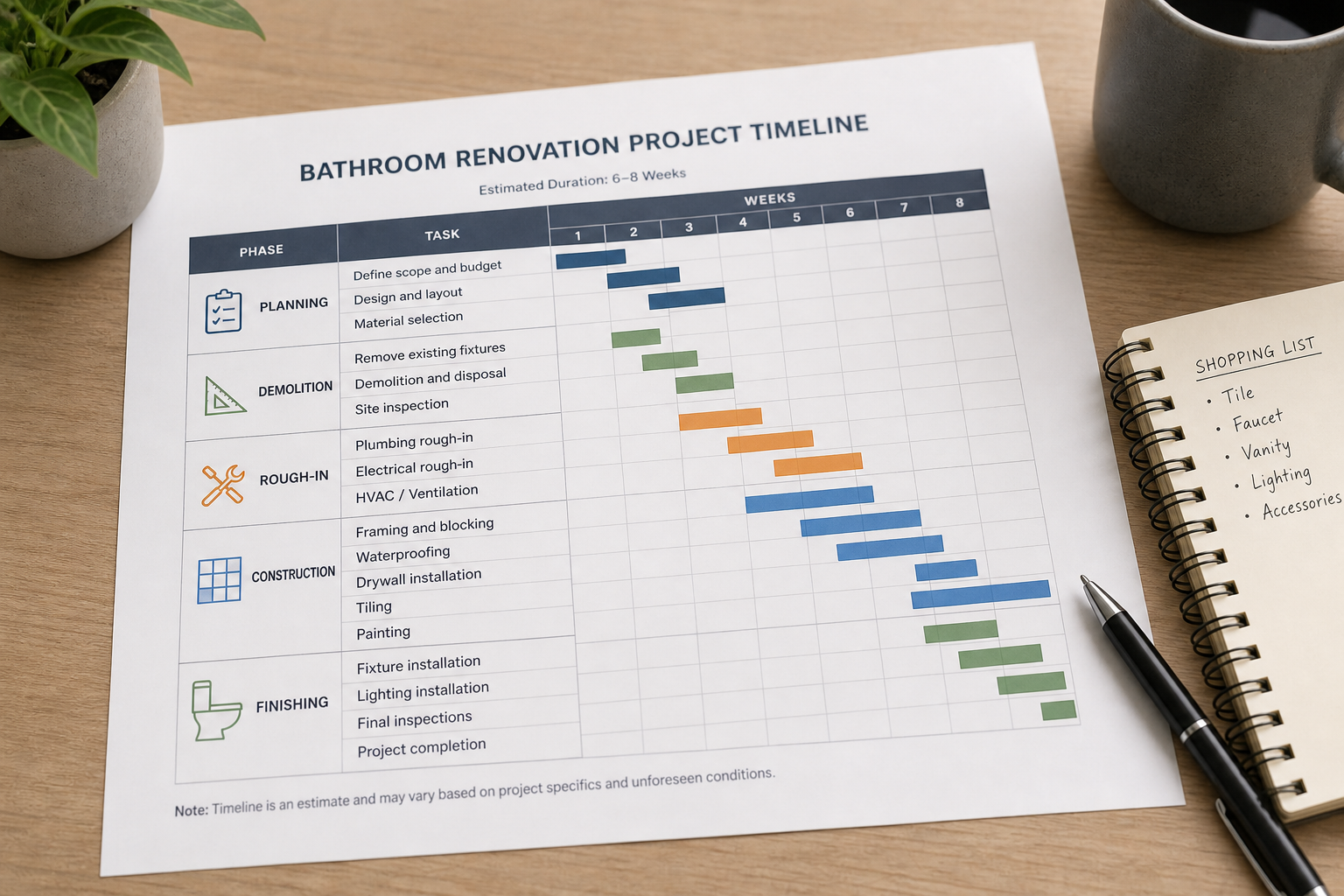
The construction timeline for a full gut primary bathroom remodel with no layout changes typically runs three to six weeks. Cosmetic refreshes run one to two weeks. Complex projects with plumbing relocation, curbless shower conversion, or extensive custom tile run six to eight weeks on site.
The project timeline for the same full gut remodel typically runs twelve to twenty weeks from initiation to occupancy. Some projects finish in ten. Some extend to twenty-four depending on permit jurisdiction, material choices, and contractor backlog.
When a contractor says "five weeks," ask: "Five weeks from when?" The answer should include a specific start date tied to permit approval and material delivery, not five weeks from contract signing.
Phase One: Design and Selections (Two to Six Weeks)
Before anything is ordered or permitted, the project needs a set of decisions that depend on each other in sequence.
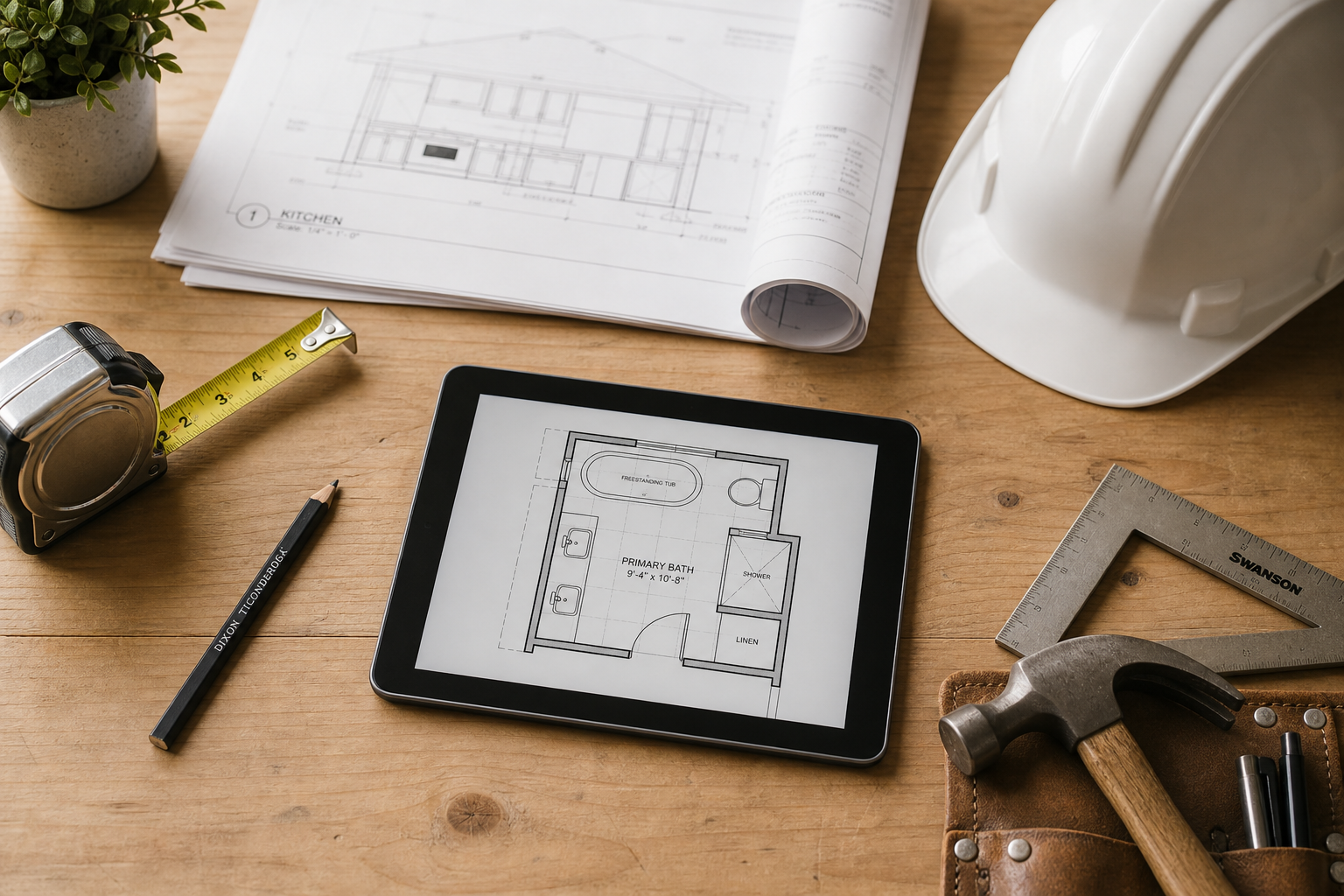
Layout confirmation comes first. Are fixture locations changing? Is the shower expanding? Is a tub being removed? Layout drives plumbing scope, which drives permit drawings, which drives tile quantity and pattern feasibility.
Fixture and finish selections follow layout. Tile format affects substrate prep requirements. Vanity width must fit wall dimensions and align with plumbing rough-in locations. Glass enclosure configuration depends on shower dimensions and tile completion. These are not independent choices. Selecting tile before confirming shower dimensions produces a change order. Selecting a vanity before confirming plumbing locations produces a return.
A realistic design and selection phase for a primary bathroom with no prior planning takes three to five weeks for a decisive household. Households comparing many options, involving multiple decision-makers, or selecting custom or imported materials extend this phase.
The constraint is not how fast you can decide. It is how fast you can decide correctly. Rushing tile selection to hit an arbitrary demo date produces a room that is finished on time and wrong.
Phase Two: Material Procurement (Two to Ten Weeks, Overlapping Design)
Long-lead materials must be ordered as selections finalize, not batched at the end of design.
Typical lead times for bathroom remodel materials:
- Stock tile and standard fixtures: one to three weeks
- Semi-custom vanity: four to eight weeks
- Custom vanity: eight to twelve weeks
- Imported or specialty tile: four to six weeks
- Frameless glass enclosure: measured after tile, fabricated in two to four weeks
- Natural stone slabs (if applicable): two to six weeks depending on fabrication queue
The critical discipline: demo does not schedule until long-lead items are confirmed with firm delivery dates or on site. Starting demolition before materials arrive is how projects stall. A completed shower waiting three weeks for a glass panel that was never measured is a project that feels finished but is not usable.
Material procurement runs parallel with design, not after it. Each confirmed selection triggers an order. The project calendar is built backward from material arrival dates, not forward from a desired demo date.
Phase Three: Permits and Review (Two to Six Weeks)
Full bathroom remodels involving plumbing or electrical work require permits in virtually every jurisdiction. Permit timelines vary by municipality, project complexity, and current department workload.
Residential bathroom permit review commonly runs two to four weeks in many jurisdictions, with complex projects or jurisdictions under staffing pressure extending to six or eight weeks. Projects with structural modifications, plumbing stack relocation, or layout changes affecting load-bearing walls take longer to review.
Permit submission requires drawings complete enough to evaluate. Incomplete submissions start a review cycle of corrections and resubmissions that adds weeks. The permit clock does not start meaningfully until the drawing set is complete, which means permits cannot be submitted until design is done.
Inspection scheduling adds time within construction, not before it. Rough plumbing and electrical inspection must pass before walls close. Failed inspections delay the next trade. This is normal. It is not accounted for in a "three-week build" quote that assumes every inspection passes on the first visit.
Phase Four: Construction (Three to Six Weeks for Most Full Remodels)
Once permits are approved and materials are on site, the construction sequence begins.
Demolition: two to four days for a standard primary bath. Longer if tile is bonded to concrete or if hazmat conditions require abatement.
Rough plumbing and electrical: three to five days. Extends if fixture locations moved or if existing conditions require pipe replacement beyond original scope.
Rough inspection: one day of inspection plus scheduling window. Typically one to three days between request and visit depending on jurisdiction.
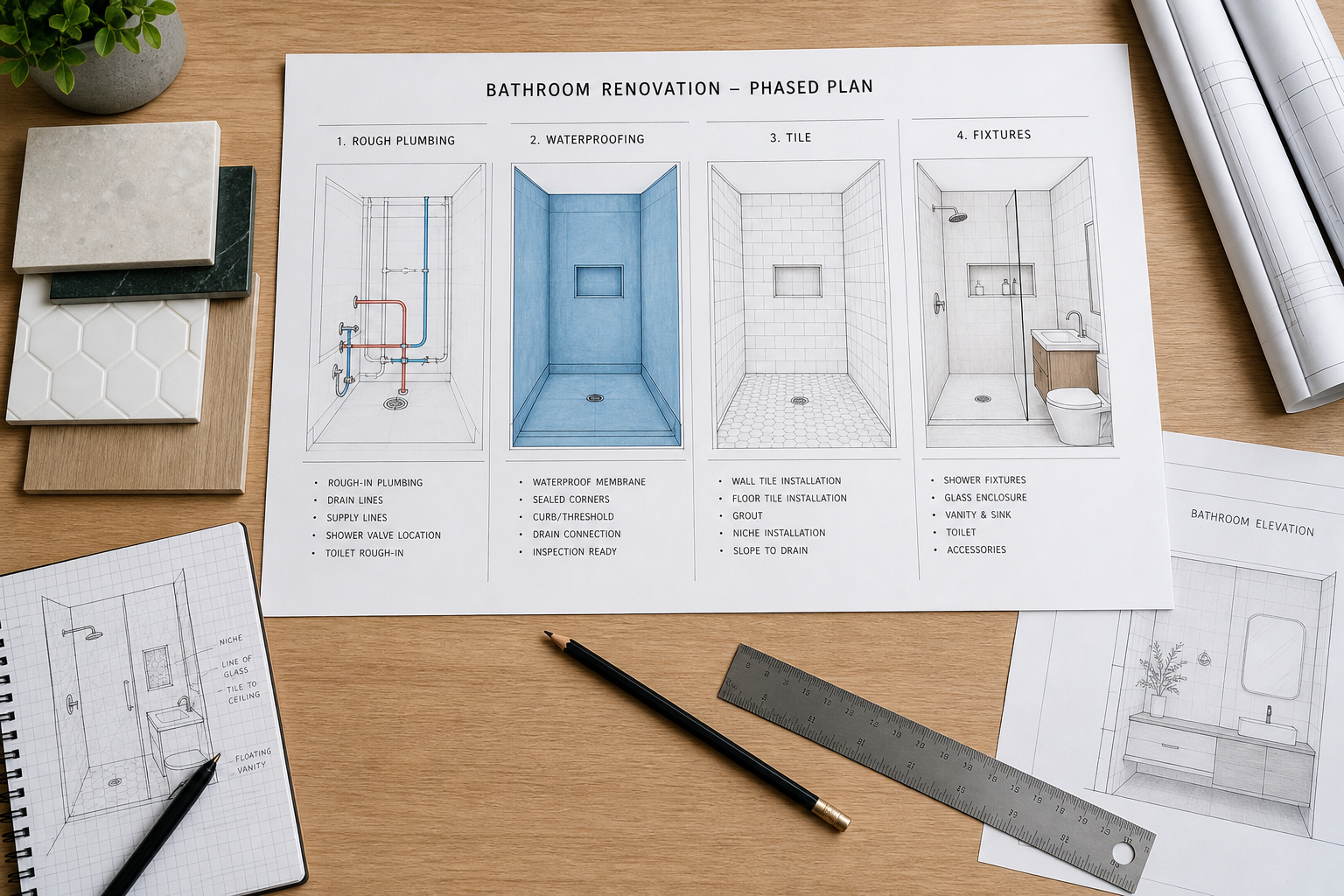
Substrate preparation and waterproofing: three to five days. Membrane cure times and flood test duration (24 hours minimum for many systems) cannot be compressed without skipping verification.
Tile installation: five to ten days depending on square footage, tile format, pattern complexity, and niche or bench details. This phase should not be rushed. Tile set while substrate is still curing or while waterproofing has not been verified produces visible problems within months.
Grout cure before water exposure: minimum three days for cementitious grout. Some epoxy systems differ. Shower use before cure completes weakens grout lines.
Vanity, countertop, and fixture installation: two to four days. Countertop template is taken after vanity is set. Fabrication runs ten to fourteen days and often runs concurrently with tile work, but installation follows fabrication.
Paint, trim, and accessories: two to four days.
Glass enclosure: measured after tile is complete. Custom fabrication runs two to four weeks off site. Installation is typically half a day. This is the most commonly underestimated back-end delay. A project that finishes tile in week four of construction may not have a usable shower until week seven or eight because glass was not measured until tile was done.
Total on-site construction for a full gut remodel with no layout changes: four to six weeks is typical. Three weeks is achievable for smaller scope with stock materials and no delays. Eight weeks indicates complexity, discovery at demo, or scheduling gaps between trades.
Phase Five: Closeout (Three to Ten Days)
Punch list completion, final inspection if required, fixture adjustment, caulk touch-up, and client walkthrough. This phase is short unless punch list items require reordering materials or scheduling a trade return visit.
The Full Project Duration
Adding all phases for a typical full gut primary bathroom remodel:
| Phase | Duration | | --- | --- | | Design and selections | 3 to 5 weeks | | Material procurement (overlapping) | 4 to 10 weeks | | Permit review | 2 to 6 weeks | | Construction | 4 to 6 weeks | | Glass fabrication (within construction) | 2 to 4 weeks | | Closeout | 3 to 10 days |
Phases overlap. Design and procurement run concurrently. Permits submit when drawings are complete, often while materials are still in transit. But the total elapsed time from first conversation to first shower is rarely under ten weeks and commonly runs fourteen to eighteen weeks for a properly planned project.
A household that calls a contractor in January and expects to shower in the new bathroom by March is planning for a cosmetic refresh timeline applied to a full remodel scope. May or June is realistic. Starting the planning process earlier is how you arrive at May without making rushed decisions in February.
Why Contractors Quote the Shorter Number
The construction timeline is shorter than the project timeline. Contractors know this. Homeowners hear the shorter number because it is easier to say and easier to sell.
Quoting "three to four weeks" without specifying that is on-site time after permits and materials are ready is technically not false. It is incomplete in a way that produces predictable disappointment. The homeowner who signed in February expecting April completion does not care that the three weeks was accurate for construction. They care that they are showering in the guest bath in May.
Some contractors quote short because their process genuinely is faster: selections are finalized before contract, materials are pre-ordered, permits are pre-pulled, and crew is pre-scheduled. That process still requires front-end weeks. The difference is the front-end happened before the homeowner heard a timeline, not that it did not happen.
Other contractors quote short because a short timeline wins bids. The contract is signed. The reality emerges in week two when the tile was never ordered.
Ask every contractor to show both timelines. Pre-construction phase with specific milestones. Construction phase with trade sequence. Where the two connect (the demo date) should be tied to permit approval and material delivery, not to contract signing.
How to Shorten the Timeline Without Cutting Corners
You cannot eliminate pre-construction time. You can use it efficiently.
Finalize selections before signing. Contractors who require selections at contract are not being difficult. They are preventing the procurement delay that adds six weeks mid-project.
Order long-lead items immediately. Custom vanity and specialty tile do not get faster because the project is urgent. They get ordered or they become the critical path delay.
Submit complete permit drawings. Incomplete submissions cost more calendar time than most construction delays.
Respond to decisions within 24 hours. Every week the tile choice sits in email limbo is a week added to the back end.
Accept that glass comes last. Plan for shower use without glass for two to three weeks at the end of construction, or plan project completion around glass installation, not around tile completion.
Our project timelines show both phases: the pre-construction phase with permit and procurement, and the construction phase with trade schedule. A client who knows the front-end timeline is prepared for it.