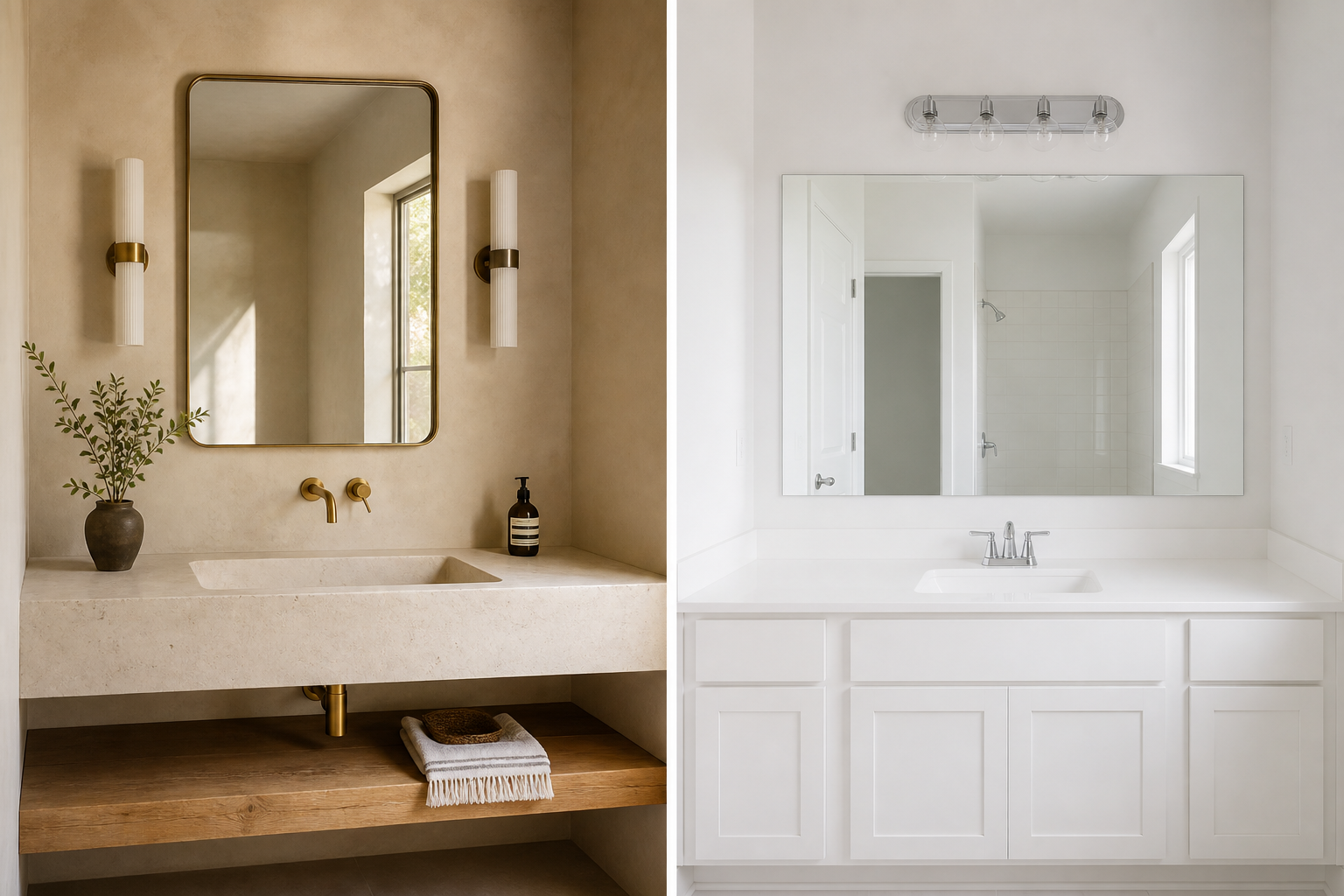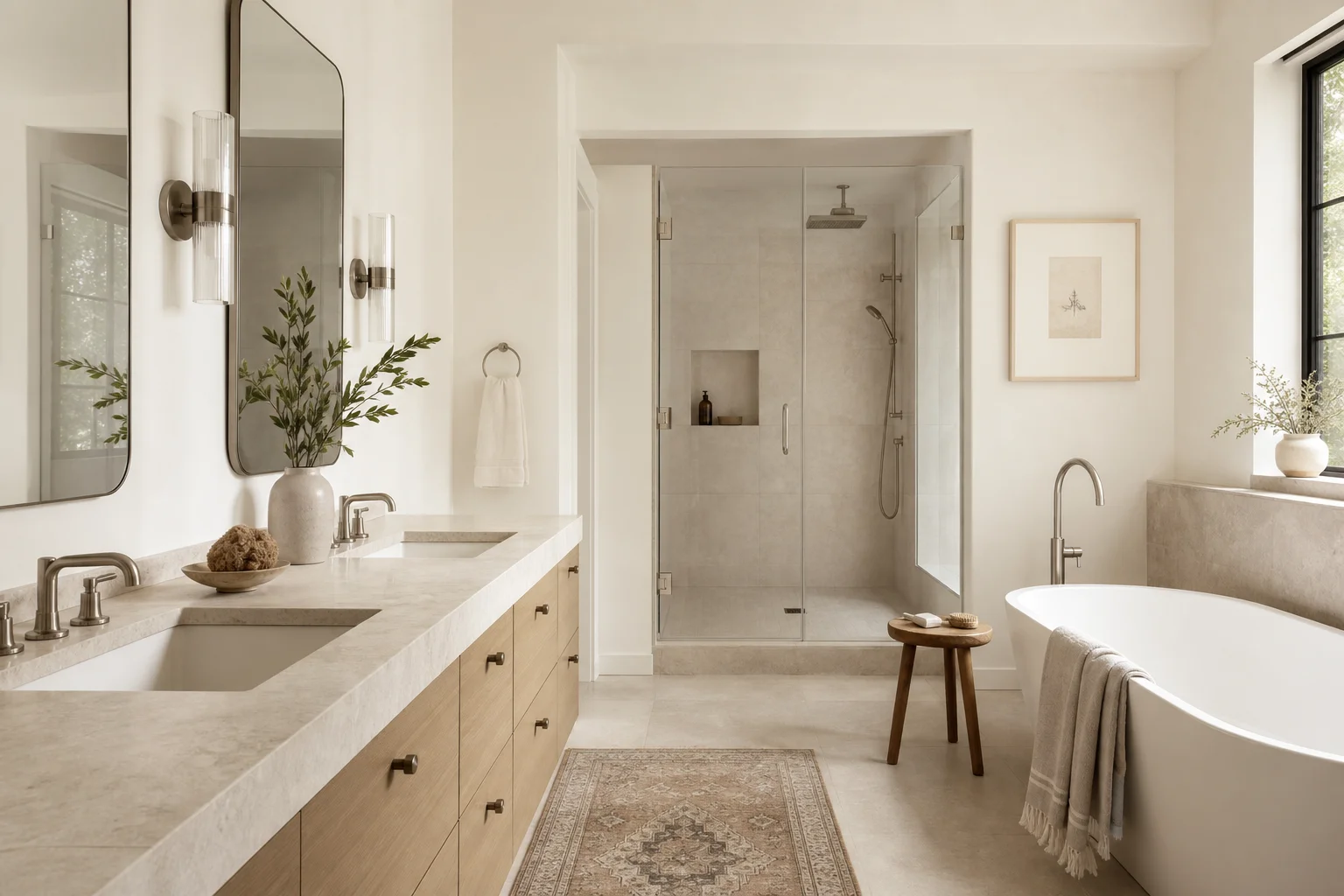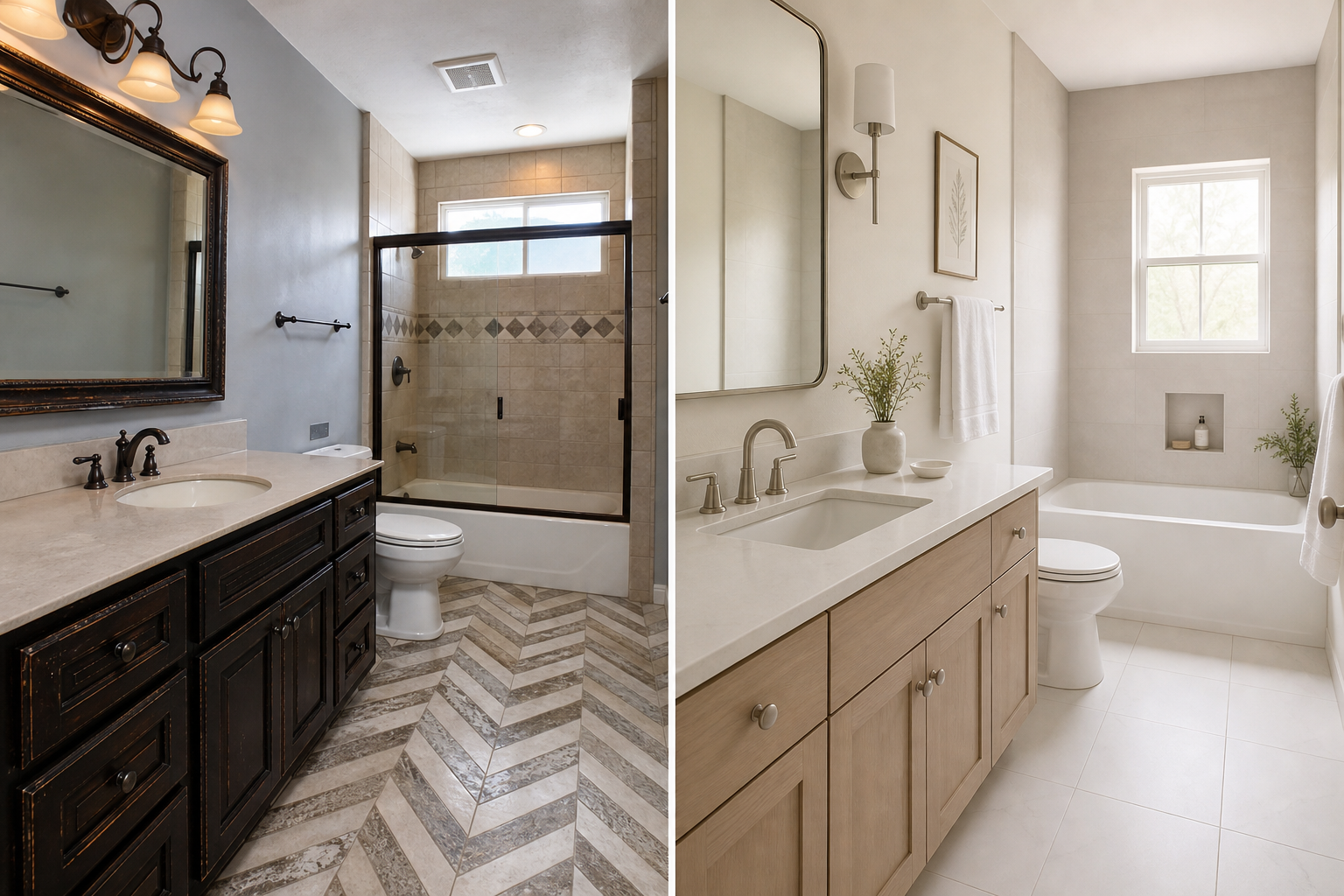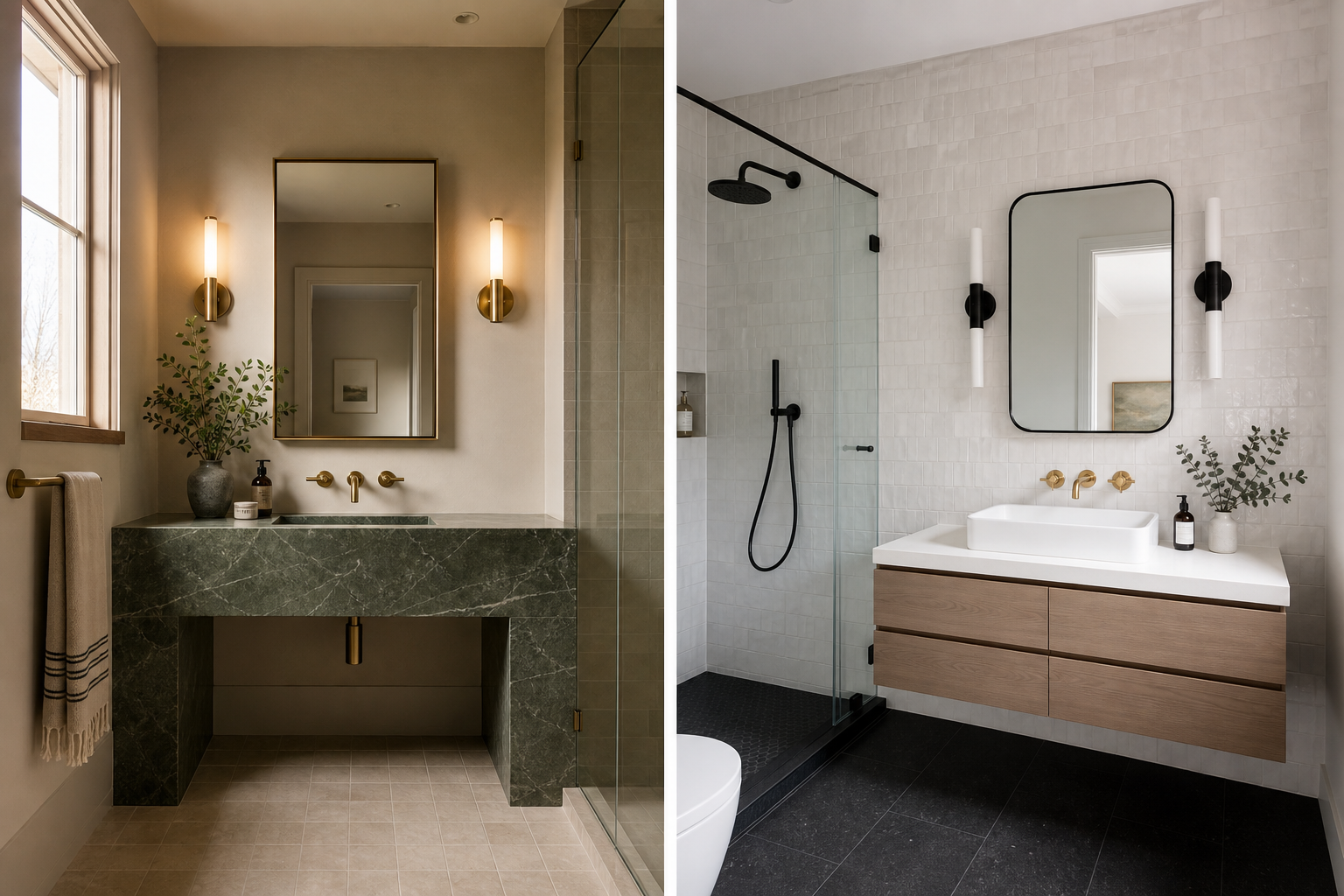
Style is a vocabulary. Taste is the judgment about which moves serve a specific room, body, and life. You can develop taste. You cannot borrow it. The distinction is not academic. It is the reason two bathrooms can use the same materials and one feels resolved while the other feels like a showroom display that wandered into the wrong house.
Most renovation mistakes that read as "bad style" are actually failures of taste: the wrong move applied with confidence. The homeowner did not lack access to good images. They lacked the judgment to determine which images were relevant to their room, their light, their household, and their maintenance tolerance. Style gave them the words. Nobody helped them choose the sentence.
Style Is Shared. Taste Is Contextual.
Style, in design terms, is a named set of moves. Mid-century modern. Organic minimalism. Industrial. Coastal. Transitional. Each style has a material palette, a proportion language, a hardware vocabulary, and a set of reference images that define what belongs and what does not.
Style is useful because it organizes decision-making. If you commit to a style, many choices collapse. A mid-century bathroom probably has walnut or teak, probably has clean-lined fixtures, probably avoids ornate molding. The style acts as a filter.
Taste is different. Taste is the capacity to look at a move that belongs to a style and ask whether it belongs to this room. A brass faucet belongs to several current styles. Taste asks whether brass is right given the tile you selected, the light in the room, the other metal finishes in the house, and the way your household maintains fixtures that show water spots.
Creative Review's design criticism makes a useful distinction between taste and coherence. Taste sorts and selects based on refinement and fluency in references. Coherence listens to a client's world and translates it into form. A bathroom can pass the taste test, every choice current and well-composed, and still fail the coherence test because nothing in the room connects to how the household actually lives.
That is the gap homeowners fall into. They curate style successfully. They never evaluate coherence.
Why Copying a Style Board Fails
The mechanism of failure is straightforward. A mood board is a composition created for a camera. It resolves at a single viewing angle under controlled light. It does not include the toilet paper holder, the outlet for a hair dryer, the grout line that will darken in six months, or the mirror reflection of the hallway beyond.
When a homeowner copies a board, they copy the visible layer. They get the zellige, the arched mirror, the floating vanity. They do not copy the spatial logic that made those choices work in the original room: the ceiling height, the window placement, the floor area, the plumbing wall location, the ventilation path.
Style boards also flatten context. A bathroom that reads as "Japandi" in a photograph may depend on a specific quality of north light, a particular plaster texture, and a ceiling height of nine feet. Install the same palette in a seven-foot ceiling room with a small window and fluorescent-adjacent builder lighting, and the style vocabulary remains but the taste judgment is absent. The room looks like a label applied to the wrong container.
The design industry increasingly recognizes that judgment cannot be copied from output alone. Looking at a finished room tells you what was chosen. It does not tell you what was rejected, what constraint forced a compromise, or what problem the room was solving. Borrowing the output without the reasoning produces rooms that are visually literate and functionally wrong.
Taste Develops Through Attention, Not Accumulation
Taste is not an innate gift. It is an accumulated capacity for contextual judgment, built through sustained attention to why spaces succeed or fail. The mechanism of development is observation paired with revision: noticing that a room felt right, identifying what produced that feeling, and testing whether the same move would produce the same feeling in a different context.
Homeowners can develop taste without design training. The process requires looking at rooms with diagnostic questions rather than aesthetic ones. Not "Do I like this?" but "Why does this work here?" and "Would this work in my room with my light?"
Useful questions for building taste in bathroom design:
What is the strongest material in the room, and what is it doing visually? Strong rooms usually have a hierarchy. Weak rooms have three materials competing for attention.
Where does the light fall at the time of day when the room is most used? A material that looks rich at noon may look flat or gray at seven a.m.
What is the maintenance relationship implied by each finish? Taste includes honesty about whether the household will wipe down matte black fixtures daily or whether that finish will look tired within a year.
Does the room belong to the house, or could it belong to any house? Coherence with the rest of the dwelling is a taste signal. A bathroom that feels imported from a different building usually is.
These questions build judgment because they connect visible choices to consequences. Style boards rarely include consequences. Taste is the habit of asking about them before the tile is ordered.
Style Gives You Options. Taste Eliminates Them.
One of the paradoxes of good design is that taste often looks like restraint. A homeowner with developed taste does not consider every option. They eliminate most options quickly because most options fail the context test.
A homeowner building from style alone often expands options. They add the trending tile because it belongs to the style. They add the trending fixture because it belongs to the style. The style vocabulary is inclusive. It says what fits the aesthetic. It does not say what fits the room.
Taste is reductive in the best sense. It removes moves that are wrong for the context so the remaining moves can be executed with clarity. A bathroom with one unusual material choice that reads as specific and right often reflects taste. A bathroom with six on-trend materials that reads as assembled reflects style without editing.
The difference is visible in hardware consistency, tile layout, and proportion. Taste produces rooms where the elements appear to be in conversation. Style without taste produces rooms where the elements appear to have been introduced by different people who did not meet.
The Mirror Test
Vanity lighting is one of the clearest tests of taste versus style in bathroom design. Style says: install the fixture that matches the aesthetic. Taste says: install the fixture that renders the people who use this mirror accurately at the time they use it.
A backlit mirror may belong to a contemporary style vocabulary. It may also produce flat, shadowless light that makes skin look washed out. Sconces at eye level may not appear on the current style boards. They may also be the correct choice for a household that applies makeup or shaves at this mirror every morning.
Taste chooses the lighting that serves the face. Style chooses the lighting that serves the photograph. The conflict between the two is where many bathrooms fail in daily use while succeeding in the reveal photo.
Color temperature follows the same logic. Style may default to whatever temperature is popular in current hospitality design. Taste specifies a Kelvin rating based on the tile undertone, the paint color, and the skin tones of the people who will stand in this light. The specification is not glamorous. It is correct.
When Style and Taste Align
Style and taste are not enemies. They align frequently. A homeowner with good taste may select a style vocabulary that suits their house and their life, then apply it with enough contextual judgment that the room feels both coherent and personal.
The alignment happens when style is treated as a starting filter rather than a destination. "We like the warmth and material honesty of organic minimalism" is a style preference that can guide taste. "We want exactly what is in this photograph" is a style preference that bypasses taste entirely.
Organic minimalism, applied with taste, might produce a bathroom with honed limestone, a wood vanity at a height specific to the household, and ventilation sized for actual shower use. Organic minimalism, applied without taste, might produce the same limestone with a vanity that stores nothing, a mirror that misleads the face, and a fan that is too quiet to move moisture.
Same style. Different judgment. Different room.
Which Should You Trust?
Trust taste, and treat style as a tool for narrowing the field.
If you are early in the process, style boards are useful for identifying what draws you in. Pay attention to what you return to, not what is most popular. The images you save twice usually contain a clue about your actual preferences: warmth, texture, simplicity, contrast, enclosure, openness.
Then apply taste by testing each preference against your specific room. Does this material work in your light? Does this layout fit your plumbing wall? Does this finish match your maintenance tolerance? Does this proportion suit your ceiling height?
If a choice survives those questions, it is yours. If it survives only because it is current, it is borrowed. Borrowed choices are not always wrong. They are always temporary.
The goal is not to avoid style. The goal is to ensure that style serves the room rather than overriding it. A bathroom with taste speaks in a voice that belongs to the household. A bathroom with only style speaks in a voice that belongs to the year the remodel was published on Pinterest.
When clients bring us a full mood board, we ask which images they keep returning to and why, not what style they think they want. The answer to "why" is usually taste trying to announce itself. Our job is to help translate it into specifications before anything permanent gets installed.