The bathroom that genuinely takes eight minutes to clean is not the result of good luck or exceptional dedication. It is the result of specific decisions made during design: fewer grout lines, the right surface textures in the right locations, movement joints where they belong instead of grout, and ventilation that keeps surfaces dry between uses. Every one of those decisions can be made deliberately. Most are not, because the conversation during renovation is about what the room looks like rather than what it will be like to live with.
The difference between a bathroom you enjoy maintaining and one you quietly dread is mostly decided before the tile is ever ordered.
Grout Is the Work
The average tile shower contains 200 to 400 linear feet of grout lines. Each one is a porous cementitious joint that absorbs soap residue, mineral deposits, and biological growth. Cleaning a shower with standard cementitious grout and small-format tile is not a design problem; it is a chemistry problem repeated at every line, on every cleaning visit, for the life of the room.
This is the part of the easy-to-clean conversation that matters most, because it is determined by tile format and grout type before a single piece is set. Two decisions change the entire maintenance equation:
Tile format. Larger tiles mean fewer joints. A 12-by-24-inch tile on a shower wall has roughly 80 percent fewer grout lines than a 4-by-4-inch tile on the same surface. That reduction is not cosmetic; it is a direct reduction in the surface area available to trap soap, minerals, and mold spores. Large-format tile in the 24-by-48-inch range reduces grout lines further still. The trade-off is that larger tiles require flatter substrates to install correctly, which is a construction quality issue, not a reason to use smaller tile.
Grout type. Standard cementitious grout is porous. It absorbs water. It harbors biological growth in the pore structure. It requires sealing after installation and resealing periodically. Epoxy grout is non-porous, waterproof, and stain-resistant. It does not need sealing. It does not absorb soap residue into the joint. The cleaning effort it requires is the same wiping that cleans the tile face; there is no separate grout-cleaning step. Epoxy grout is more expensive and requires a skilled installer to apply correctly. In a shower used daily, the maintenance savings over ten years are significant. Mapei's Kerapoxy CQ and similar products are the category examples; the standard cementitious and advanced cementitious grouts are not equivalents regardless of marketing language.
Surface Texture: Where It Helps and Where It Costs You
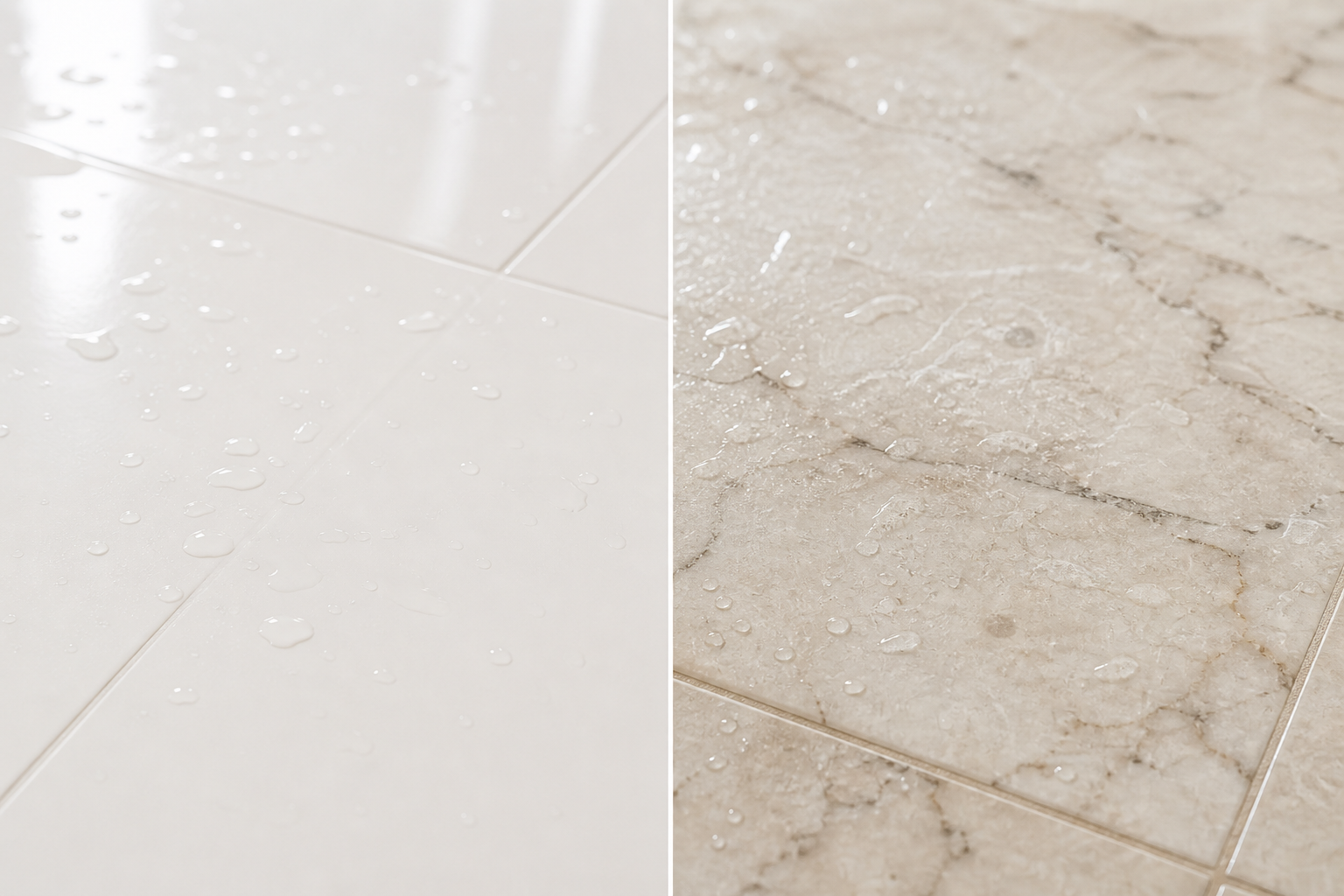
Matte and textured tile finishes conceal water spots and minor surface soiling between cleanings. They show less on a daily basis. They also require more work when deep cleaning is needed, because the texture provides more surface area for soap scum and mineral deposits to adhere.
Polished tile shows every water spot. It also wipes clean more completely when you do clean it, because the smooth surface offers fewer opportunities for residue to anchor.
The practical design decision is not to choose one or the other universally, but to place each texture where its properties help most. Polished or honed flat tile on shower walls, where a weekly wipe-down is the maintenance task and water spots matter less, makes that task fast. A lightly textured tile on the shower floor, where slip resistance actually matters and water spots are hidden by the foot traffic pattern, handles both requirements. The mismatch is using heavily textured stone or tile in a wet area because it photographs well, then discovering it traps soap residue in the texture and requires scrubbing to clean.
Glass tile on shower walls, less common but worth noting, is non-porous and wipes clean faster than any tile with grout structure. The grout is still the work; the tile face is not.
The Movement Joint Problem Nobody Talks About
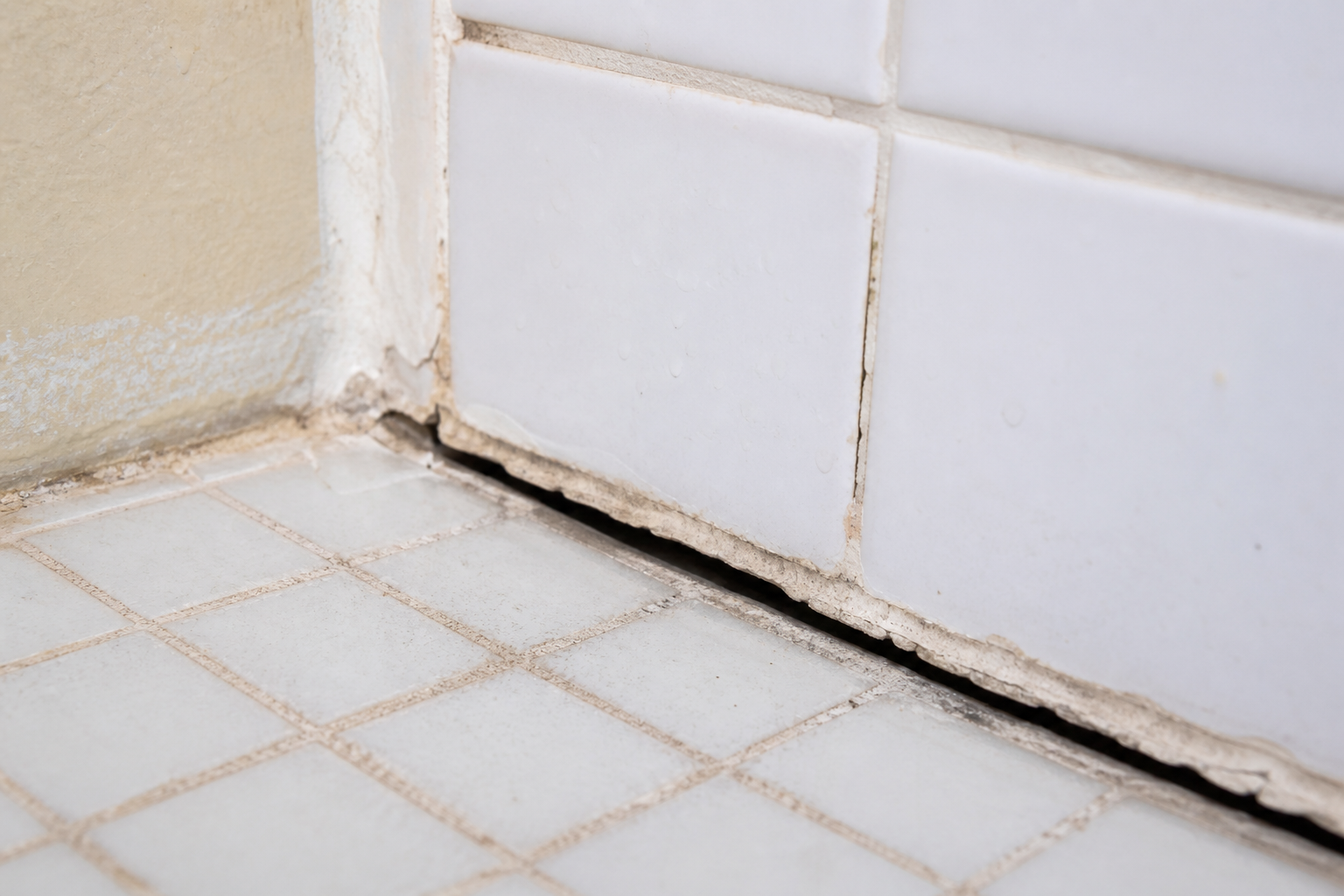
Most shower corners and floor-to-wall transitions are grouted. They should be caulked with flexible silicone sealant. When they are grouted, the grout cracks because the assembly moves and grout cannot flex. The crack creates an infiltration path for water and a collection point for soap and mold.
Replacing cracked grout at corners is a maintenance task that repeats every few years in a grouted corner. Silicone at the same location, installed correctly at the time of construction, moves with the assembly and eliminates that recurring task. Color-matched silicone in the same tone as the grout is nearly invisible from a normal viewing distance.
A bathroom with correct movement joints at all changes of plane and floor-to-wall transitions will not develop the black-line problem at the base of the shower that is the most visible sign of a bathroom that is difficult to maintain. It is a construction detail, not a cleaning habit.
Ventilation Is Maintenance
A bathroom that dries fully between uses does not accumulate the biological growth that makes cleaning harder. A bathroom that stays humid, where moisture lingers for hours after every shower, is providing ideal conditions for the organisms that make surfaces feel perpetually grimy despite regular cleaning.
The tissue test from the failure-sequence article applies here too: hold a single ply of tissue against the fan grille with the fan running. If it does not hold, the fan is not removing meaningful air, and the room is wetter between uses than it appears. Running the fan during every shower and for at least thirty minutes after is the behavioral contribution; correct fan sizing and duct routing is the construction contribution. Both are required.
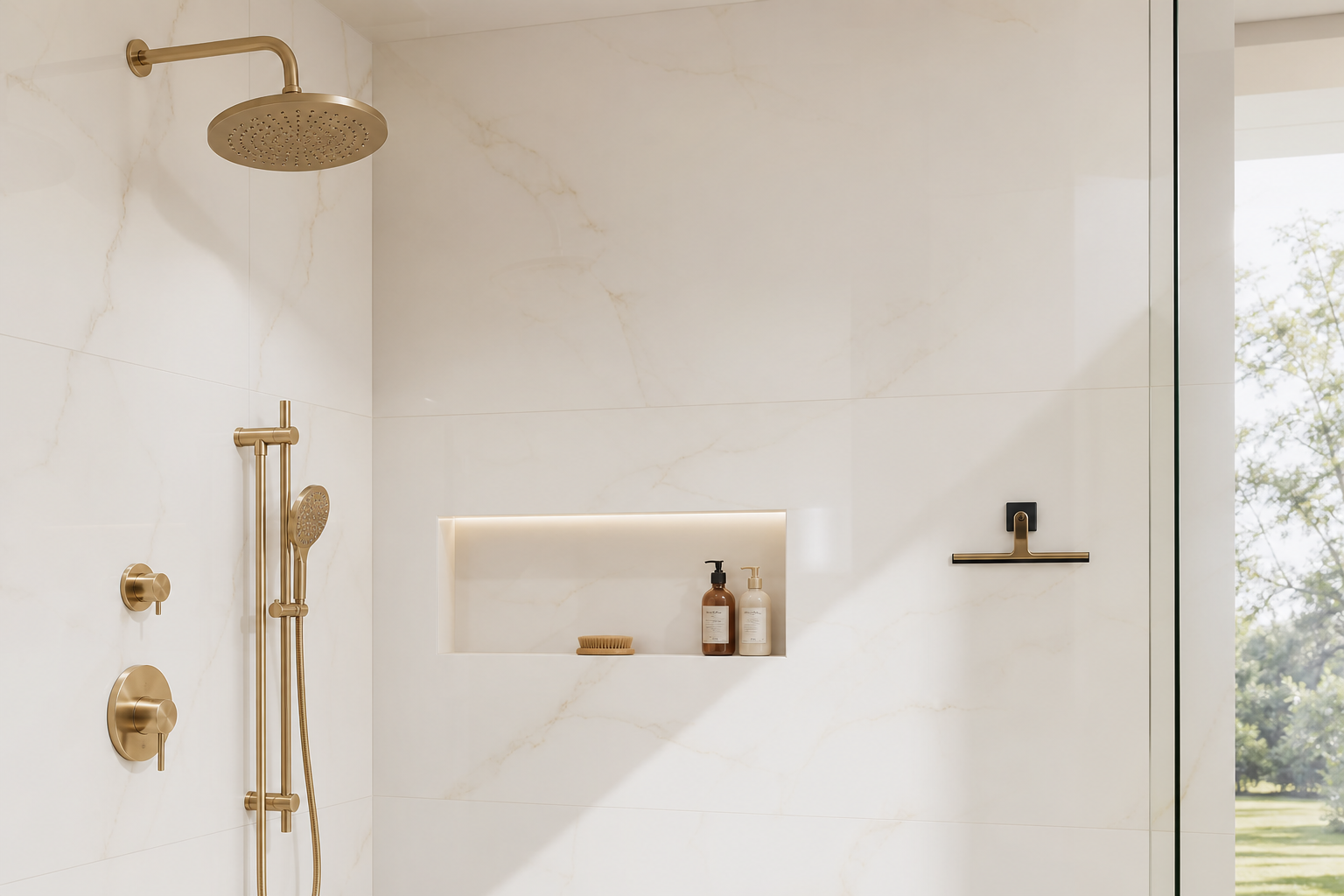
Squeegee habits extend the benefit. Running a simple squeegee over shower walls after each use removes the water film that would otherwise deposit mineral residue as it evaporates. A five-second squeegee pass changes the cleaning interval from weekly to significantly less frequent for the tile face. A wall hook inside or immediately adjacent to the shower, positioned where it is natural to reach, is the only infrastructure needed.
What "Easy to Clean" Looks Like as a Finished Room
It looks like a shower with large-format glazed porcelain, epoxy grout in a coordinating tone, silicone at all corners and floor-to-wall transitions, a properly sized exhaust fan with a duct that terminates outdoors, and a squeegee within arm's reach of the shower.
It does not require any finish style or price point to achieve. An easy-to-clean bathroom can be minimal or rich, simple or detailed. The design choices that make it maintainable are independent of the ones that make it beautiful. They just need to be made explicitly, rather than left to whatever the installer defaulted to.
The room that looks beautiful on installation day and still looks beautiful in year eight is almost always the room where someone thought carefully about what it would be like to clean it, not just how it would look in photographs.
We review cleaning implications of material and grout selections with every client before tile is specified. A choice that looks stunning in a showroom but requires forty minutes a week to maintain is not a choice we recommend without that conversation first. When a household tells us they want a room they can care for quickly, those decisions change the specification before anything is ordered.