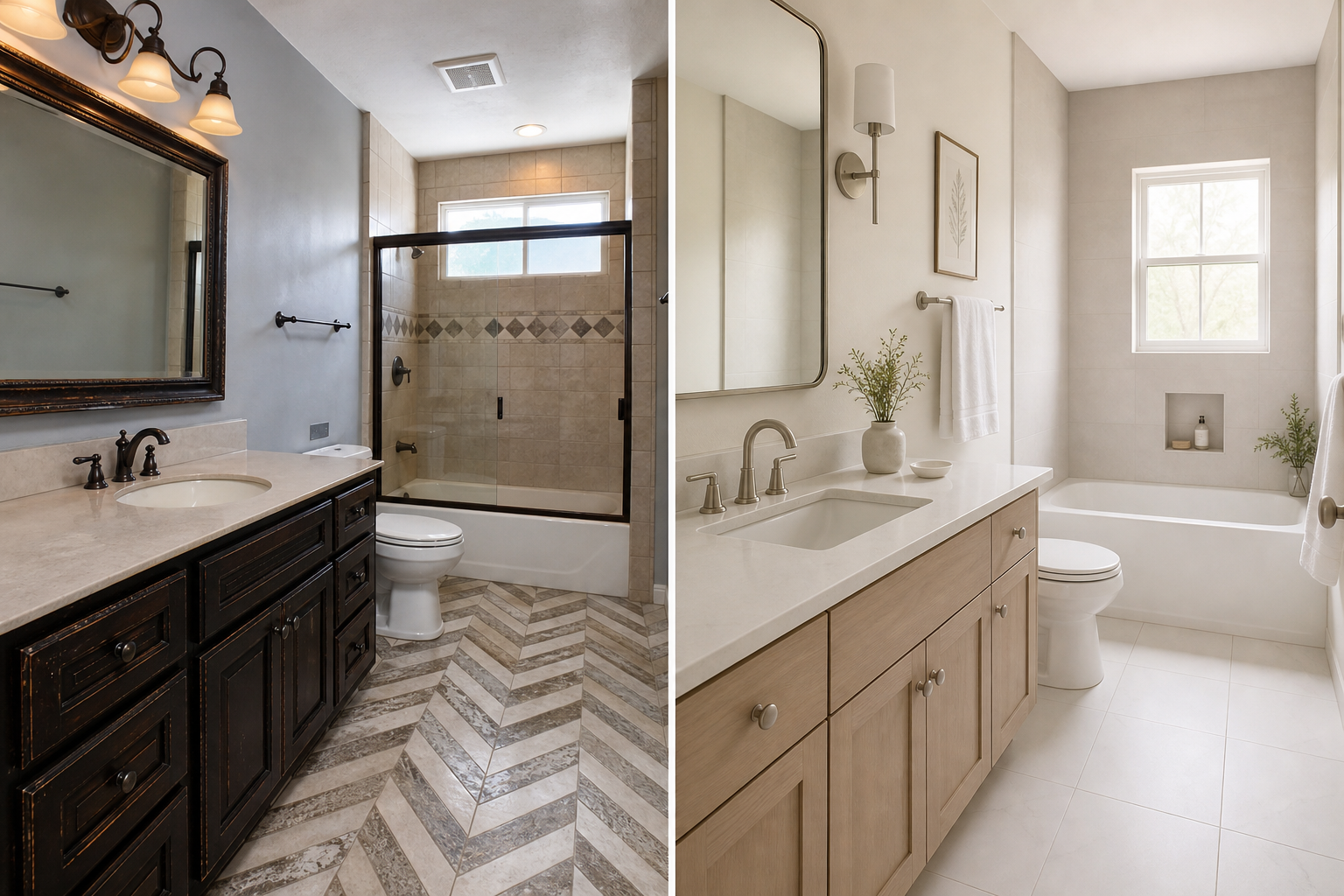
Almost every bathroom trend that dated badly looked current and even sophisticated when it was installed. The chevron floors of the early 2010s. The gray-everything era of the mid-2010s. The farmhouse tile with dark grout that dominated HGTV for a decade. None of those choices looked wrong on installation day. They looked exactly like what the design media said a good bathroom looked like. They just looked like that year, rather than like a considered room.
The question of whether a trend will last is therefore not really a question about trends. It is a question about why you are making the choice in the first place. Two bathrooms can use the same large-format white porcelain floor tile; one will read as timeless in ten years and one will look like a 2024 spec home. The difference is not the tile. It is what the tile was chosen to do.
This article is the diagnostic: a way to tell, before you commit to anything permanent, whether a design choice is likely to age with dignity or date with embarrassment.
Why Trends Date, Specifically
A design choice becomes dated when the reason it was chosen no longer exists. The reason most people chase trends is novelty; the choice feels fresh, current, surprising. But novelty is, by definition, temporary. The very thing that makes a trend feel exciting when it first appears makes it feel exhausted once everyone has done it.
This is the trap: the qualities that make a trend appealing on the showroom floor (freshness, recognition, belonging to a cultural moment) are exactly the qualities that guarantee it will feel stale when that moment passes.
Design choices that are not trend-driven do not have this problem because they were never chosen for their novelty. A curbless shower entry looks right in 2014 and in 2024 because it was chosen to solve a real problem: eliminating a trip hazard and making the shower easier to enter. The problem does not become less real over time. The solution stays valid. The room ages without explanation.
A jetted tub was a statement of arrival in 1998. By 2024, it is widely understood as a maintenance liability with hygiene concerns and a plumbing system that fails in eight to fifteen years. The choice was driven by status signaling, not by what the tub actually did for the person who bathed in it. Once the status signal faded, nothing remained to justify the choice.
The principle that runs through all of this: choices made to solve real problems outlast choices made to signal something. Not because real solutions are inherently beautiful, but because the problem they solve remains relevant regardless of what the design media is running that season.
The Test Worth Running Before You Commit
Before locking in any permanent element of a bathroom, ask one question: what real problem is this choice solving?
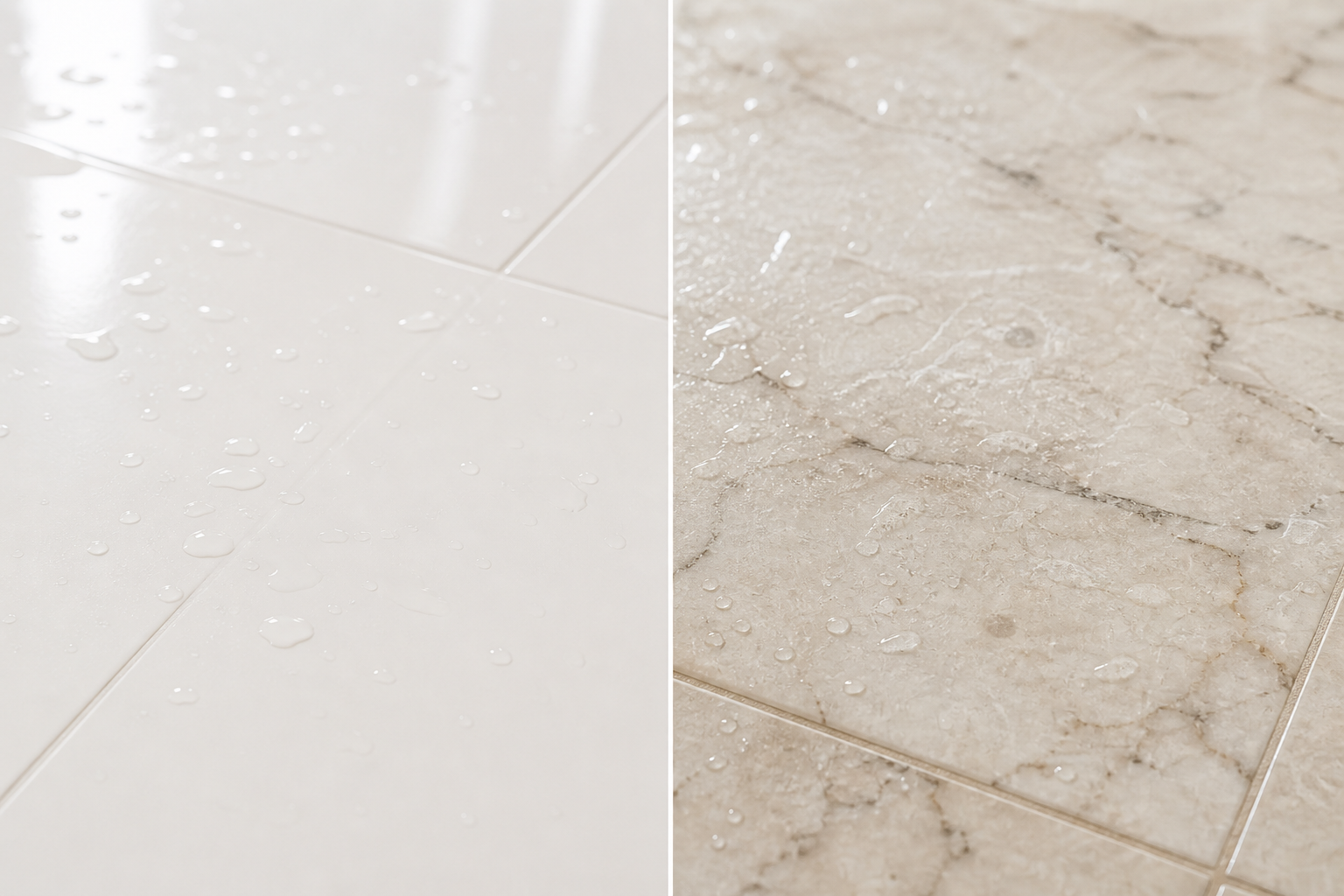
If the answer is specific and functional, the choice is likely to hold. Large-format tile was chosen because it reduces grout lines in a wet area and is easier to keep clean. Curbless shower entry was chosen because it eliminates a curb that created a trip hazard and made cleaning harder. Side-lit vanity mirrors were chosen because overhead light creates shadows on the face.
If the answer is primarily aesthetic or cultural, pay attention. The choice may still be correct; many beautiful things are beautiful for reasons that are not easily articulated. But the difficulty of articulating the reason is a signal worth noticing. "It looks current" and "everyone is doing it" and "I saw it in three magazines this year" are answers that describe novelty, not resolution.
The distinction is not always clean. Sometimes a choice solves a real problem and also happens to be fashionable at the moment. The question is which of those is doing the real work. A matte black faucet is fashionable in 2024, but if the reason it was chosen is that it does not show water spots the way polished chrome does in a hard-water area, then the choice has a functional basis that will survive the fashion cycle. If it was chosen purely because matte black is in, it will date when matte black moves on.
What Actually Ages Well
Looking at bathroom elements that have maintained their appeal across multiple design cycles reveals a consistent pattern. The choices that held are choices that either:
Resolved an ergonomic or physical problem. Double vanities. Walk-in shower sizes that fit the human body. Properly placed controls. Good ventilation. These choices serve the same problem in 2034 that they served in 2014, because the body using them is the same.
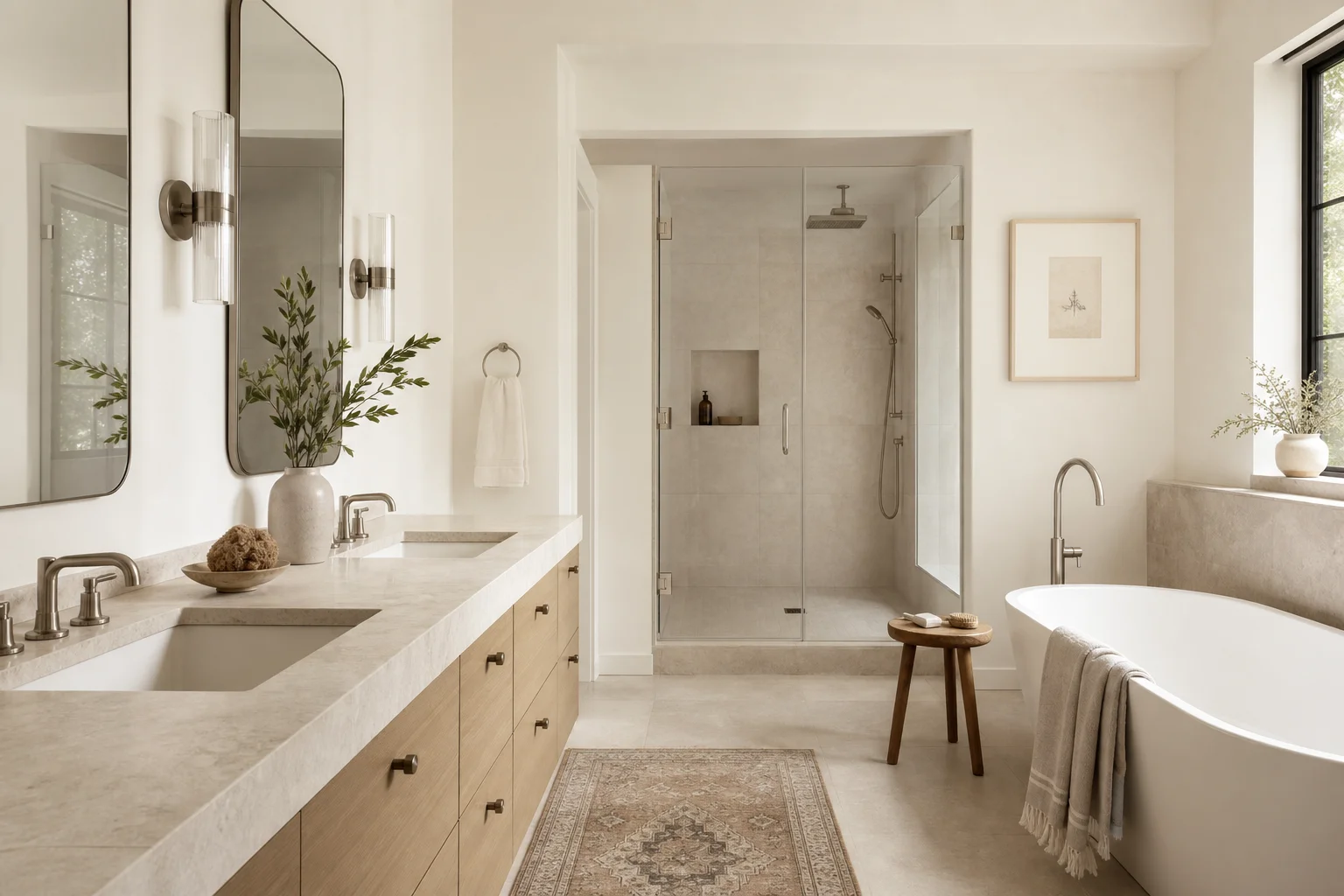
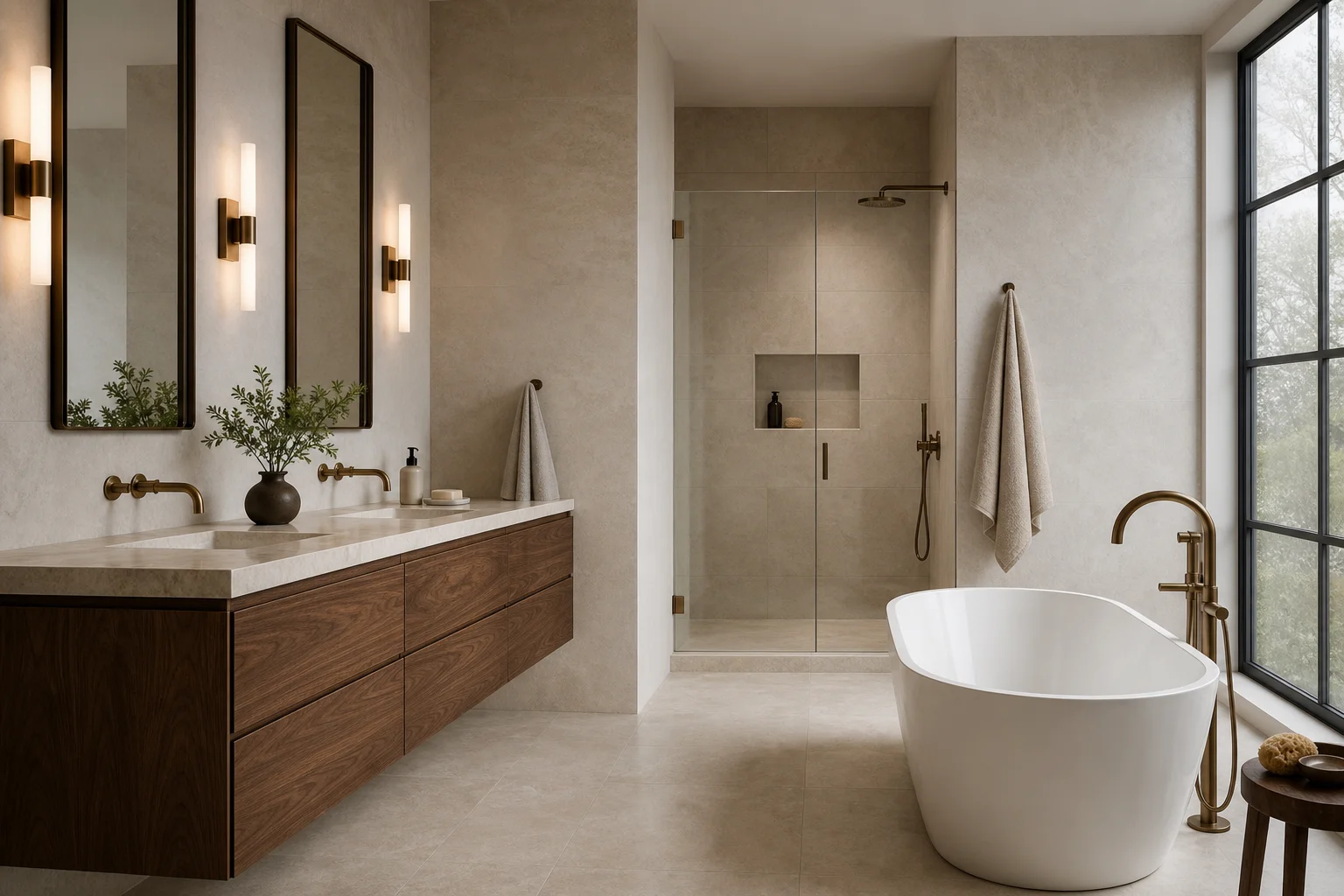
Used material honesty. Natural stone, solid wood, porcelain that works as porcelain rather than impersonating something else. Materials chosen for their actual properties, not as a low-cost simulation of something more expensive, tend to develop character over time. Simulations tend to reveal themselves.
Respected proportion. A well-proportioned mirror in relation to the vanity below it. A tile format that is scaled to the wall, not oversized or undersized relative to the room. Fixtures that are sized to the people using them, not to the showroom floor. Proportion is not a style; it is a relationship between things, and correct relationships do not go out of fashion.
Practiced restraint. The most consistently admired bathrooms across eras have fewer materials, not more. Two or three materials handled very well outlast five materials handled adequately. Restraint is not minimalism as a style; it is the decision to stop adding things once each addition earns its place. Rooms that achieve this read as quietly confident rather than effortful.
What Ages Poorly, and Why
Choices that consistently date quickly share a structure: they were driven by specificity to a cultural moment rather than resolution of a problem.
Highly patterned tile on every surface reads the room as belonging to a specific year because the pattern was chosen for visual impact, not for what the tile needed to do. In five years, the impact is familiar rather than striking. In ten, it is recognizable as a style period.
Bold color applied to permanent surfaces (floors, tile, built-in cabinetry) is a similar risk. Color that expresses a household's character is legitimate; it is specific to the people who live there. Color that expresses what Pantone said the year of the remodel will feel borrowed and eventually irrelevant. The same color in a towel or a painting is easily changed; the same color in the floor tile is not.
Technology features with short product cycles date badly. Integrated Bluetooth speakers, specific smart mirror interfaces, LED strip light schemes tied to a particular aesthetic moment: these elements signal their installation date loudly once the technology or the aesthetic advances. The shower valve and the drain will be in the room in thirty years. The speaker system will not.
Features driven by a single media moment date badly. The farmhouse bathroom aesthetic was everywhere for a decade because HGTV normalized it through sheer repetition. Its overexposure at scale made it simultaneously familiar and exhausted before many of its practitioners even finished installing it. Any design choice that has saturated mass-market renovation media has, by definition, lost the novelty that made it appealing. It is now signaling conformity, not taste.
The Honest Concession
None of this guarantees anything. Taste changes in ways that cannot be predicted, and a choice made with every reasonable longevity principle in mind can still feel dated in fifteen years for reasons that have nothing to do with the choice itself. Architecture shifts. Cultural references change. What was restrained becomes conservative. What was bold becomes familiar.
What the framework actually provides is probability, not certainty. A choice made because it solves a real problem is less exposed to fashion cycles than a choice made because it is fashionable. A room that practices material honesty and proportion is less likely to announce its vintage than one assembled from a trend board. That is all the protection available.
The other honest concession: some trends are worth living with, even knowing they will date. A choice that delights you genuinely, that reflects something specific about who you are and how you live, has value even if it is unfashionable in ten years. The rooms that feel hollow over time are not usually the ones with a personality; they are the ones that borrowed someone else's personality for a season.
When we review a client's finish selections, we ask about the reason for each choice before commenting on any of them. Not to challenge preferences; to understand what risk each choice is carrying. A finish chosen because it does not show water spots in a hard-water area is at low risk regardless of what the market does next. A finish chosen because it appeared in every showroom this year is at higher risk, and we say so before anything is ordered. That conversation is easier to have before tile is purchased than after.