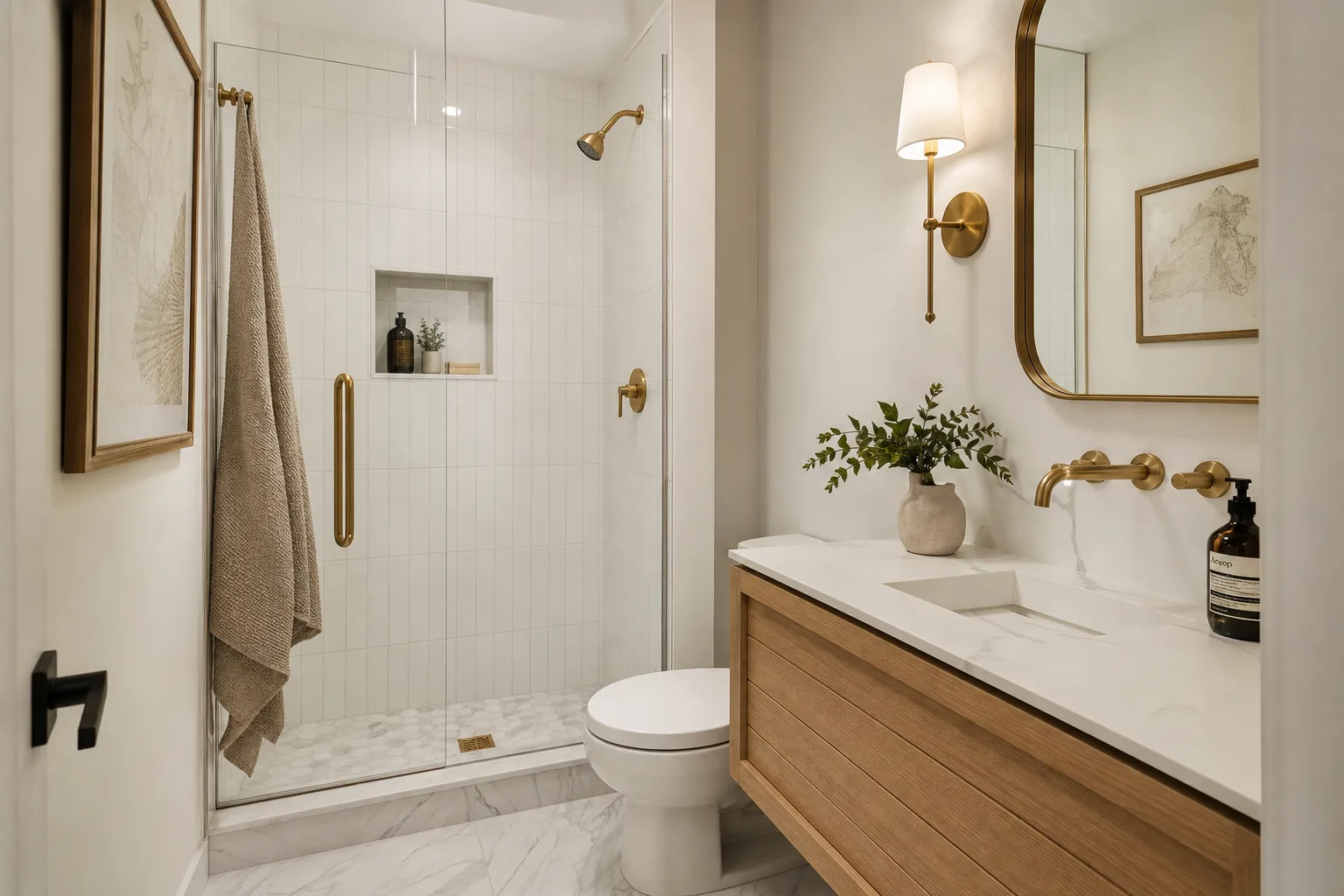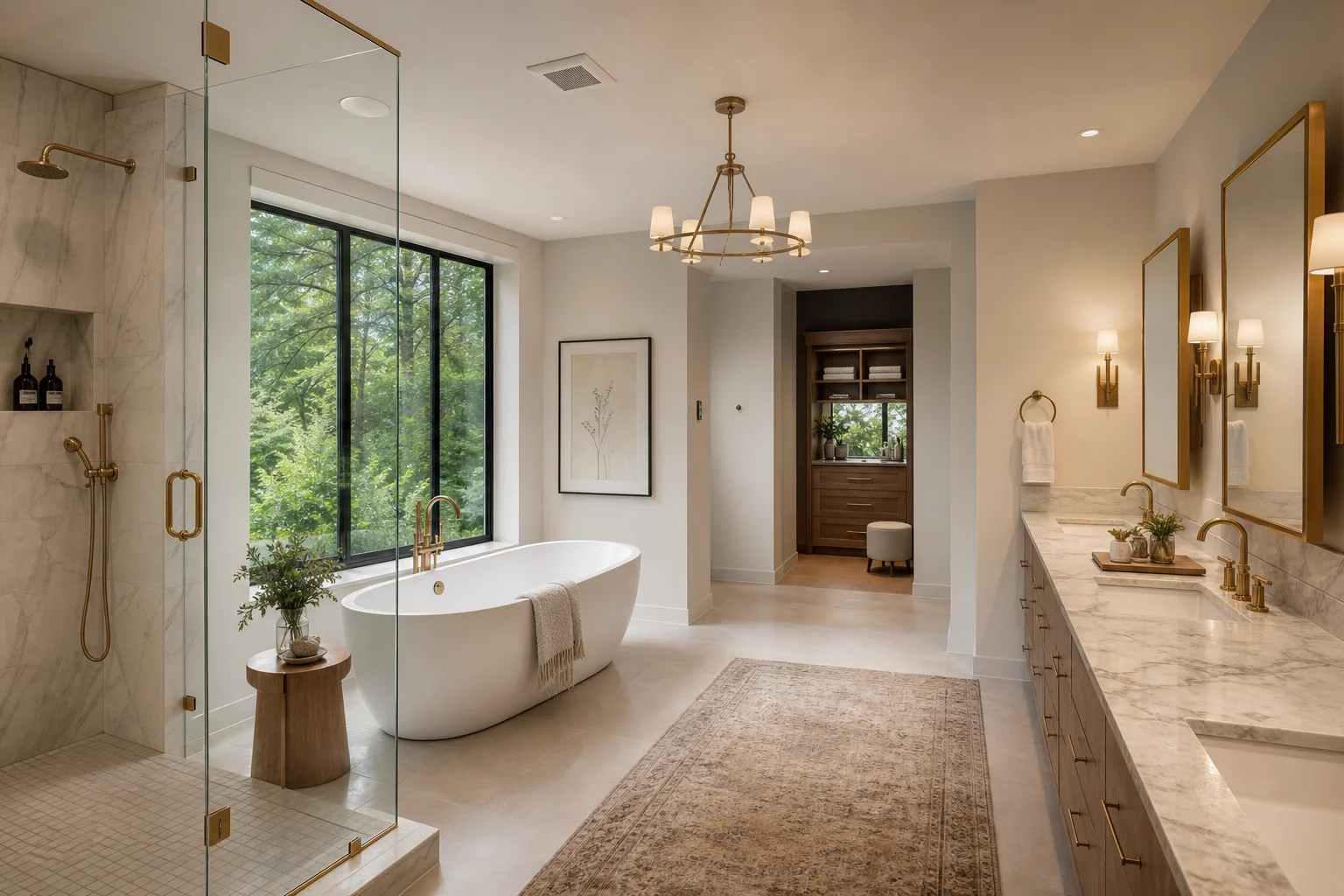
Mirror height is one of the most consequential decisions in a bathroom and one of the least considered. A mirror installed at what contractors call standard height is centered for a person of average height standing at an average vanity. For someone four inches taller, that means crouching slightly or seeing only chest and chin. For someone four inches shorter, it means looking up at their own forehead. Neither household member registers this as a design failure immediately. They adapt. And then they live with a small indignity every morning for as long as they own the house.
The solution is not complicated. It requires one conversation and one measurement.
Why Standard Height Exists and Why It Is Wrong for Most Households
A standard contractor default for bathroom mirror height places the bottom edge of the mirror approximately forty inches above the finished floor, with the assumption that the person using it stands somewhere between five feet four and five feet eight. That default was derived from a set of design rules developed when bathroom layouts were more uniform, users were imagined to be one person of one height, and the range of adjustability in a residential finish was limited.
The problem with the default is that it optimizes for an imaginary average and serves almost no one precisely. A person who is five feet eleven will see the mirror bottom at about armpit height and spend every morning bending their knees slightly to center their face in the glass. A person who is five feet two will see the top of their head and need to stand on their toes to check their full hairline. Both users are using the same mirror at the same height. Both have adapted to a small but persistent ergonomic failure.
The principle for correct mirror placement is straightforward: the center of the mirror should be at approximately eye level for the primary user, or at the midpoint of the eye-level range if the household has significant height variation. For a person who is five feet ten, eye level standing at a vanity is approximately sixty-four to sixty-six inches above the floor, depending on posture and vanity height. The mirror center should be near that number. For a person who is five feet three, eye level is roughly fifty-eight to sixty inches. Those are different numbers, and a mirror center that serves one serves the other only partially.
The Vanity Height Complicates It
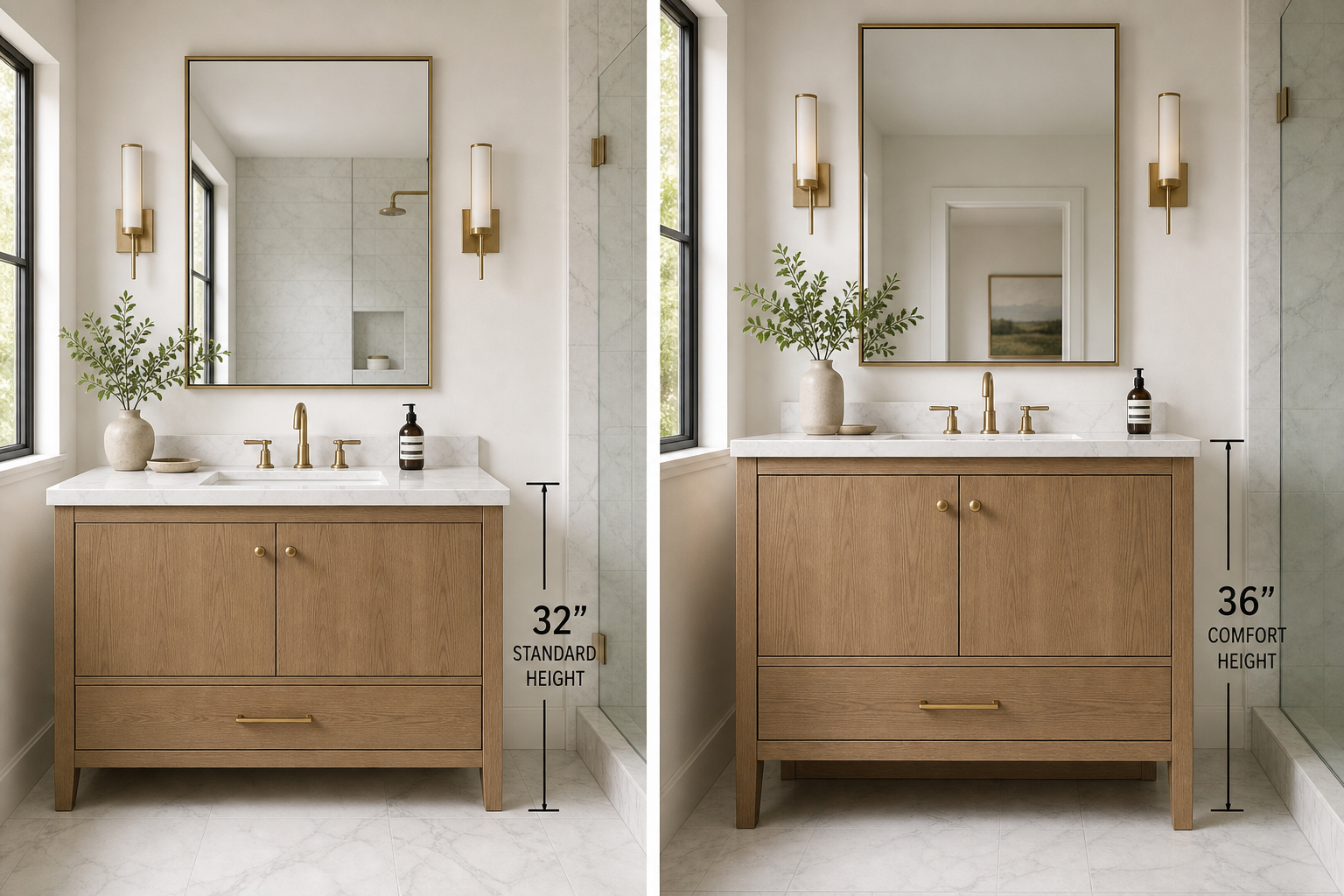
The relationship between vanity height and mirror height is often ignored, which produces a second layer of the same problem. Standard vanity height in residential construction is thirty-two to thirty-four inches. Some designers now specify thirty-six inches, particularly for taller users or for households that prefer a more upright working position. The vanity height changes where the user's face lands relative to the floor, which changes where the mirror should be.
A mirror hung at forty inches from the floor above a thirty-two-inch vanity is already low. The same mirror above a thirty-six-inch vanity is lower still relative to the user standing at it. The face, the hands, and the items on the counter all shift when the vanity height shifts, and the mirror specification needs to move accordingly.
If the vanity is customized or non-standard, the default mirror mounting height almost certainly needs adjustment. If the vanity is a standard unit and the household has users of significantly different heights, the mirror height needs a deliberate decision rather than a default.
The Lightbulb: Width Is Part of the Same Problem
Most of the attention in bathroom mirror specification goes to height, and height is the more critical variable for face alignment. But mirror width carries its own ergonomic weight that gets almost no attention in typical residential design.
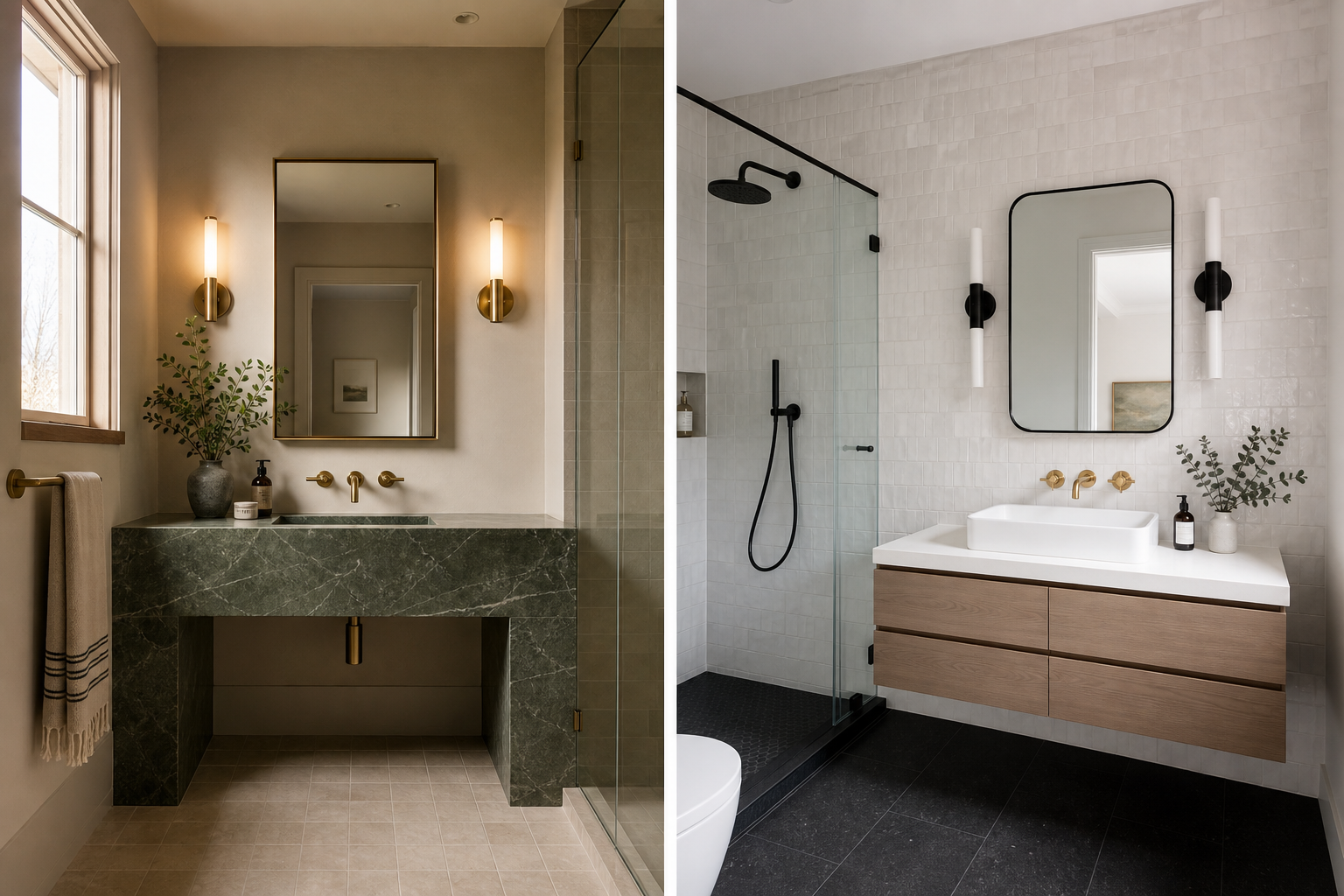
A mirror that is narrower than the person's shoulder width creates an experience of tunnel vision at the vanity. The user cannot see what is happening at the periphery of their face without turning, which makes tasks like checking the jaw line while shaving or seeing the sides of a hairdo require a second move. A mirror that extends to or slightly beyond the width of the fixture below it allows peripheral awareness without requiring the user to move.
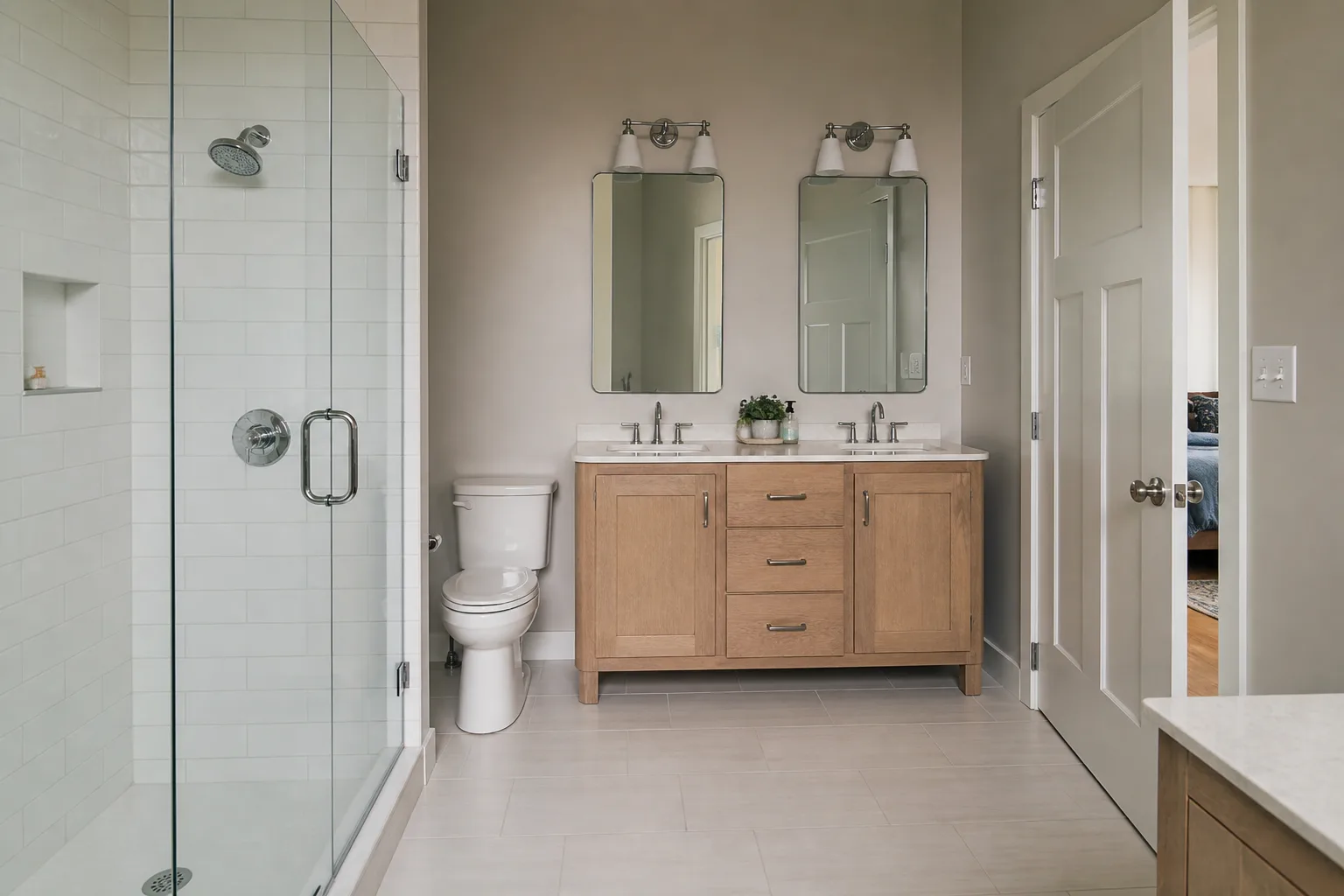
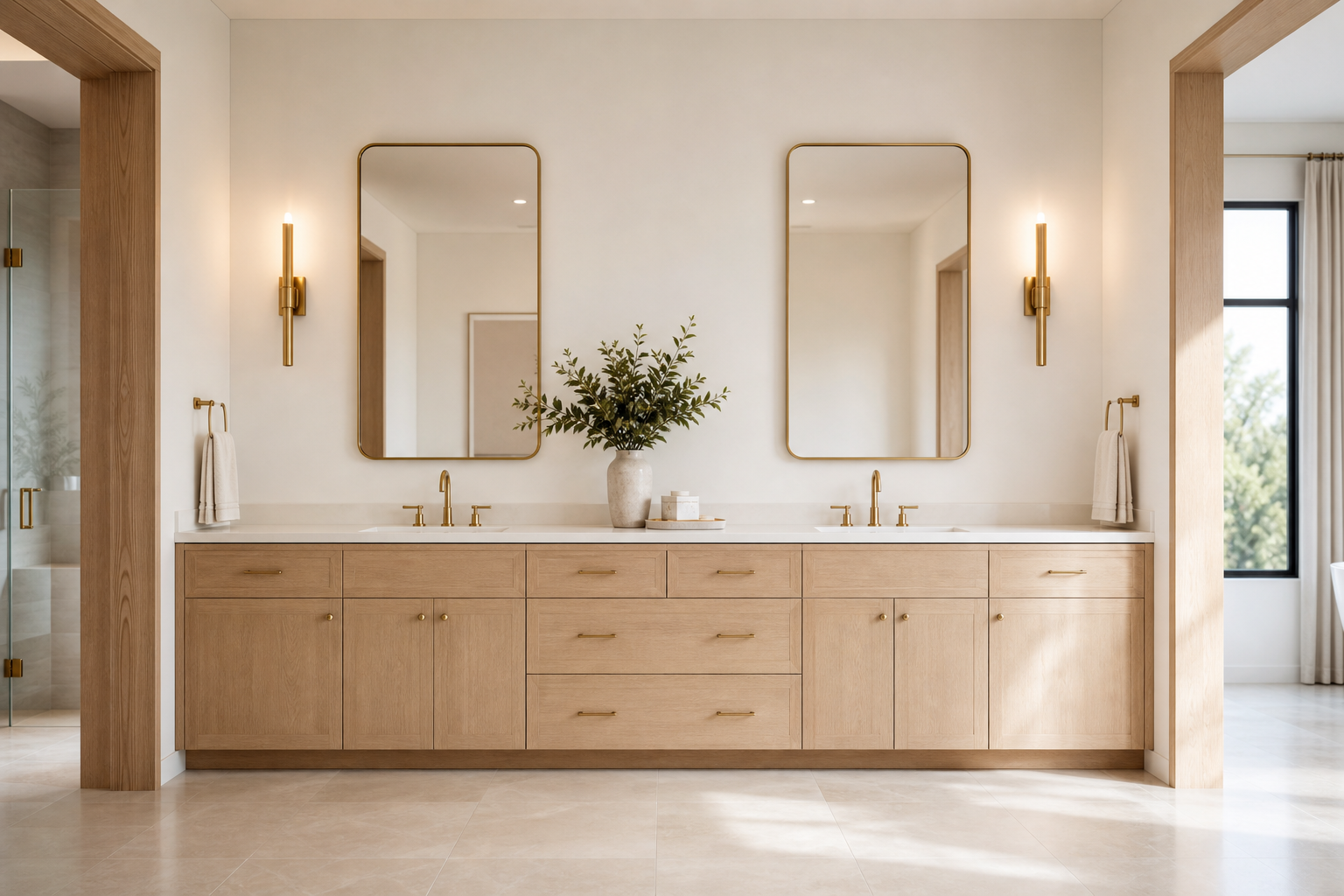
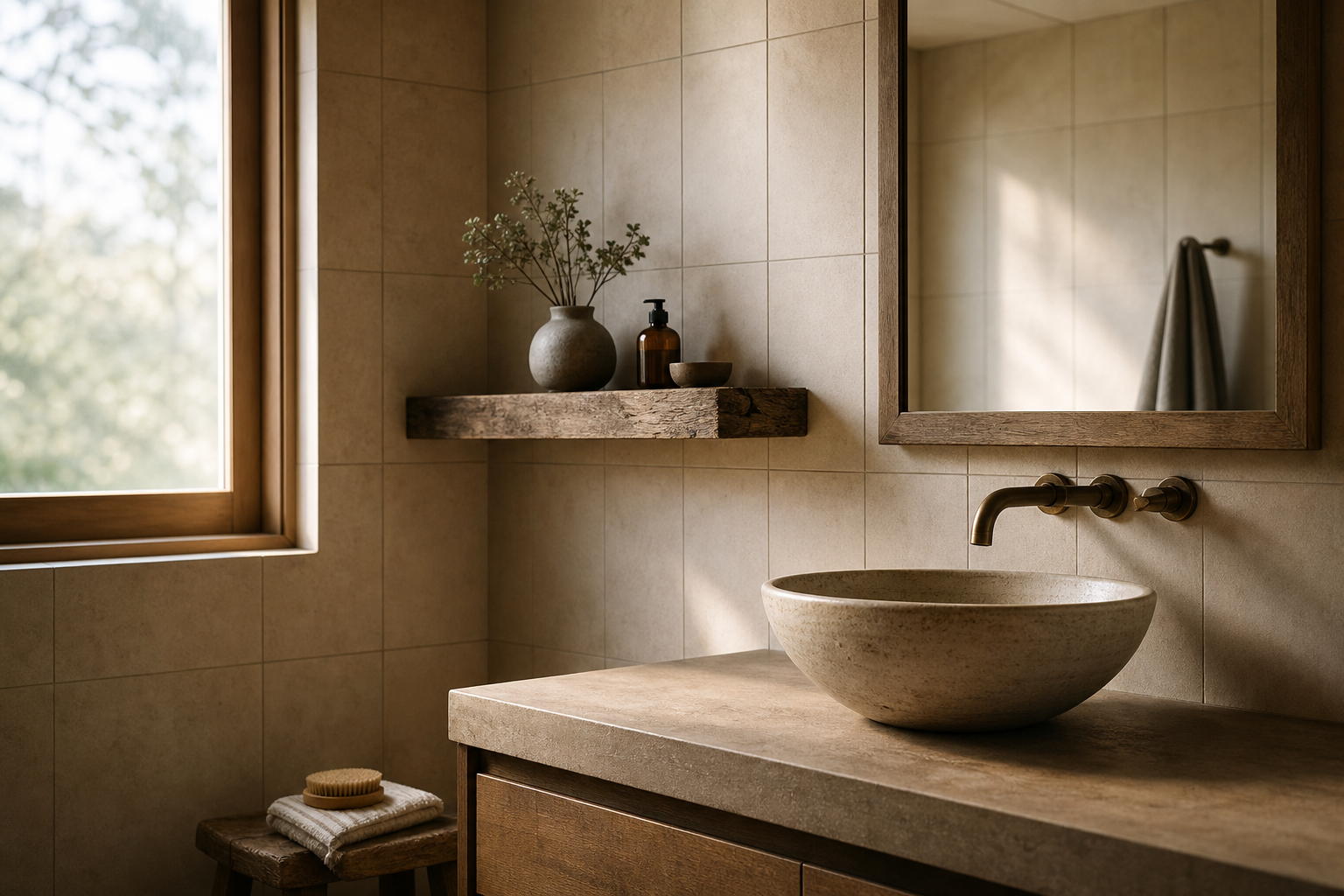
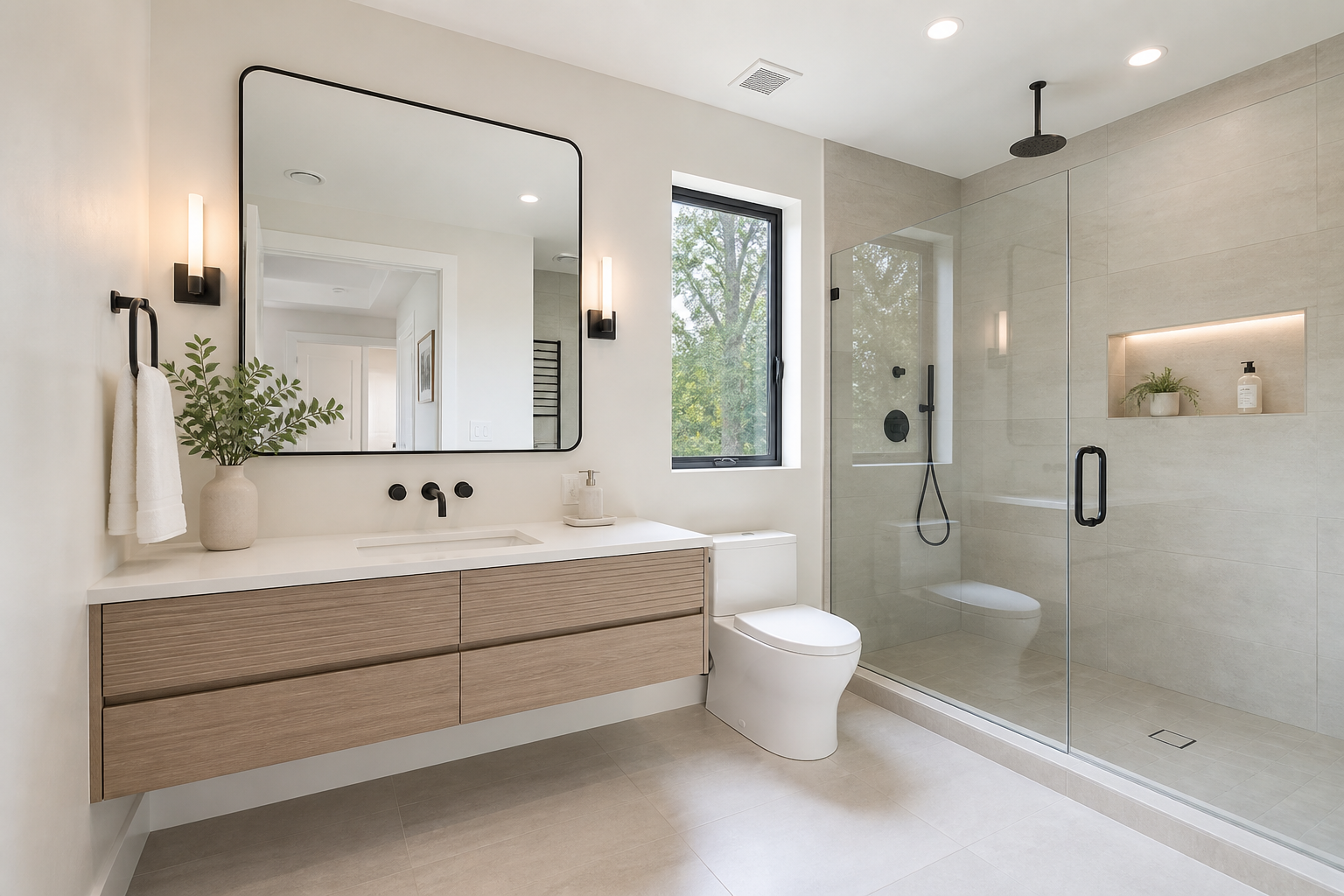
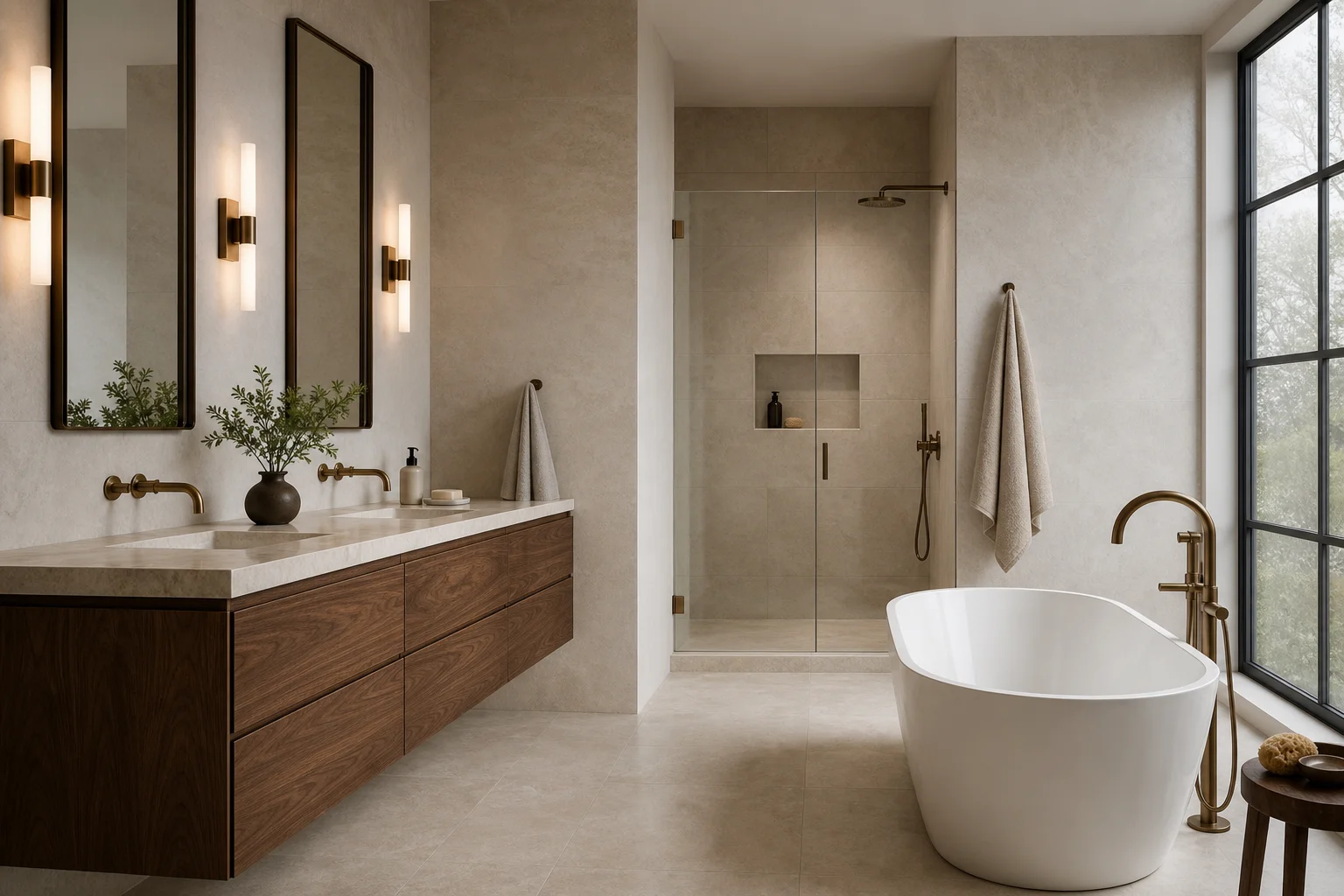
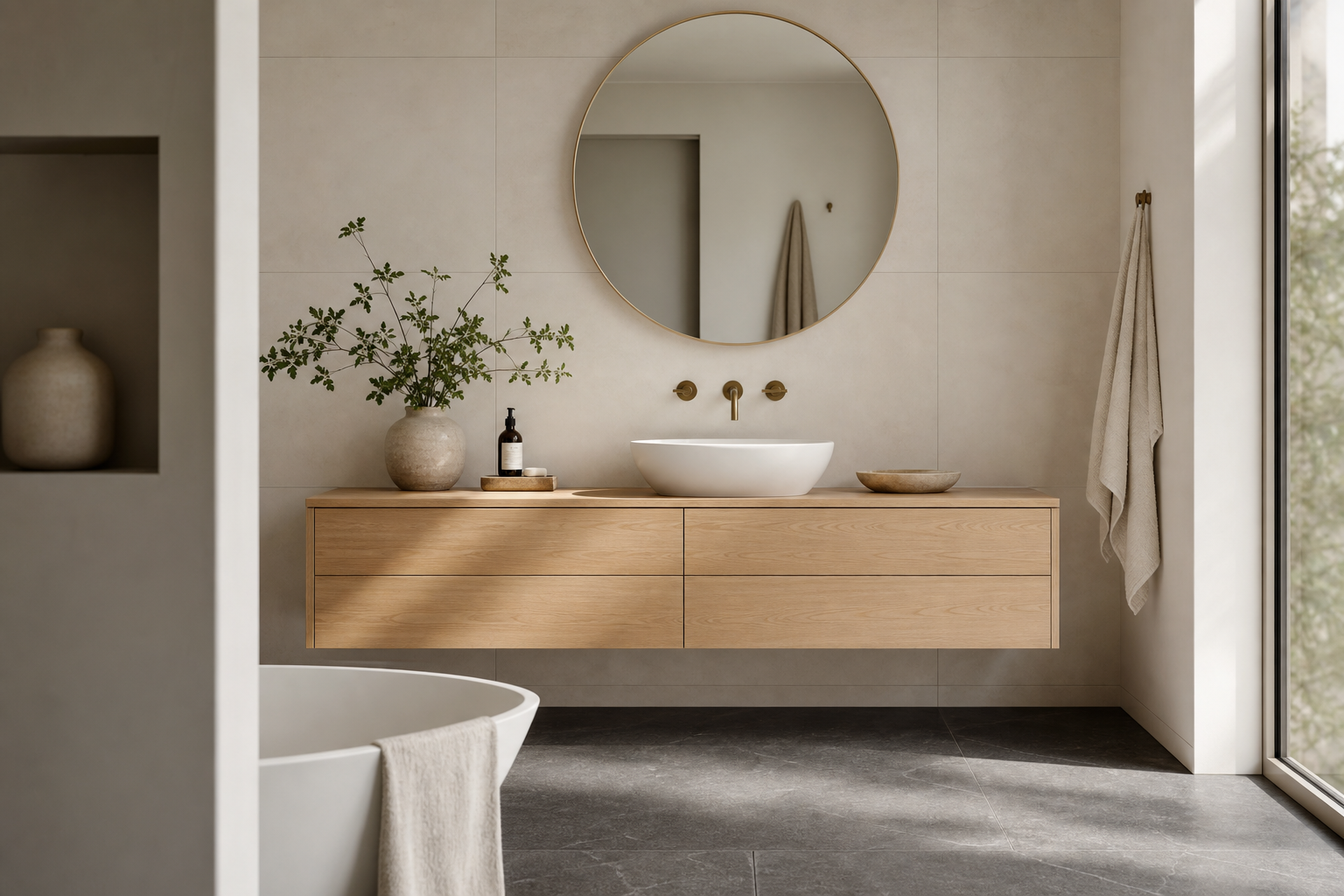
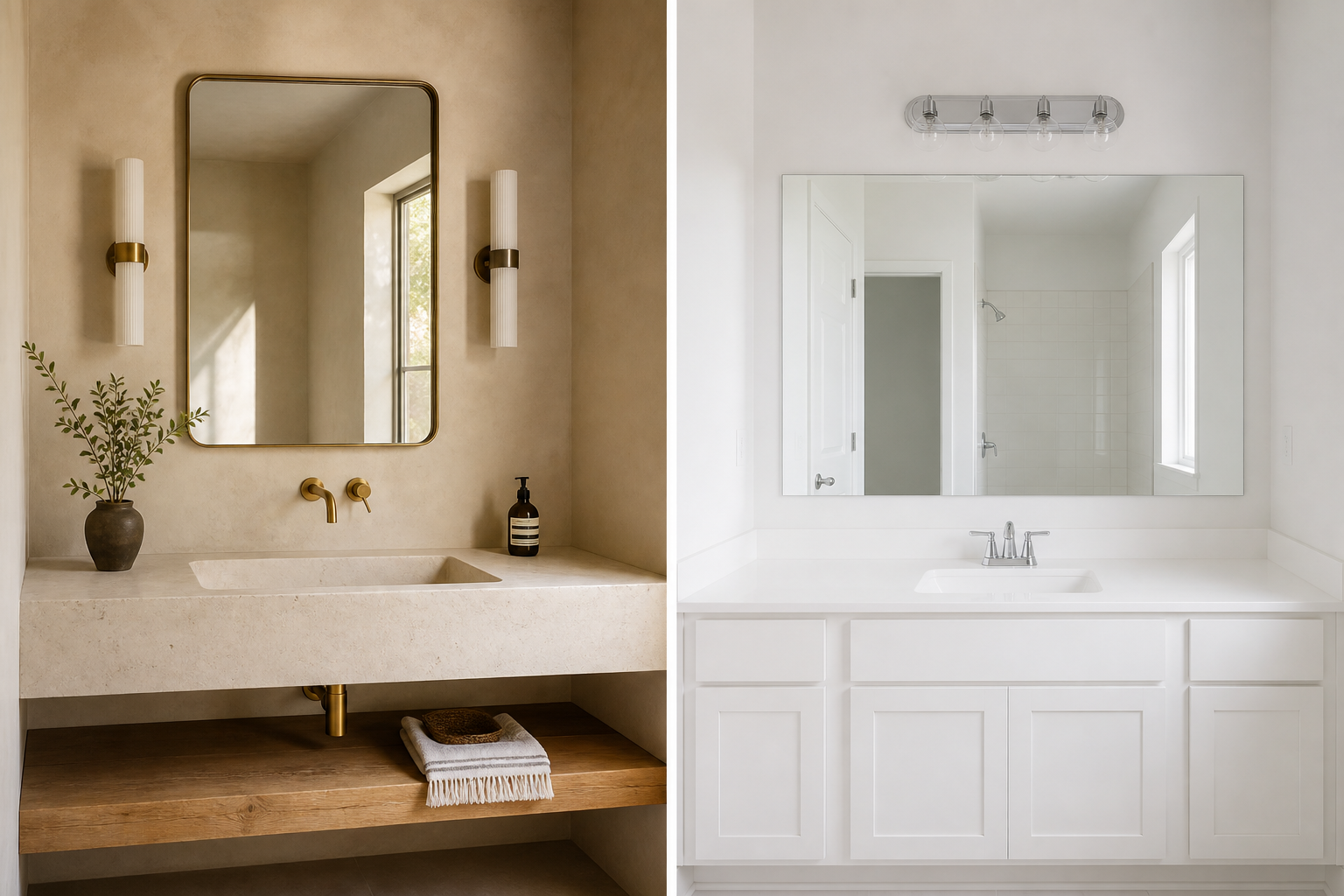
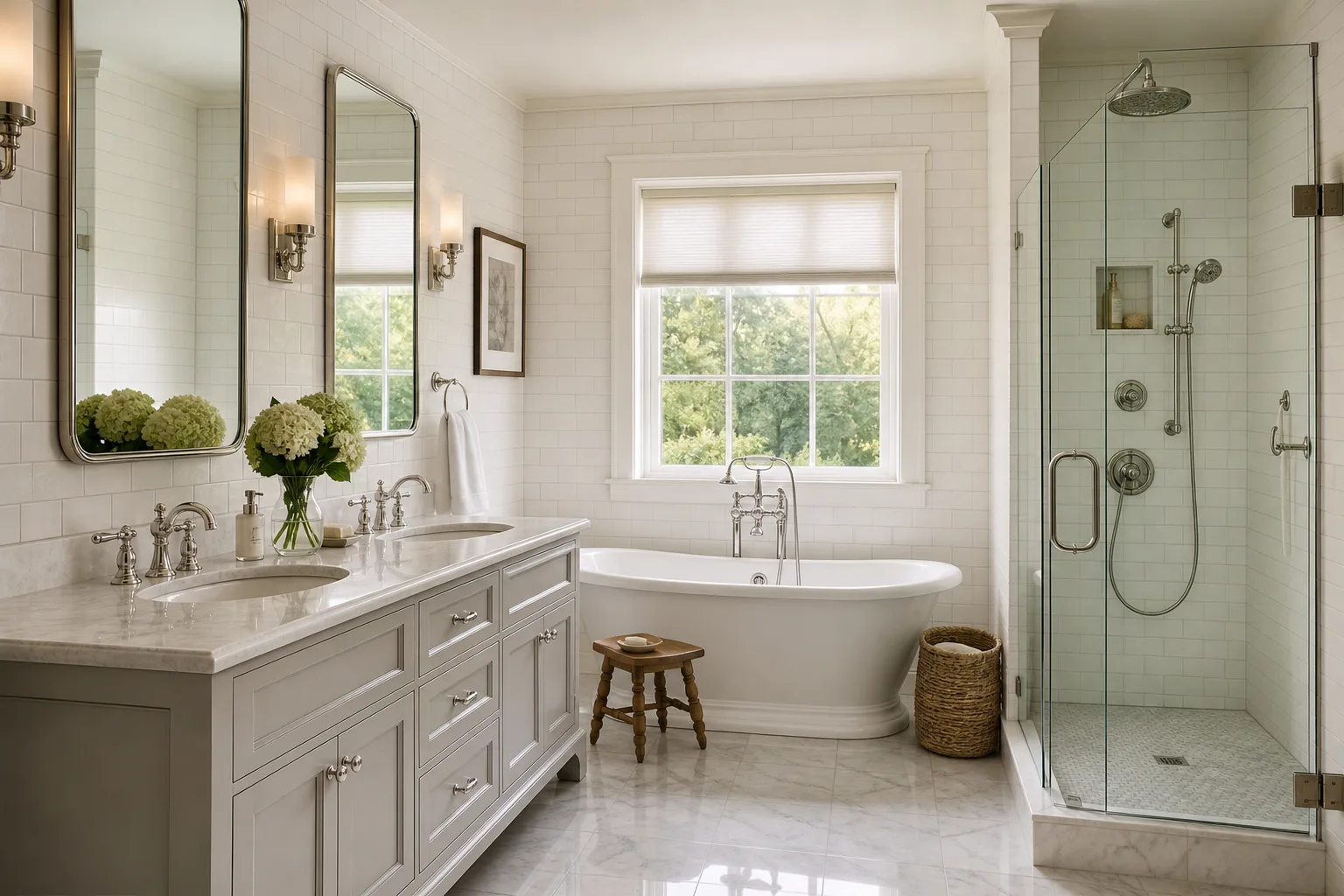
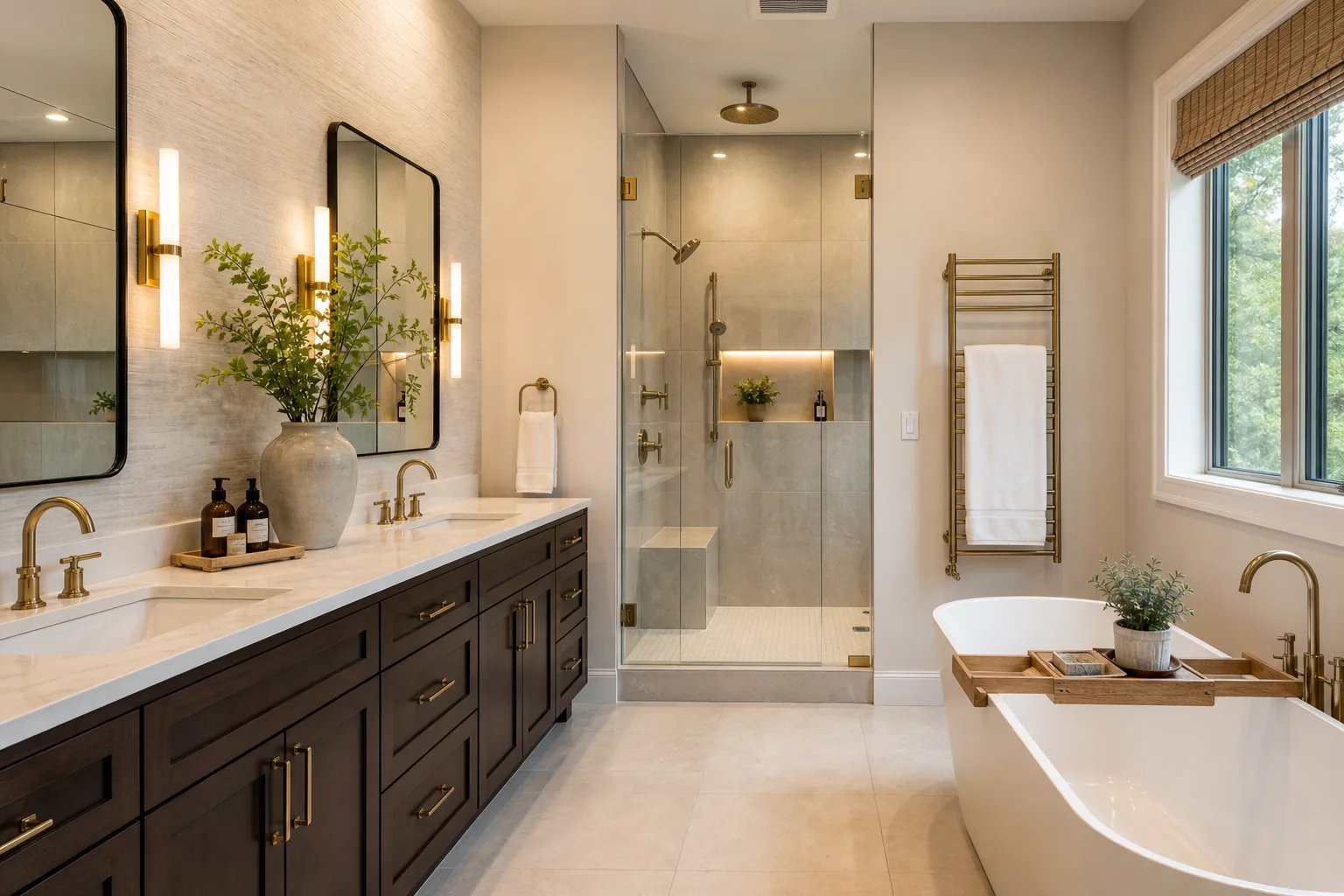
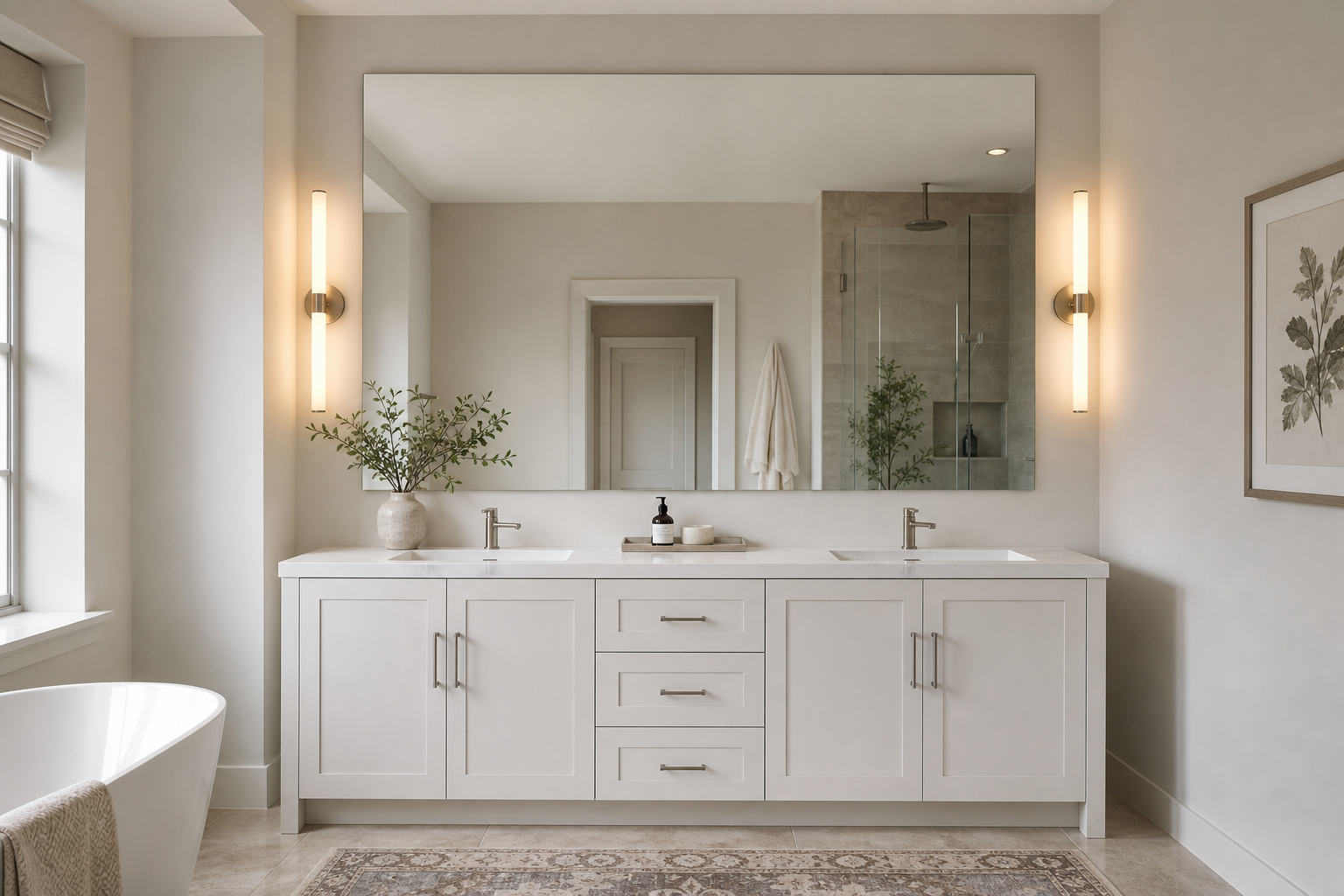
The NKBA recommends that a mirror above a single vanity match or exceed the width of the fixture, stopping short of any adjacent walls by at least a few inches. Above a double vanity, the guideline has been to run a mirror the full width of the fixture, or to use two individual mirrors positioned over each sink bowl. Two individual mirrors allow different mounting heights, which is the correct solution for a household where two users of meaningfully different heights share the vanity.
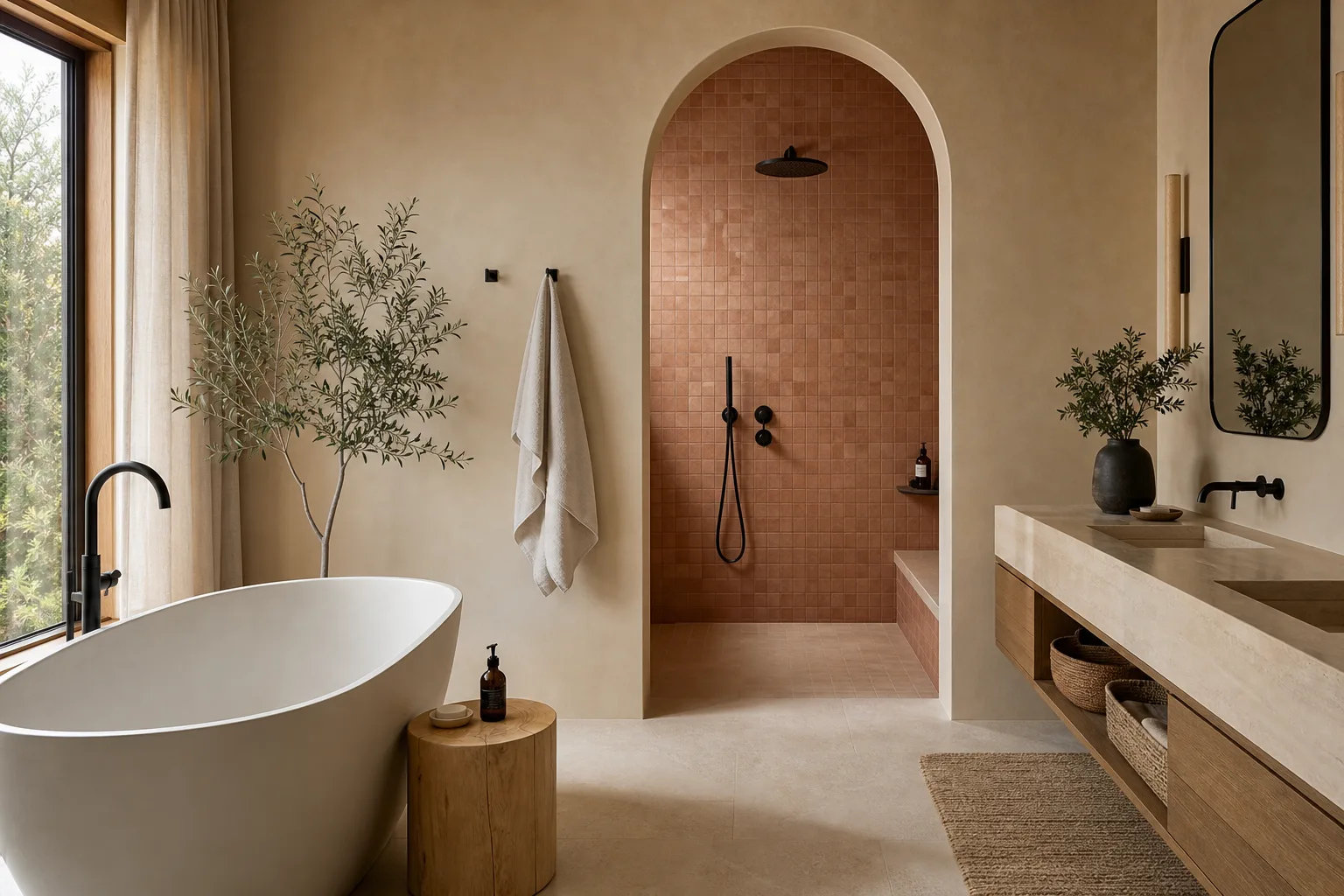
The two-mirror approach above a double sink is common in designed bathrooms and is almost always used for compositional reasons. It looks intentional. What most people do not realize is that it also solves the height problem entirely, because each mirror can be mounted independently at the right center height for its primary user. The mirror that reads as a design choice and the mirror that solves an ergonomic problem are the same mirror.
Lighting and Mirror Interact
Mirror height is not a solo specification. It interacts directly with bathroom lighting in ways that amplify both good and bad placements.
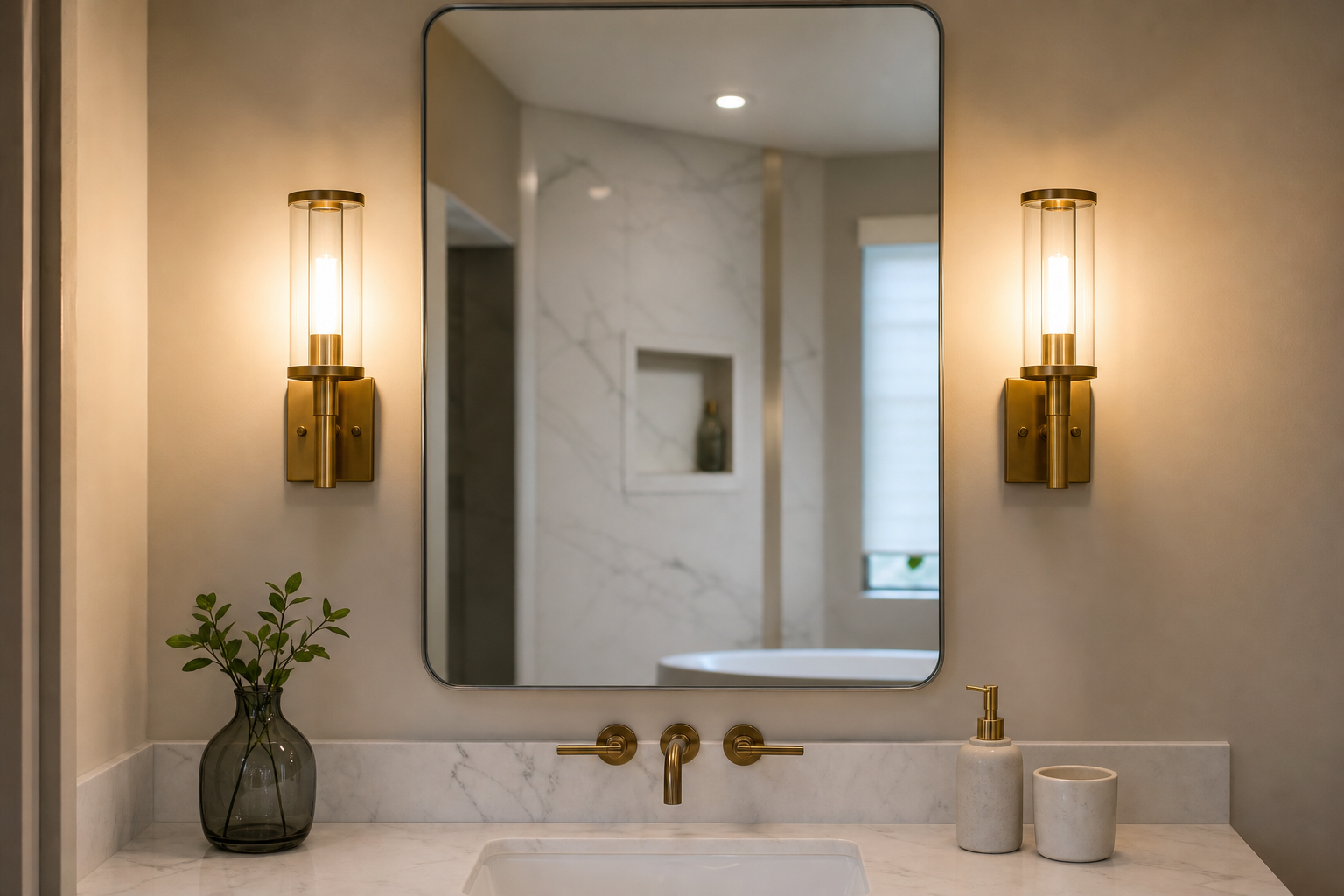
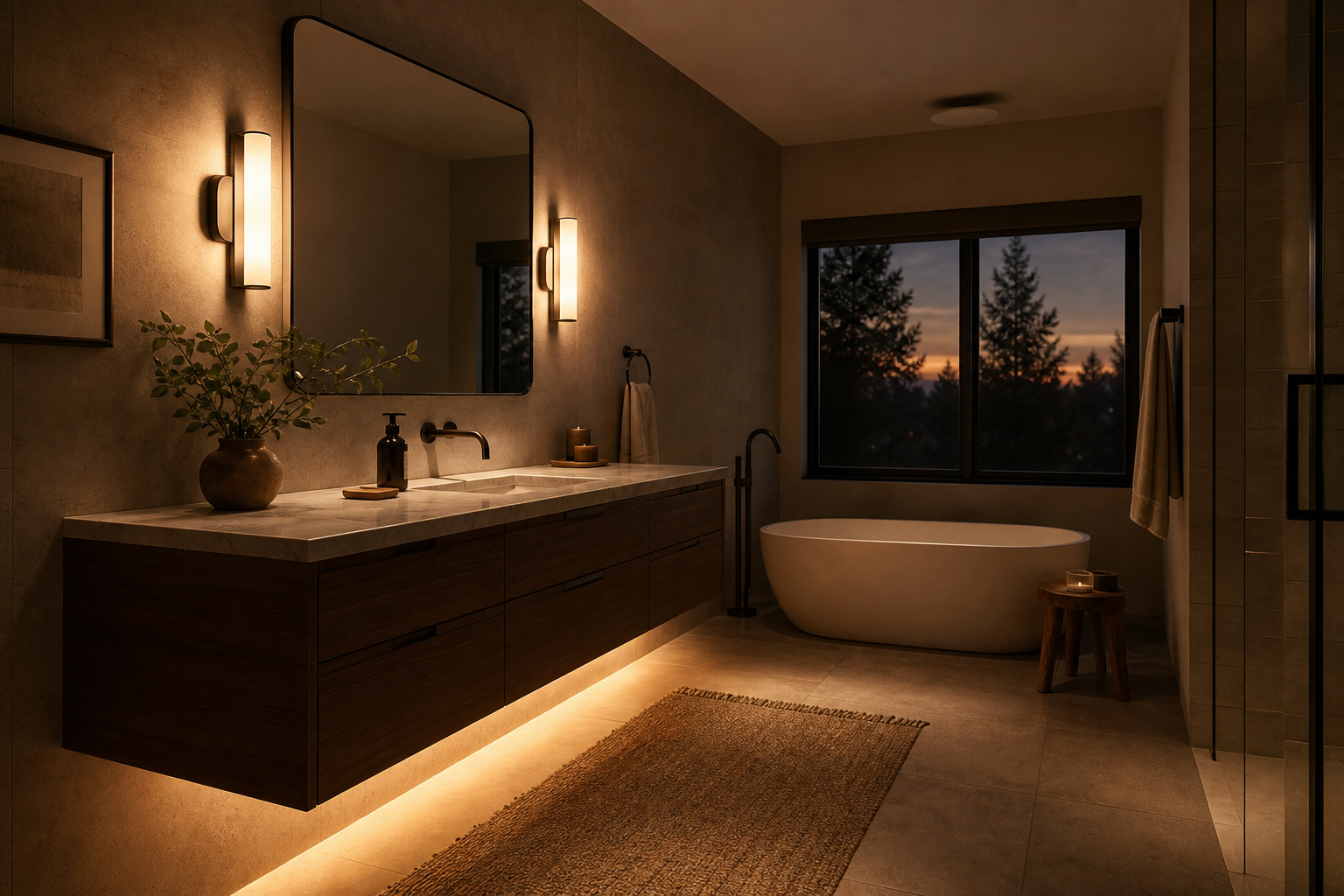
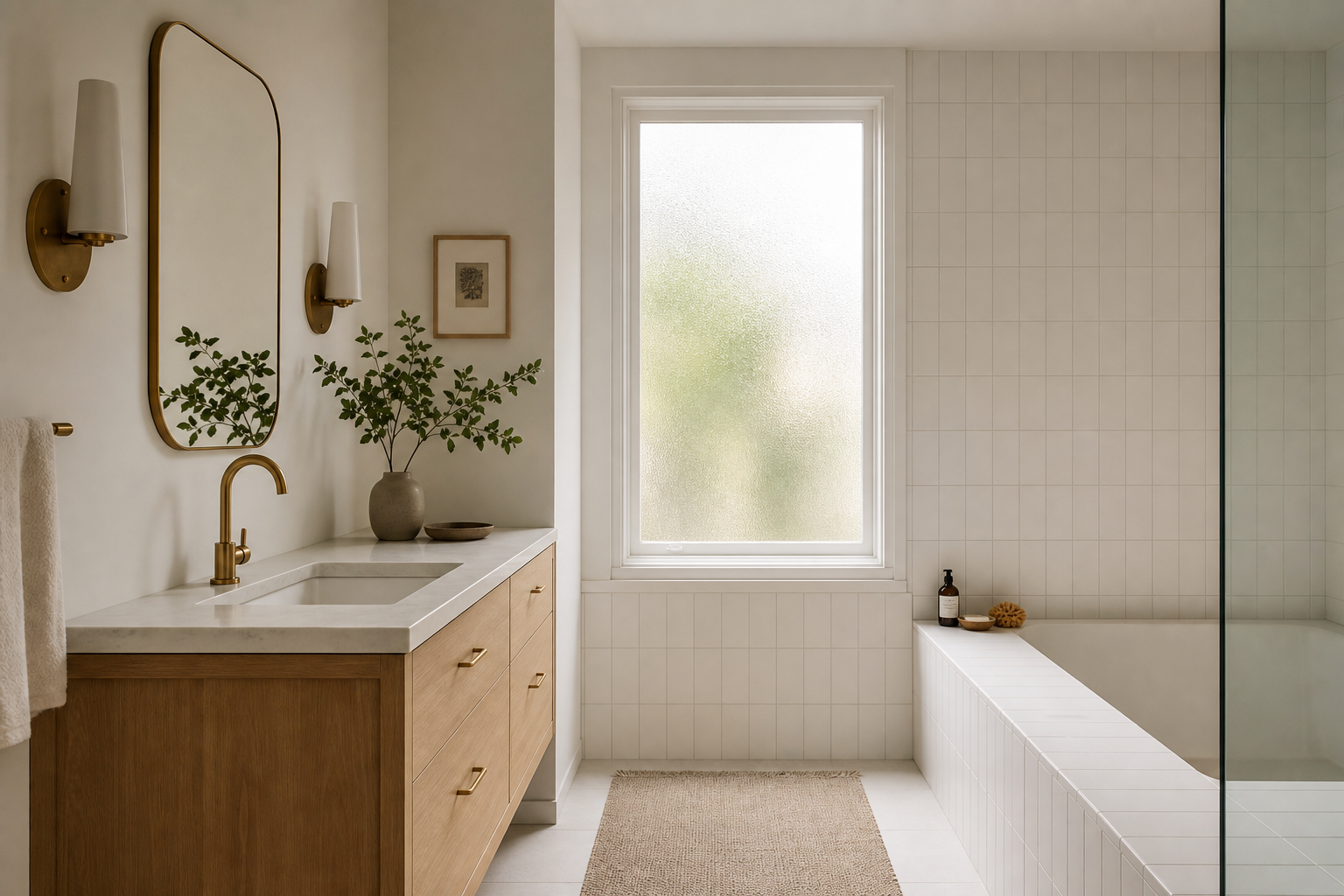
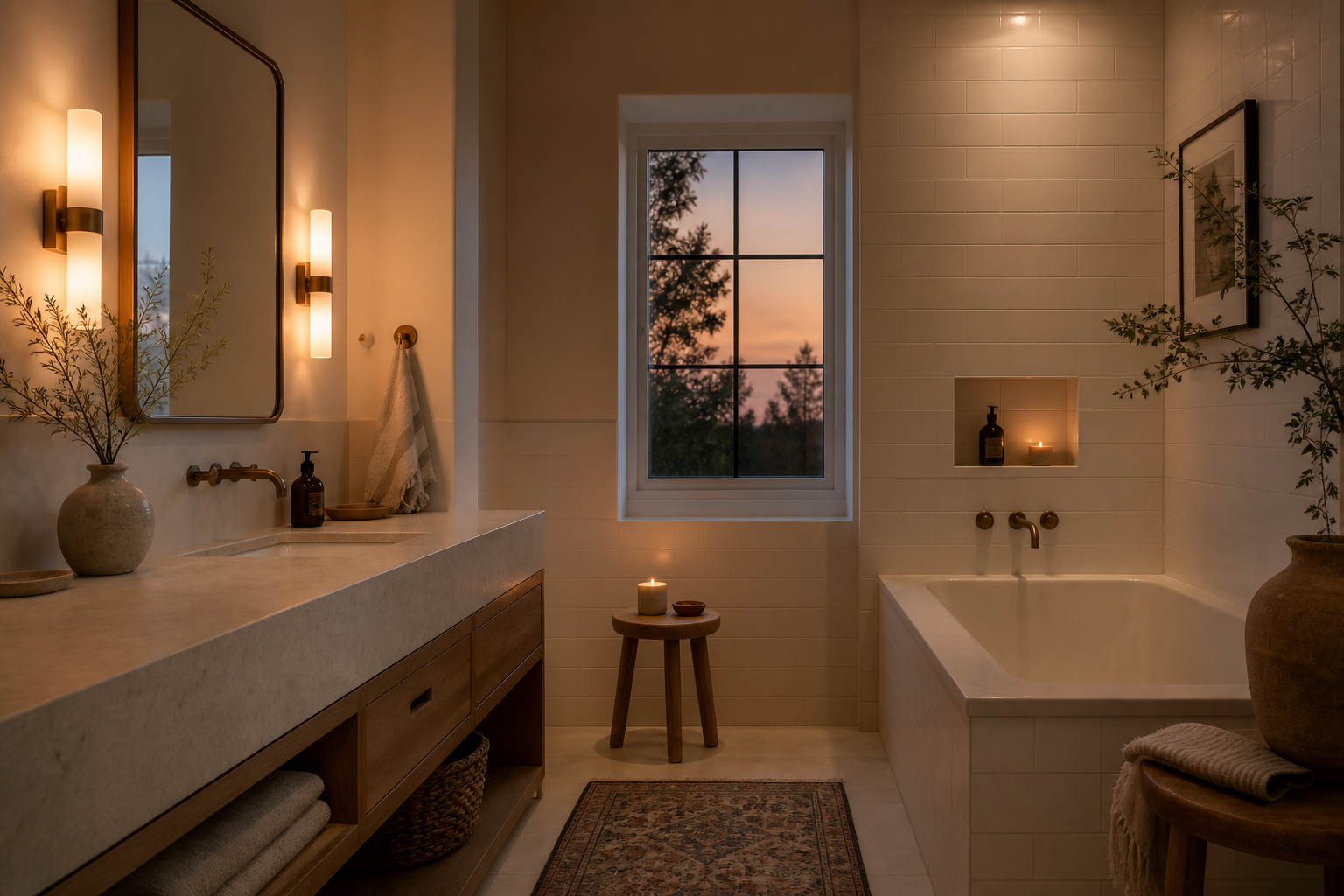
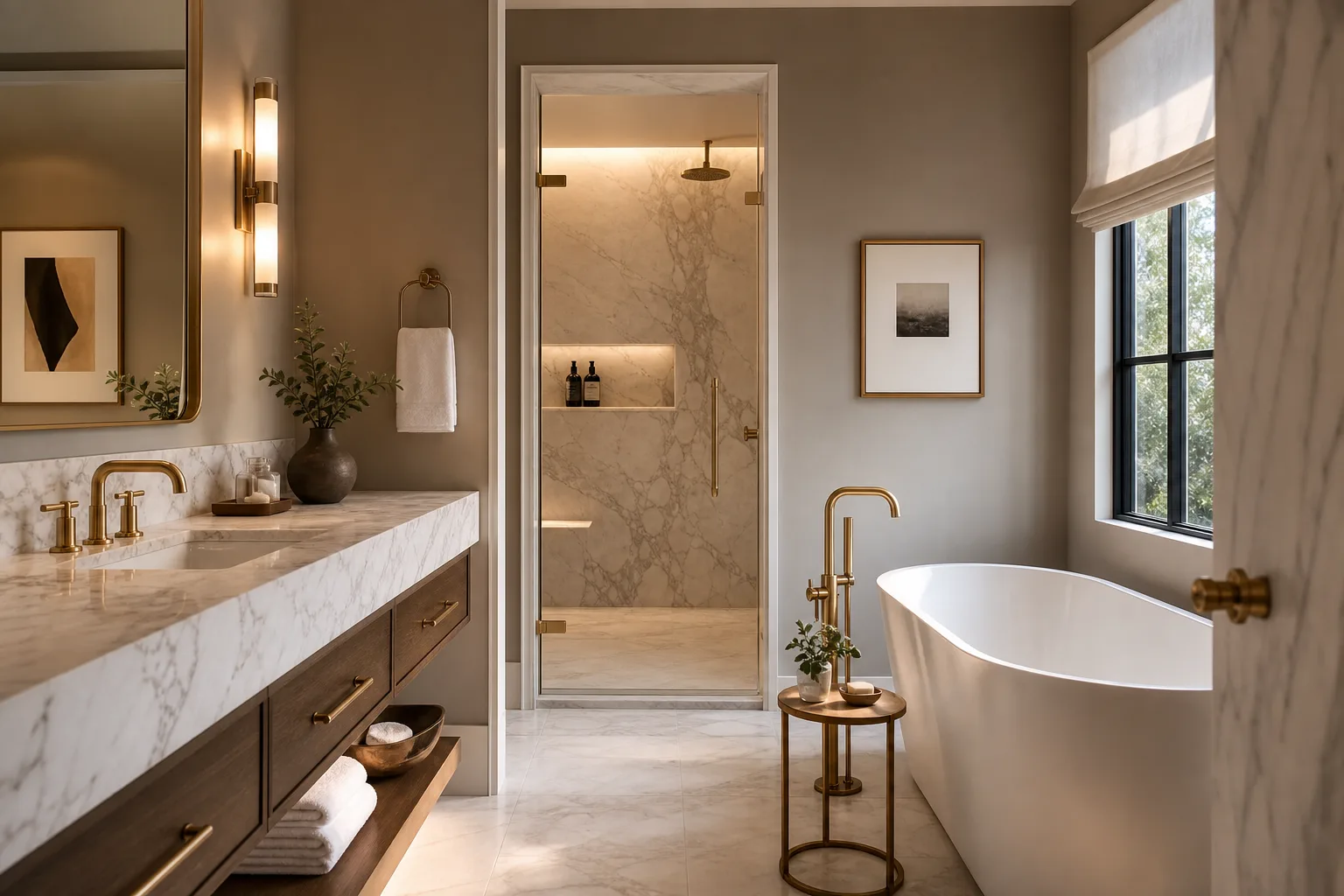
Side lighting, sconces flanking a mirror rather than a fixture mounted above it, works best when the sconce center is at approximately the same height as the user's face, typically sixty to sixty-five inches above the floor. When the mirror is mounted correctly for the user's height, side sconces at face height illuminate the face rather than the wall beside it. When the mirror is mounted too low, side sconces end up illuminating the user's shoulders.
Overhead lighting above a mirror, a bar or fixture mounted above the frame, casts downward light. If the mirror top is too low, the overhead fixture shines on top of the head and creates deep shadows under the chin and nose. If the mirror extends high enough that the fixture is above the face plane rather than just above the mirror frame, the light becomes more useful. The geometry of the lighting and the geometry of the mirror height are the same geometry.
The practical implication is that mirror height should be specified before the rough-in locations for lighting are fixed. In many residential projects, that sequence is reversed. The electrical is roughed in at a default height. The mirror is installed later at whatever fits between the electrical and the counter. The result is a lighting and mirror combination that neither designer chose but that both inherited from a sequence of defaults.
The Household Height Conversation
In a single-occupant bathroom, mirror height is simple: center it on the eye level of the person who uses it.
In a shared bathroom, it requires an explicit decision about who the primary user is and how to serve the other. The two-mirror approach resolves the problem but requires the fixture below to support two mirrors, which means a double vanity. In a single-vanity bathroom shared by users of significantly different heights, the options are less clean.
One reasonable approach is to set the mirror center at the midpoint between the two users' eye levels. A person who is five feet three and a person who is six feet one will land at approximately fifty-nine inches and sixty-seven inches respectively for eye level. The midpoint is sixty-three inches. Neither user gets a perfectly centered view, but neither gets a dramatically compromised one.
A second approach is to determine who does more grooming work at the mirror and set the height for that user, accepting that the other will adapt. This is an honest calculation that most households can make for themselves.
A third approach is an adjustable mirror, typically a floor-length or tall frameless mirror mounted on a track or pivot. This adds complexity and cost to a detail that is otherwise simple, and it suits some design directions better than others.
The more important point is that the conversation has to happen. Without it, the contractor installs the mirror at a default height, the household adapts, and the adaptation becomes invisible within a few weeks. The mirror is technically present and technically functional. It just does not serve the people using it as well as it should, every day, for the life of the renovation.
When It Is Too Late to Adjust the Height
A mirror hung above a vanity backsplash at a standard tile height has its lower edge constrained by the tile. Moving the mirror up requires either a taller mirror or a gap between the tile and the mirror bottom, which is an awkward detail. Moving the mirror down into the tile line is not possible without re-tiling.
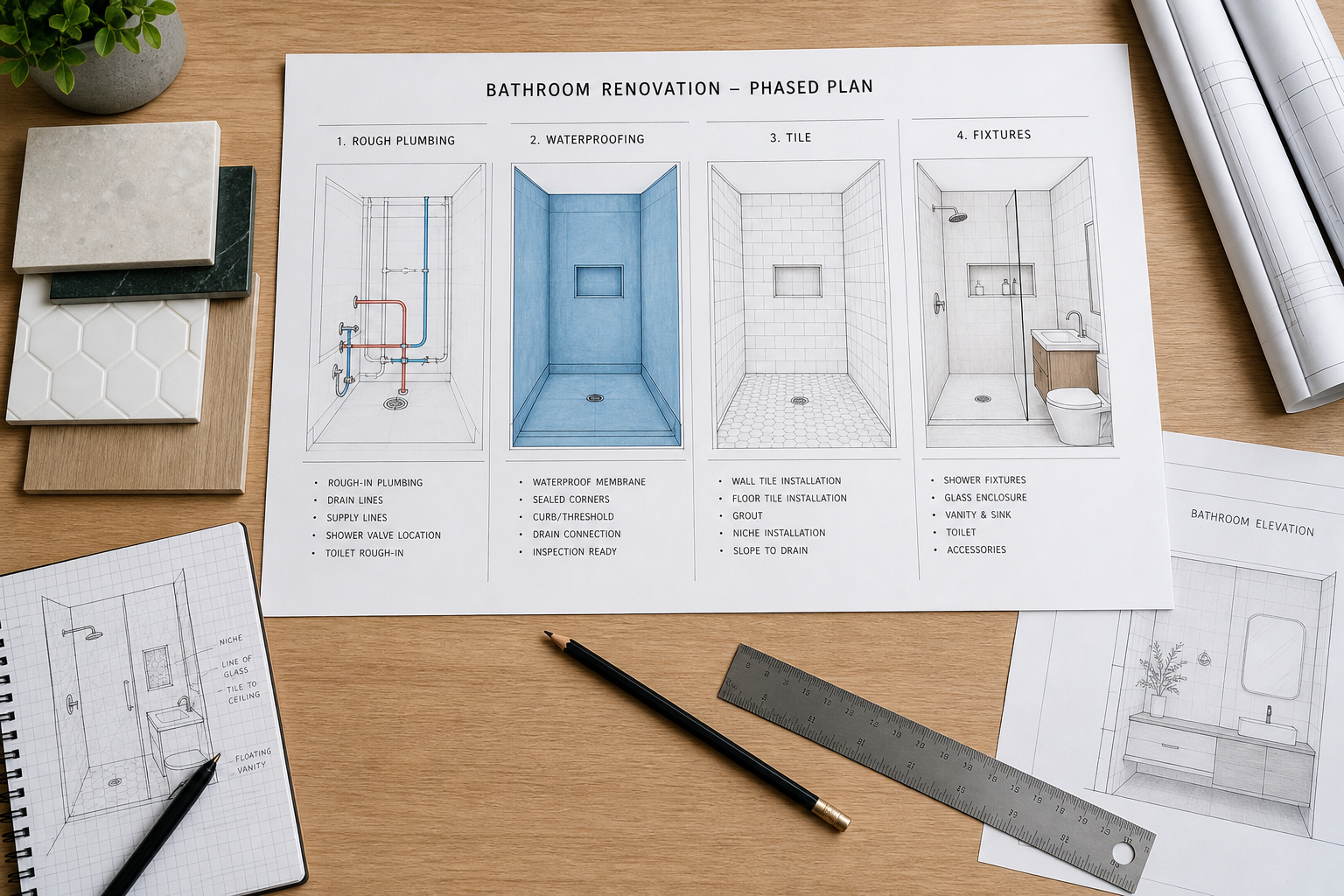
This is why mirror height should be specified during the tile planning phase, not after the tile is installed. The mirror height determines the upper limit of the tile field, or determines whether a gap or recessed reveal detail is needed at the top of the tile. If the backsplash tile runs to a specific height and the mirror bottom must clear it, the mirror bottom height is already fixed by the tile decision. The sequence matters.
For an existing bathroom where the tile is set and the mirror needs to move up, the practical solution is a taller mirror. A mirror that extends higher can have its center moved up by three or four inches without any tile work. The bottom edge lands at the same height, but more glass extends upward, raising the visible field and the usable upper reflection zone.
Mirror height and width are on every lighting drawing we produce. We ask the height of each adult user before specifying where the mirror center lands.