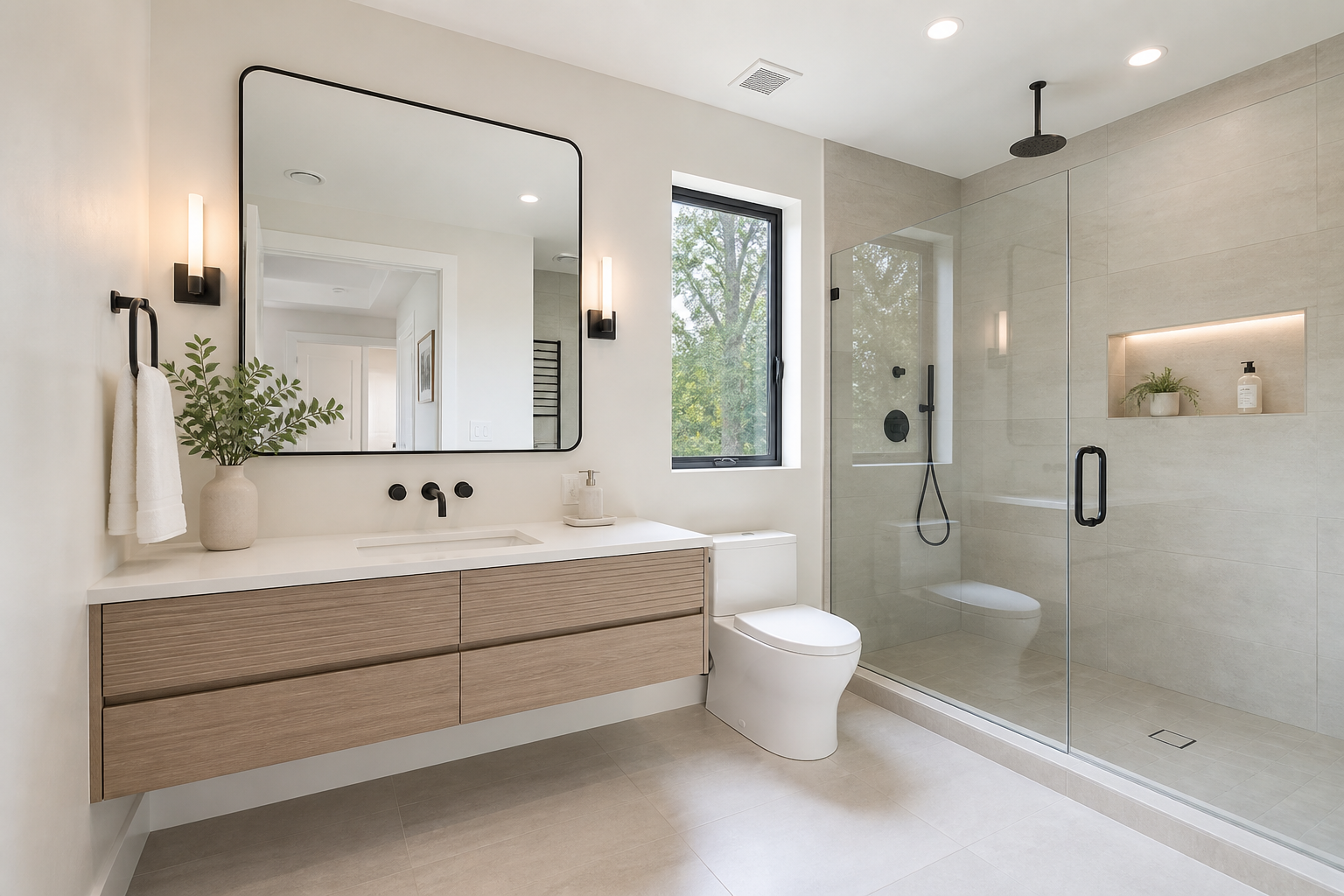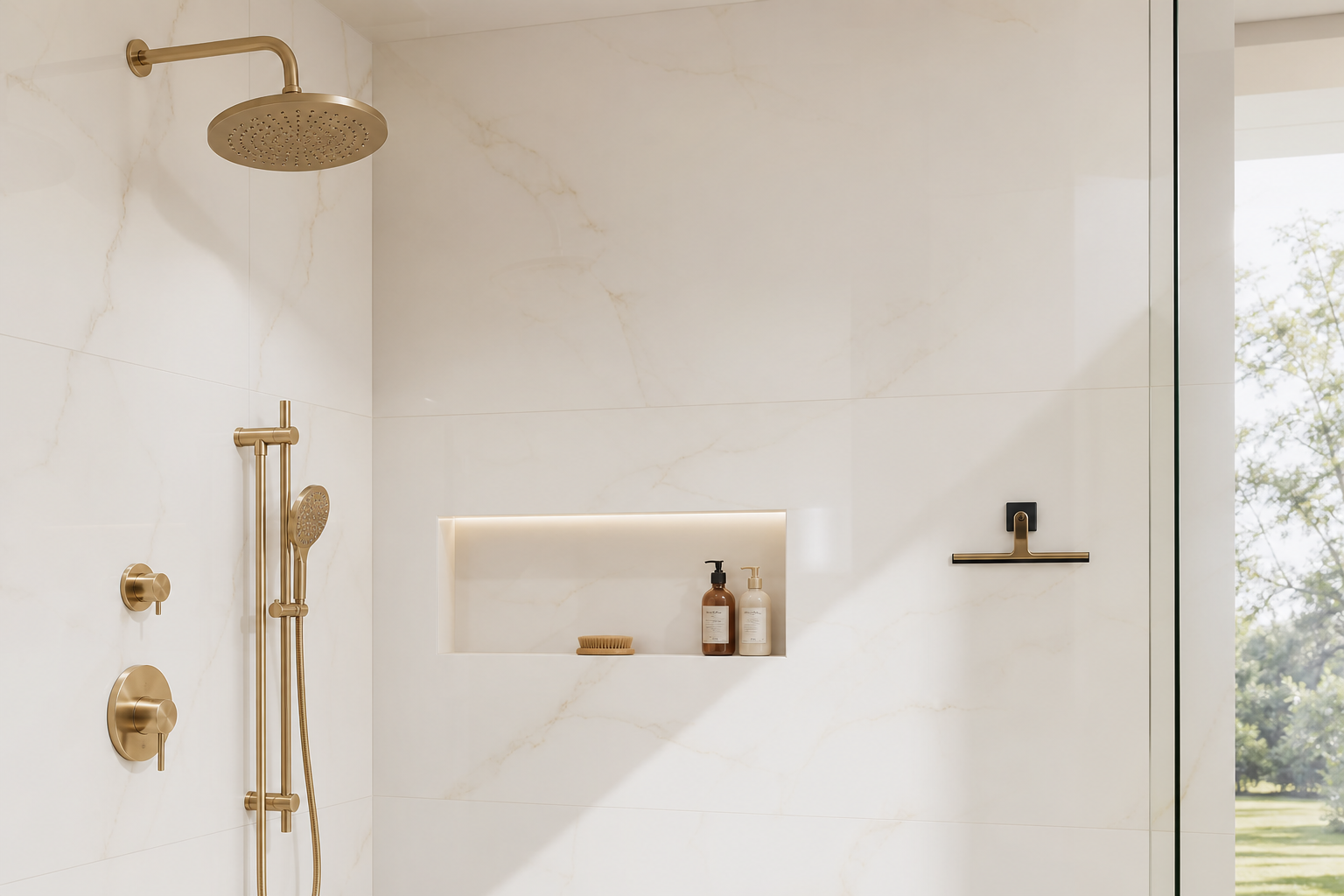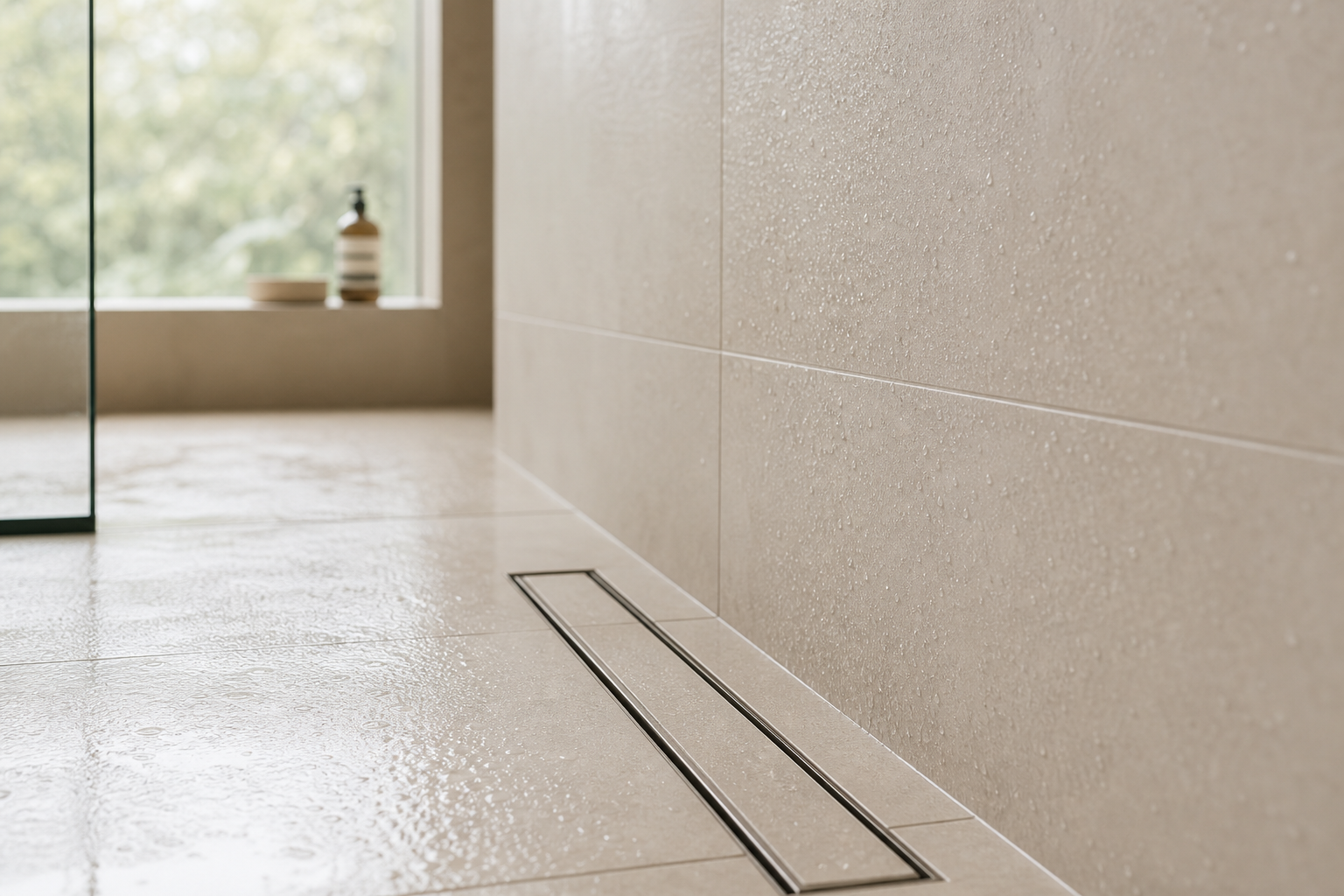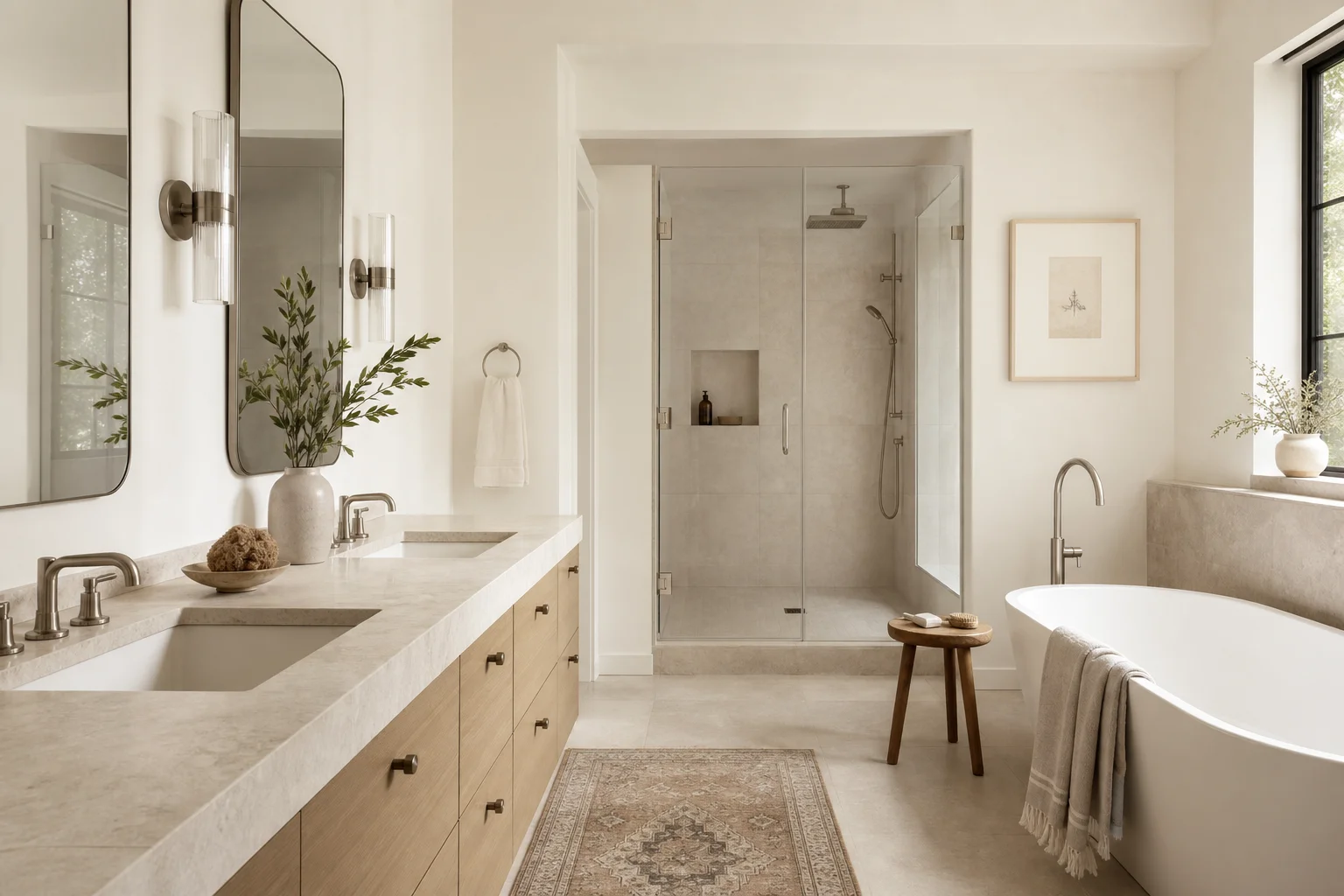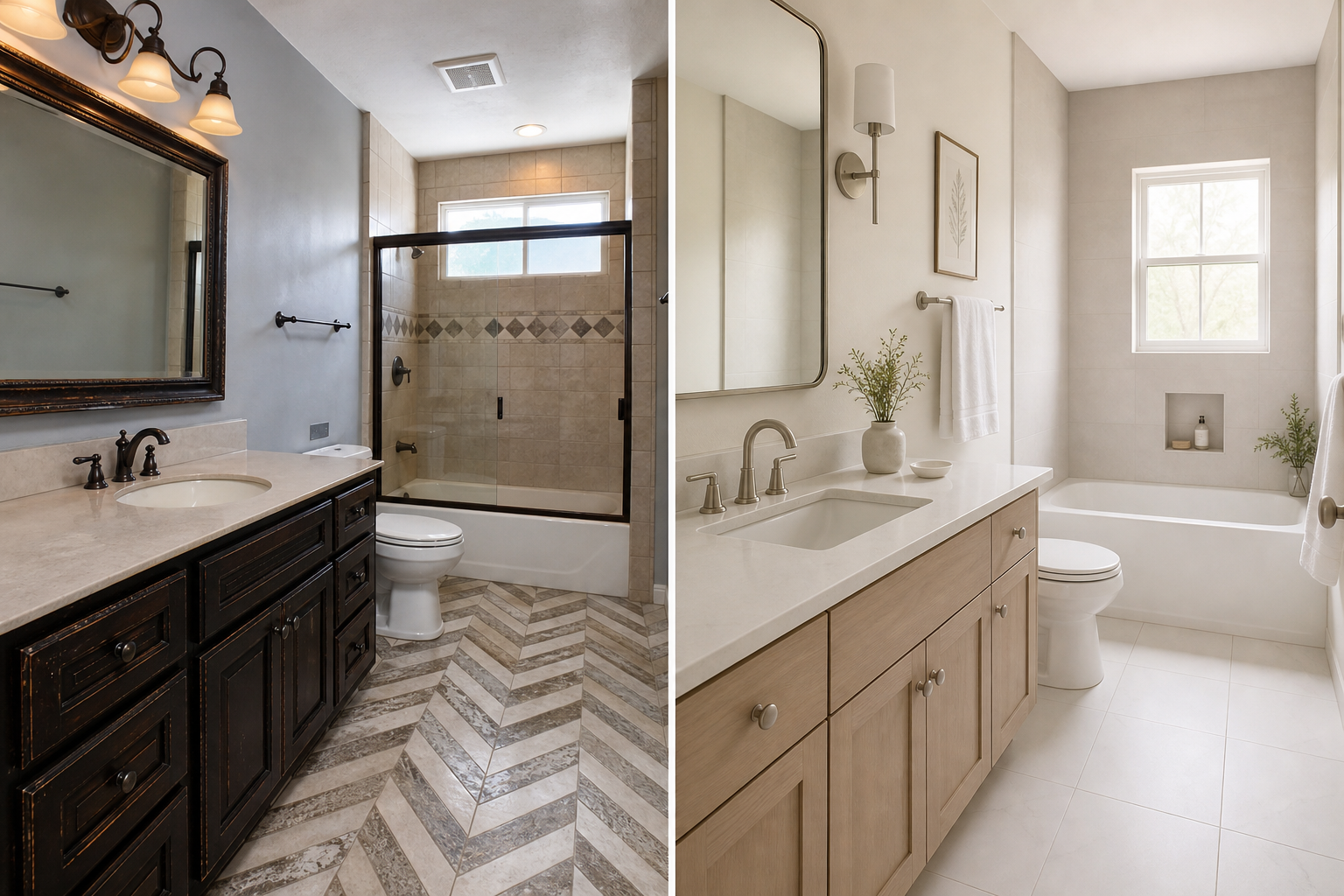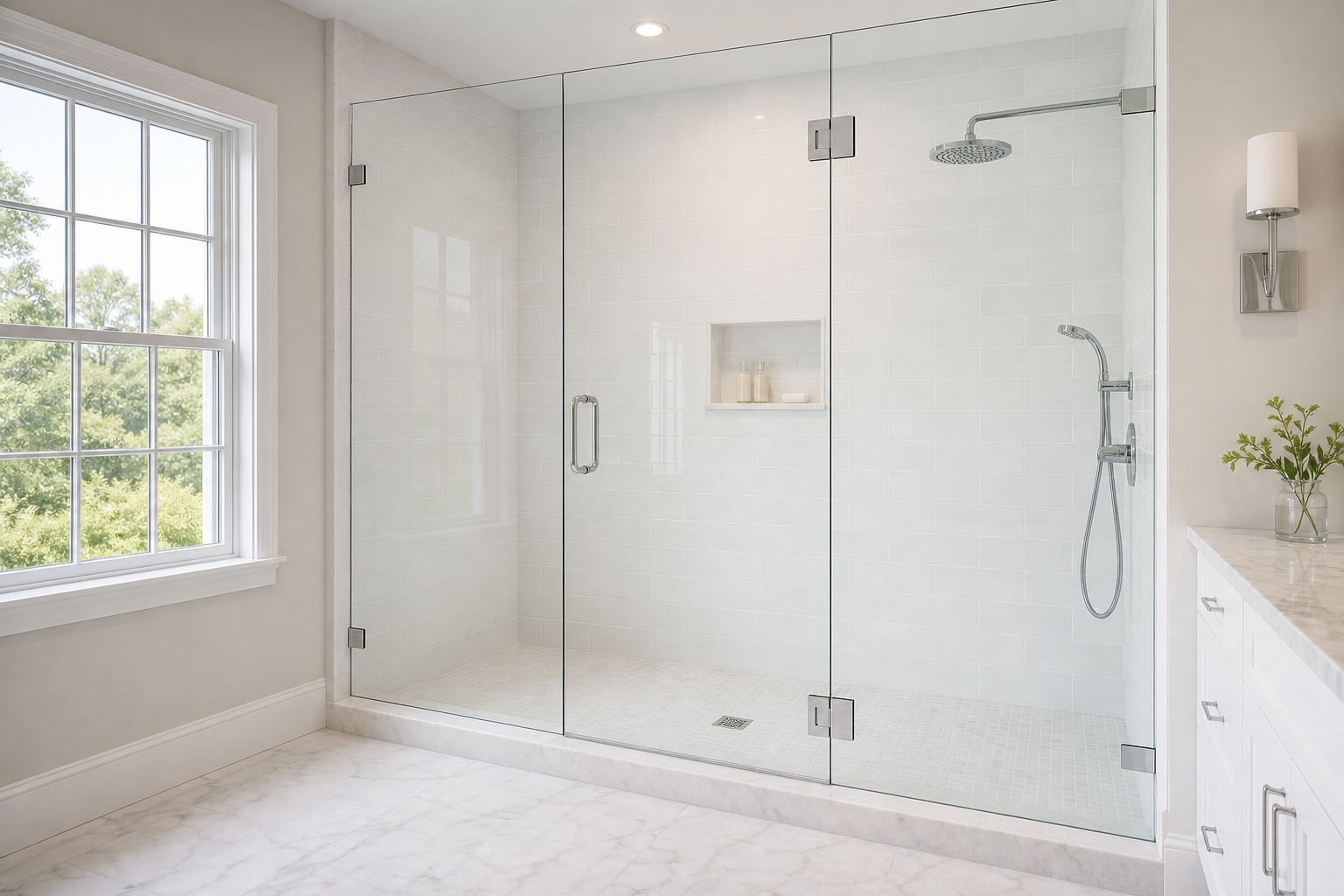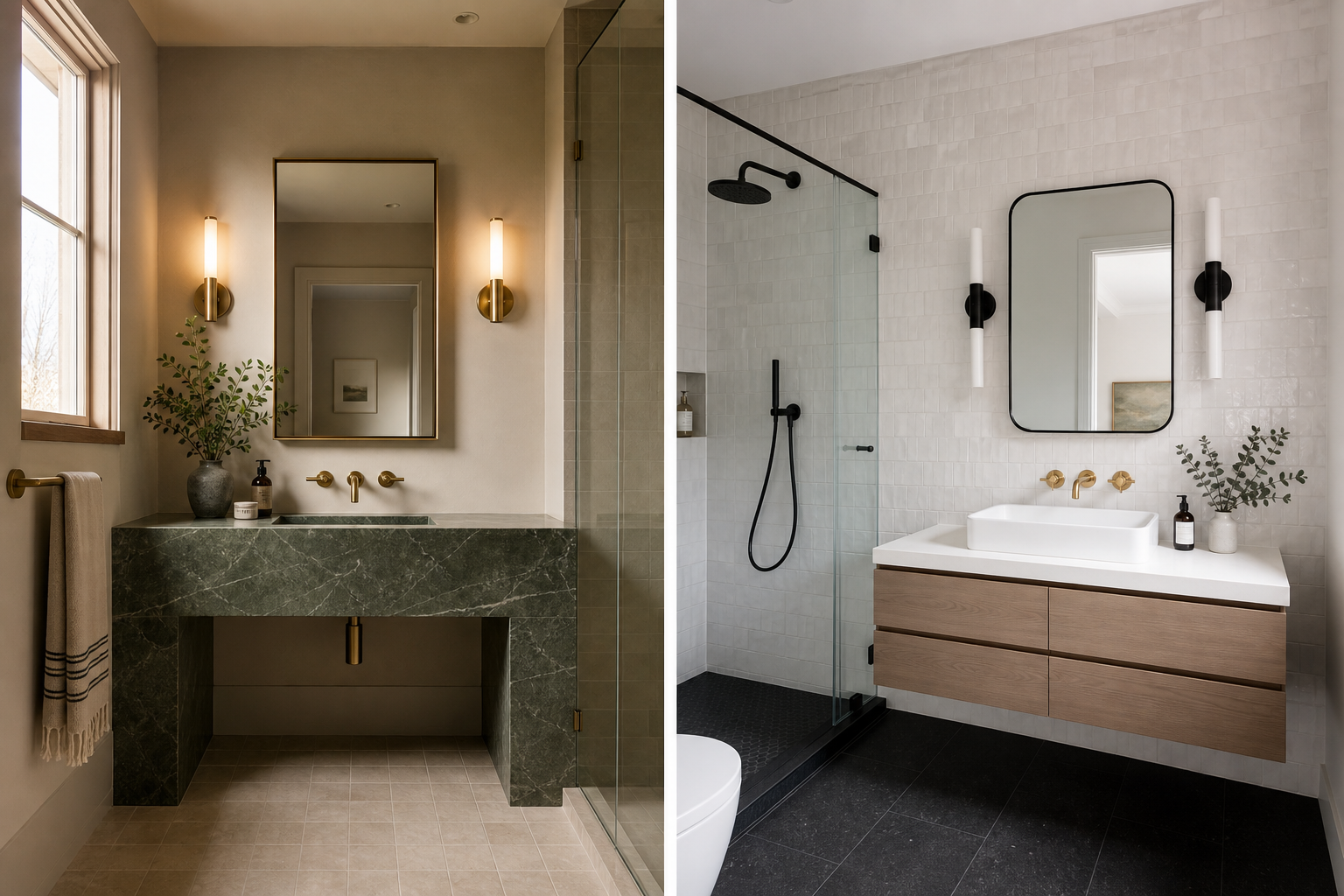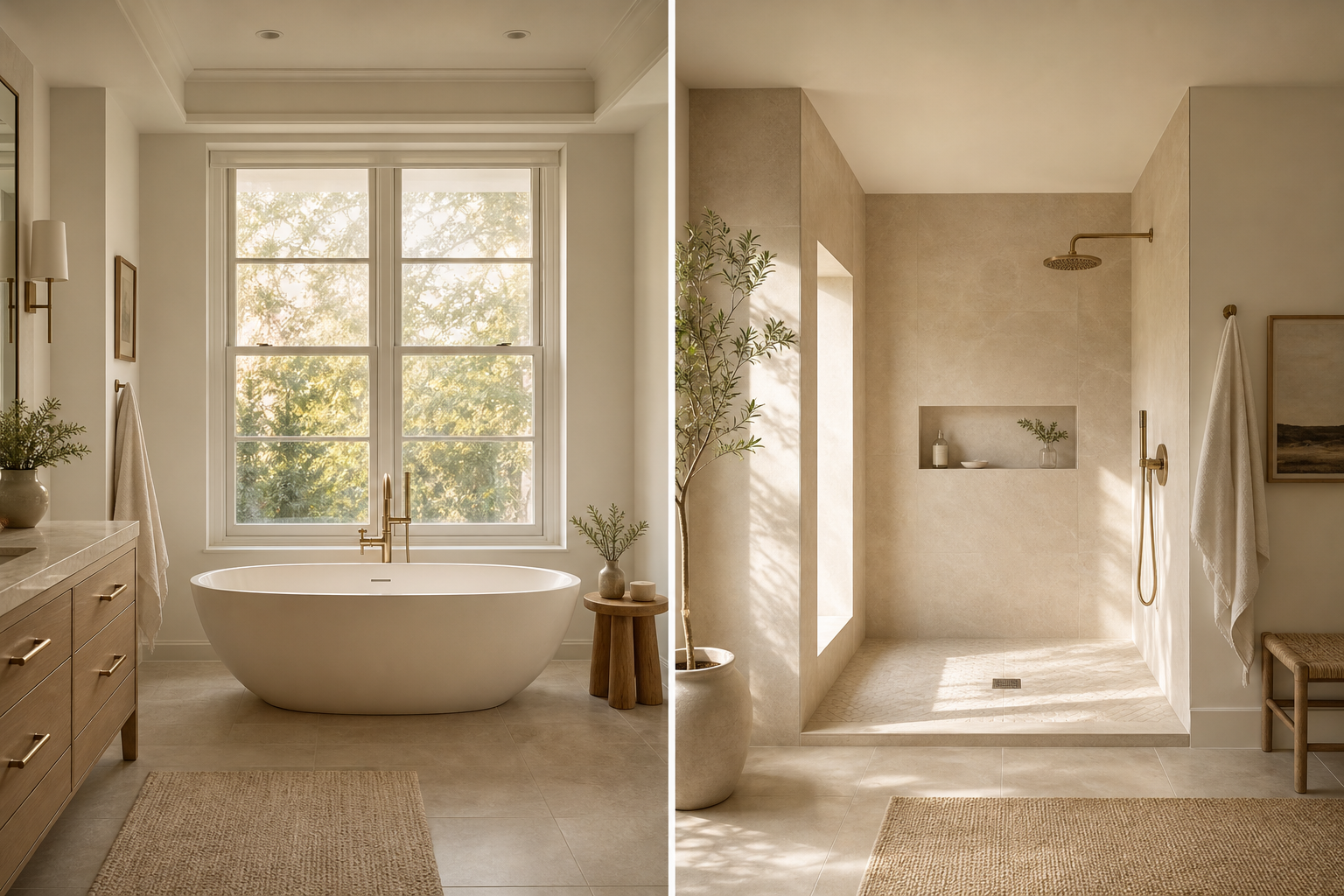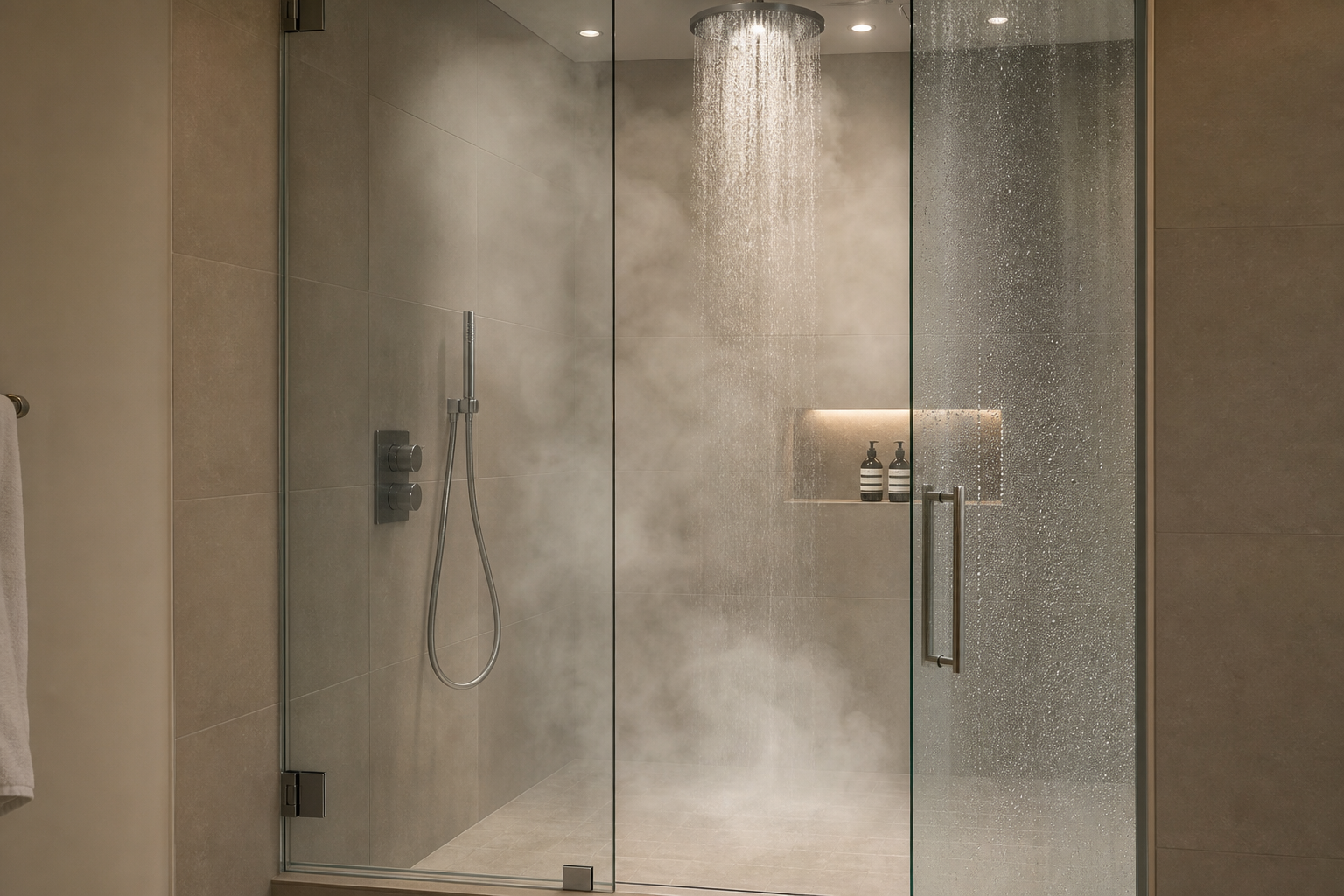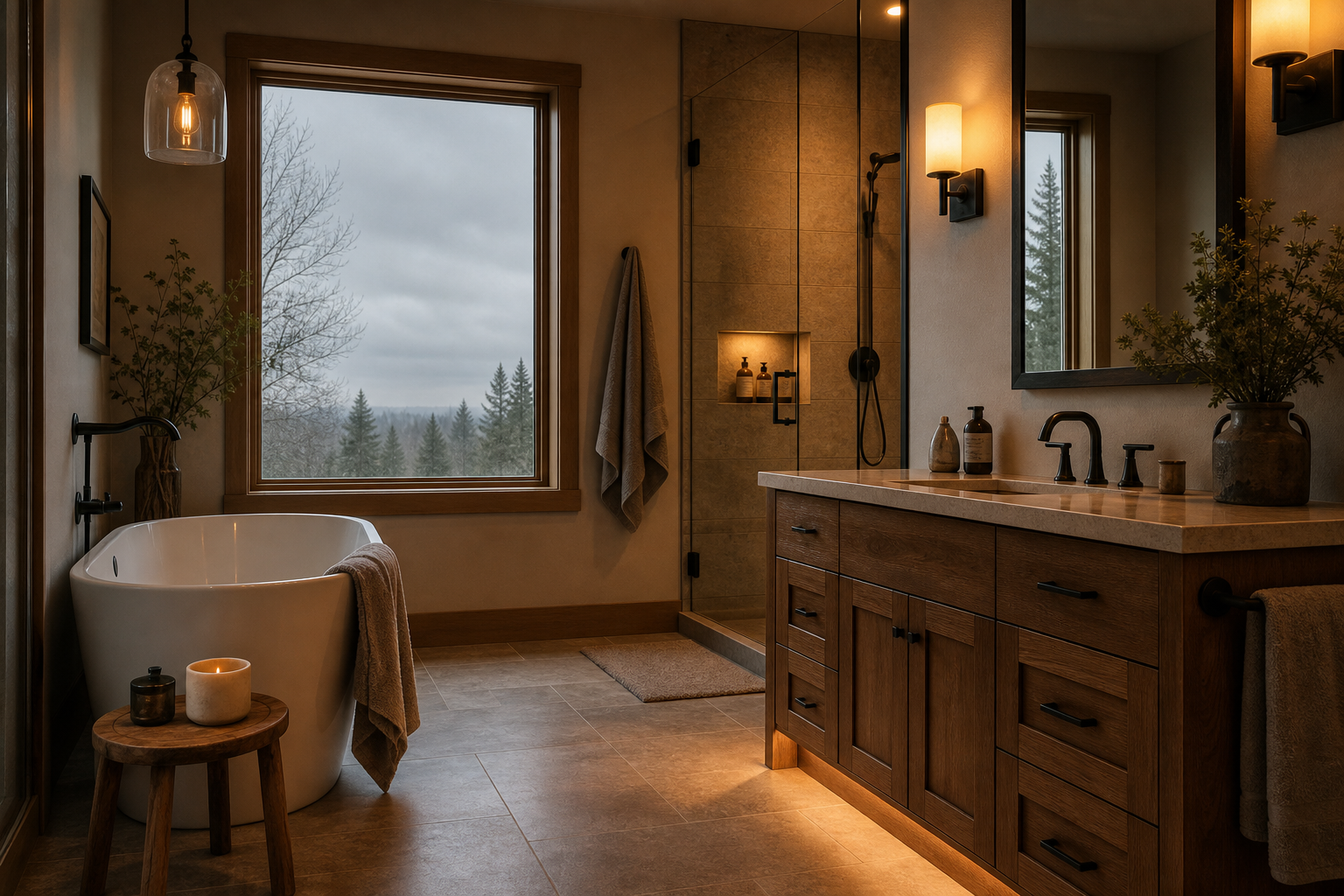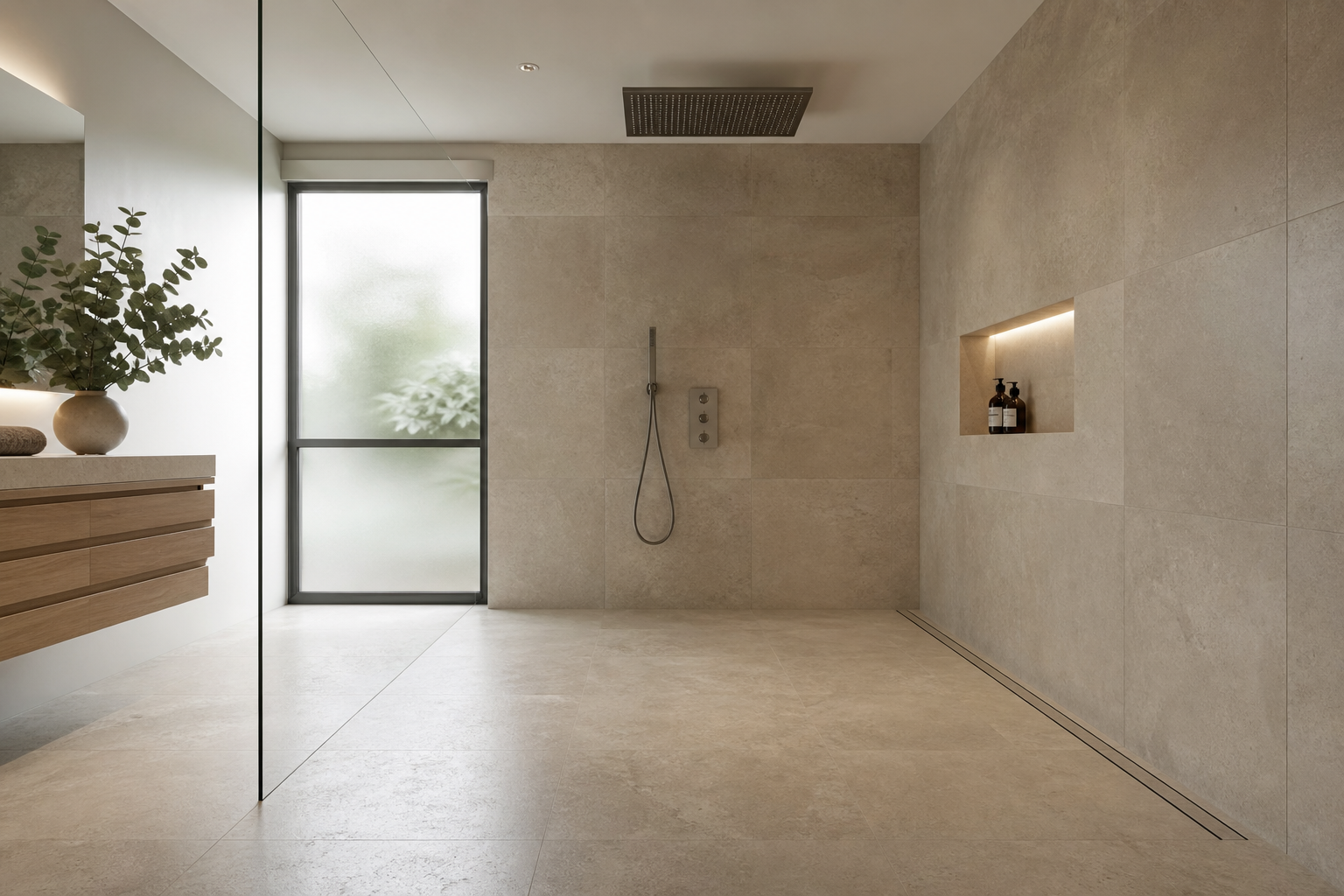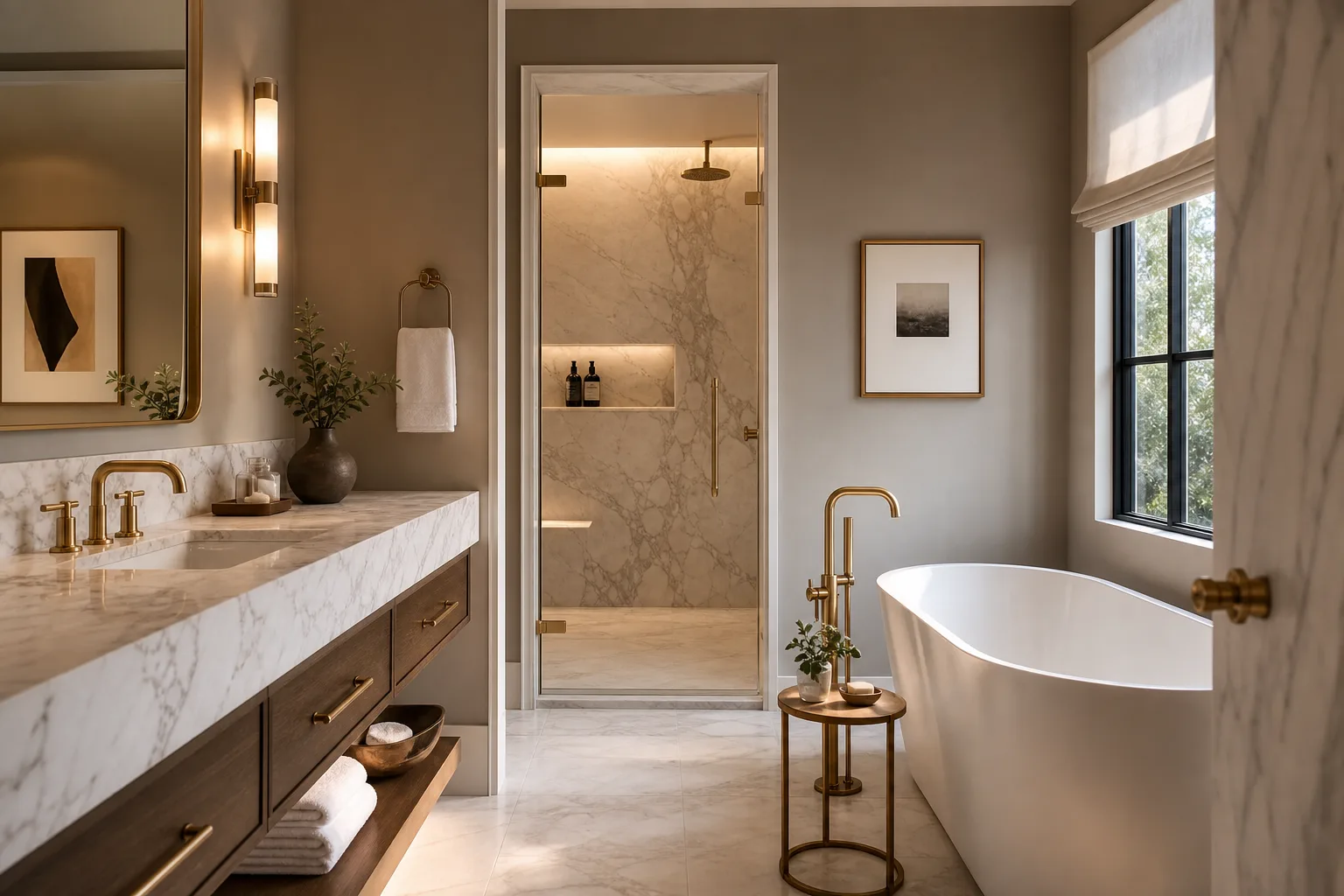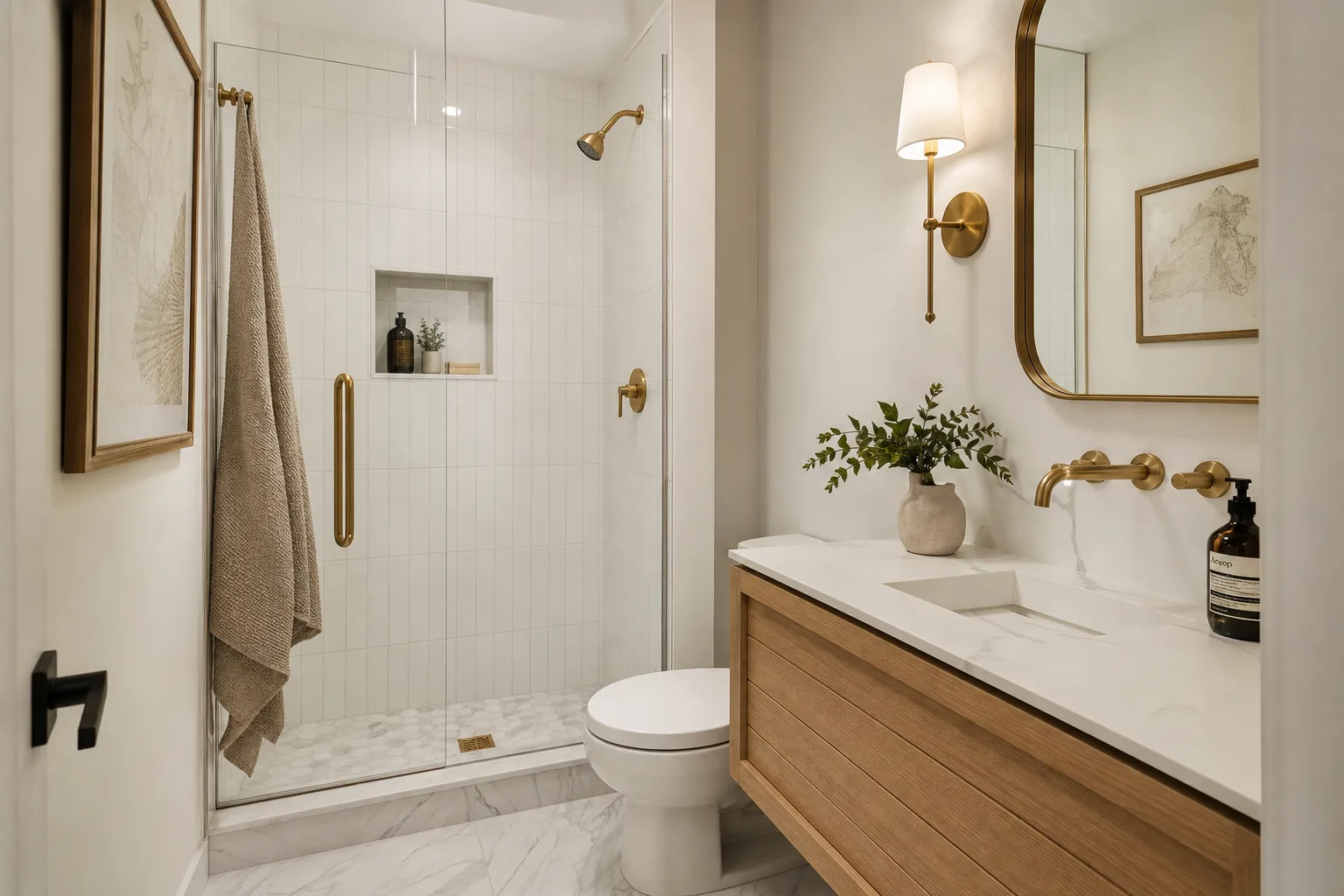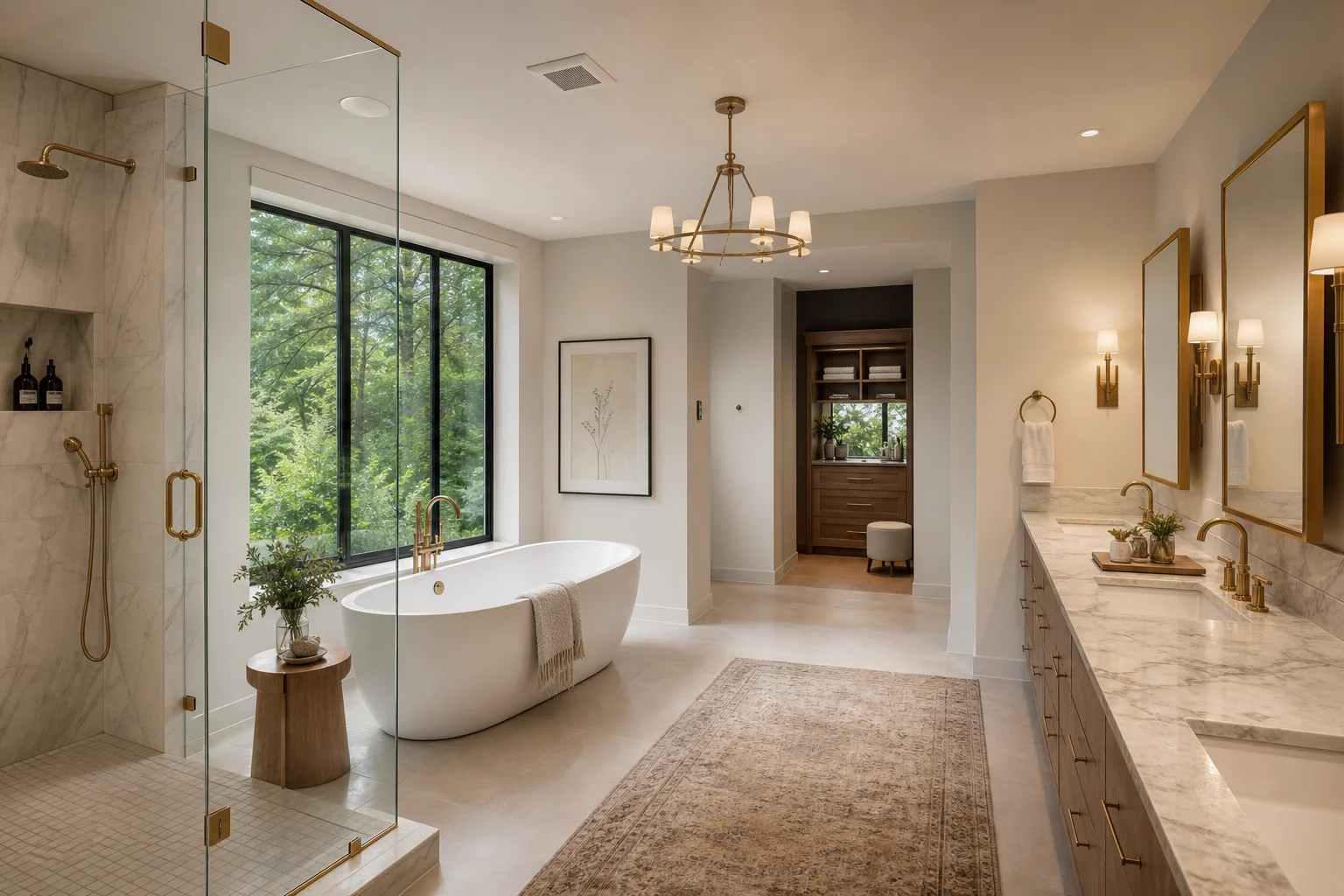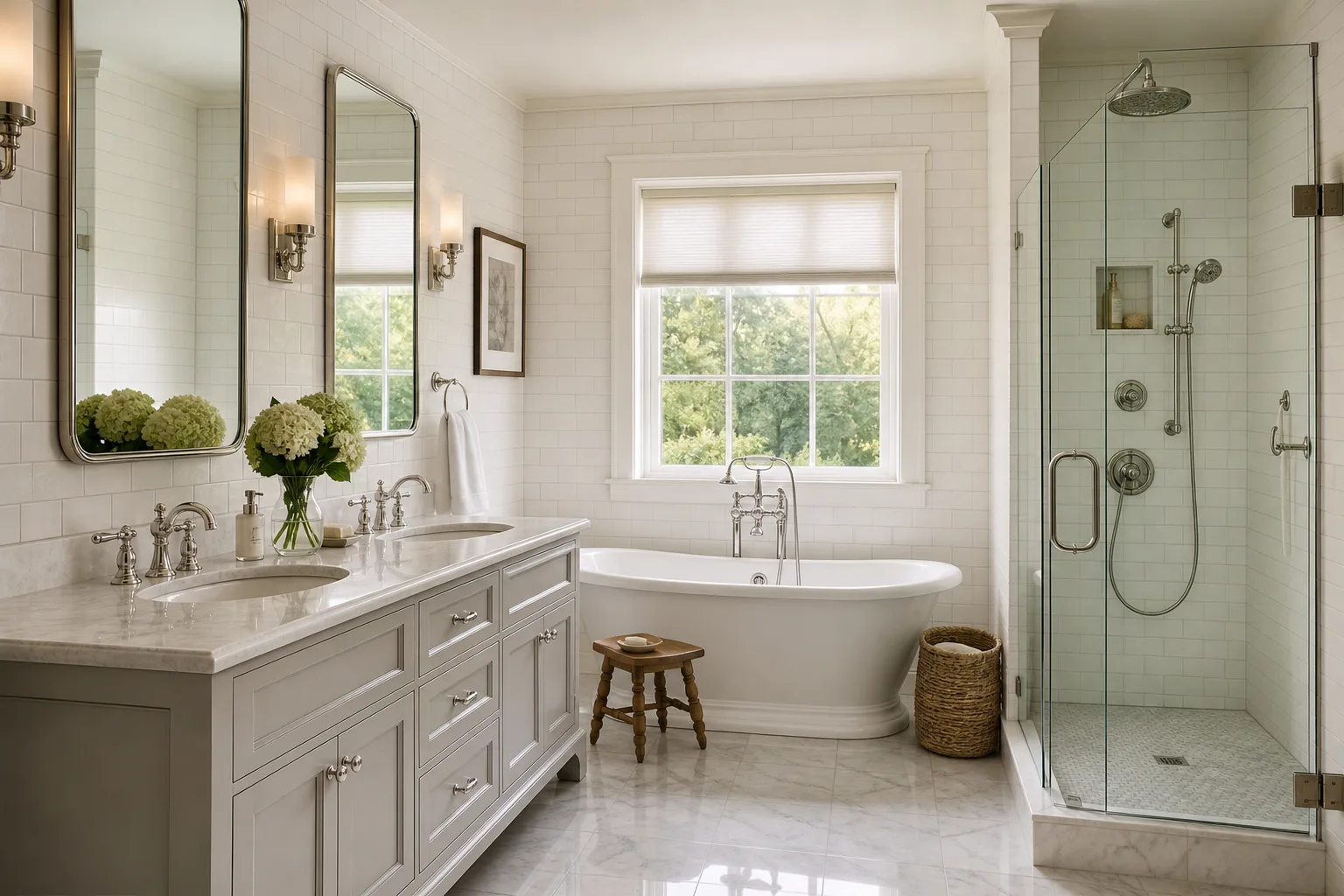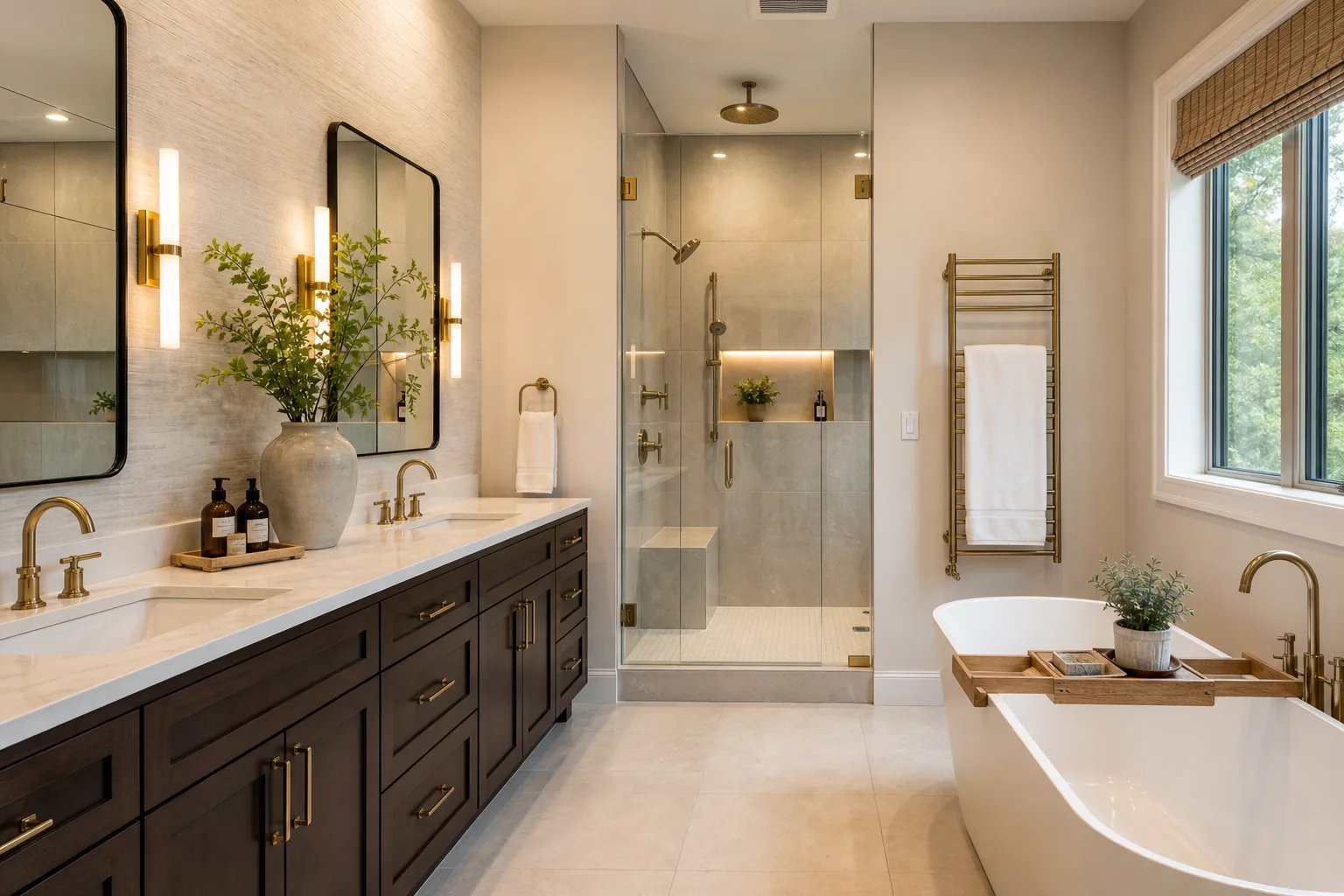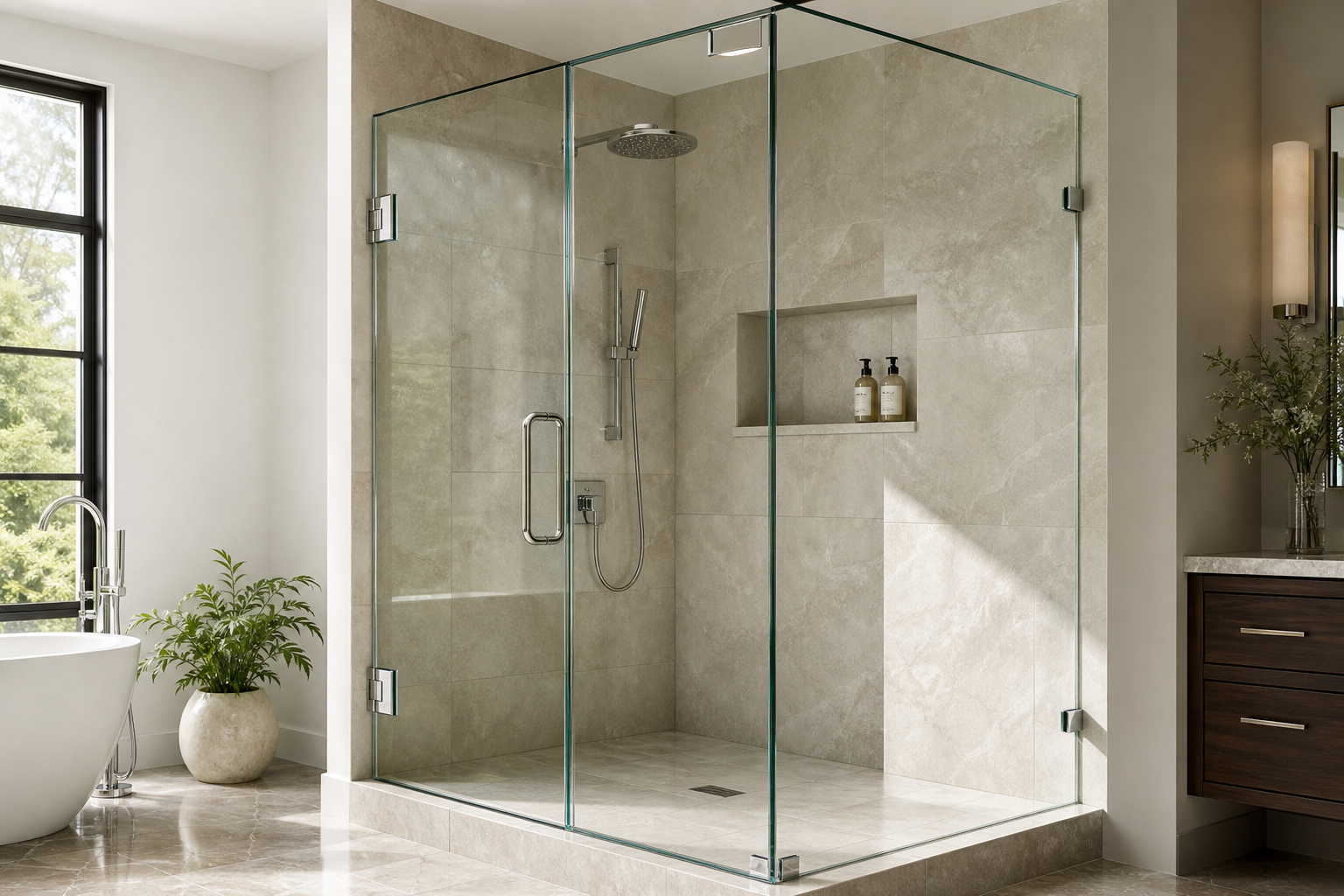
A frameless glass shower enclosure costs between two and four times more than a framed alternative for reasons that are almost entirely structural, and understanding those reasons is the clearest way to evaluate whether the premium is appropriate for a specific project.
The framing in a framed shower enclosure is not decoration. The aluminum track that runs along the top and bottom of framed shower glass, and the vertical stiles at door edges and panel seams, are structural elements. They hold the glass panels rigid, prevent the panels from flexing under load or door impact, resist sway when the door is opened and closed, provide the mounting attachment for hinges and latches, and compensate for small variations in the opening dimensions with adjustable track systems. The aluminum does a great deal of mechanical work. The glass in a framed system does not have to.
When the aluminum is removed, all of that work is reassigned to the glass, to the hinges, and to the hardware. The glass must become thicker to support itself and to carry the hinge loads without flexing. The hinges must be more robust to carry more load. The hardware must be stronger and more precisely engineered to control the door through its swing. The wall anchors must be larger and more securely fastened because they bear the full weight of the glass panels without any distribution through a frame. Every component in the system becomes more expensive because every component is doing more structural work.
Why Glass Thickness Is Not a Luxury Upgrade
Framed shower enclosures most commonly use 3/16-inch glass, approximately 5mm, which is standard float glass in a residential weight. At this thickness, the glass is adequately rigid when it is held by aluminum framing on two or more edges. It does not need to carry structural loads on its own.
Frameless enclosures require a minimum of 3/8-inch glass, approximately 10mm, and most quality installations specify 1/2-inch glass, approximately 12mm, for doors and larger panels. The thickness is not a visual specification. It is an engineering requirement. At 3/8 inch, glass panels of shower door size carry enough stiffness to hold pivot hardware at one edge without excessive flex under opening loads. At 1/2 inch, the panel is substantially stiffer, carries hinge hardware more securely, and tolerates door-slam force without the deflection that causes stress concentrations in thinner panels.
The cost difference between 3/16-inch and 1/2-inch glass is not proportional to the thickness difference. Thicker glass is heavier, which increases shipping costs. It requires different fabrication equipment for cutting and edge finishing. It takes longer to temper, because the heat penetration time scales with thickness and the tempering parameters must be adjusted to ensure uniform through-heat. A 1/2-inch tempered panel costs four to five times more per square foot than a 3/16-inch panel of comparable area, and that differential propagates through the entire enclosure.
The tempering requirement is non-negotiable. All shower enclosure glass must be safety-glazed per model building codes referencing CPSC 16 CFR 1201 and ANSI Z97.1, which require that glass in hazardous locations including shower enclosures either be tempered or laminated. Tempered glass breaks into small, blunt fragments rather than large, sharp shards. The tempering process introduces compressive stress into the glass surface and tensile stress in the interior, which gives it both its strength and its characteristic fracture pattern. The process also locks in the final dimensions of the panel. A tempered panel cannot be cut, drilled, or otherwise modified after tempering. Every opening, notch, and drill location must be specified before tempering and introduced into the panel during fabrication.
The Custom Fabrication Requirement
This is where the premium becomes most consequential for a practical renovation budget.
A framed shower enclosure can be ordered from a catalog. The aluminum track accommodates variation in opening dimensions through adjustable mounting positions. The panels can be cut to fit the opening on-site. A fabricator can produce a framed enclosure using standard glass panels and field-trim the frame to the measured opening. Lead times are short. Pricing is predictable from standard tables.
A frameless enclosure cannot be ordered from a catalog. Because the glass must fit the opening precisely and because it cannot be modified after tempering, every frameless enclosure is fabricated to the exact measurements of the specific opening it will occupy. The fabricator must take precise field measurements of the opening, accounting for wall plumb, wall flatness, floor slope, and any variation from square in the corners. Those measurements drive the panel layout, which determines the dimensions of every piece of glass in the assembly. The panels are then cut, edge-finished, drilled for hardware, and tempered as a set specific to that opening.
Lead time for custom-tempered glass typically runs two to four weeks from measurement to delivery, depending on the glass shop and regional capacity. Any measurement error discovered after tempering requires re-fabrication of the affected panels at full cost. An installation error that chips or cracks a panel requires a replacement order at the same lead time. In framed systems, field-cuttable panels allow minor corrections. In frameless systems, replacement is the only option.
The edge finishing of frameless glass is also a visible quality specification. Exposed glass edges in frameless installations must be polished, because cut glass edges are sharp and visually rough. Polished edges are smooth to the touch and have a finished appearance, typically either flat-polished or beveled. The polishing process takes time proportional to the total edge length in the assembly. A simple frameless door with four edges requires less polishing labor than a multi-panel enclosure with curved or custom-profile edges. The polishing cost is included in fabrication quotes but is worth understanding as a driver of the total.
The Hardware Carries More Load Than It Appears To
The hardware in a frameless enclosure, the hinges, the pivot, the handle, the door sweep, and the wall anchors, looks minimal. That appearance is intentional and is part of the design appeal of frameless glass. It is also somewhat misleading about the engineering behind it.
A standard framed shower door hinge attaches the door panel to the aluminum frame and carries a fraction of the door weight because the frame is carrying most of it. A frameless hinge attaches the door directly to the wall or to an adjacent glass panel and carries the full door weight plus the dynamic load of the door swing. A tempered 1/2-inch glass door panel of typical shower size weighs between 50 and 80 pounds. The hinges must carry that static weight, resist the bending moment created by a person pulling the door open at the handle, and absorb the impact of a door closing with enthusiasm. Those requirements call for hinges engineered from solid brass or stainless steel at thicknesses that can carry the load.
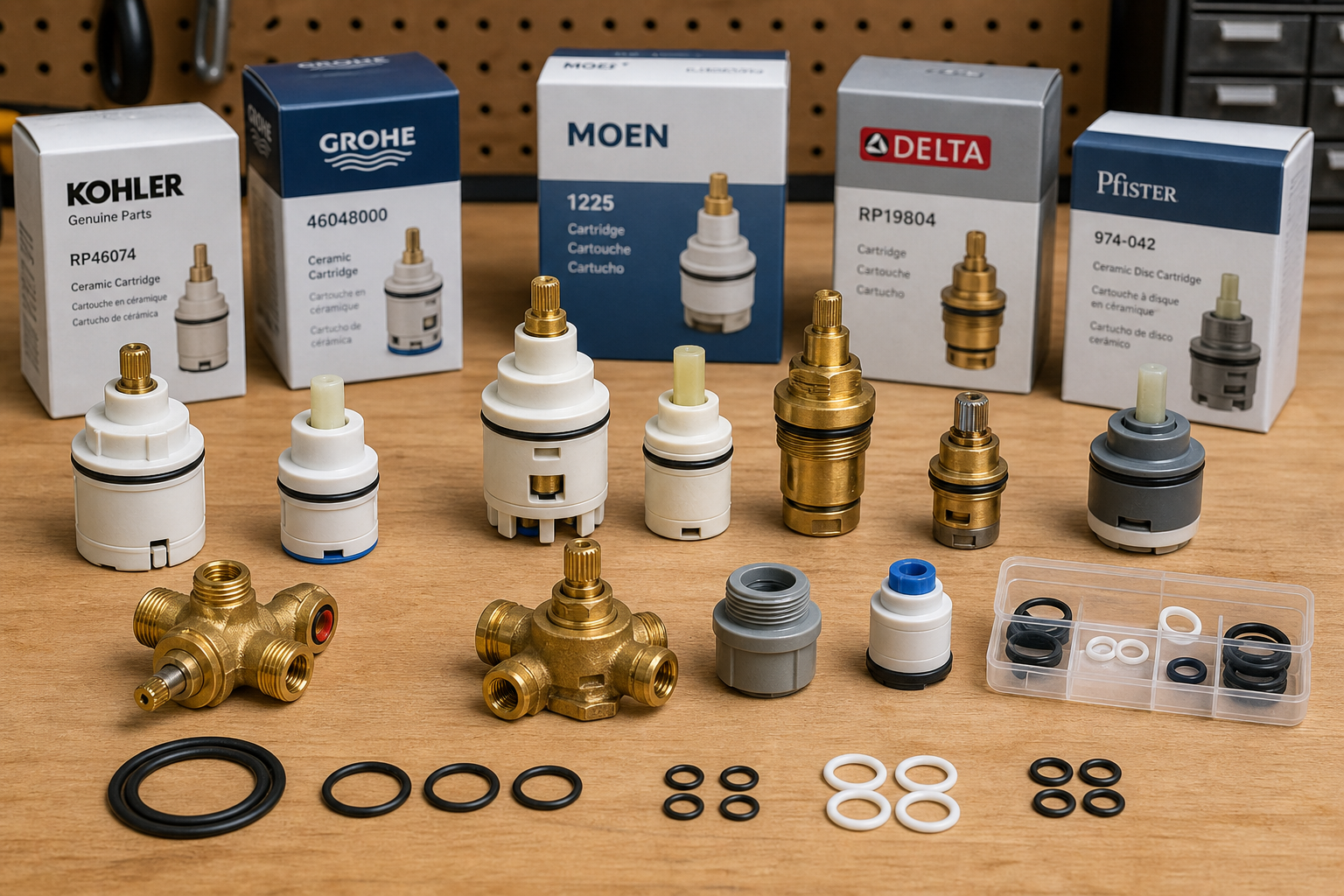
Quality frameless shower hinges from manufacturers including CR Laurence, Kohler, DreamLine, and Basco range from $80 to $300 per hinge. A typical frameless enclosure requires two or three hinges. The pivot, which is the bottom pivot point for a pivot-hung door, adds another $50 to $200. The handle, which in a frameless installation must serve as a comfortable grip while also providing the mechanical connection through which door-pull forces transfer to the hinge system, runs $80 to $400 for quality hardware. The wall anchors for stationary panels add $50 to $200 per anchor point.
Total hardware cost for a quality frameless enclosure, not including the glass, runs from approximately $500 to $2,500 depending on the complexity of the installation and the finish selected. For comparison, hardware for a framed enclosure of comparable size typically runs $100 to $400. The frameless premium in hardware alone is $400 to $2,000 above the framed baseline.
When the Premium Earns Its Cost
The premium for a frameless enclosure buys three things: visual clarity, ease of cleaning, and longevity of appearance.
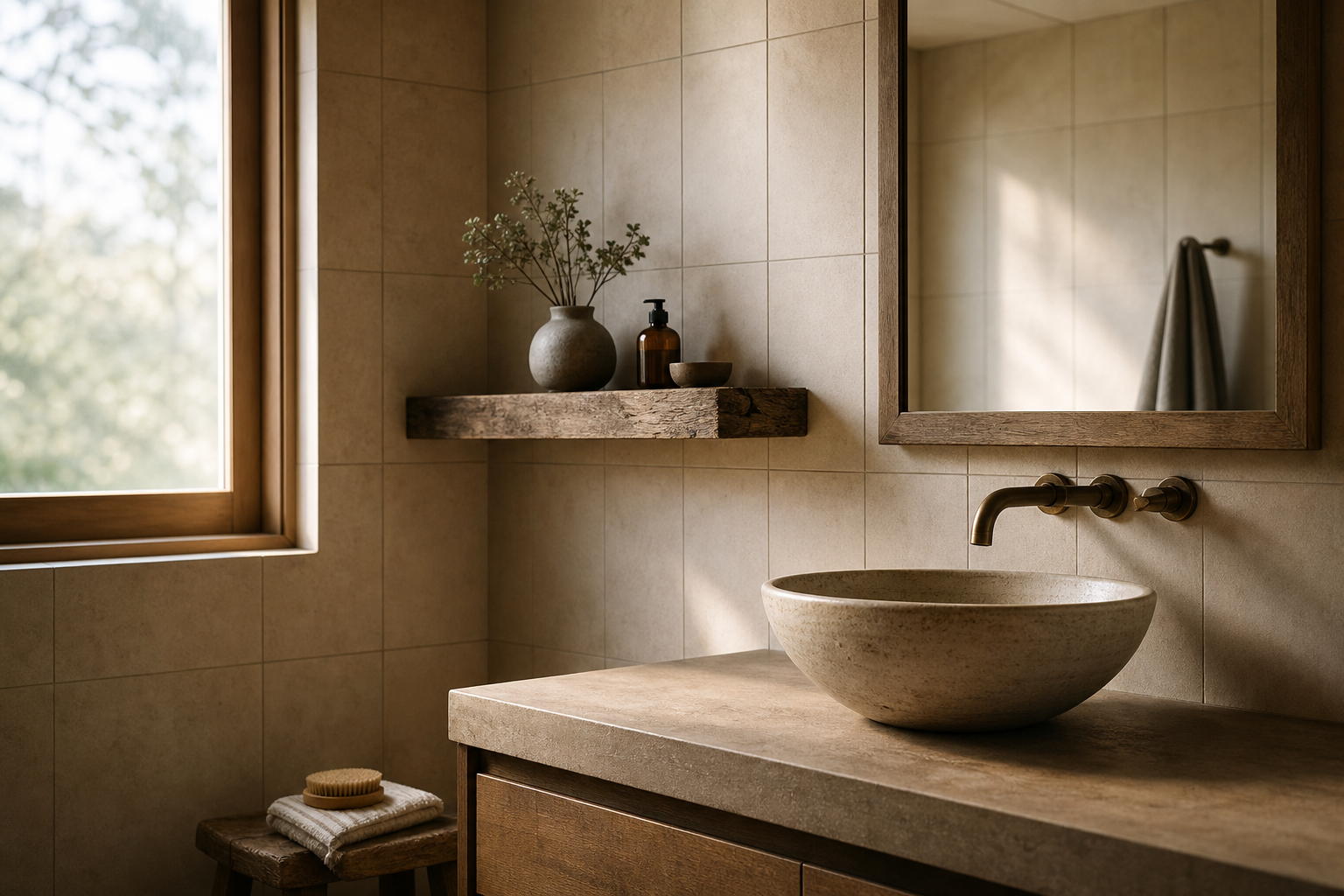
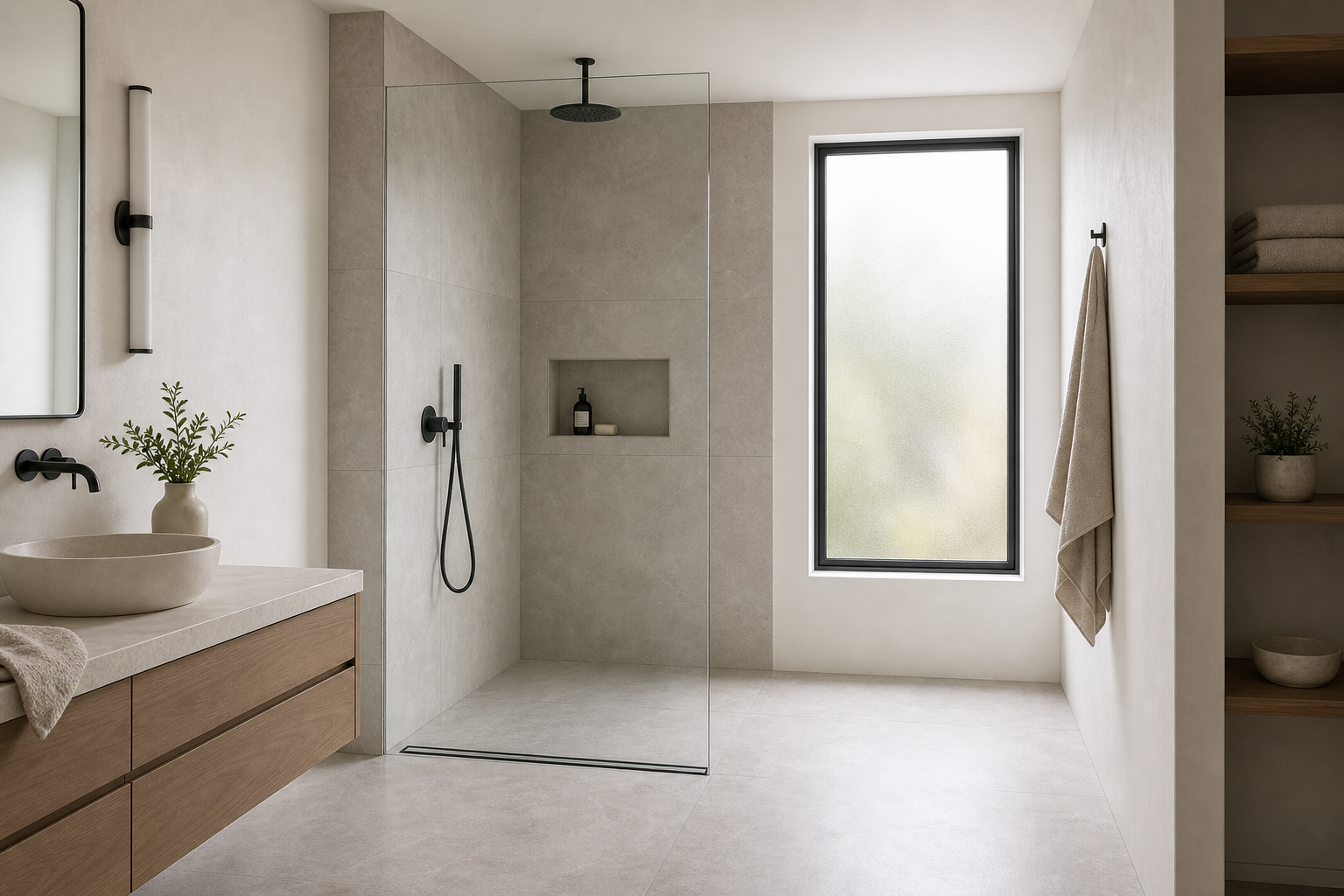
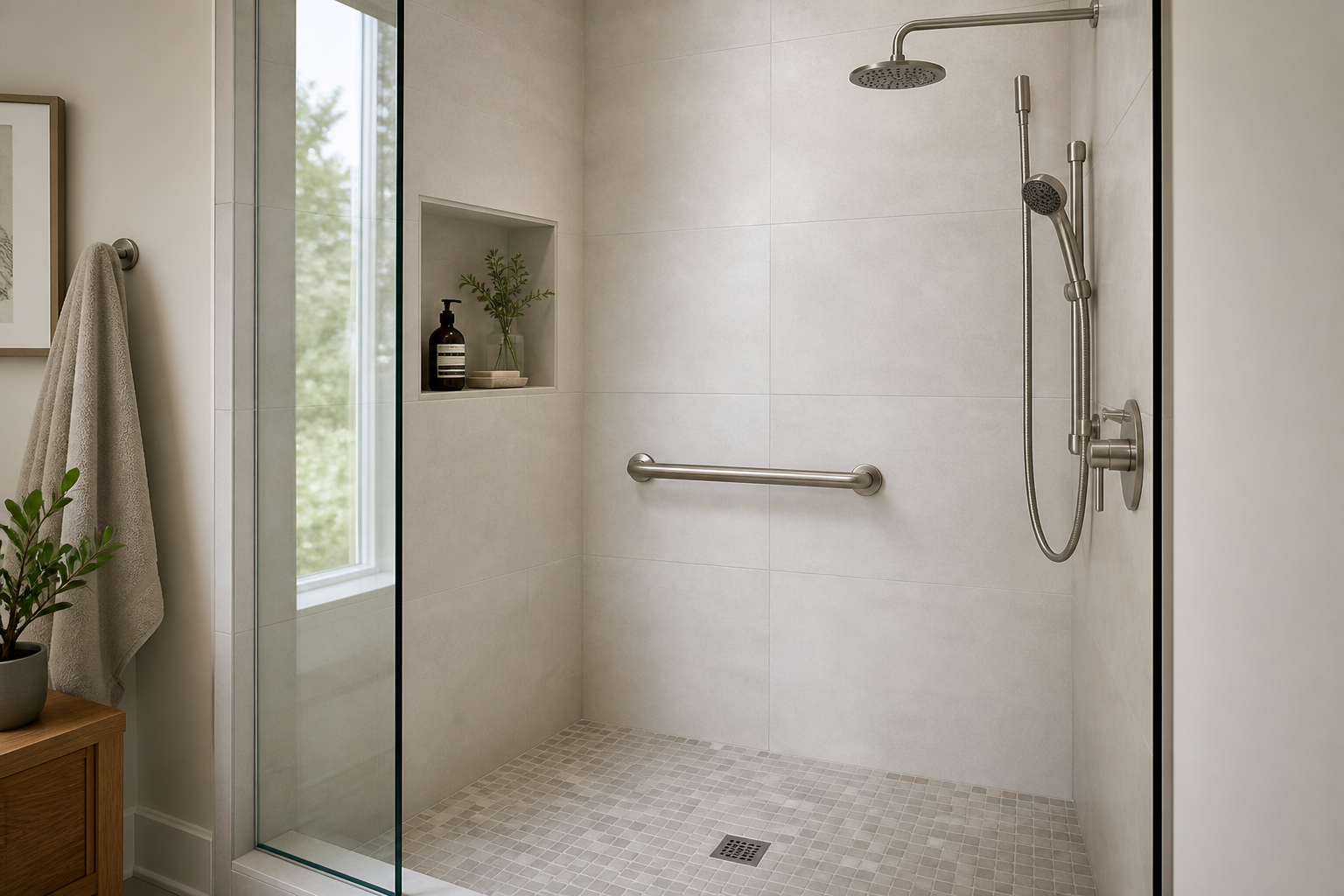
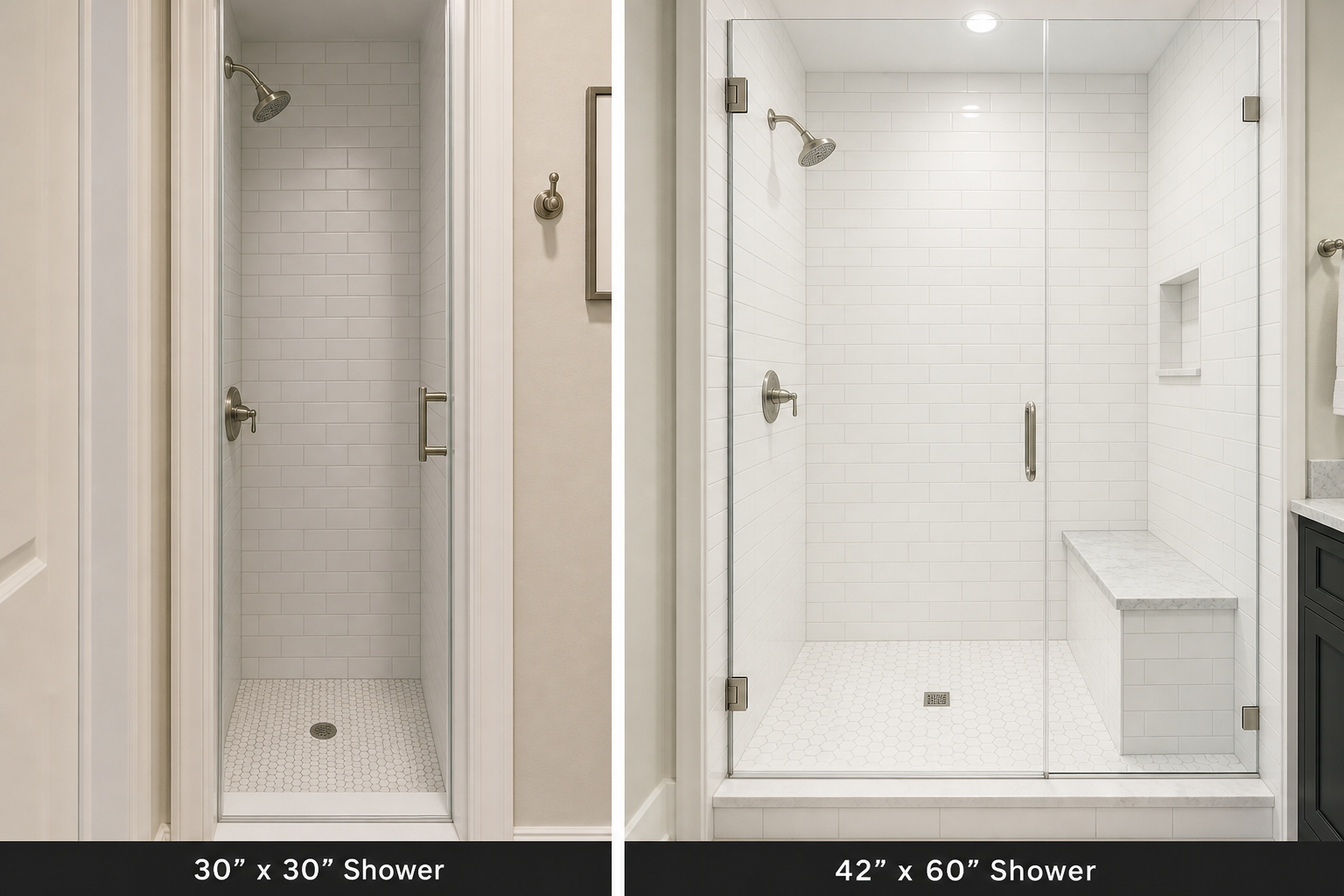
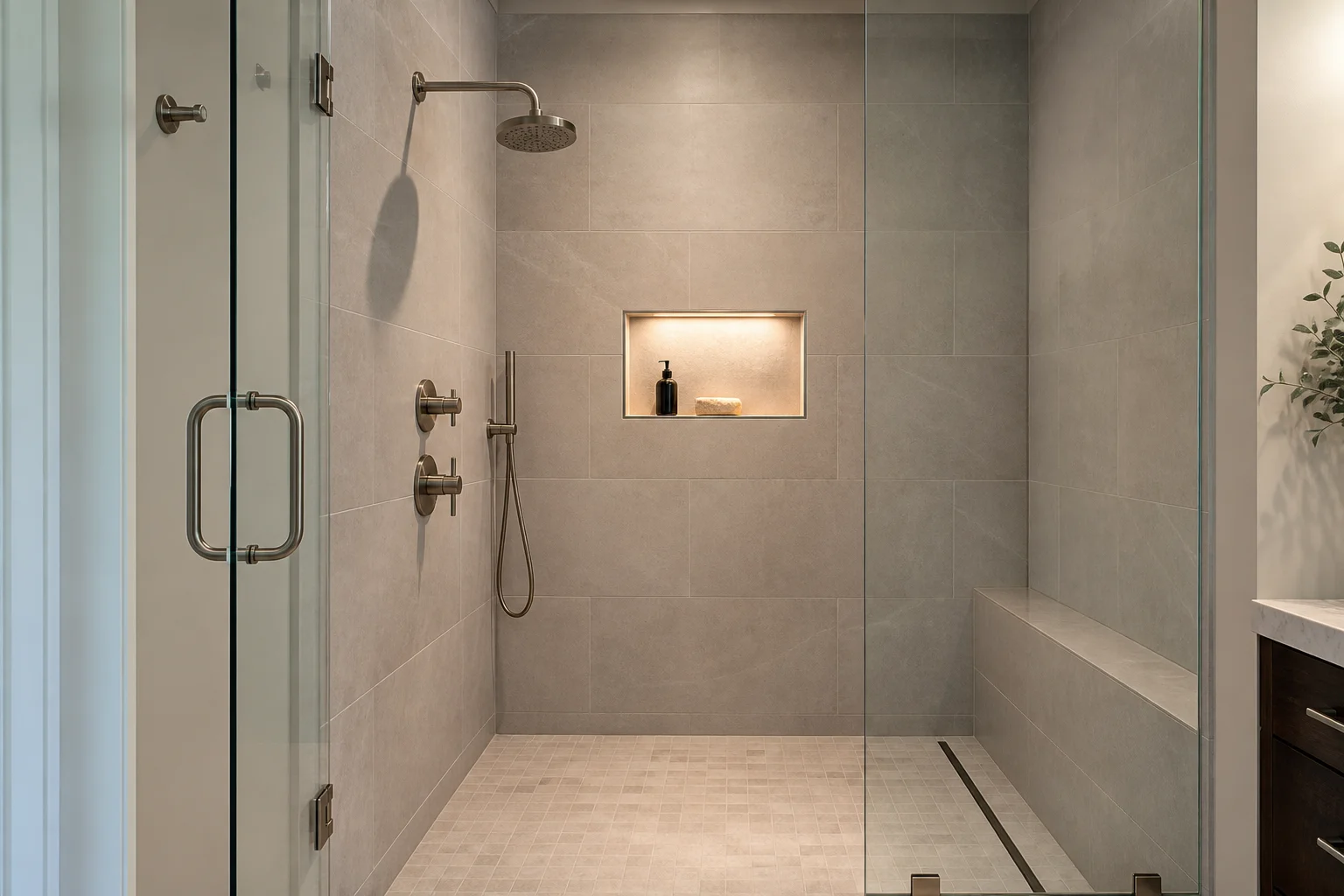
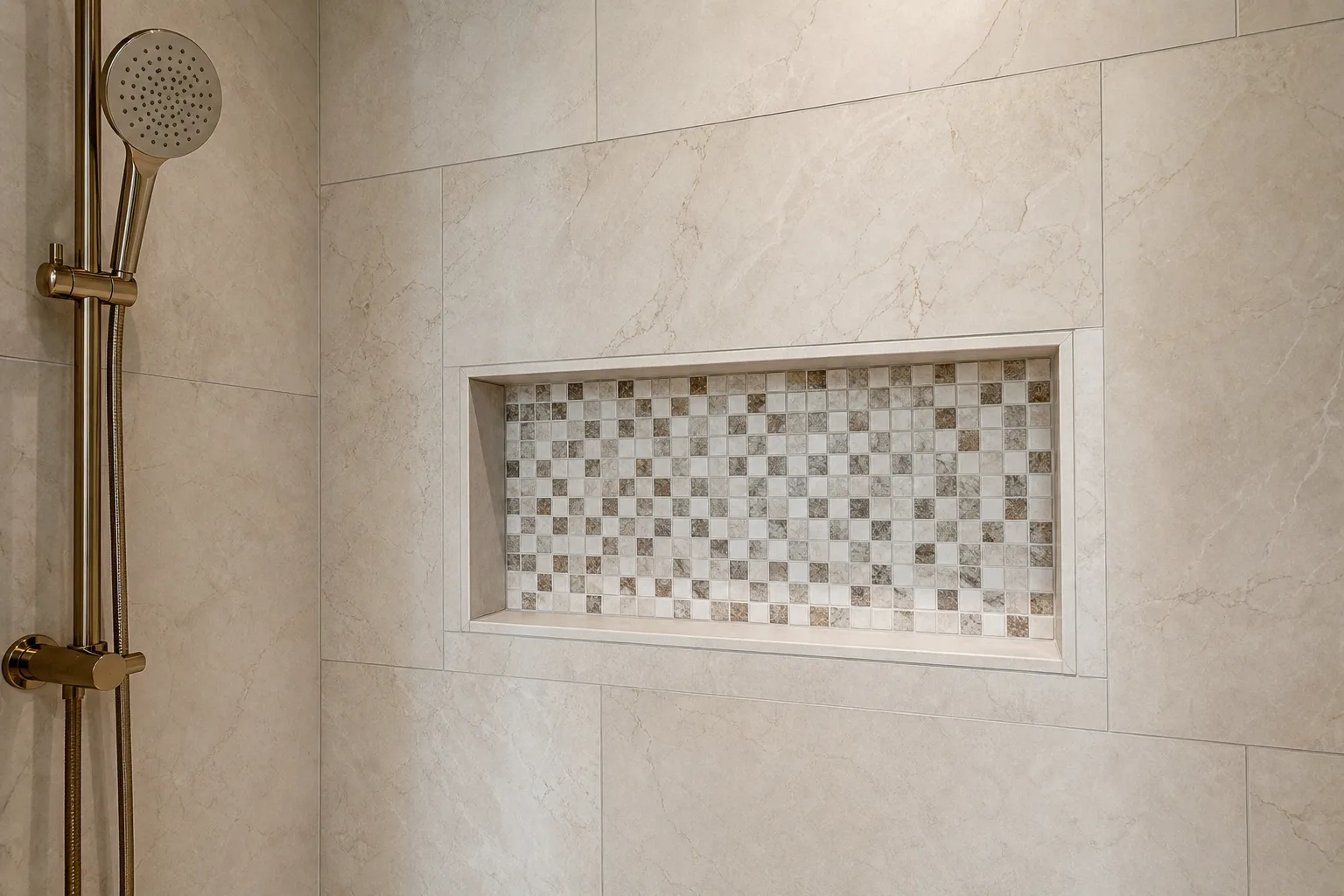
Visual clarity is the most obvious. Aluminum framing, even finished aluminum, introduces a visual element at the perimeter of the glass that competes with the tile and the space behind it. In a bathroom with a complex or beautiful tile installation in the shower, framing reads as a border that reduces the visibility of the tile. Frameless glass disappears as a surface and makes the tile visible from outside the enclosure. In a bathroom designed around the shower tile, frameless glass is the more honest choice about what the room is actually showing.
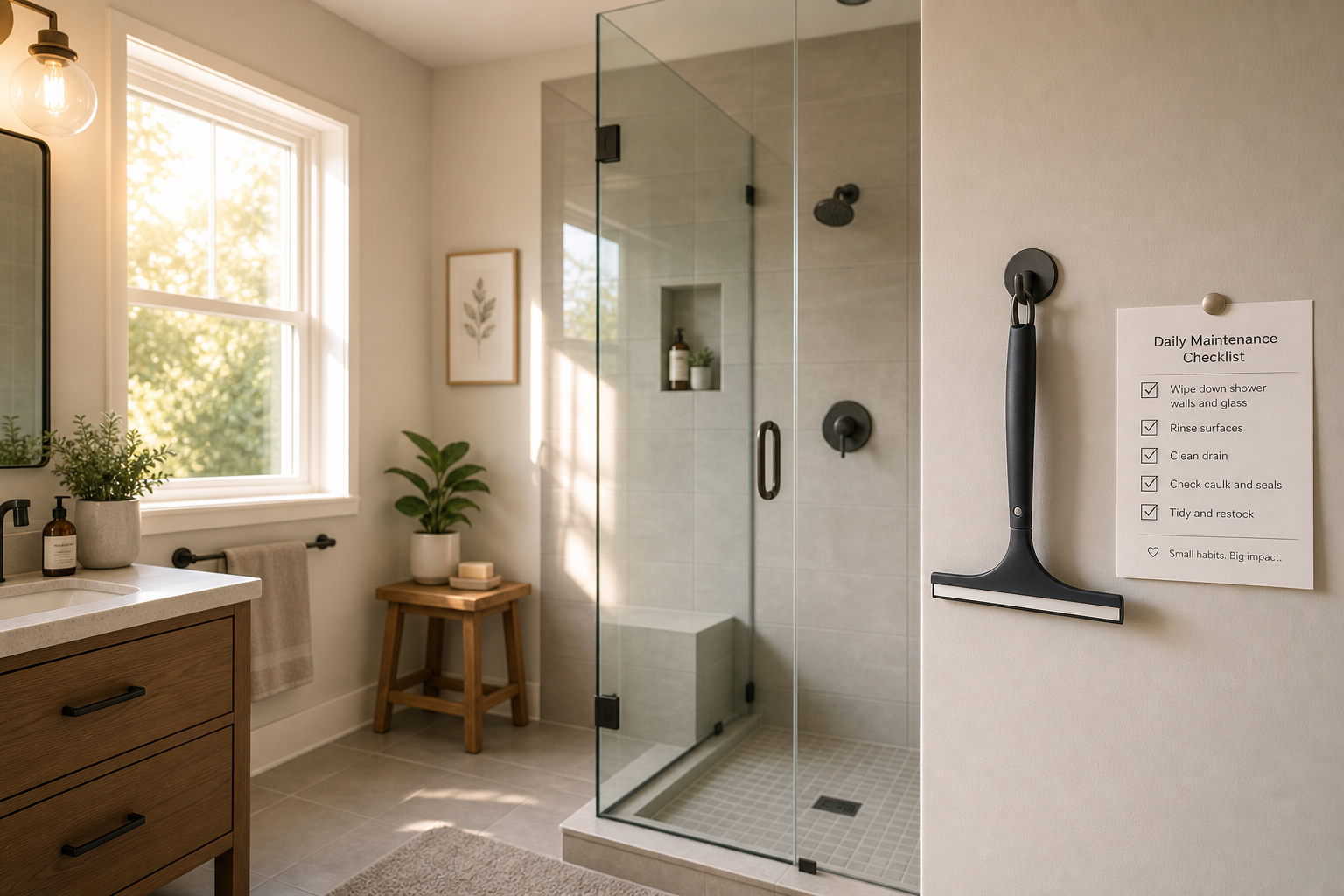
Ease of cleaning is related to the aluminum. Framed systems accumulate soap residue, mineral deposits, and mildew in the channels and seals where aluminum meets glass. The cleaning of these areas is tedious and the residue is persistent. Frameless systems have no channels, no tracks at the bottom, and no seals at panel edges other than the door sweep. The glass is wiped clean as a continuous surface.
Longevity of appearance is a function of the same factors. Aluminum finishes in framed systems degrade over time in a wet environment. Anodized finishes wear. Painted finishes pit and peel at the edges. Heavy-gauge hardware in a frameless installation, in quality stainless or solid brass, maintains its appearance with minimal maintenance across the life of the enclosure.
Before specifying glass enclosure type, we review the opening dimensions and the wall construction behind the glass. Frameless enclosures require solidly-backed walls for the hardware mounts, and discovering that a wall cannot support the hardware after glass is ordered is an expensive problem. We check the structure before the glass is specified.