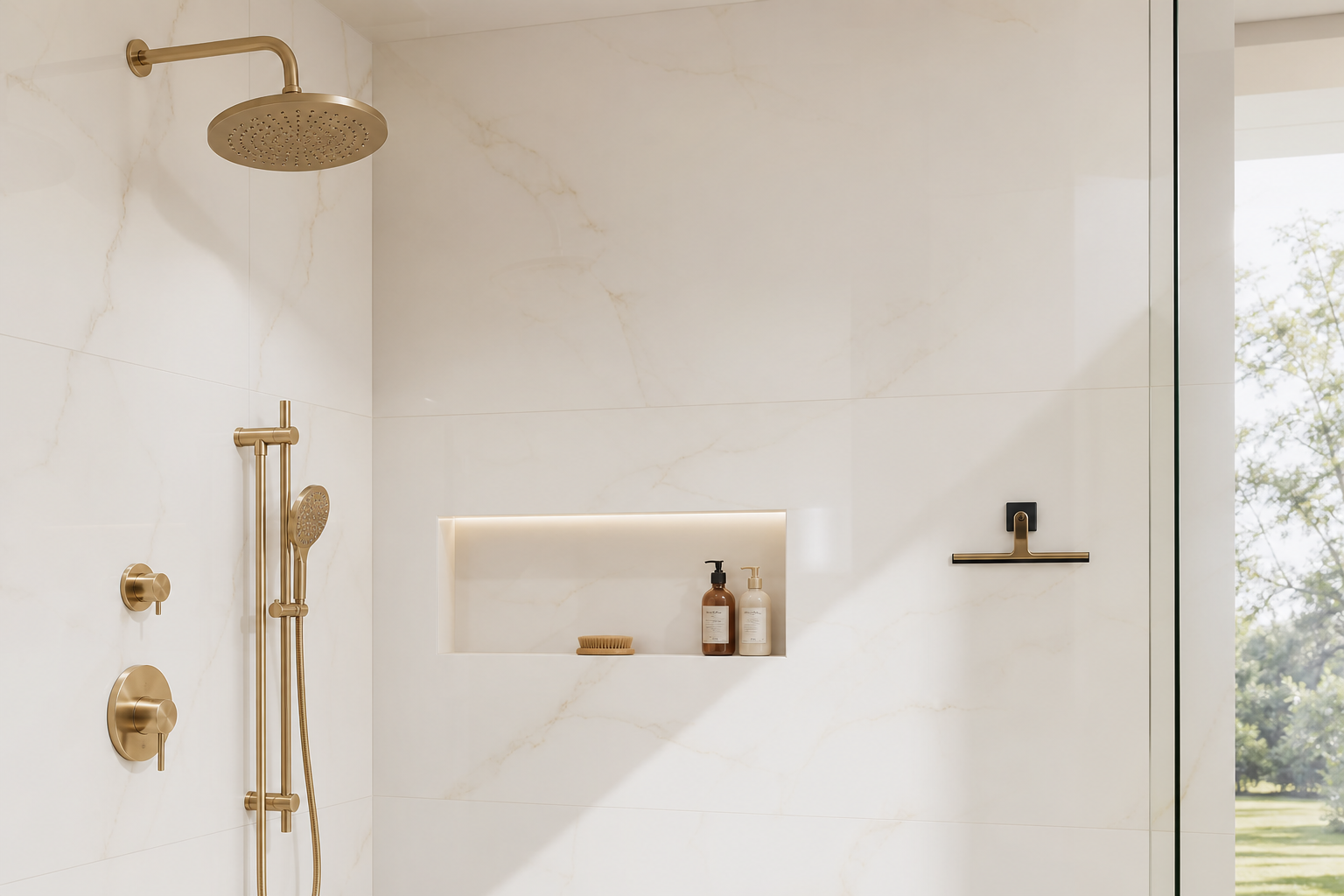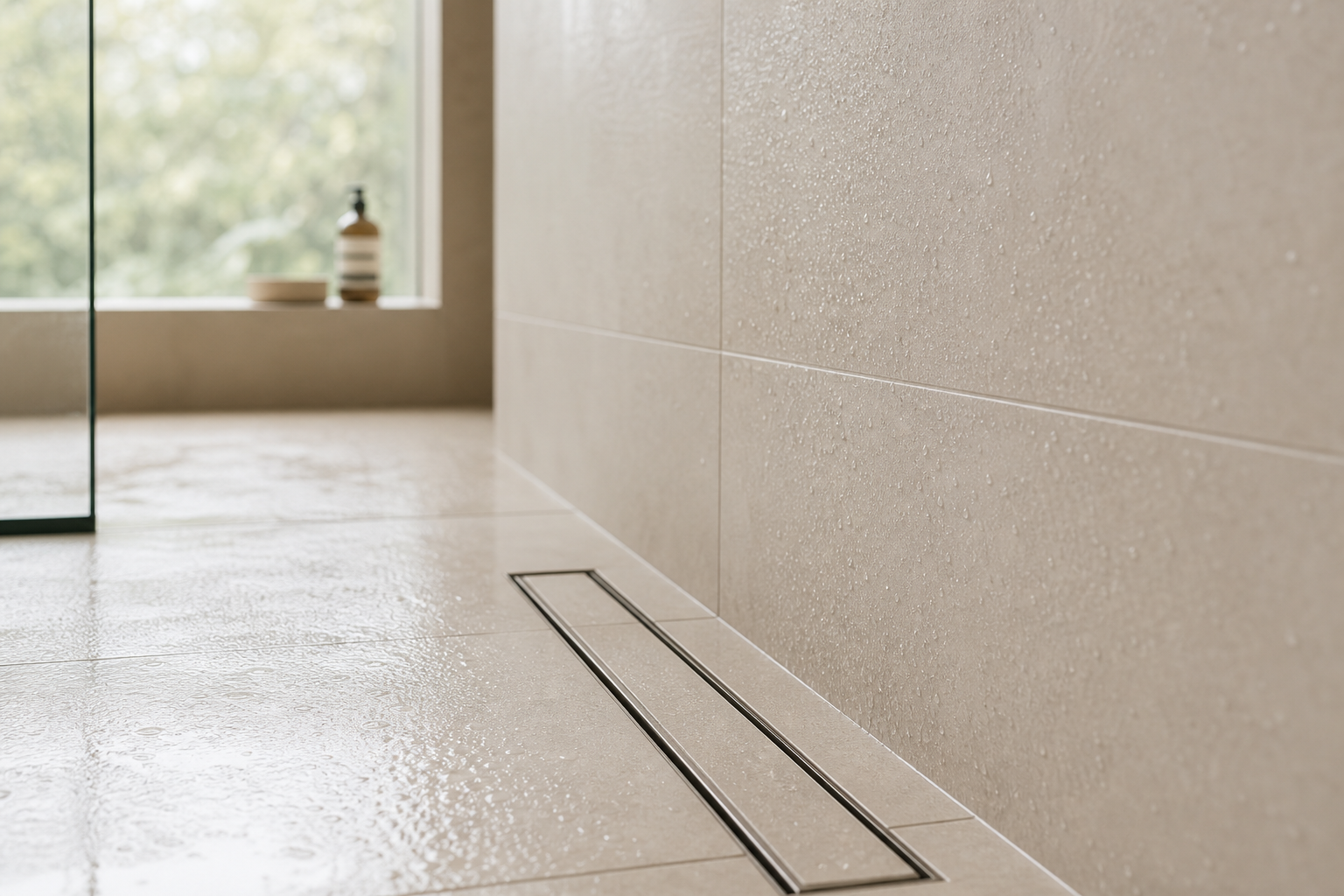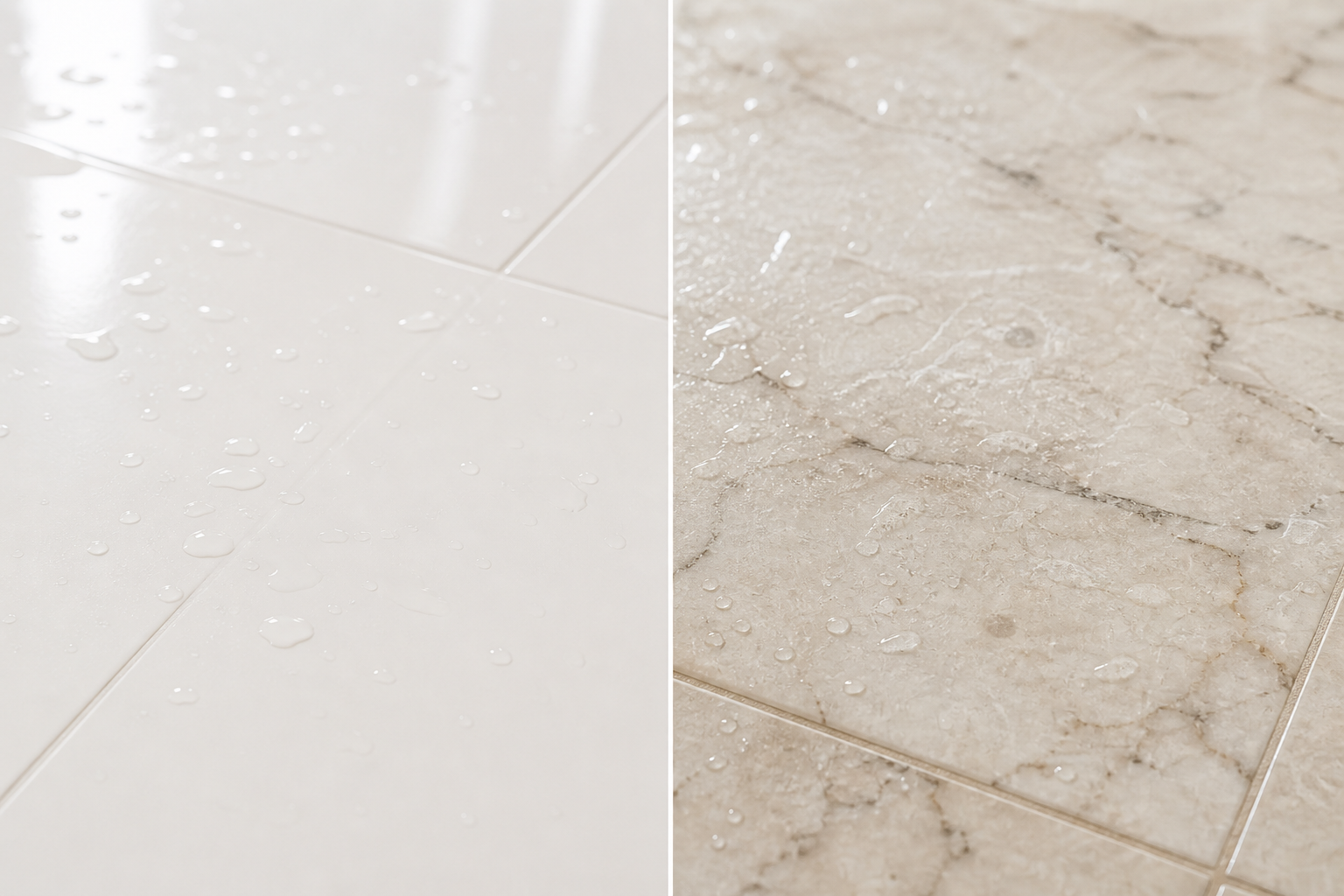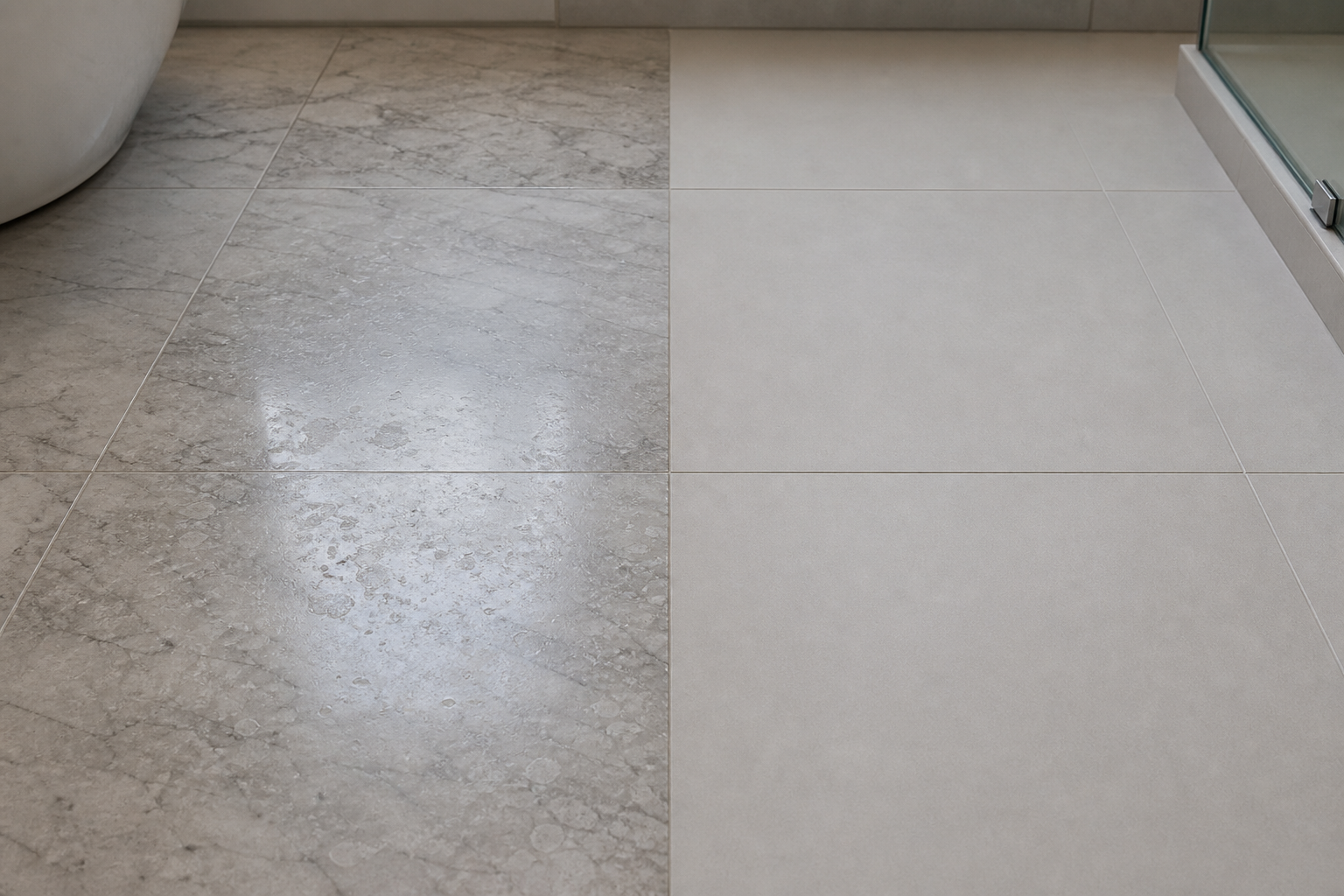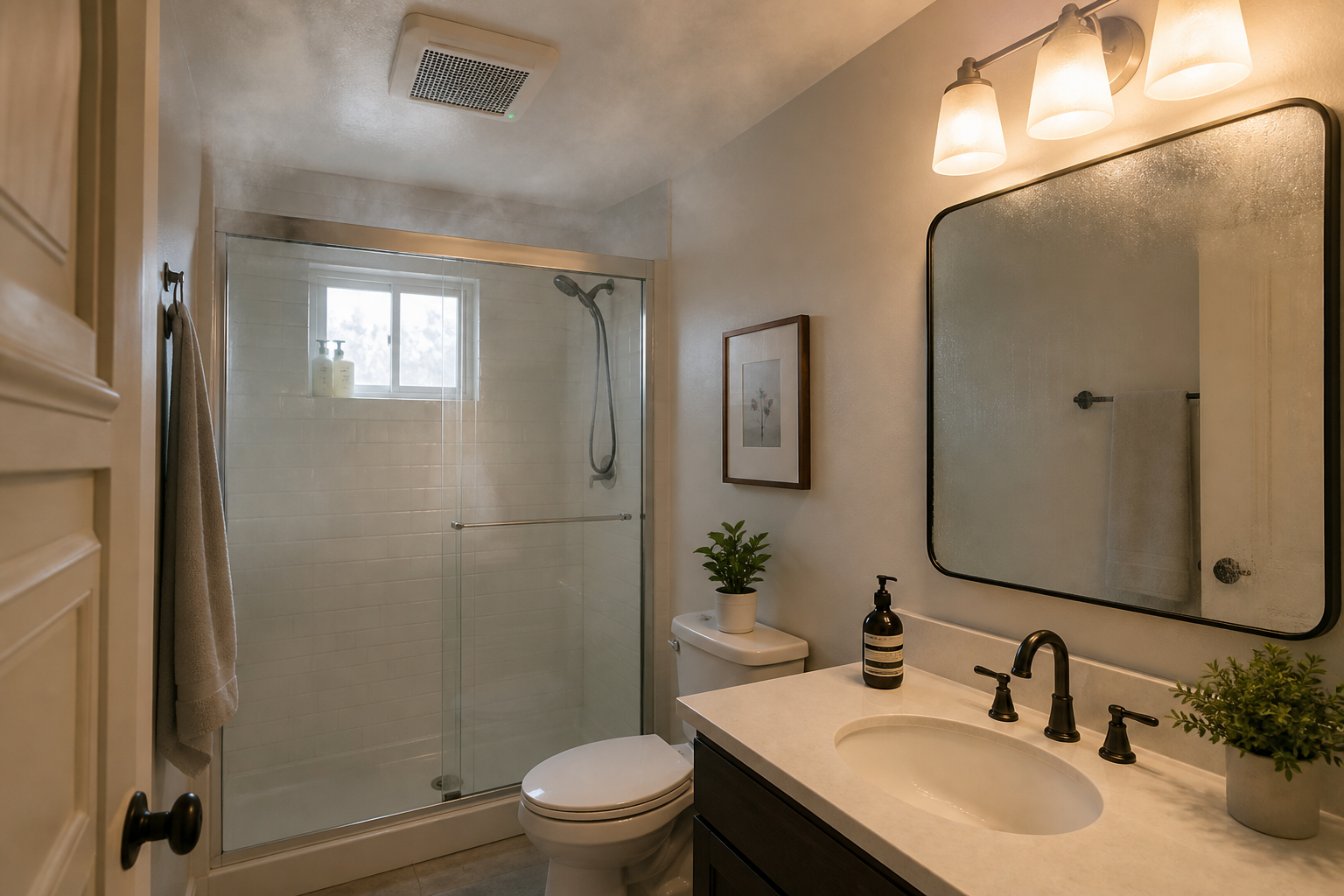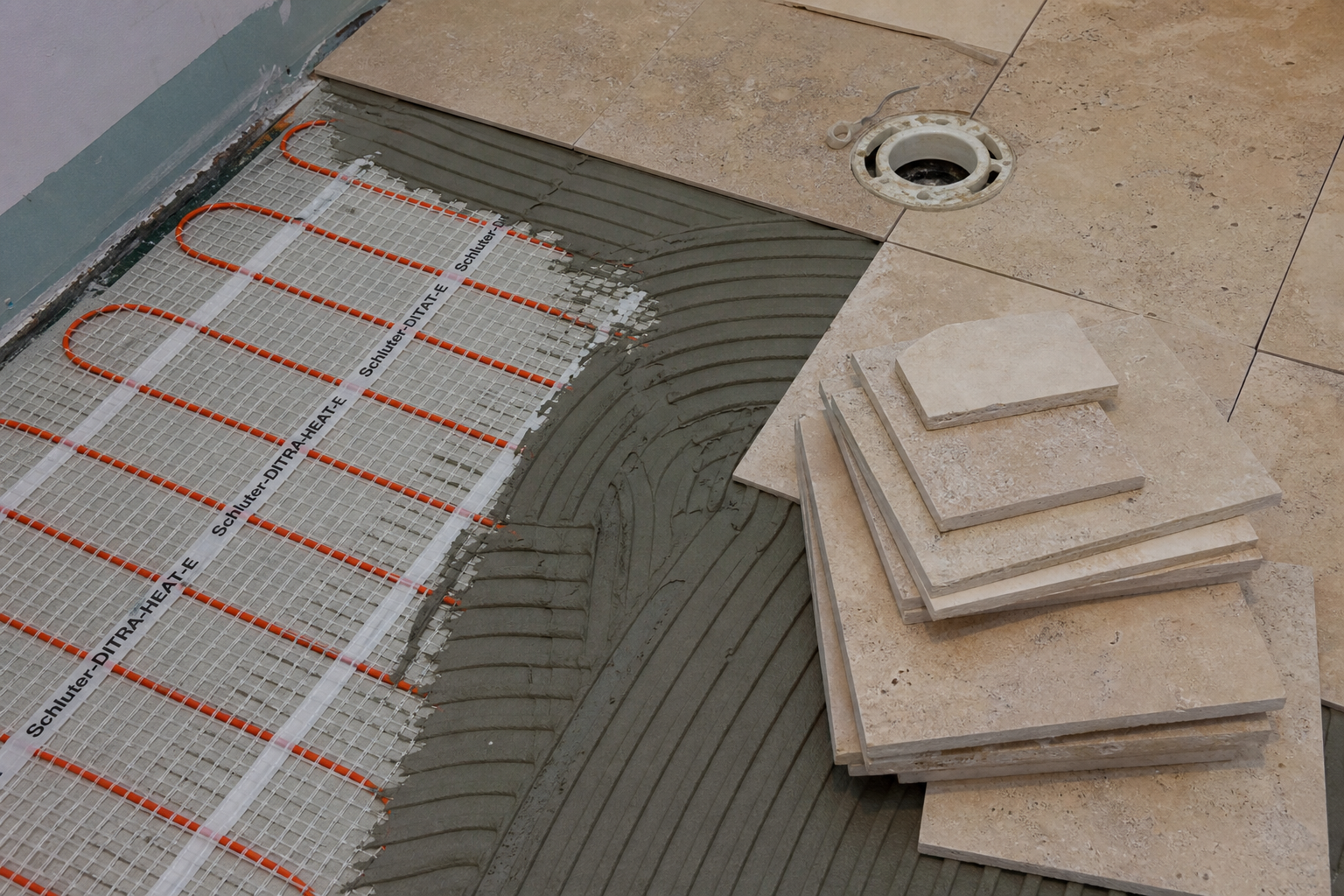
Tile is not waterproof. Every experienced tile setter knows this. Most homeowners do not, and most contractors rely on that gap in knowledge. Water reaches the wall assembly behind a shower through four distinct pathways, and three of them are invisible. A shower can look perfect and be leaking for years.
That statement is not speculation. It is the documented position of the Tile Council of North America, the International Institute of Building Enclosure Consultants, and every major membrane manufacturer in the industry. The tile surface in a shower is cladding. It sheds water, yes. But it does not stop water. Something else has to do that, and that something lives behind the tile, not at the surface.
Understanding why requires understanding how water actually moves through solid materials under real shower conditions.
What "Looks Sealed" Actually Tells You
A shower that looks sealed tells you that the finish work was done. It tells you nothing about the wall assembly behind the finish layer.
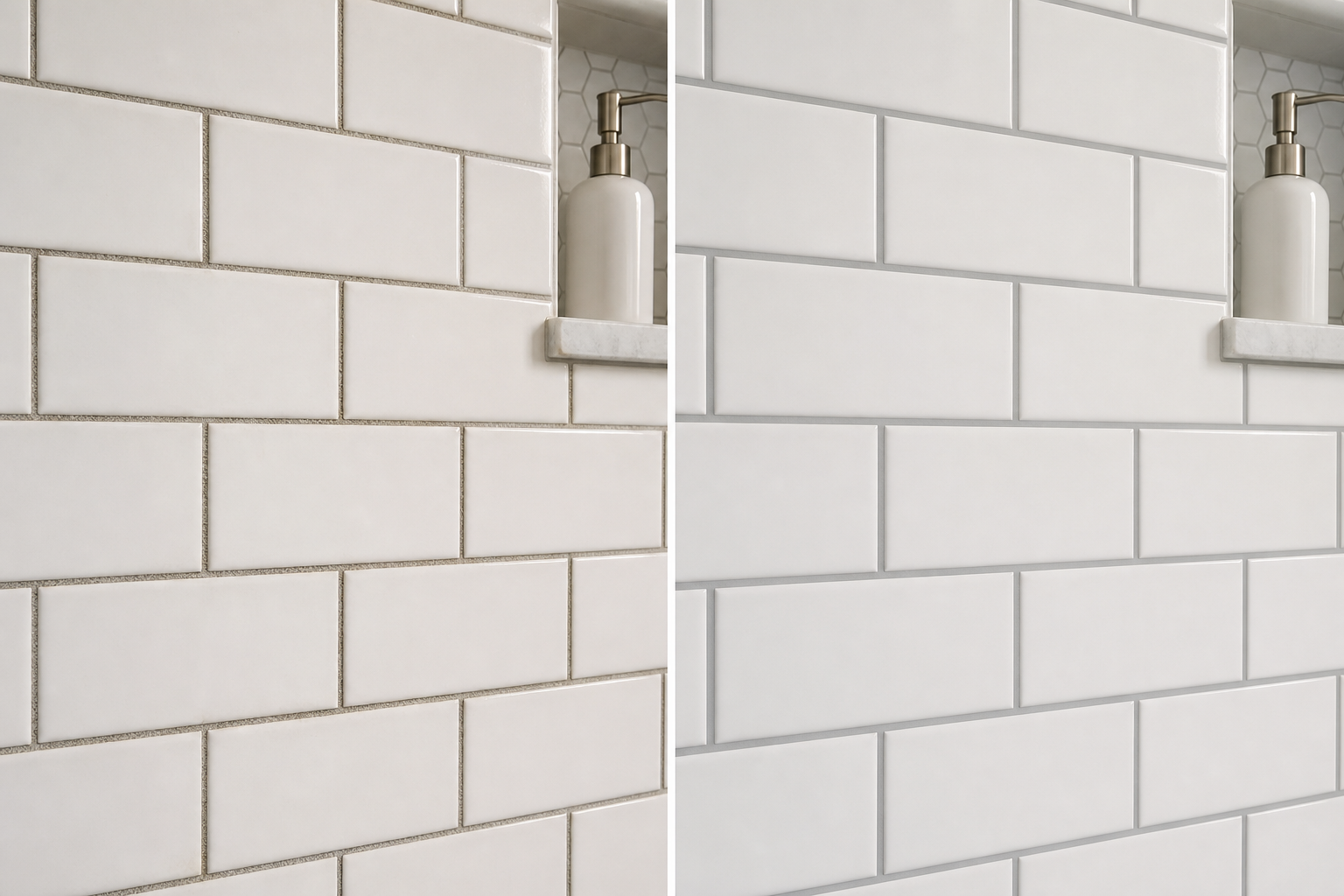
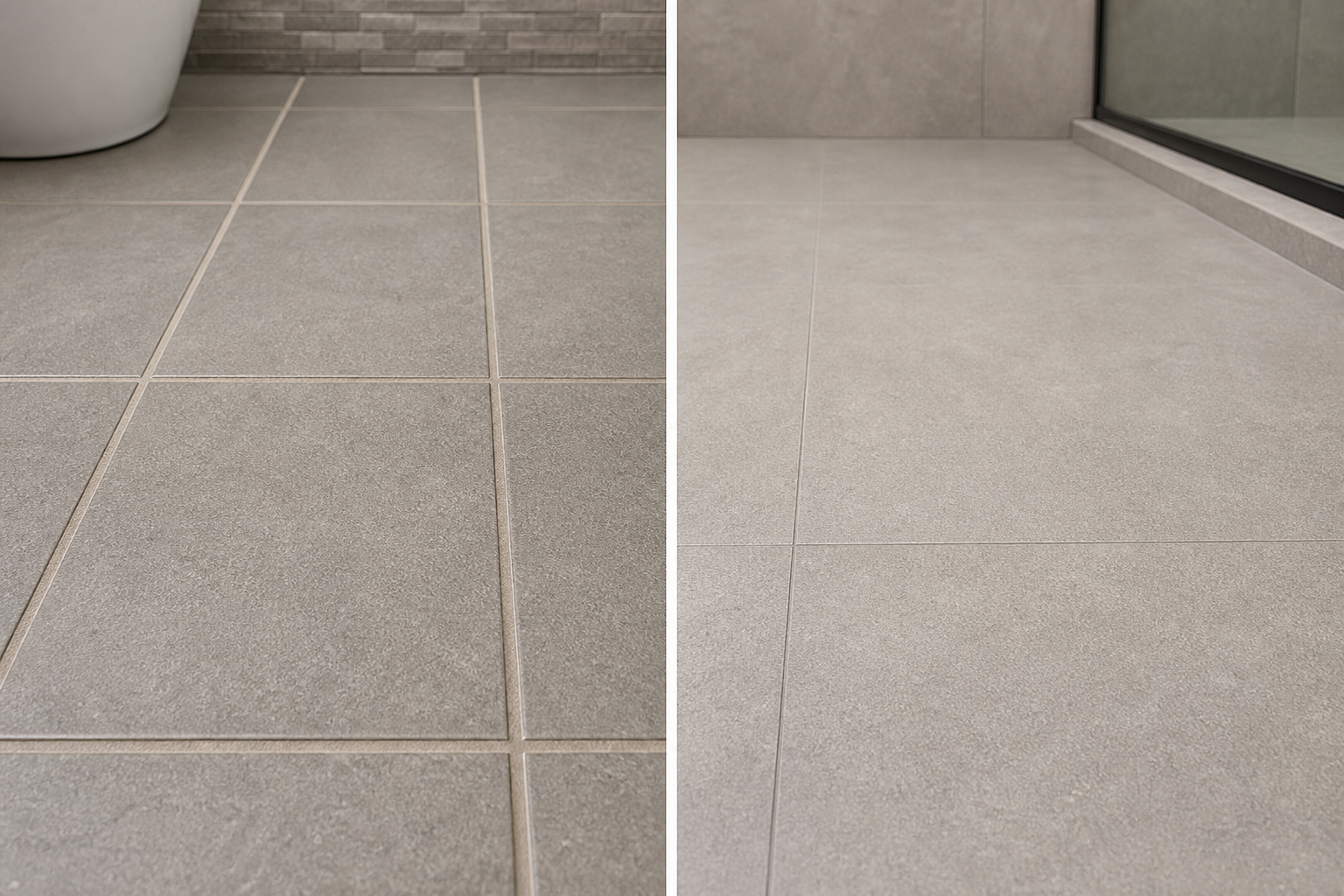
Grout looks dense but is not impermeable. Caulk at the perimeter looks continuous but has a lifespan measured in years, not decades. Tile itself, except for the glazed face of a ceramic or porcelain unit, has porosity that varies considerably by material and body composition. What you see from inside a finished shower is the decorative surface of a system whose function depends entirely on what you cannot see.
The question is not whether a shower leaks in the dramatic sense of water running down the hallway. The question is where water goes after it hits the tile, and whether there is anything in its path before it reaches the framing.
Pathway One: Capillary Action Through Grout Joints
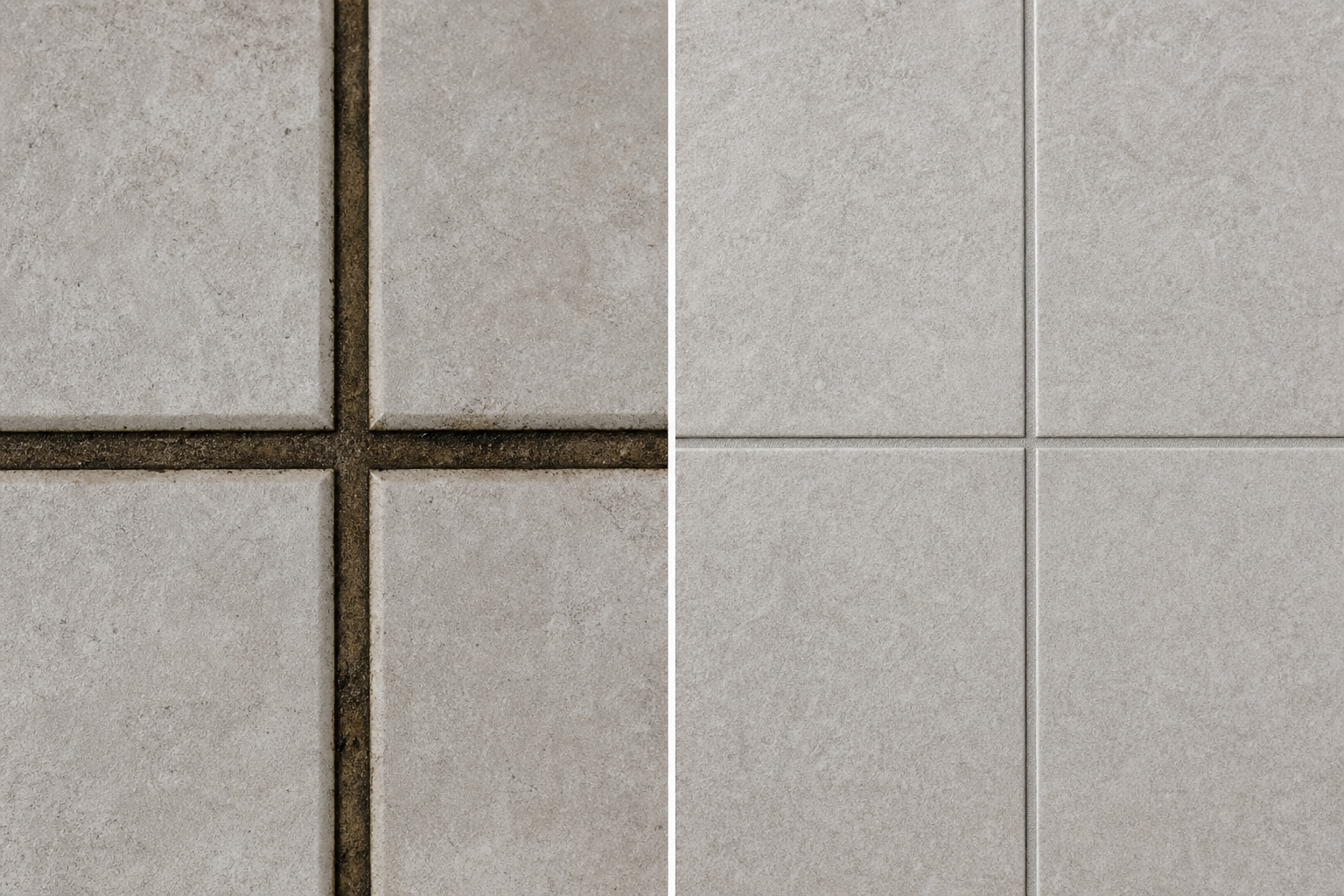
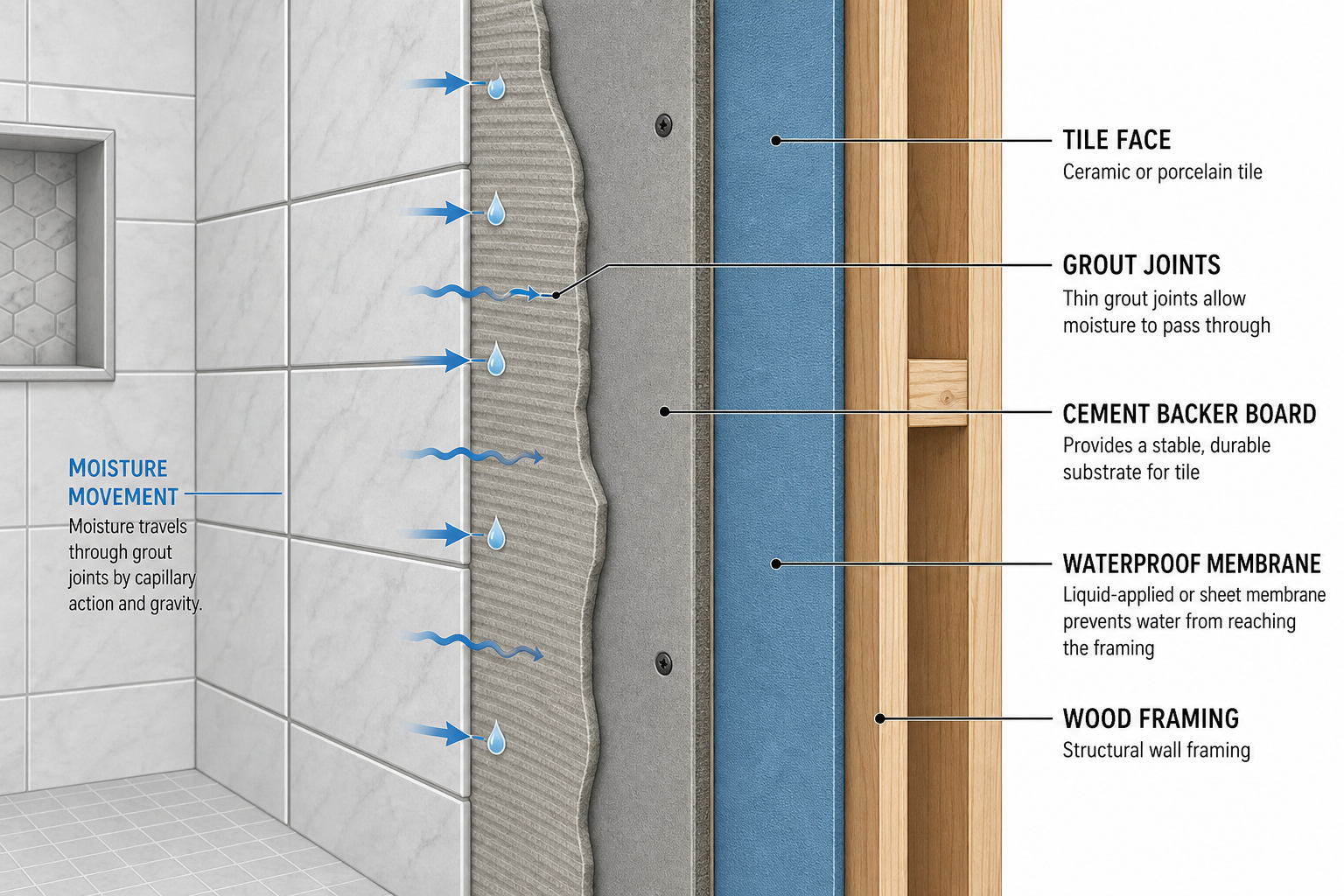
The mechanism is chemistry and physics, not negligence. Cement-based grout is a porous material. Its porosity is structural, not a defect. When the grout cures, water from the mix evaporates and leaves behind a network of micro-capillaries running through the set material. Those capillaries are permanent features of the grout matrix.
Under testing protocols established by ANSI A118.6, cement-based grouts absorb water at rates ranging from approximately 5 to 16 percent by weight, depending on formulation and installation quality. That absorption is not passive. Capillary pressure actively draws water into the grout the same way a paper towel draws water upward against gravity. The smaller the capillary diameter, the higher the suction pressure. Water does not need to be forced in. It is pulled.
Water that enters a grout joint does not stay in the grout. It migrates laterally and inward through the assembly, following the capillary network toward drier zones. In practice, that means water moves toward the substrate behind the tile, and from there into whatever substrate material occupies that position.
Sealing grout with a penetrating sealer reduces the absorption rate but does not eliminate it. The Custom Building Products technical white paper on shower waterproofing states this directly: even treated grout joints will not eliminate water intrusion completely. Sealers degrade. Reapplication schedules are rarely followed. The capillary network is still there when the sealer is gone, and it resumes drawing at full rate.
Epoxy grout achieves near-zero water absorption by replacing the cement binder with a resin system that does not form capillary pores during cure. For high-traffic commercial environments, epoxy grout reduces moisture infiltration significantly compared to cement alternatives. But epoxy grout does not stop vapor transmission, does not eliminate the need for movement joints at changes of plane, and does not change the physics of the other three pathways described here. It solves one problem in a system that has four.
The practical conclusion is that grout joints are permeable by design. A properly constructed shower accepts this and places the waterproof layer behind the grout, not at the grout surface.
Pathway Two: Vapor Transmission
Hot shower water does not only produce liquid spray. It produces steam, and steam is a form of water vapor that behaves entirely differently from liquid water.
Vapor moves through solid materials in response to vapor pressure differentials. When a hot shower raises the humidity inside the enclosure toward saturation, a pressure gradient forms between the wet interior air and the drier air inside the wall cavity. That gradient drives water vapor through any material that is not vapor-impermeable, including grout, cement board, and most setting beds. The vapor does not find a crack or a gap. It diffuses molecule by molecule through the bulk of the porous material.
This pathway requires no holes, no failed caulk, and no visible defect. It operates at the molecular level through materials that appear entirely intact from the surface.
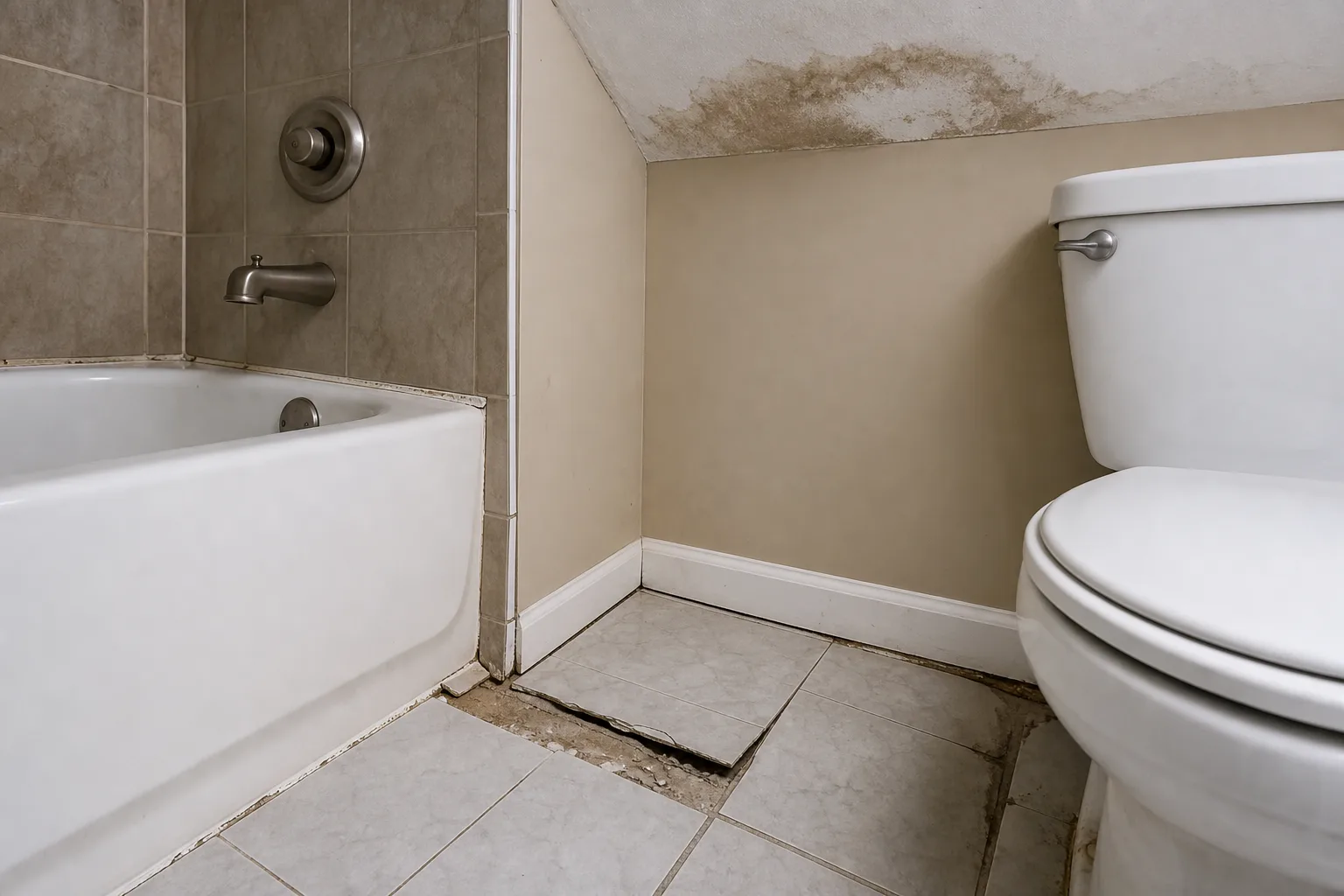
The Tile Council of North America steam shower guidelines now require that waterproof membranes used in steam applications have a water vapor permeance rating of 0.5 perms or less, tested per ASTM E96 Procedure E. That number is not arbitrary. It represents the threshold at which vapor transmission into the wall assembly stays below the rate at which the assembly can dry during off-hours. Exceed it consistently, and moisture accumulates in the framing over time. The accumulation is invisible from either side of the wall. The rot arrives years later.
Many membranes sold and installed for standard shower applications have perm ratings well above 0.5. They perform adequately as liquid waterproofing but do not meaningfully retard vapor. In a household with long daily showers, multiple users, or any form of steam generation, vapor transmission through a technically waterproof membrane can still deliver a sustained moisture load to wood framing over a long enough period.
The relevant point is that vapor transmission is a distinct and independent pathway from liquid infiltration. Stopping one does not automatically stop the other. The two mechanisms require different material properties, and a membrane specified only for liquid waterproofing may leave the vapor pathway open.
Pathway Three: Change-of-Plane Joints
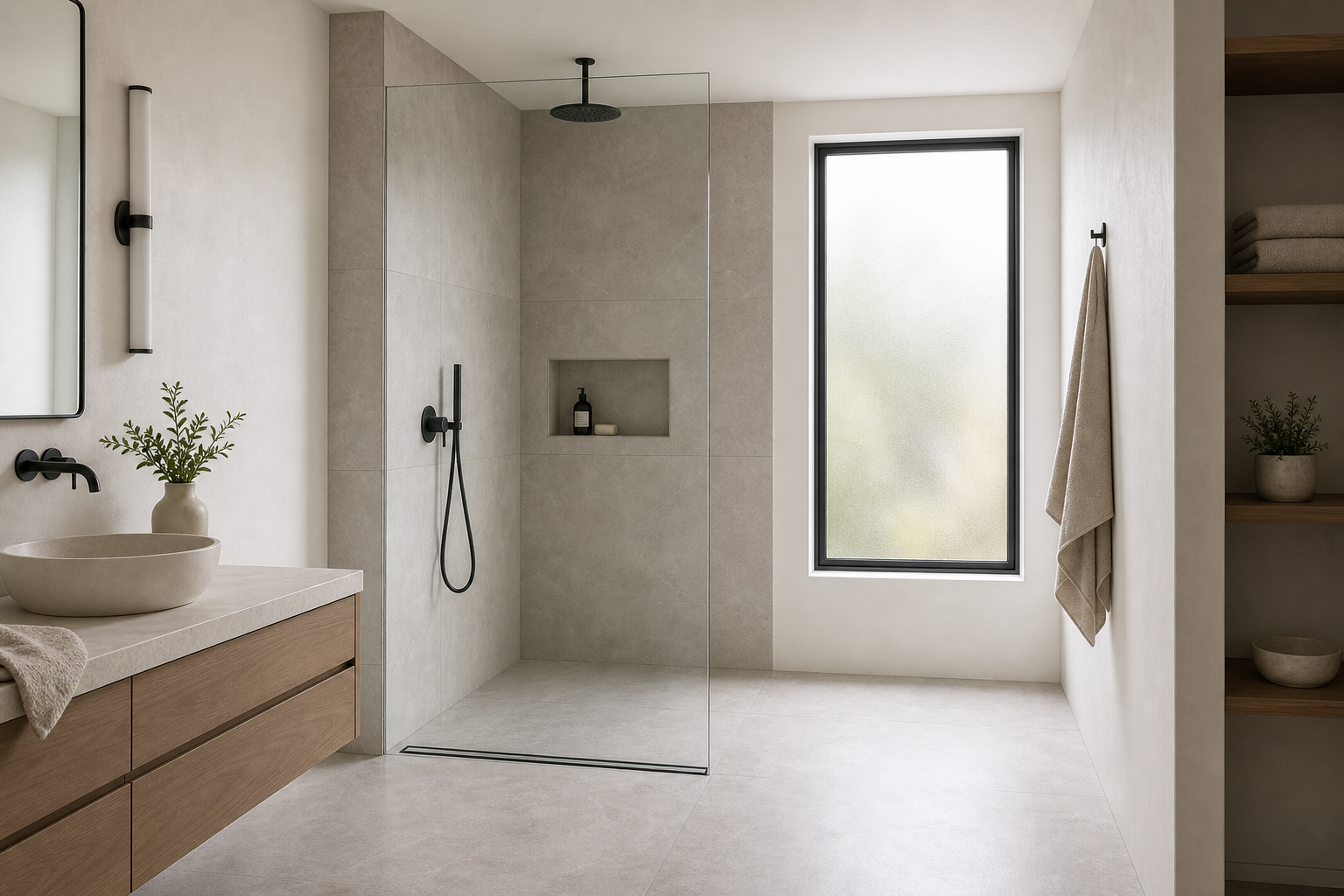
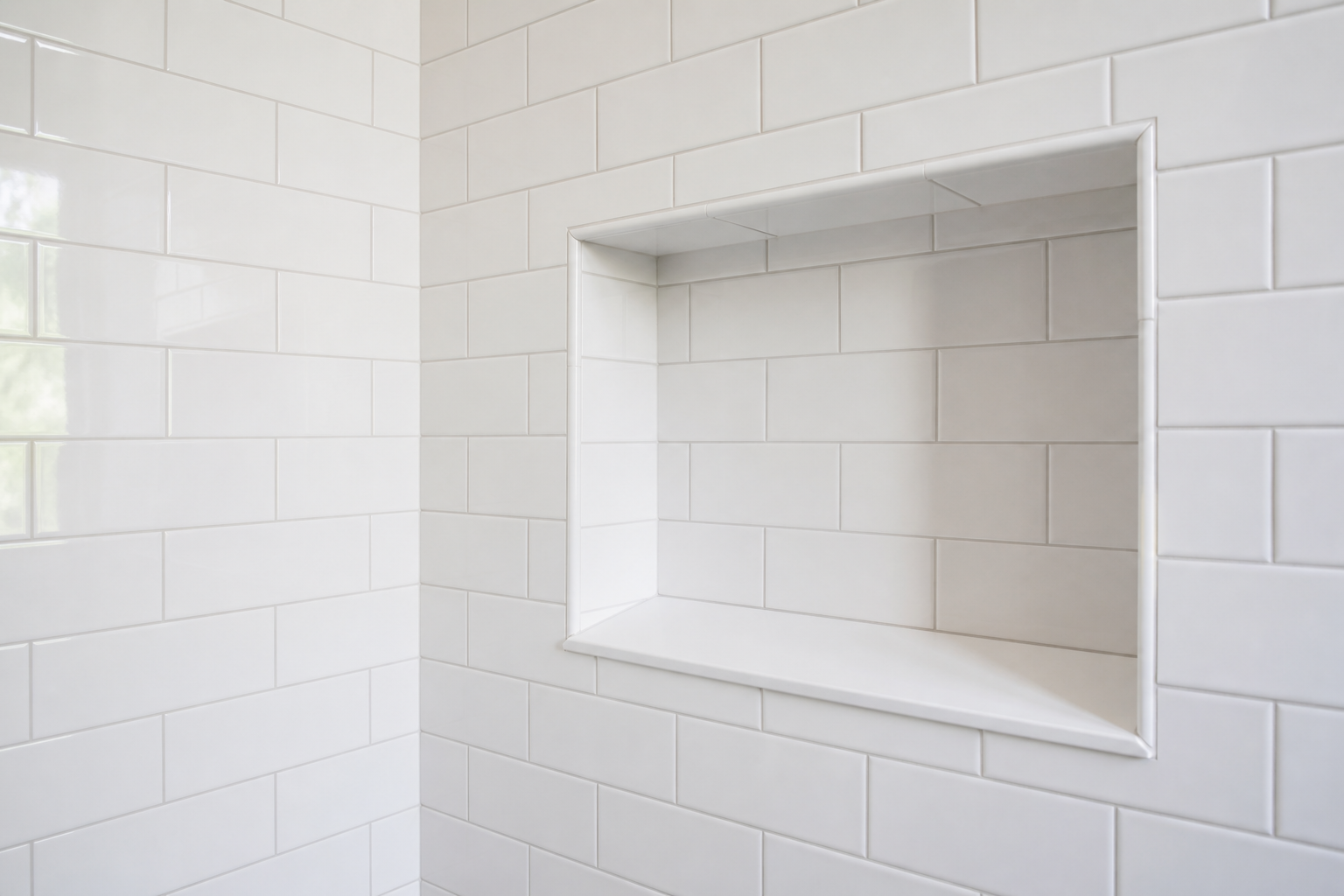
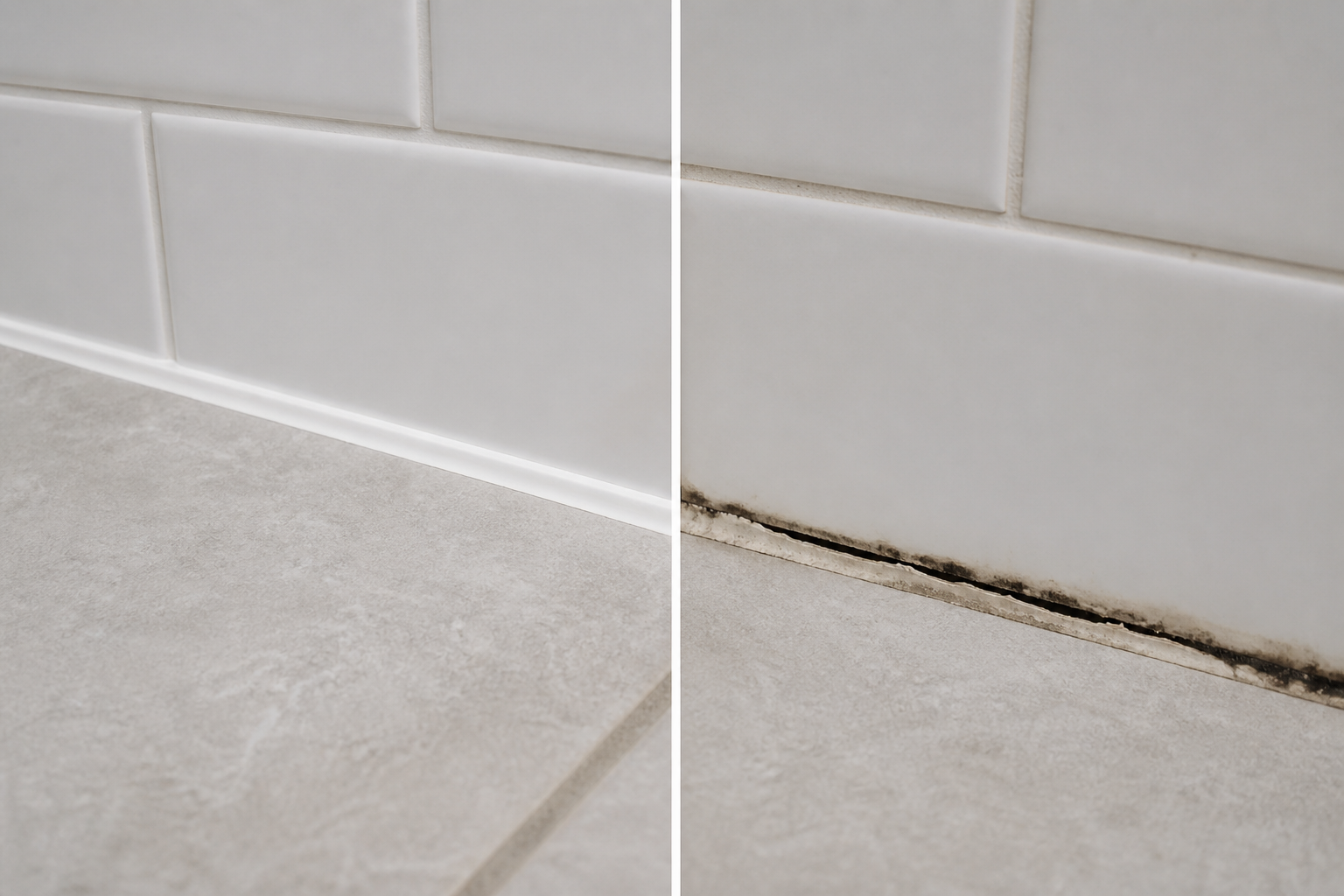
Every shower contains locations where two planes of tile meet at an angle. The floor meets the wall. The wall meets the fixture flange. The niche interrupts the wall plane and creates four new inside corners. The bench meets the floor and each adjoining wall. Each of these transitions is a change-of-plane joint.
These locations are not just geometrically different from field tile. They are mechanically different. The floor assembly and the wall assembly expand and contract at different rates. Framing lumber shrinks as it dries after construction. The mortar bed under the floor and the backer board on the wall respond differently to temperature and humidity cycling. At changes of plane, these differential movements concentrate into a small area with no capacity for relief.
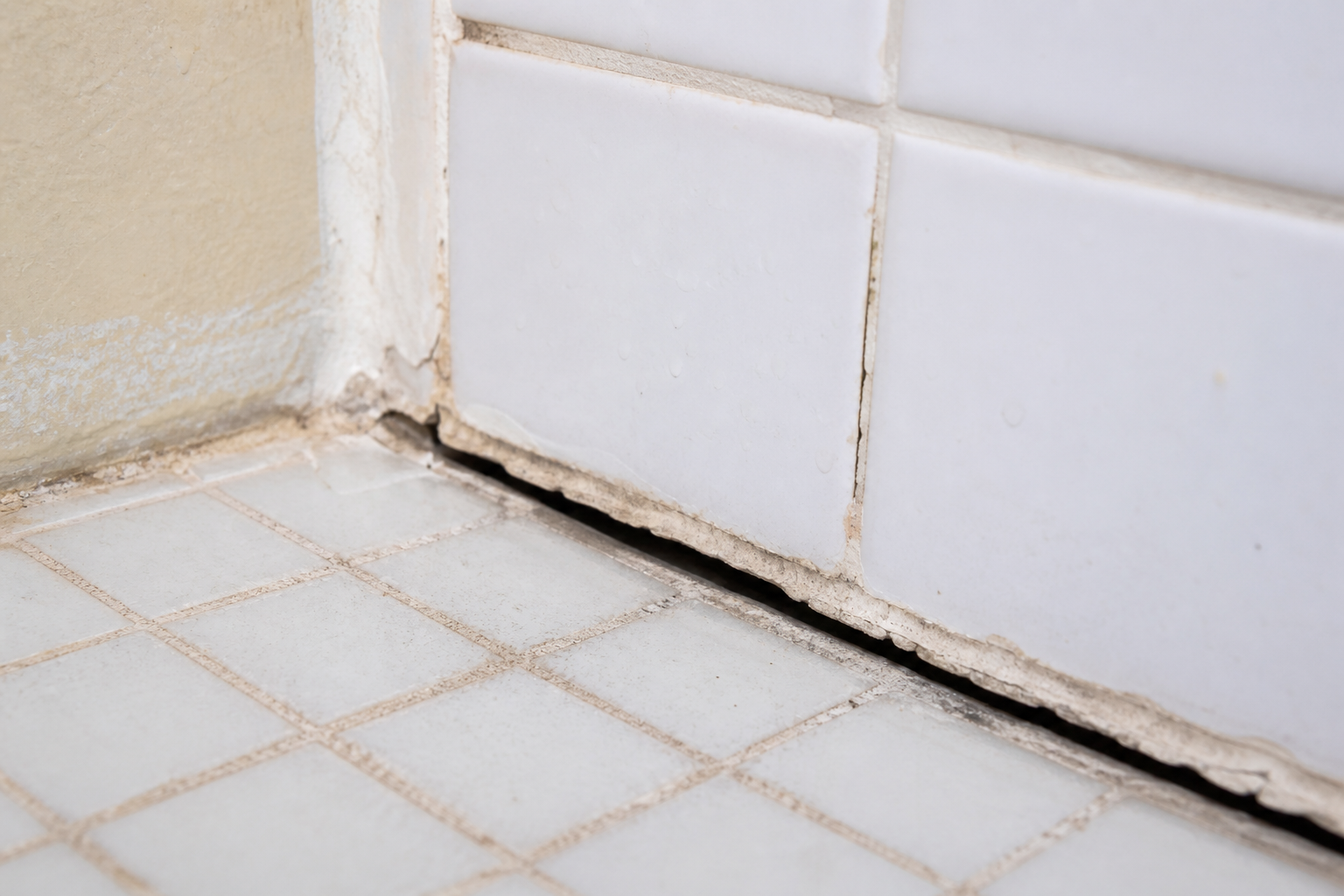
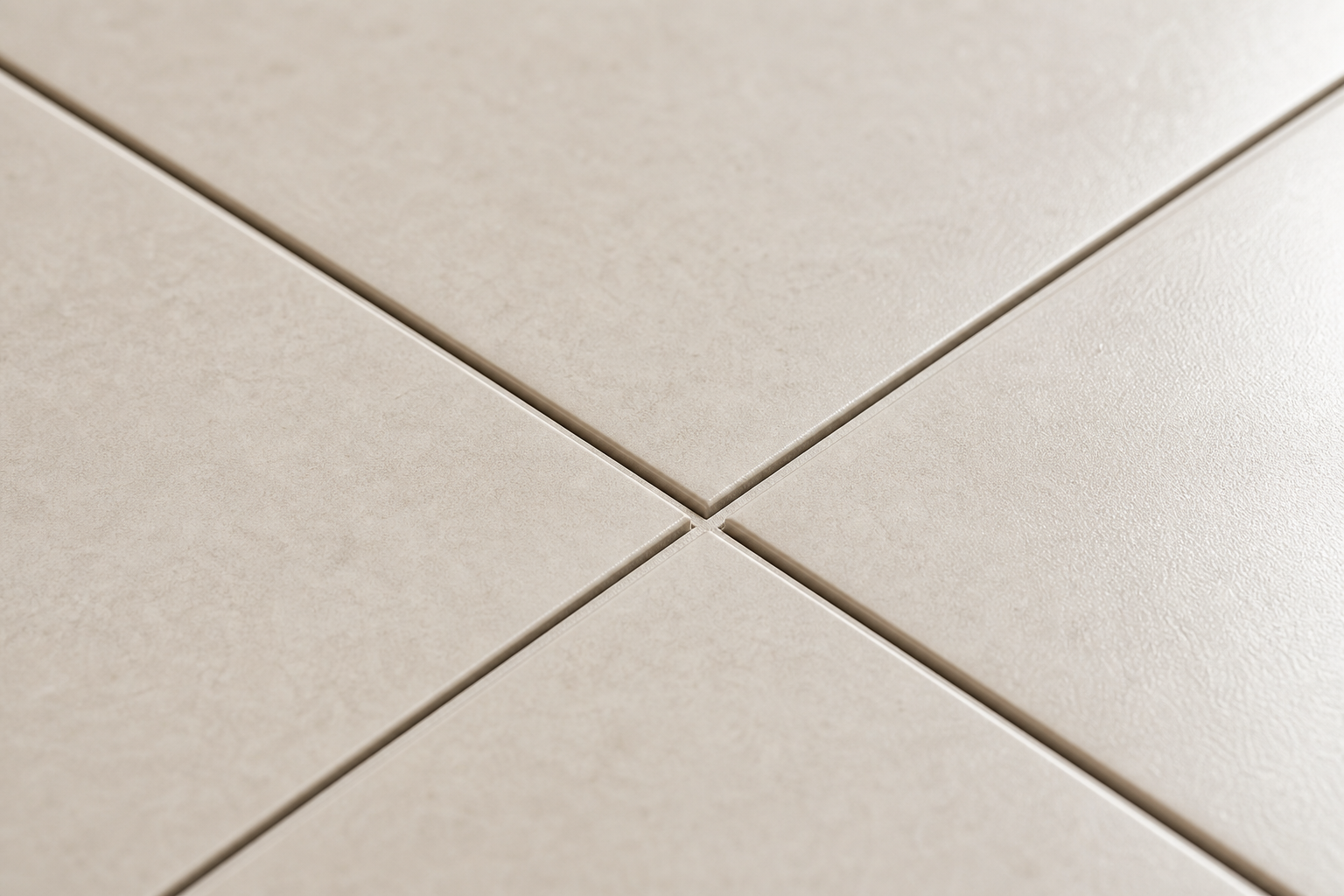
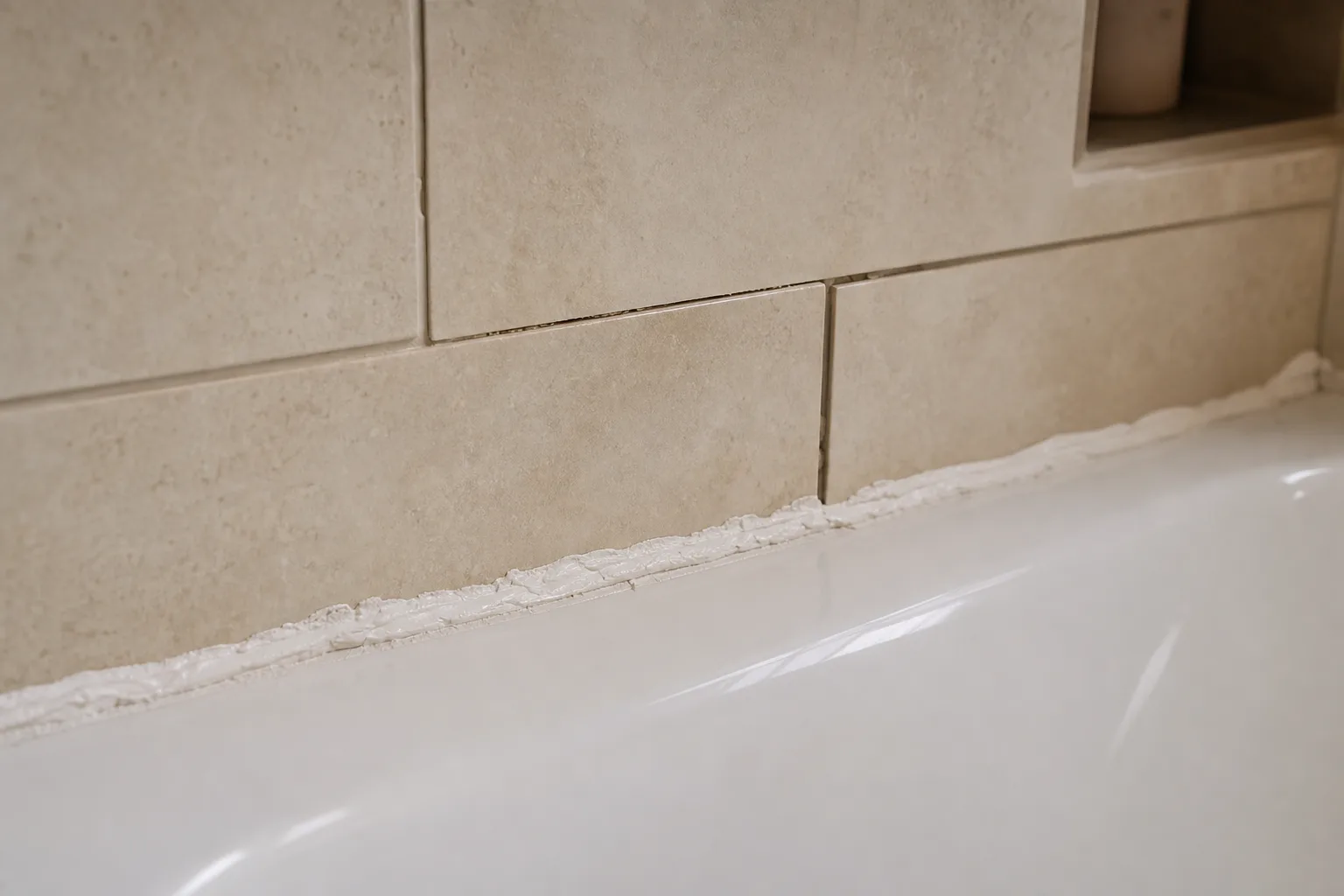
Rigid grout cannot accommodate differential movement. TCNA Detail EJ171 requires that all inside corners, all floor-to-wall transitions, and all perimeter joints be filled with a compressible elastomeric sealant rather than grout. The mandate is not aesthetic. It is structural. Grout at an inside corner will crack because the forces acting on it will eventually exceed its tensile strength. The only variable is when.
When grout at a change-of-plane joint cracks, the resulting gap is at the highest-stress location in the entire shower. It is also typically at the base of the wall, directly adjacent to the shower floor where standing water accumulates during use. Water entering a cracked base-course joint is not finding a hairline fissure in the middle of a wall. It is entering the assembly at its most vulnerable point, at grade level, during every shower.
The International Institute of Building Enclosure Consultants, in research comparing tiled shower walls to clad exterior wall assemblies, has documented that shower failures consistently originate at these transition zones. The failure mode at changes of plane is not slow capillary migration. It is bulk water entry through a wide-open path created by predictable movement that nobody allowed for.
The answer is a properly installed movement joint at every change of plane, filled with sealant rather than grout, and a waterproofing membrane beneath the tile that is continuous through the transition rather than stopping at the edge of one plane and starting fresh at another.
Pathway Four: The One Penetration
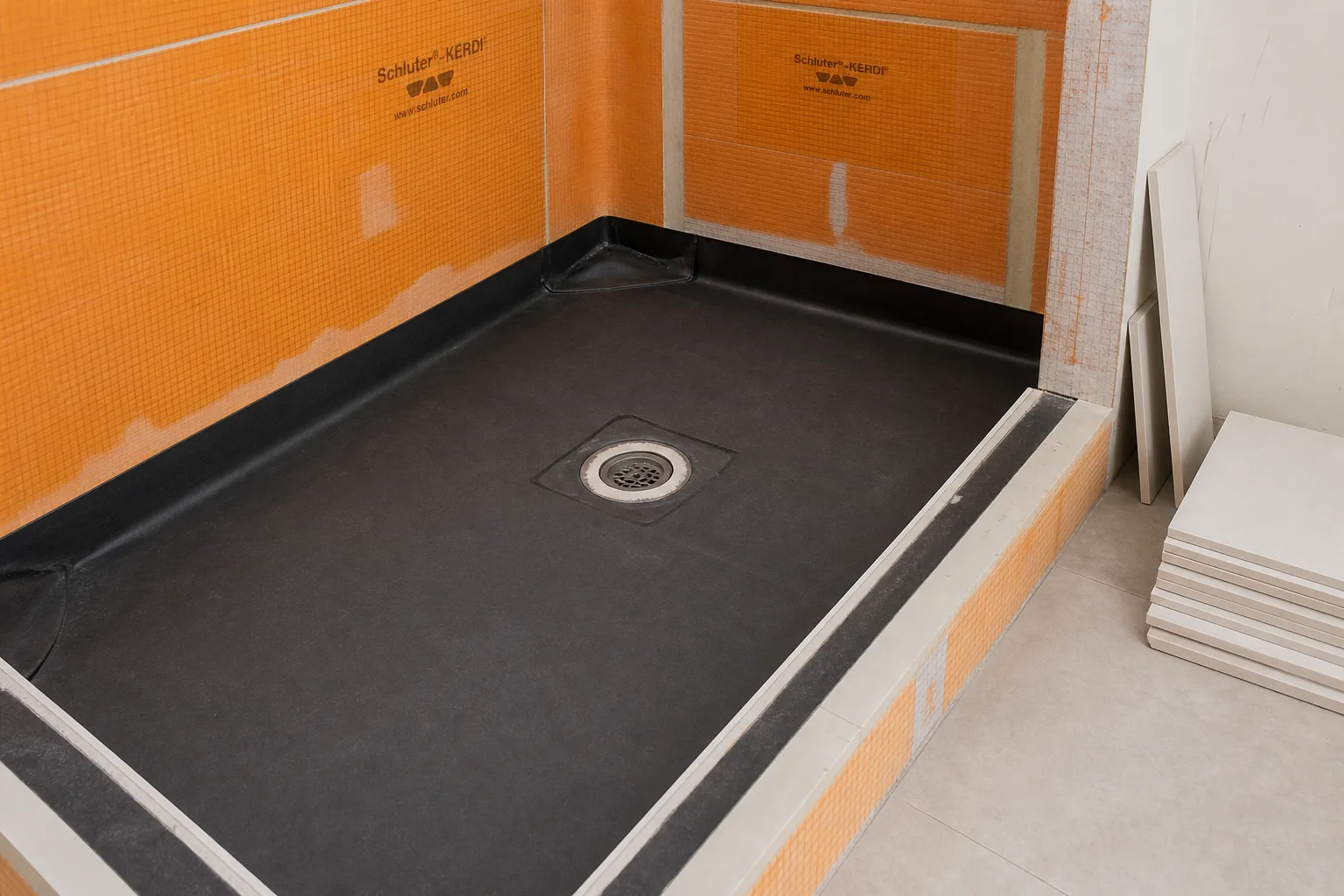
Every tile installation contains penetrations. Screws or nails fasten backer board to framing. Fasteners secure the curb form. The drain body passes through the floor assembly. Fixture valve flanges pass through the wall plane. In a well-designed shower assembly, every one of these penetrations is accounted for. The membrane is lapped over or bonded to each transition with compatible materials from the same product system.
In practice, one gets missed.
Schluter Systems, in their published document on common waterproofing mistakes, identifies fastener penetrations through pan liners as one of the most consistent documented failure modes in the field. The liner is intact everywhere except for two screws driven through the curb to secure the backer board. The tile looks perfect from inside the shower. The liner is compromised. Water has been tracking through the framing below the floor for three or four years before anyone notices.
The physics is unforgiving. A single pinhole in an otherwise intact liner is sufficient, given enough water pressure and enough time, to produce significant structural damage. The same principle applies to bonded sheet membrane systems. A missed corner where membrane fabric was not lapped into the floor transition, a gap at a niche corner where the installer ran out of seam tape, a small area where the membrane did not bond to the substrate: each is an independent pathway. Each is invisible after tile is set. Each operates without any signal until the damage is too large to miss.
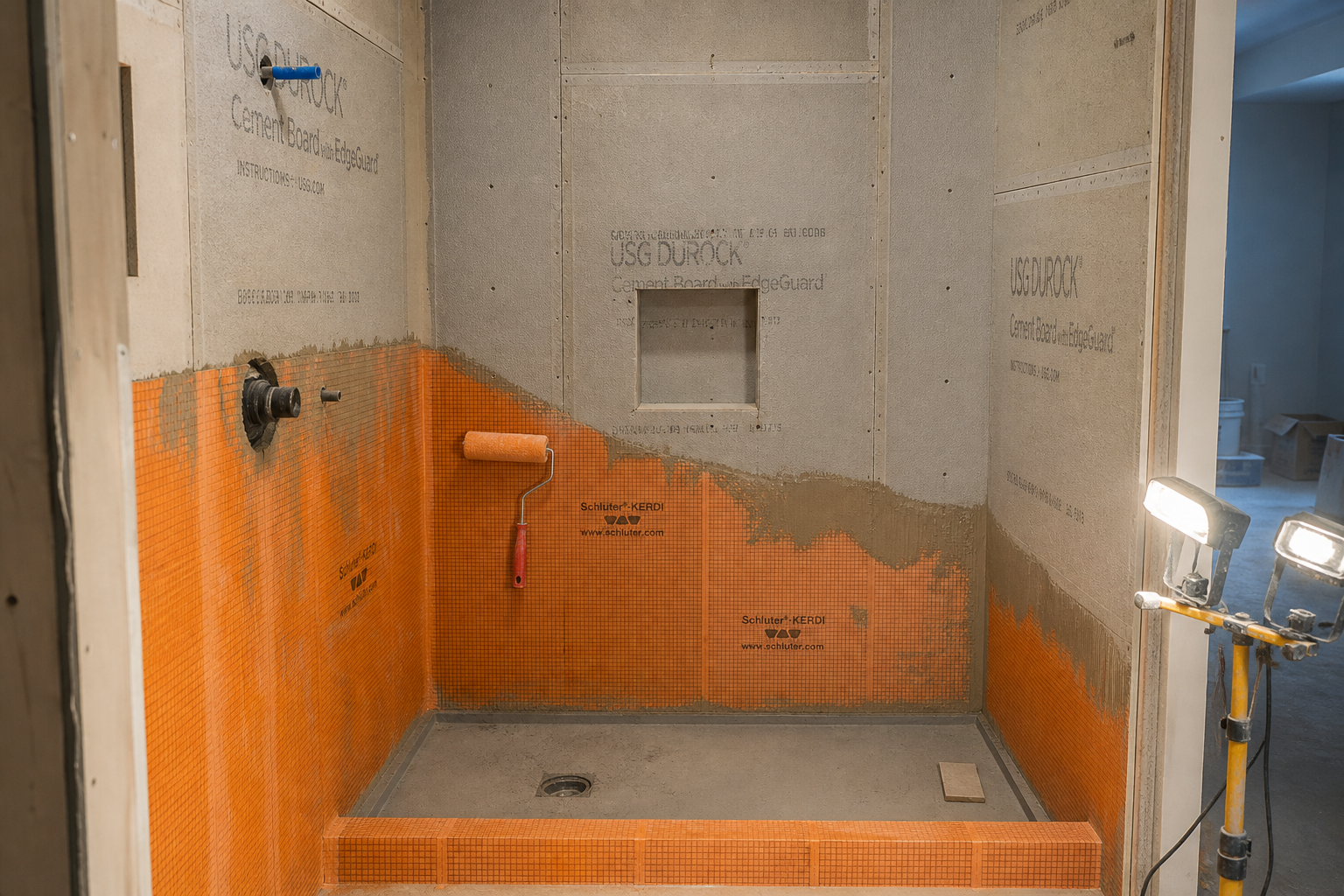
This is what makes pre-tile inspection valuable. There is no substitute for seeing the membrane installed and continuous before the tile covers it permanently. Flood-testing a traditional liner before the mortar bed goes down has been standard practice for decades. For bonded membrane systems, visual verification of continuity at all corners, transitions, and penetrations serves the same function. After tile, that verification is no longer possible.
Why the Membrane Must Be Behind the Tile
The four pathways share a common property: they all originate at or through the tile surface and progress inward toward the wall assembly. The tile does not stop any of them. The tile was never designed to.
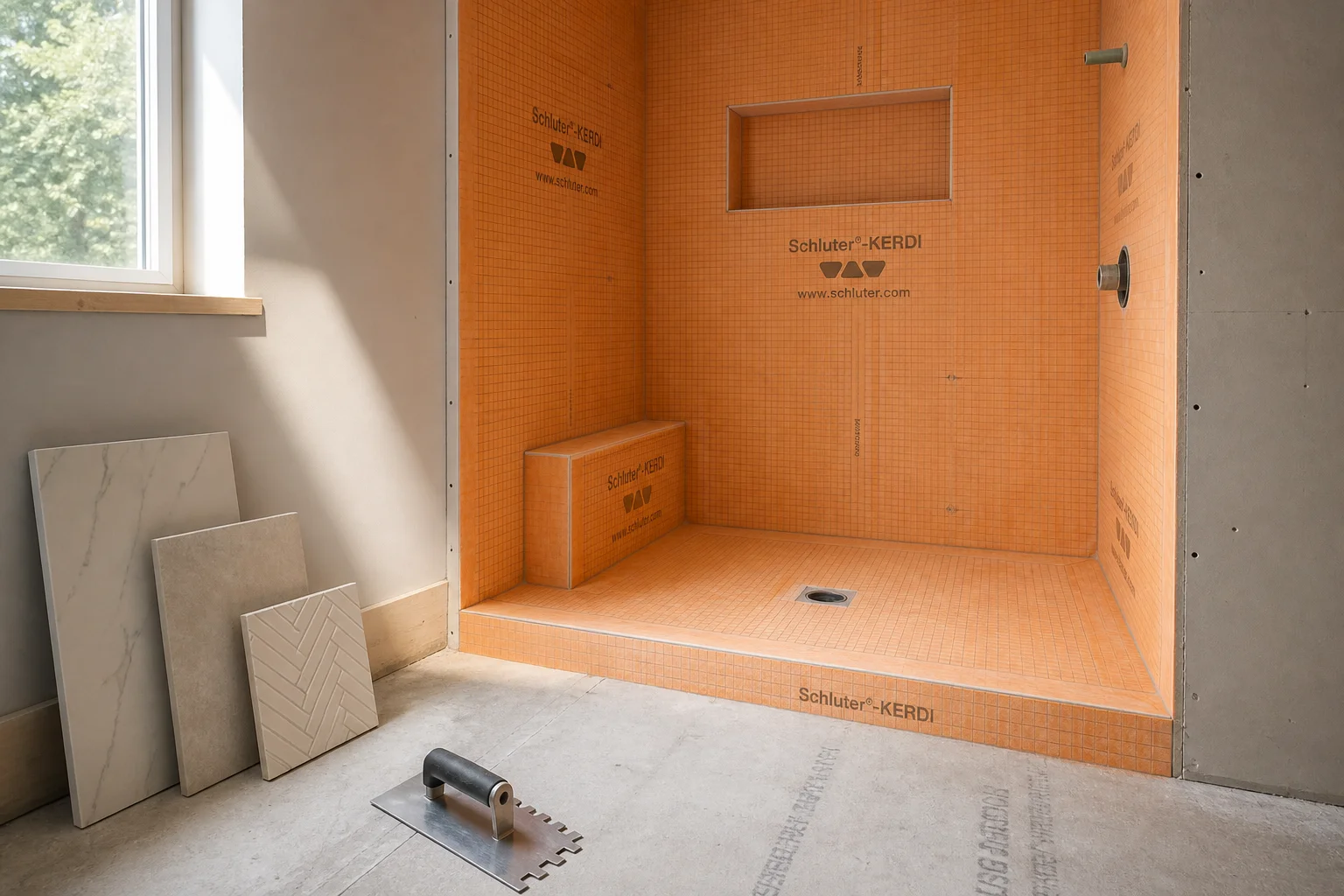
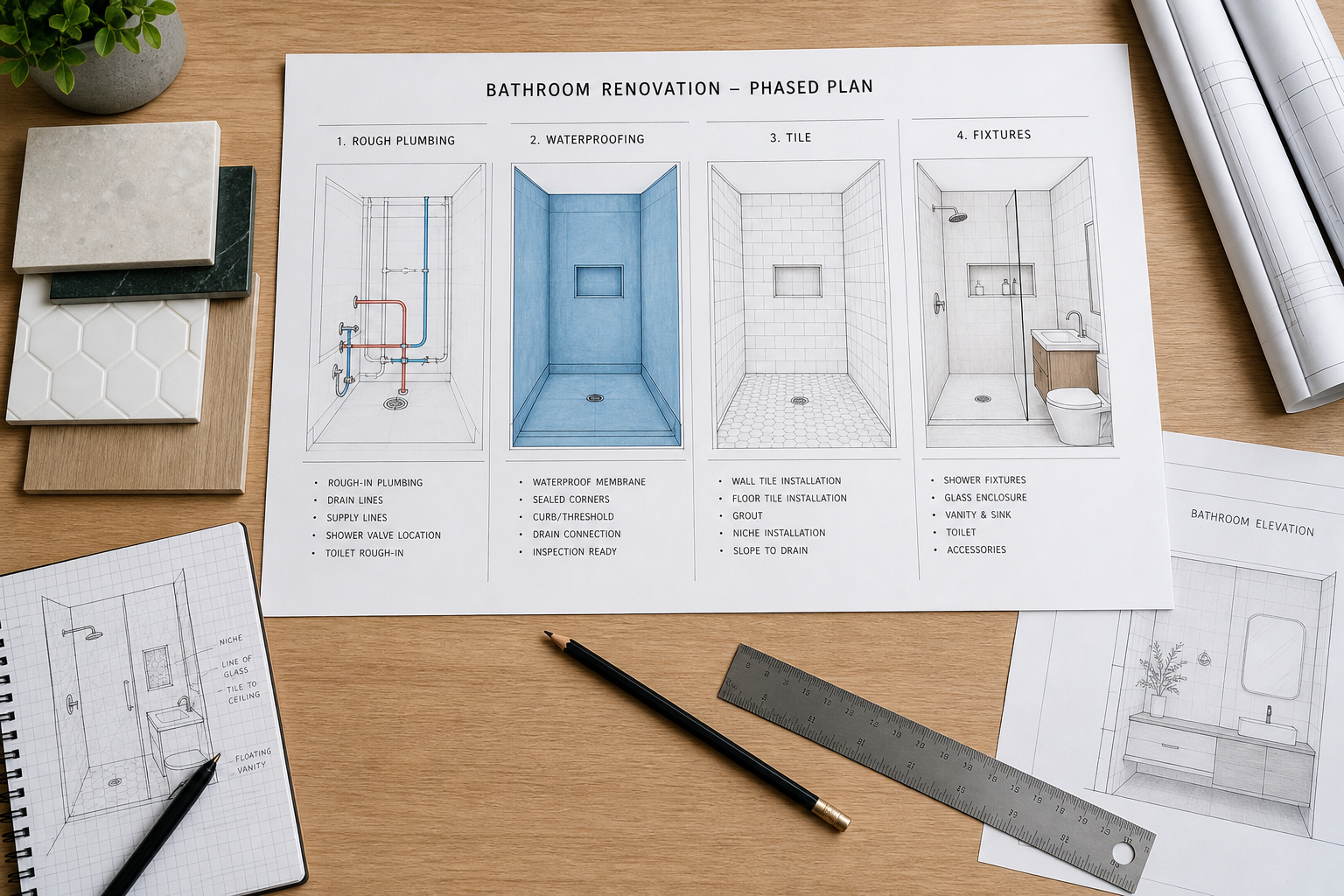
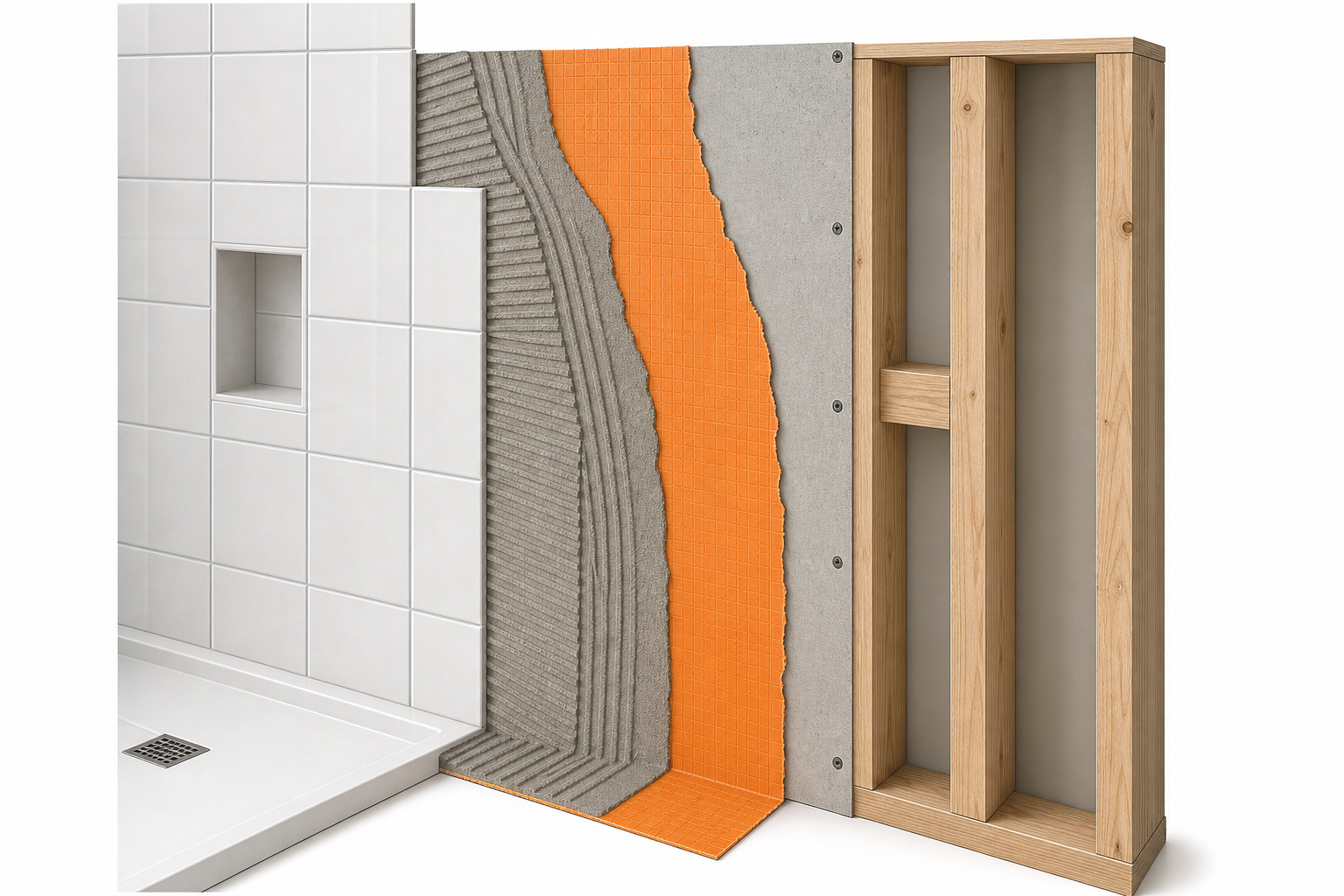
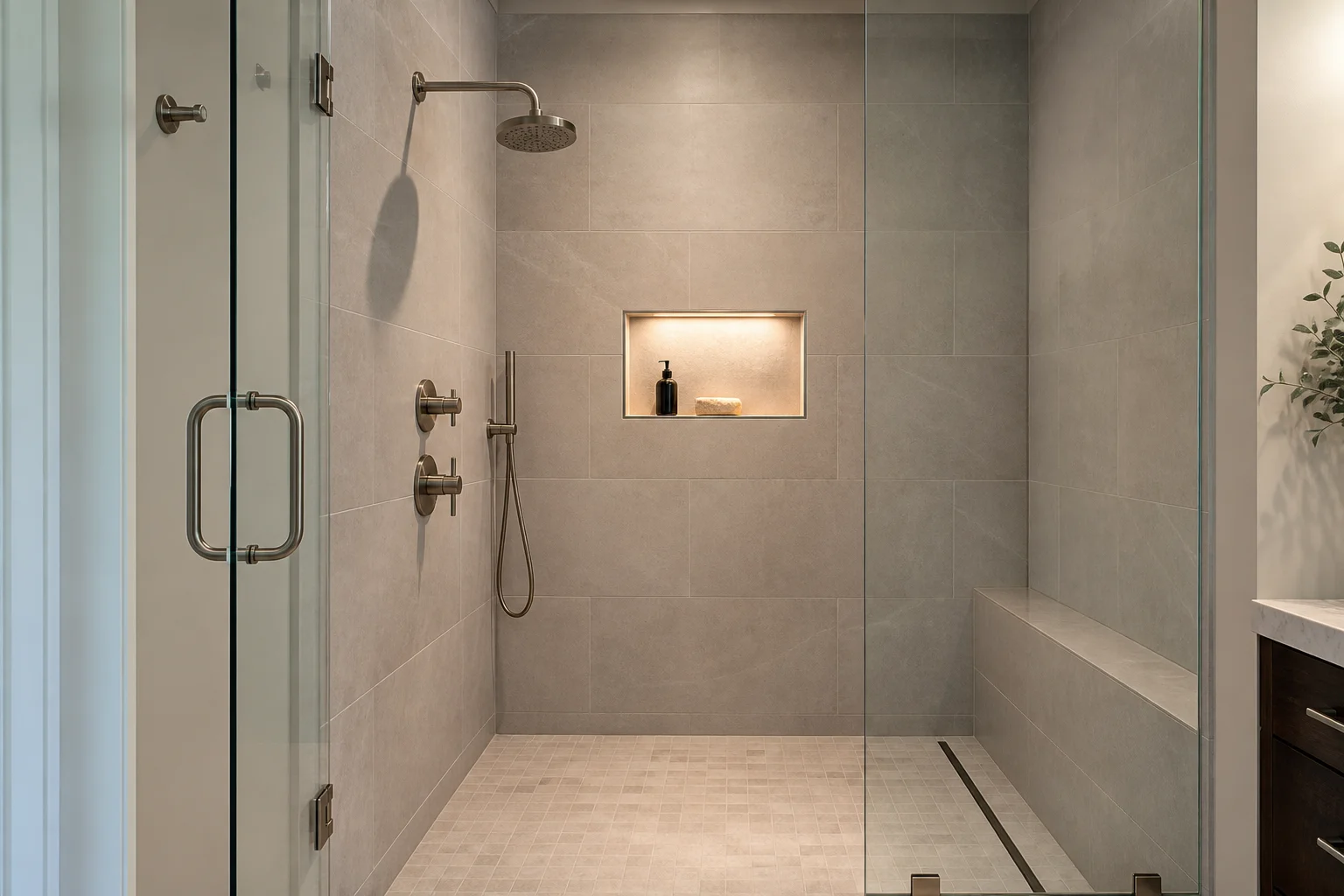
This is why the waterproofing membrane in a shower must be installed behind the tile, not at the tile surface. The membrane belongs as close to the substrate as practical, directly beneath the bonding mortar on the walls and integrated with the drain at the floor. In this position, the membrane intercepts any water that has moved through or around the grout via capillary action, any vapor that has diffused through the setting bed, any water that entered through a failed movement joint, and any water that found a fastener penetration. The tile assembly is deliberately allowed to get wet. The membrane is what stops water from going further.
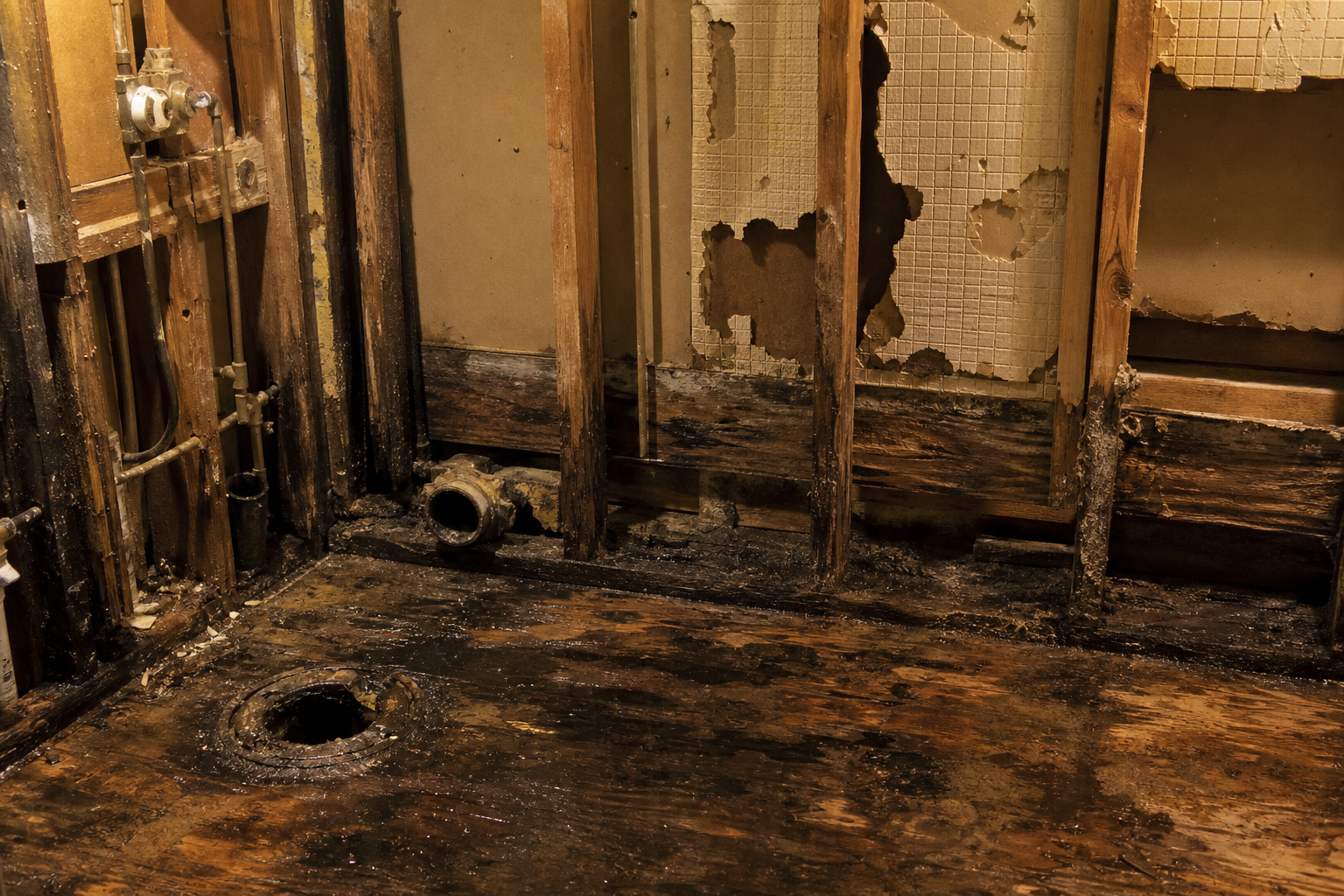
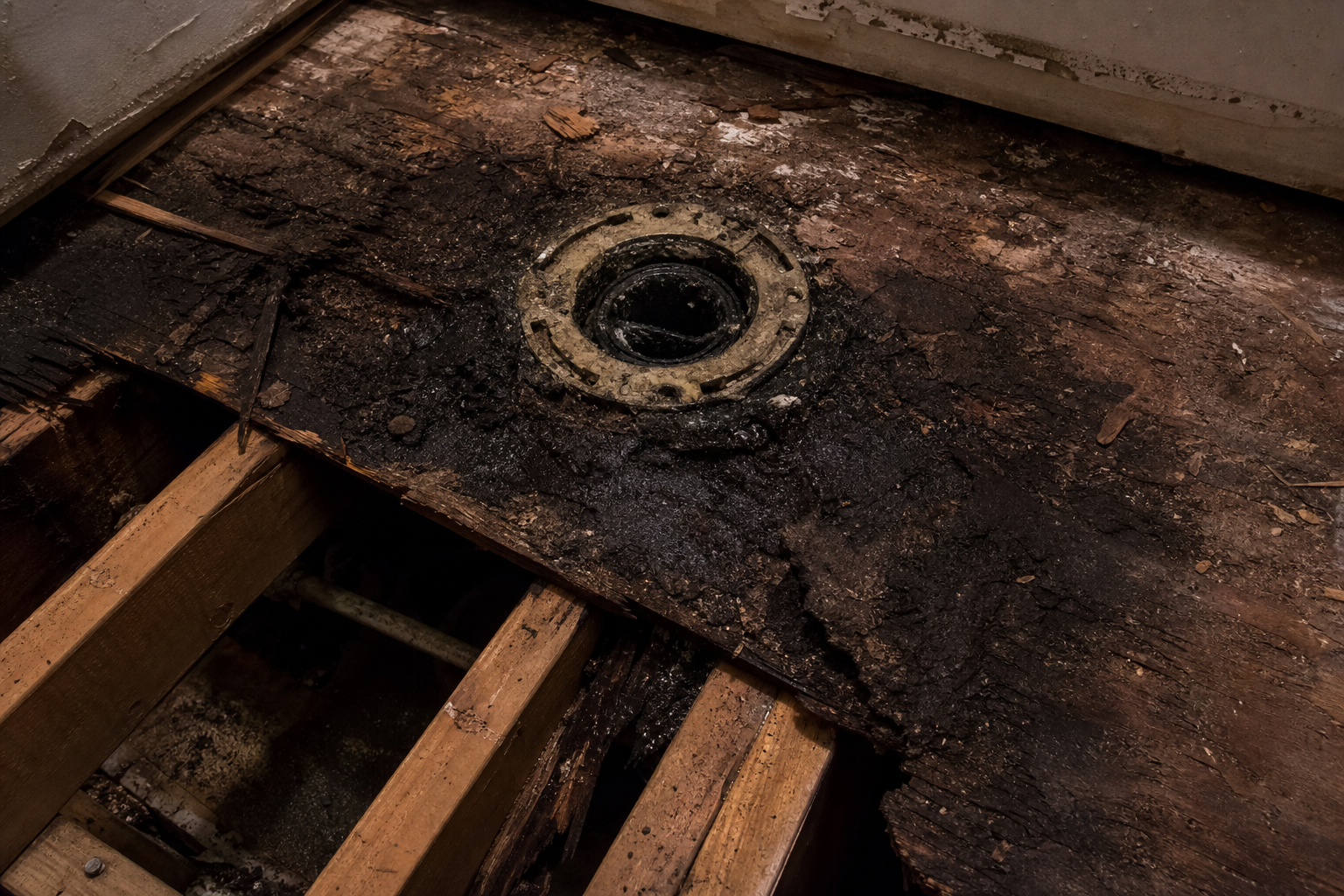
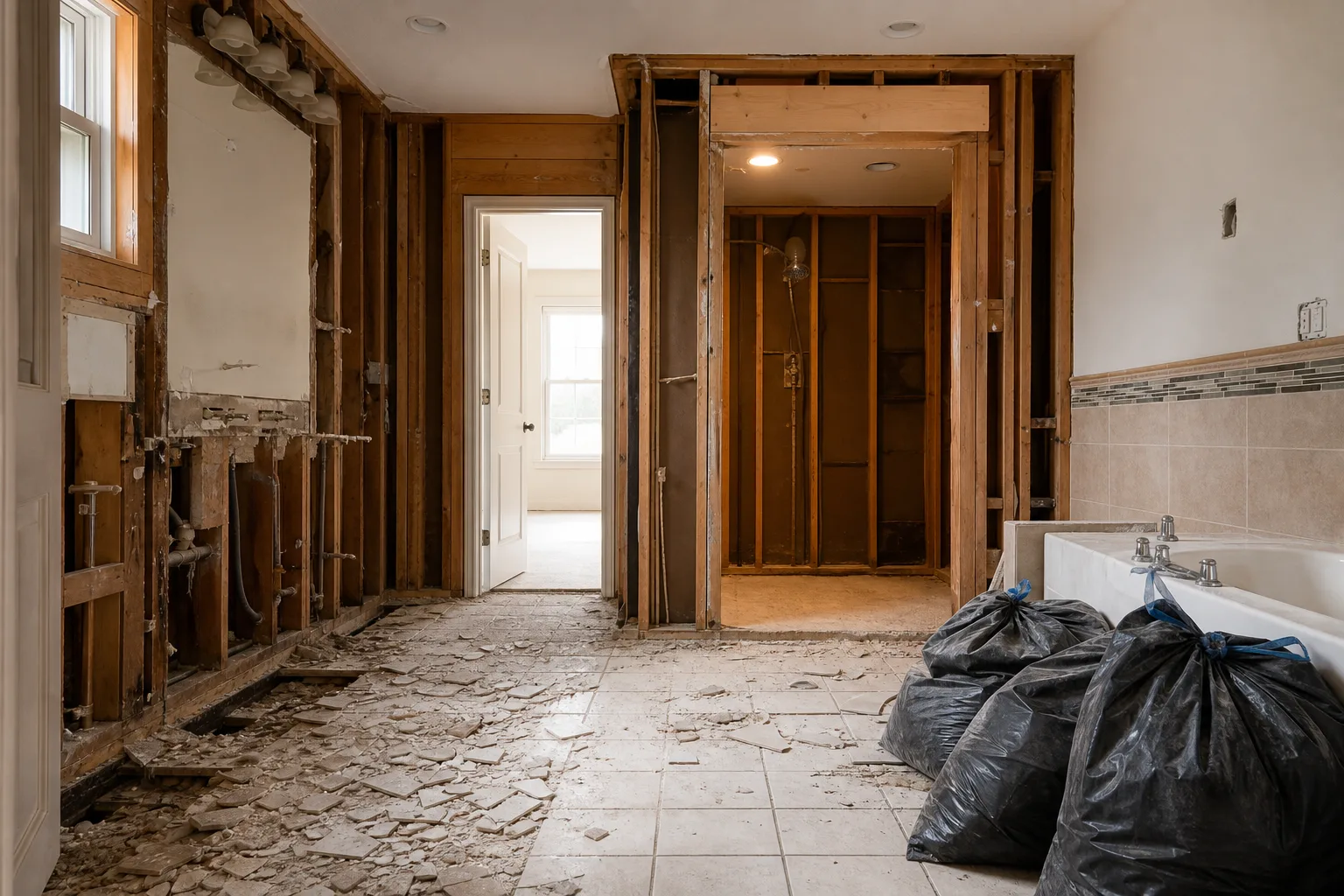
An assembly without a properly installed membrane leaves no defense between a leaking grout joint and the house framing. Cement board will let water pass through it. Drywall will absorb it and begin to decompose. Plywood will swell, delaminate, and eventually support mold growth. The damage that follows is then a question of time and volume, not a question of whether.
The shower that does not leak is not the one with the best grout. It is the one with the best membrane behind the grout. Grout is a finish material. It belongs to the visual plane, not to the waterproofing system. When a contractor tells you the shower will be fine because the grout is sealed or because they used a quality product, they are either confused about the physics or counting on the confusion to close the job.
That is the consistent finding of everyone who has opened a rotted shower wall: the tile looked perfect. The problem was in the layer nobody could see.
On every shower we build, we can tell you exactly where the waterproof layer is and how water gets from the tile surface to the drain without touching the house framing. That is not a claim about quality; it is a description of a system. If a contractor cannot describe the system in those terms, the description exists only because we named it, not because it was designed.