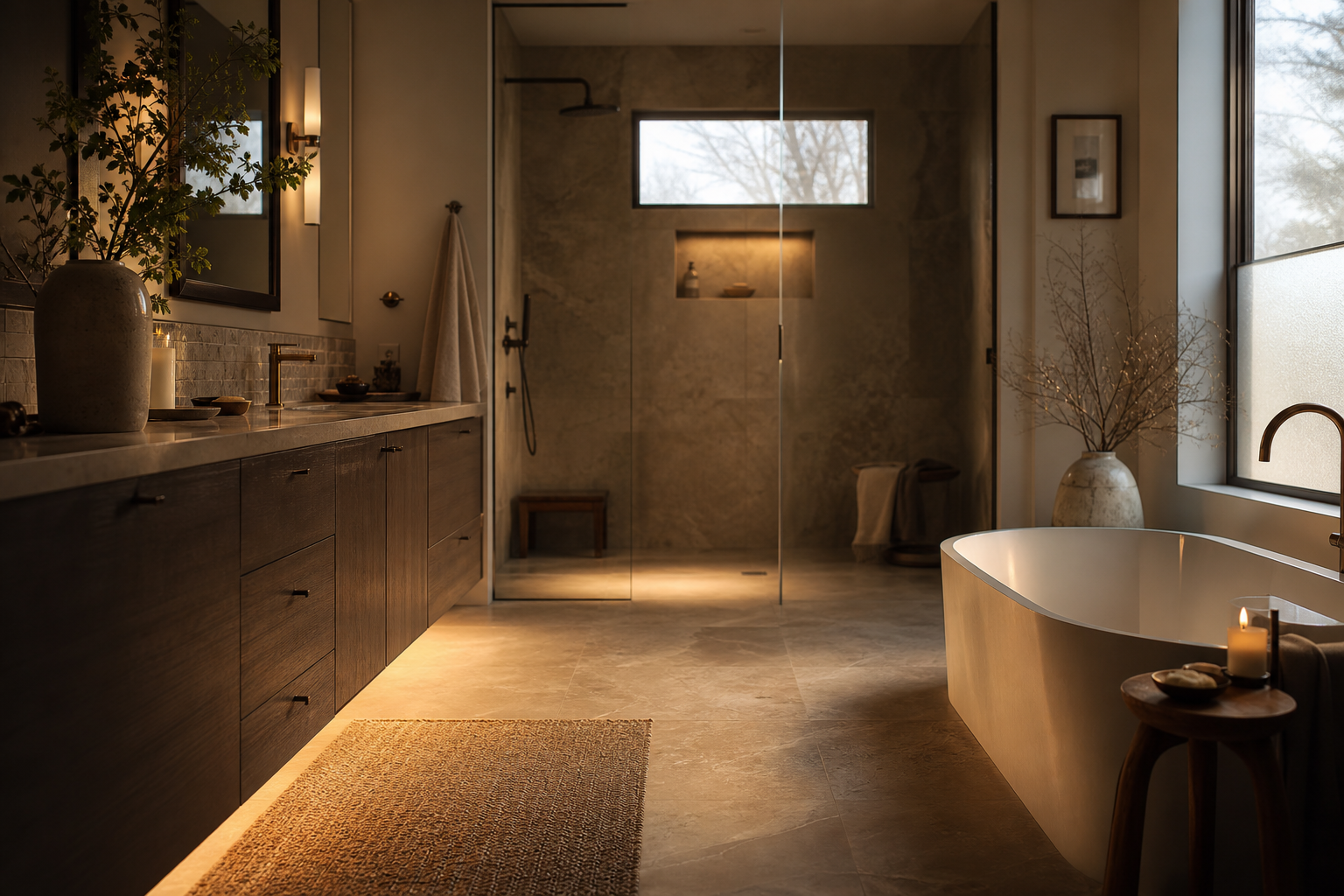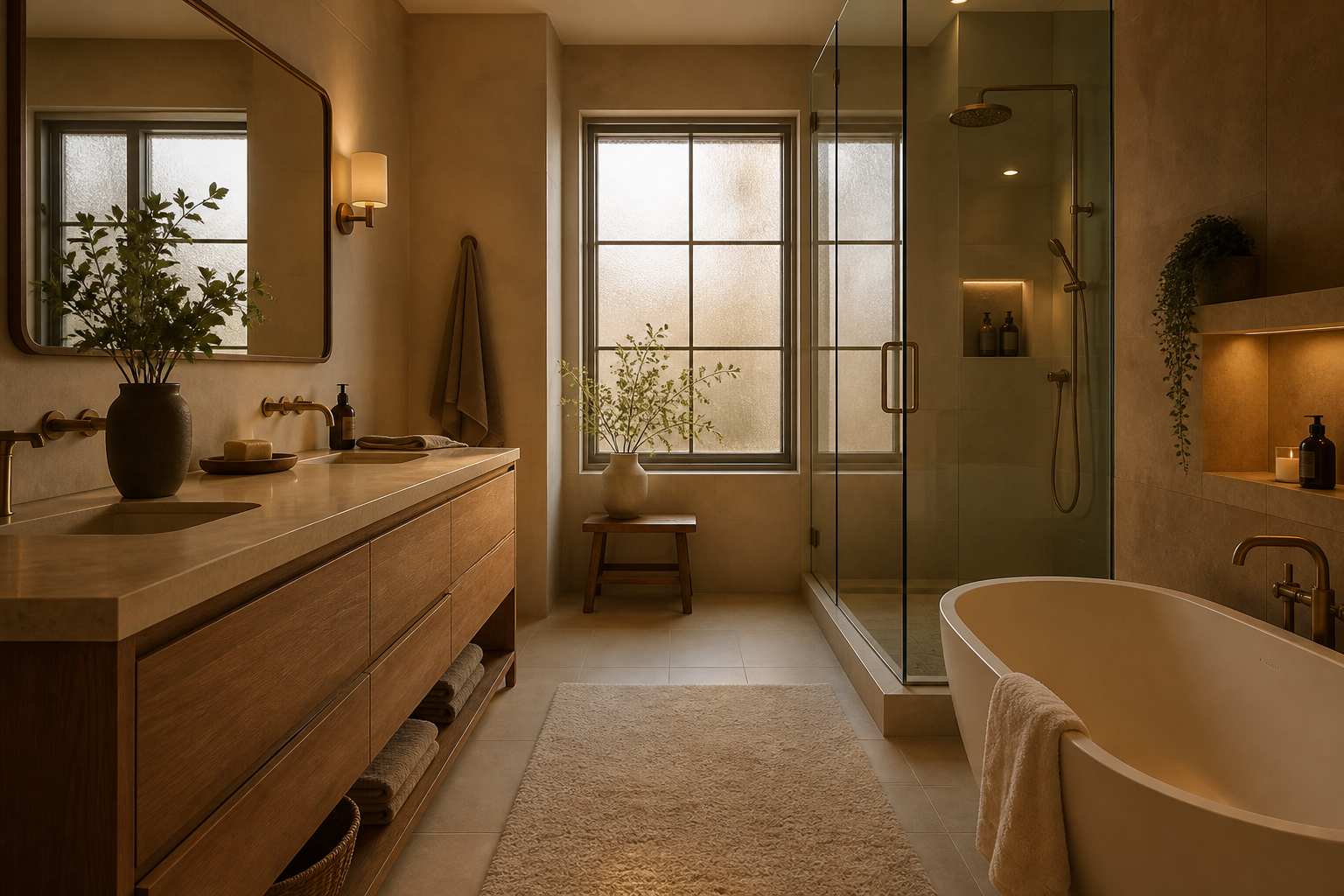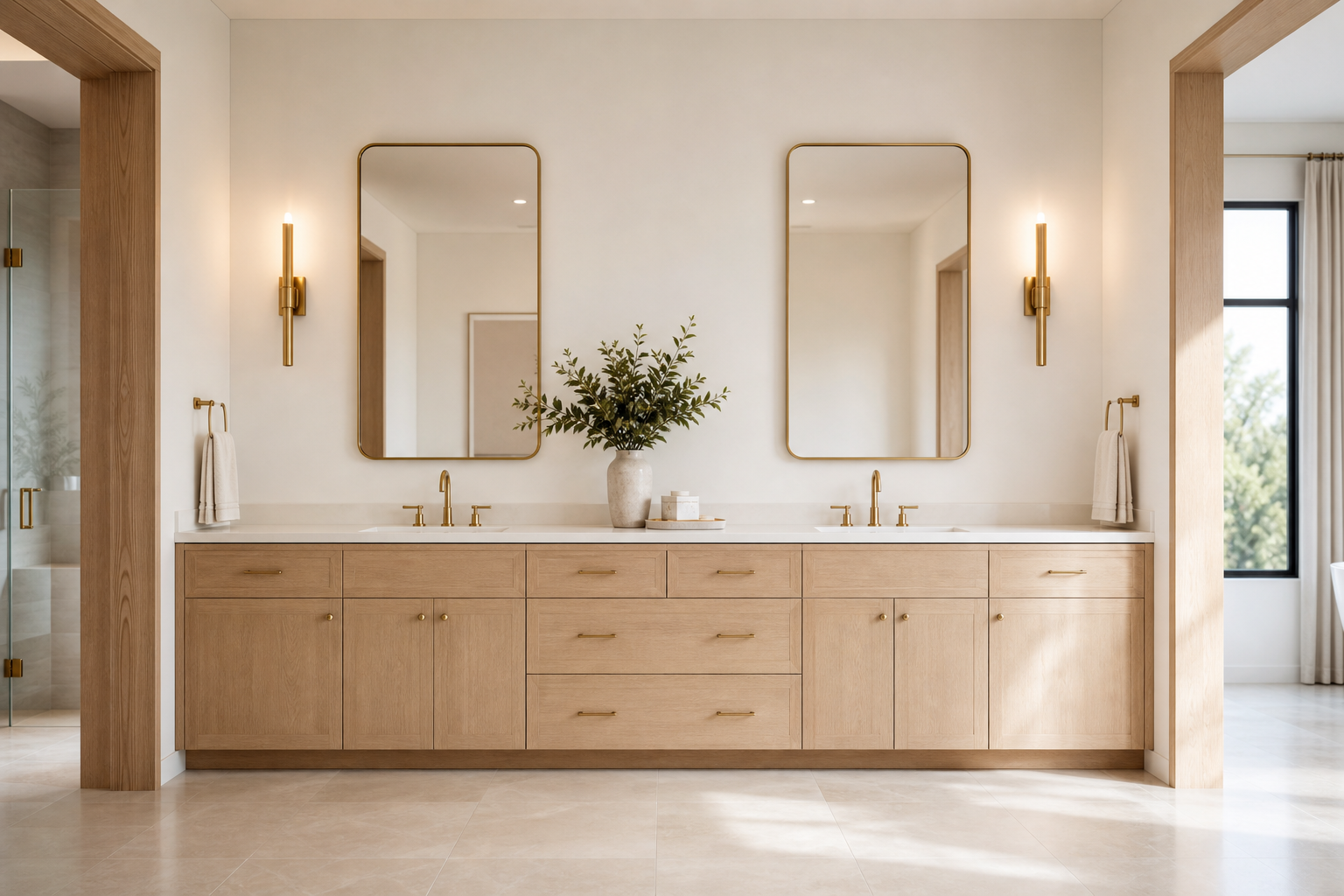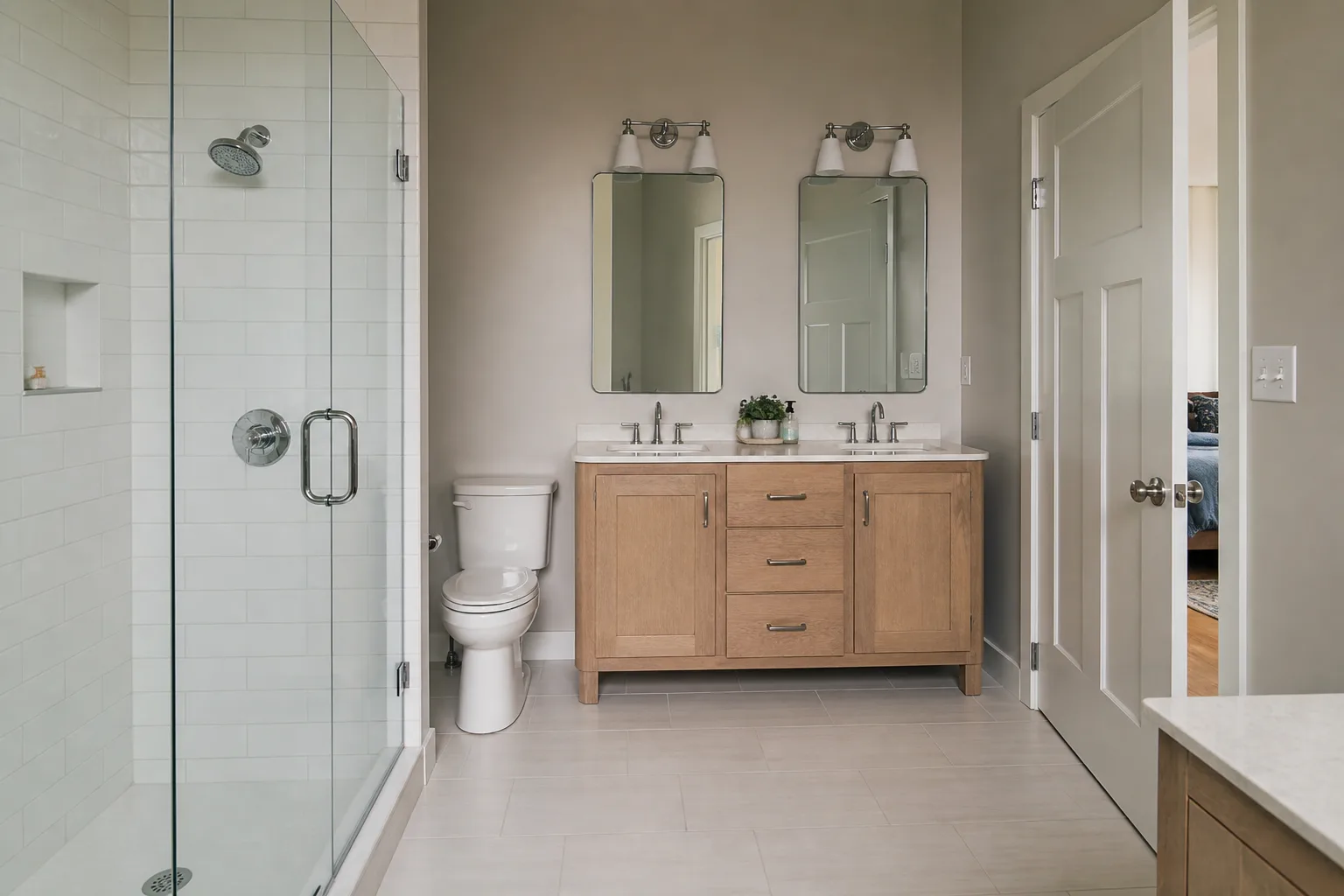
The rooms most often called timeless are also, sometimes fairly, called boring. White tile. Brushed nickel. Subway. No personality, no risk, no nothing. The word gets used as a cover for decisions that were never really made, a defense against criticism that is also a defense against interest. A bathroom designed to offend nobody often fails to please anyone either.
But that is a failure of restraint, not of timelessness. The two are different phenomena, and conflating them produces either rooms that are genuinely boring or rooms that are interesting for about four years and tired for the next twenty-six.
A timeless bathroom has a point of view. It just does not need to shout it.
What Boring Actually Is
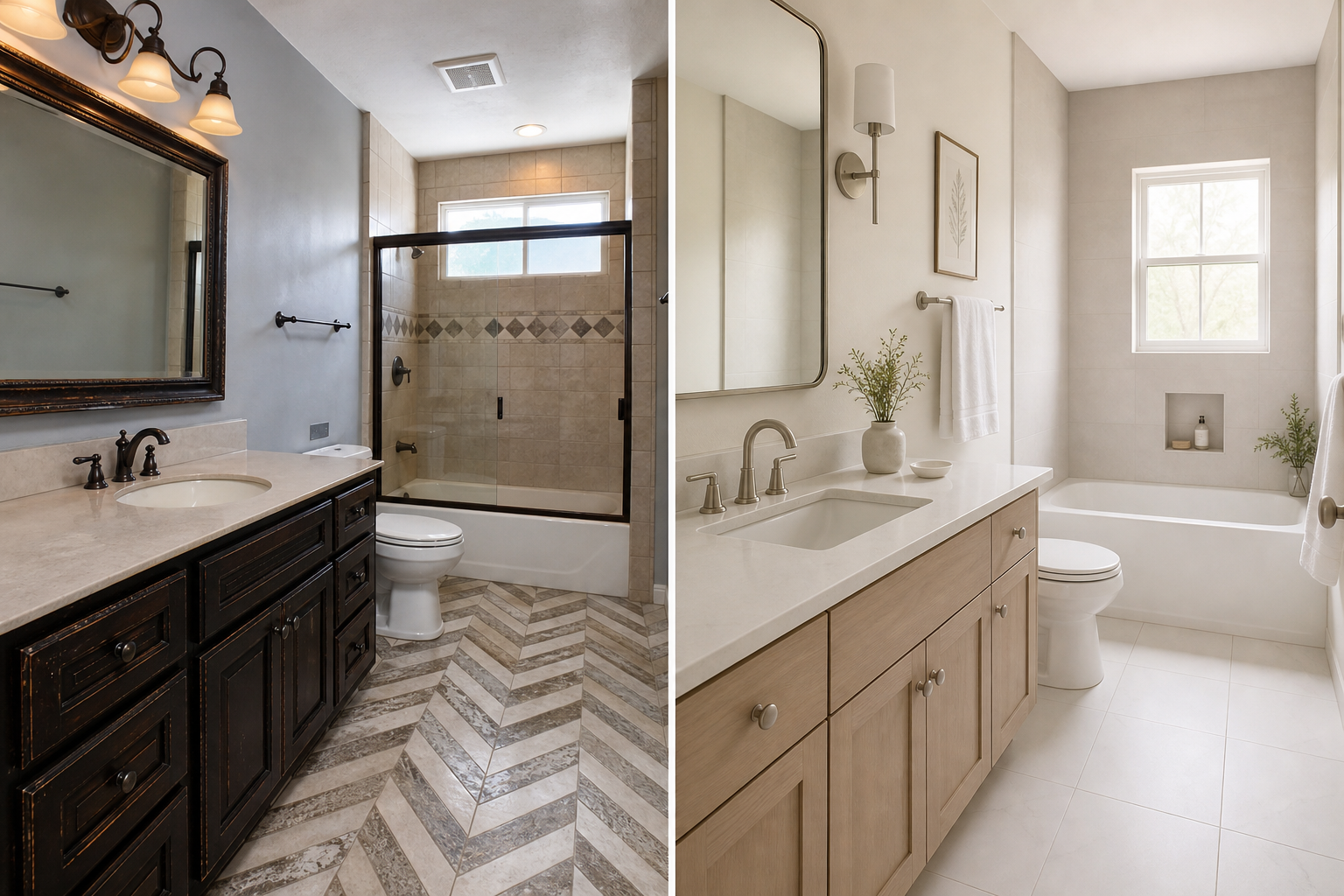
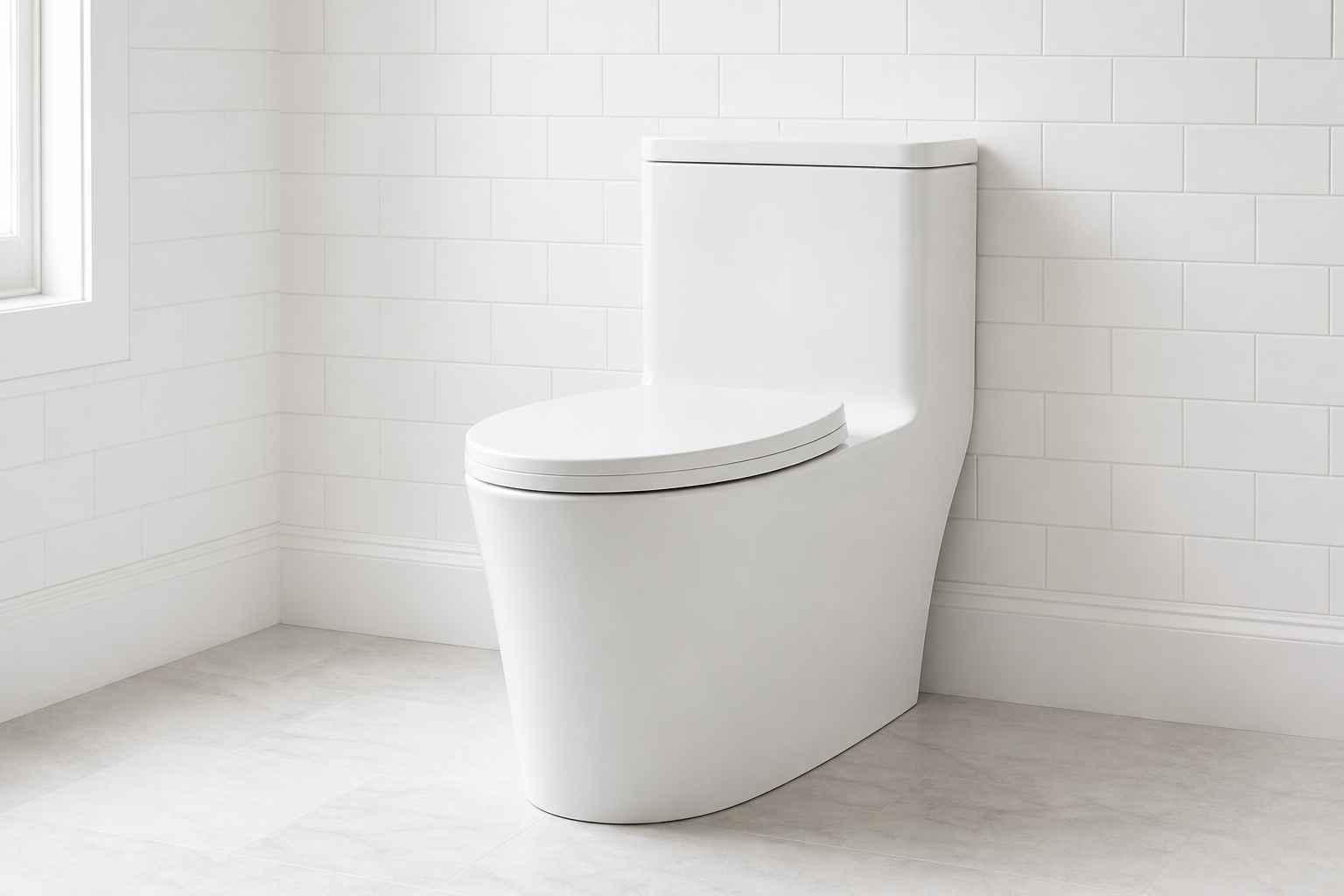
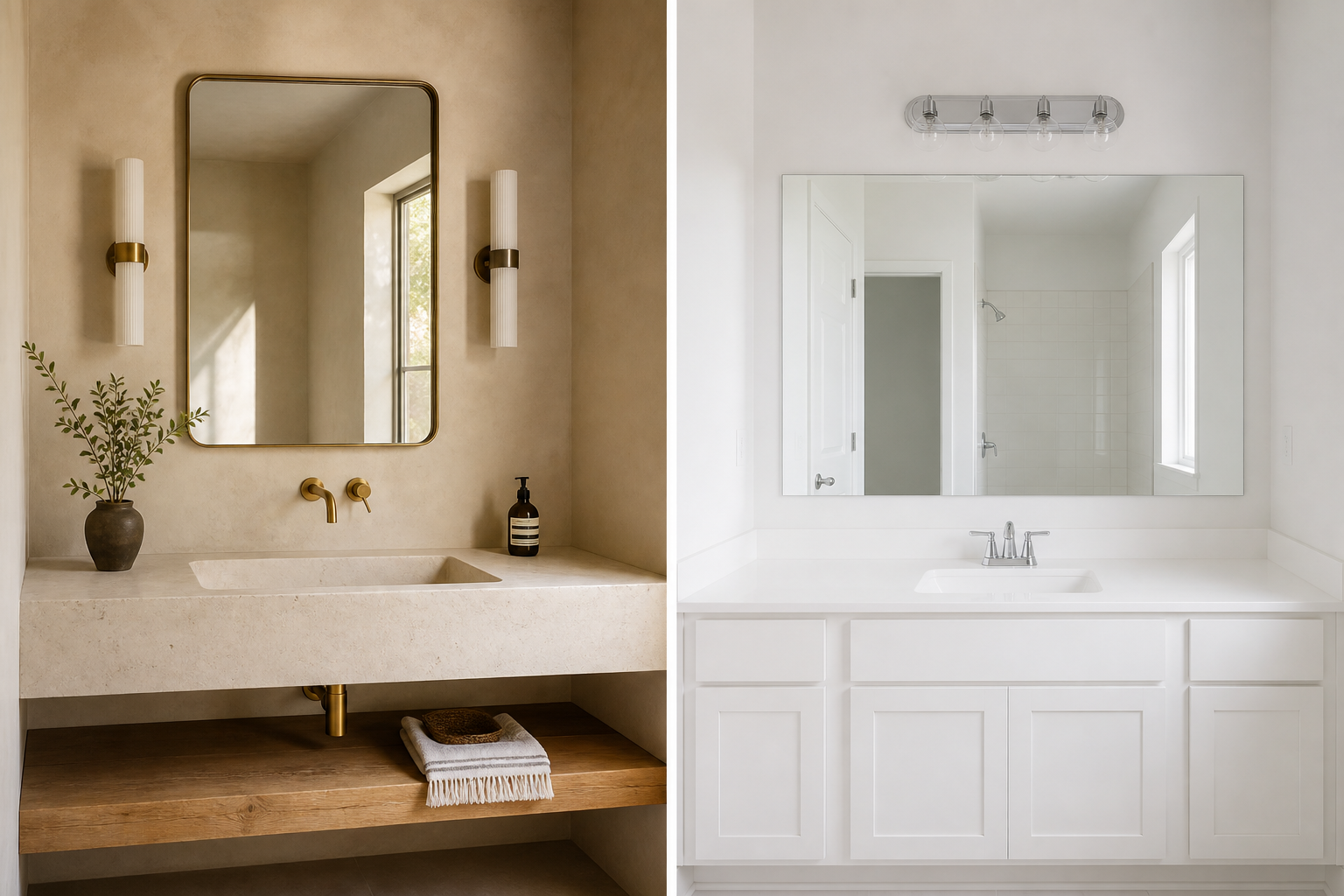
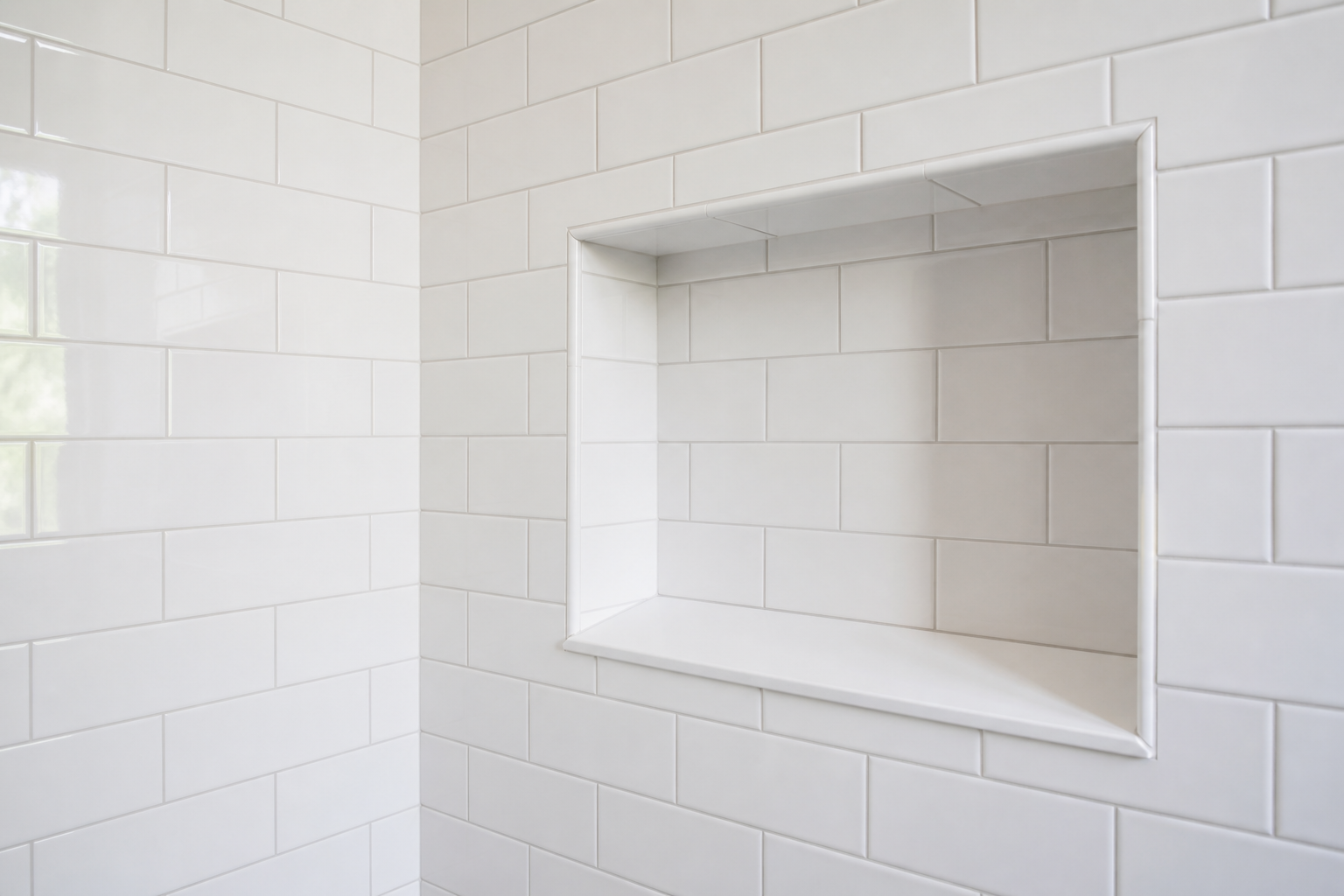
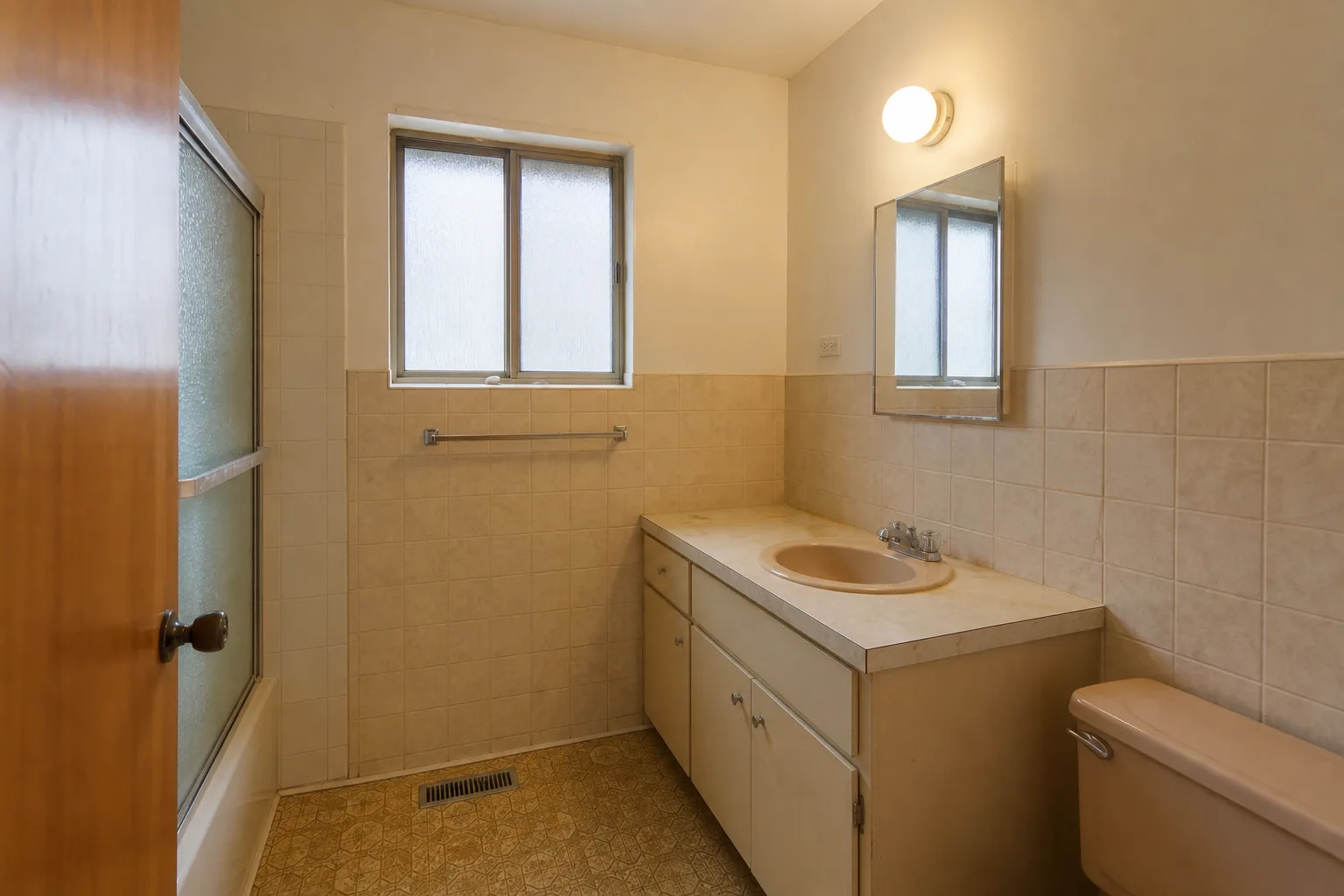
A boring bathroom is one where every decision deferred to a safe default. The tile is the standard 3-by-6 subway because nobody could commit to anything else. The hardware is brushed nickel because it is inoffensive. The vanity is a catalog model because custom felt like risk. The mirror is from a big-box store because nobody got to the decision. The lighting is whatever the electrician roughed in.
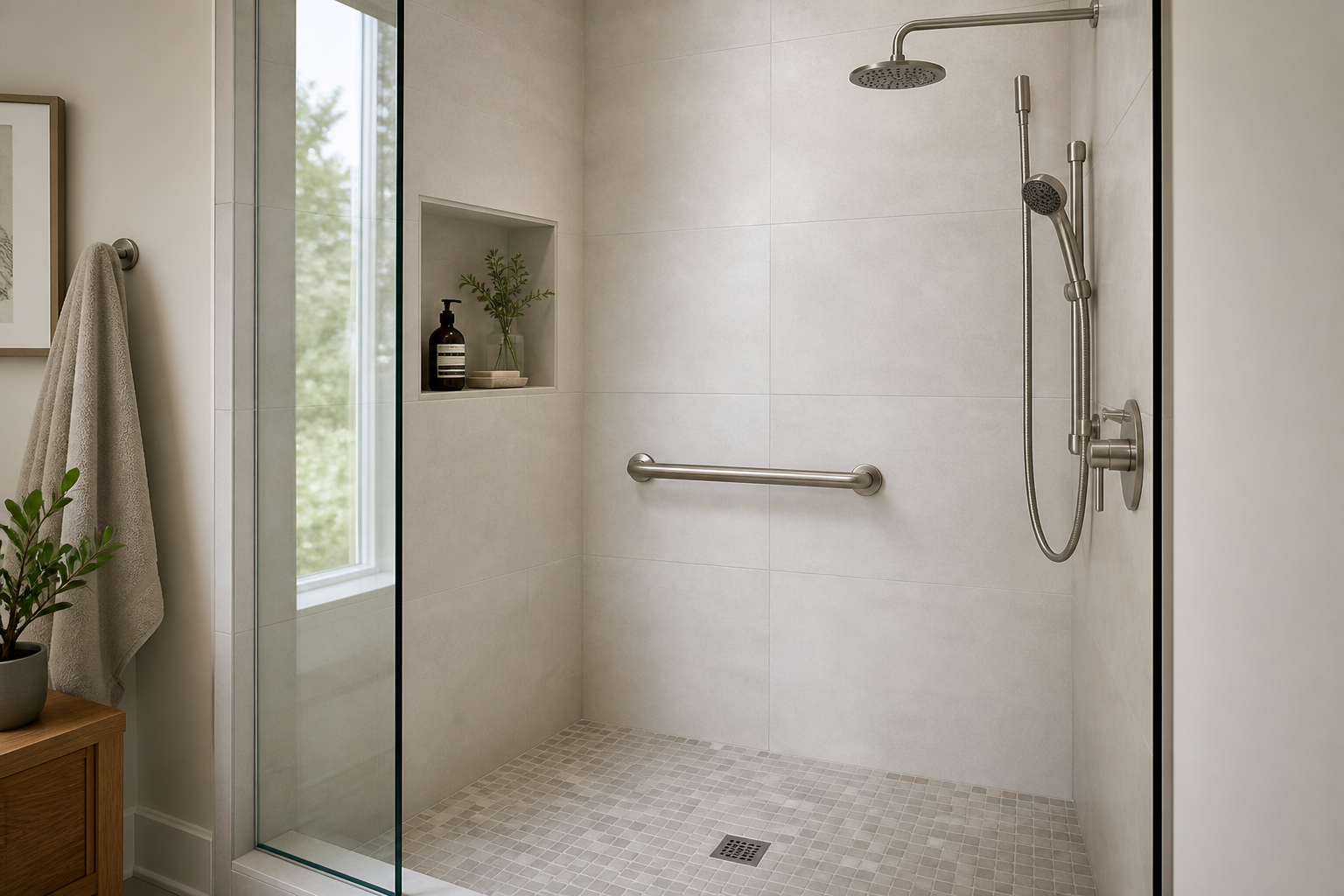
Each of these choices is defensible in isolation. Together, they produce a room that reads as assembled rather than designed. It has no texture, no hierarchy, no moment that reveals something about the people who live there. It is the design equivalent of a room-temperature room: technically fine, emotionally absent.
Boring is the result of decisions being made by subtraction rather than by intent. Every potentially interesting choice was removed, not because something better replaced it, but because the interest itself felt like a risk. The room that remains is not restrained. It is just empty.
What Timeless Actually Is
A timeless room has a different problem than a boring room. It has too much identity to abandon for whatever trend arrives next, and that stability reads as conviction rather than fashion.
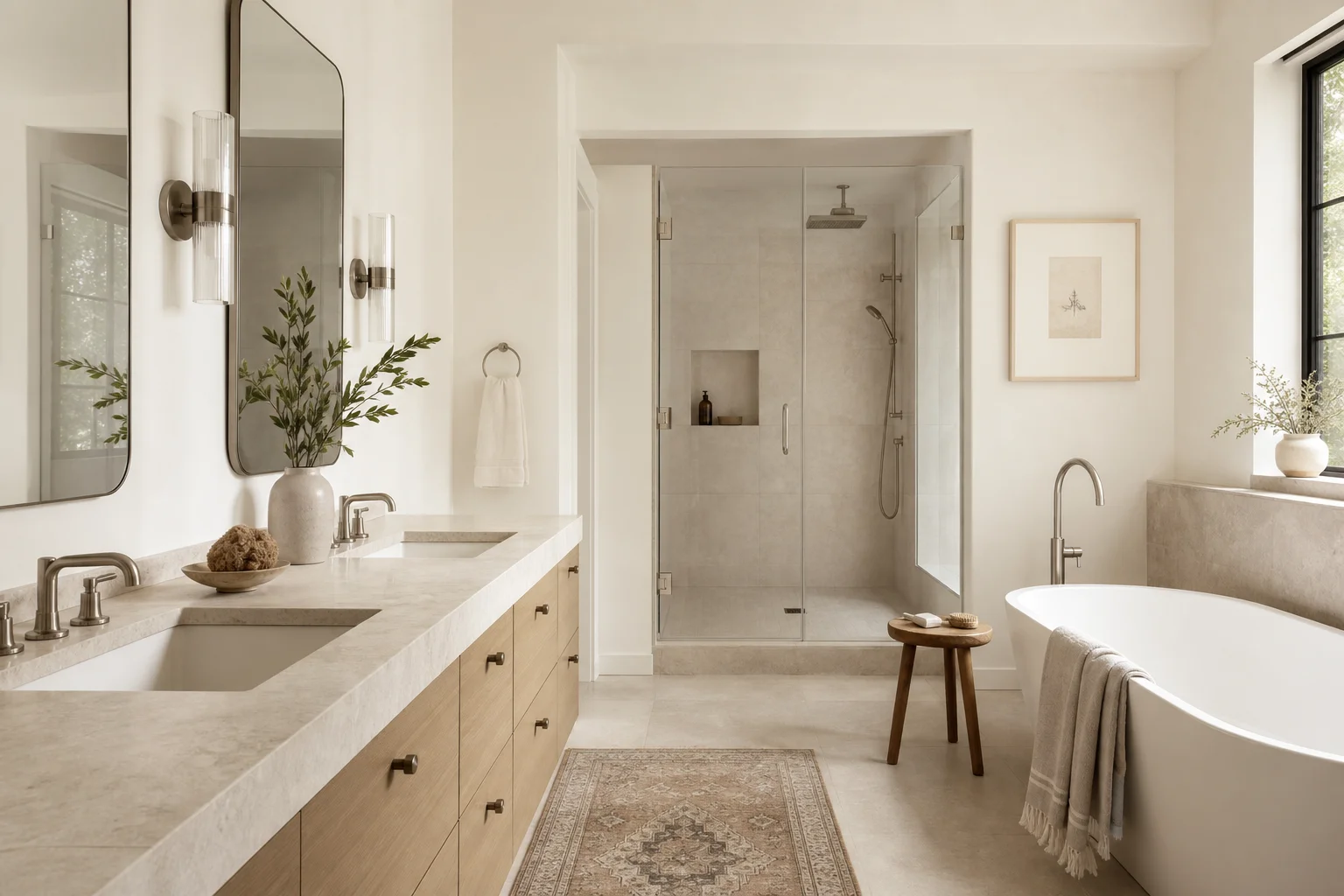
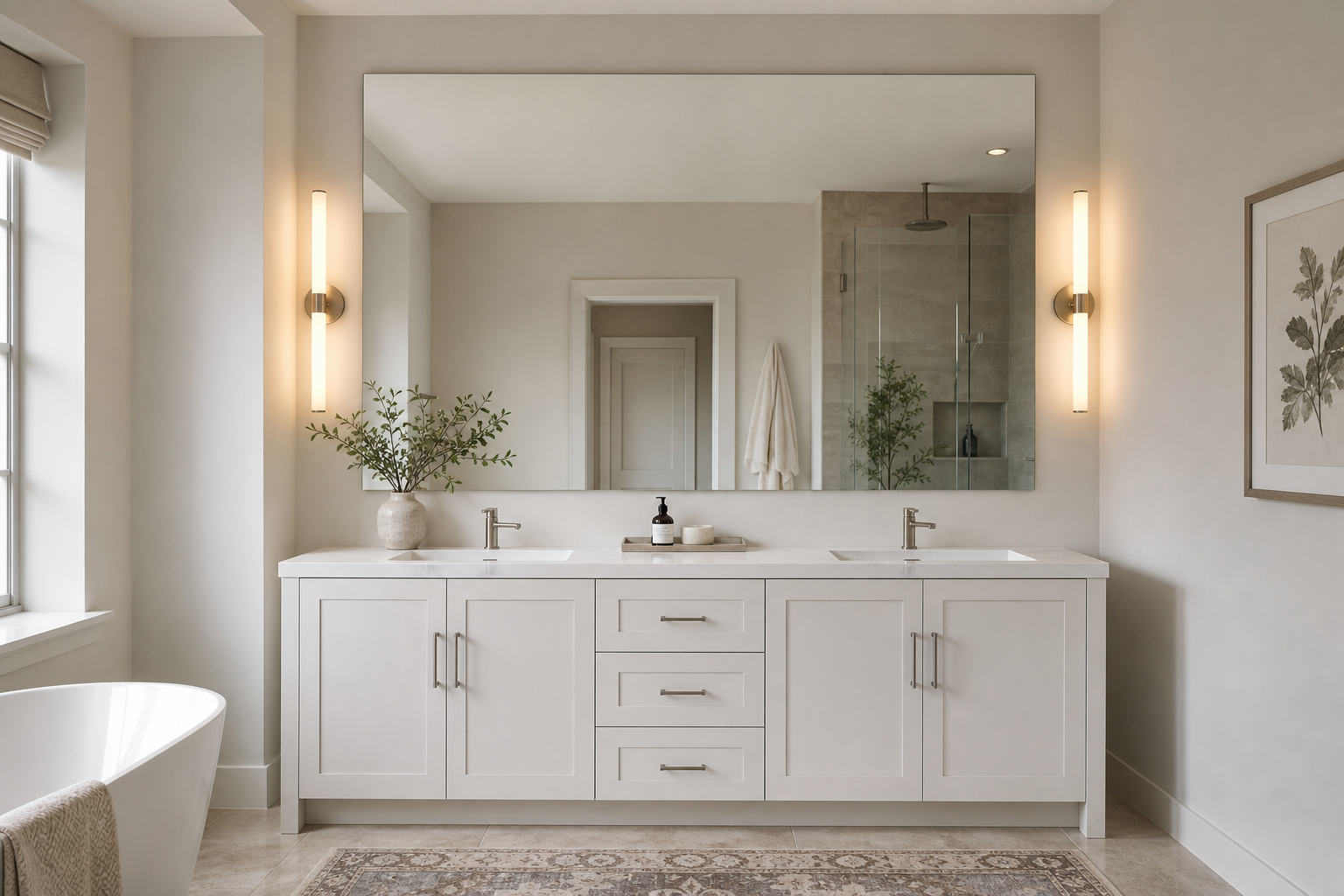
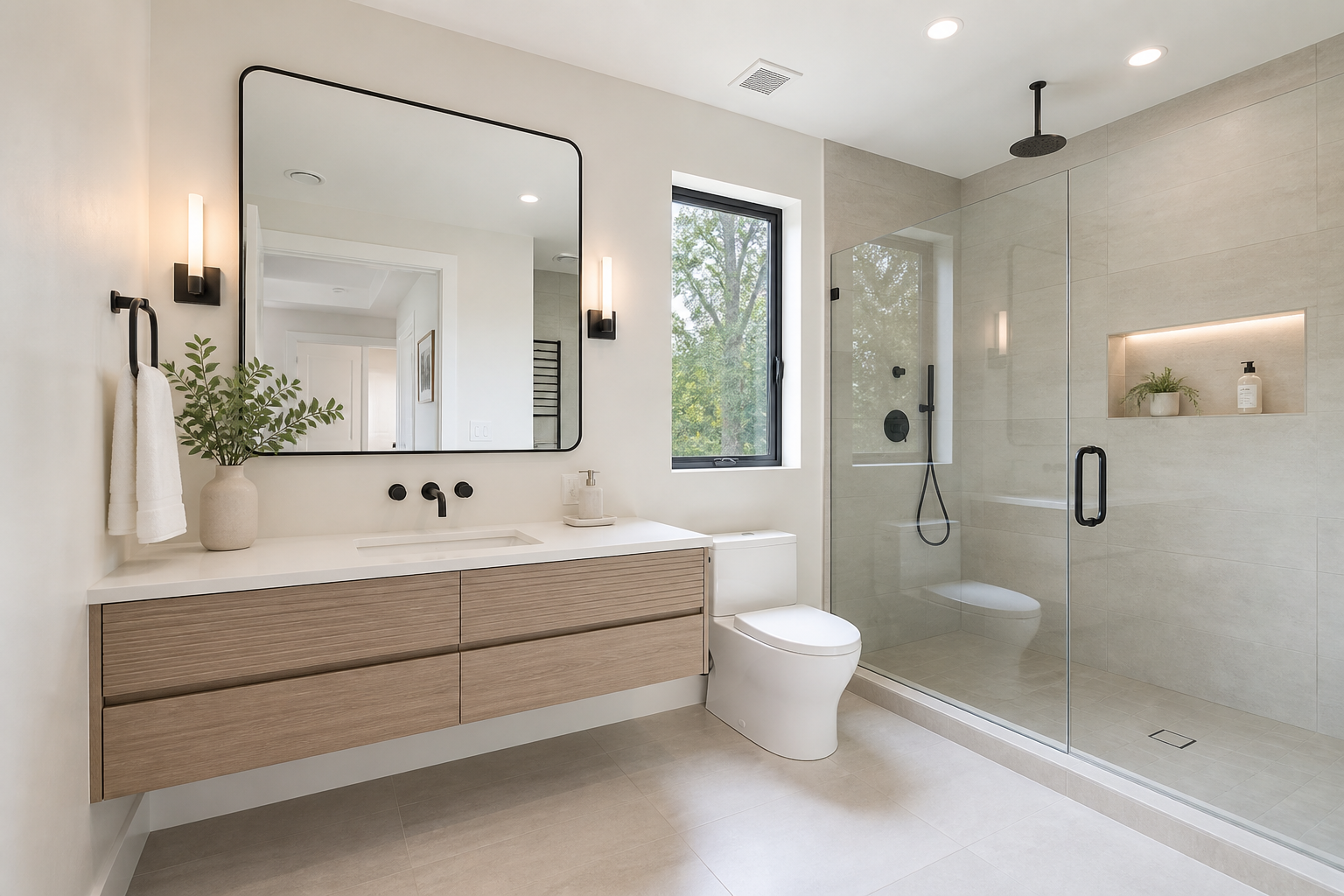
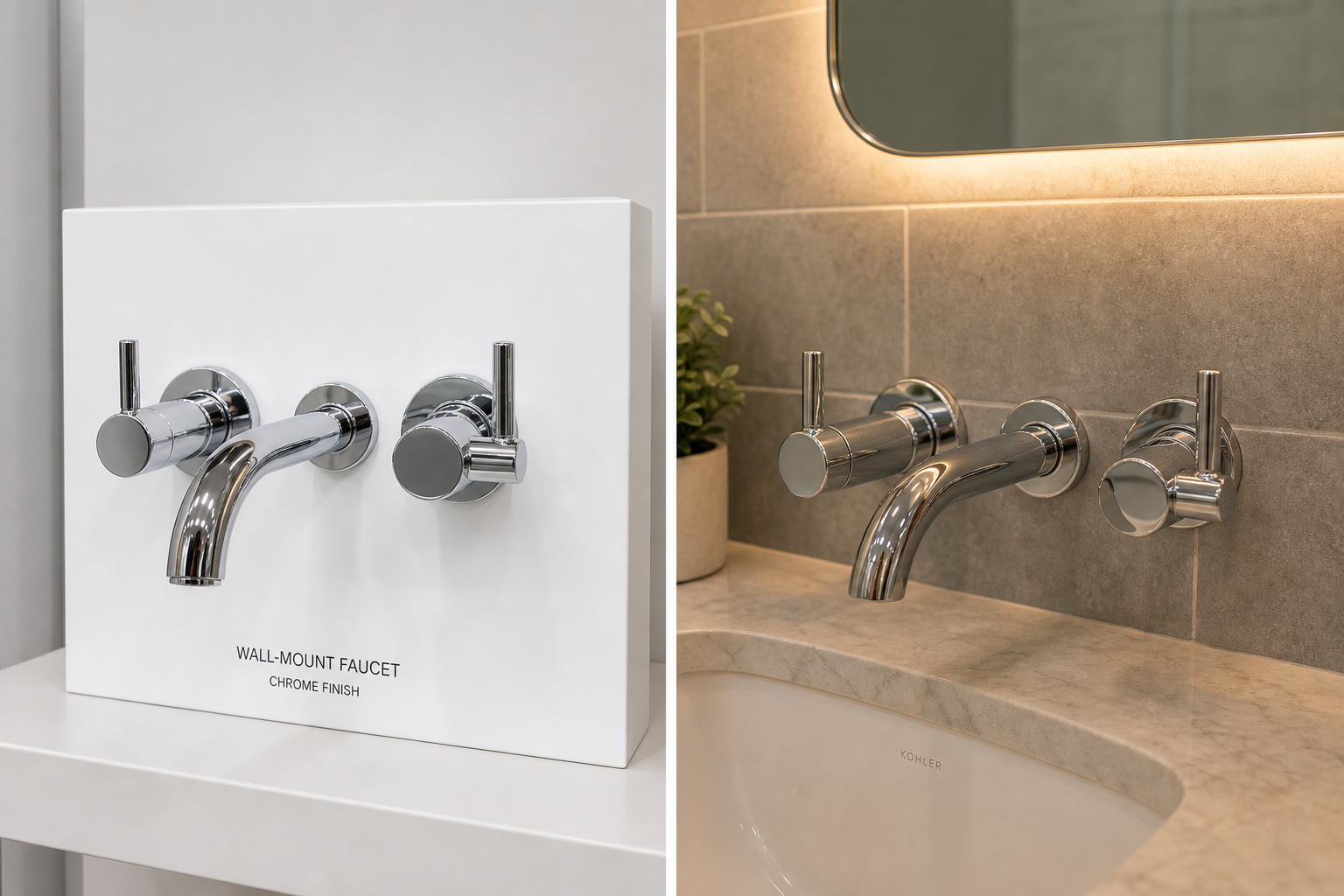
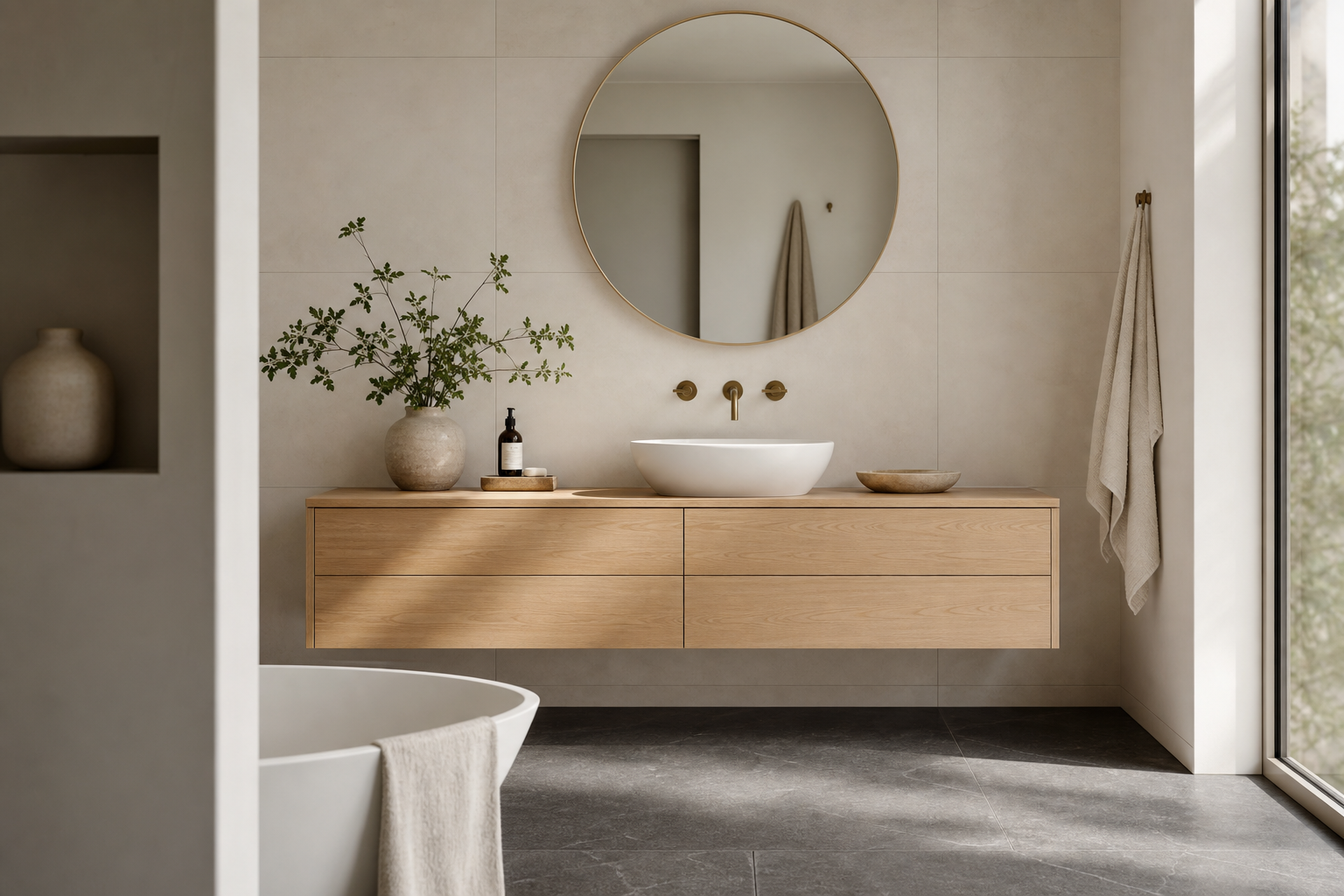
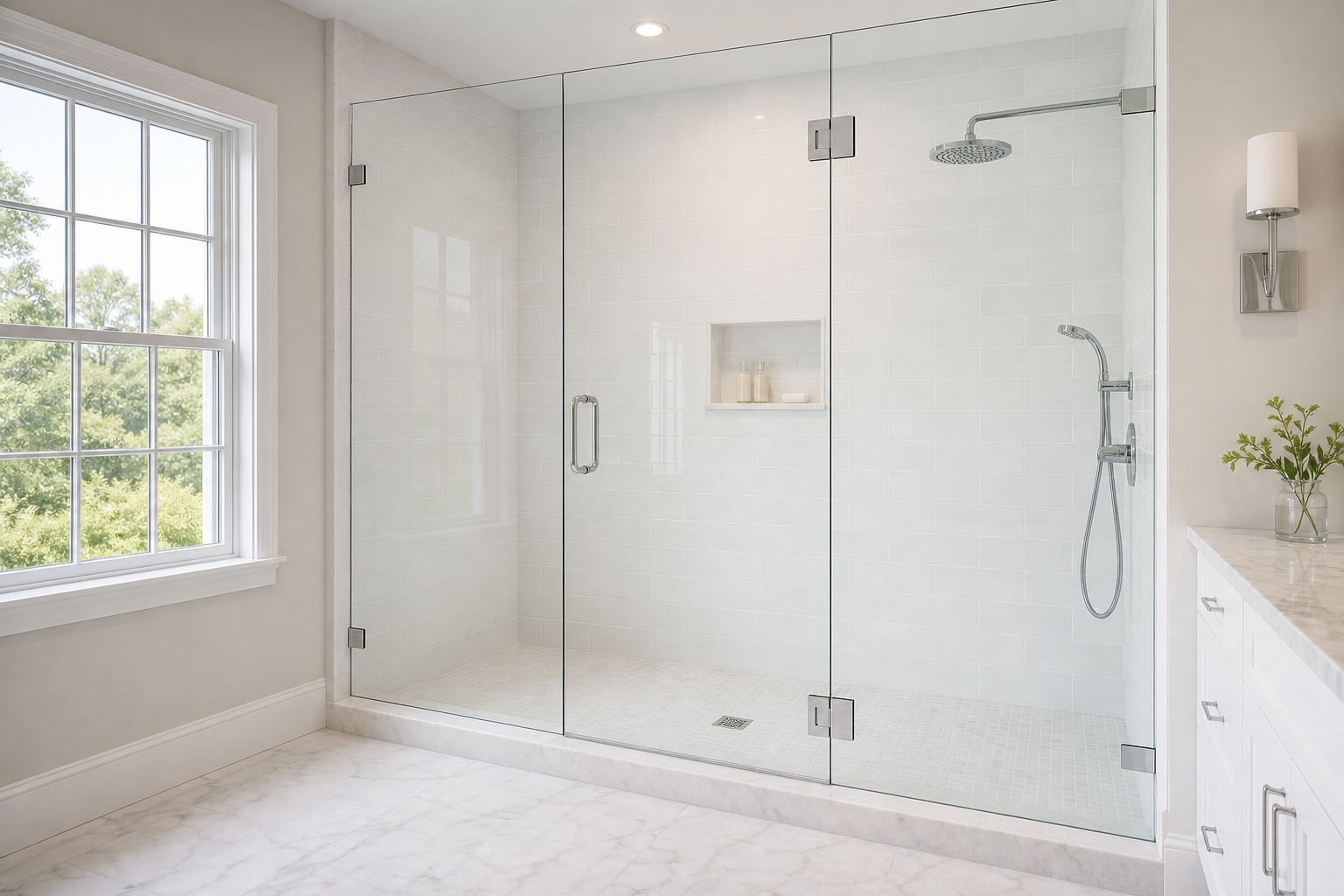
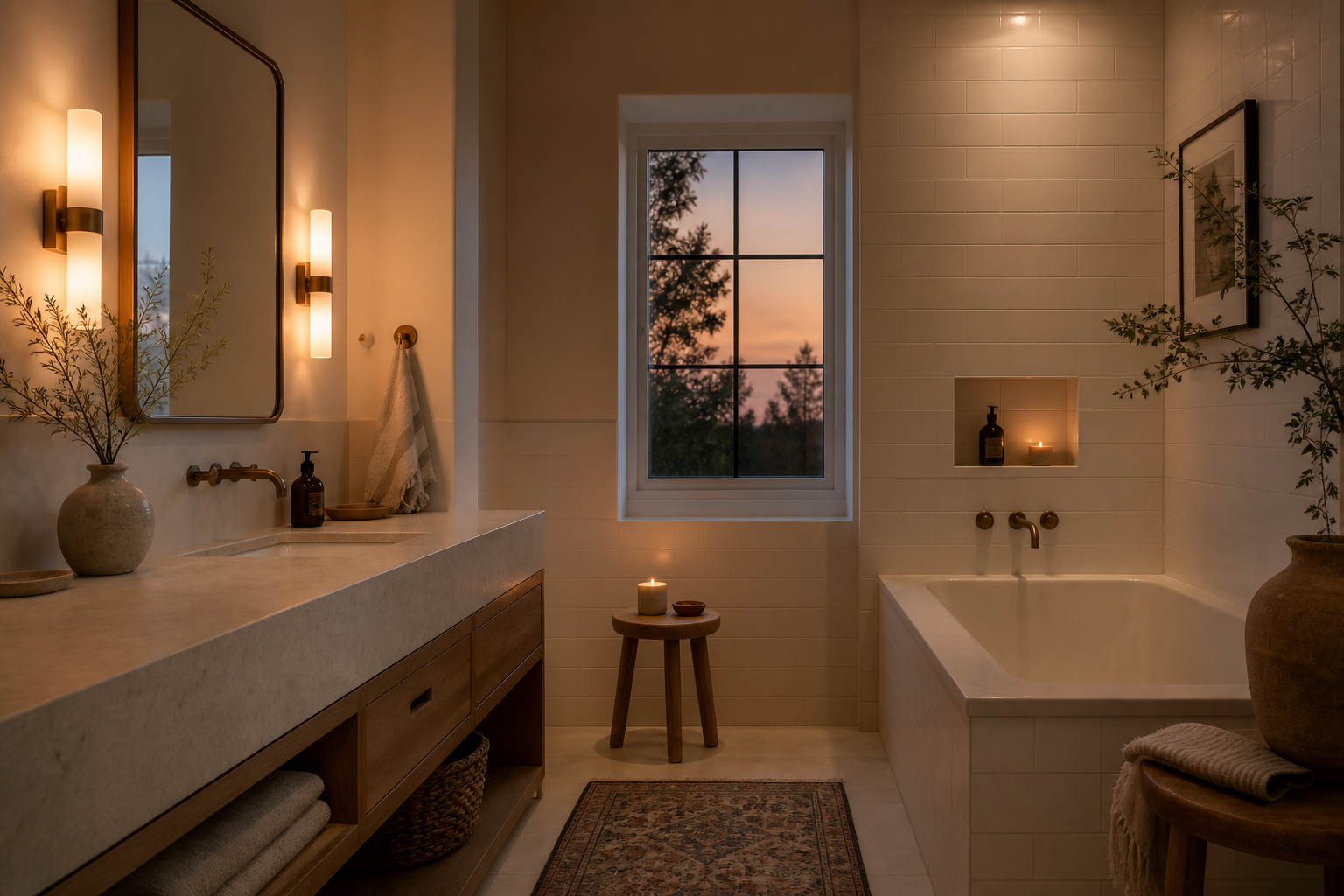
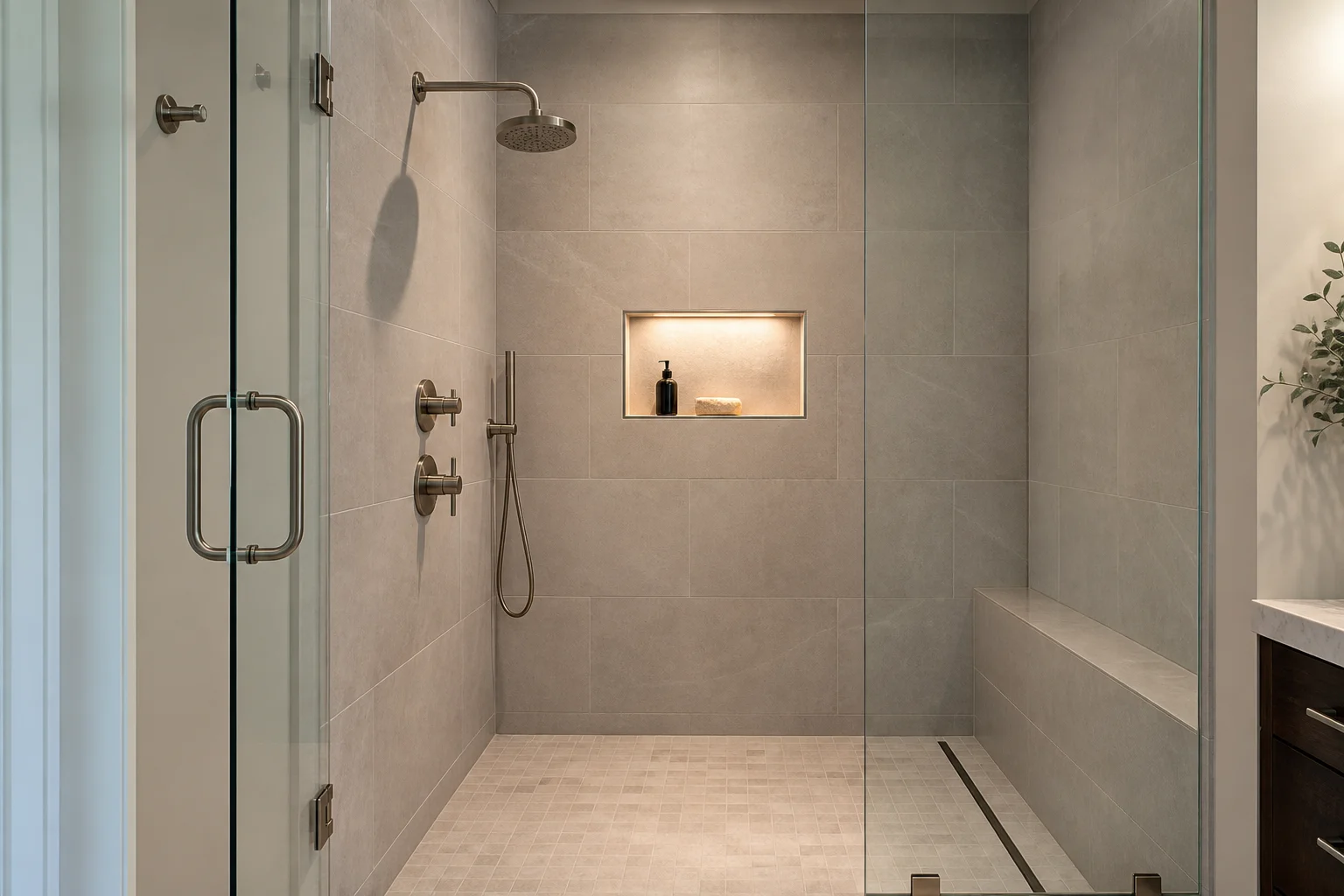
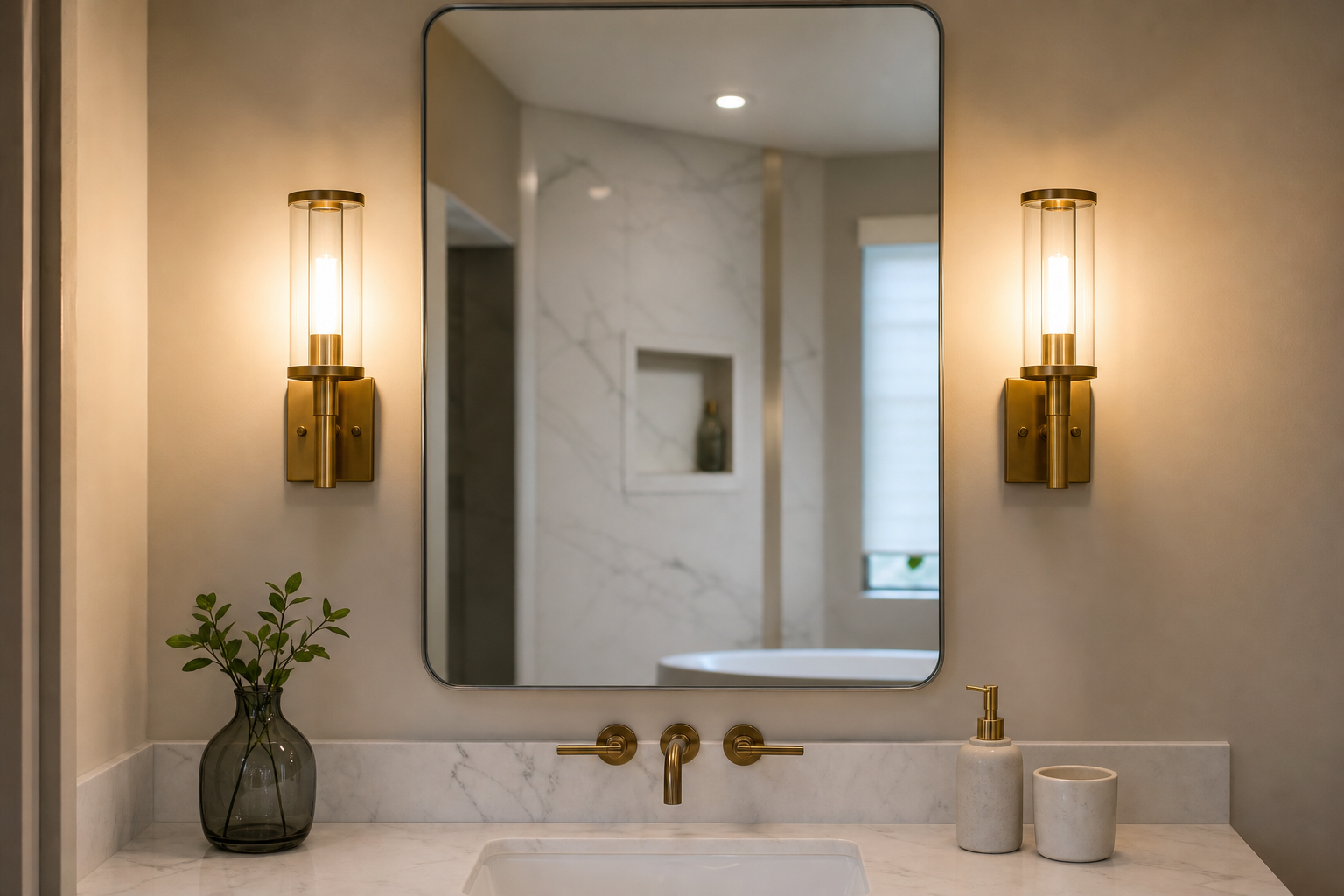
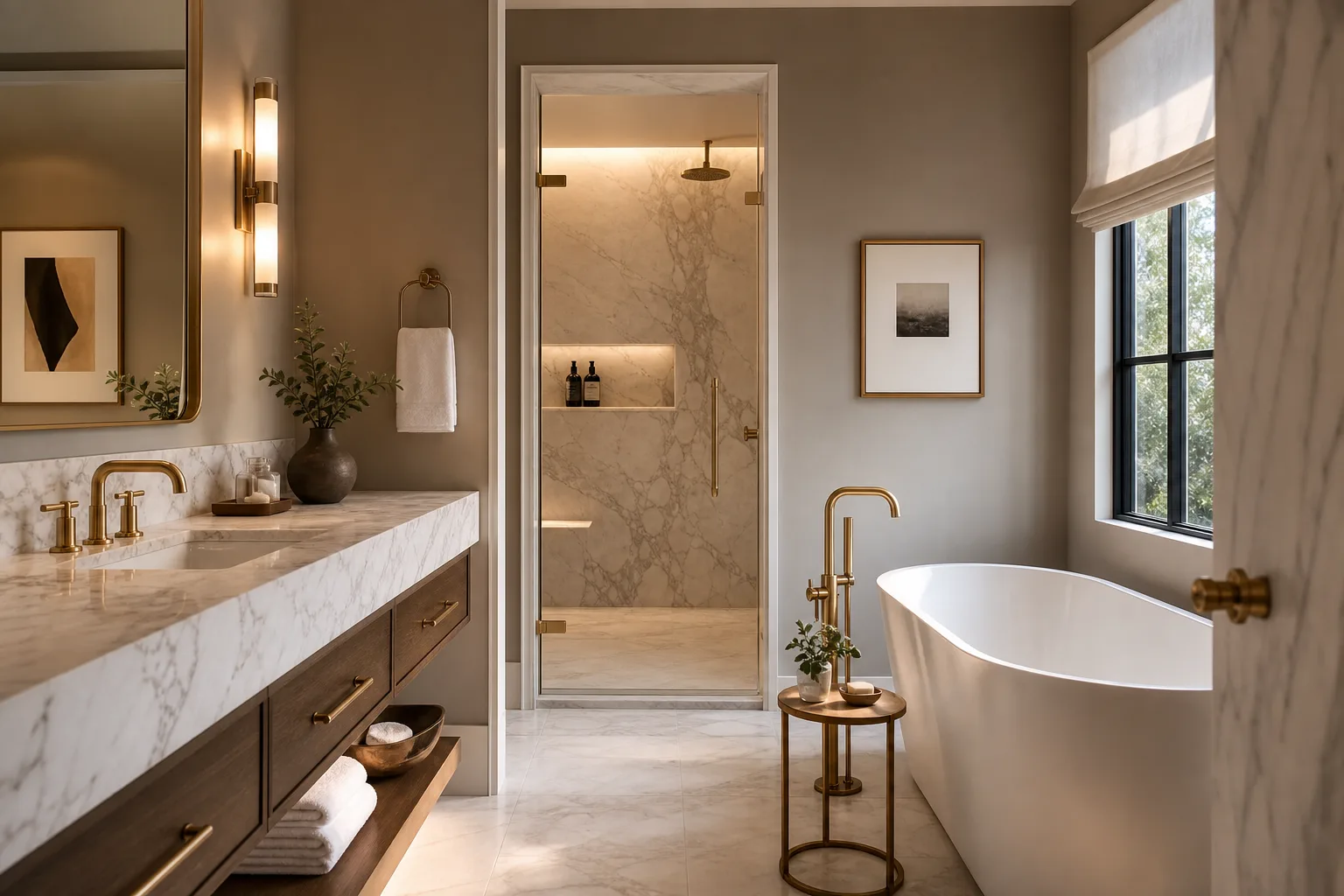
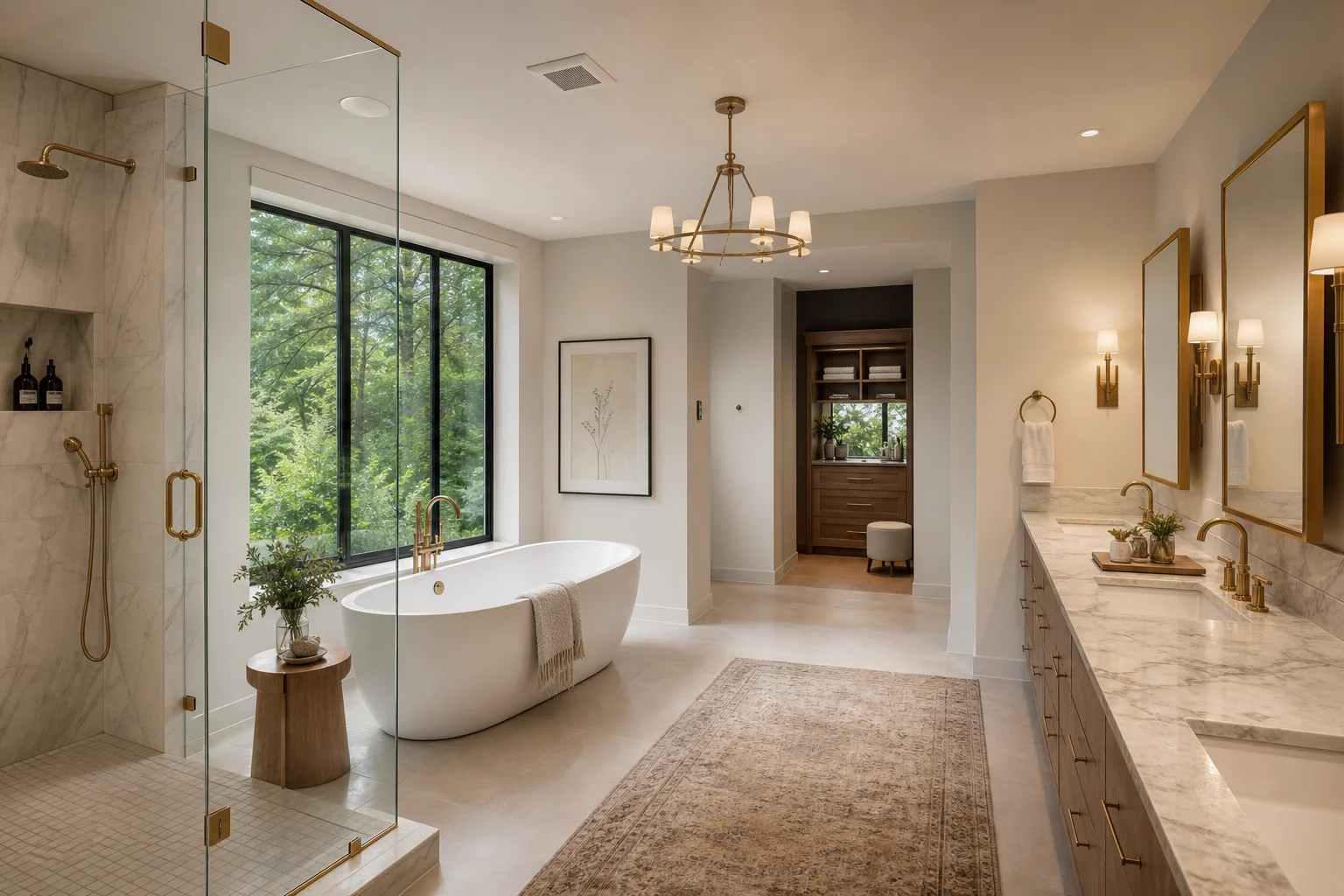
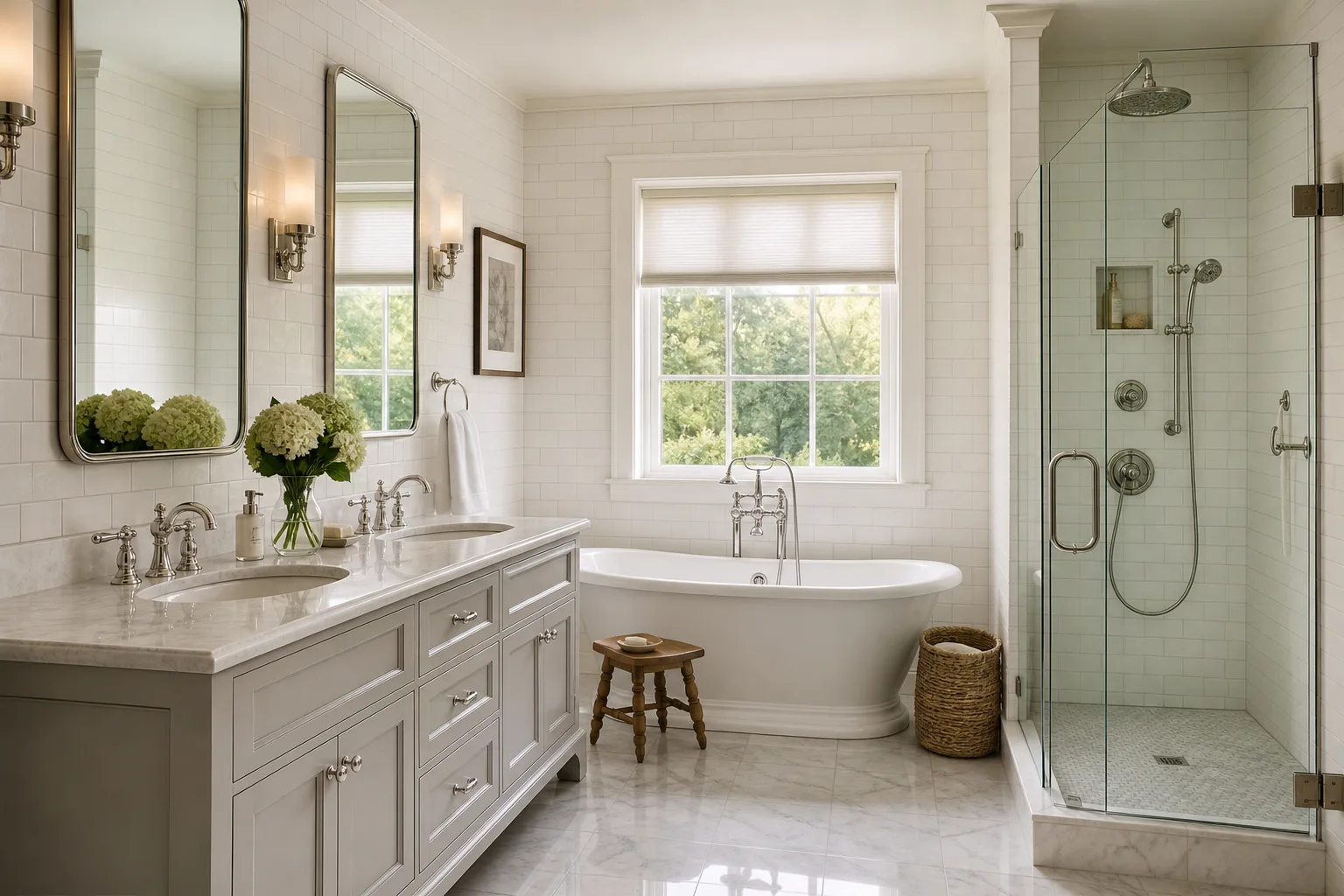
The classic examples are instructive. A bathroom with marble subway tile, a white porcelain undermount sink, a chrome faucet with clean lines, and side-lit mirrors: this combination has been excellent for 80 years and will remain excellent for another 80. It is not boring. It is resolved. Every decision connects to the ones adjacent to it, the materials reference each other, the proportions are correct, and the room has a clear character. That character happens to be quiet rather than emphatic, but quiet is not the same as absent.
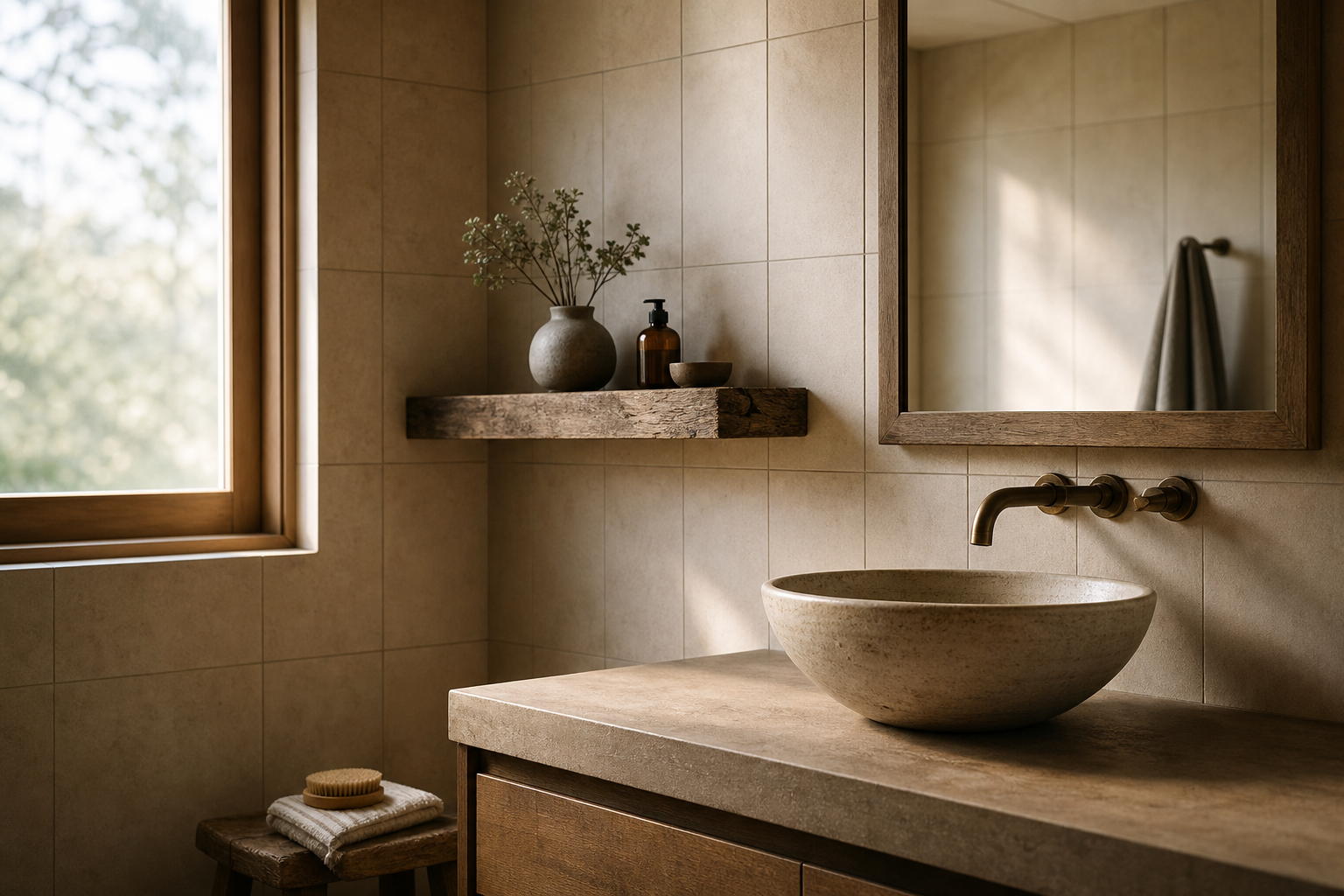
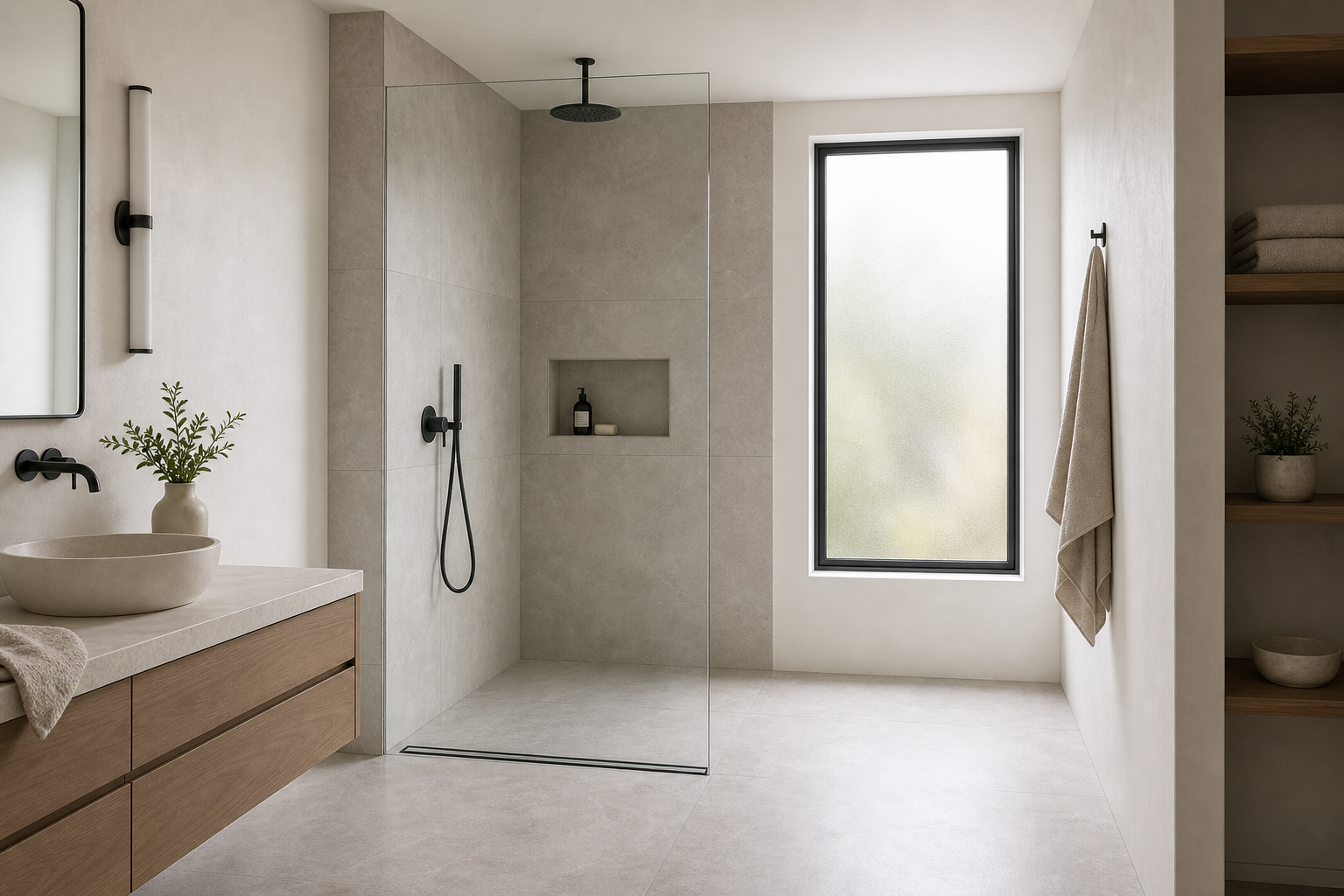
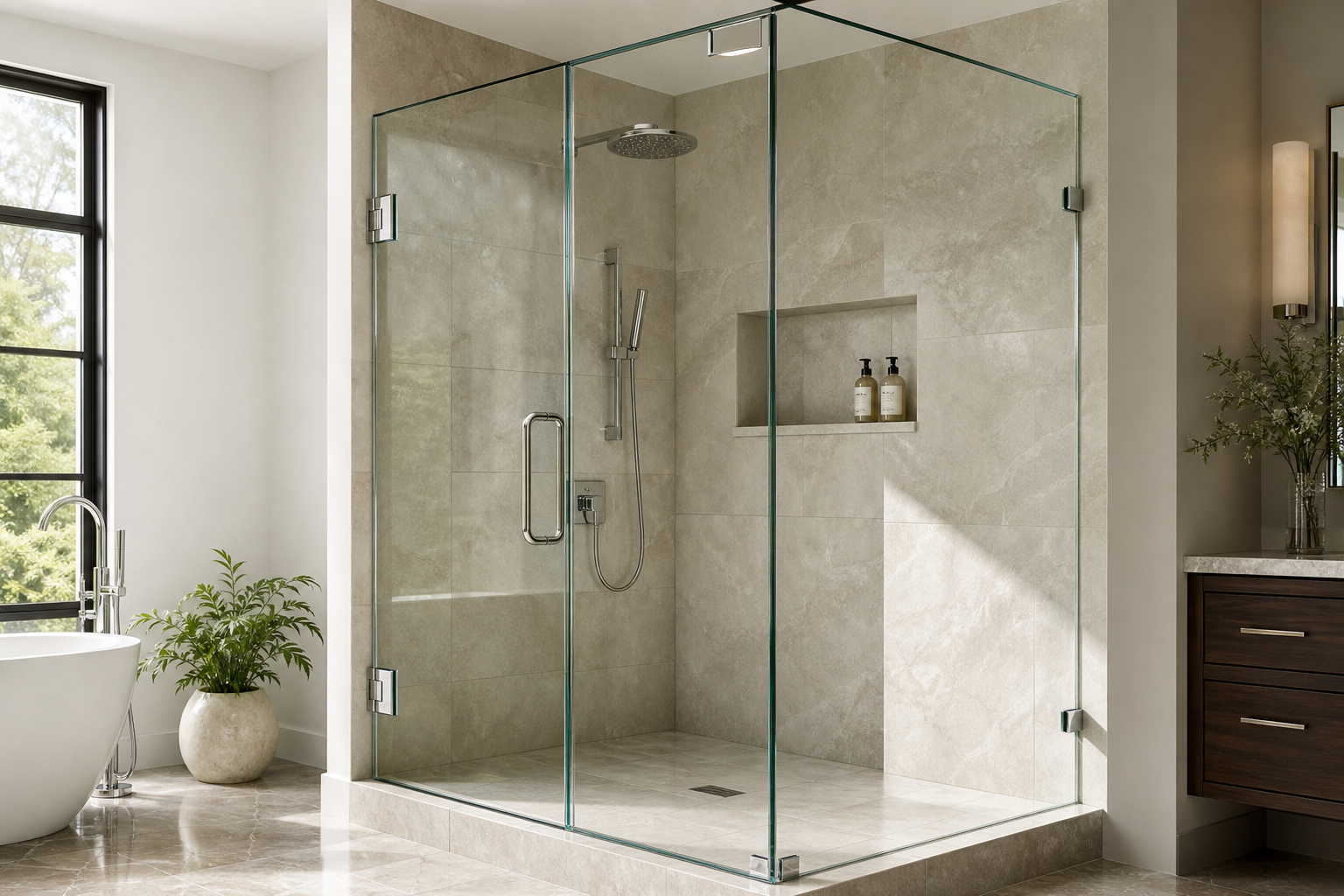
The practical distinction between timeless and boring is whether the room's restraint is a statement or an avoidance. A bathroom with three materials, handled very well, in deliberate proportions, with a single moment of texture or warmth that ties the room together: that is restraint with conviction. A bathroom with three materials, in whatever proportions seemed easiest, with nothing to look at twice: that is avoidance.
The Design Move That Saves Restraint From Boring
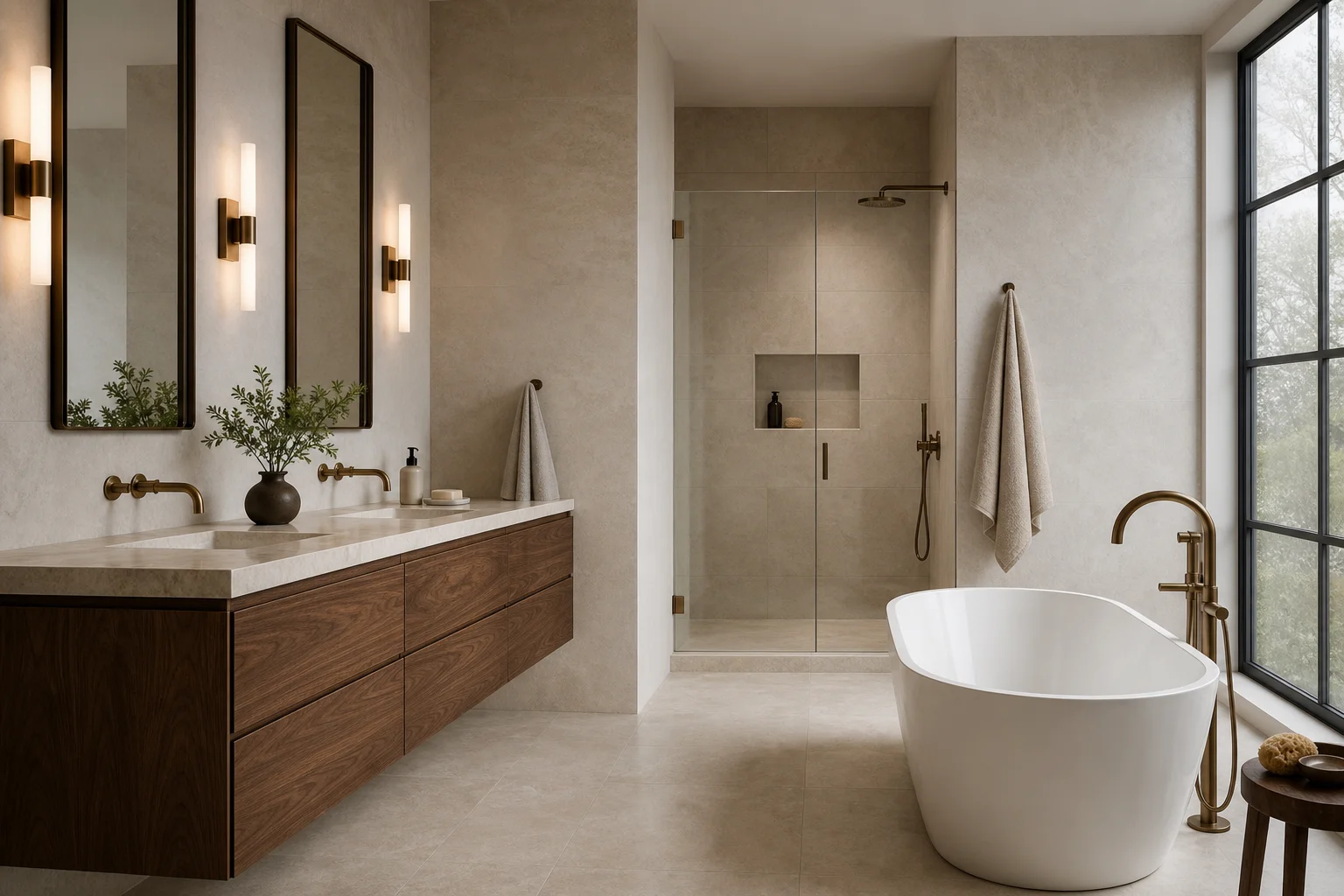
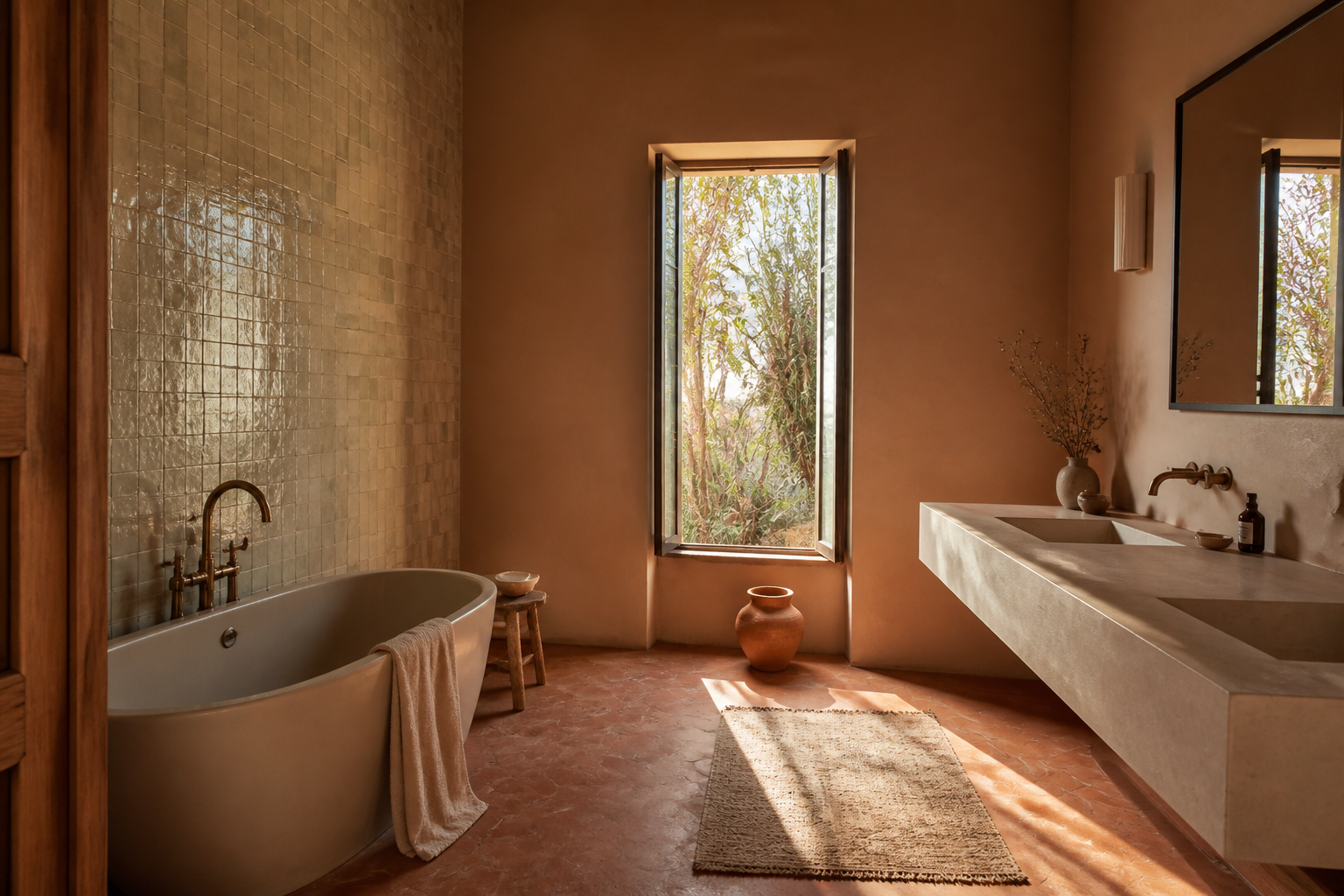
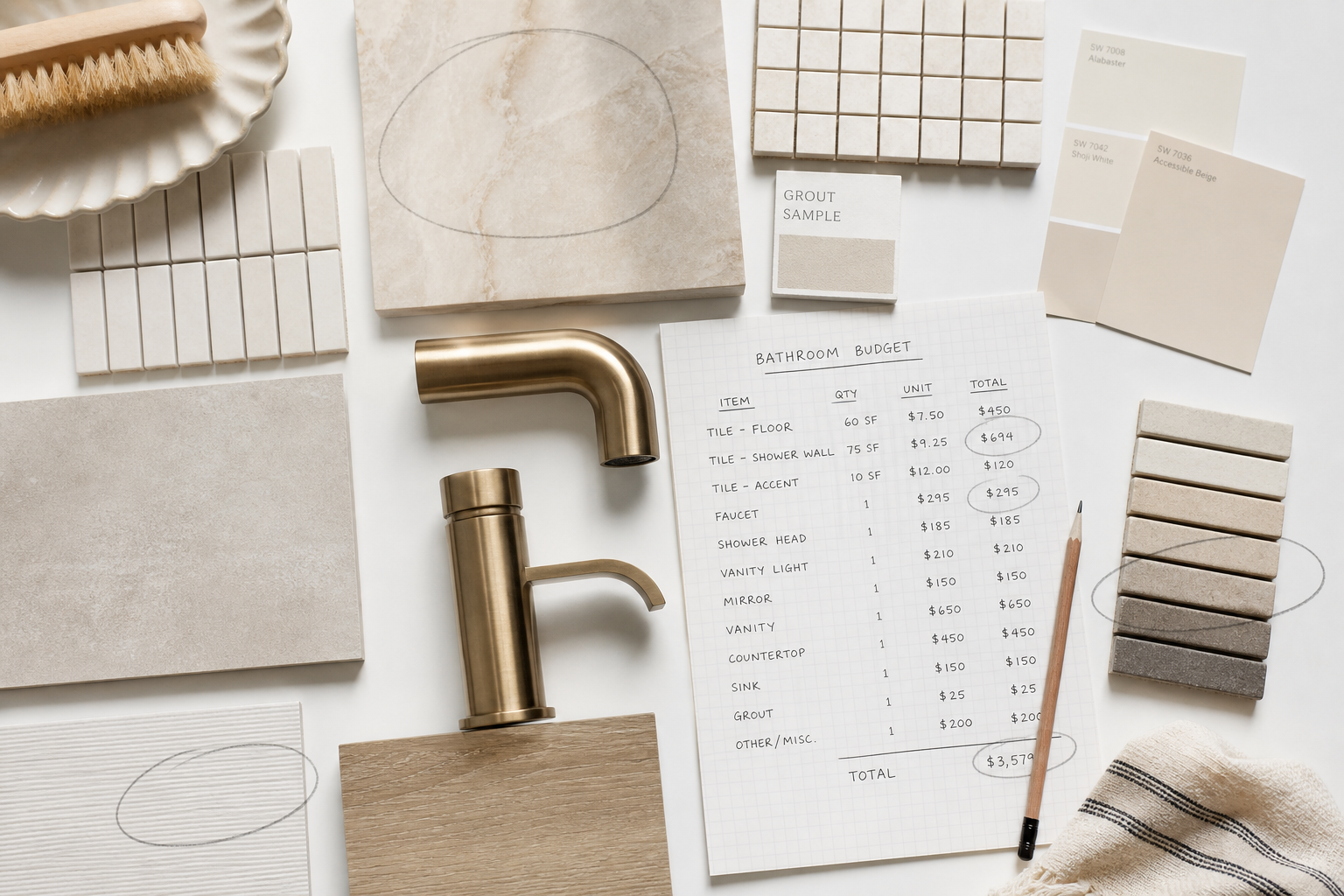
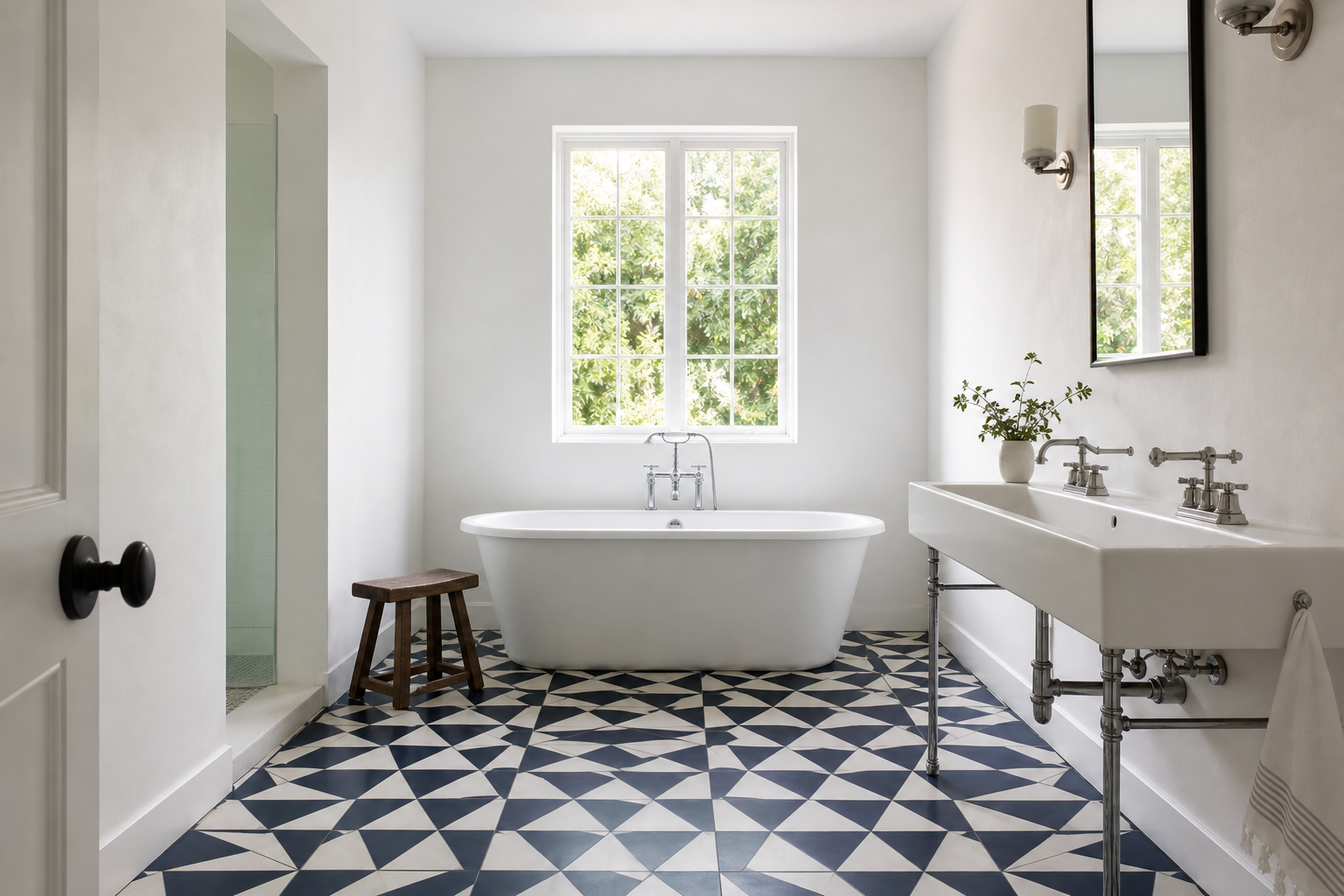
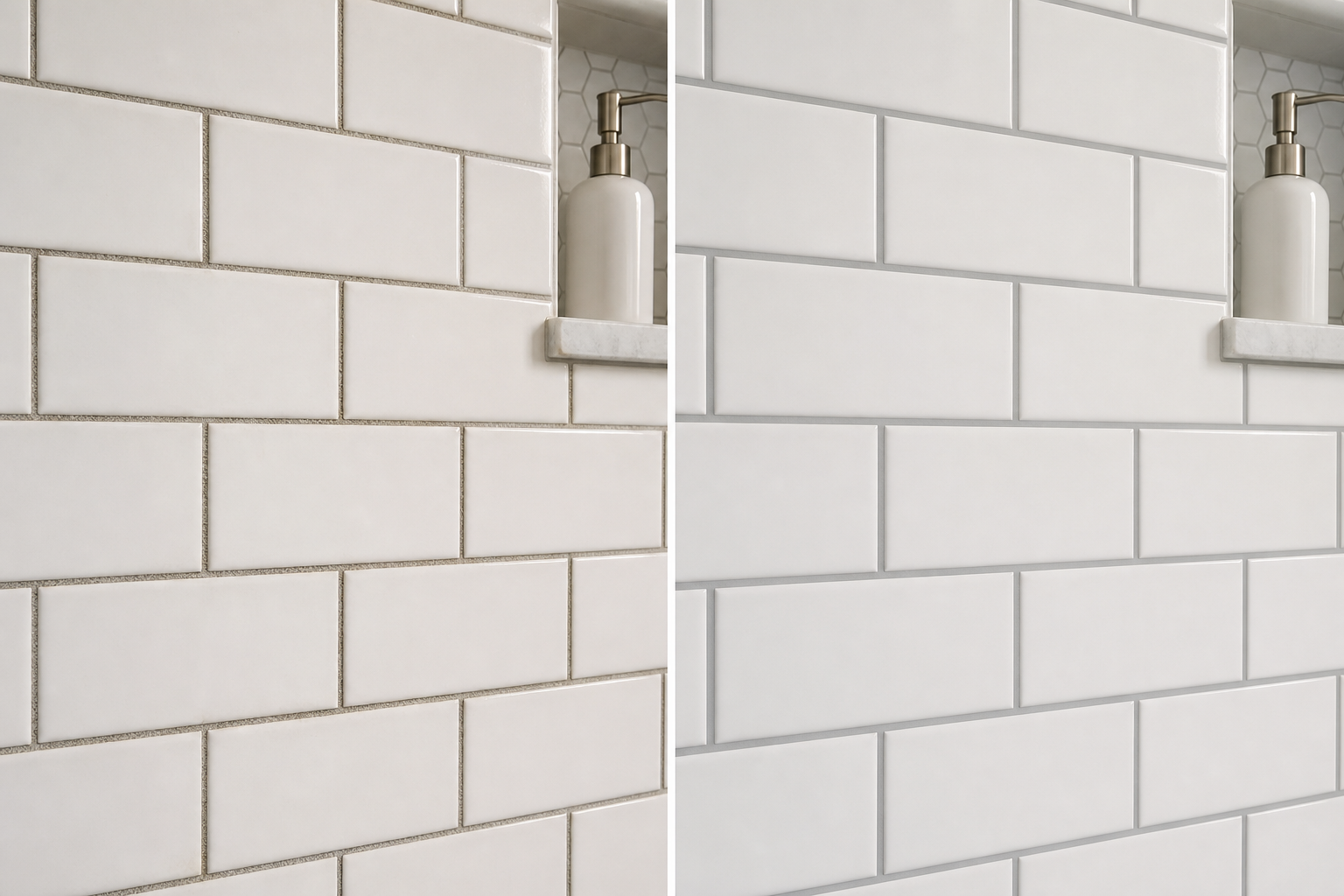
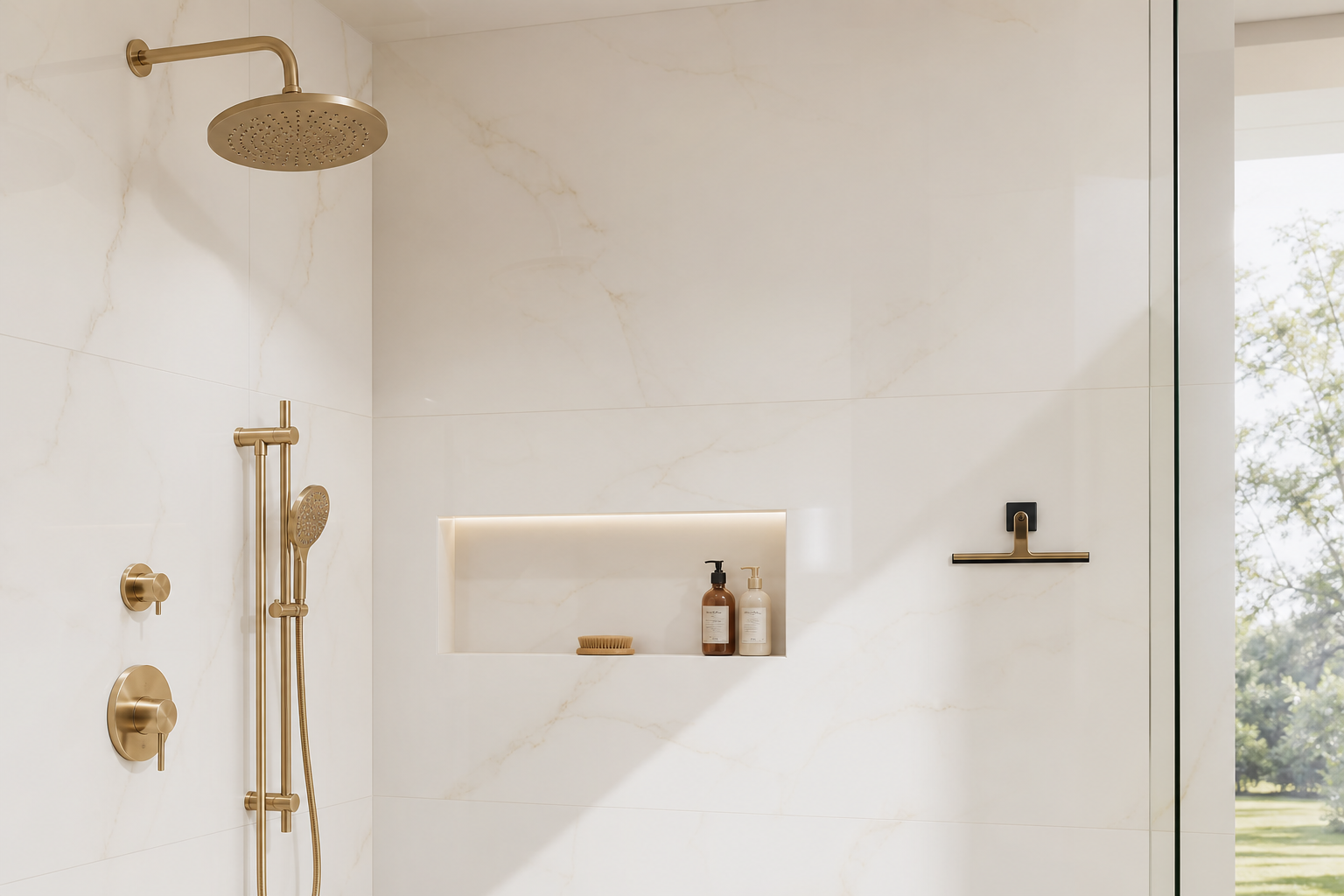
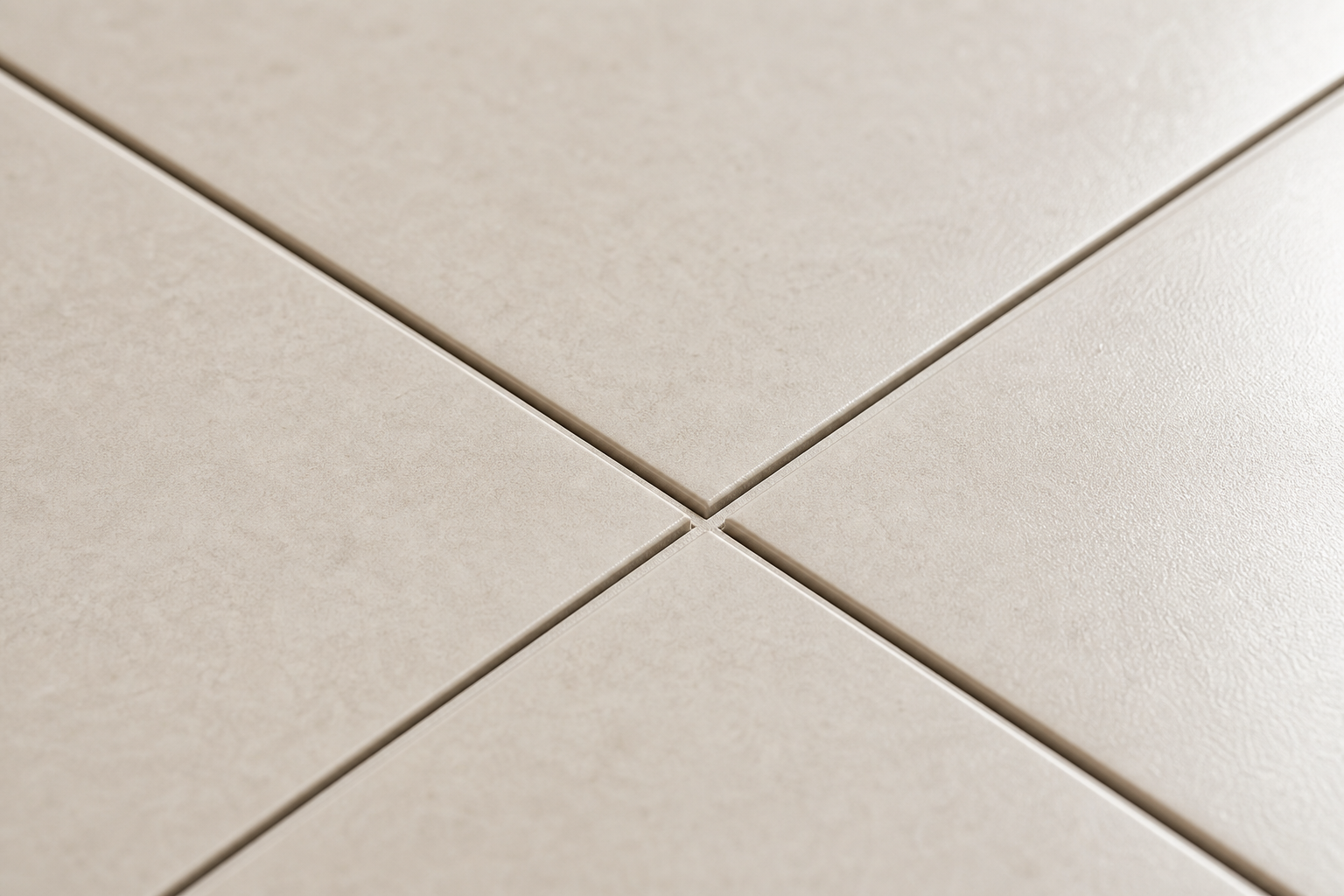
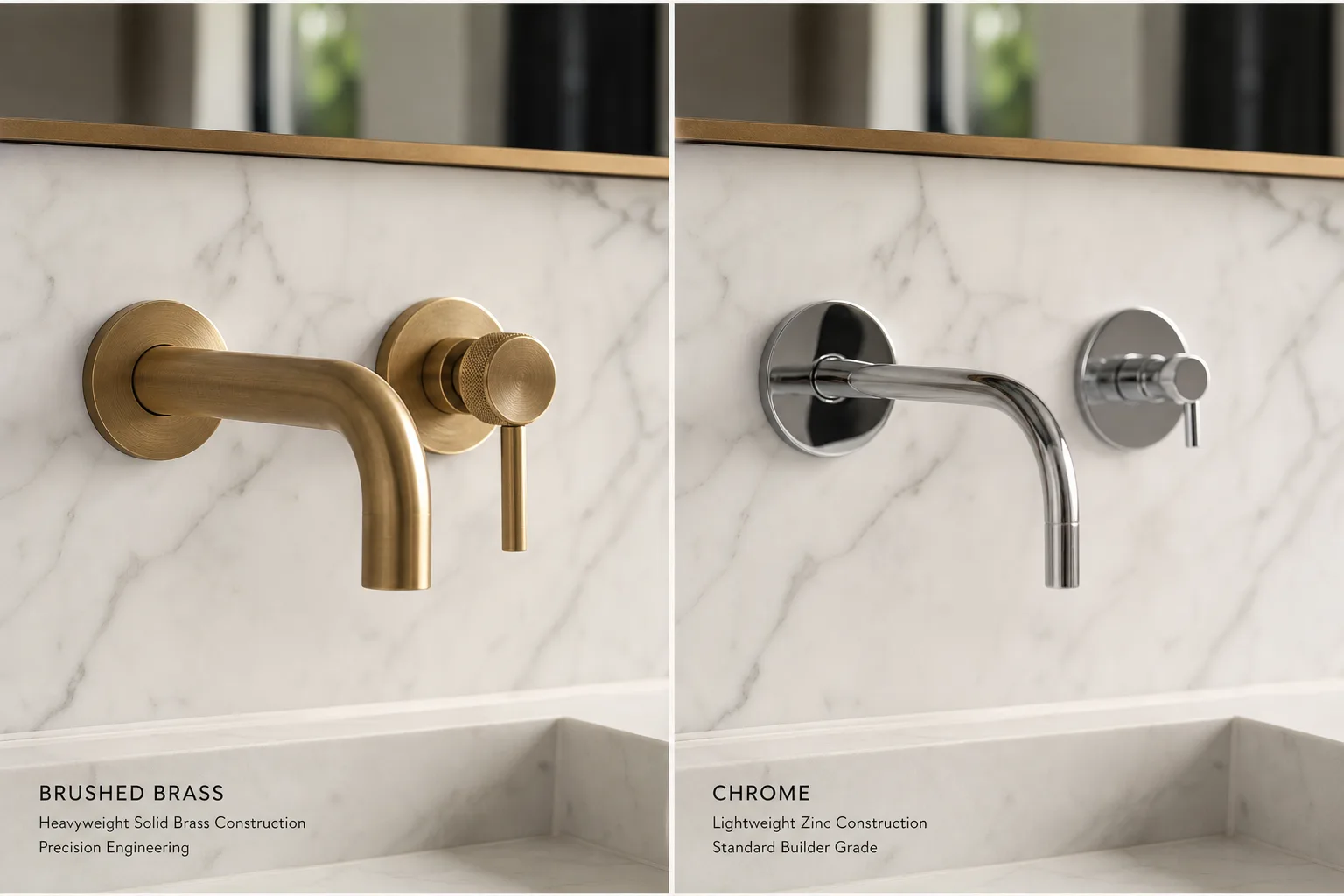
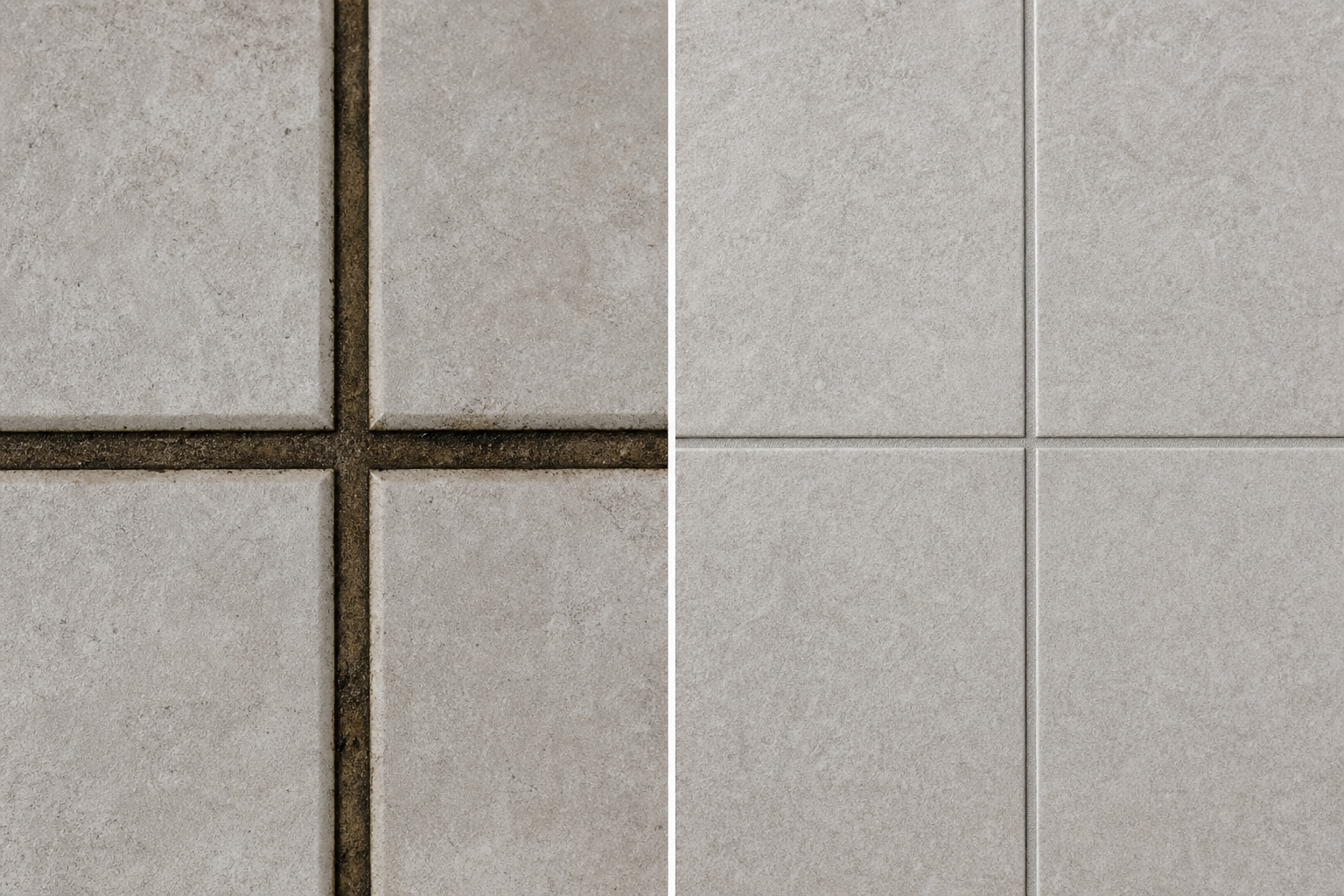
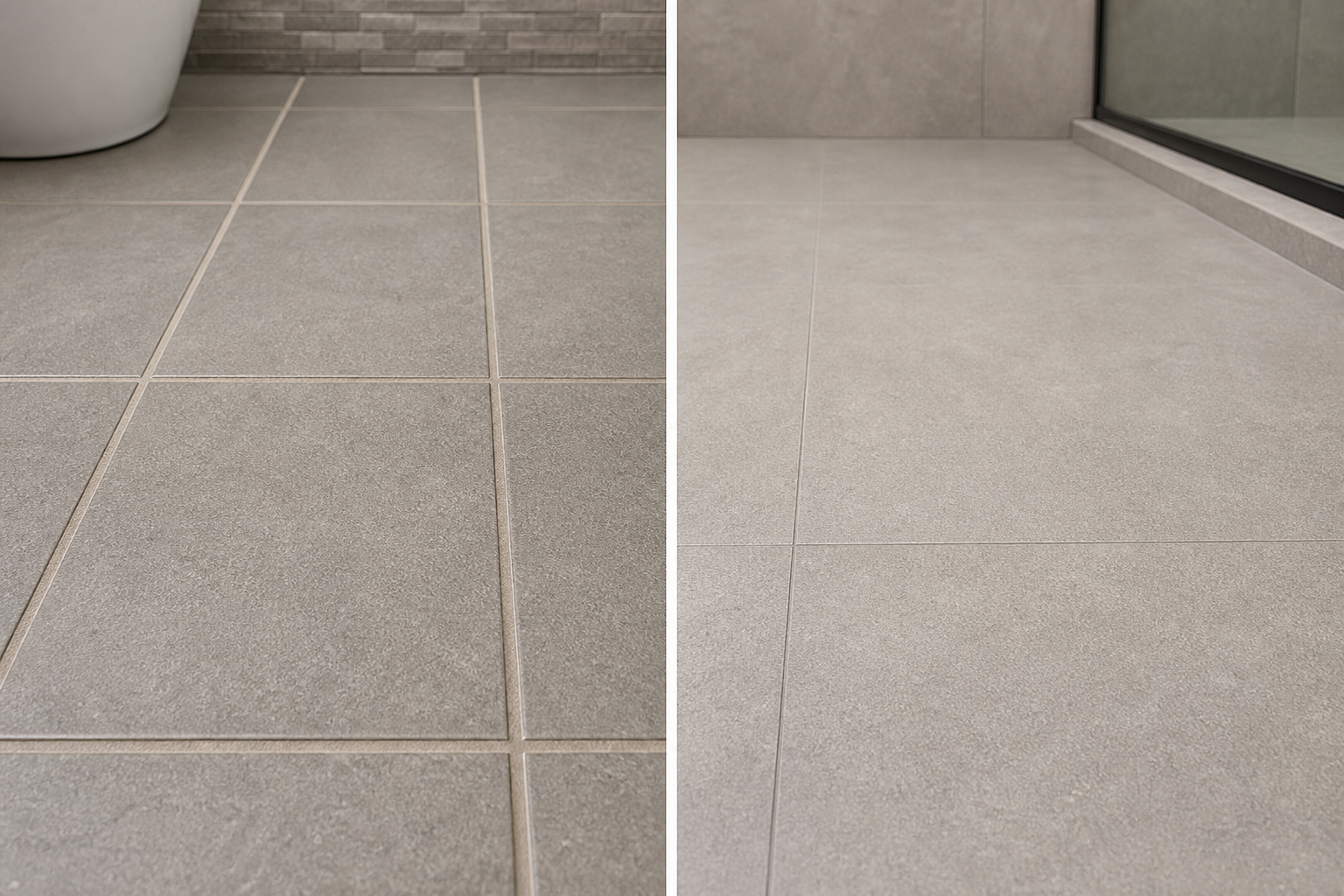
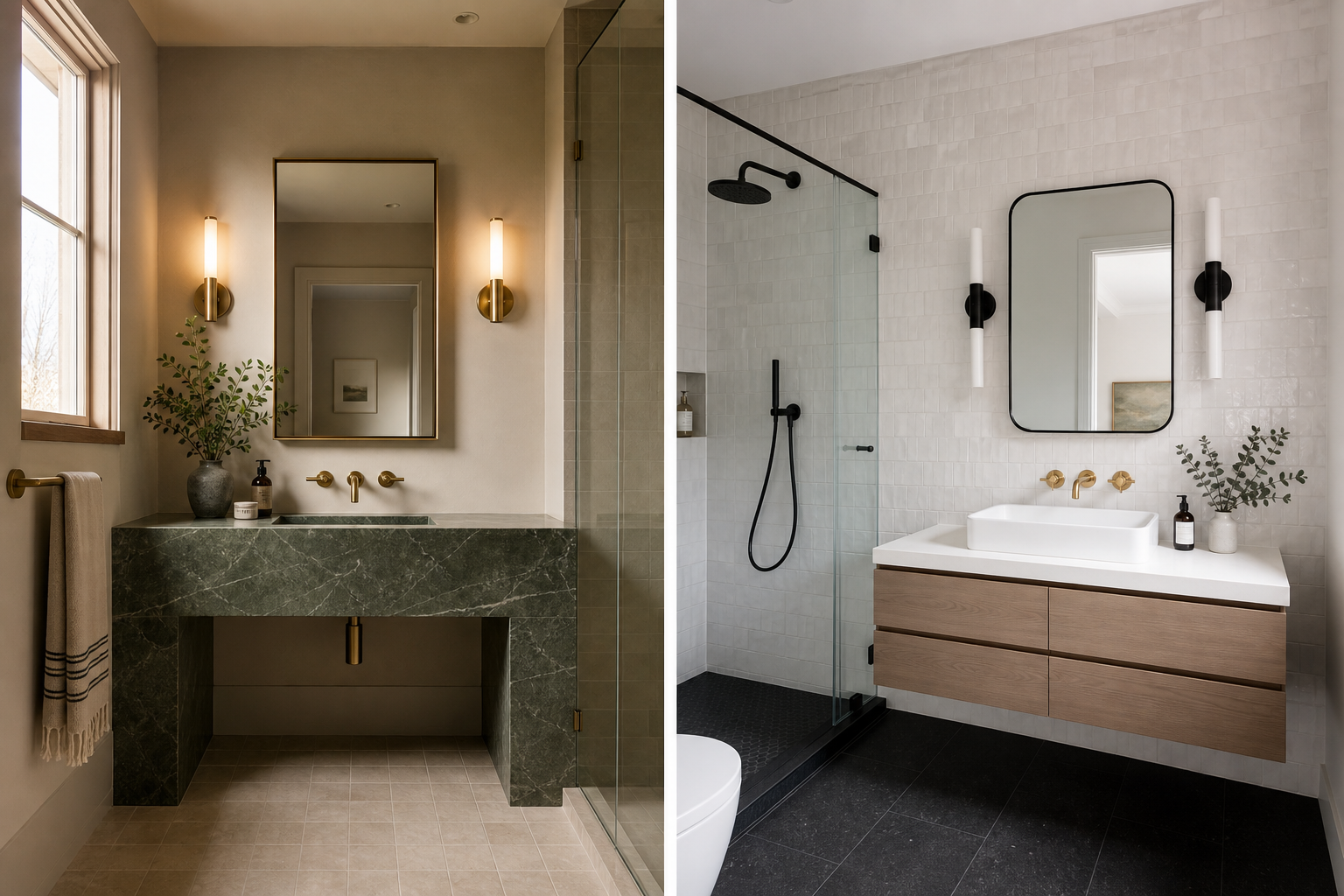
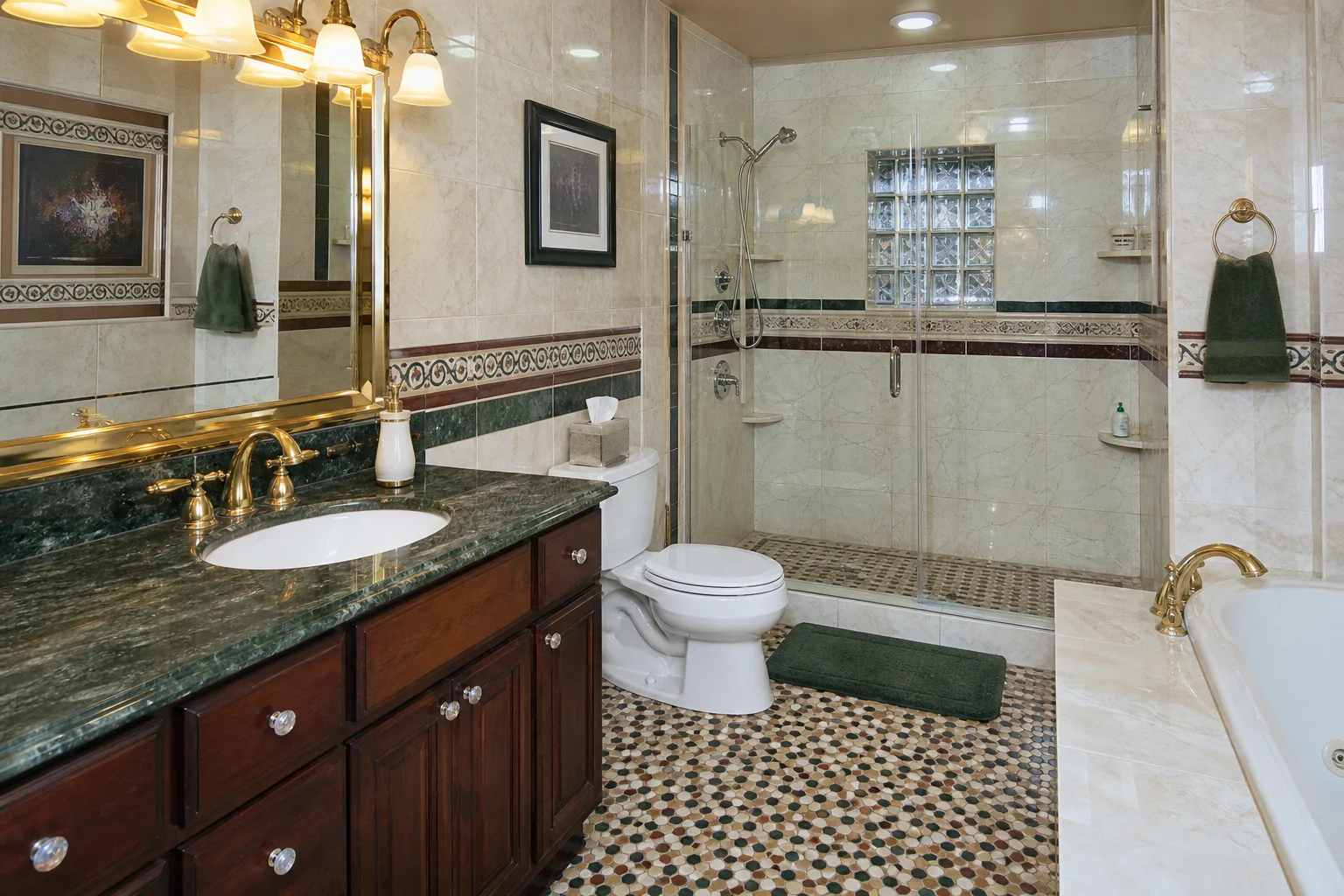
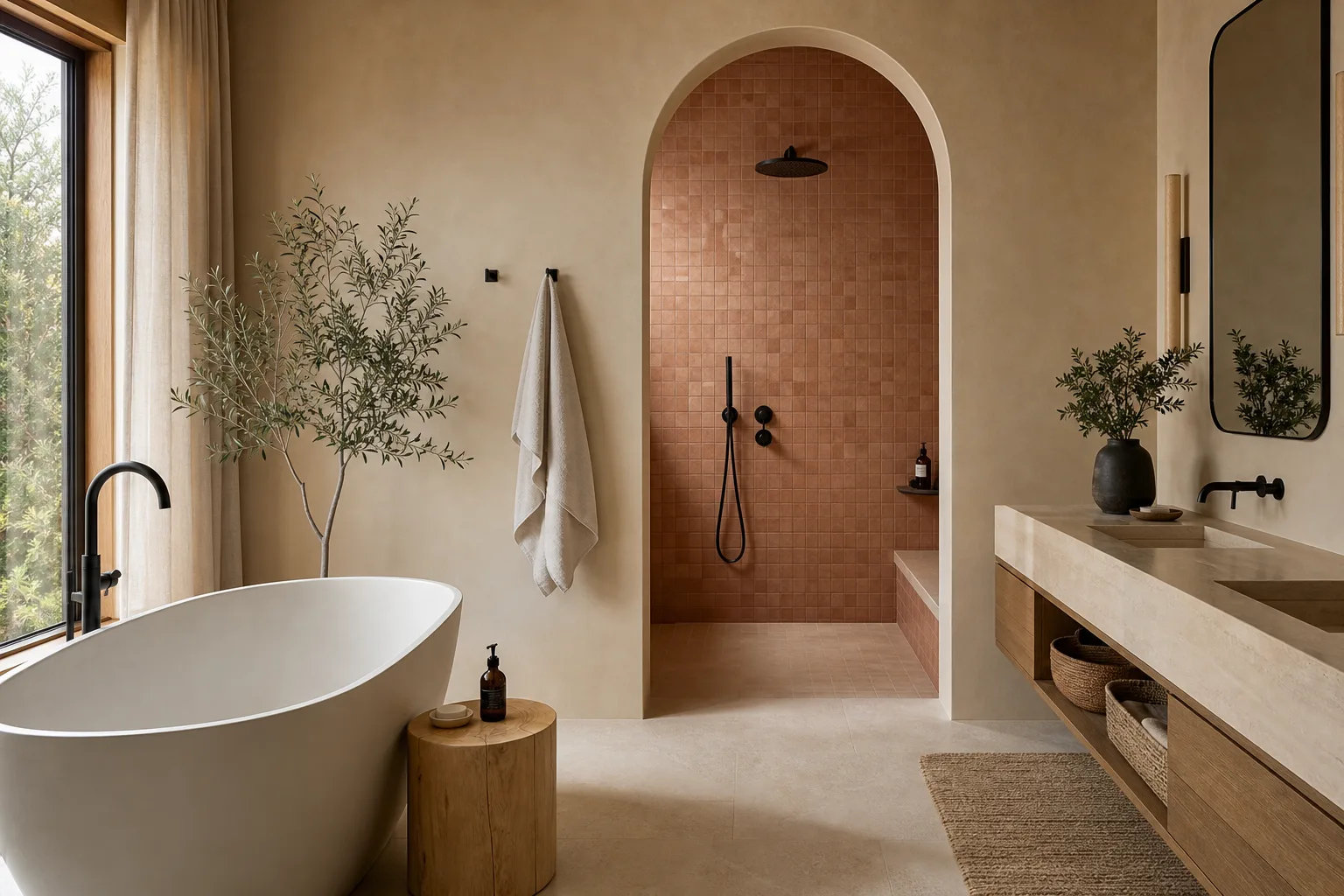
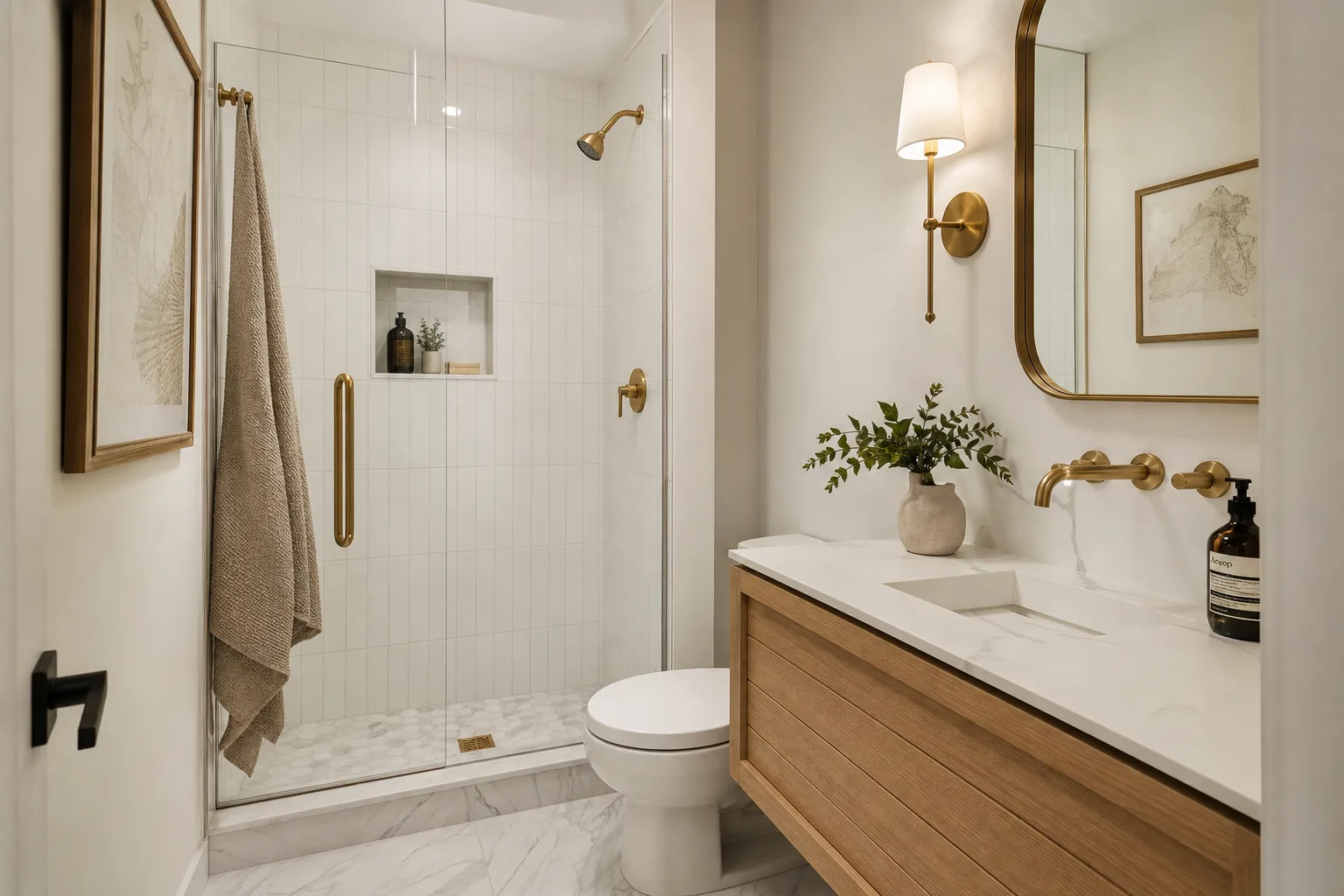
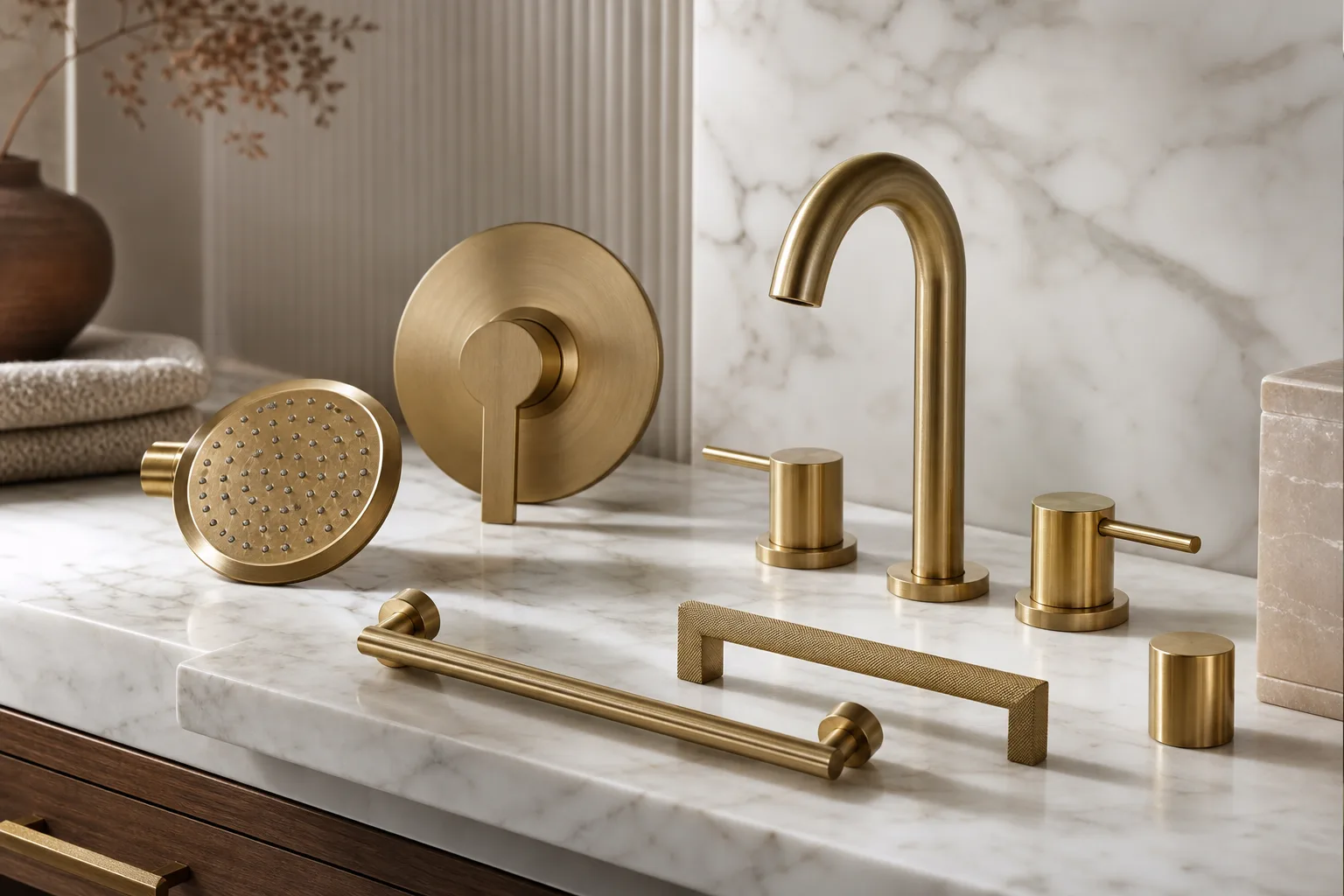
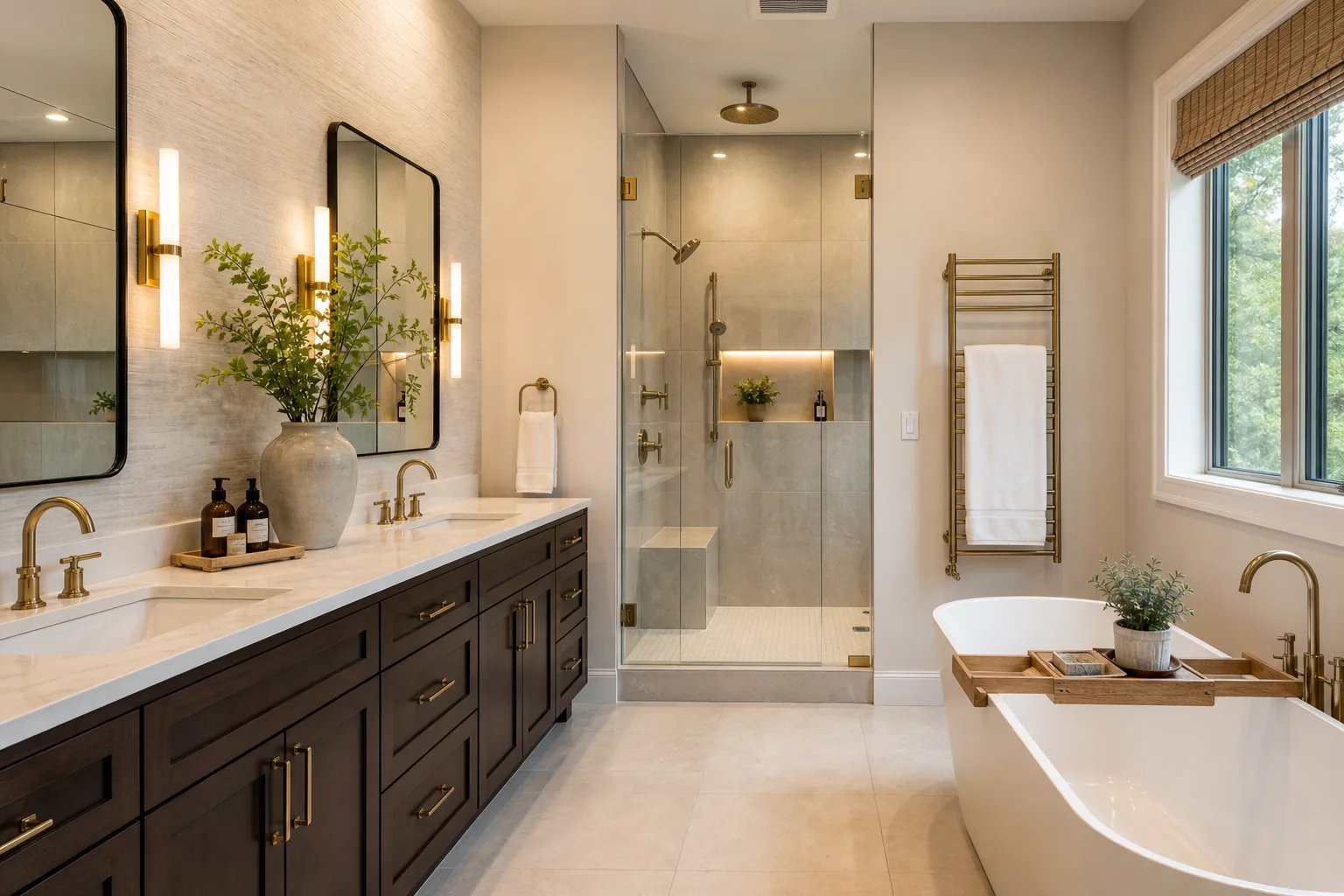
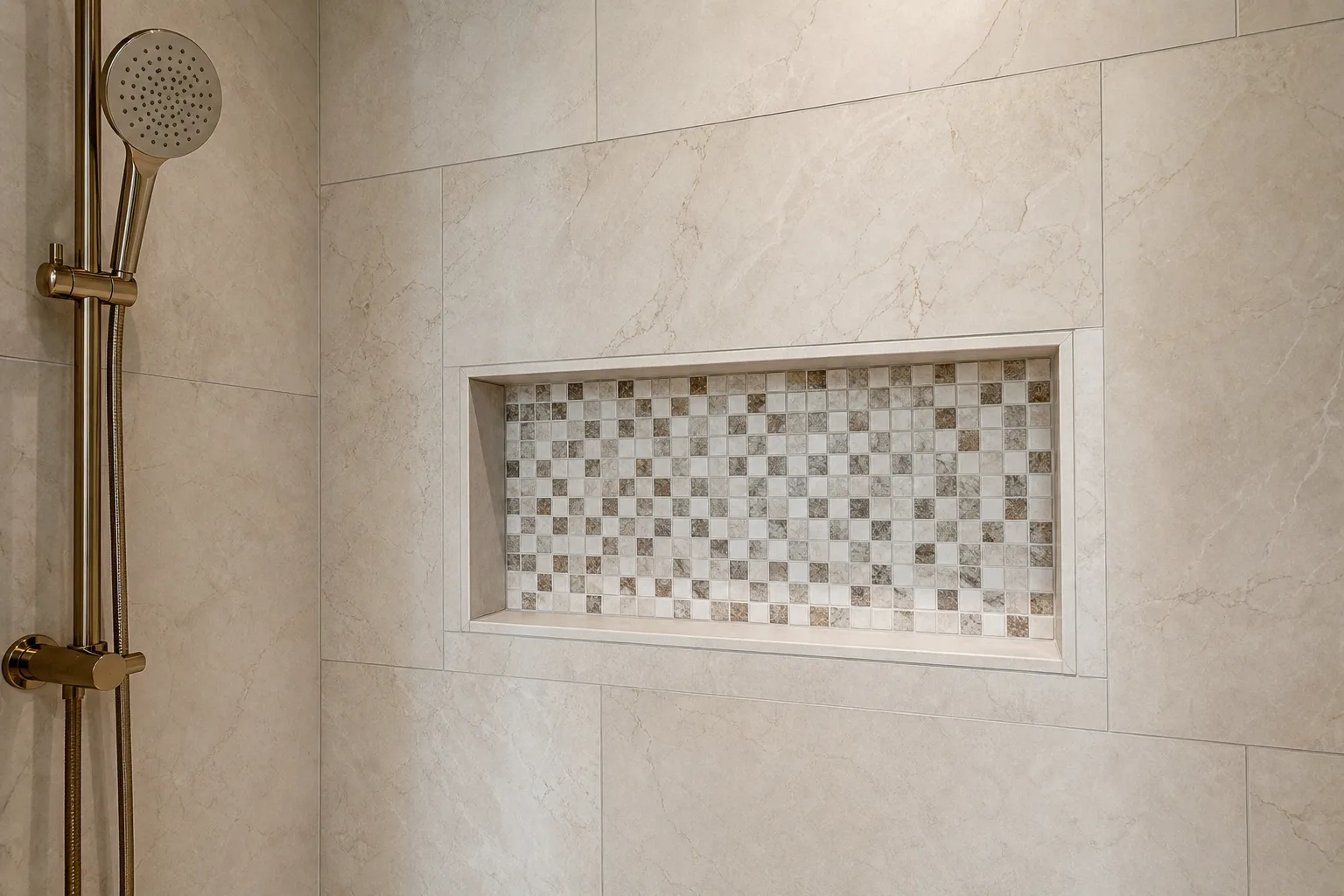
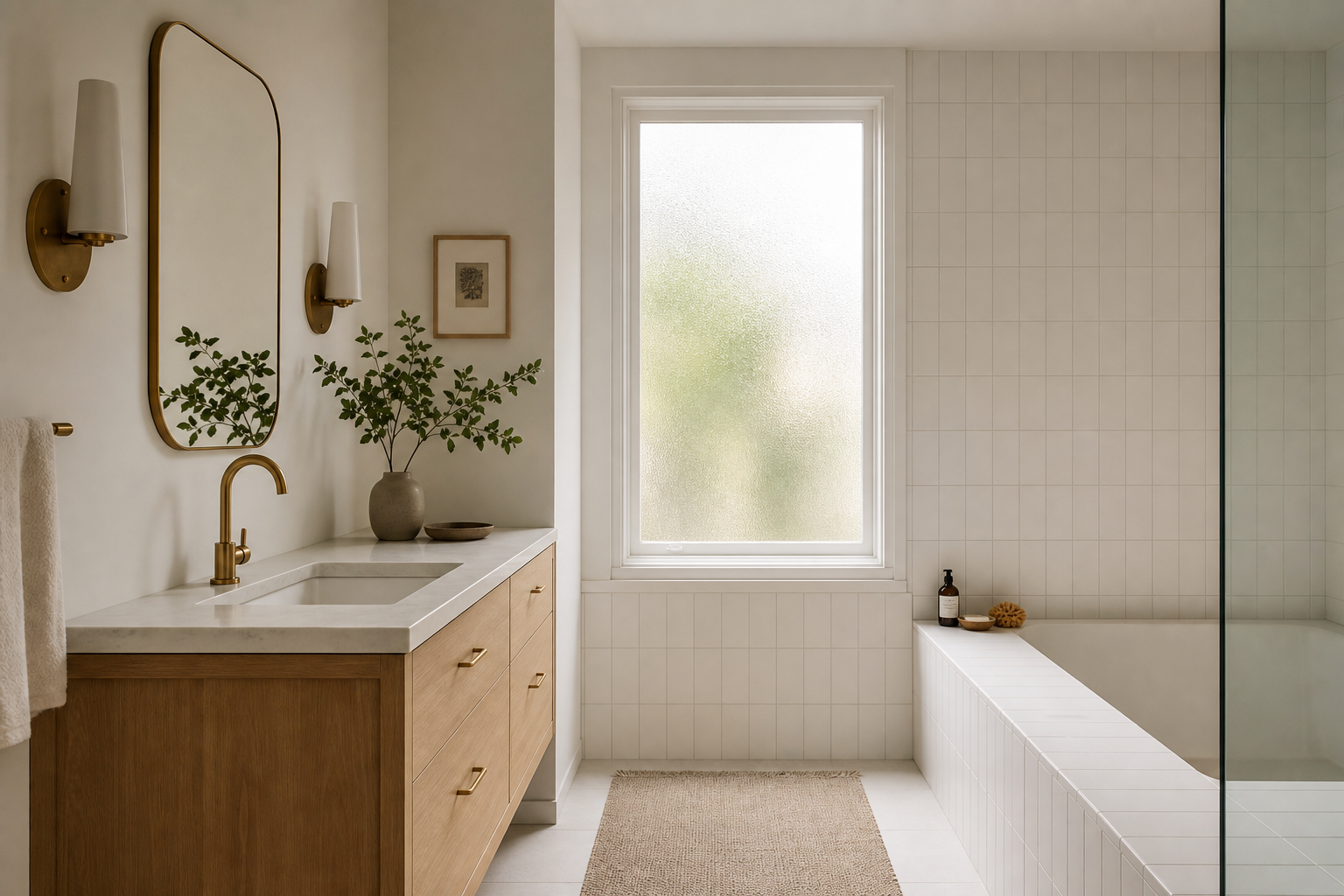
The difference almost always comes down to one choice that earns interest without requiring trend commitment. Not a statement wall. Not an accent color. Something smaller: a grout color that reveals the tile pattern instead of disappearing into it. An unlacquered brass fixture in a room of otherwise cool materials. A single tile format used in a pattern rather than a running bond. A window in a place most bathrooms would not have one.
These are not bold choices in the sense of high risk. They are deliberate choices in the sense of having been made on purpose, for a specific effect, rather than defaulted to or avoided. The room with them reads as designed. The room without them reads as assembled.
The design move does not have to be expensive. A 1-by-4-inch tile used in a brick-bond vertical pattern instead of horizontal reads completely differently than the same tile in the standard orientation. The material cost is identical. The effect is that the choice is visible. Someone made it.
Personality Without Trendiness
A bathroom can contain the specific preferences of the household without containing the specific preferences of the design media that year. These are different things, but they look similar from a showroom floor, which is why so many renovations choose between "safe" and "on-trend" as if those are the only options.
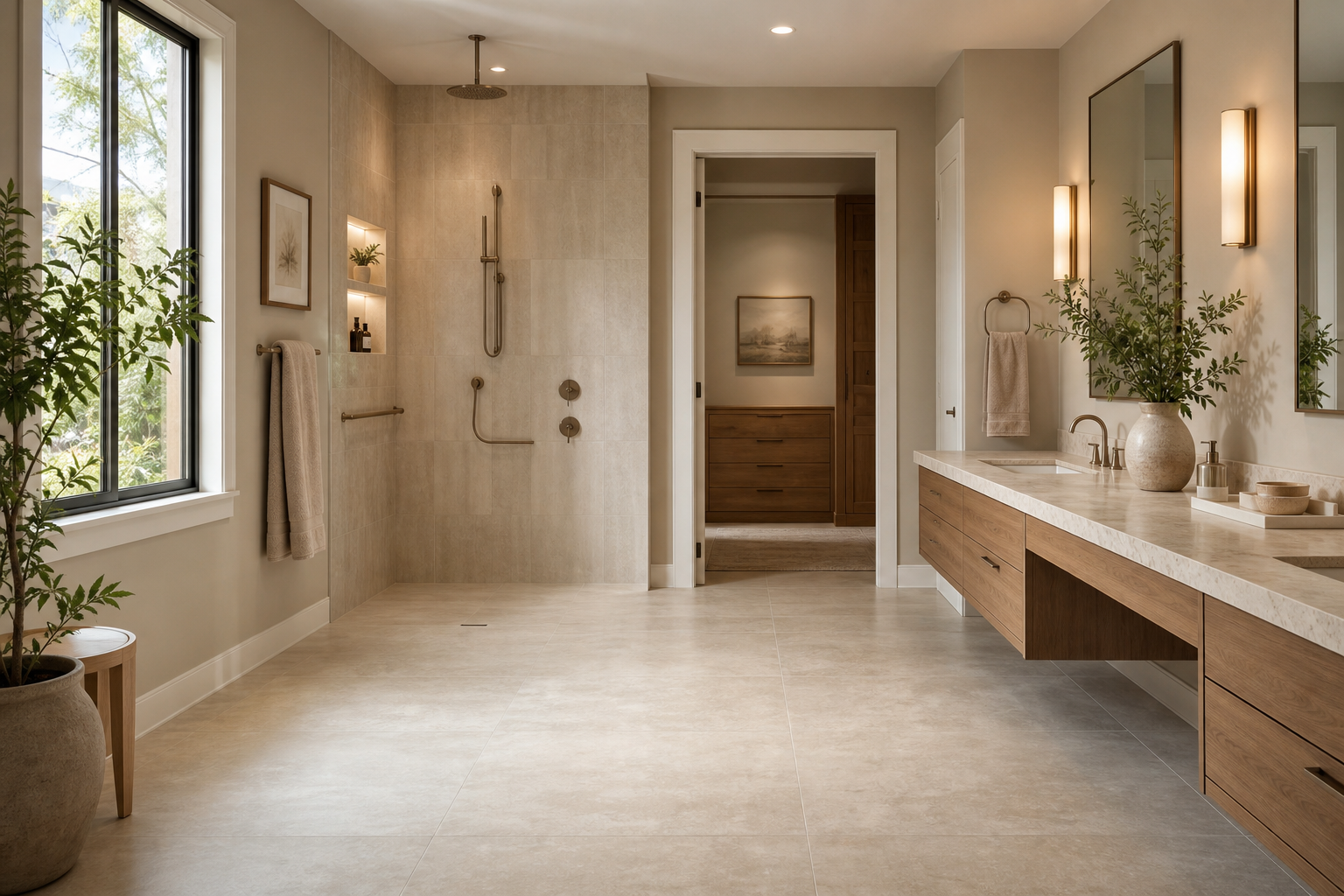
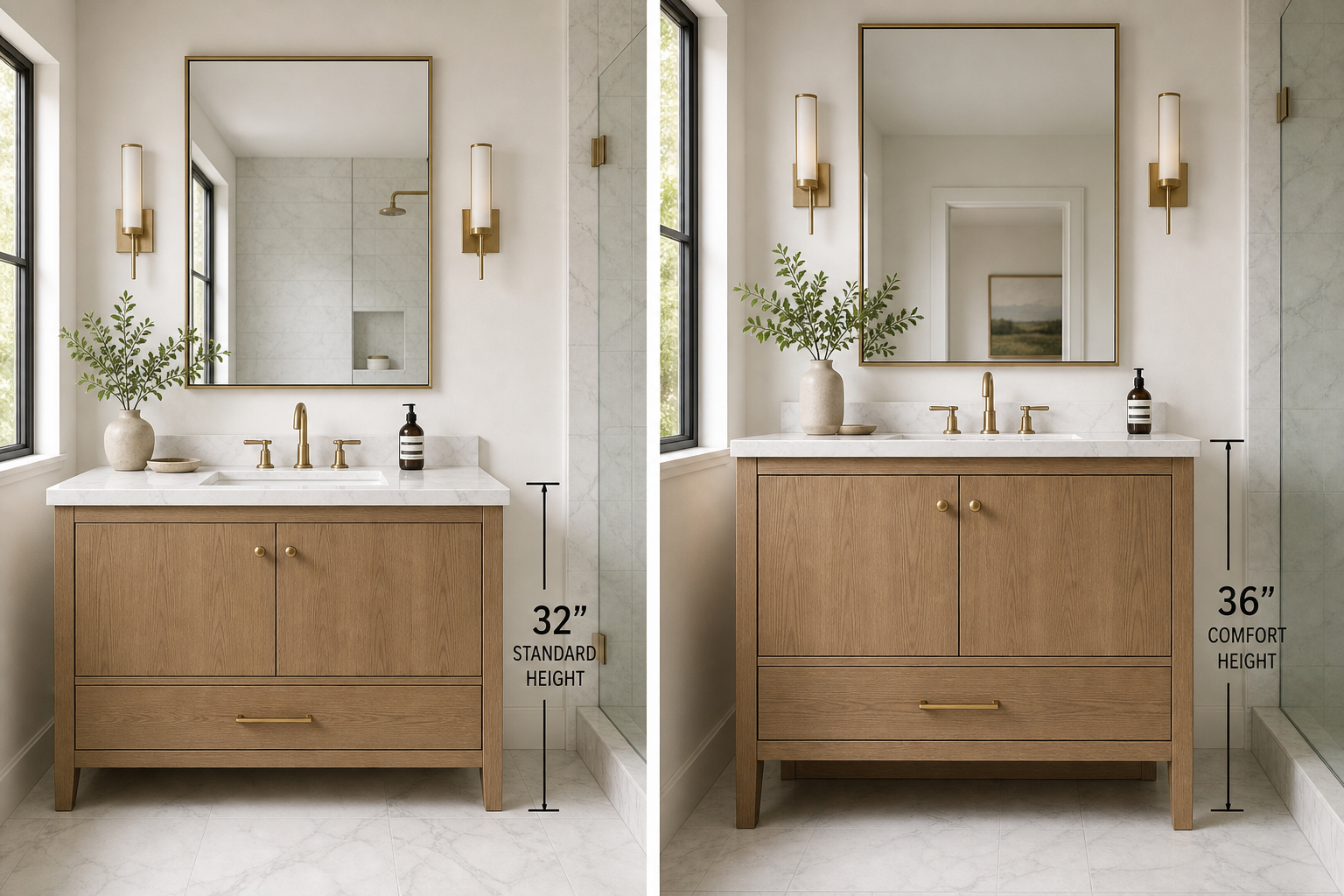
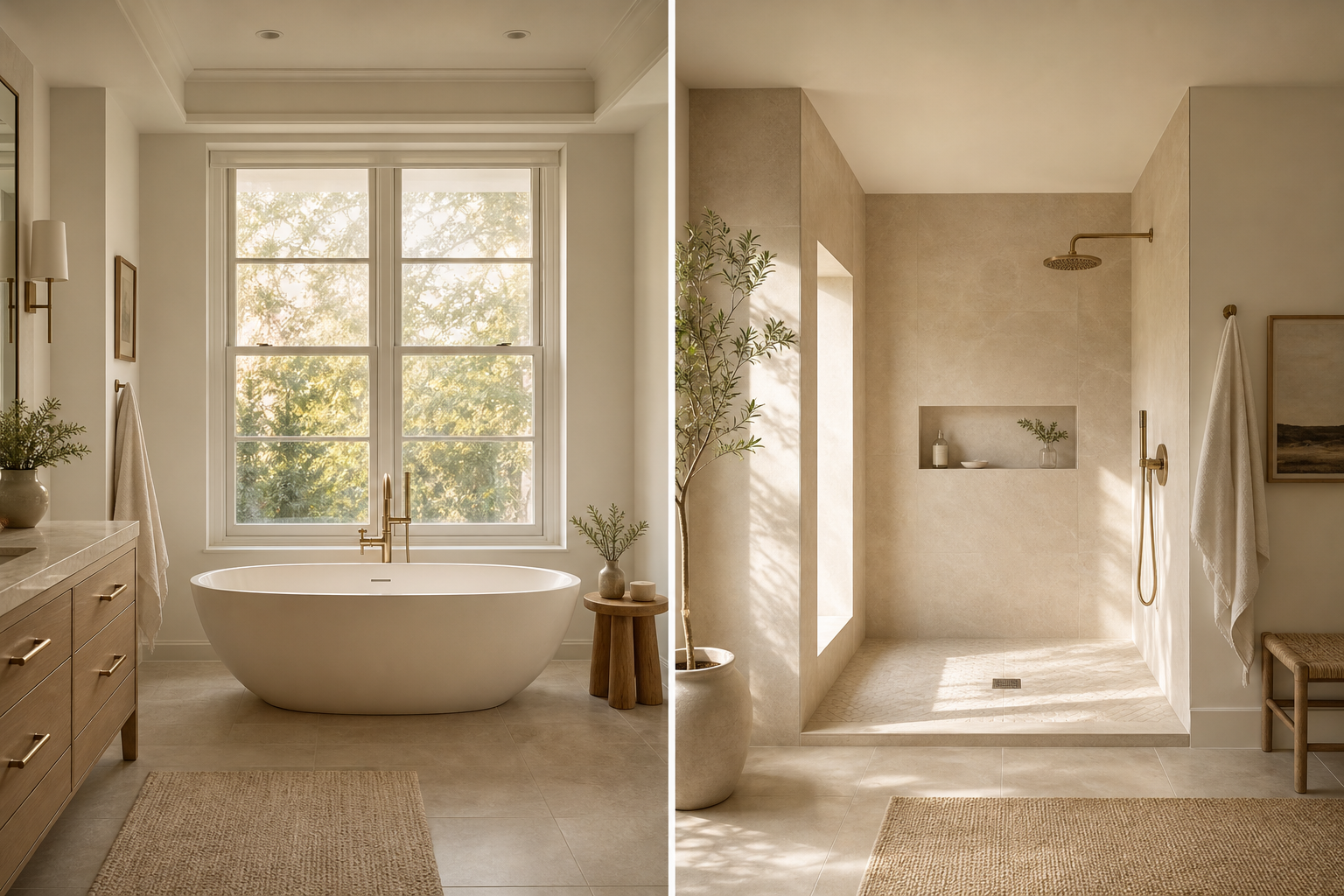
Personal choice in a bathroom looks like: the faucet style that reflects how the homeowner thinks about objects. The tile color that responds to natural light in the room at the time of day they actually use it. The vanity proportion that fits the wall rather than the catalog. The mirror that is sized to the people using it rather than to a standard offering. None of these decisions require trend-chasing. All of them produce a room with identity.
The rooms that age best are usually the ones where someone asked "what do we actually want here" rather than "what is safe here" or "what is fashionable here." Both of those questions produce rooms that belong to their moment. The first produces a room that belongs to the household.
What to Protect From the Next Renovation
If you are planning a bathroom with some version of longevity as a goal, the thing worth protecting is not the specific finishes but the decisions that made them interesting. A room built around a specific logic, where the materials were chosen in relation to each other rather than in isolation, where the proportions were considered rather than defaulted, will remain coherent as individual elements are eventually updated.
A room built from catalog defaults in the currently inoffensive finishes has nothing to update toward. Replacing the brushed nickel hardware with matte black does not make the room more interesting; it just changes one default for another.
Timelessness is not a style you choose. It is a quality produced by the discipline of making every decision for a reason, and by having the conviction to stay with the decisions that required it. The boring bathroom and the timeless bathroom often contain similar materials. The difference is entirely in how those materials were chosen and whether the result has the confidence to be itself.
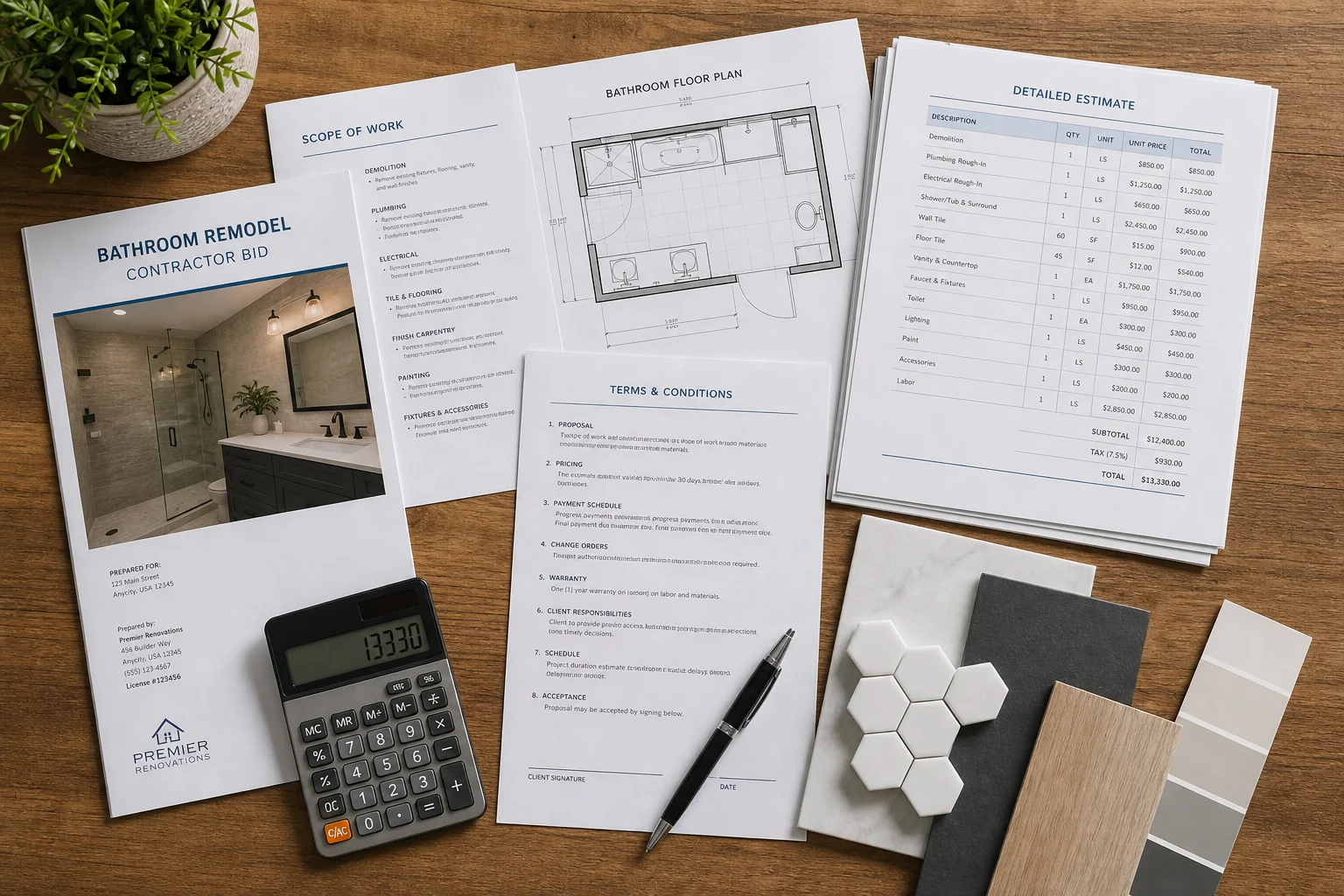
We push back when clients default to safe choices from anxiety rather than choosing them from preference. A room assembled from avoidances is not timeless; it is a room that avoided the conversation about what the household actually wants. That conversation is the design work, and it is worth having before tile is ordered.