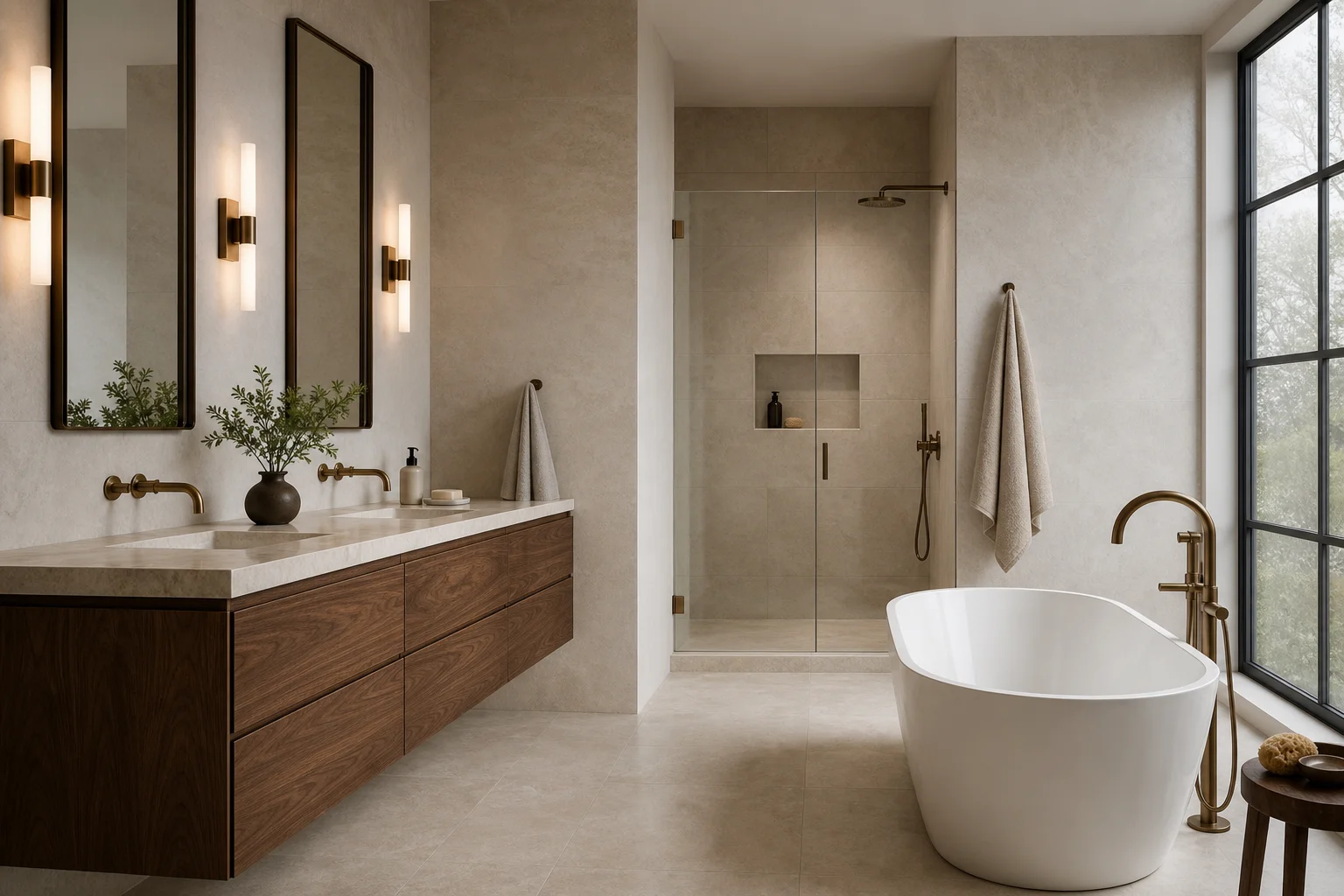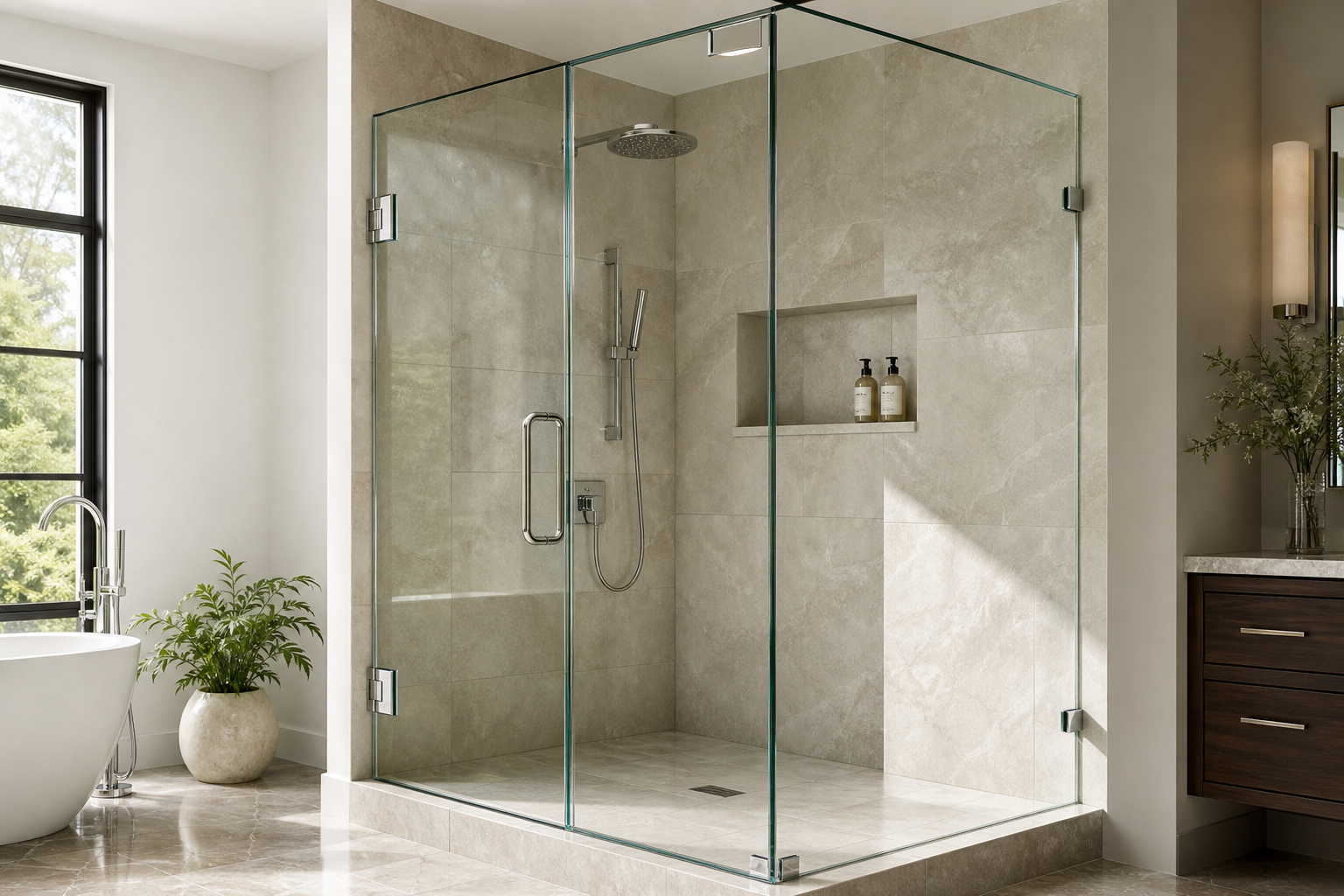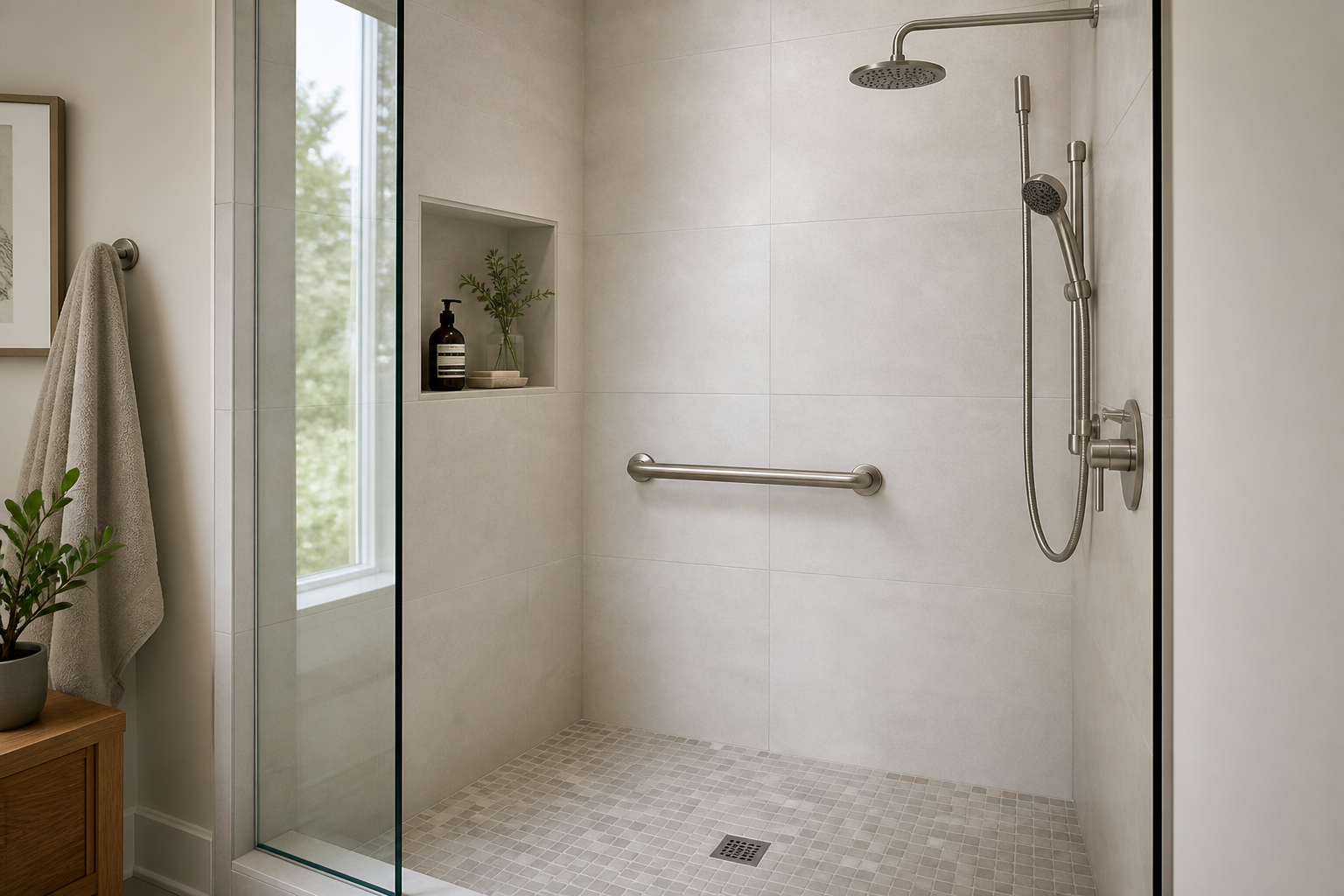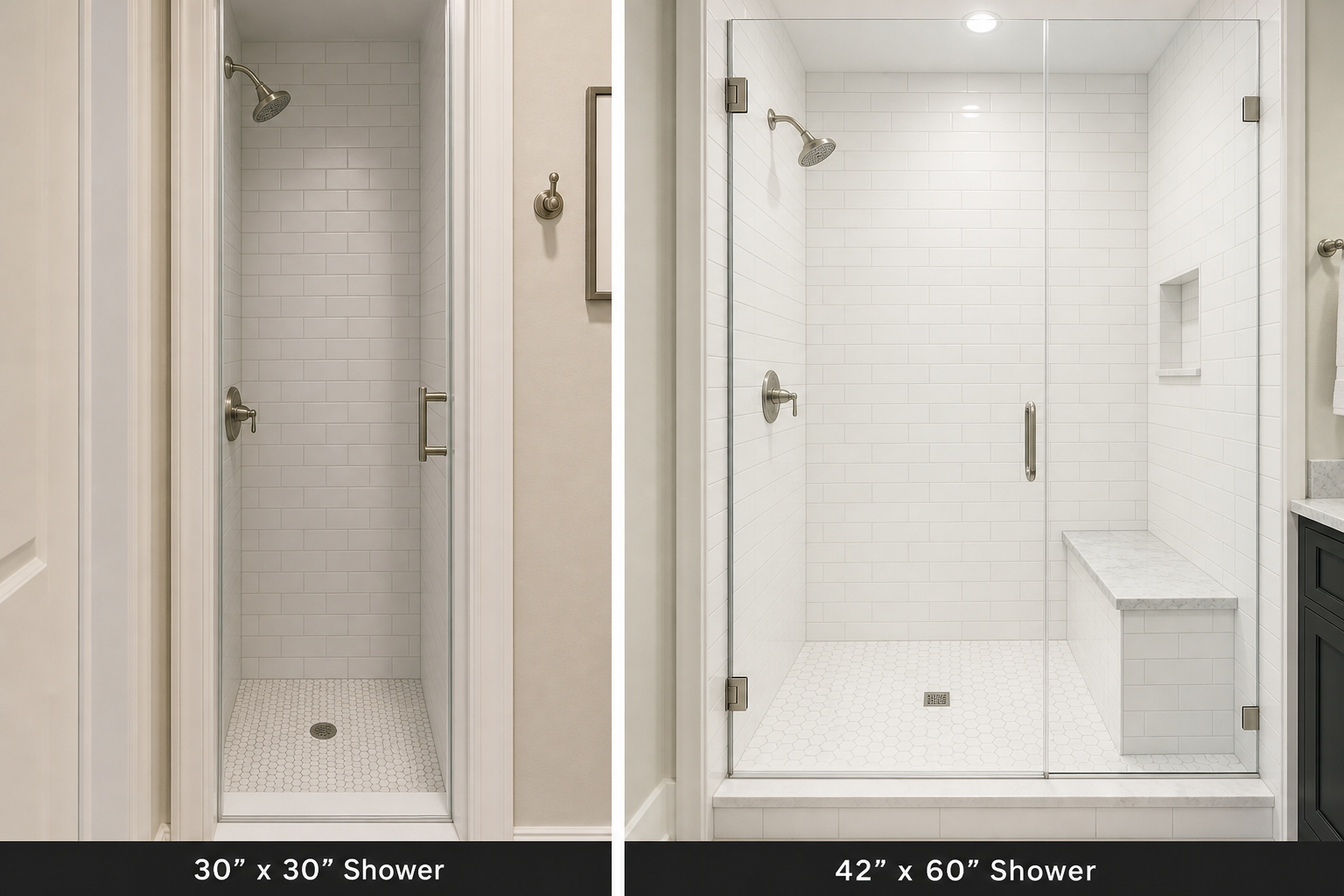
The IRC code minimum for a shower is 30 by 30 inches. That is the size of a small coat closet. It satisfies the code while producing a shower that most adults cannot use comfortably. The number that actually matters is 36 by 48 for a functional single-user shower, and the difference between code and comfort is the difference between a room that works and one you tolerate.
This is not an opinion about luxury. It is a measurement problem with daily consequences. A shower that passes inspection can still fail the person standing in it every morning. Code sets a legal floor. Comfort sets a functional floor. The two floors are twelve to eighteen inches apart, and that gap is where most shower regret lives.
What the Code Actually Requires
Section P2708.1 of the International Residential Code specifies that shower compartments shall have not less than 900 square inches of interior cross-sectional area, with a minimum dimension of 30 inches measured from the finished interior surface. The measurement is taken tile to tile, exclusive of valves, shower heads, and grab bars, at the height of the threshold and continuing to at least 70 inches above the drain.
UpCodes publishes the full IRC text: the minimum required area and dimension shall be measured from the finished interior dimension at a height equal to the top of the threshold and at a point tangent to its centerline and shall be continued to a height of not less than 70 inches above the shower drain outlet. Hinged shower doors shall open outward.
Building Code Trainer, which publishes code interpretation guides, notes an exception: compartments with a minimum dimension of 25 inches are permitted if the total cross-sectional area is at least 1,300 square inches. That exception allows slightly rectangular showers, such as 25 by 52 inches, to pass code. It does not make them comfortable.
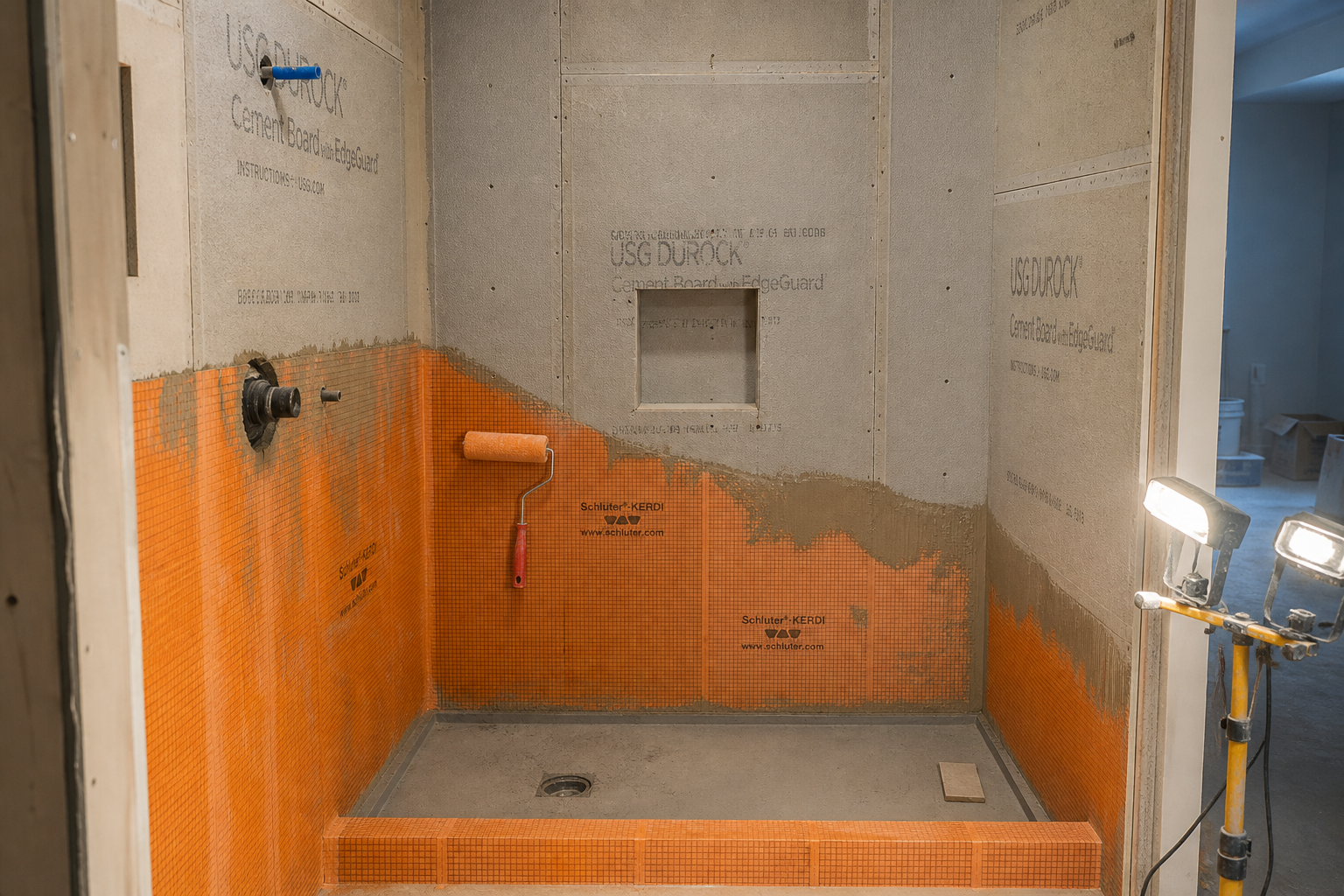
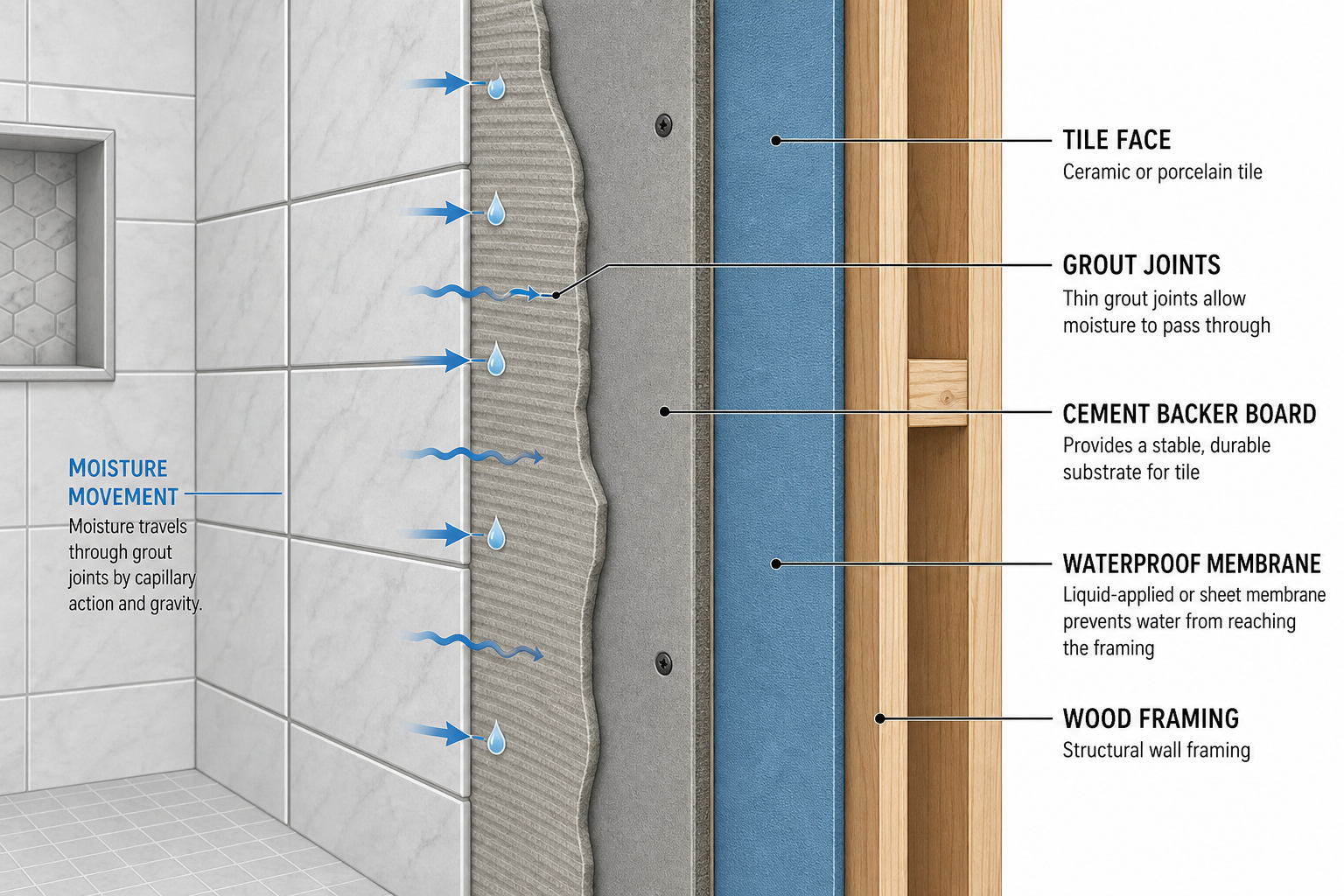
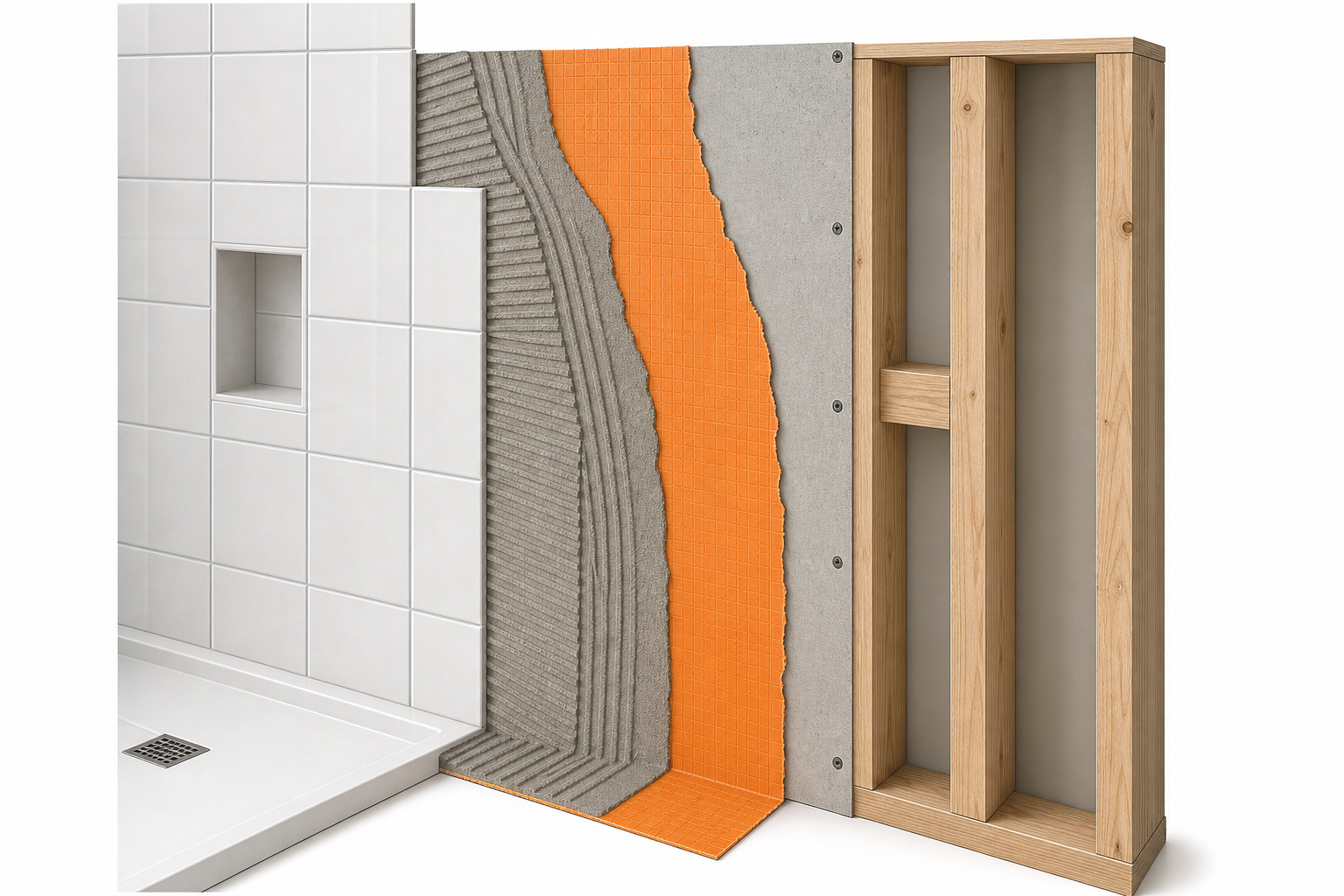
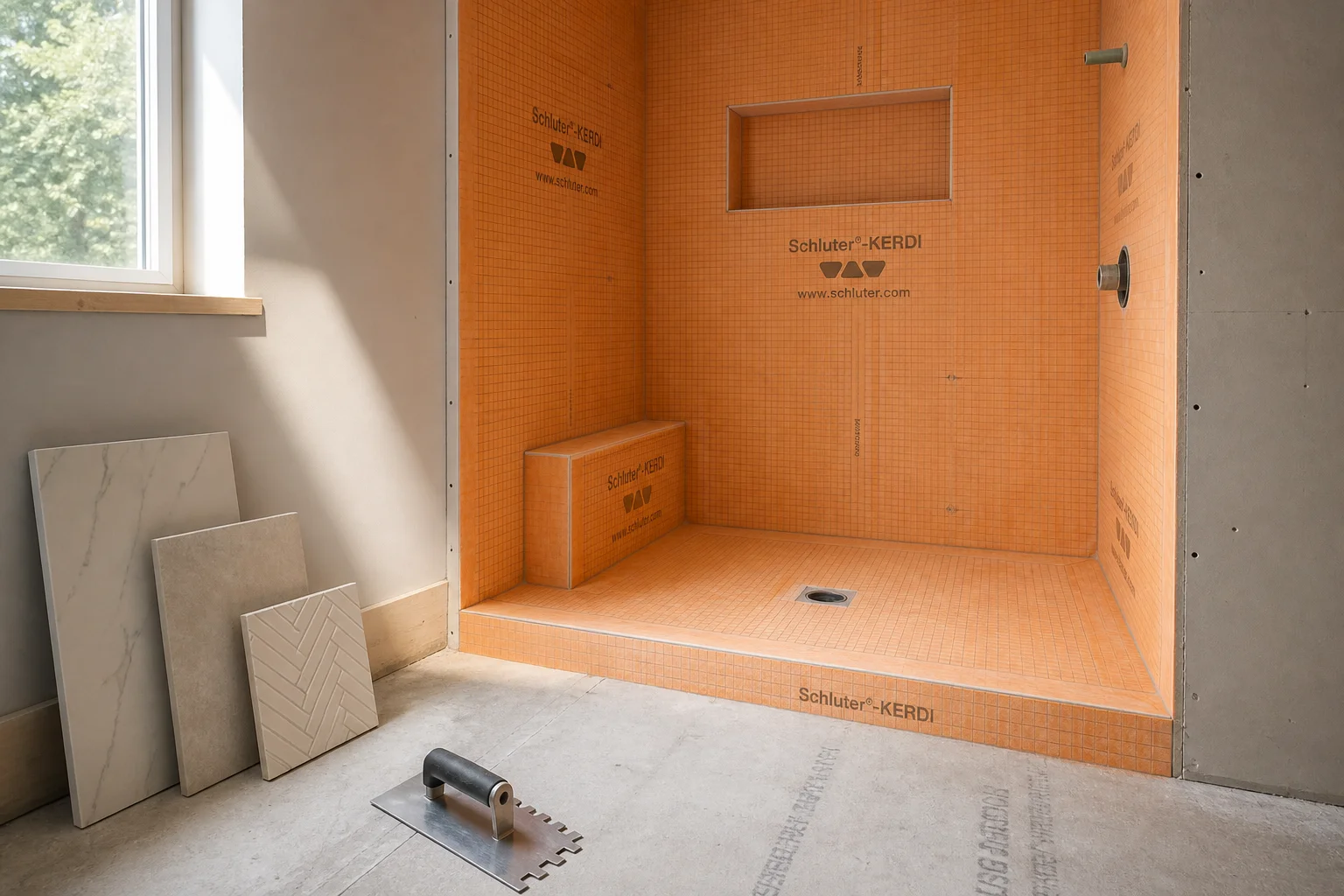
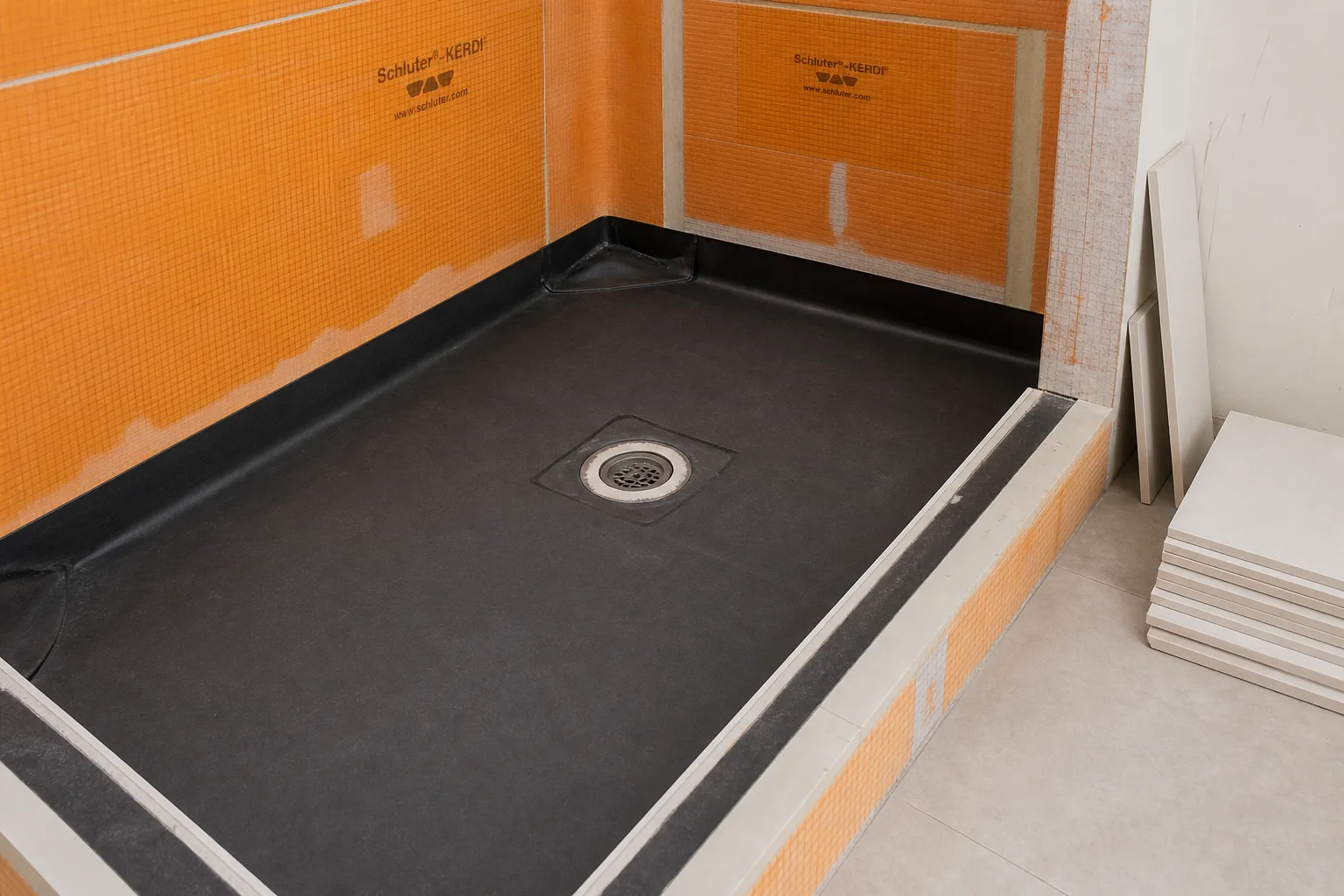
The critical detail is finished interior dimension. The 30-inch minimum is not rough framing. It is the space you occupy after tile, backer, and waterproofing consume wall thickness. In a typical framed wall with cement board and tile, each wall loses roughly three to four inches from the stud bay. A shower framed at 36 inches inside the studs may finish at 30 inches tile to tile. Contractors who size from framing rather than finished dimension produce showers that pass inspection on paper and fail in use.
Code also requires that the 30-inch minimum dimension be maintained from the threshold to 70 inches above the drain. A shower that tapers inward due to poor framing or a poorly placed bench can fail inspection even when the floor plan looks adequate on the drawing.
What NKBA Recommends and Why
The National Kitchen and Bath Association recommends 36 by 36 inches as the practical minimum for a shower that adults will use daily. Peak Property Services, citing NKBA ergonomic guidance, notes that the 36-inch recommendation reflects comfort, usability, and aging-in-place considerations rather than legal compliance alone.
The difference between 30 and 36 inches is six inches per wall, twelve inches total width in a square shower. That sounds modest until you stand in both. A 30-inch interior dimension leaves roughly 24 inches of clear body width once you account for elbow position and the slight forward lean most people adopt while rinsing. Shoulders contact tile. Elbows bump valves. Turning around requires a shuffle rather than a pivot.
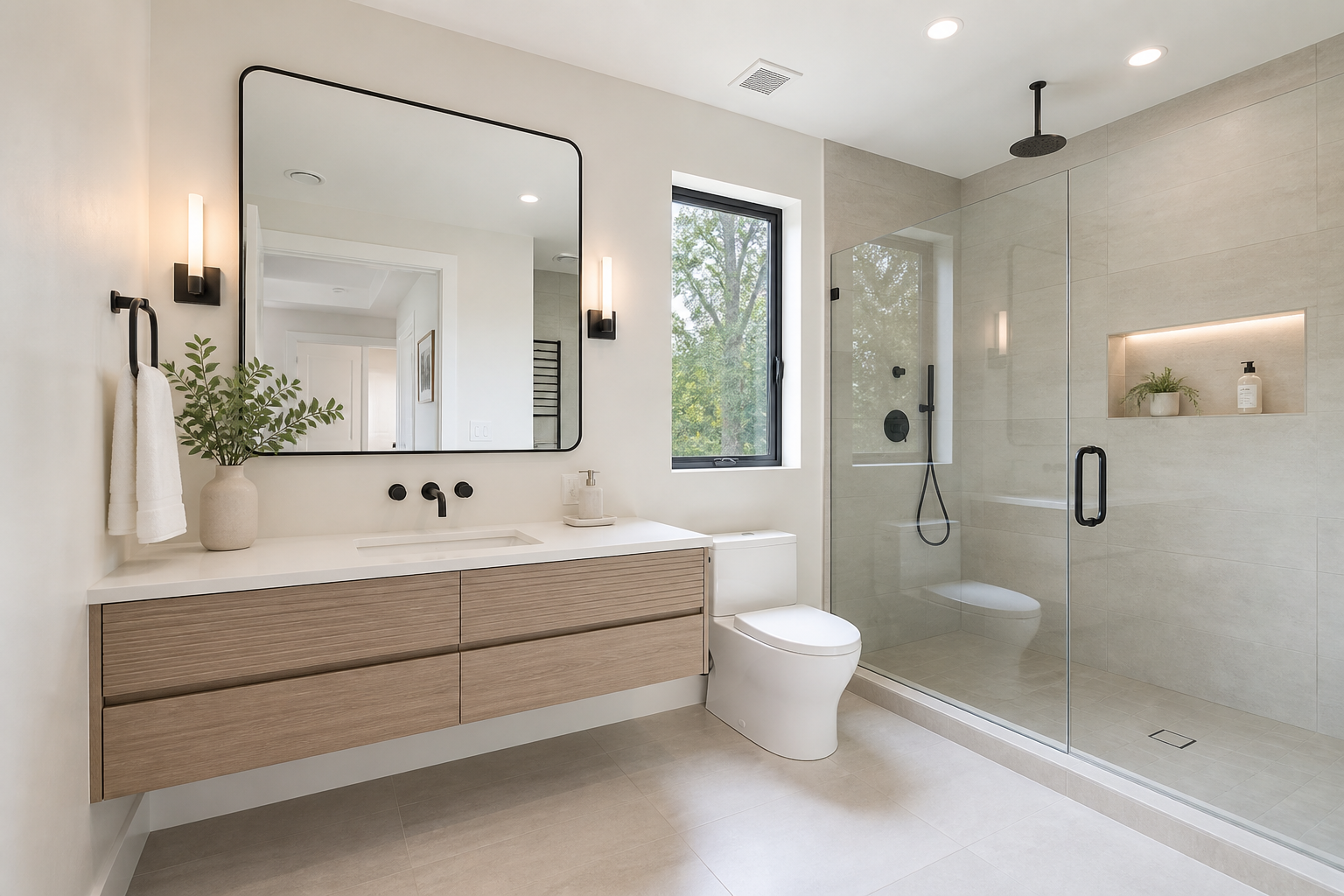
A 36-inch square shower provides enough interior width for most adults to stand with elbows slightly out, turn without contacting walls, and raise arms to wash hair without negotiating the enclosure geometry. It is not spacious. It is functional. That is the NKBA threshold: functional daily use, not spa experience.
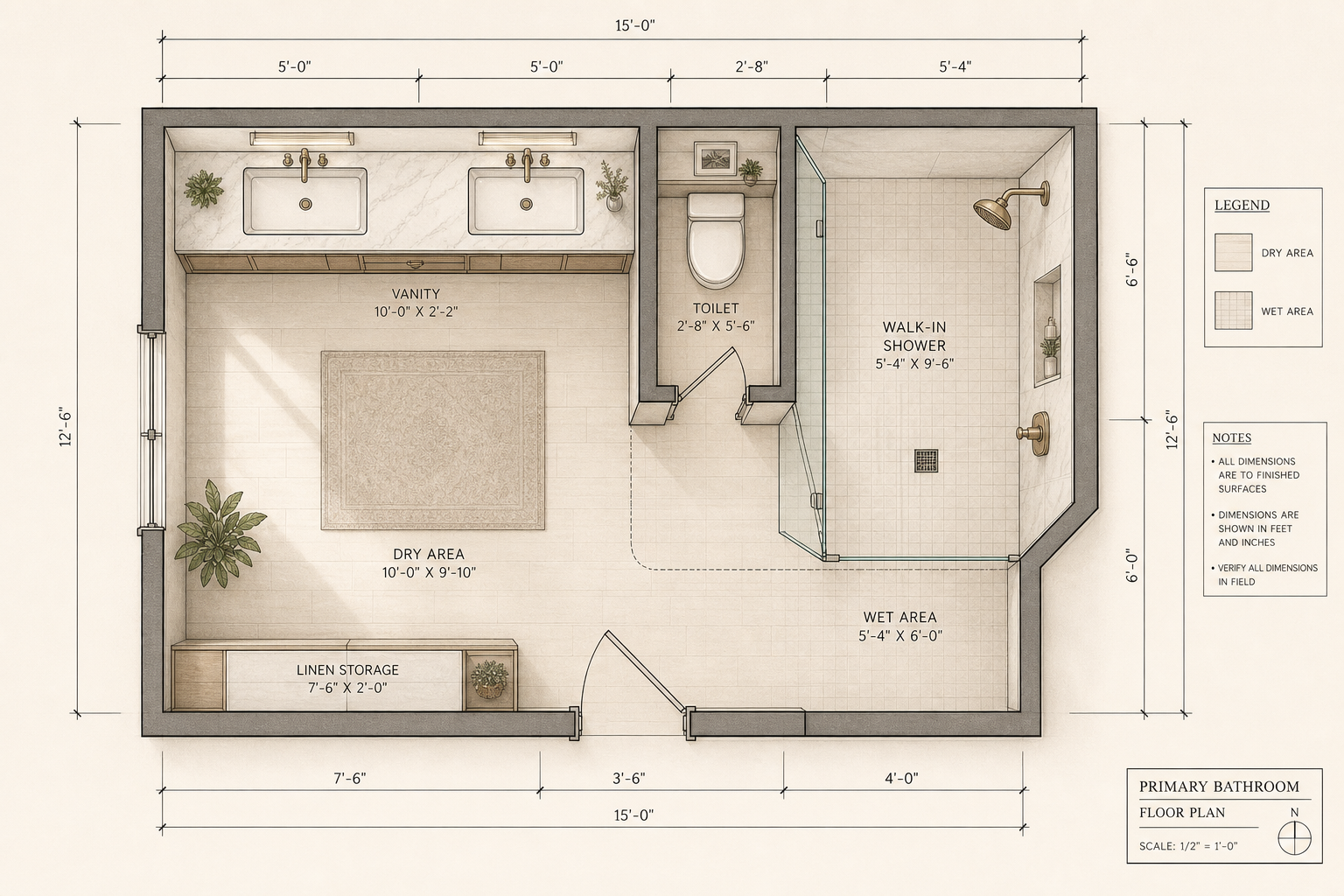
For primary bathrooms, NKBA and most design professionals treat 48 by 36 inches as the baseline for single-user comfort. The extra twelve inches of depth provides forward space for bending, for avoiding spray from a fixed head while adjusting the valve, and for installing a bench without reducing standing area below the code minimum. USA Cabinet Store's 2026 shower size guide lists 48 by 36 as the "comfortable" category for primary bathrooms, with 36 by 36 as the standard square size for general residential use.
The Human Body Does Not Compress
Adult shoulder width averages 16 to 18 inches for women and 18 to 20 inches for men. Elbow span during hair washing extends to roughly 24 to 28 inches. These are not maximum athletic dimensions. They are ordinary use positions.
A 30-inch shower interior provides, at best, six inches of clearance beyond shoulder width if the person stands perfectly centered and does not move. Any shift toward the valve wall, any reach for a niche, any turn to rinse the back reduces that clearance to zero. Contact with tile is not a failure of technique. It is a failure of dimension.
Height matters as well. The IRC requires 70 inches of clear width from threshold to 70 inches above the drain. Taller users need vertical space as well as horizontal. A shower head mounted at the code-minimum height for a six-foot-two user produces a spray angle that hits the upper wall rather than the body. The user crouches or steps forward into the spray cone, reducing effective floor area further.
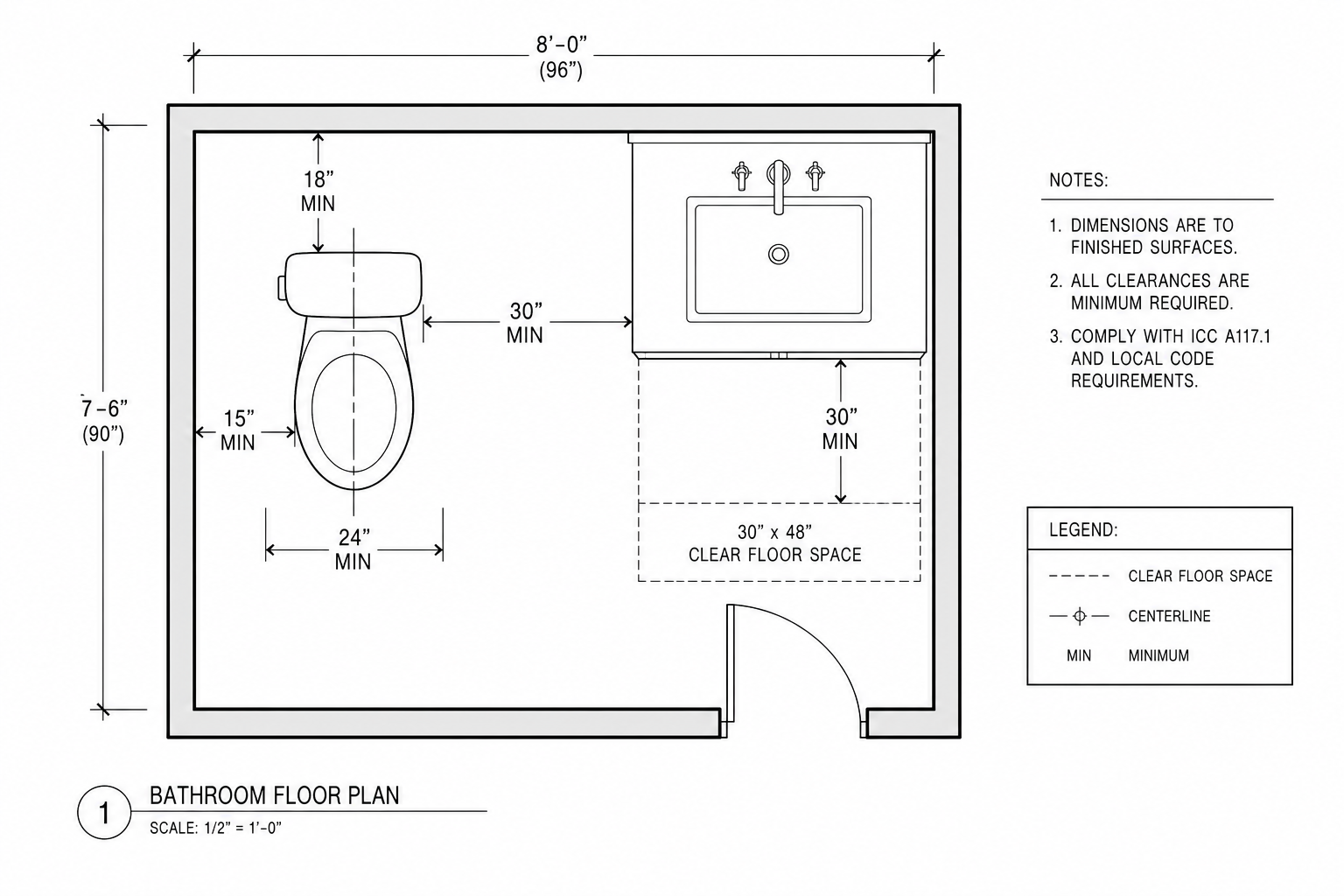
Clearances outside the shower matter for the cramped feeling even when interior dimensions meet code. The IRC requires a minimum 21-inch clearance in front of the shower entry for the door swing path. In a small bathroom, a 30-inch shower with a swinging door can consume the entire floor area in front of the toilet or vanity. The shower interior may technically comply while the bathroom as a whole feels impossibly tight.
When 36 by 36 Works and When It Does Not
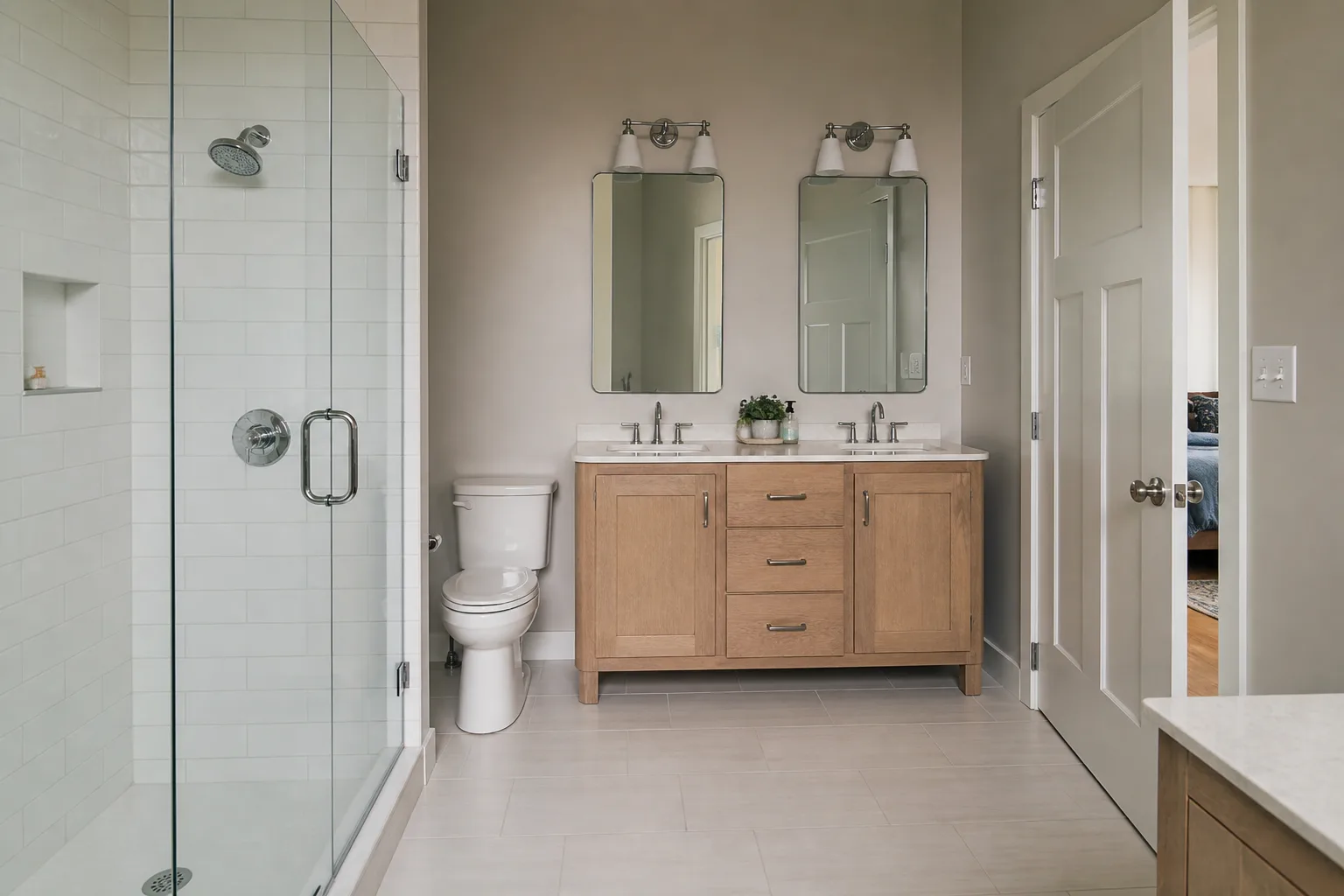
A 36-inch square shower is the most common prefabricated size in residential construction for good reason. It fits standard tub alcoves during tub-to-shower conversions. It works in guest baths where use is occasional and duration is short. It satisfies NKBA minimum guidance for able-bodied single users in secondary bathrooms.
It fails in several predictable scenarios. Primary bathrooms where two people prepare in the morning need more than minimum. Households with users above six feet need depth, not just width. Showers with built-in benches consume floor area; a 36-inch shower with a 15-inch bench leaves 21 inches of standing width, which is below code if measured incorrectly and below comfort even when it passes. Showers with multiple niches, body sprays, or hand showers on the same wall reduce effective width at the point of use.
Pritch Remodeling's 2026 shower size guide notes that while 30 by 30 passes inspection, most adults need at least 36 inches of interior width for daily comfort. The guide lists 60 by 36 and 60 by 42 as common primary bath configurations where space allows, reflecting the industry consensus that depth is as important as width for comfort.
The tub-to-shower conversion deserves specific attention. Standard tub footprints are 60 by 30 or 60 by 32 inches. Converting to a shower within that footprint often yields a 30-inch width that matches the old tub width. The shower feels more accessible because there is no step-over. It does not feel more spacious because the interior dimension is unchanged. Many homeowners discover that the walk-in shower they wanted is the same narrow box they had before, minus the bath function.
The Number That Actually Matters: 36 by 48
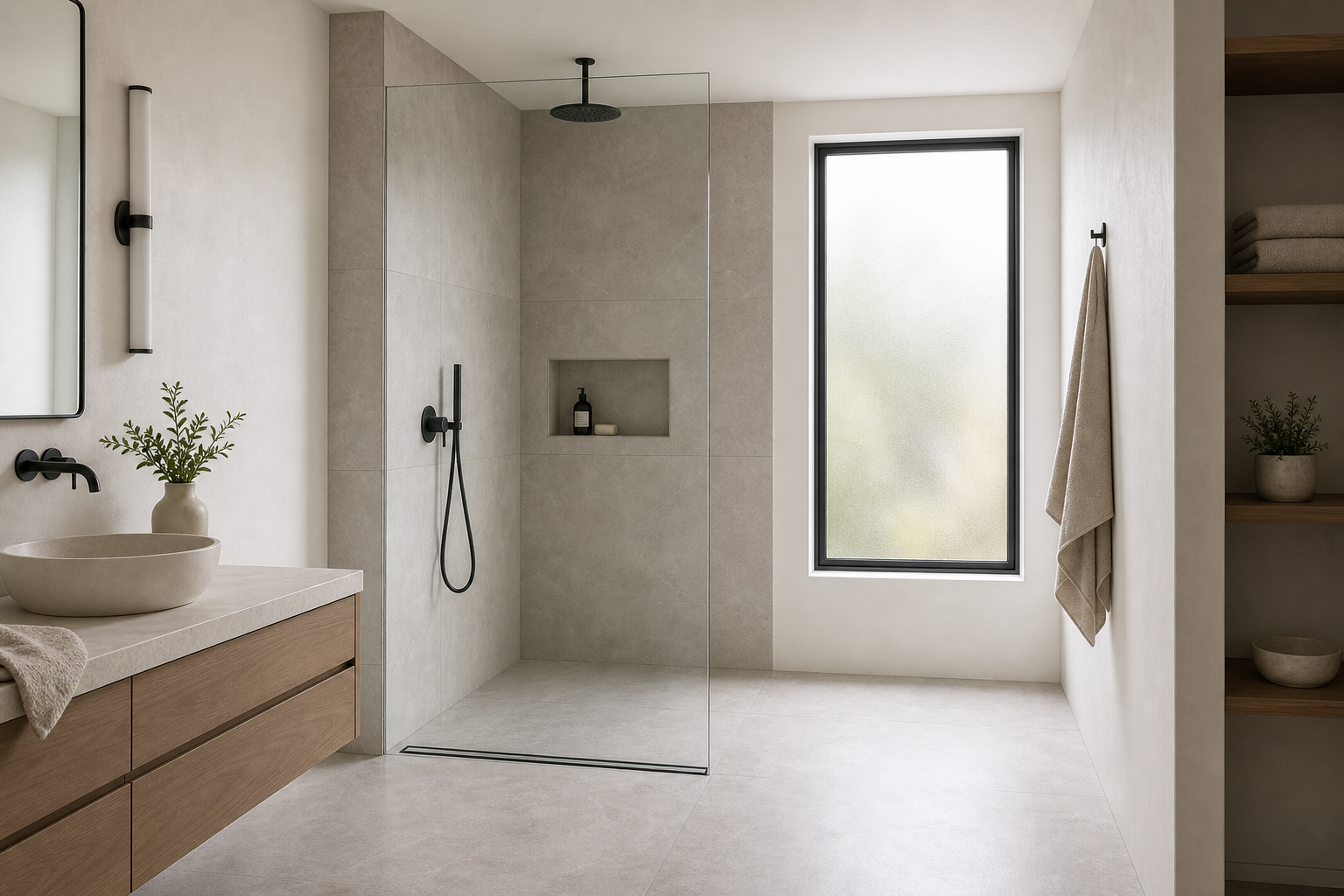
For a single-user primary shower, 36 by 48 inches is the dimension where comfort stops being a negotiation. Forty-eight inches of depth allows forward movement, bench placement on the back wall without eliminating standing space, and spray patterns that do not immediately hit the entry side. Thirty-six inches of width satisfies NKBA minimum and accommodates most adult body dimensions without daily contact with tile.
This is not a luxury specification. It is the size at which the shower stops asking the user to adapt to the enclosure and begins accommodating ordinary movement. USA Cabinet Store categorizes 48 by 36 as "comfortable" and 60 by 36 as "spacious" for primary bathrooms. The step from 36 by 36 to 36 by 48 is often achievable in the same bathroom footprint that currently holds a standard tub, because tub length is 60 inches and shower depth can borrow from that length during conversion.
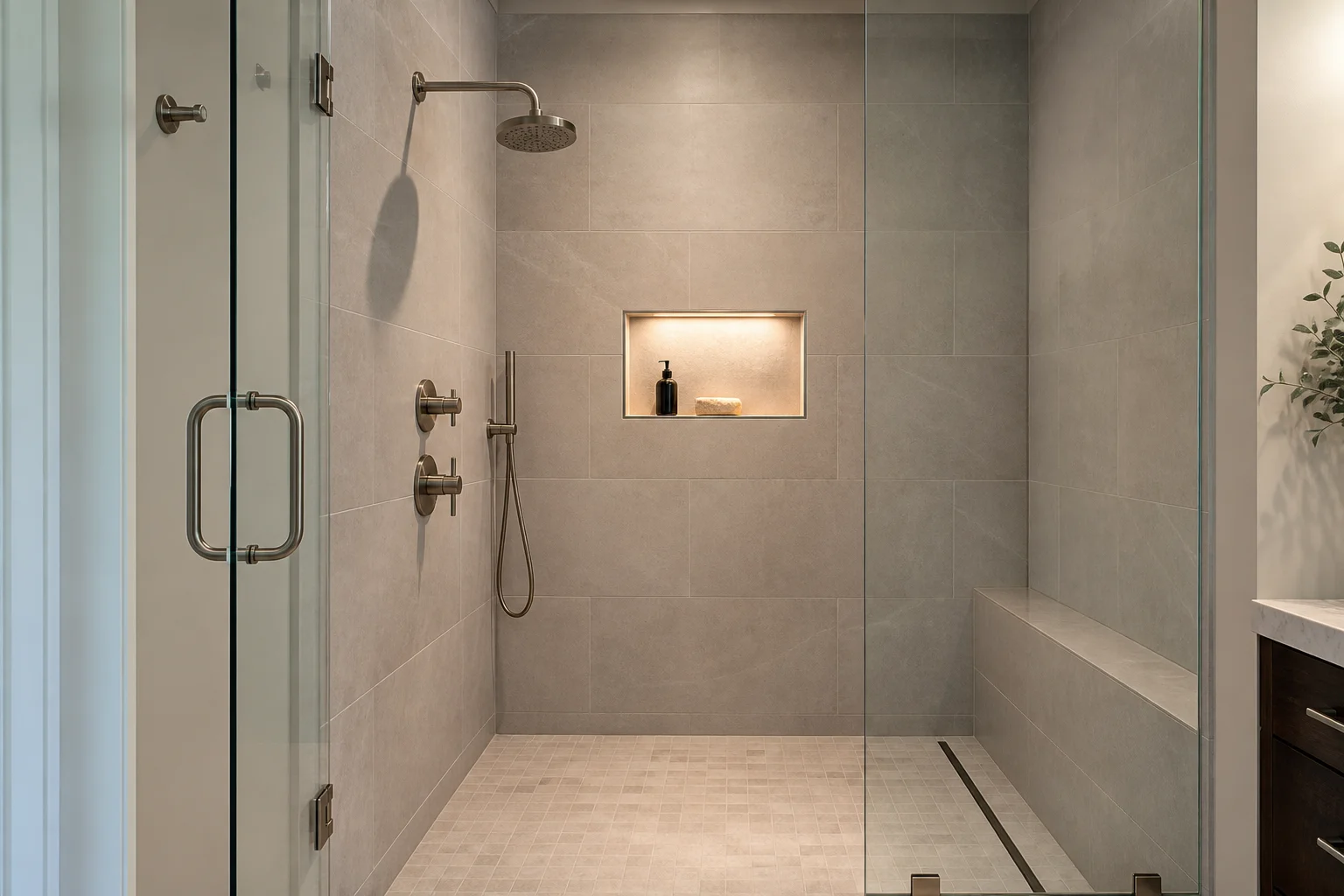
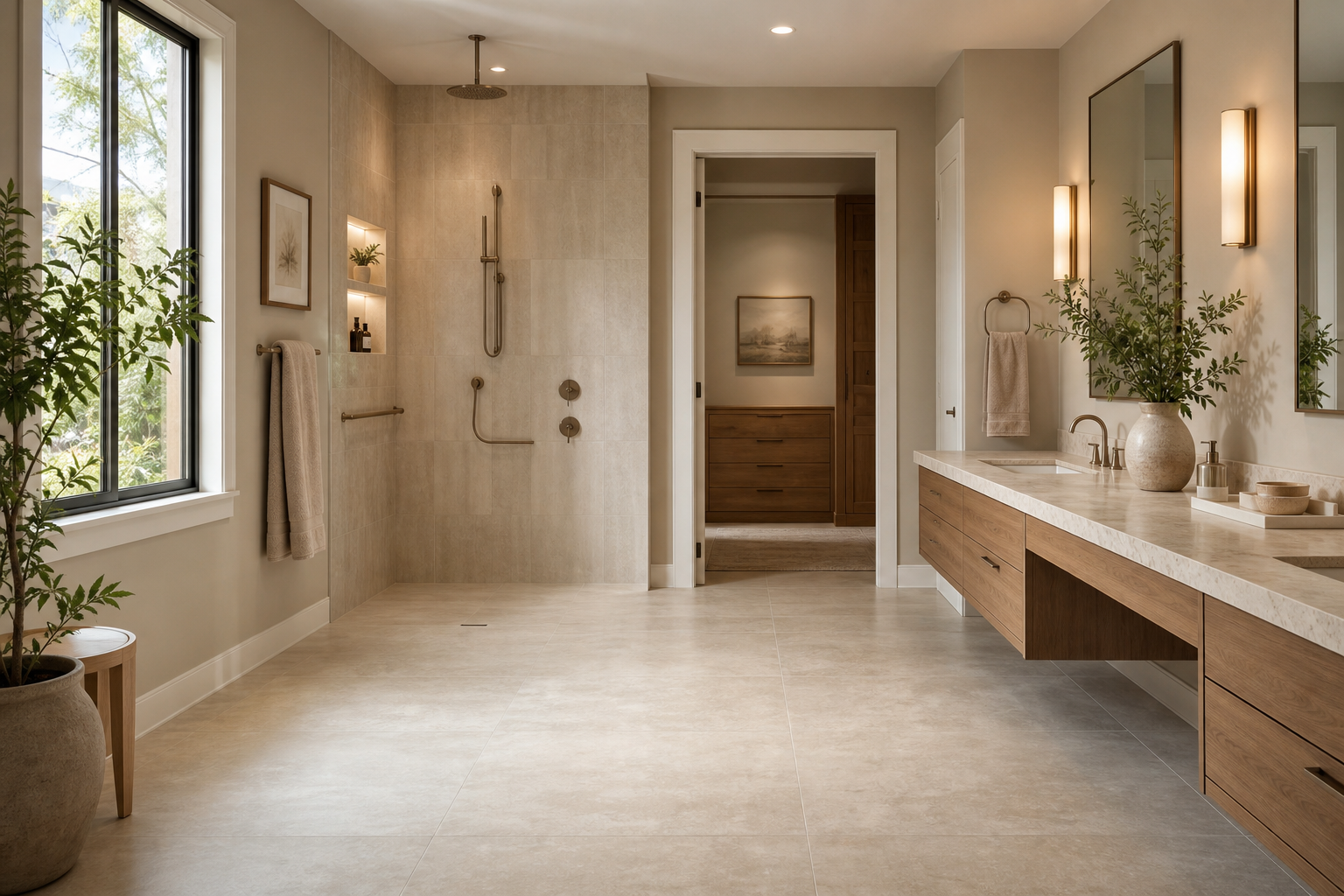
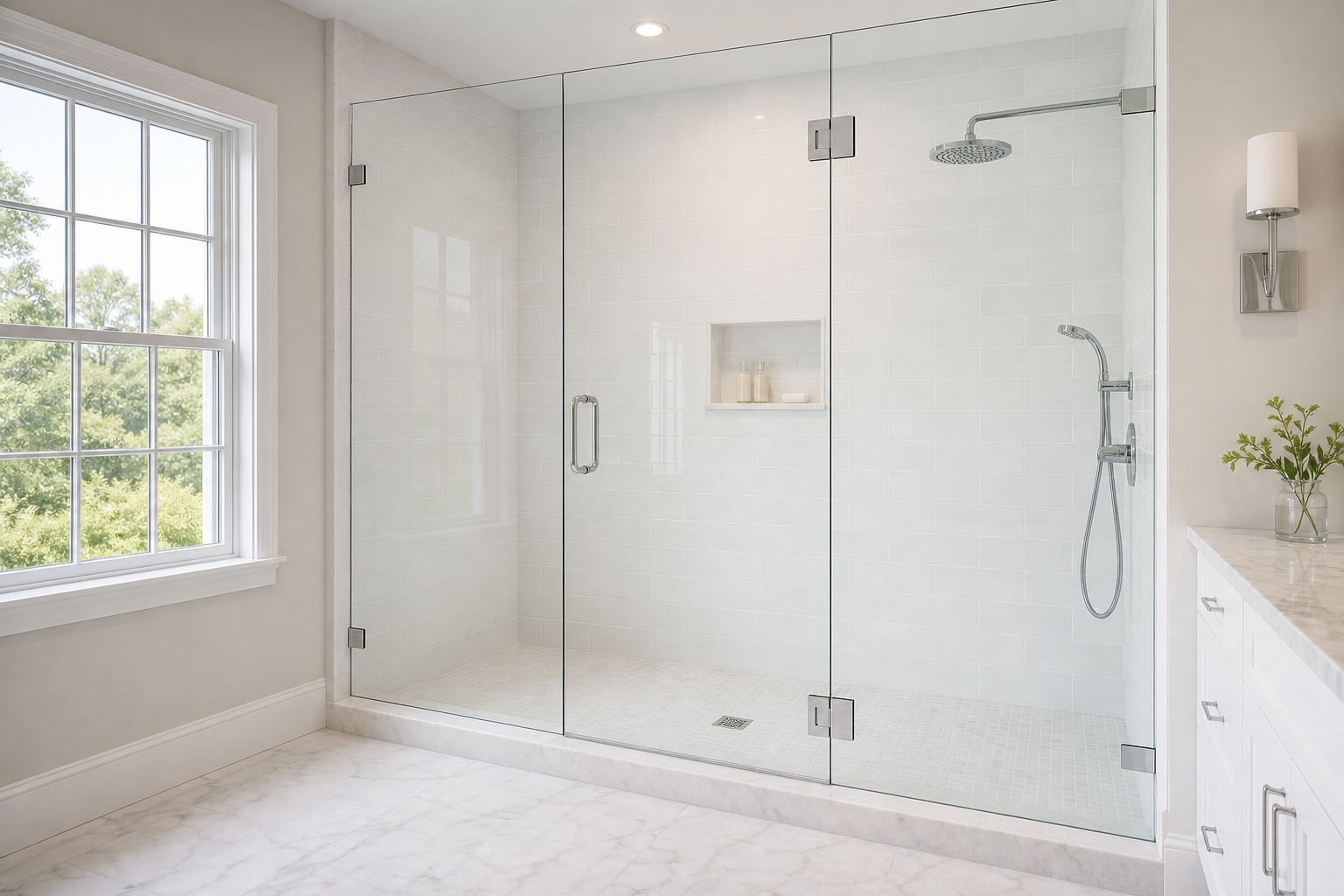
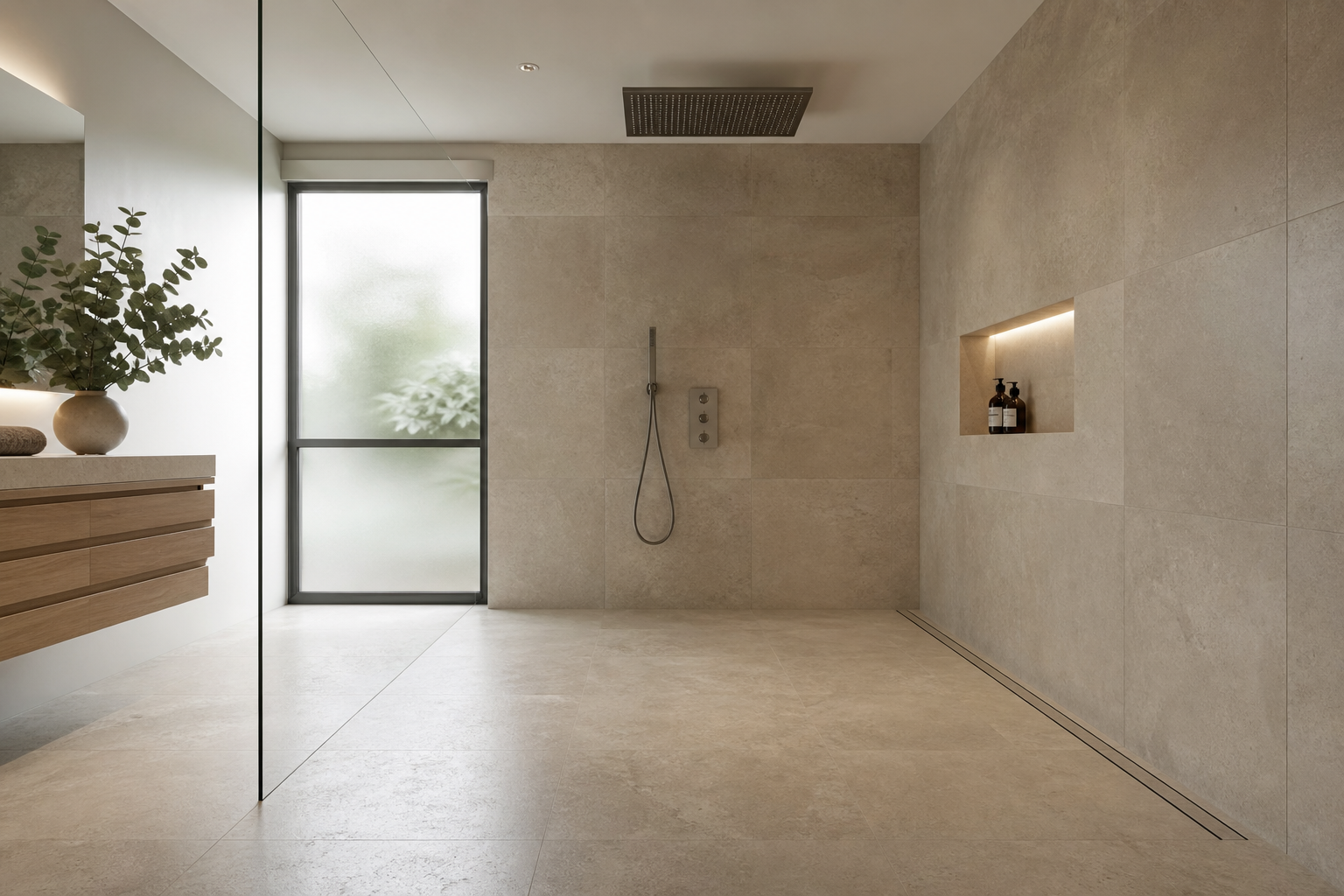
Walk-in showers without doors change the calculation. A curbless or low-threshold shower needs additional floor area for water management: the slope to the drain must occur within the shower boundary, and splash zone extends beyond the spray footprint. NKBA recommends larger dimensions for curbless designs to contain water without relying on a dam that users step over. A 36 by 36 curbless shower in a small bathroom often wets the entire floor. Depth and width both increase when the threshold disappears.
How to Evaluate Whether Your Planned Size Will Feel Cramped
Before committing to dimensions, mock up the interior at full scale. Tape the floor to the finished interior dimension, not the framing dimension. Stand inside the taped area. Raise your arms. Turn around. Simulate reaching for a valve on one wall and a niche on another. If your elbows contact the tape line during ordinary motion, the shower will feel cramped regardless of tile quality or fixture brand.
Compare against existing experience. If your current shower feels tight and measures 32 inches inside, adding two inches to reach code minimum will not fix the feeling. If your current tub-shower feels acceptable at 30 inches width but you want a bench, you need to add depth, not just remove the tub apron.
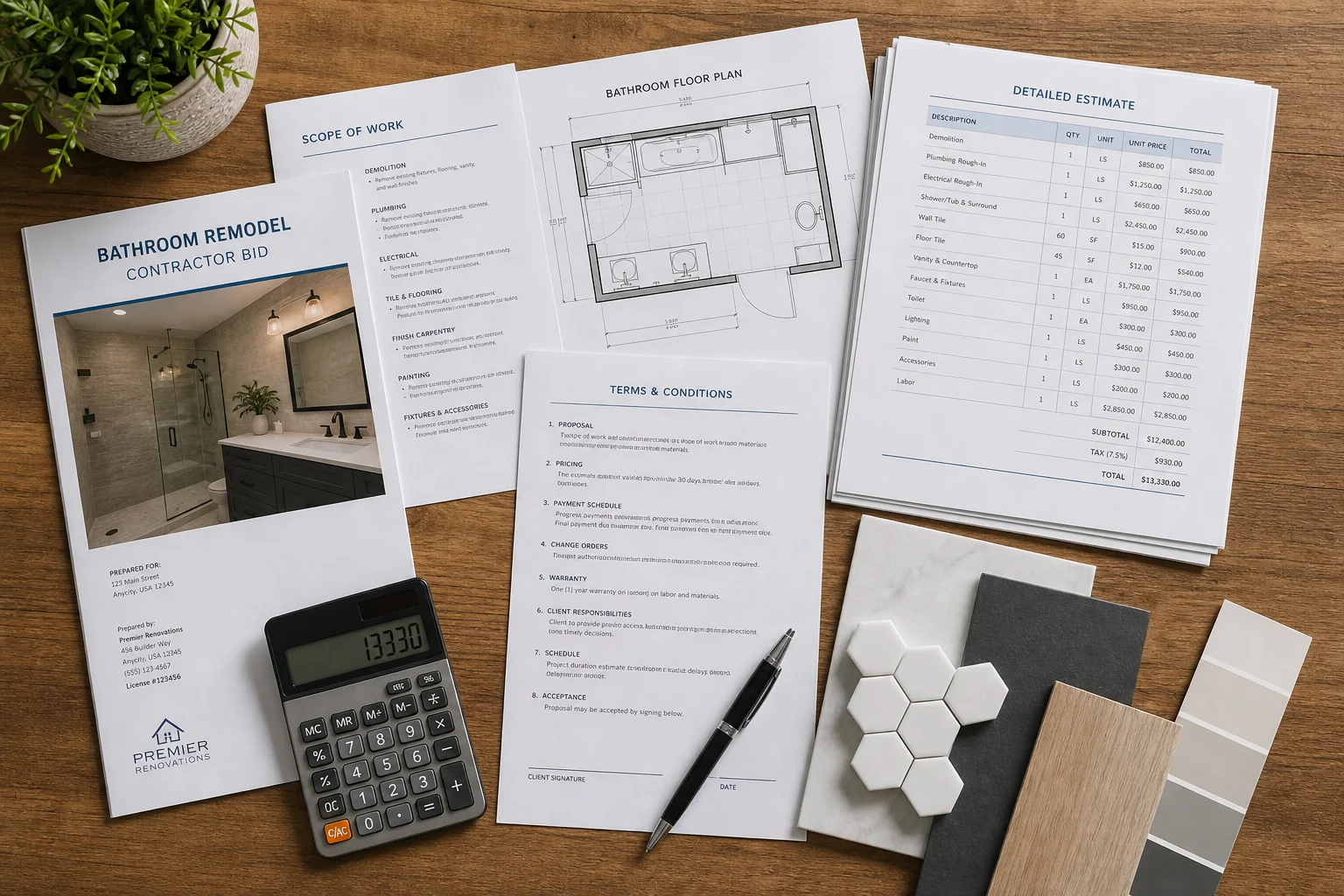
Verify the finished dimension with your contractor in writing. The bid should state tile-to-tile interior size, not rough opening. If the contractor sizes from studs, ask what wall assembly thickness they are assuming and subtract it from both directions. A shower specified at 36 inches rough may finish at 30 inches tile to tile in a standard two-by-four wall with cement board and half-inch tile.
Consider door type. A hinged door swinging outward requires clearance in the bathroom. A sliding door or fixed panel reduces that requirement but may reduce entry width. A 24-inch clear opening is the practical minimum for comfortable entry. Narrower openings require sideways entry and feel cramped before you reach the spray.
We do not specify showers below 36 by 48 inches in primary baths we design. In secondary baths where space is constrained, we discuss the trade-off explicitly before accepting a smaller dimension.