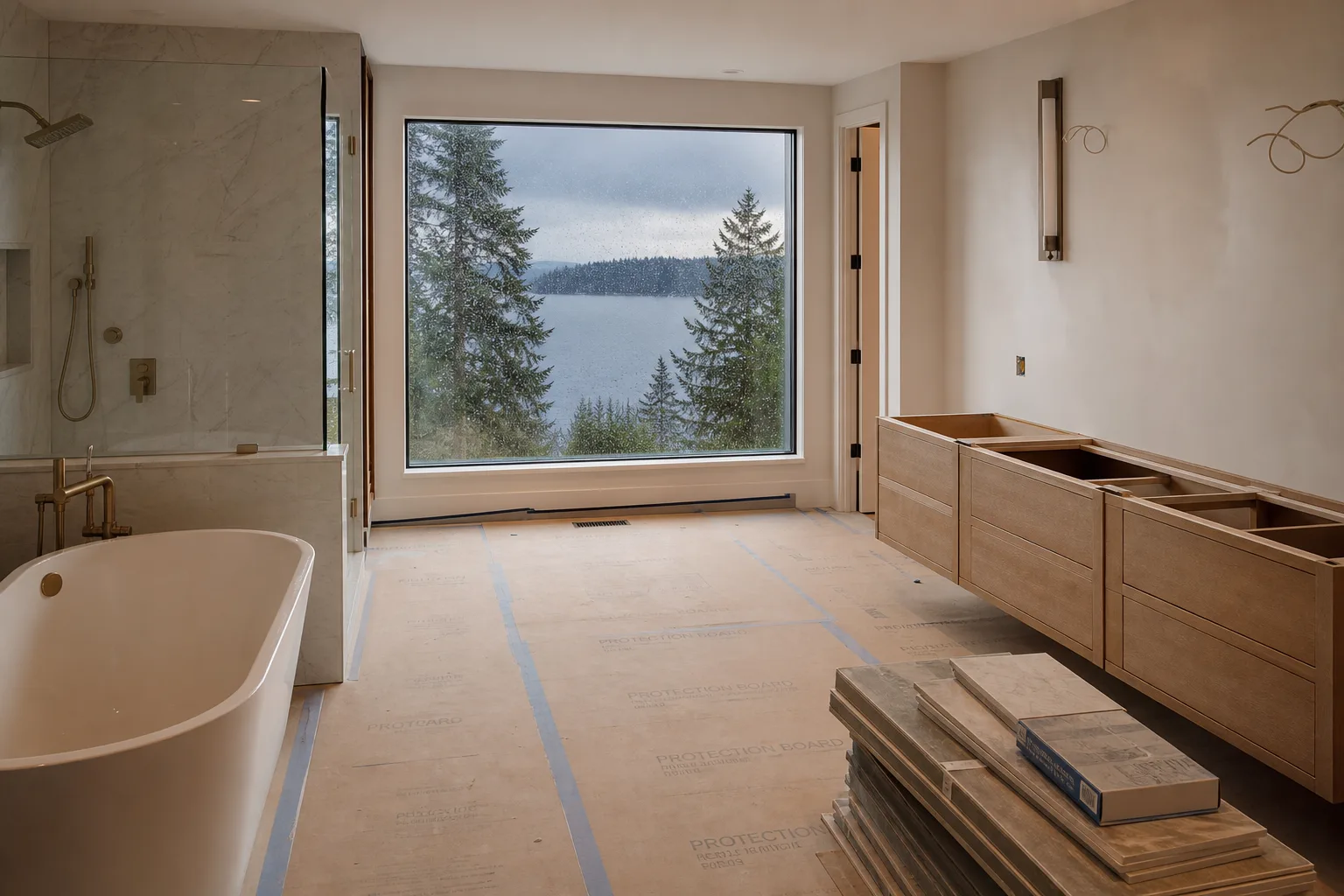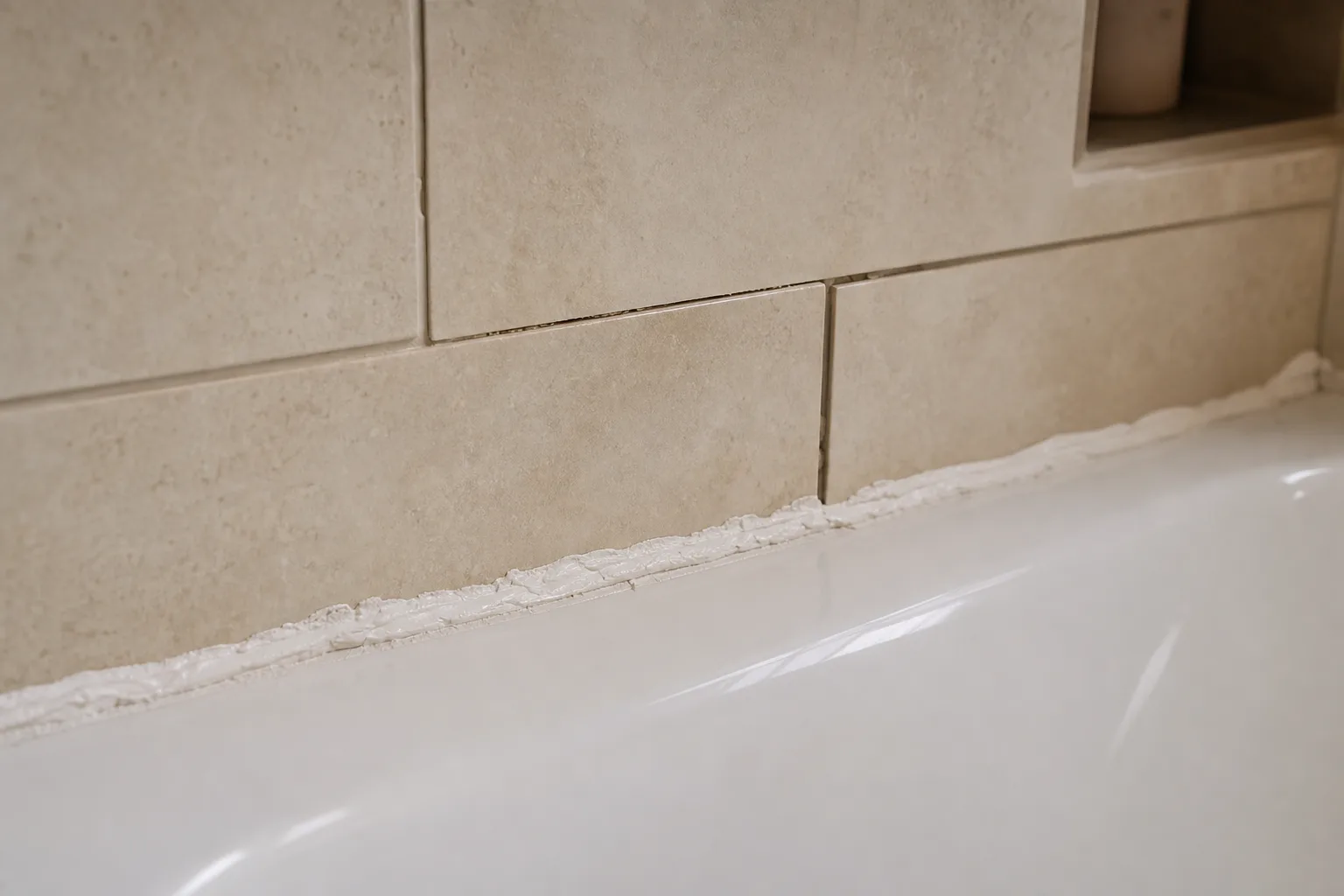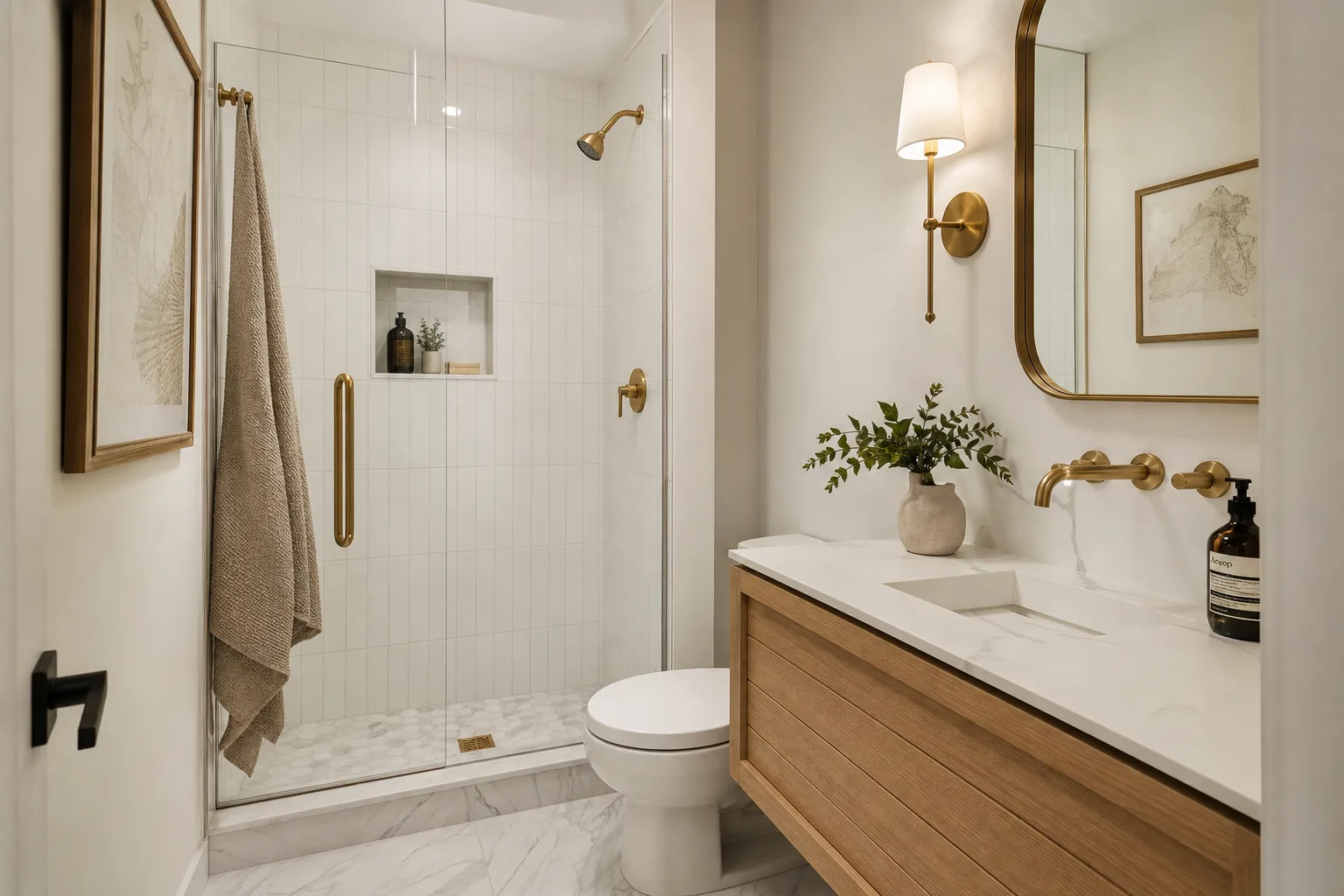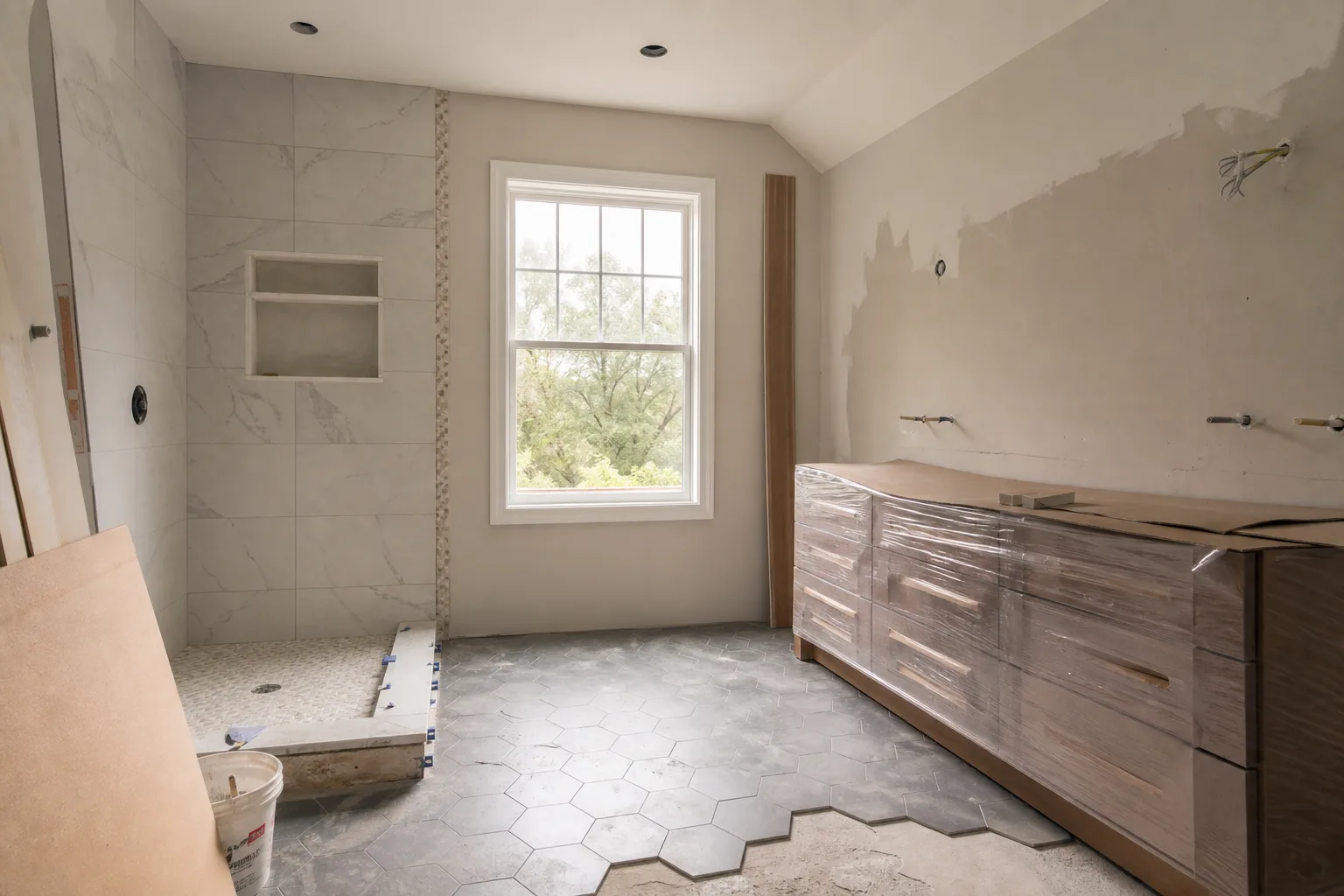
The most expensive part of a bathroom remodel is labor, not fixtures, not tile material, not even plumbing rough-in alone. Labor runs 40 to 65 percent of total cost in most projects, and within that labor total, tile installation and plumbing are what move the number most dramatically because both require skilled tradespeople who bill at high hourly rates and whose schedules dominate the project timeline.
Homeowners often fixate on the visible purchases. The faucet. The tile sample. The vanity door style. Those items appear on invoices with product names and prices that feel tangible. Labor appears as line items with trade names and hourly rates that feel abstract until the total arrives. Understanding where labor concentrates, and why certain trades cost more than others, is the difference between adjusting scope intelligently and cutting the wrong thing to save money.
Why Labor Dominates the Budget
A bathroom remodel is not one trade. It is a sequence of trades working in a small, wet, code-regulated space where mistakes are concealed behind finished surfaces. Demolition, plumbing, electrical, waterproofing, tile, drywall, painting, glass installation, and fixture setting each require a different skill set. Most remodeling firms coordinate these trades rather than employing every specialist full time. Each handoff adds scheduling complexity. Each specialist bills for time on site, travel, and the expertise required to work correctly in a bathroom environment.
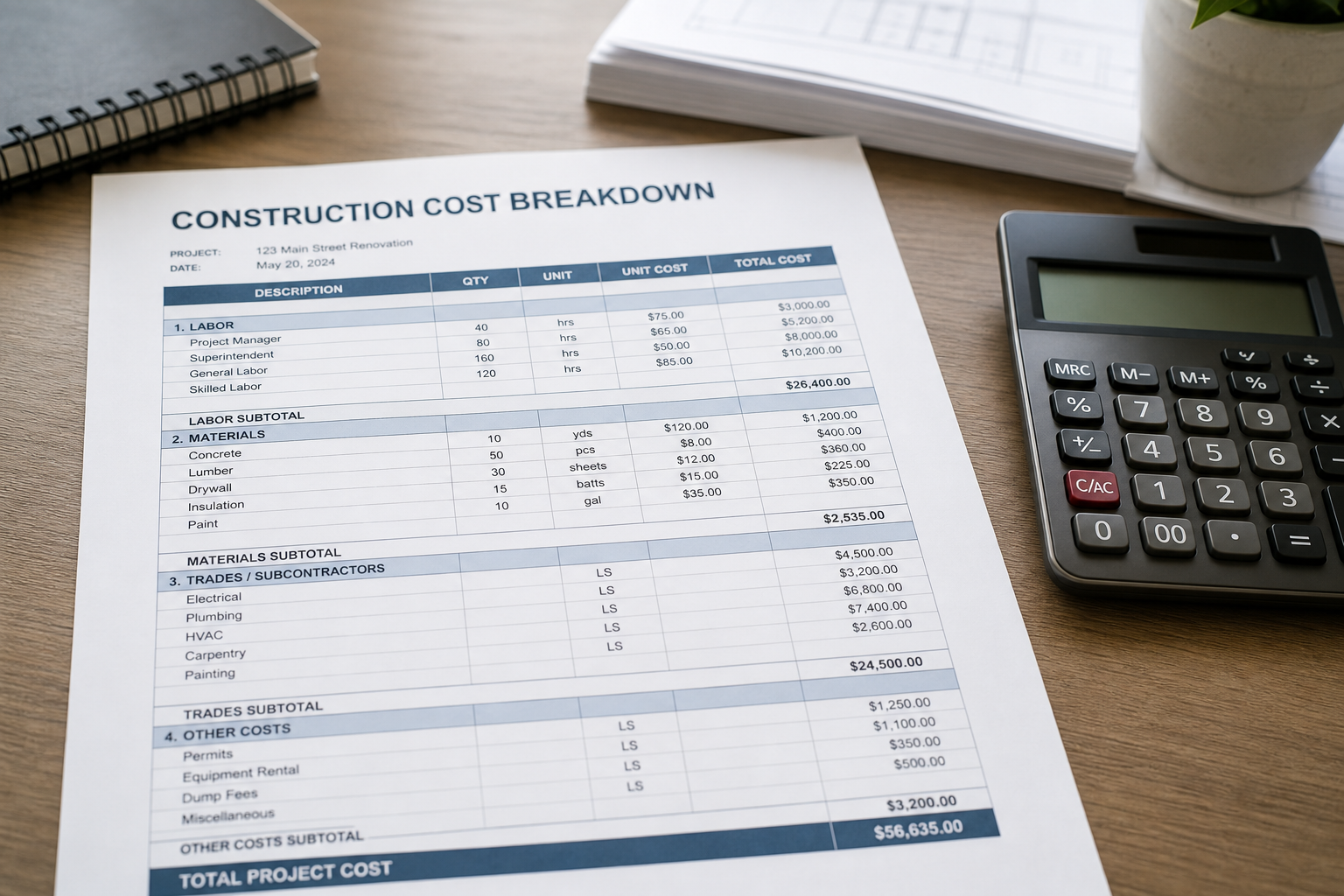
Industry cost analyses consistently place labor at 40 to 65 percent of total bathroom remodel cost. Angi, Realm, and regional contractor breakdowns converge on this range regardless of project scale. A $60,000 bathroom remodel with labor at 55 percent means $33,000 goes to tradespeople, not products. A $90,000 project at the same ratio means $49,500 in labor. The fixtures and tile did not change proportionally. The labor did, because more complex scope requires more skilled hours.
General contractor fees (typically 10 to 20 percent of project cost for firms that manage the full sequence) sit inside or alongside this labor total depending on how the estimate is structured. Some bids itemize GC overhead separately. Others roll it into trade pricing. Either way, the coordination cost exists because someone must schedule the plumber before the tile setter, verify the waterproofing before tile covers it, and hold the inspection before closing walls.
What Labor Actually Buys
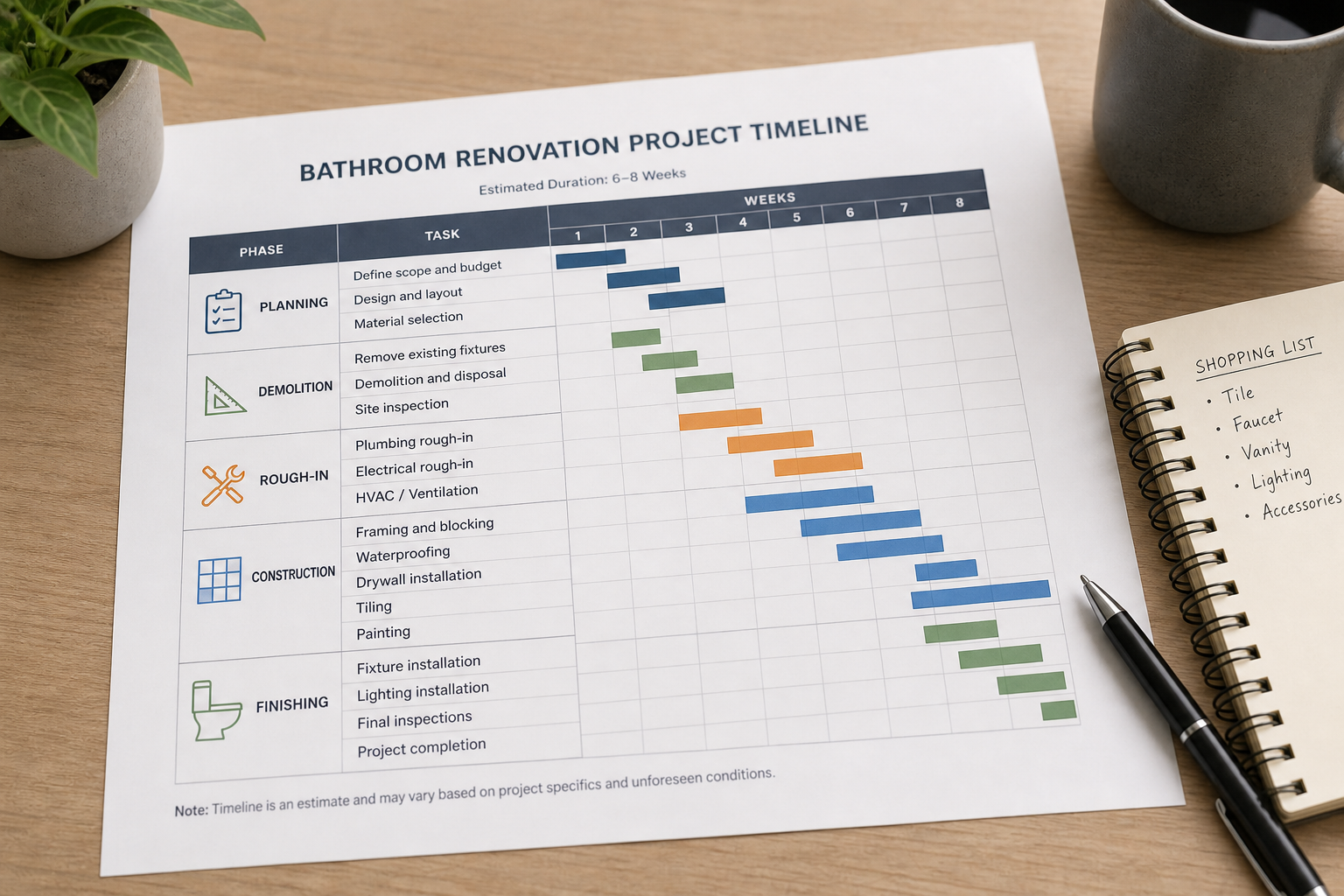
Labor cost is not uniform across a bathroom project. It clusters in specific phases where skill requirements and time intensity peak.
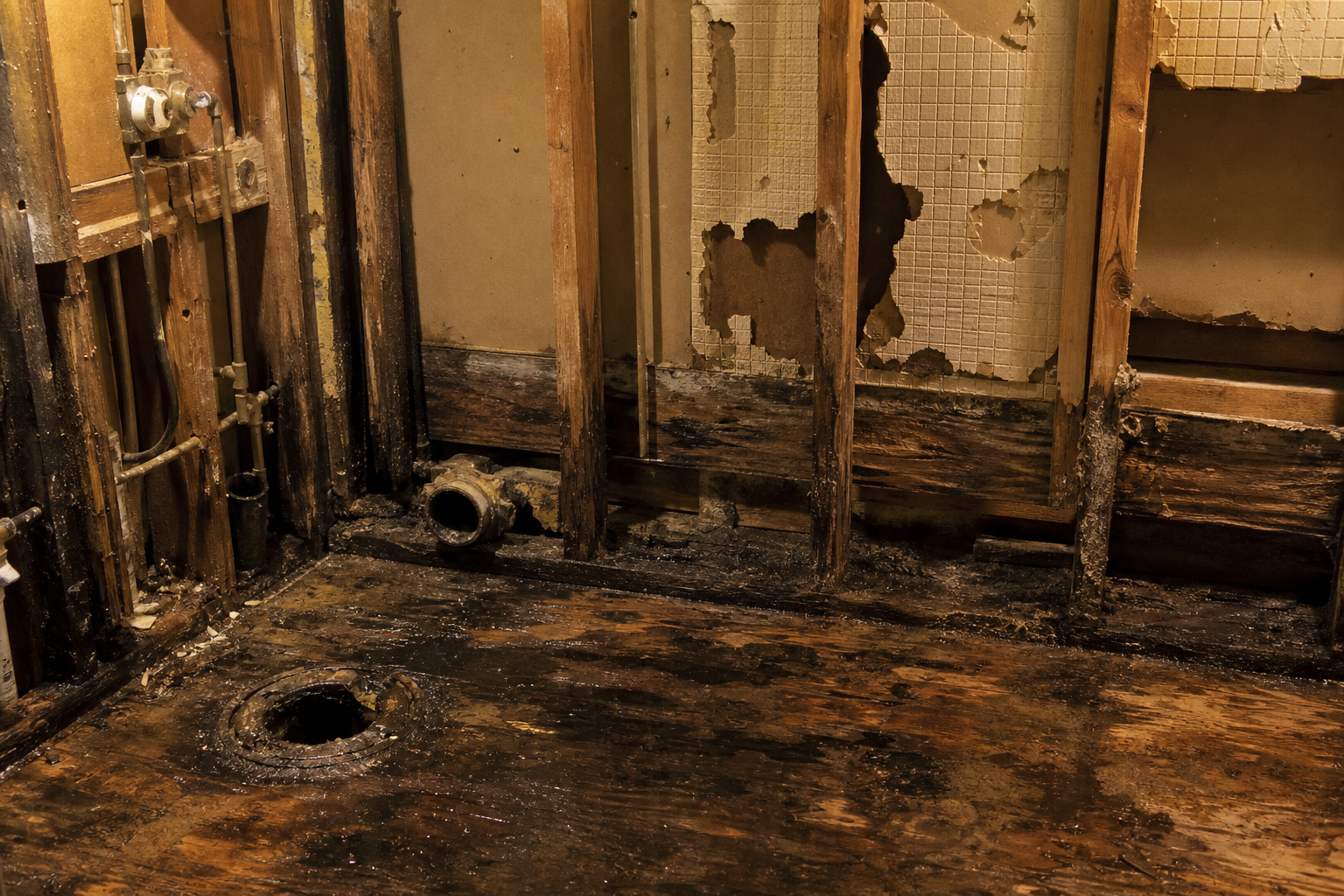
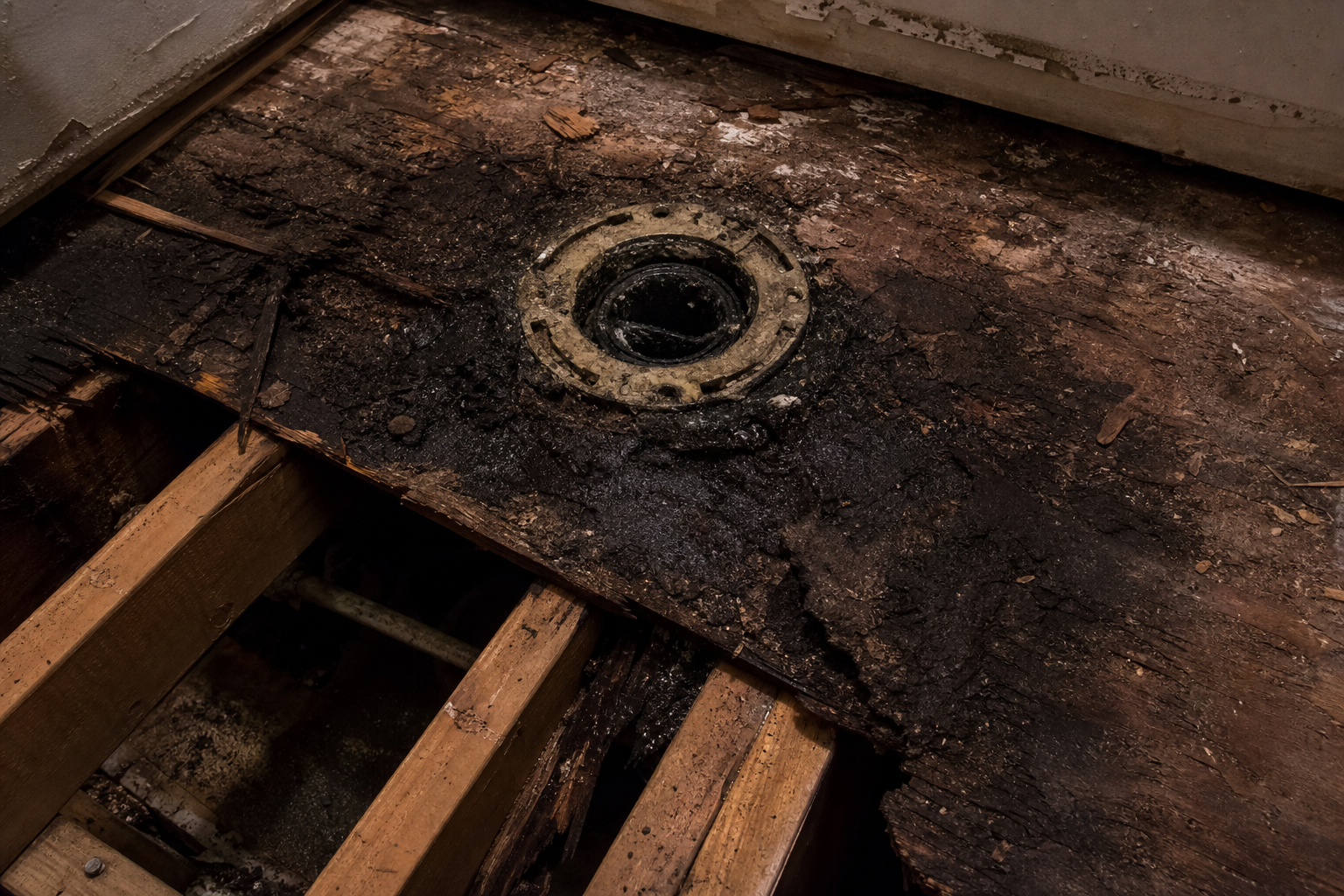
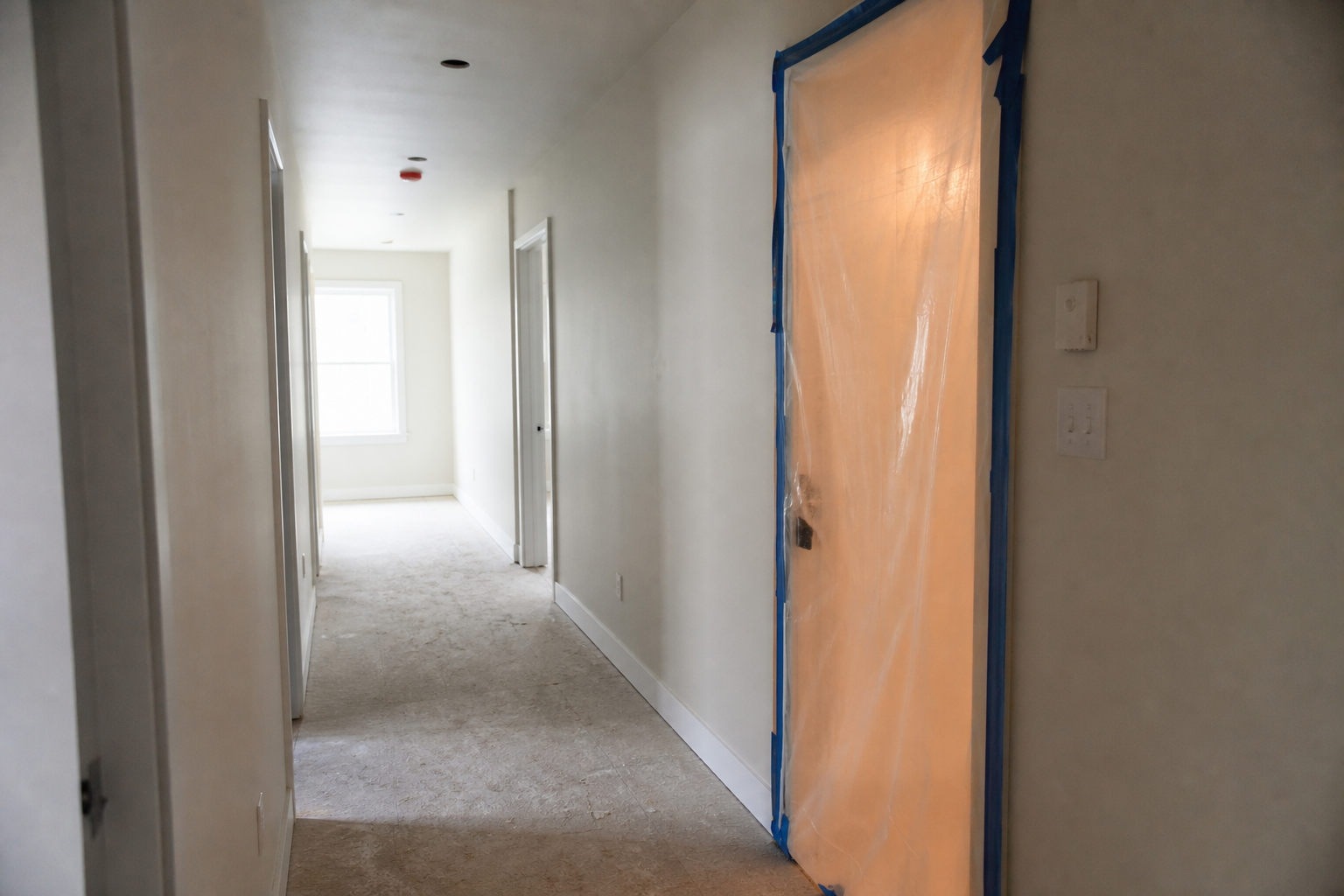
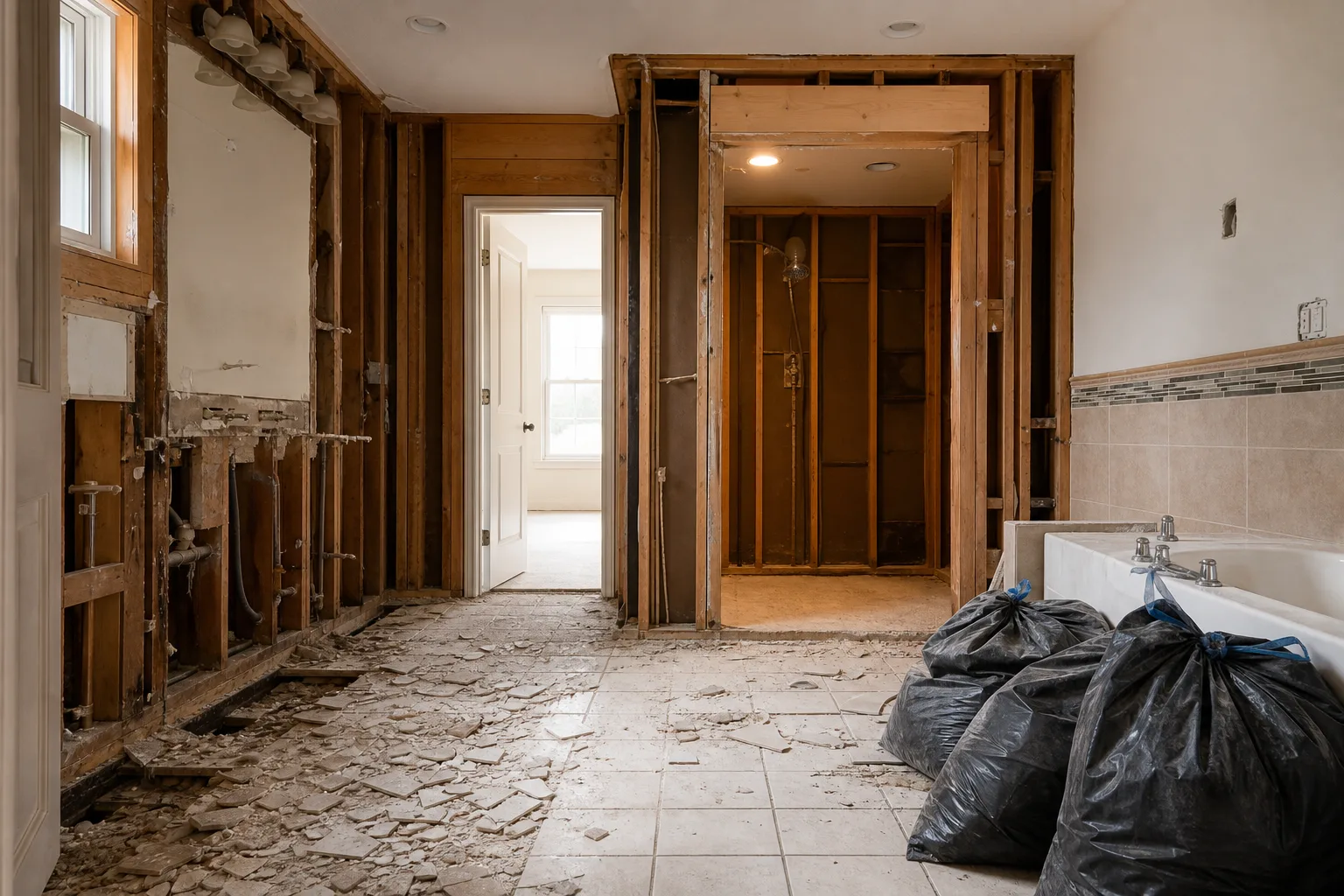
Demolition and prep account for a modest share of total labor (often 5 to 10 percent) but set conditions for everything that follows. Rushed demo damages adjacent surfaces. Incomplete demo leaves old adhesive, uneven substrates, or hidden rot undiscovered until the next trade arrives and stops work.
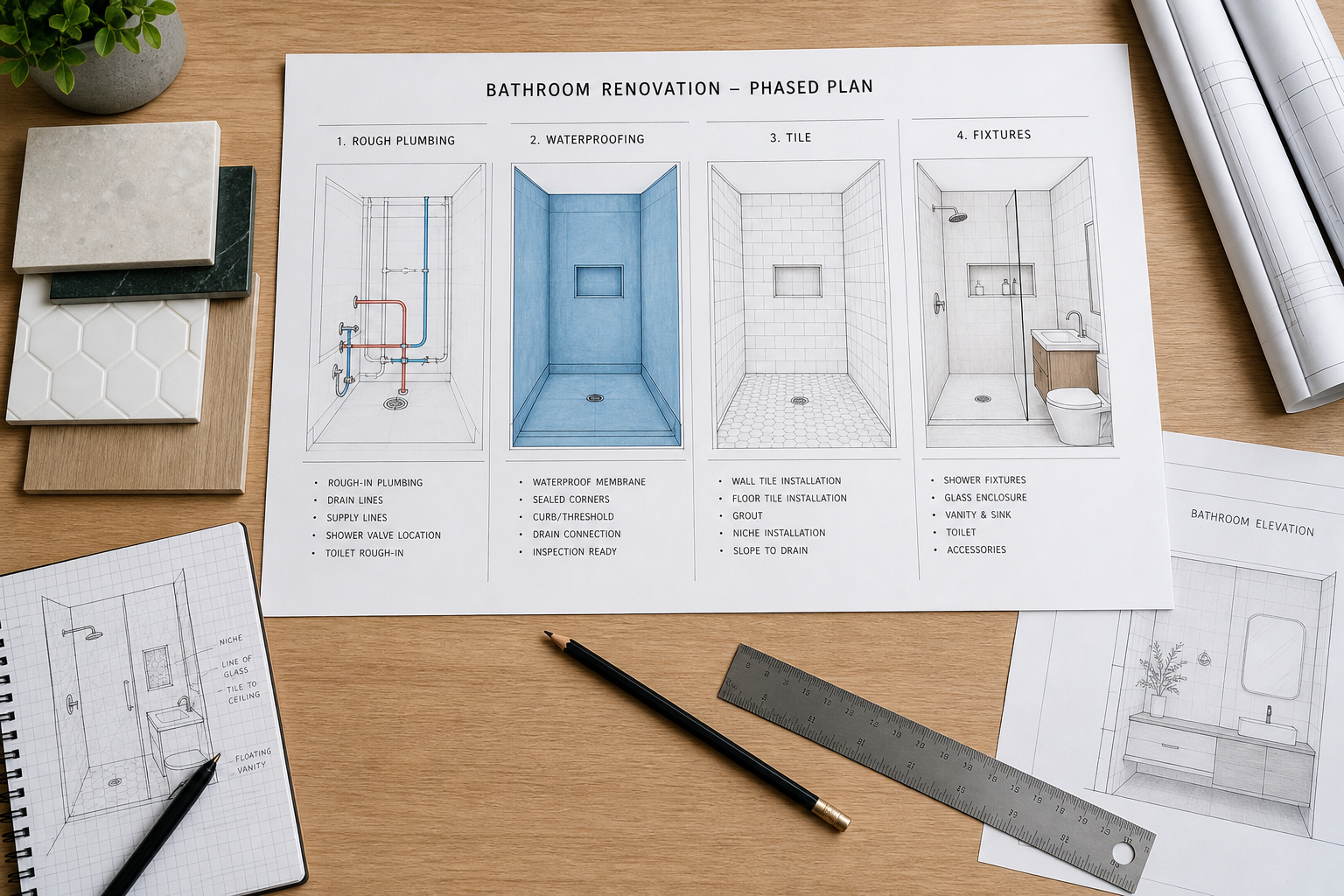
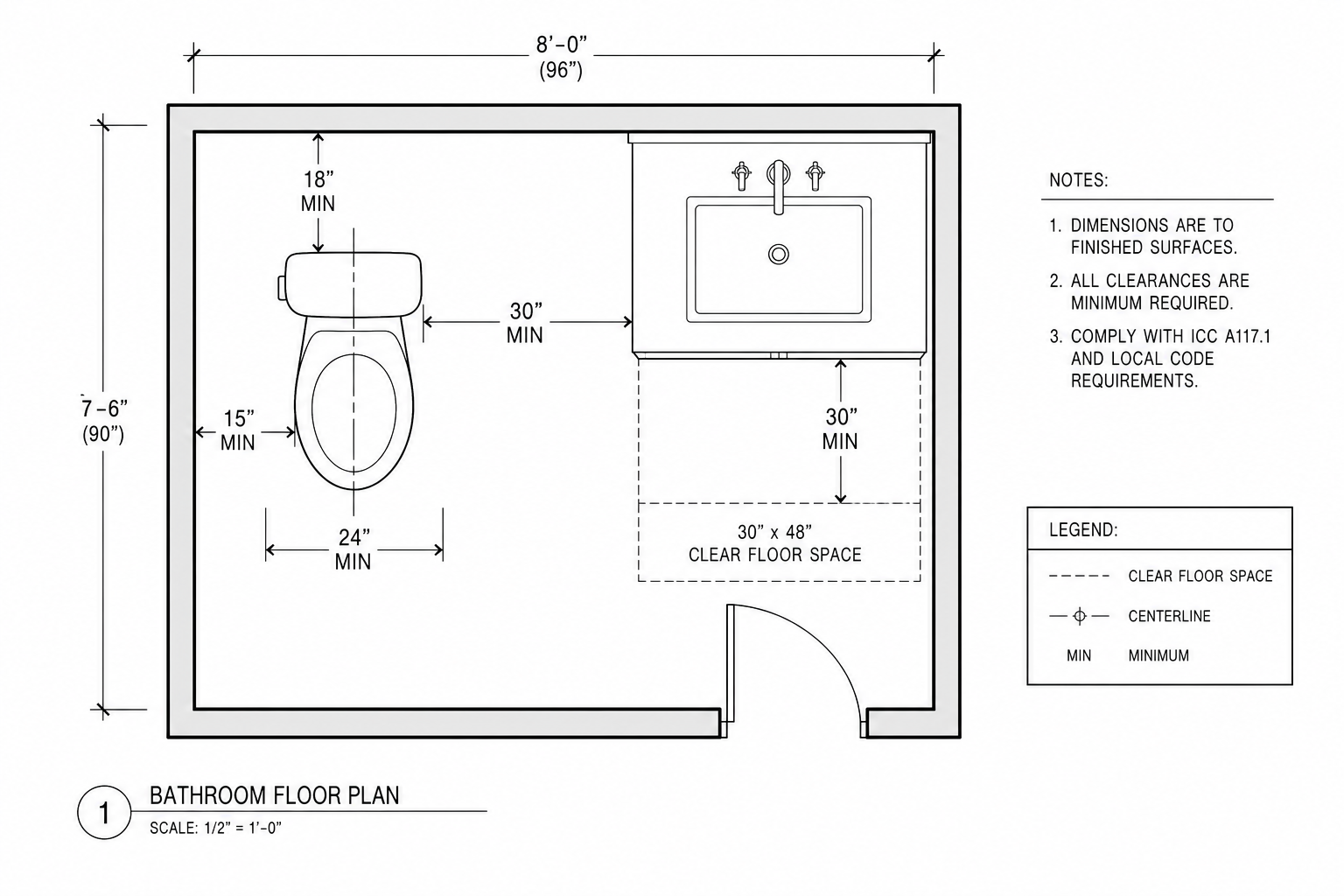
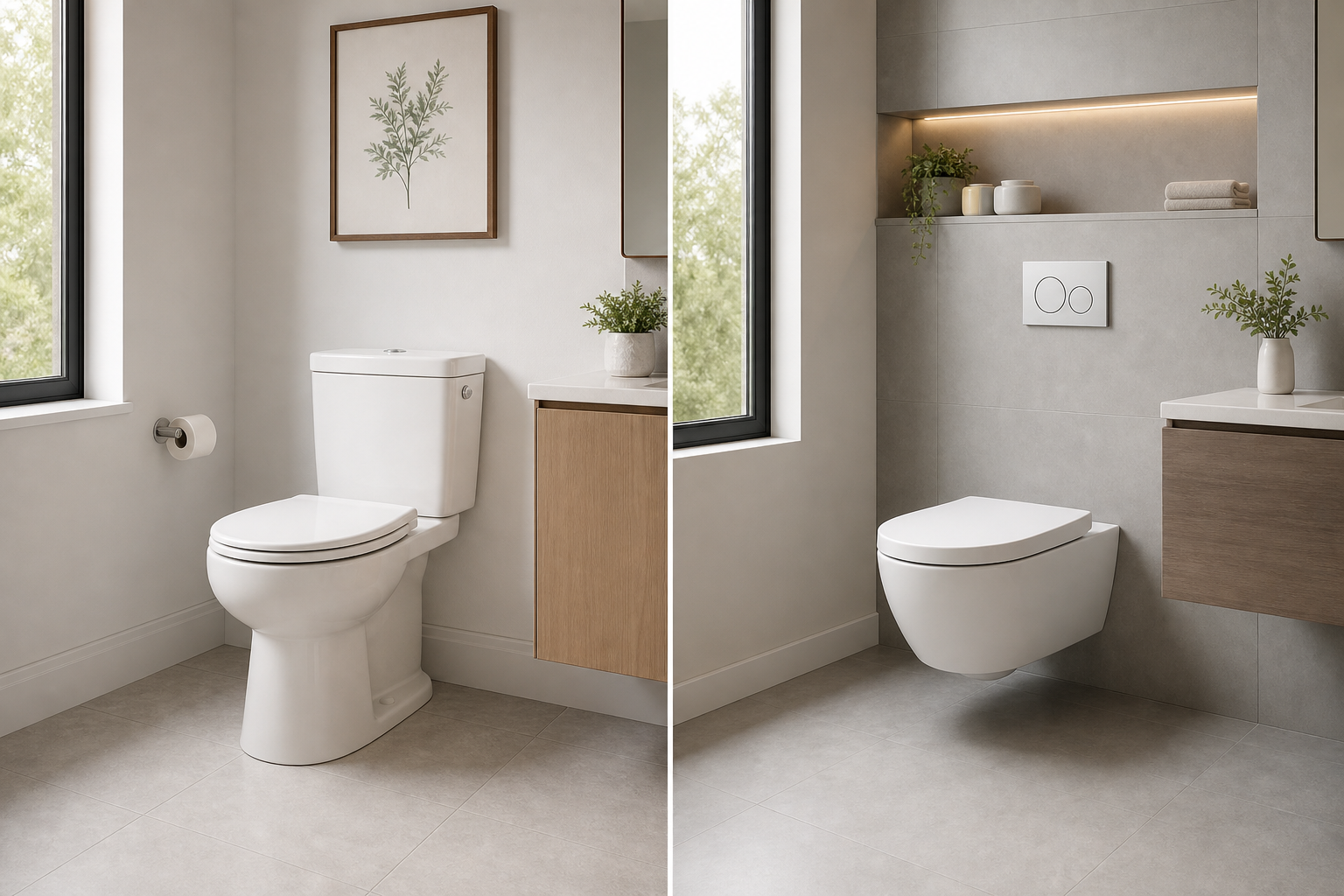
Rough plumbing and electrical typically consume 15 to 25 percent of total project labor. Plumbers bill $45 to $200 or more per hour depending on market and license level. A full bathroom rough-in for a gut remodel, including drain lines, supply lines, vent connections, and fixture locations, can run $4,000 to $7,000 or more in labor alone before materials. Moving a toilet drain requires re-engineering slope and venting. Moving a shower drain requires subfloor modification. Relocating a vanity supply and drain adds wall penetration and patching. Each move adds hours. Hours add cost. Keeping existing fixture locations is the single most effective way to reduce plumbing labor without reducing finish quality.
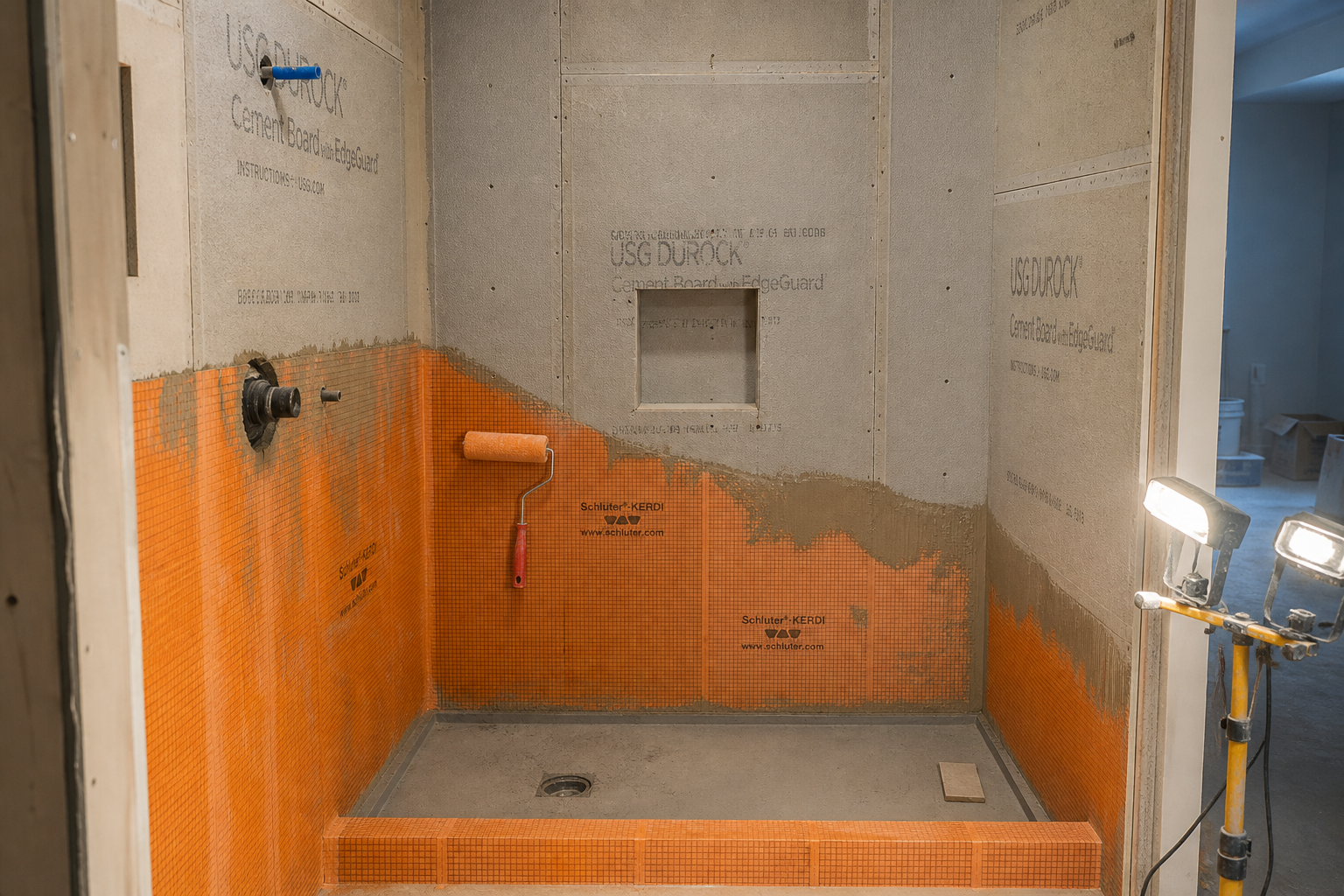
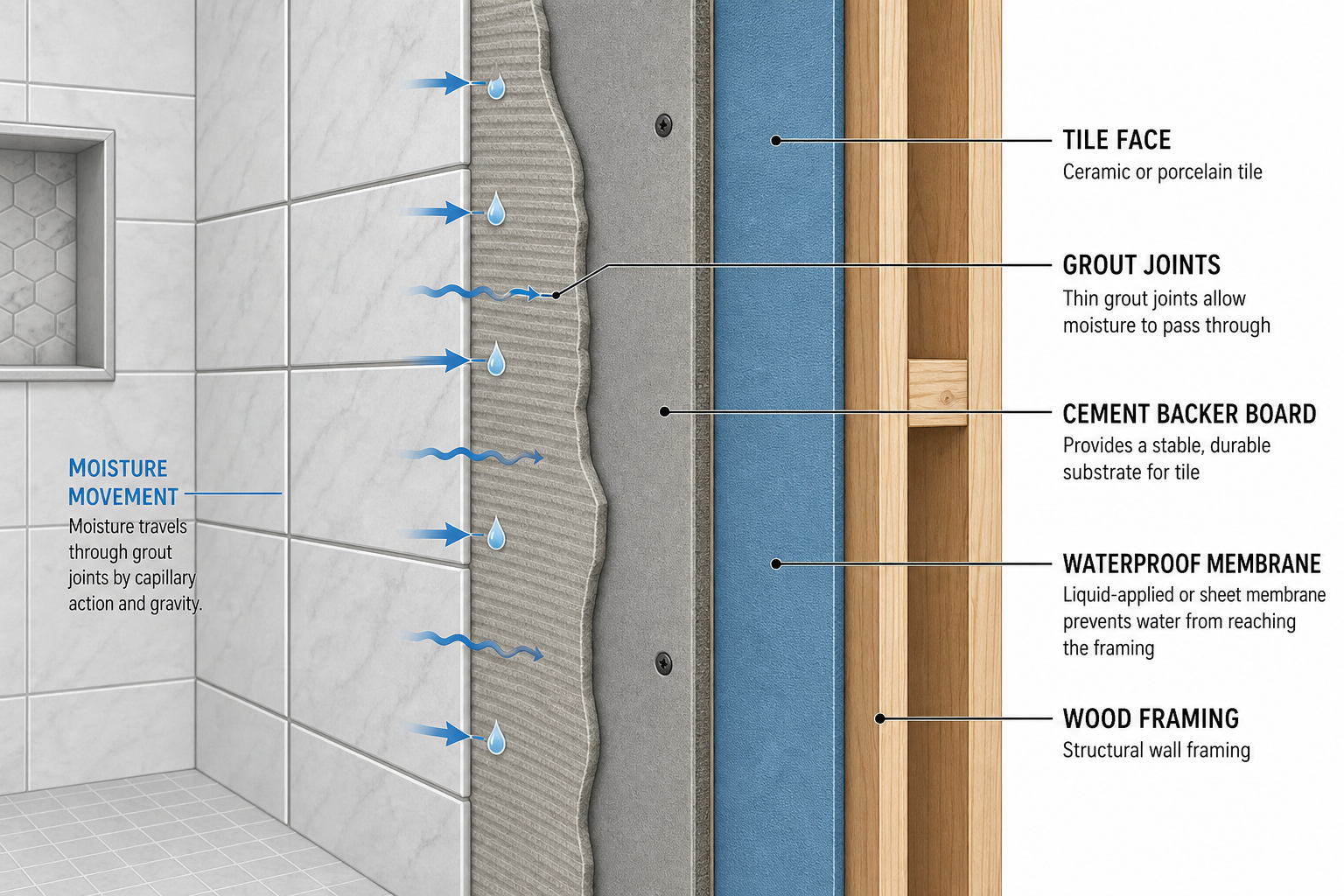
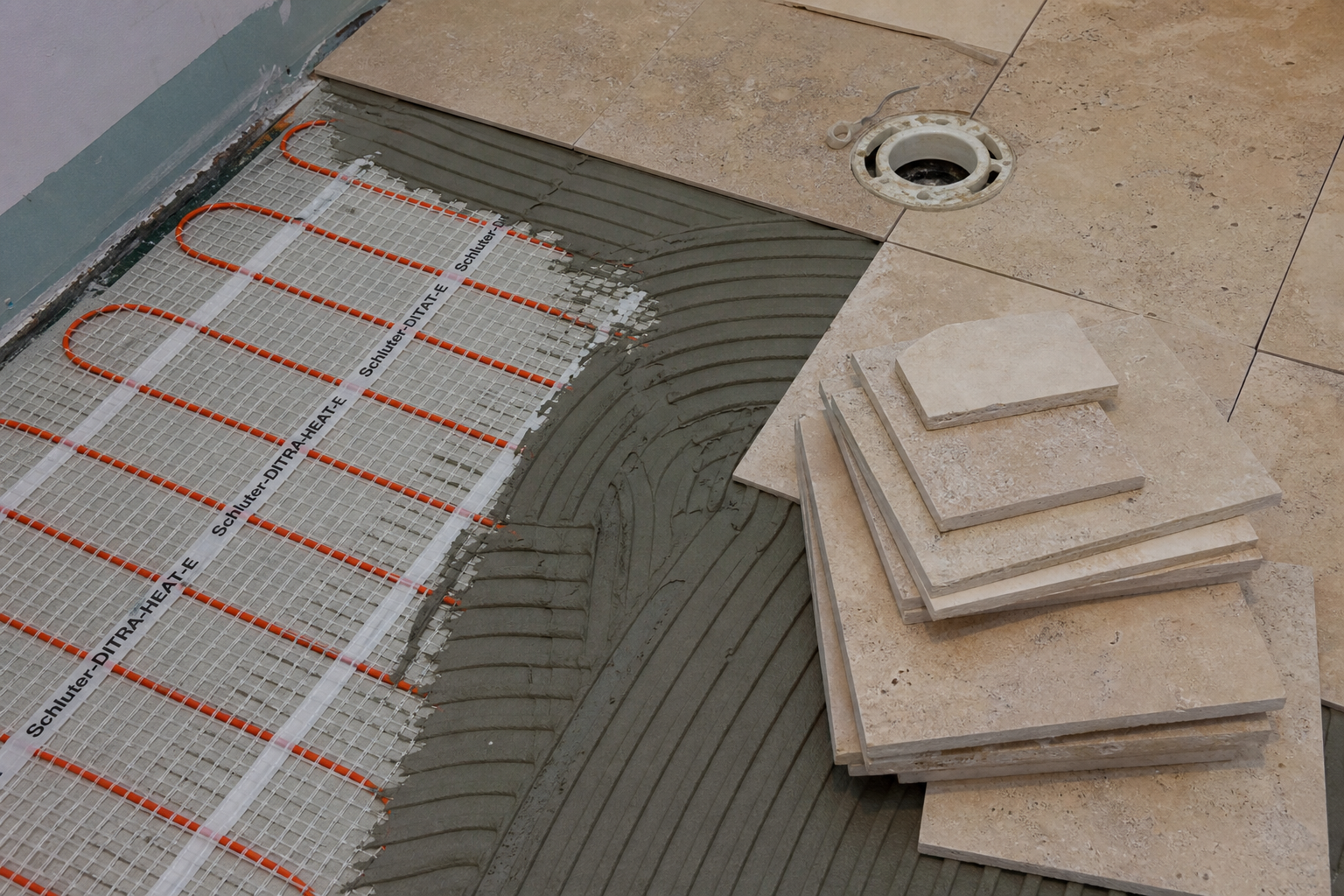
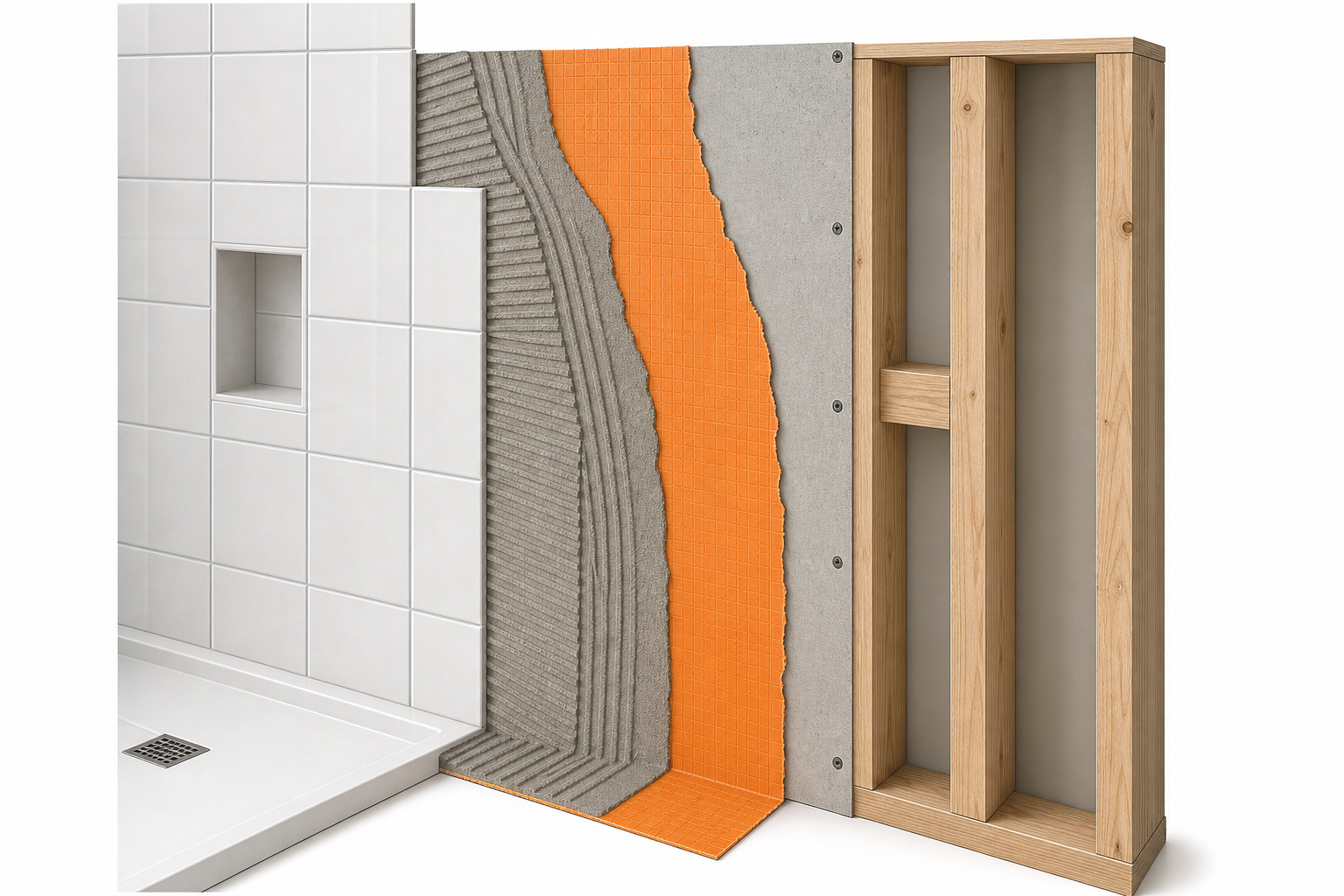
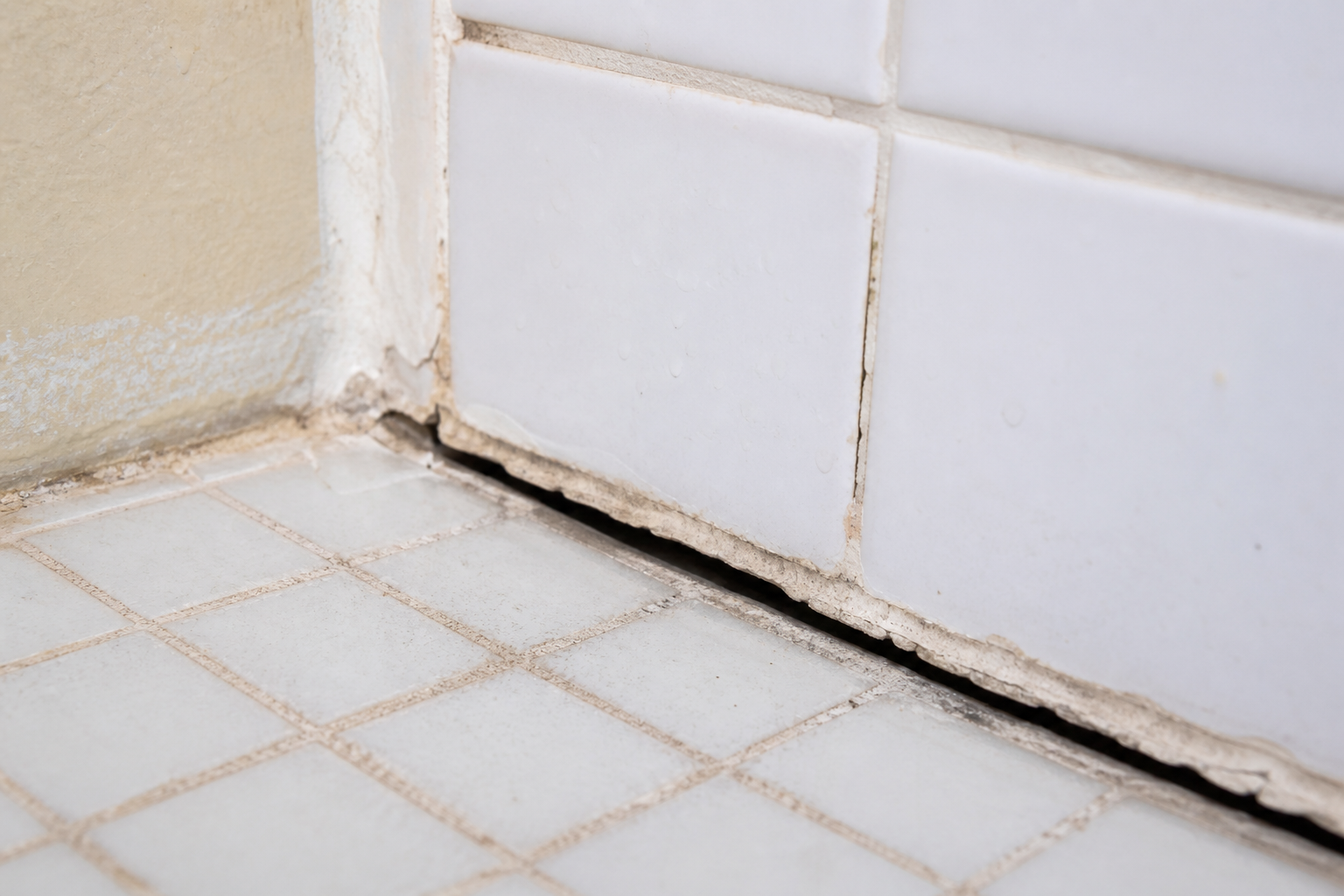
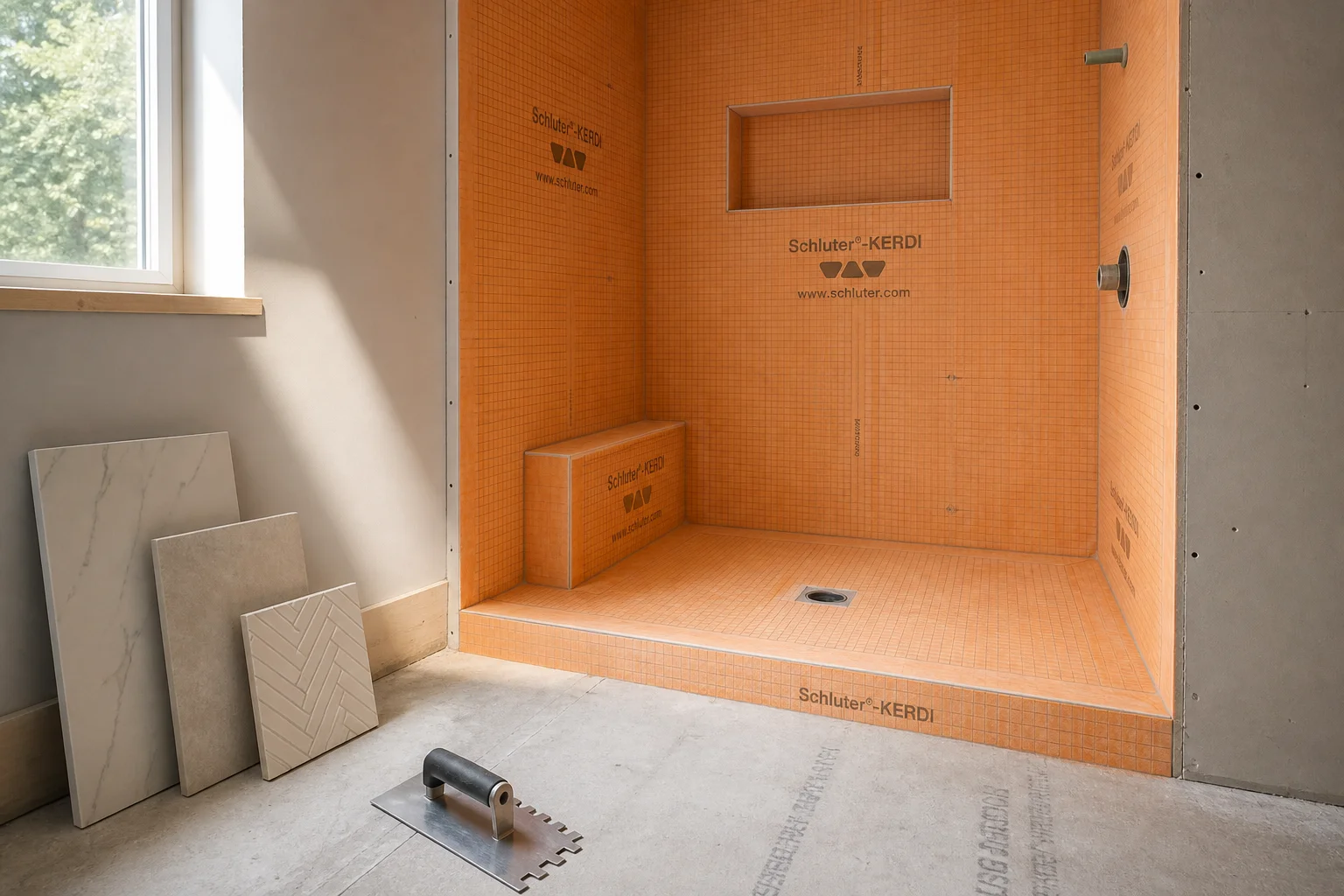
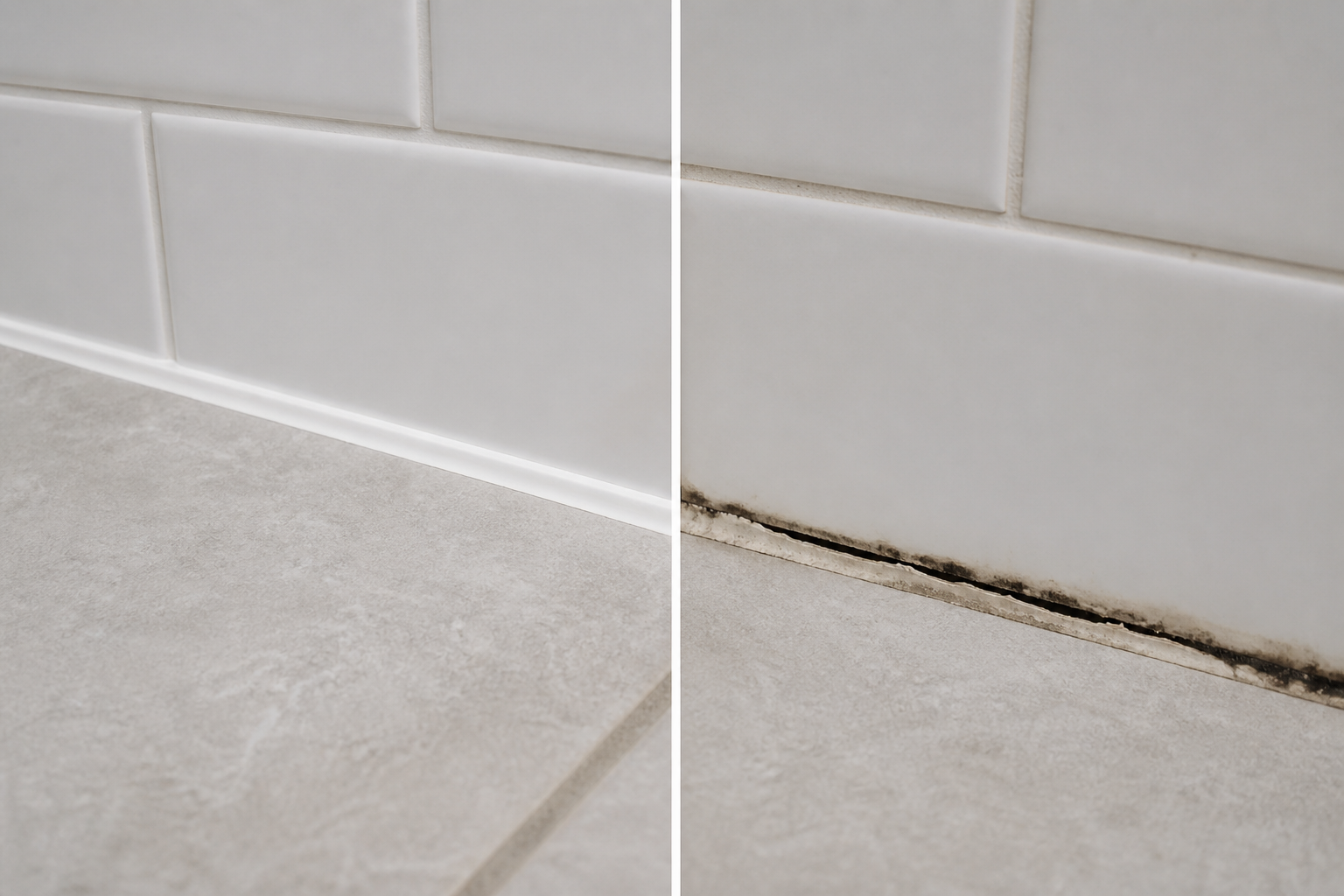
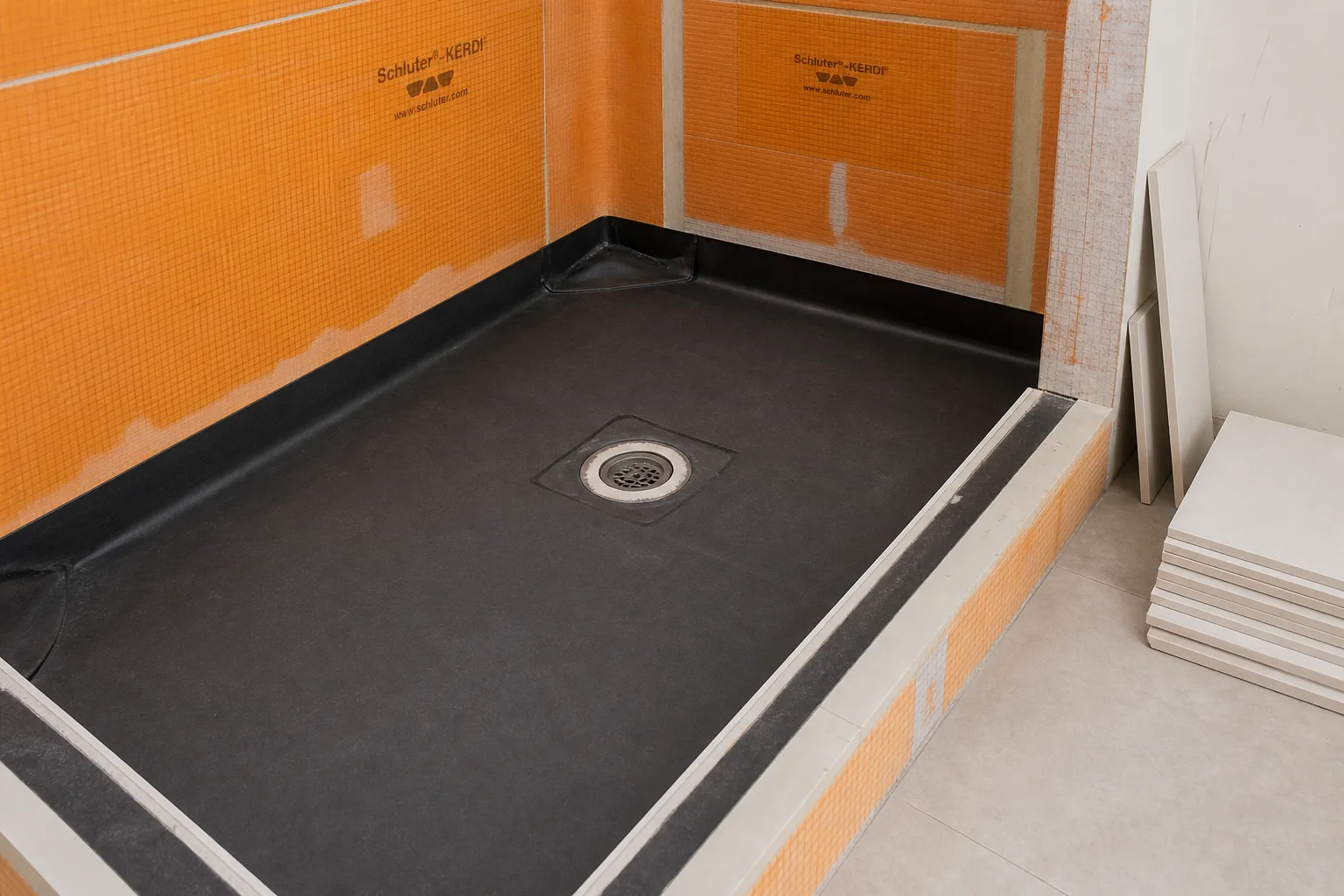
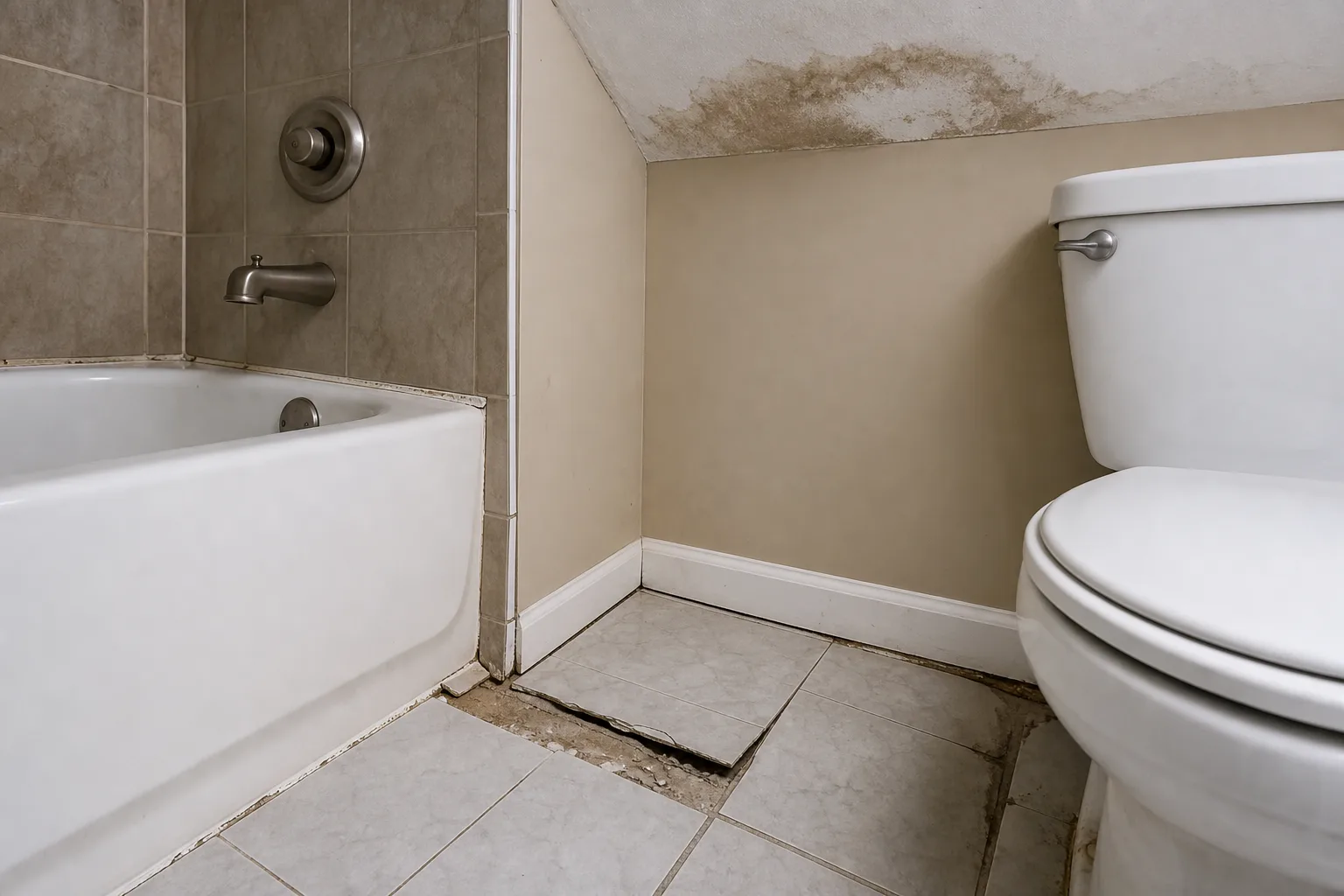
Waterproofing and shower prep sit between rough plumbing and tile. This phase is often underpriced in low bids because the work is invisible once tile is installed. A bonded membrane system (Schluter-Kerdi, Laticrete Hydro Ban, or equivalent) requires careful installation at corners, curb transitions, and drain connections. Flood testing adds a day. The labor here is not fast. It is precise. Cutting waterproofing labor produces a shower that looks identical on day one and fails differently on year three.
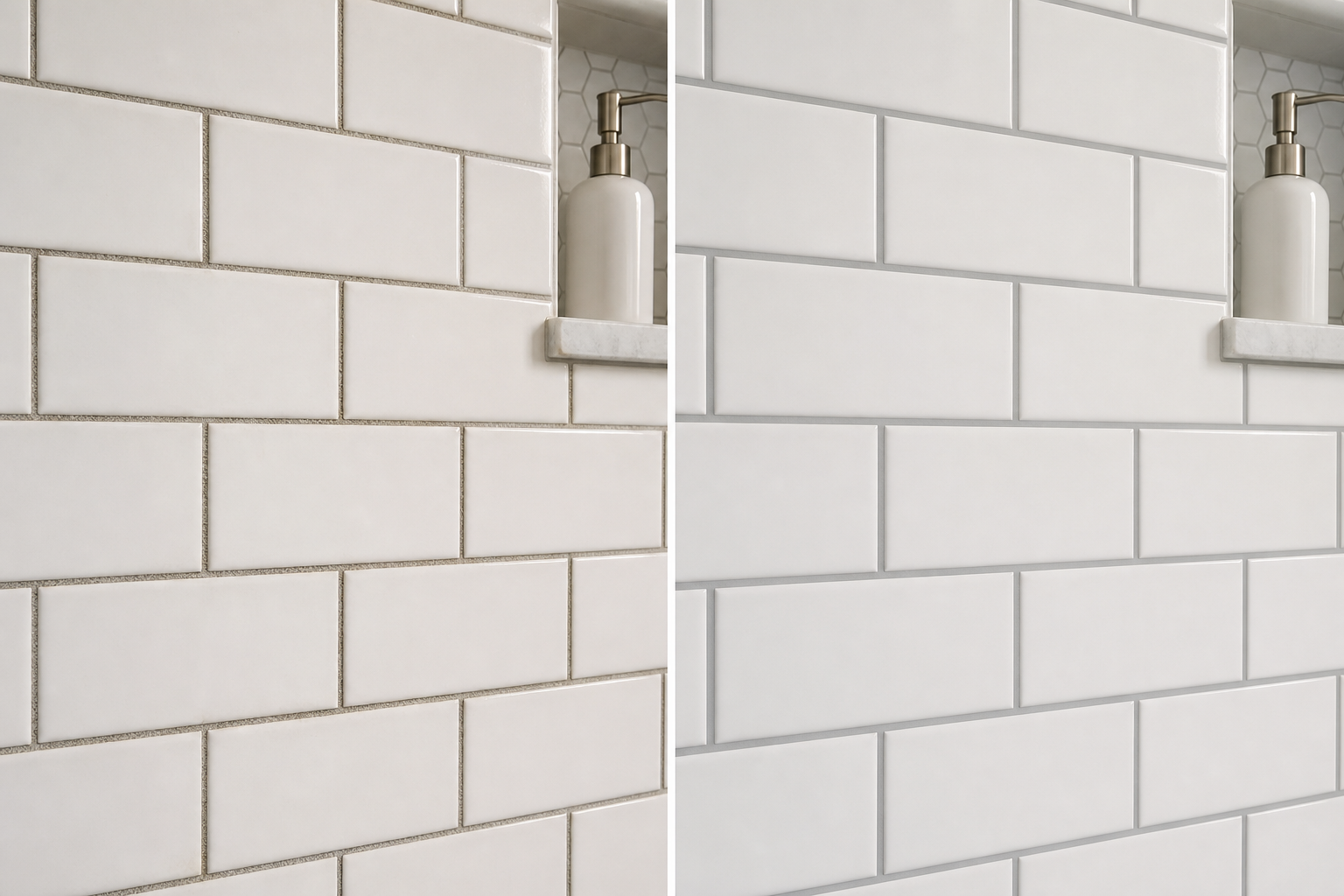
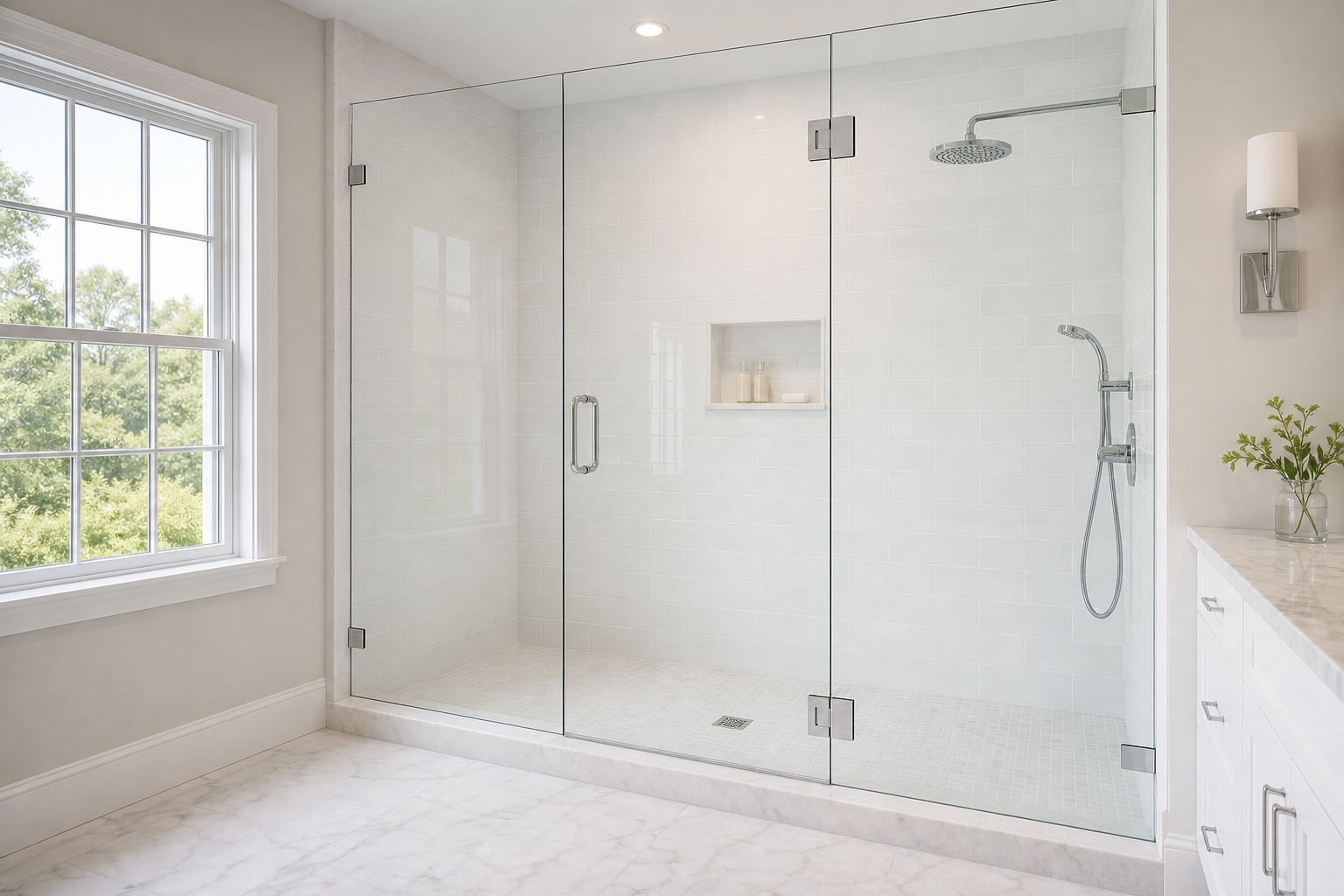
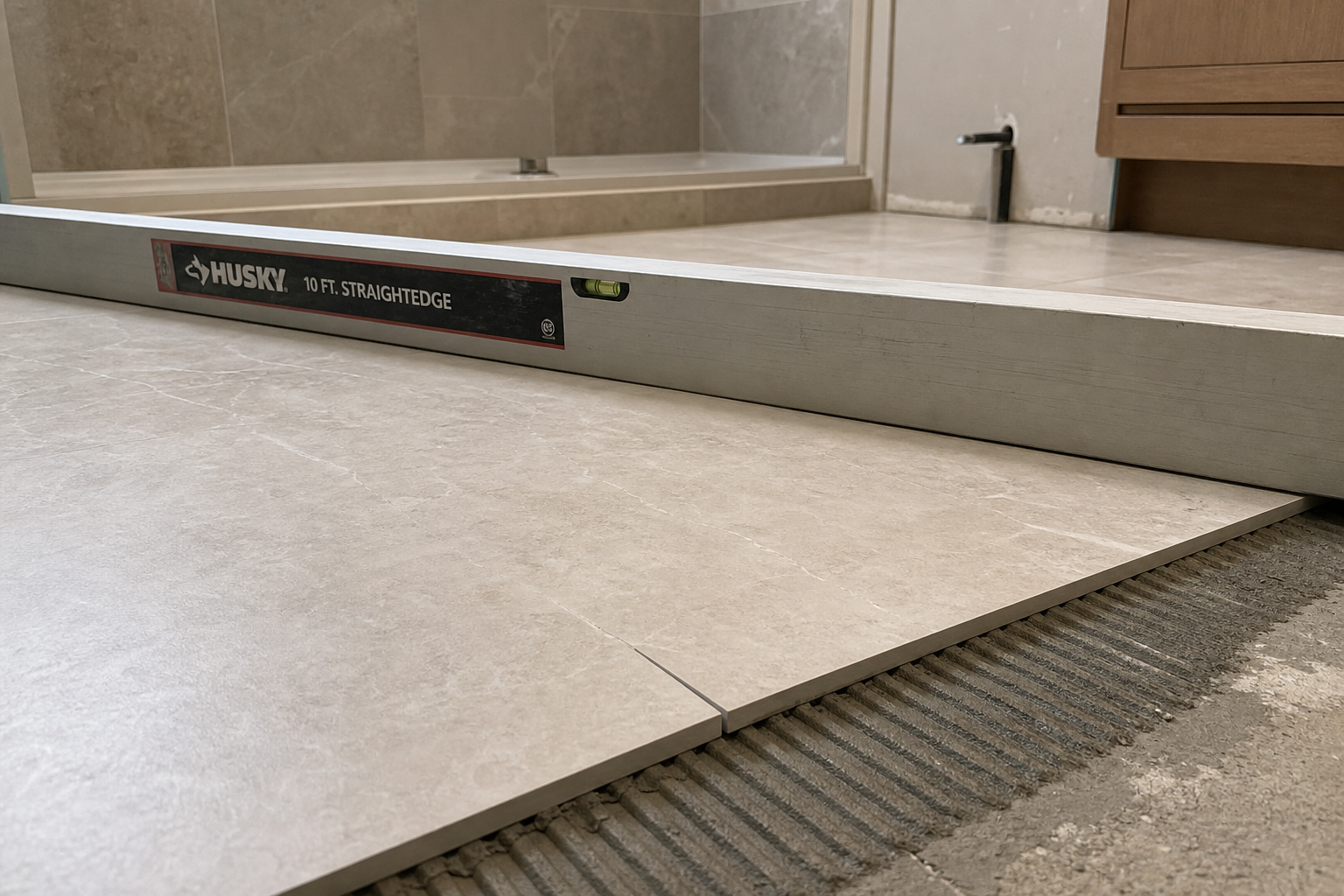
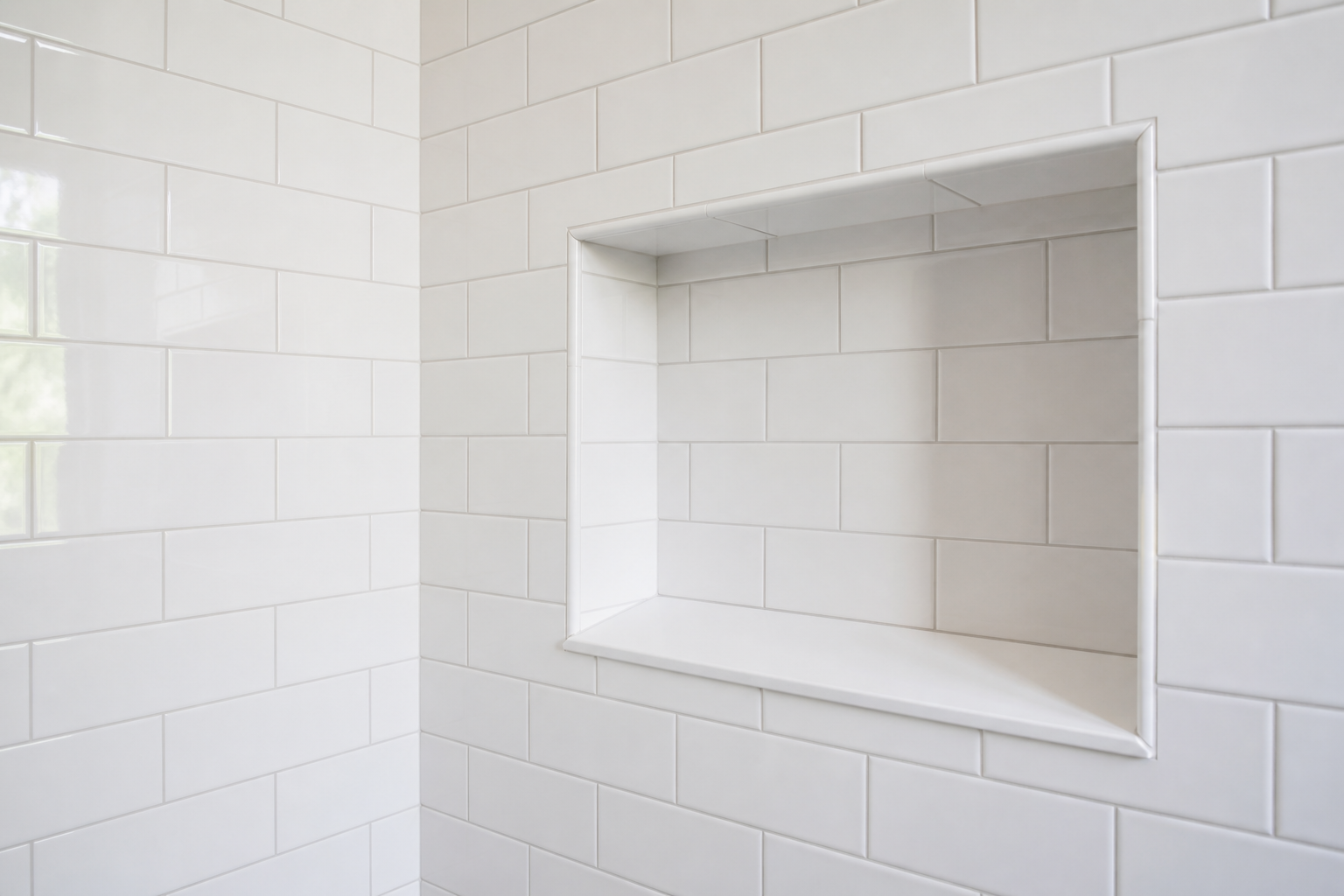
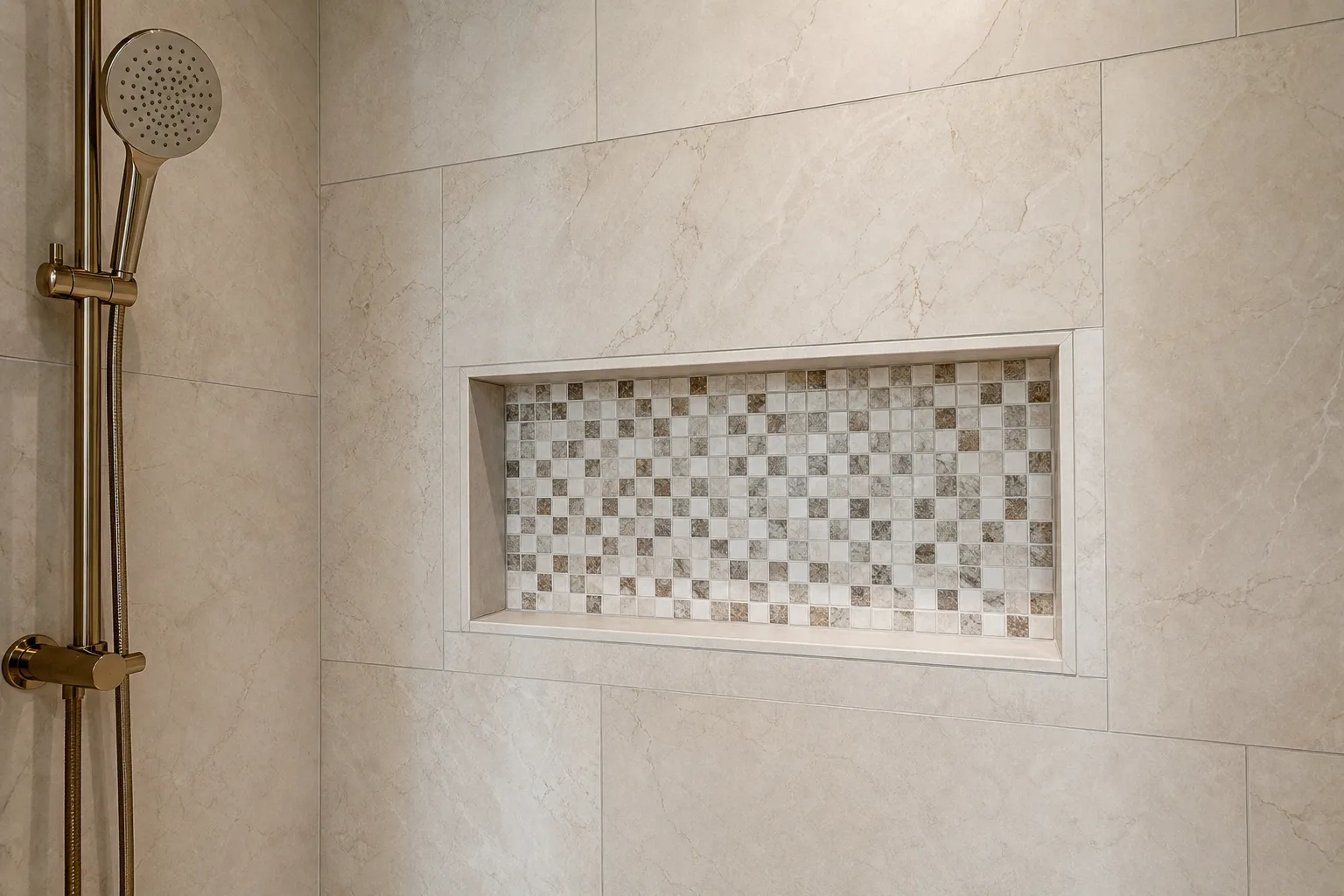
Tile installation is where labor cost spikes most visibly. Tile setters bill per square foot ($8 to $30 or more depending on market, tile size, and pattern complexity) or hourly. A standard bathroom floor might run 40 to 60 square feet. A walk-in shower adds 80 to 120 square feet of wall tile. Large-format tile requires a flatter substrate and more careful handling. Herringbone, mosaic, and natural stone patterns multiply cutting and setting time. A shower with niche details, bench work, and multiple trim transitions can consume five to ten full days of a skilled tile setter's time. At $15 to $30 per square foot installed, a 100-square-foot tile scope runs $1,500 to $3,000 in labor before materials. Complex showers run significantly higher.
Finish trades (drywall repair, painting, trim, fixture setting) add another 10 to 20 percent. These phases look faster than tile but still require skilled work in a space where every surface is visible and every edge is scrutinized.
Why Tile and Plumbing Move the Number Most
Within the labor total, tile installation and plumbing rough-in are the two trades that create the widest cost variance between otherwise similar projects. They are not the only expensive trades. They are the trades where scope decisions produce the largest swings.
Plumbing is expensive because it is structural and code-regulated. Water supply and drain lines are not cosmetic choices. They must meet code slope requirements, venting rules, and pressure specifications. Moving a fixture location means opening floors or walls, rerouting pipe, patching structure, and scheduling an inspection before the next trade begins. A toilet moved three feet can add $2,500 to $3,500 in plumbing labor because the drain slope and vent connection must be re-engineered, not extended. A shower drain moved to accommodate a curbless design adds subfloor work. In older homes, opening walls frequently reveals galvanized pipe, undersized venting, or corroded fittings that must be replaced before new fixtures connect. None of this is visible in the finish. All of it is billable.
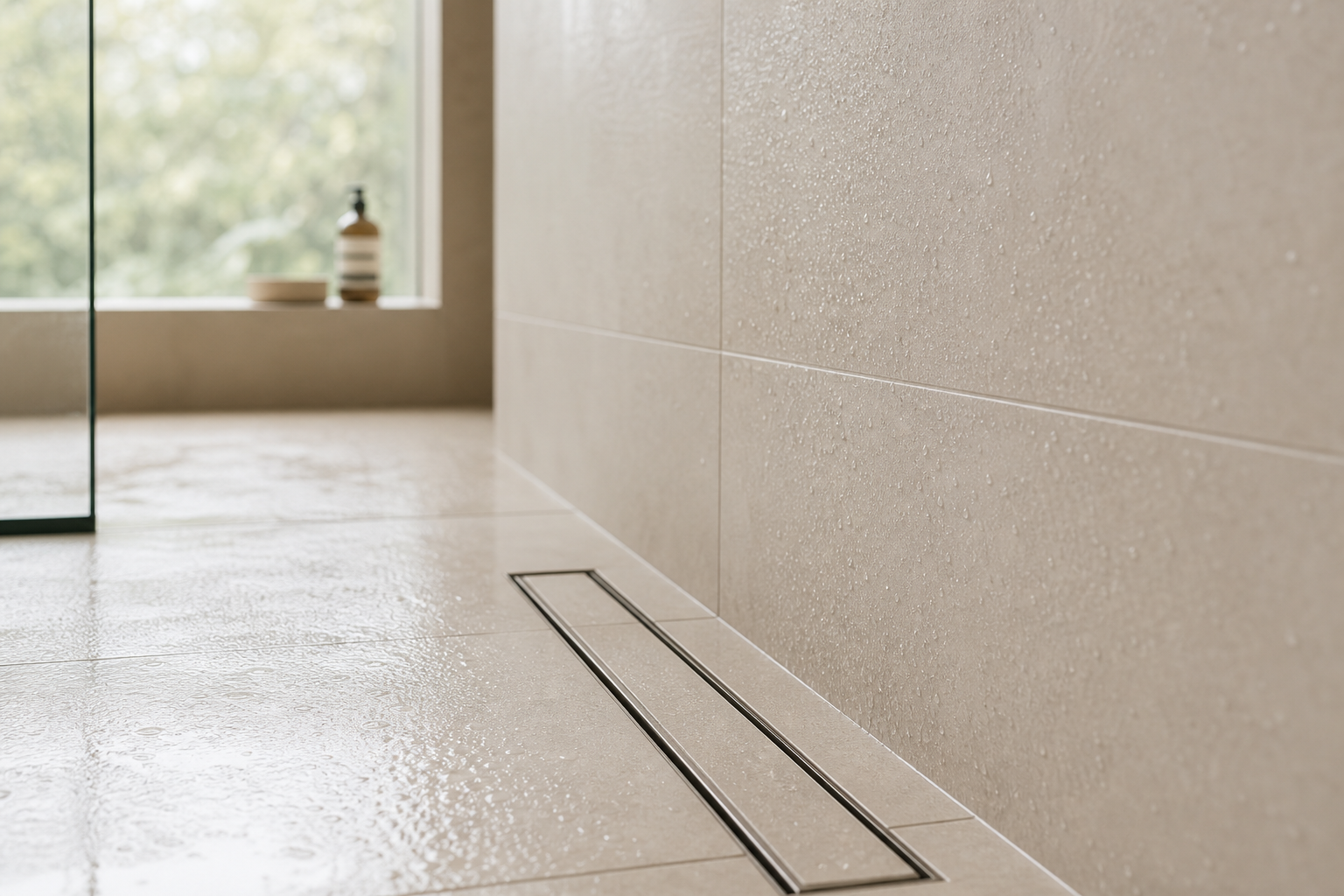
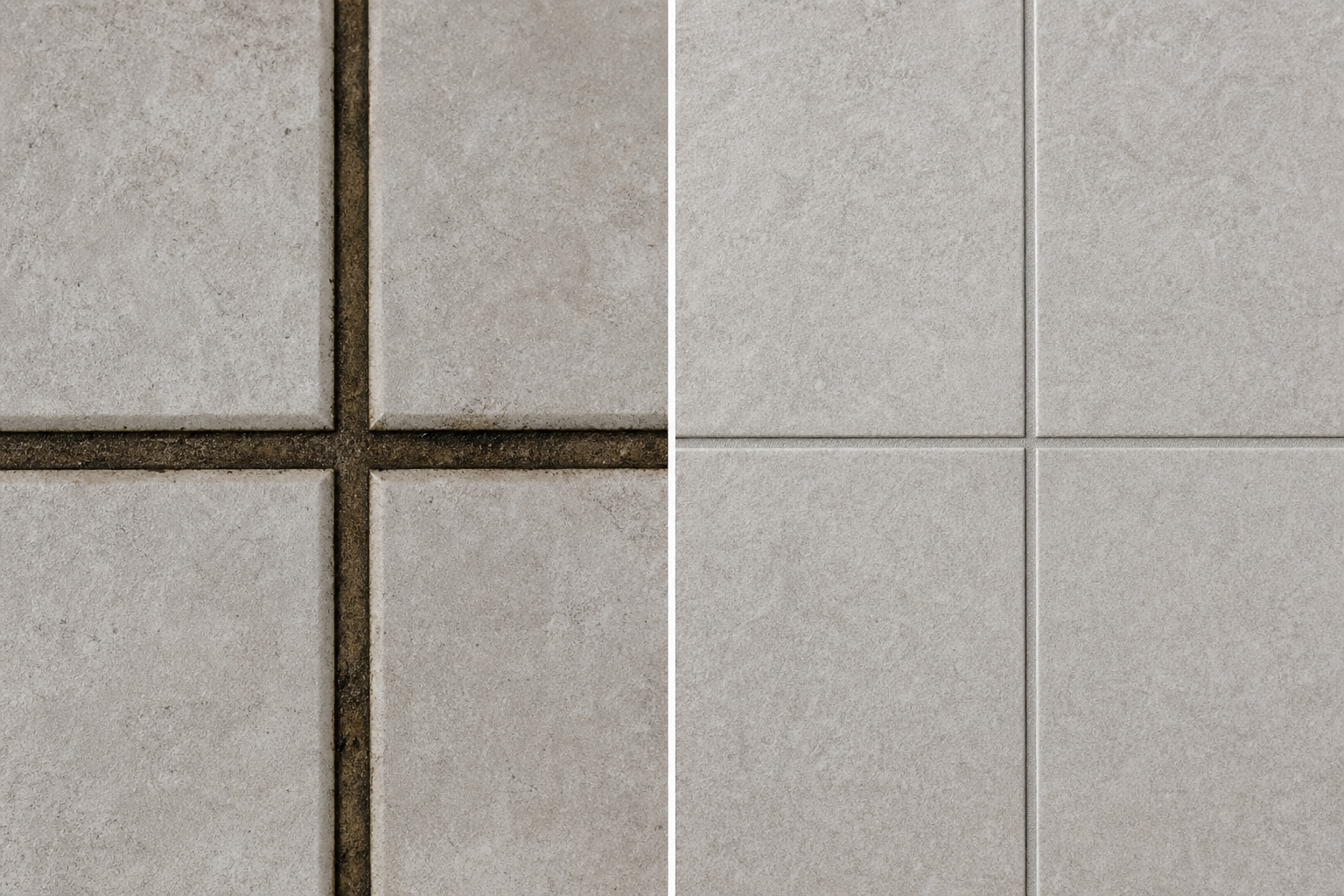
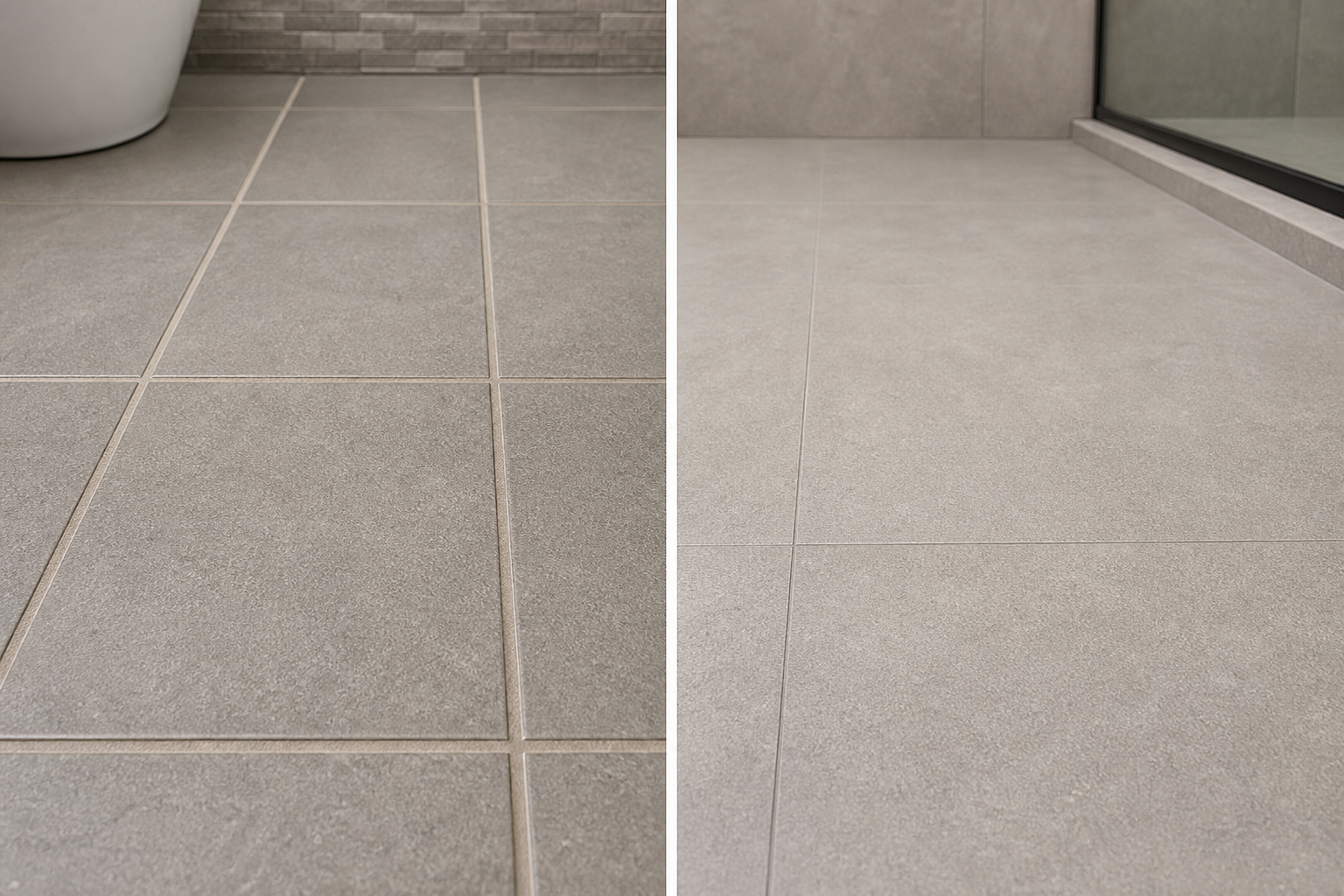
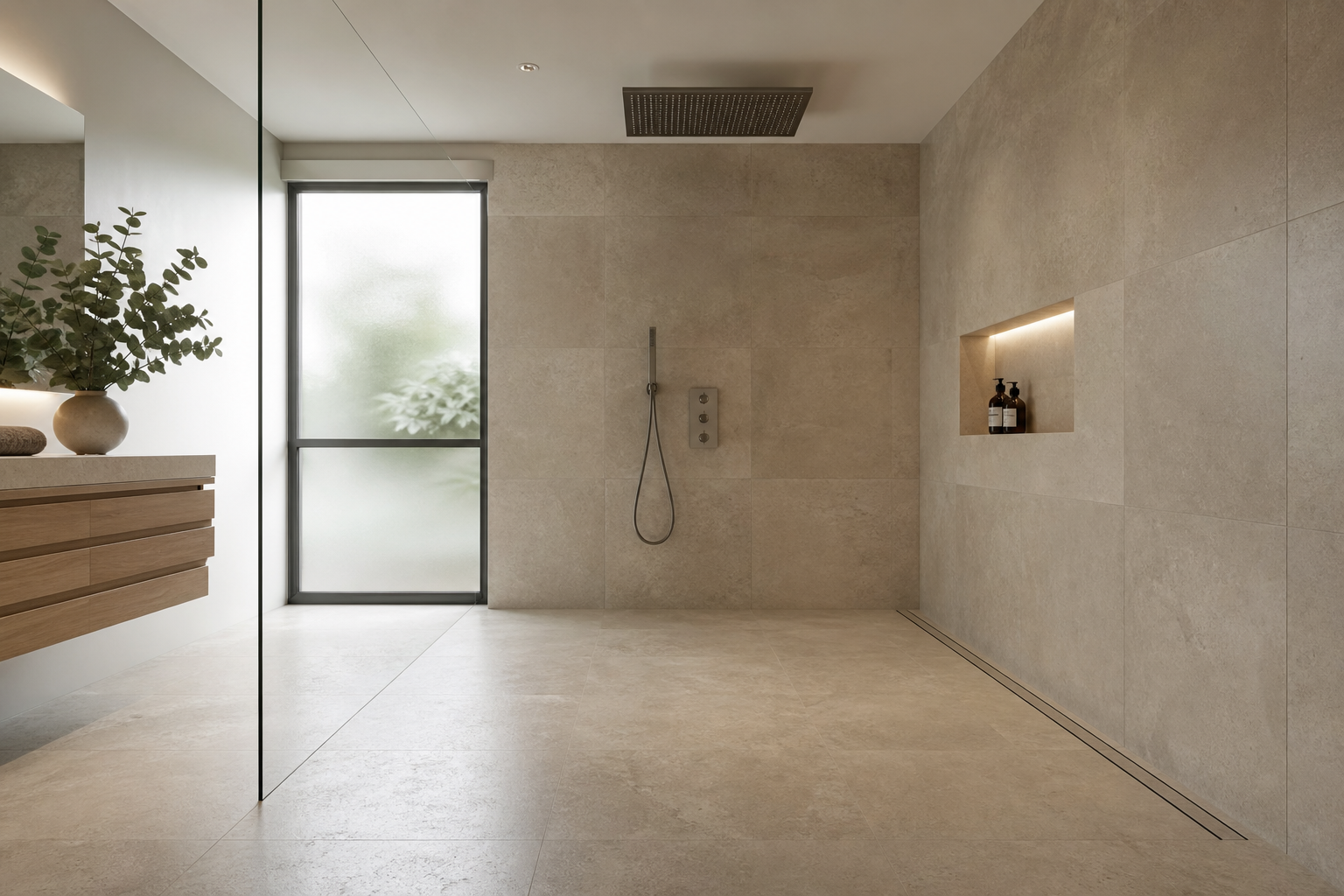
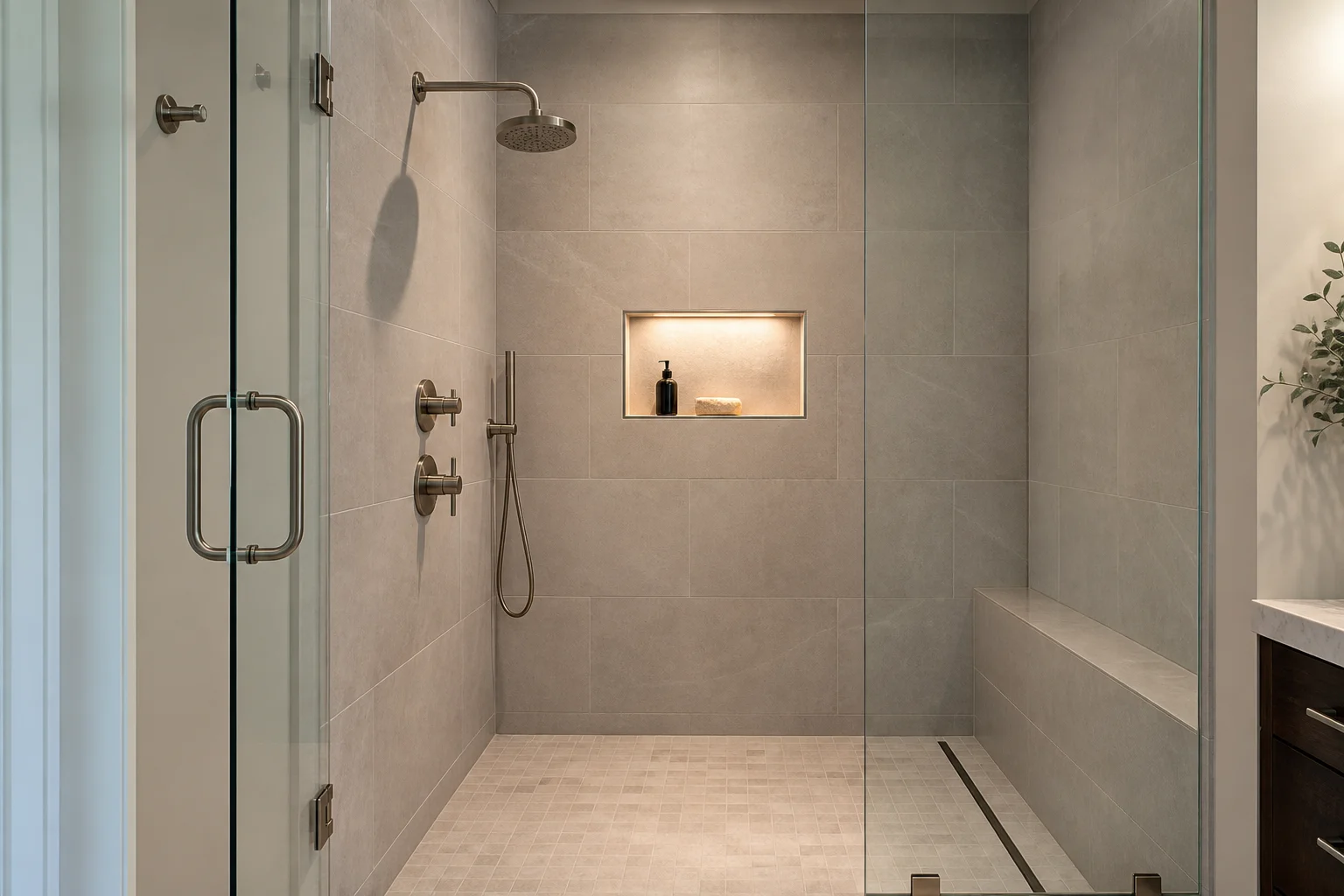
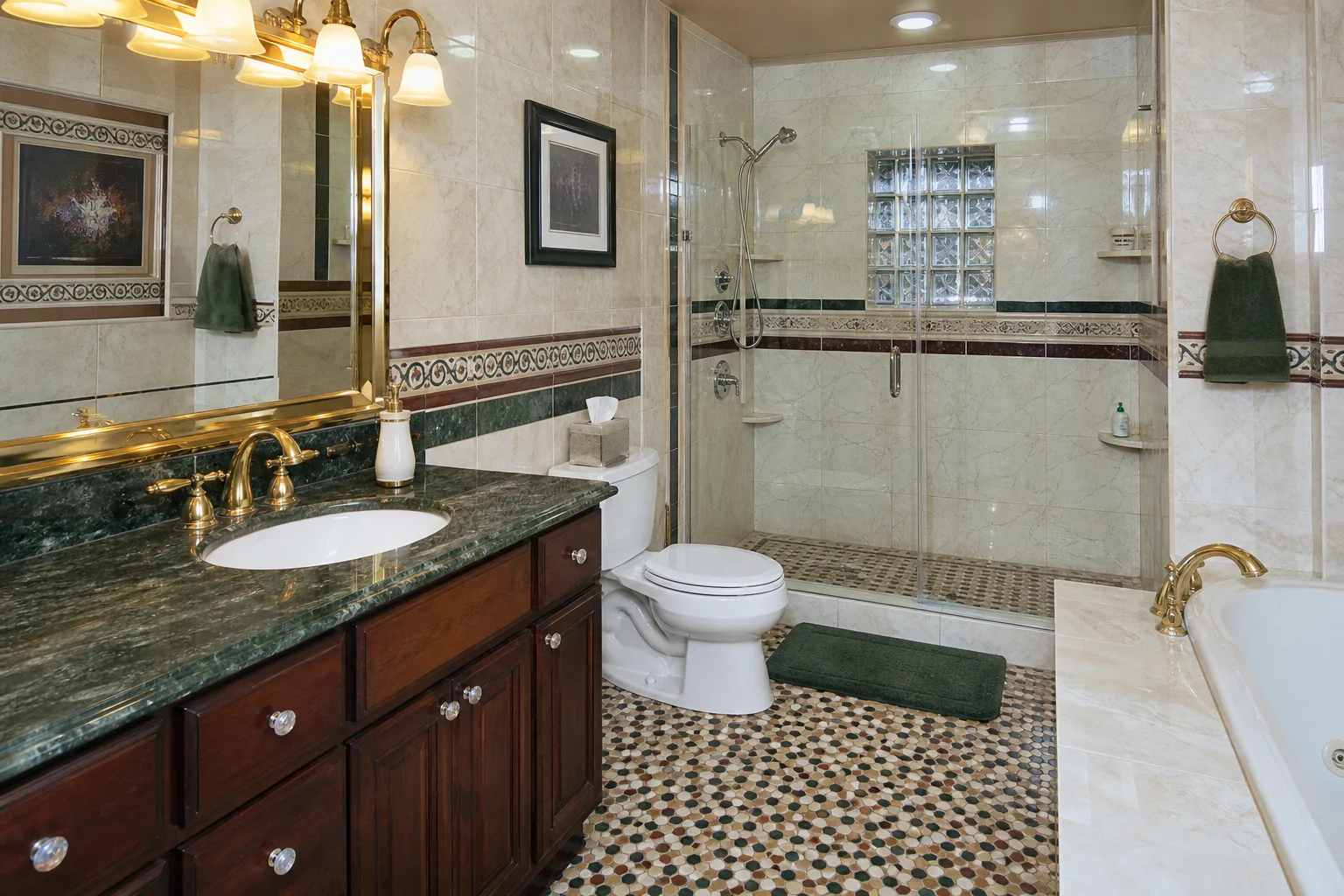
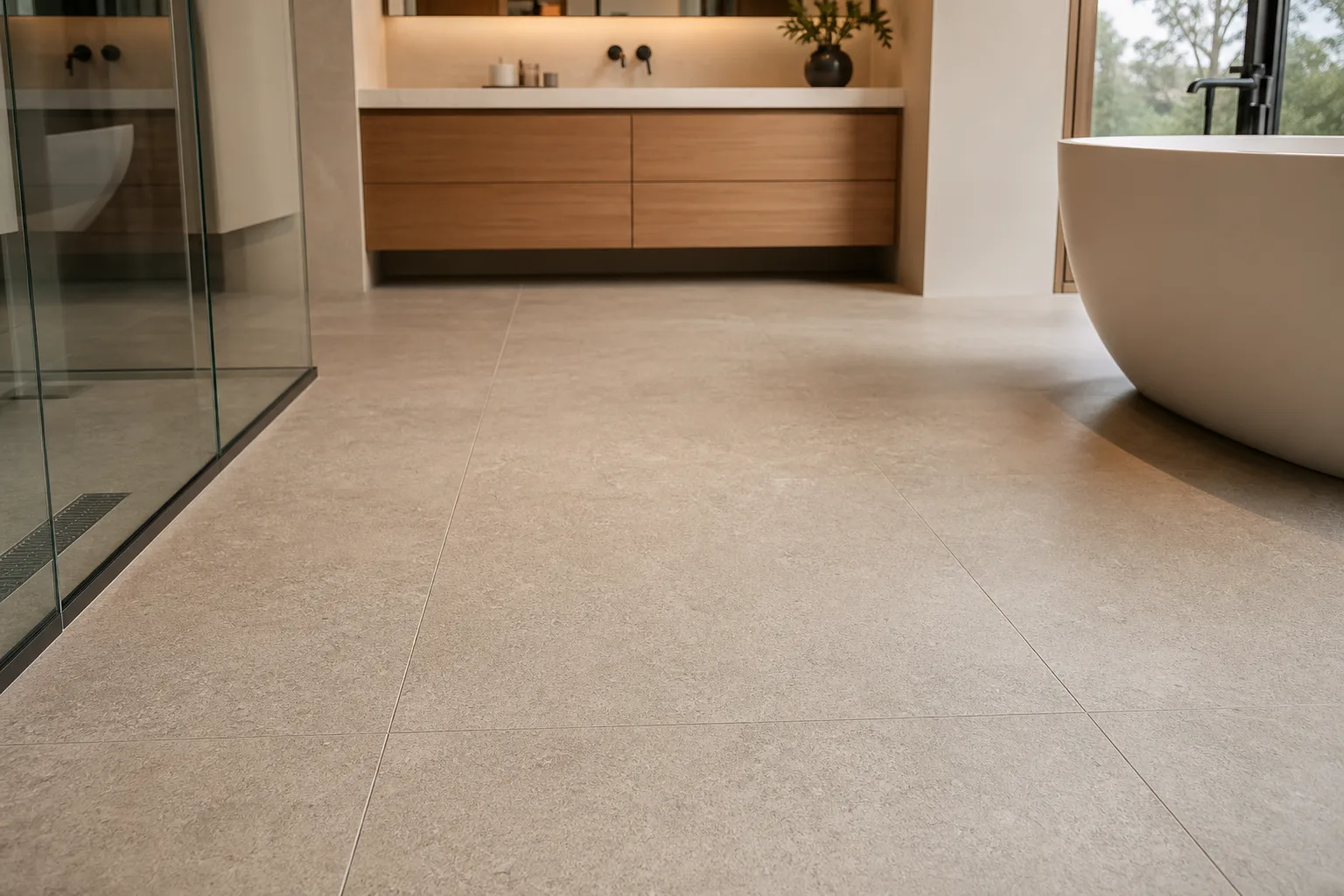
Tile is expensive because it is slow, visible, and unforgiving. Every cut shows. Every lippage gap shows. Every grout line shows. A tile setter working with 12-by-24-inch porcelain on a flat, prepared substrate moves faster than one working with 24-by-48-inch slabs on a substrate that required leveling compound. A herringbone floor pattern can double installation time compared to a straight lay. A shower with three niches, a bench, and a linear drain requires layout planning, multiple waterproofing penetrations, and trim coordination that a standard alcove shower does not. The material cost difference between $4-per-square-foot ceramic and $15-per-square-foot porcelain is real but often smaller than the labor cost difference between simple and complex installation.
Together, tile and plumbing labor can account for 30 to 45 percent of total project cost on a full gut remodel with a custom shower and no plumbing relocation, and 45 to 55 percent when plumbing moves or tile scope expands.
What Is Not the Most Expensive Part
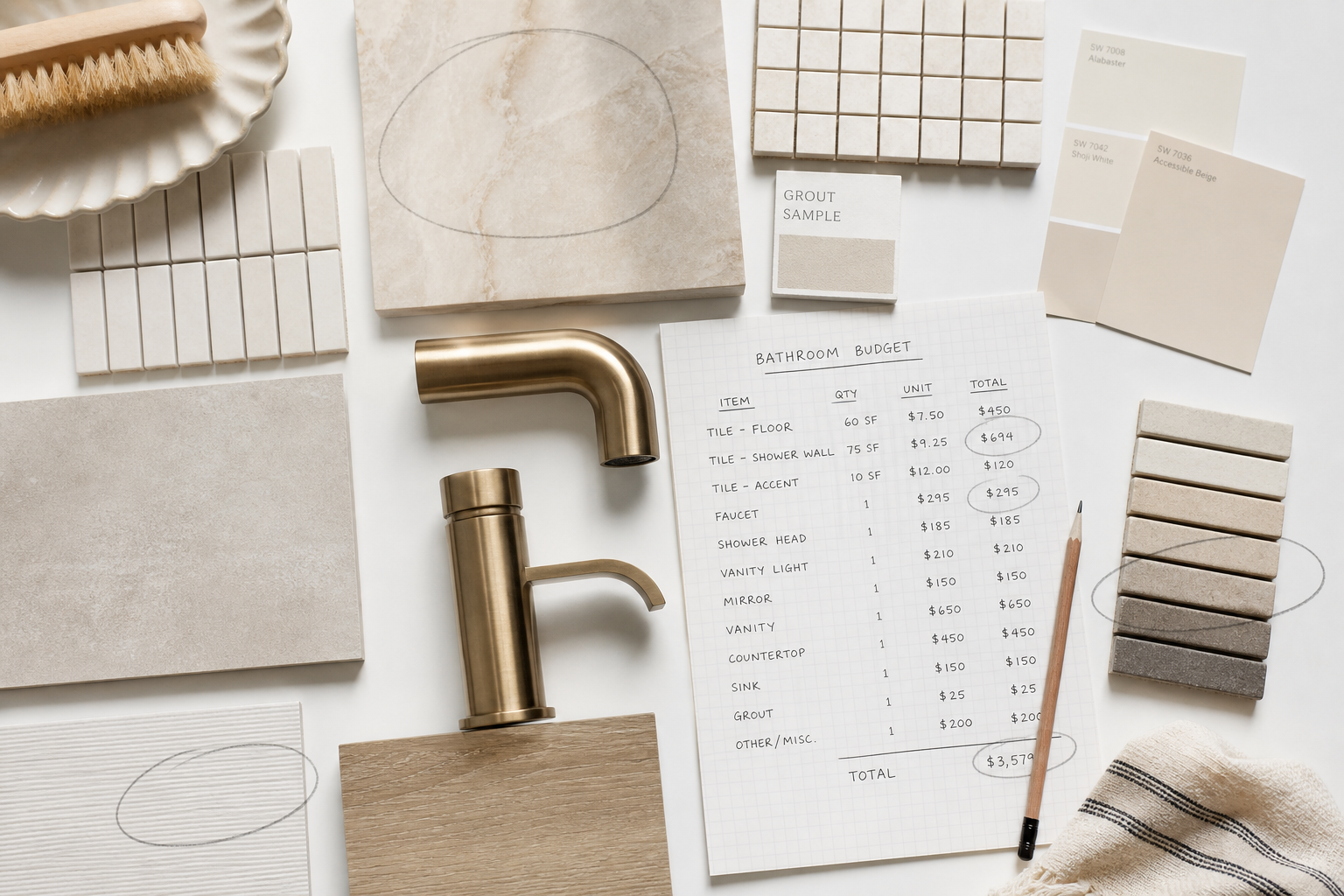
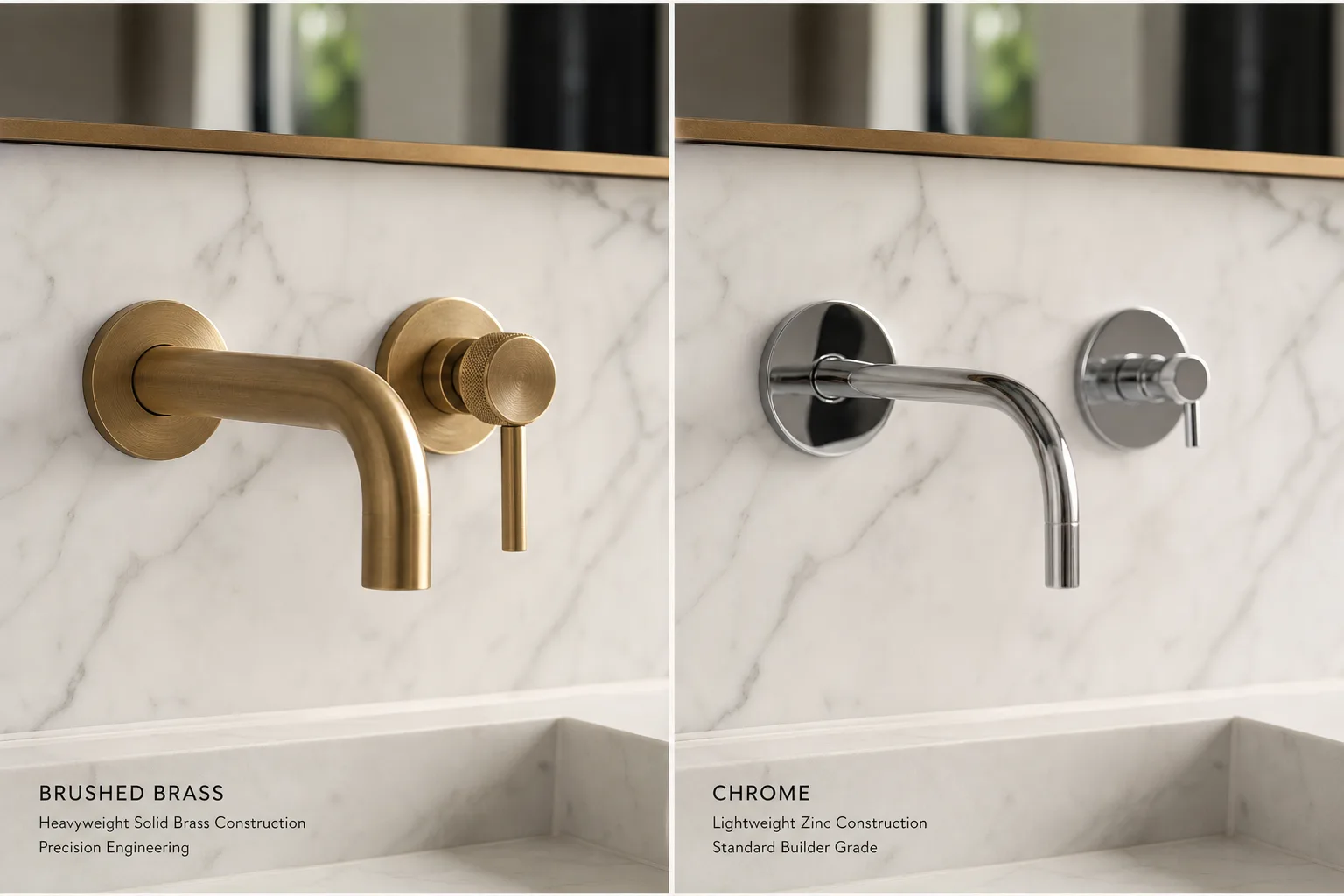
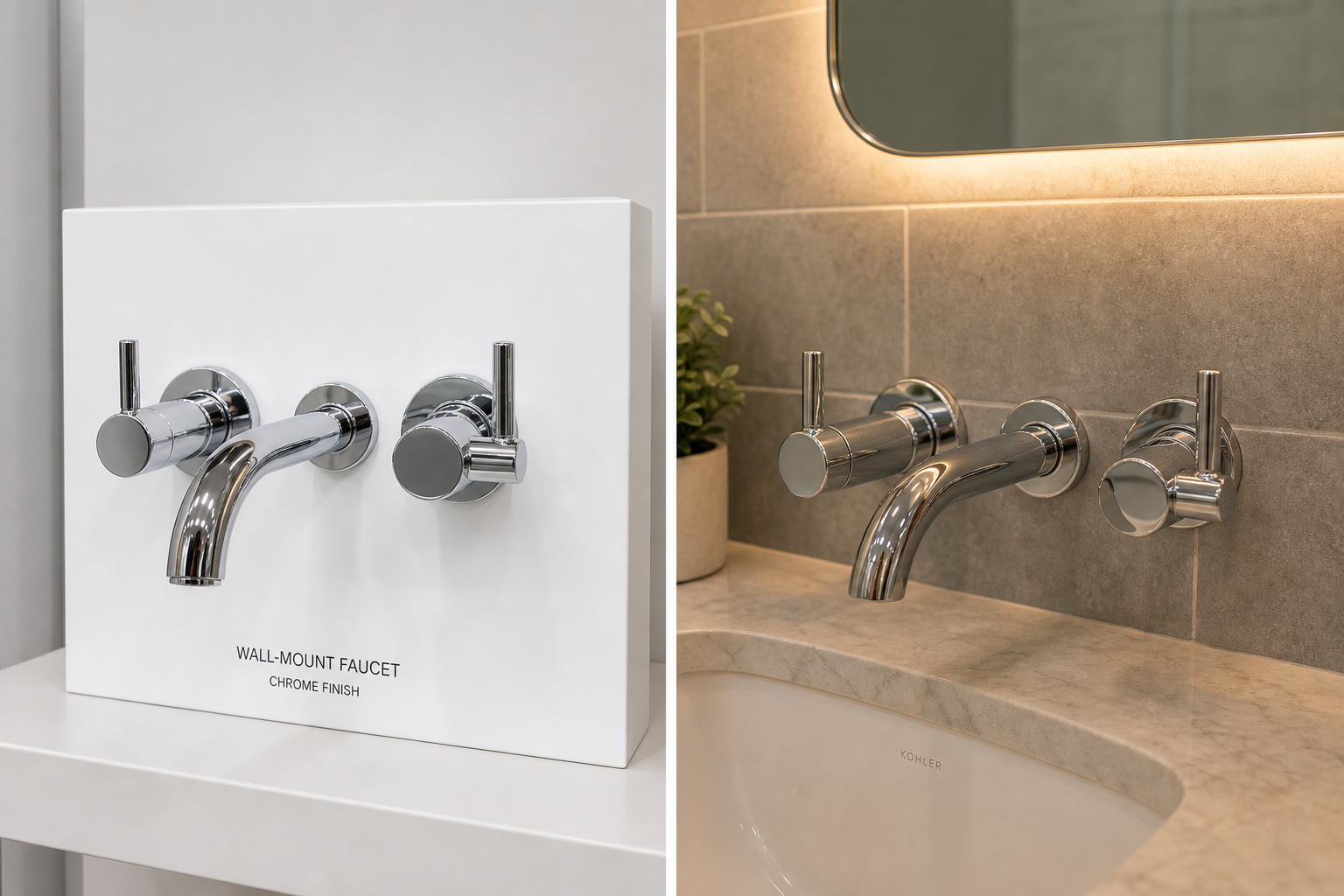
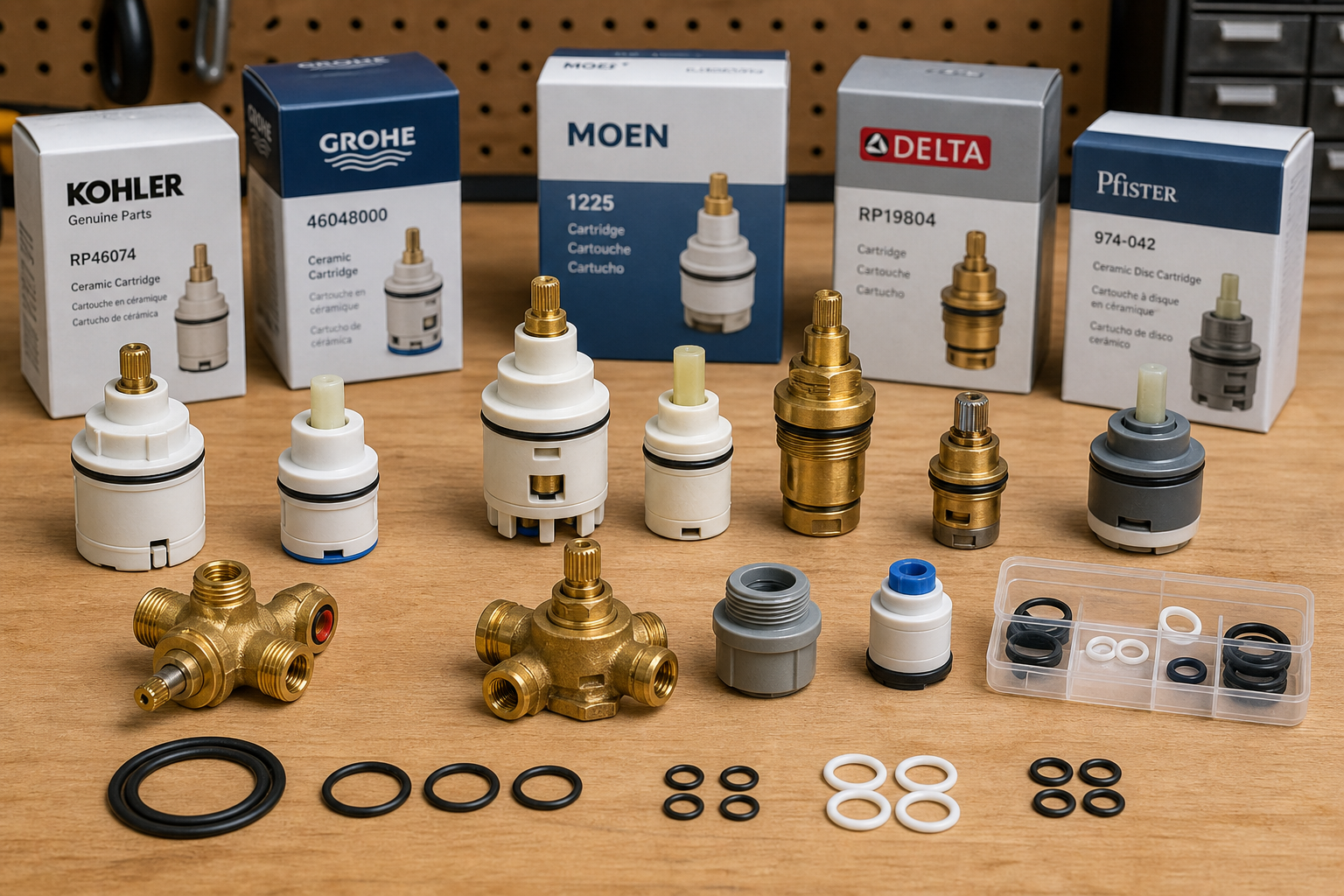
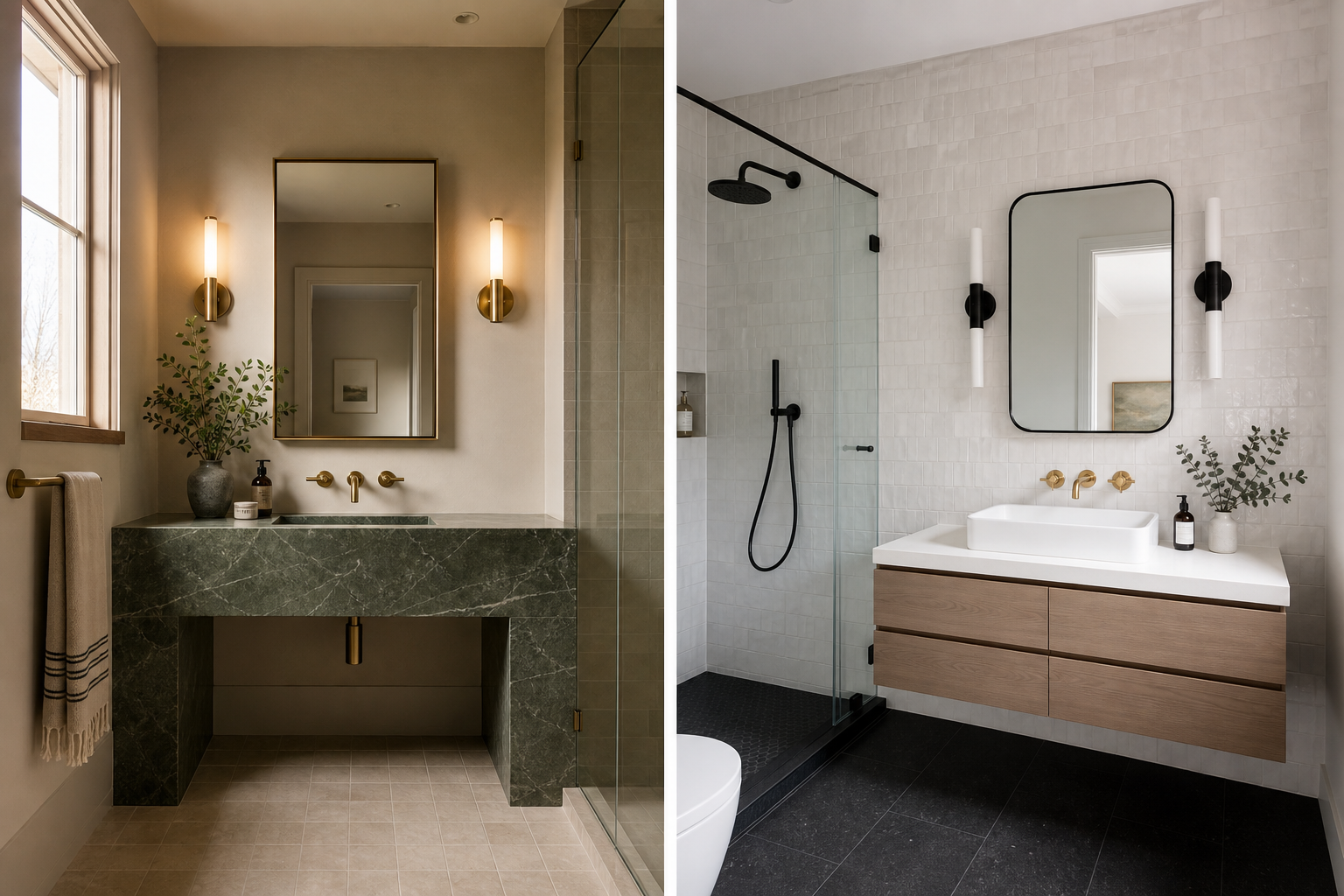
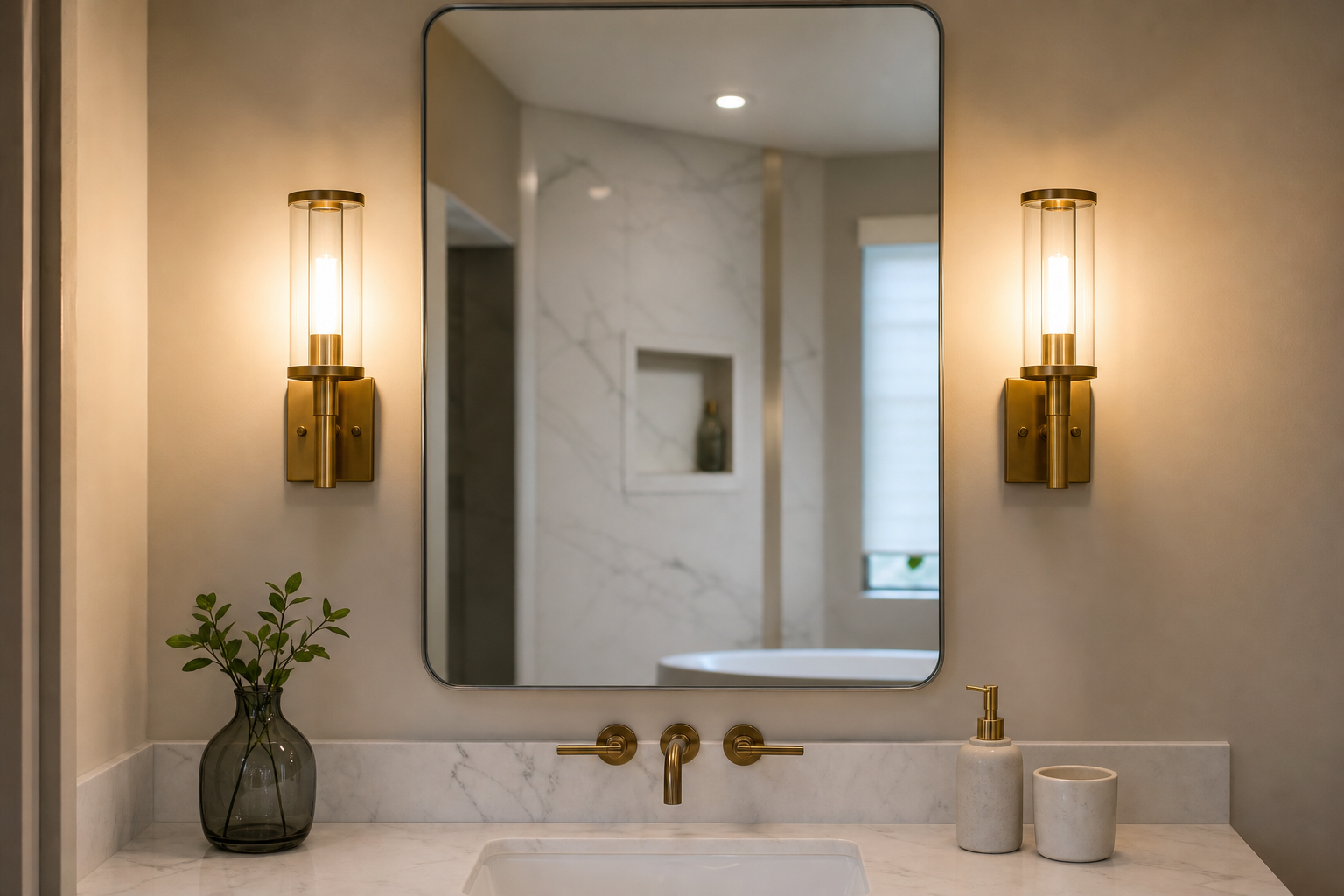
Fixtures get attention because they have brand names and showroom displays. A $1,200 faucet is a real cost. It is not the cost driver in a $70,000 remodel. Fixtures (faucets, shower valves, toilets, towel bars) typically represent 10 to 15 percent of total budget. Upgrading from a midrange to a premium fixture line might add $2,000 to $4,000. Moving the shower drain adds more.
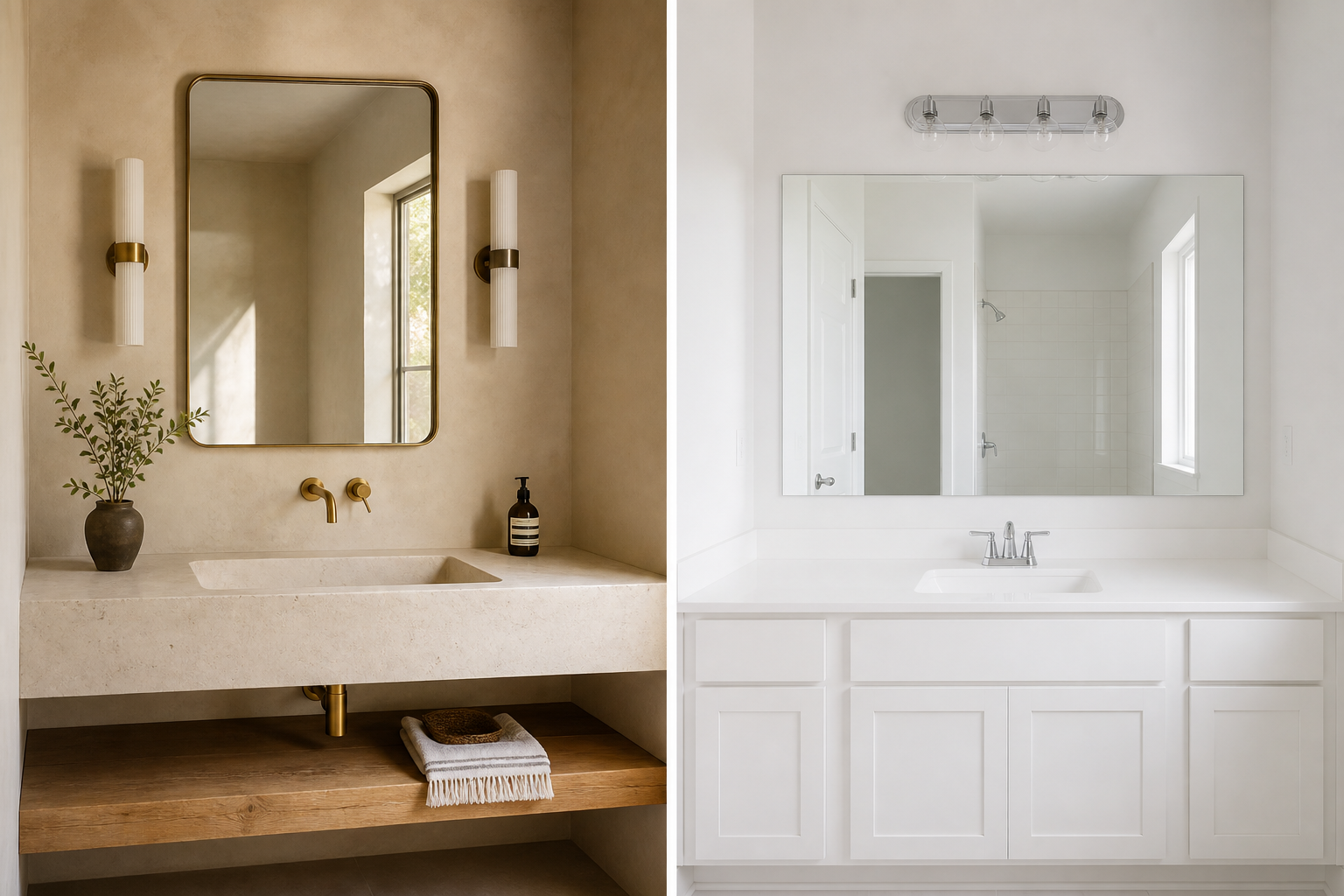
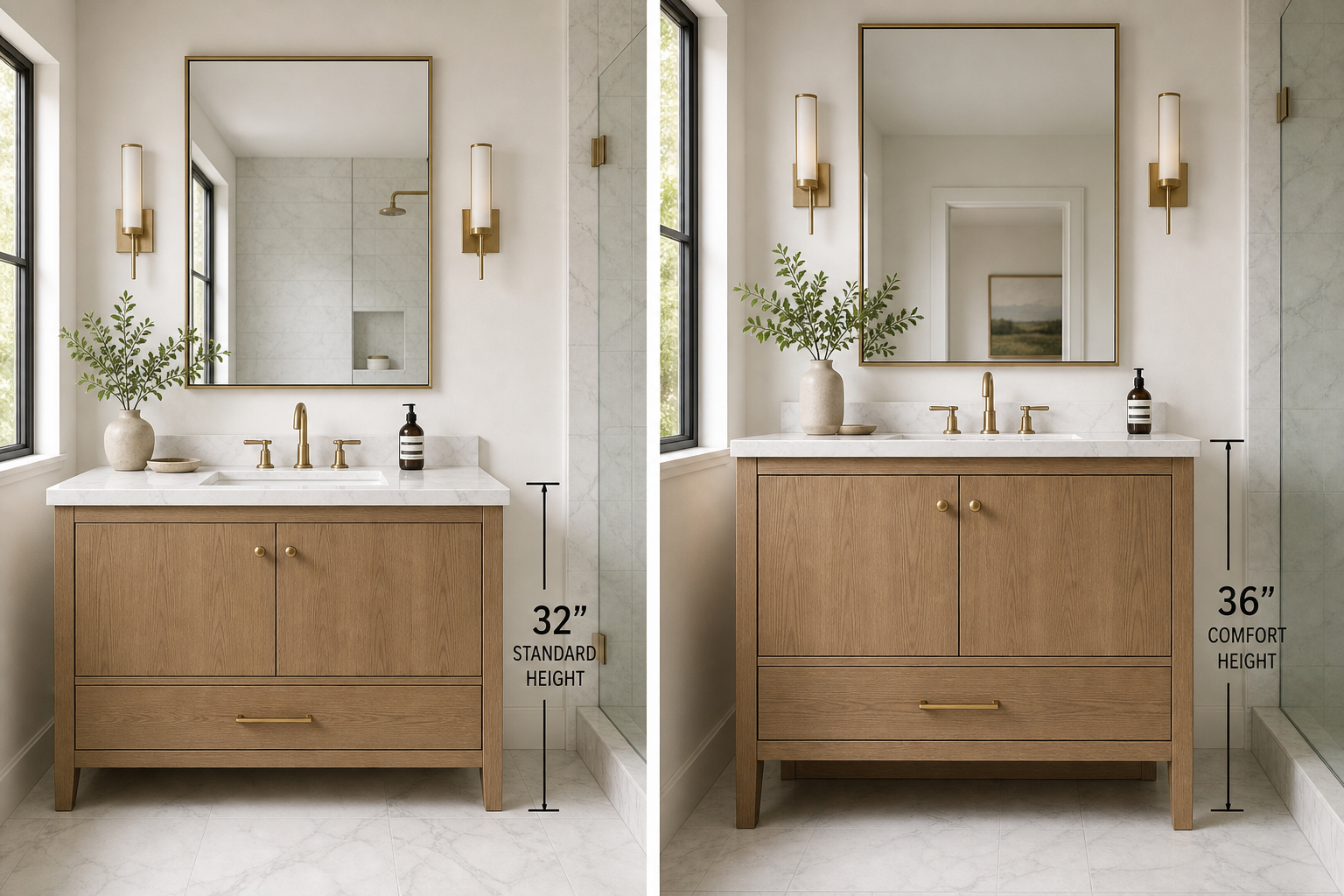
Vanity and countertop packages run 15 to 20 percent in many estimates. A stock vanity with quartz top is a manageable line item. A custom cabinet with stone slab fabrication adds cost, but the labor to install it is measured in hours, not days. Compare that to the tile setter who needs a week in the shower.
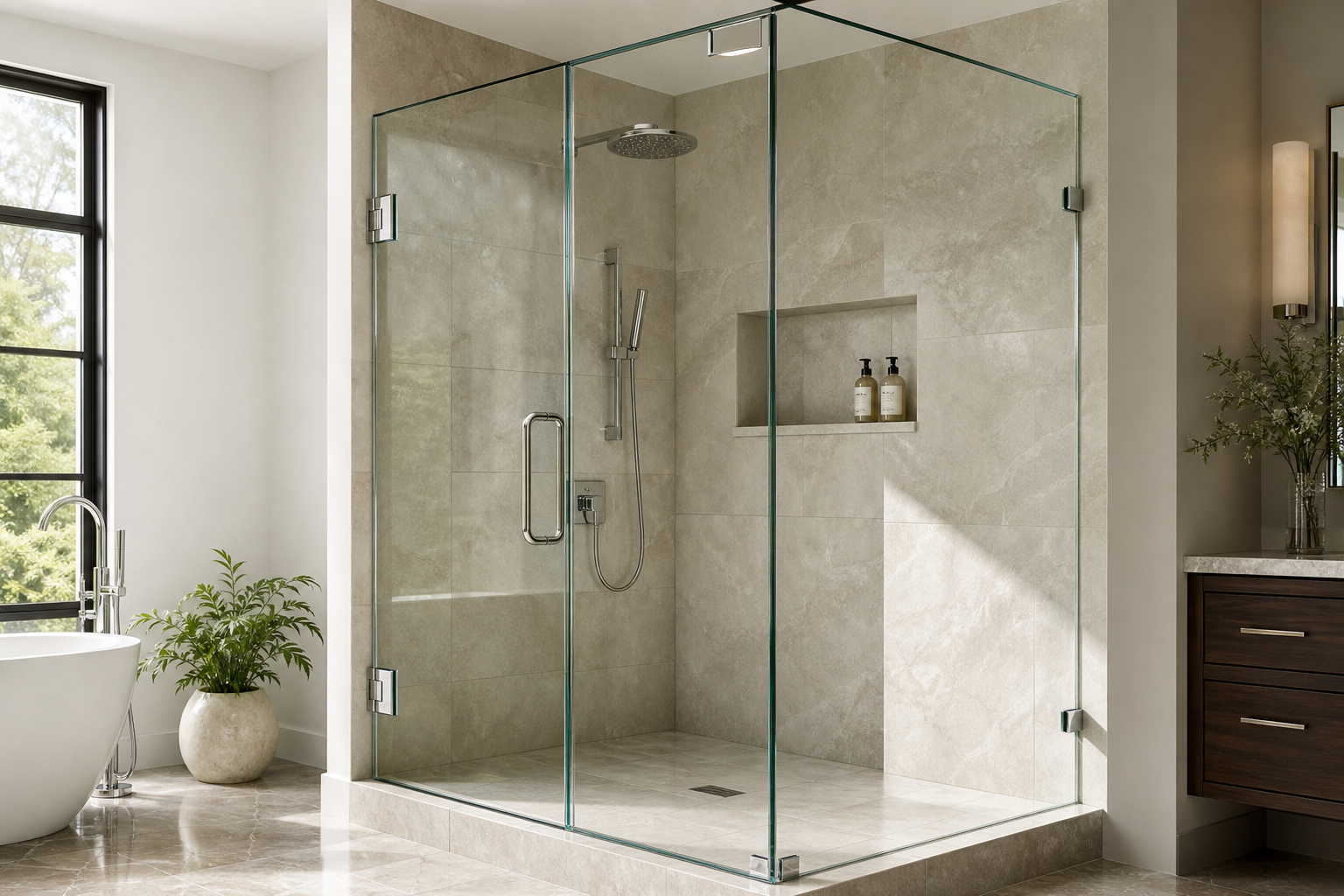
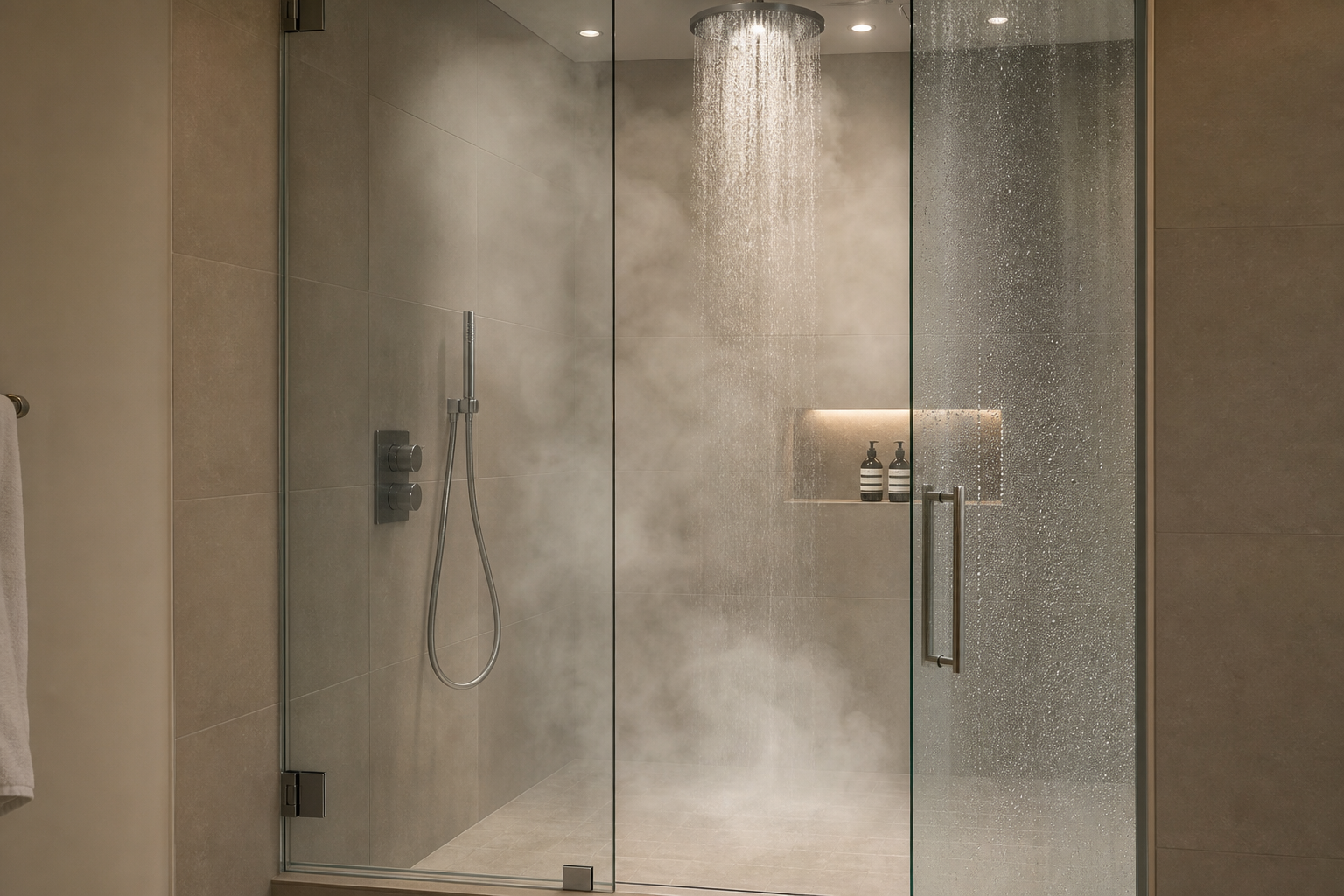
Glass shower enclosures run $1,500 to $4,000 or more depending on configuration, but the fabrication lead time (measured after tile is complete) affects project timeline more than it affects labor percentage. The glass installer is on site for half a day. The tile setter was there for five.
Material upgrades change the invoice. Labor complexity changes the project. Homeowners who want to reduce cost without sacrificing quality should look at labor drivers first: plumbing location, tile pattern, shower configuration, and substrate condition.
How Scope Decisions Map to Labor Cost
The same finish quality can produce very different labor totals depending on layout and complexity decisions made before the estimate.
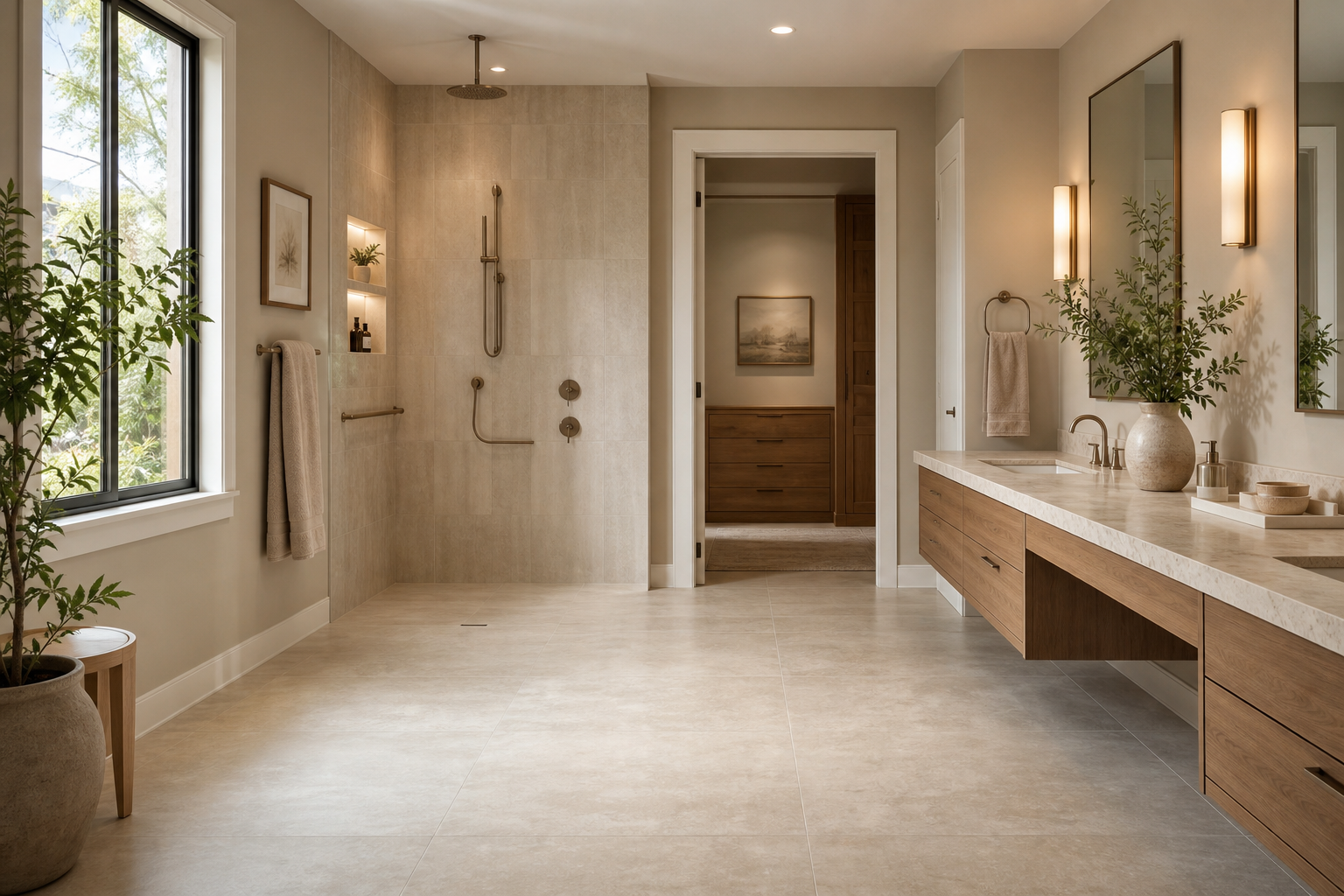
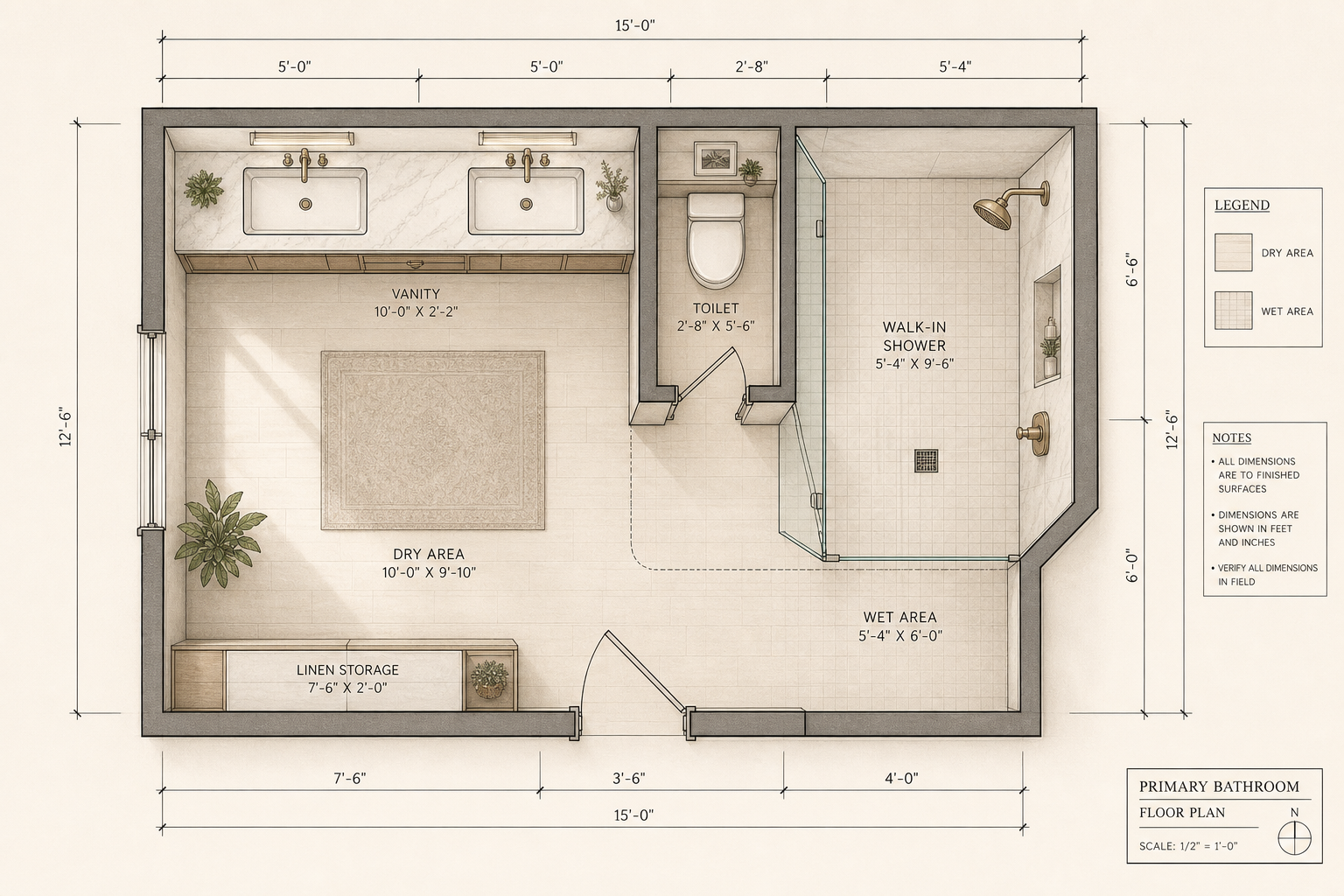
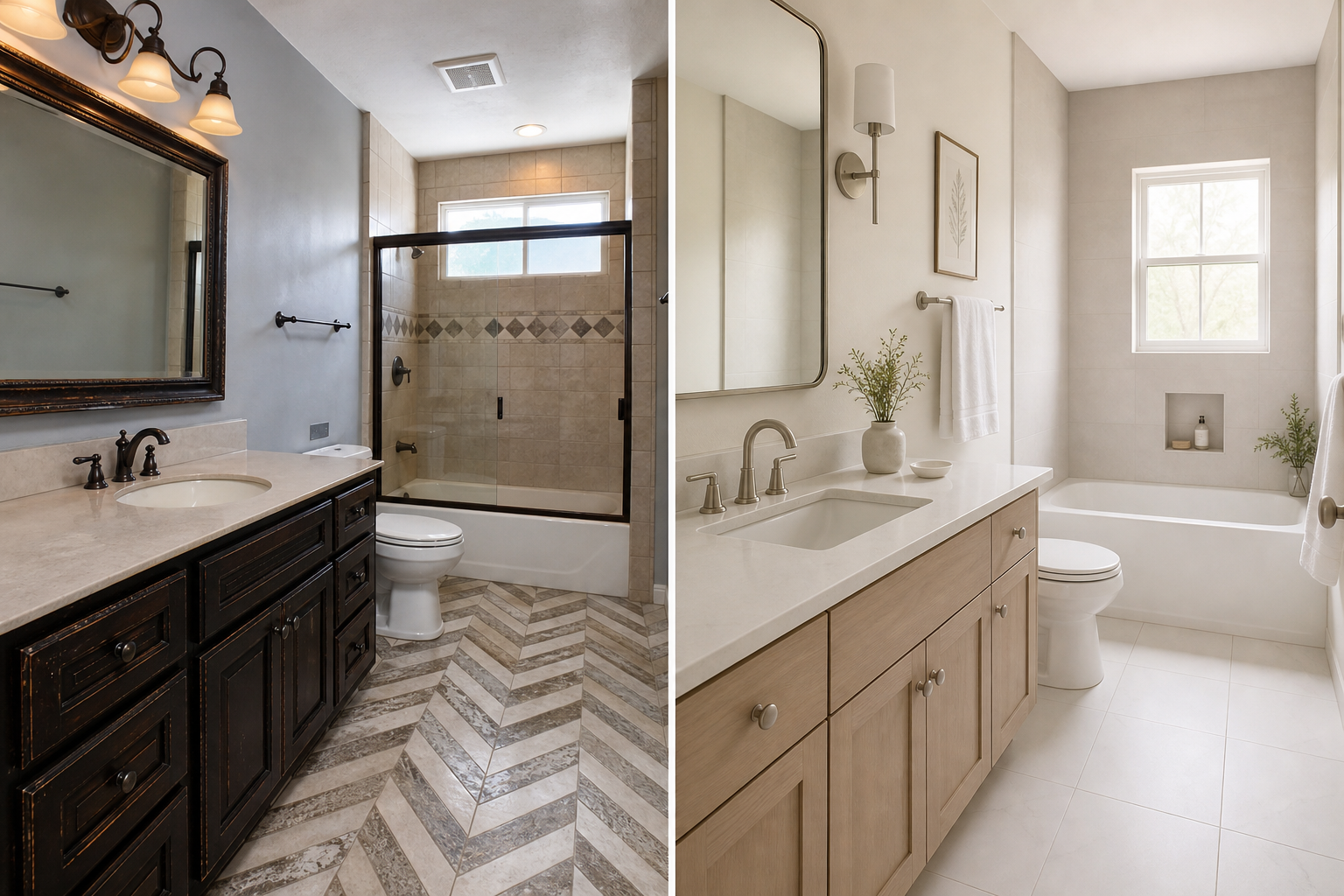
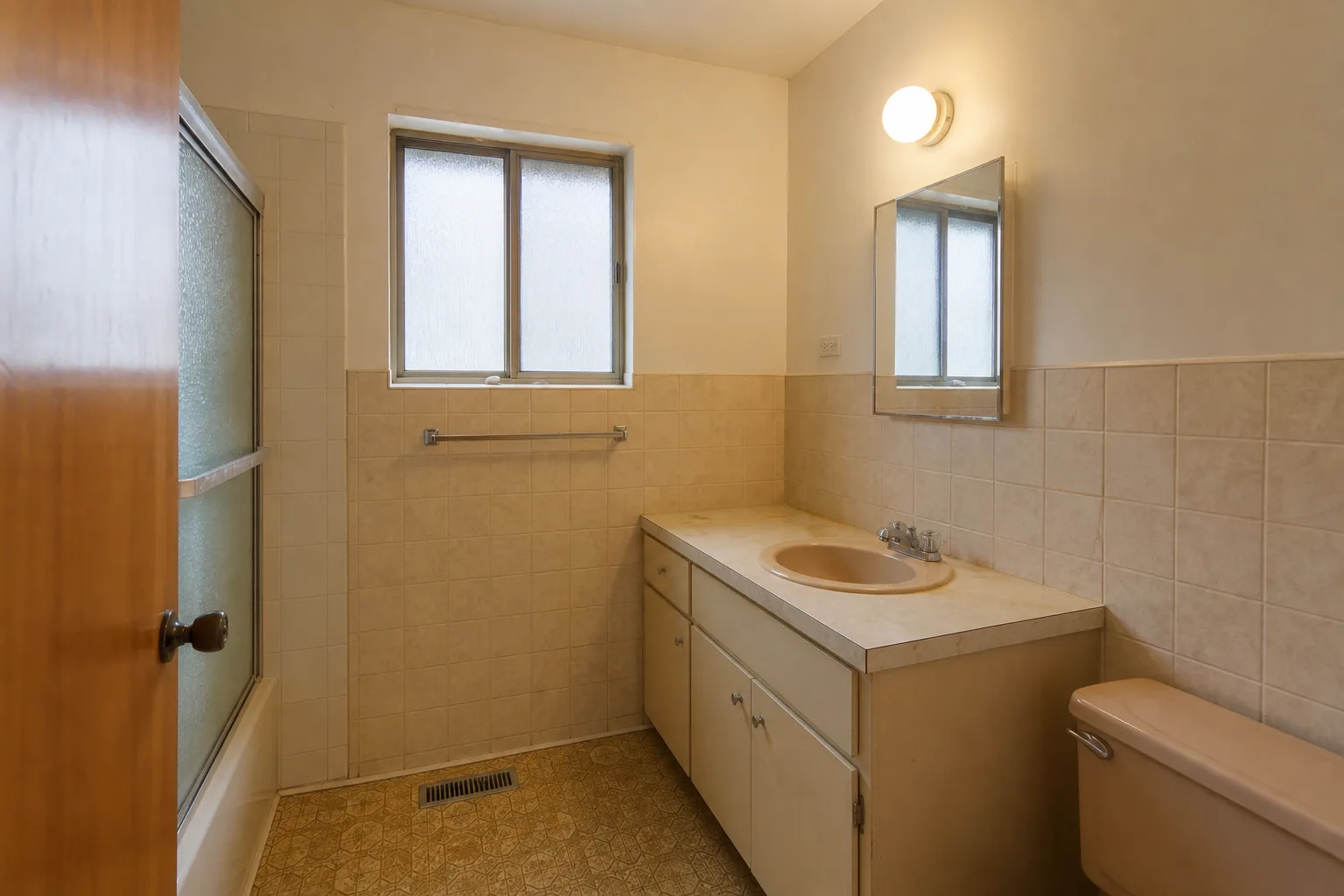
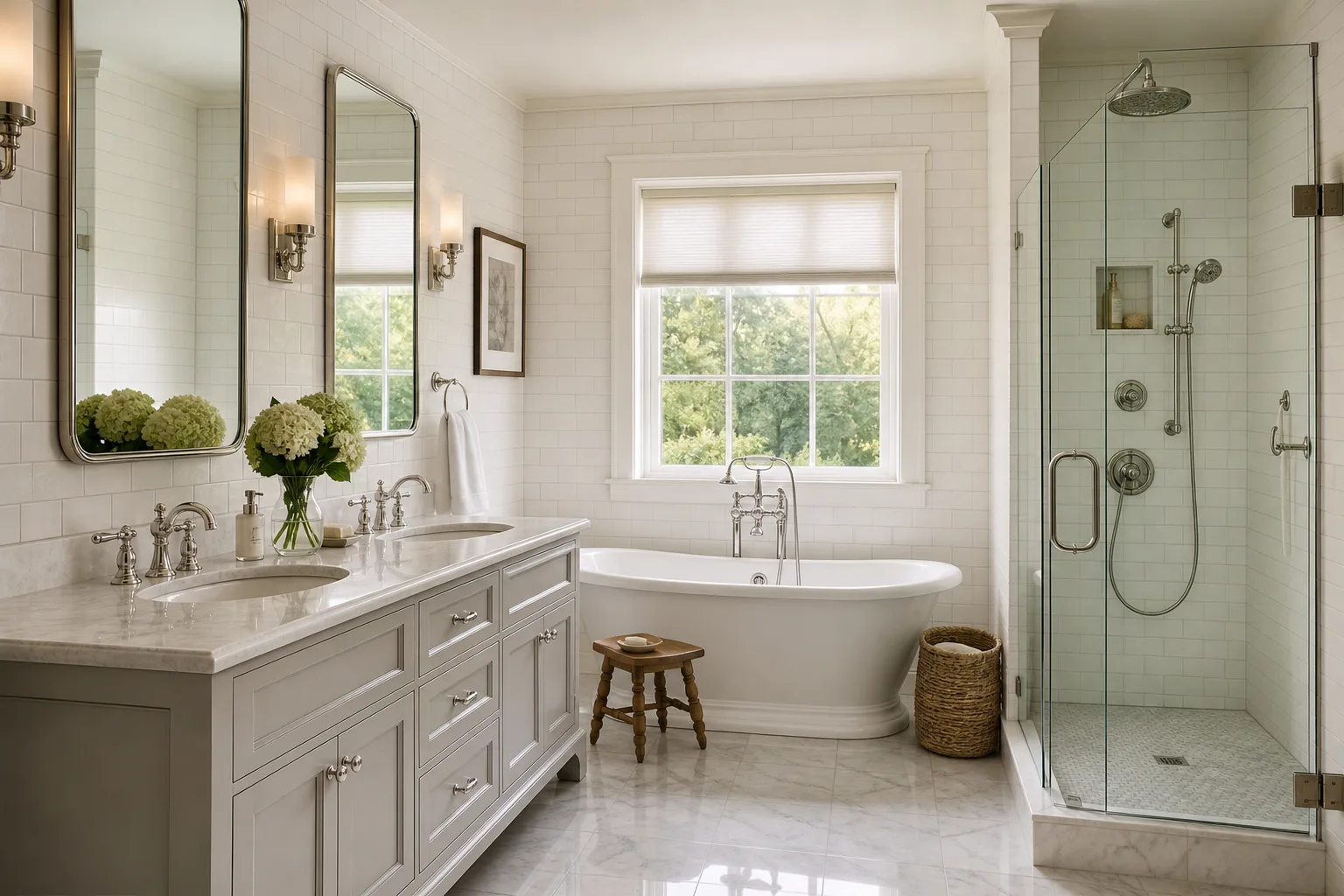
Keeping existing fixture locations versus moving them is the largest single labor lever. A full gut remodel with new tile, new waterproofing, new vanity, and new fixtures in the same locations as the original room avoids the most expensive plumbing hours. The room can look entirely different without rerouting drains.
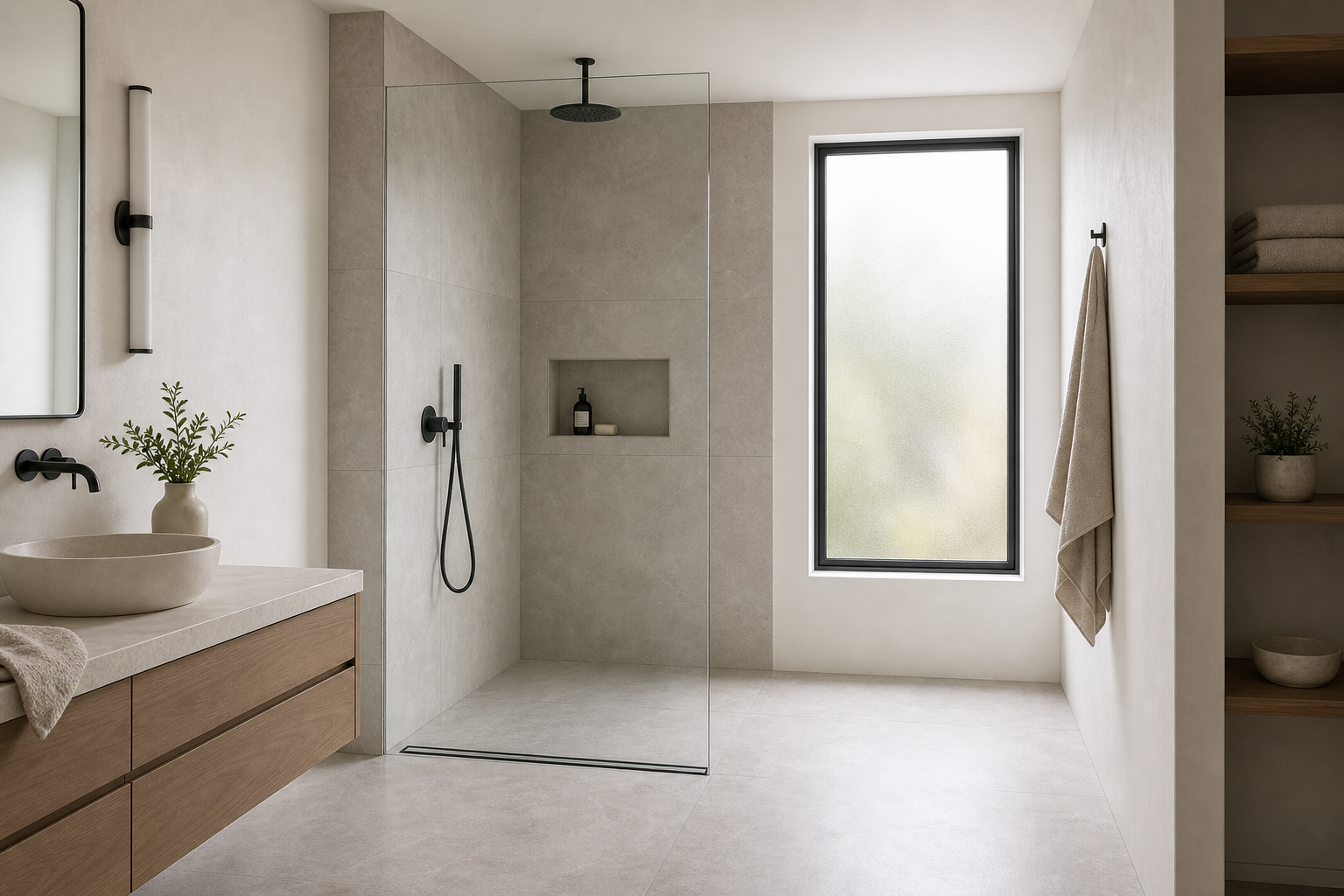
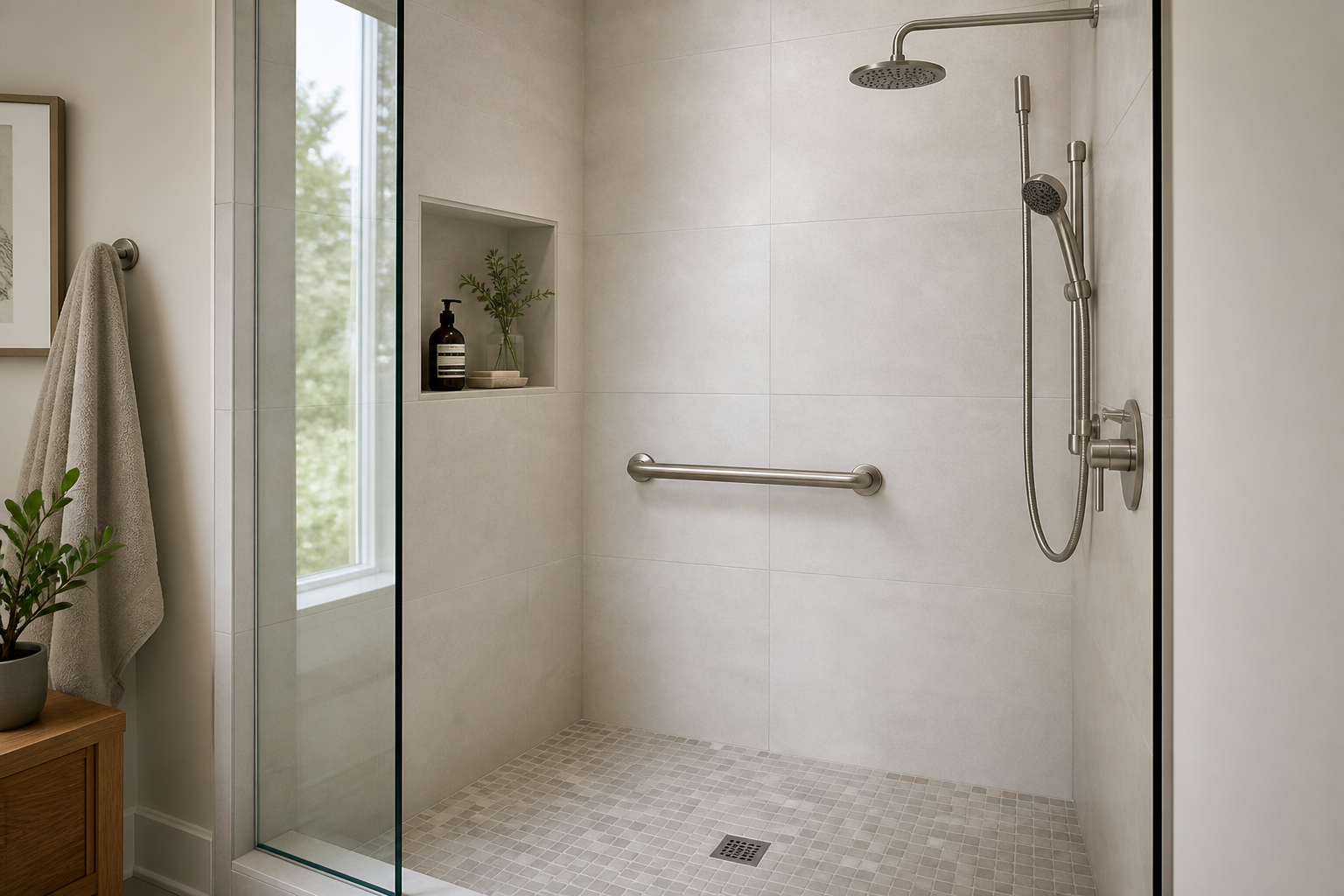
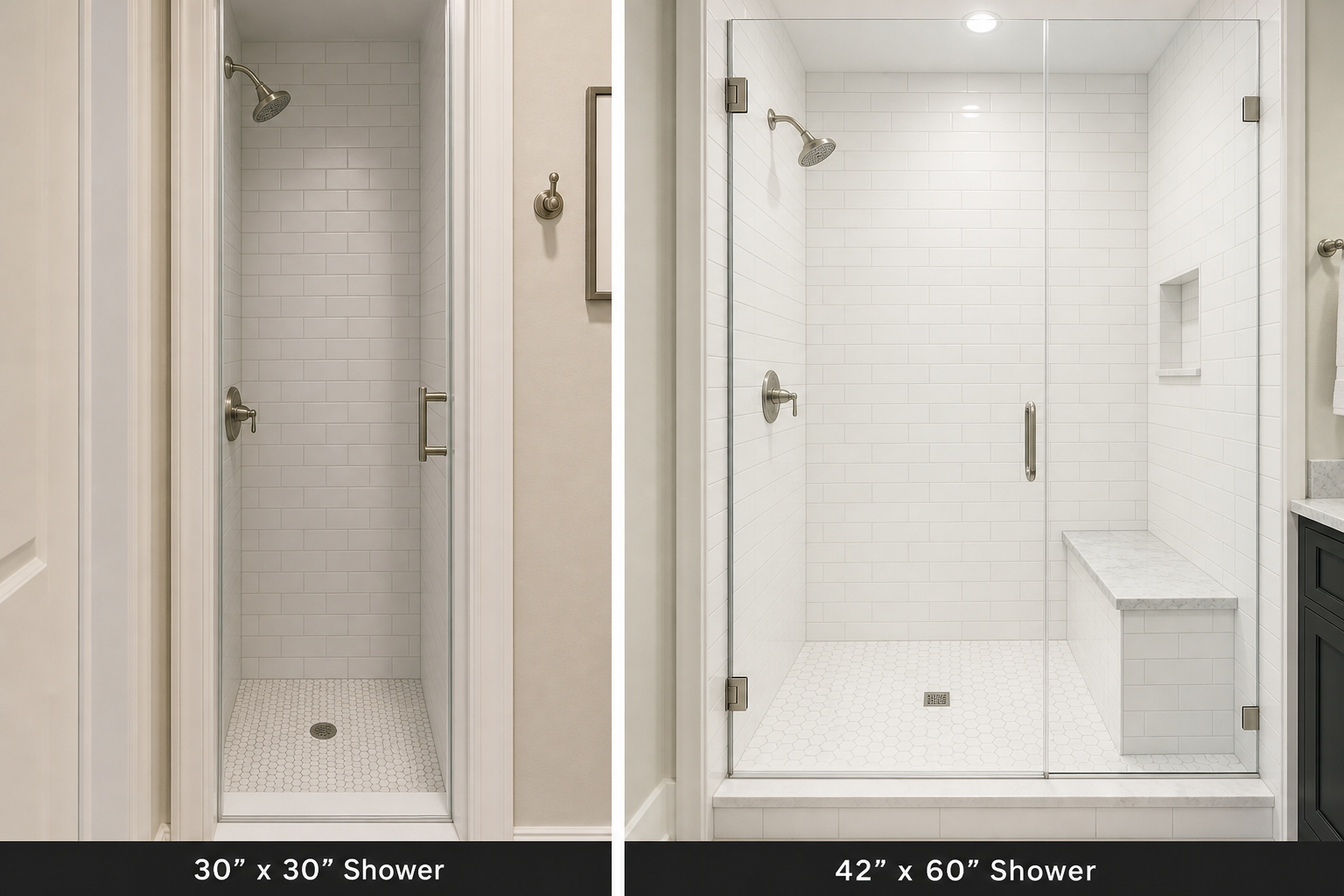
Choosing shower configuration affects both plumbing and tile labor. A prefabricated shower base with standard dimensions reduces both trades' time compared to a curbless custom pan with linear drain, which requires subfloor modification, precise slope work, and extended waterproofing.
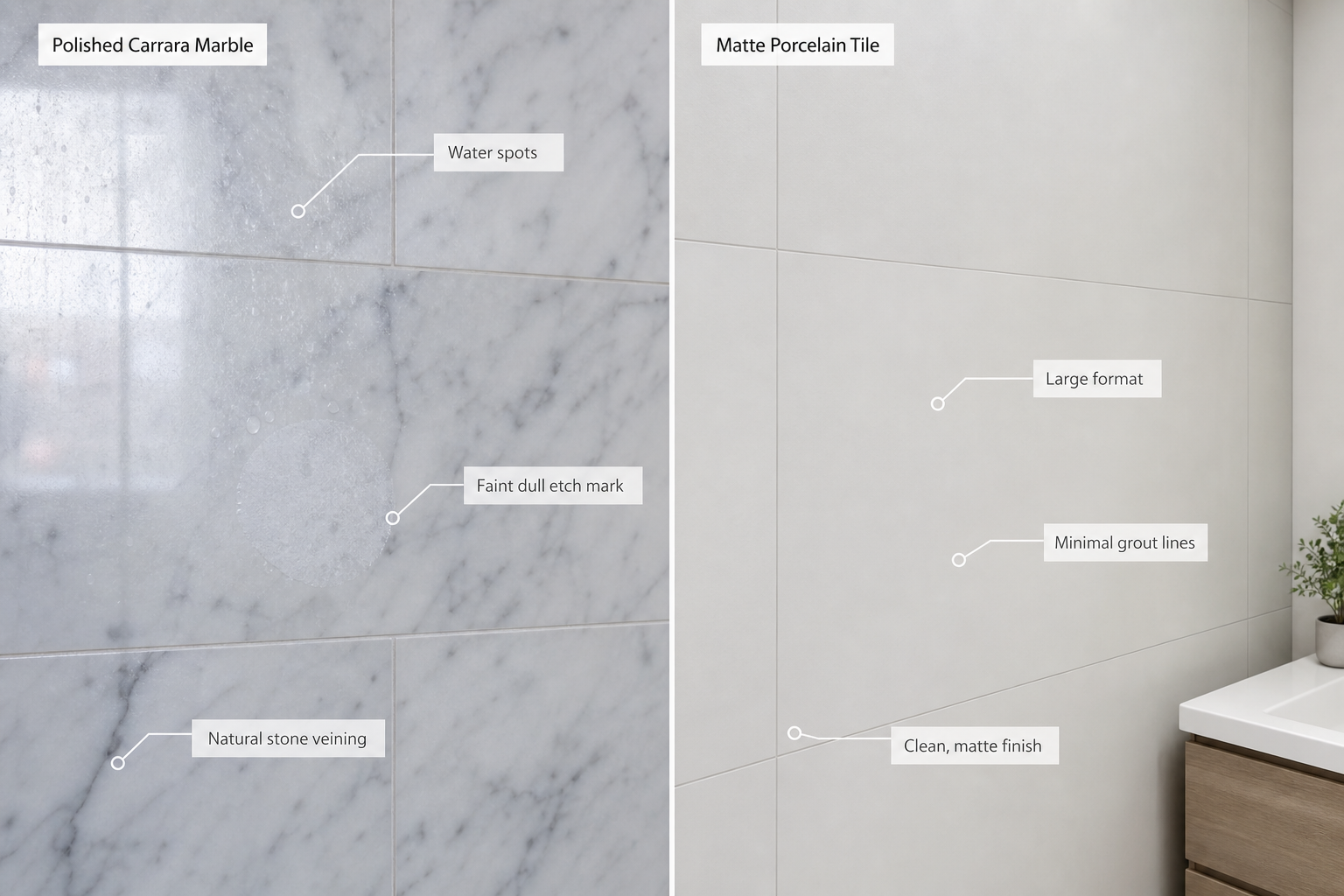
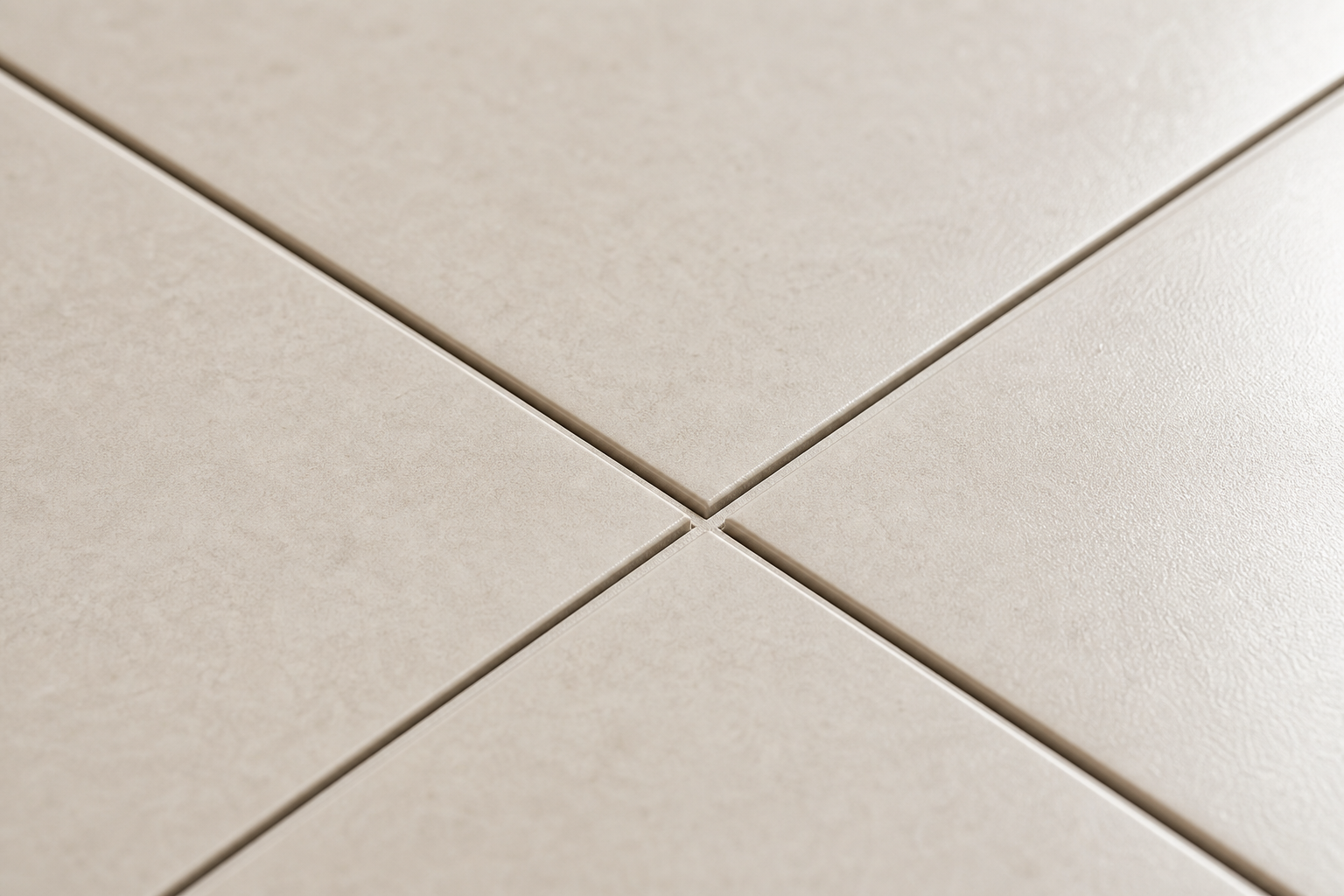
Selecting tile format and pattern affects tile labor directly. Large-format rectified tile on a properly prepared flat substrate installs efficiently. Mosaic floors, diagonal layouts, and book-matched feature walls install slowly. The tile material and the tile labor should be evaluated together, not separately.
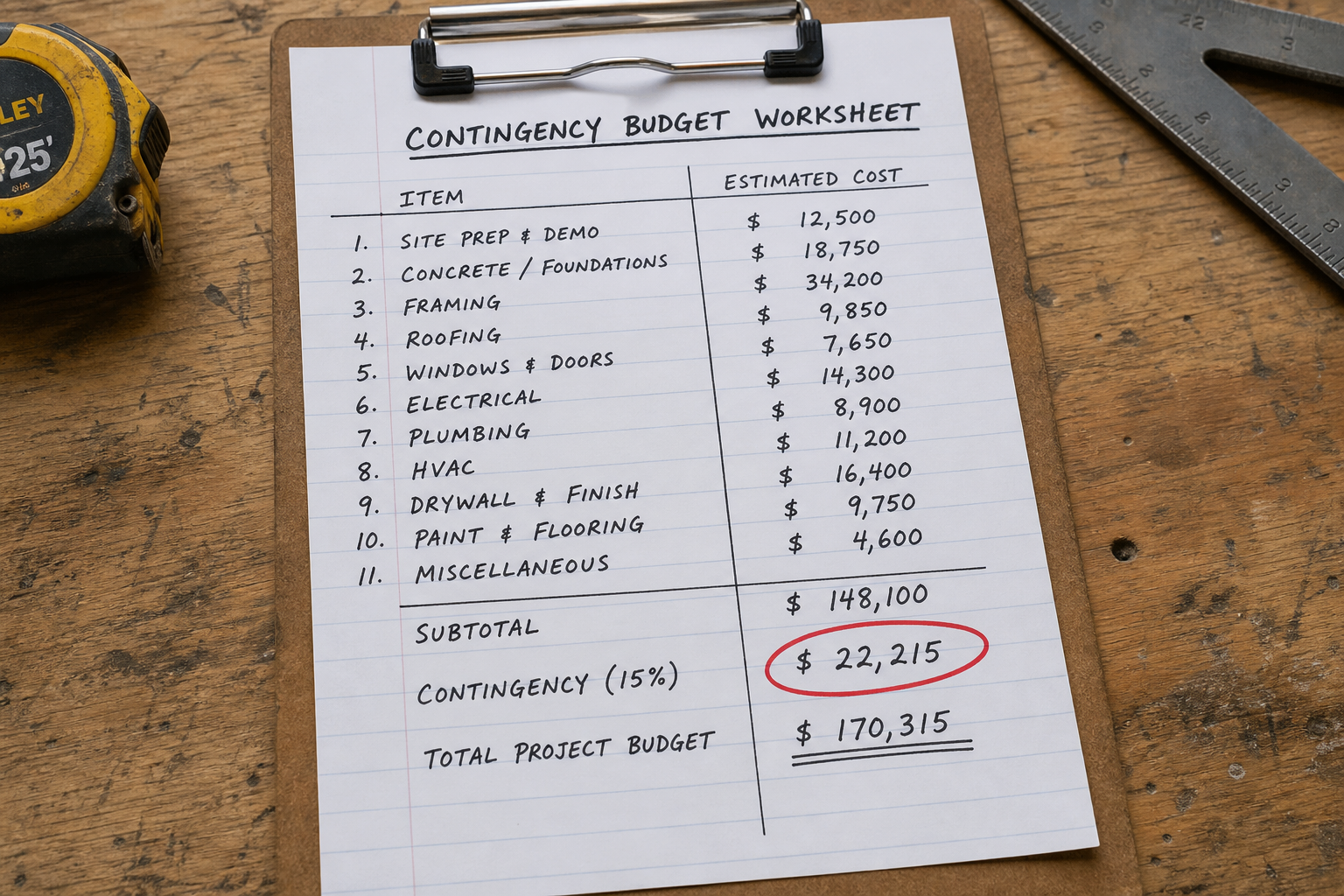
Accounting for existing conditions affects labor unpredictably. A home built before 1980 with original plumbing and no prior gut remodel has higher probability of hidden labor at demo. Budget contingency (15 to 20 percent) exists because this labor cannot be quoted precisely before walls open.
Reading an Estimate Through the Labor Lens
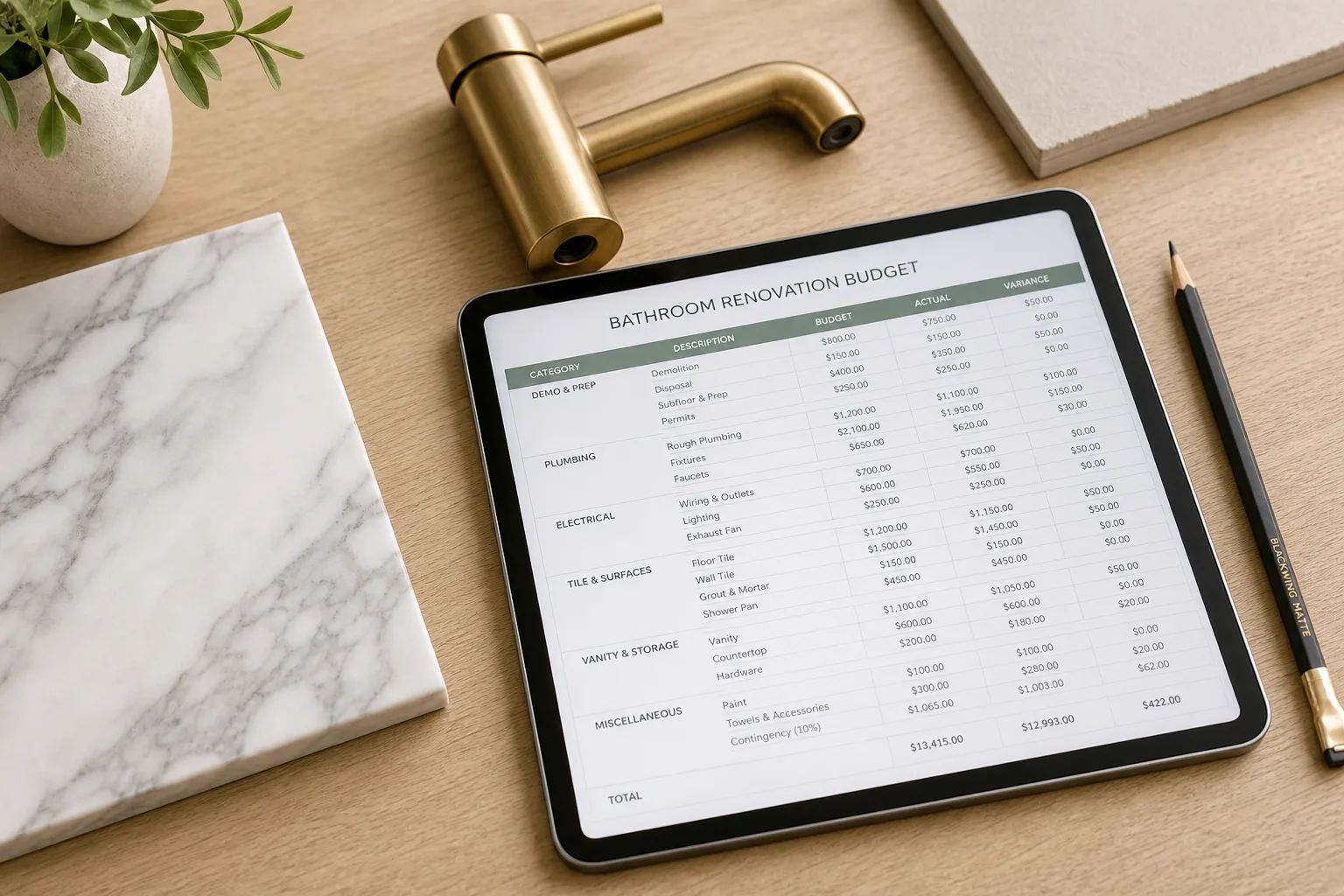
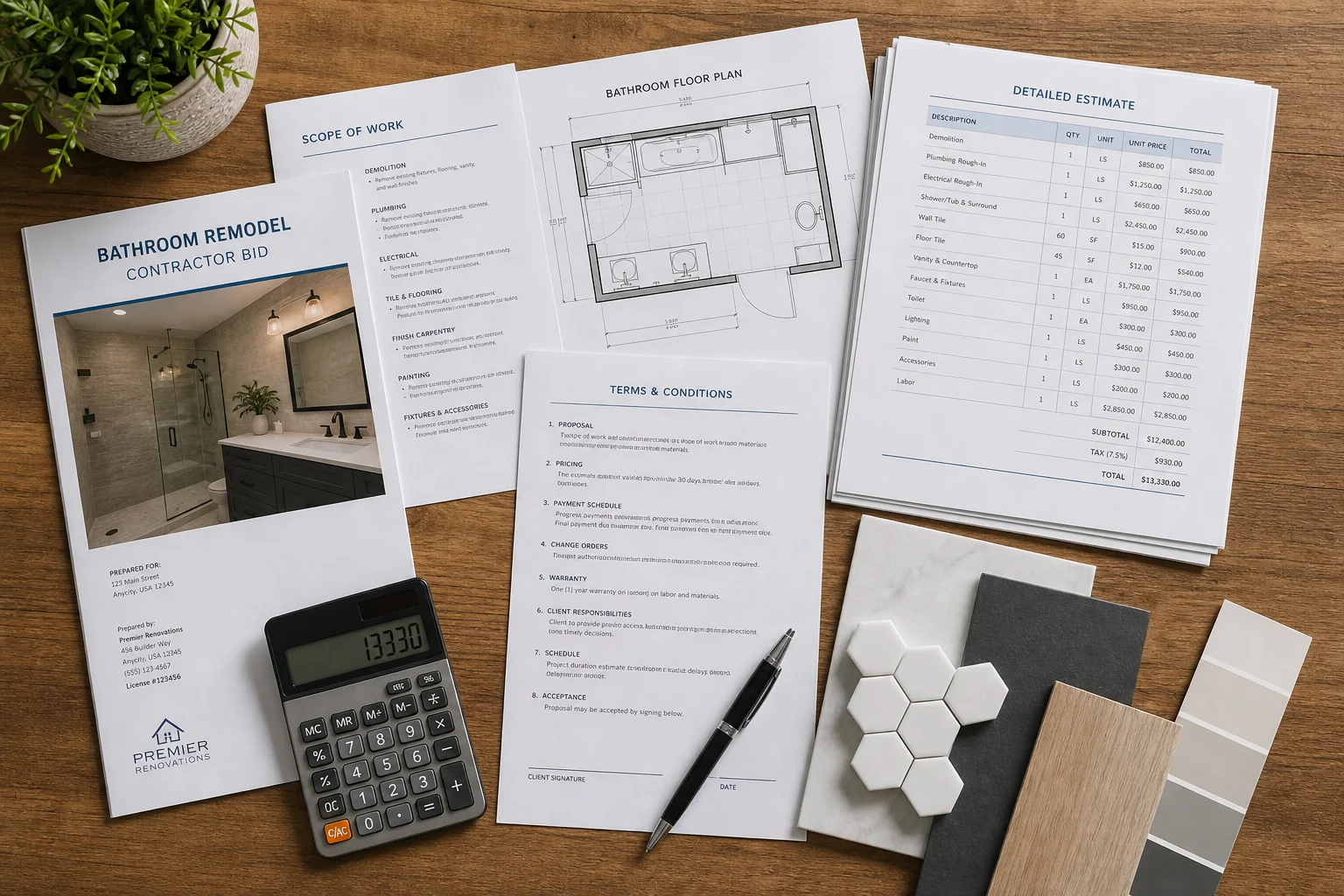
When comparing bids, separate labor from materials before comparing totals. Two bids at $65,000 with different labor-to-material ratios are pricing different scopes even if the finish selections look similar.
Ask each contractor to break out labor by trade: demo, plumbing, electrical, waterproofing, tile, finish. Not every firm will provide this breakdown willingly. Those who do are showing how they think about the project. Those who refuse are asking you to compare a total number without understanding what it contains.
Compare tile labor specifically. If one bid shows $8,000 for tile installation and another shows $14,000, the difference is not necessarily markup. It may reflect different assumptions about substrate prep, pattern complexity, or shower scope. Ask what each number includes.
Compare plumbing labor against fixture locations. If the layout drawing shows moved fixtures but the plumbing line item is low, something is missing from the scope.
When reviewing a scope, we break labor out by trade before showing the total. Clients who understand where the money goes make better decisions about where to adjust scope. A household that wants to reduce cost without touching finish quality often finds the answer in plumbing location or tile complexity, not in cheaper faucets.