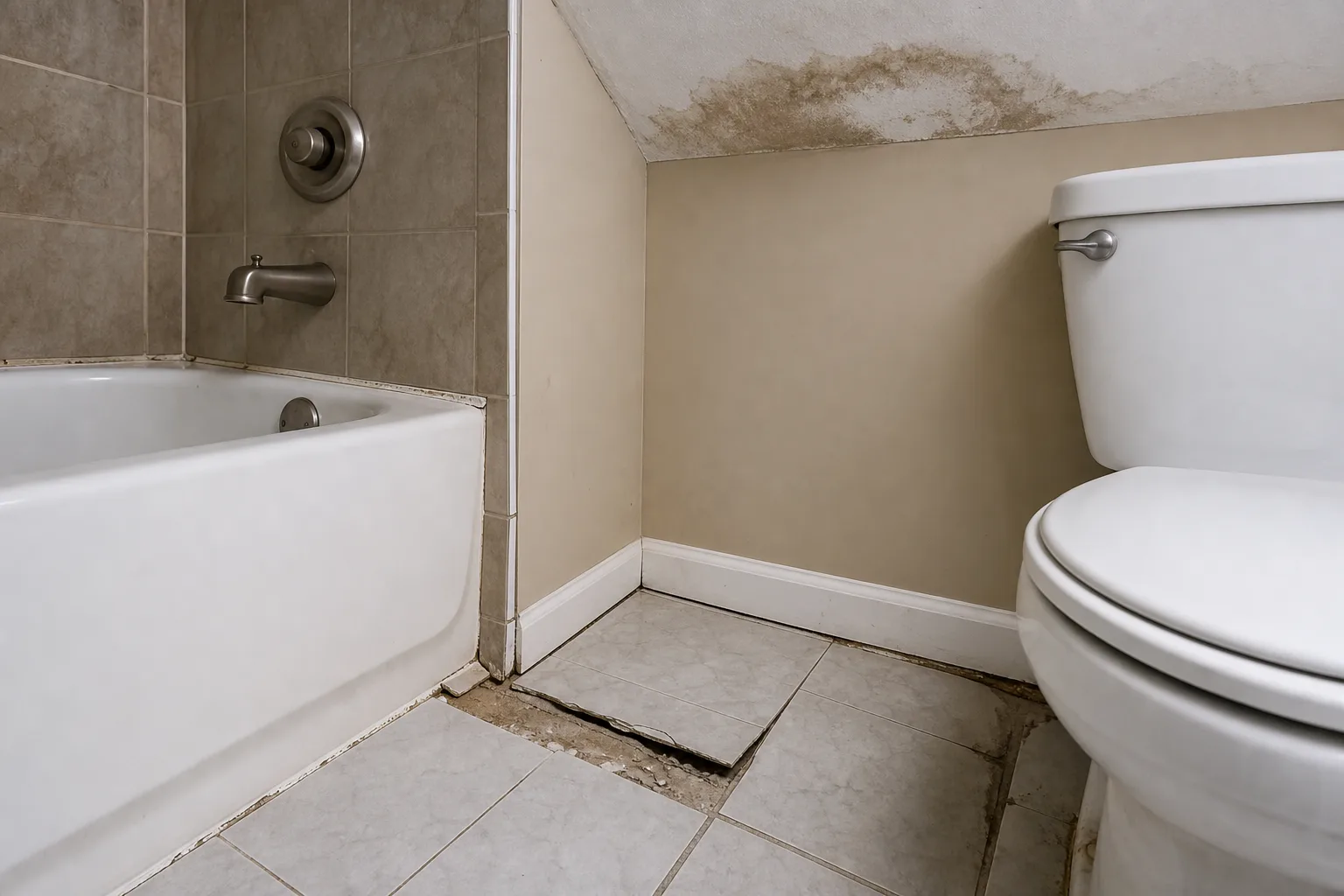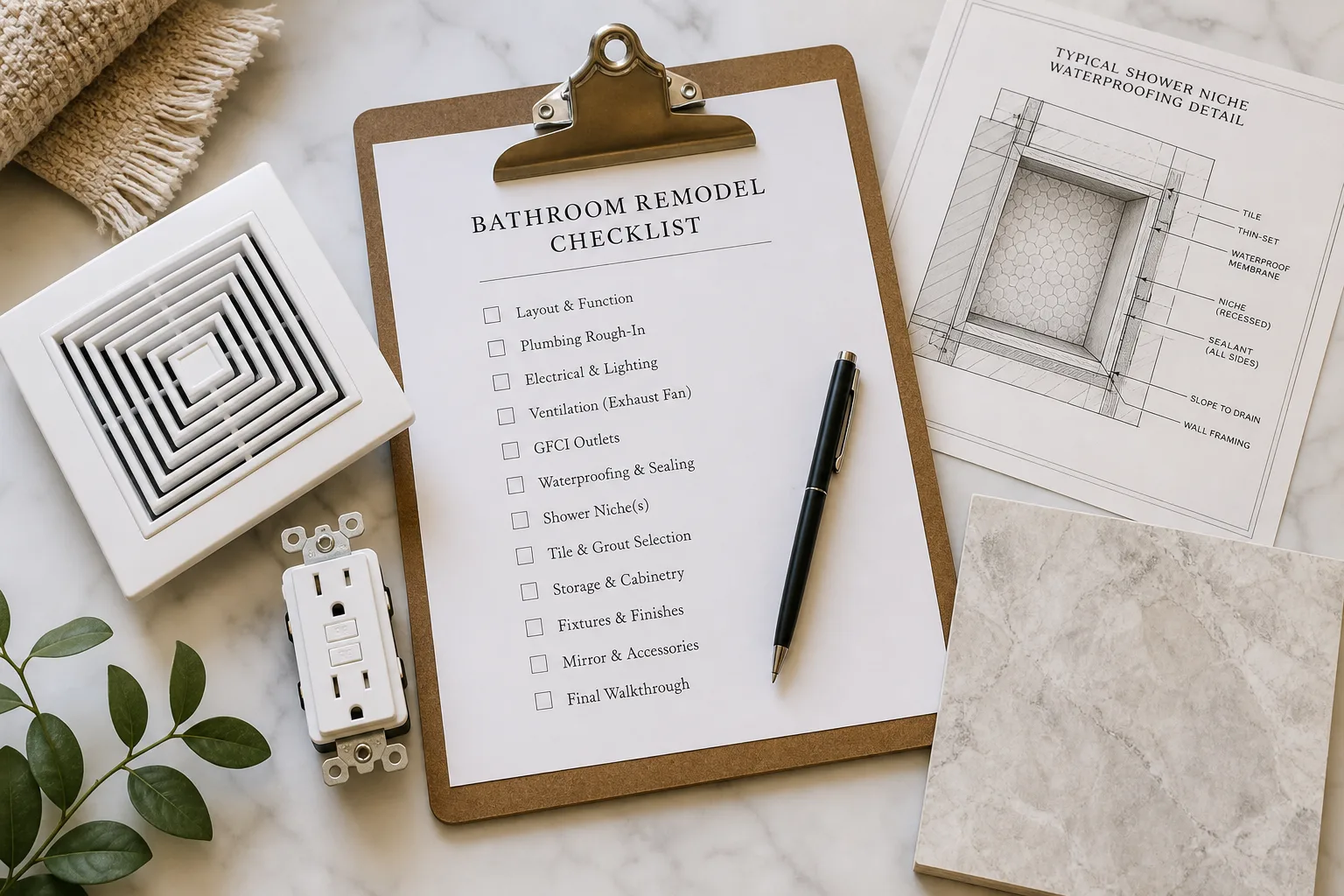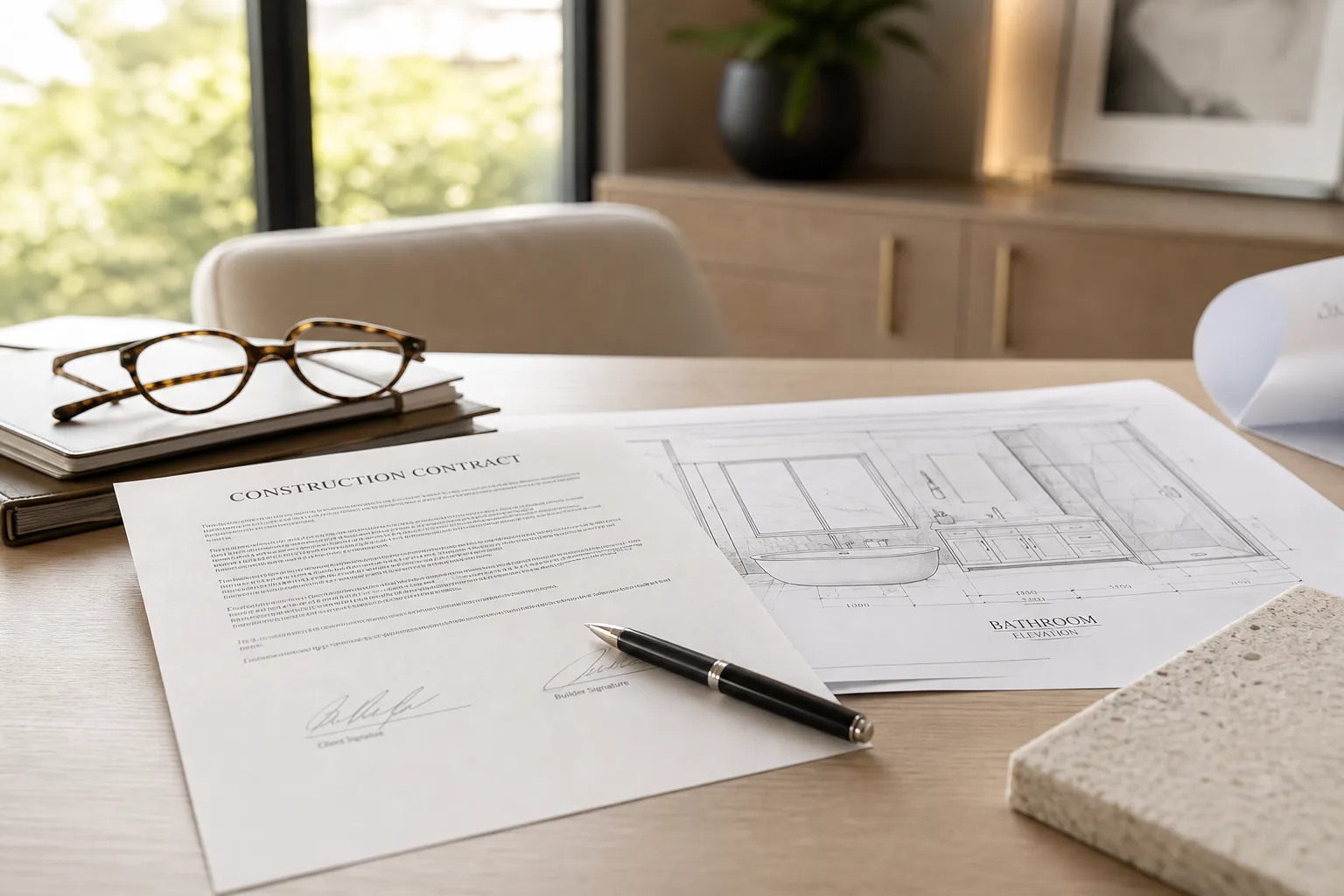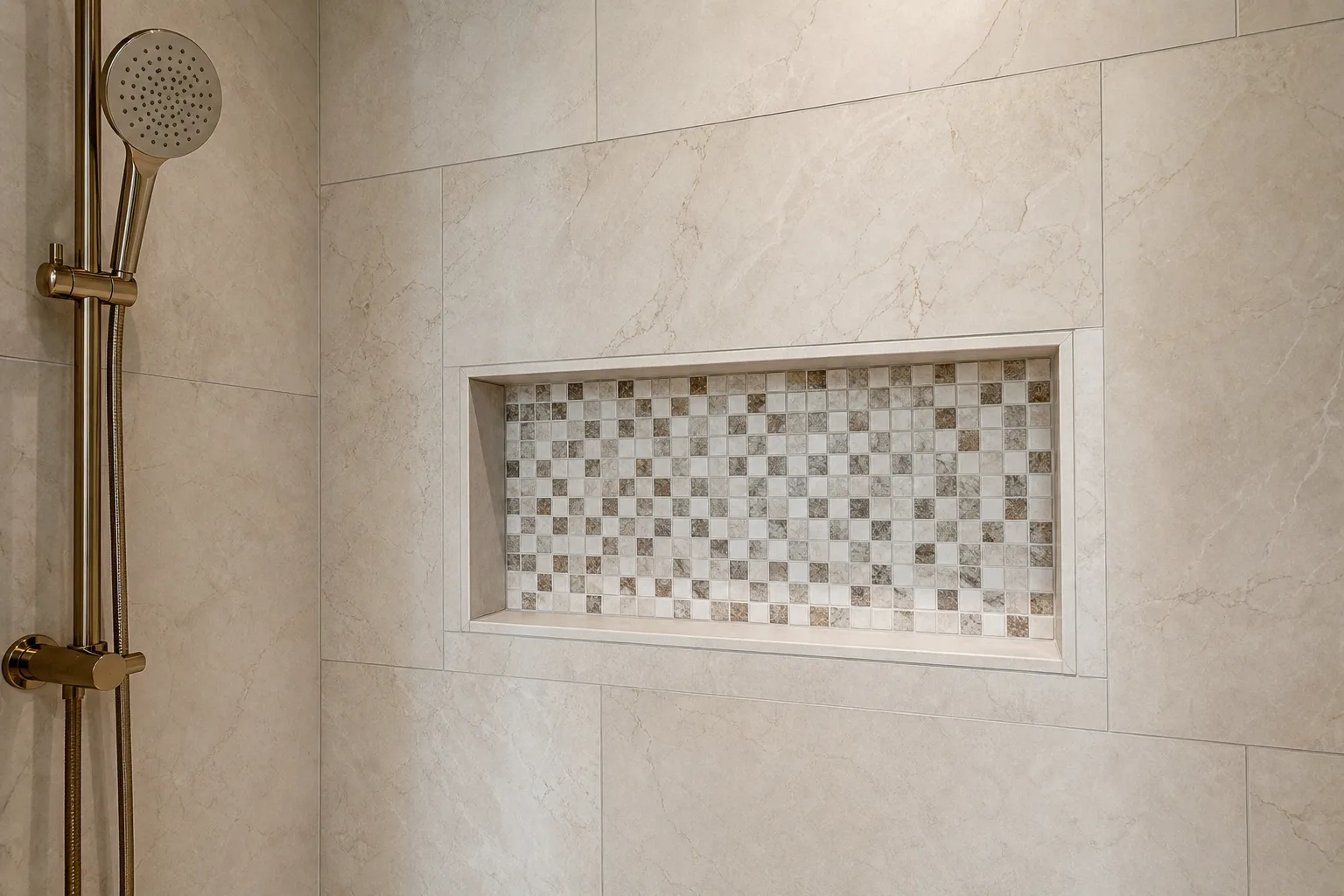
The standard contractor interview questions (how much, how long, can I see references) are the ones every contractor rehearses. The questions that reveal whether someone can actually build the room you are imagining are about systems, failure modes, and how they handle what they cannot control.
Every homeowner knows to ask about price, timeline, and references. Every contractor knows those questions are coming and has polished answers ready. Price comes with a number. Timeline comes with a confident window. References come with three names who will say the project went fine. None of those answers tell you whether the waterproofing will hold, whether the vent exhausts outside, or whether the contractor has a process for the subfloor that turns out to be rotten at demo.
The questions that matter are the ones contractors do not expect homeowners to ask. They require specific knowledge to answer. A contractor who cannot answer them clearly is telling you something, whether or not they intend to.
Why the Standard Questions Fail
The standard interview script produces standard information. It confirms that the contractor exists, carries insurance, and has completed projects. It does not confirm that they understand how water moves through a shower assembly, how to coordinate five trades in a wet environment, or what they do when an inspection fails.
NARI's recommended questions (how long in business, who supervises the project, are you licensed and insured, can you provide references) are necessary but not sufficient. They filter out contractors who are not playing by minimum rules. They do not filter out contractors who meet minimum rules but lack bathroom-specific competence.
The gap between "registered and insured" and "can build a shower that performs for fifteen years" is where most hiring mistakes happen. Closing that gap requires questions that test technical judgment, not administrative compliance.
Questions About Systems
A bathroom is a wet mechanical system disguised as a finished room. The questions that reveal competence start there.
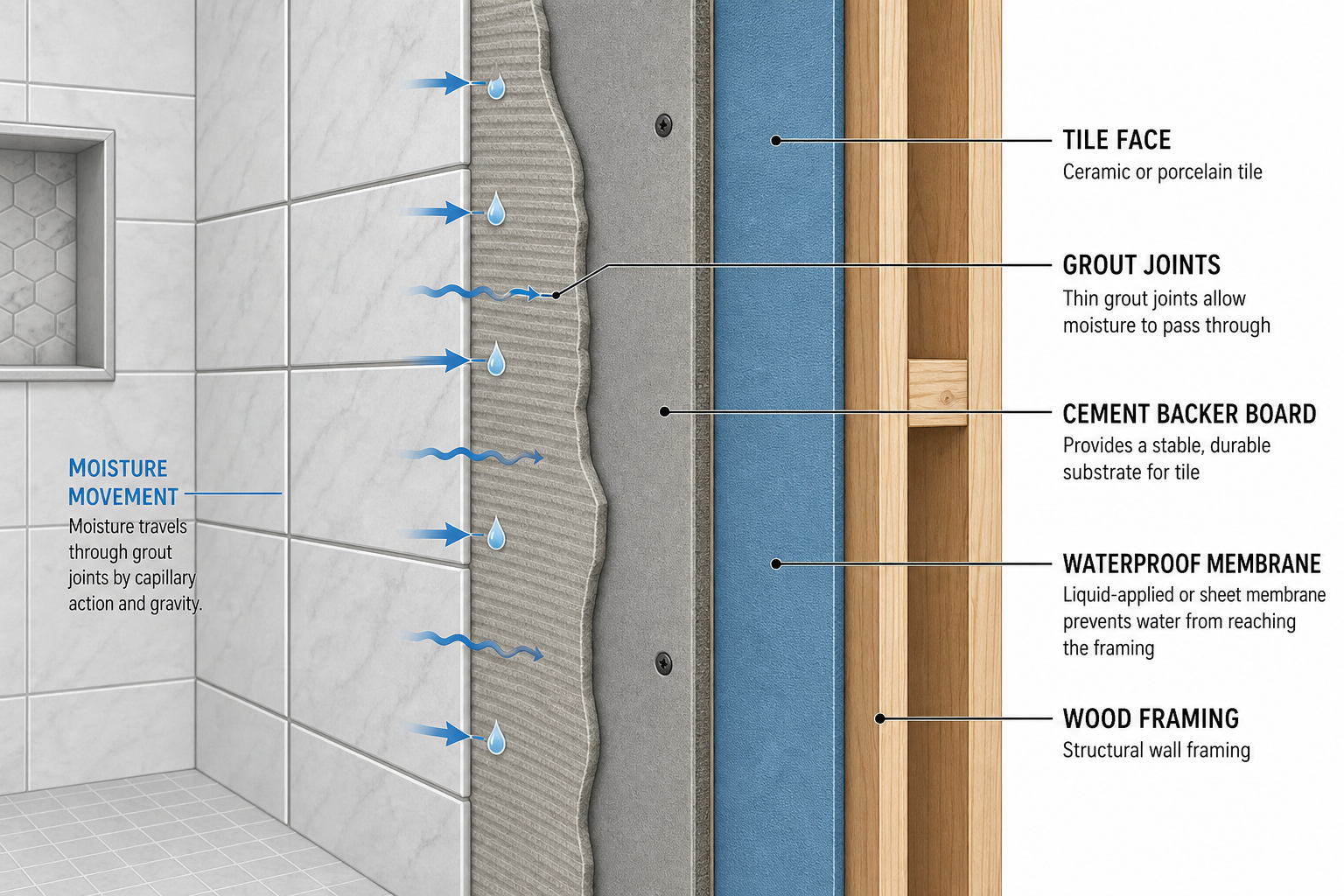
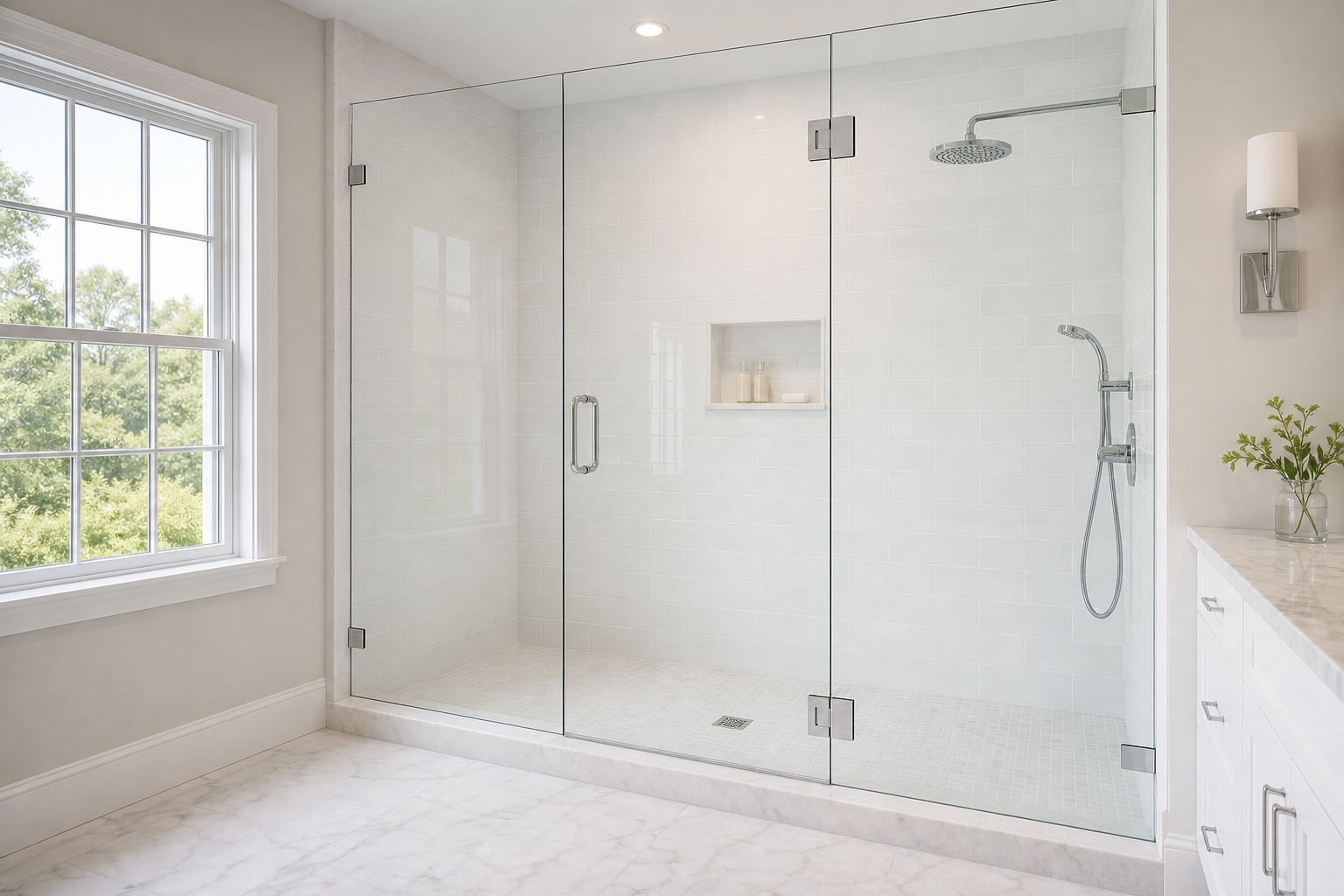
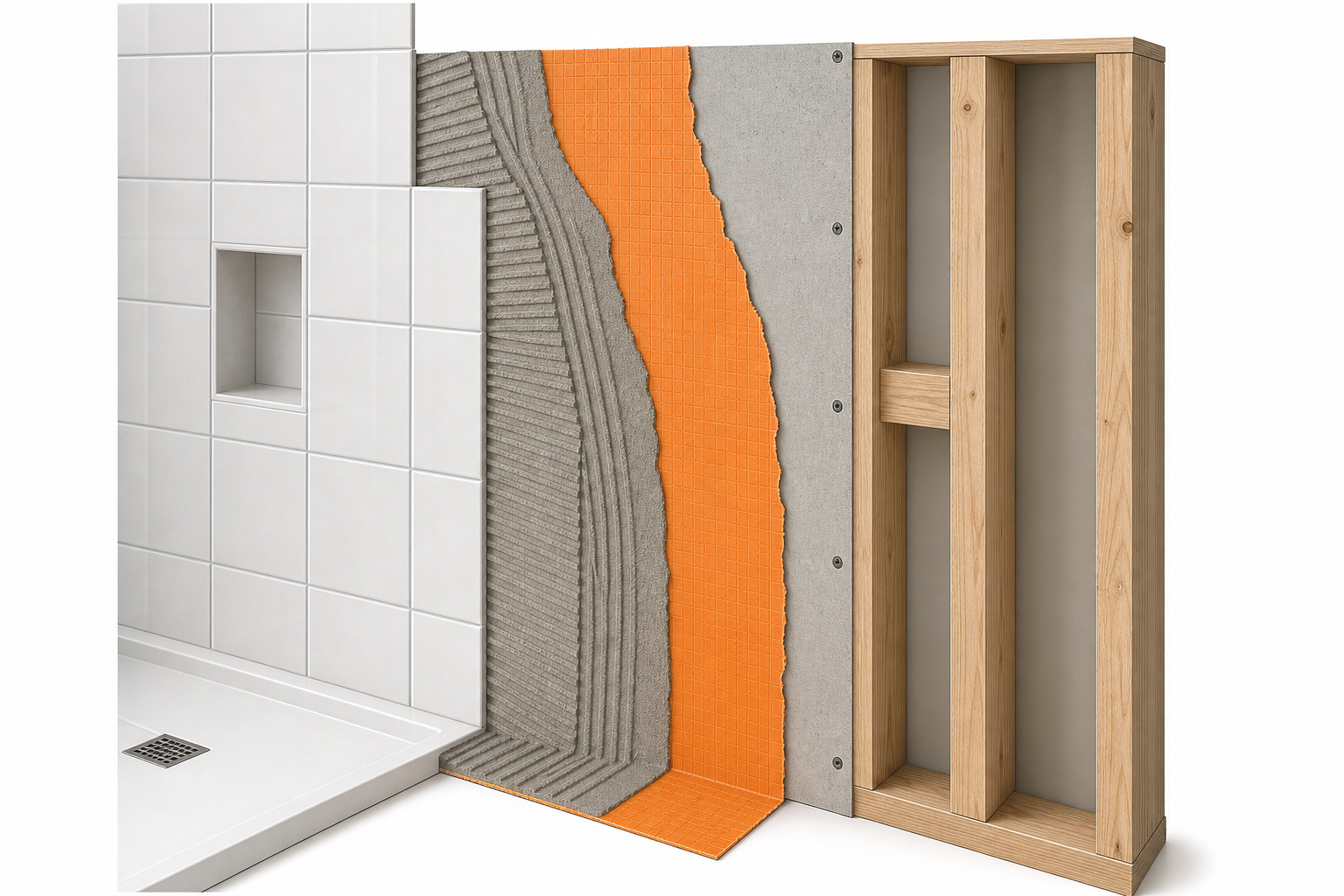
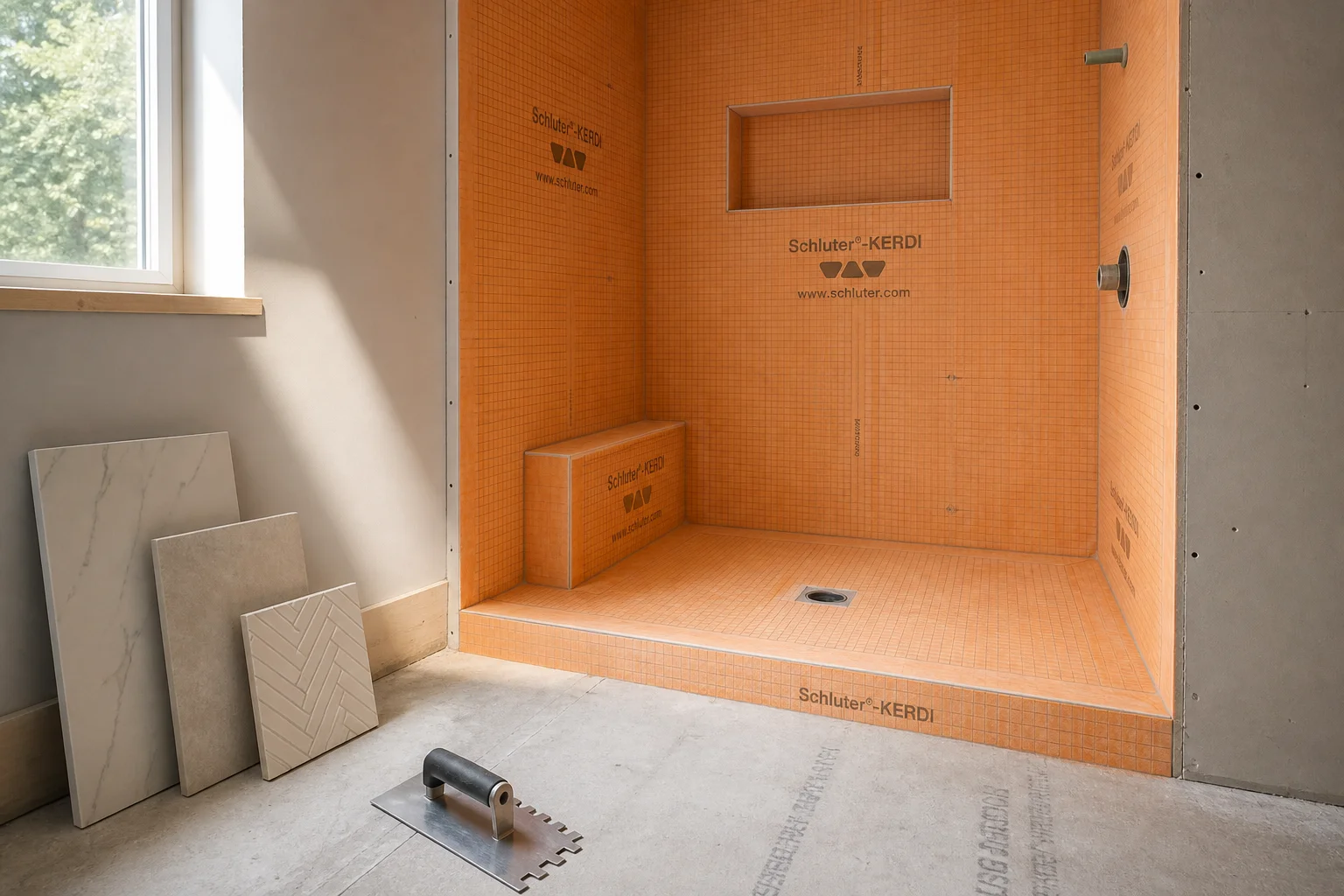
"Walk me through your shower waterproofing system, step by step."
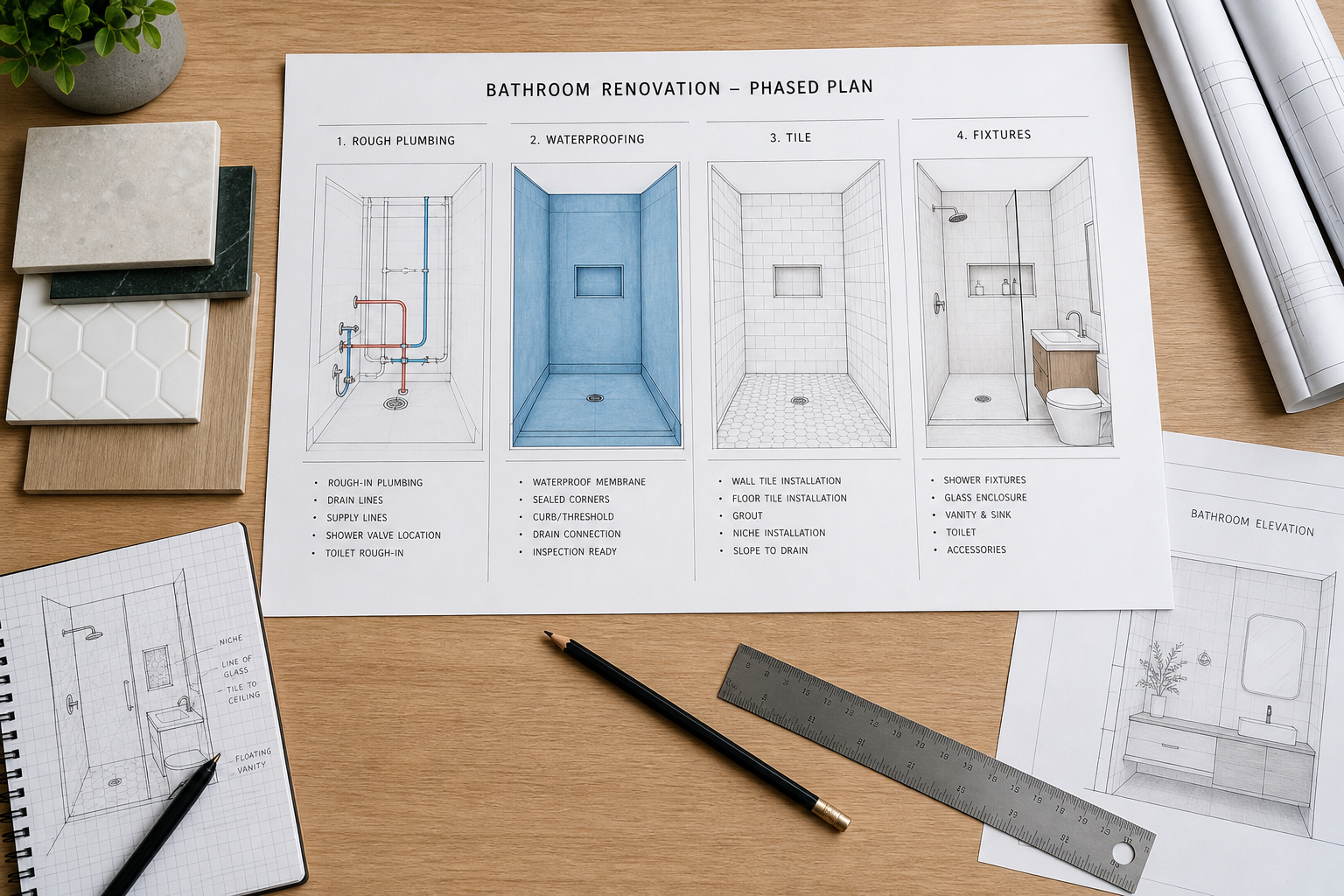
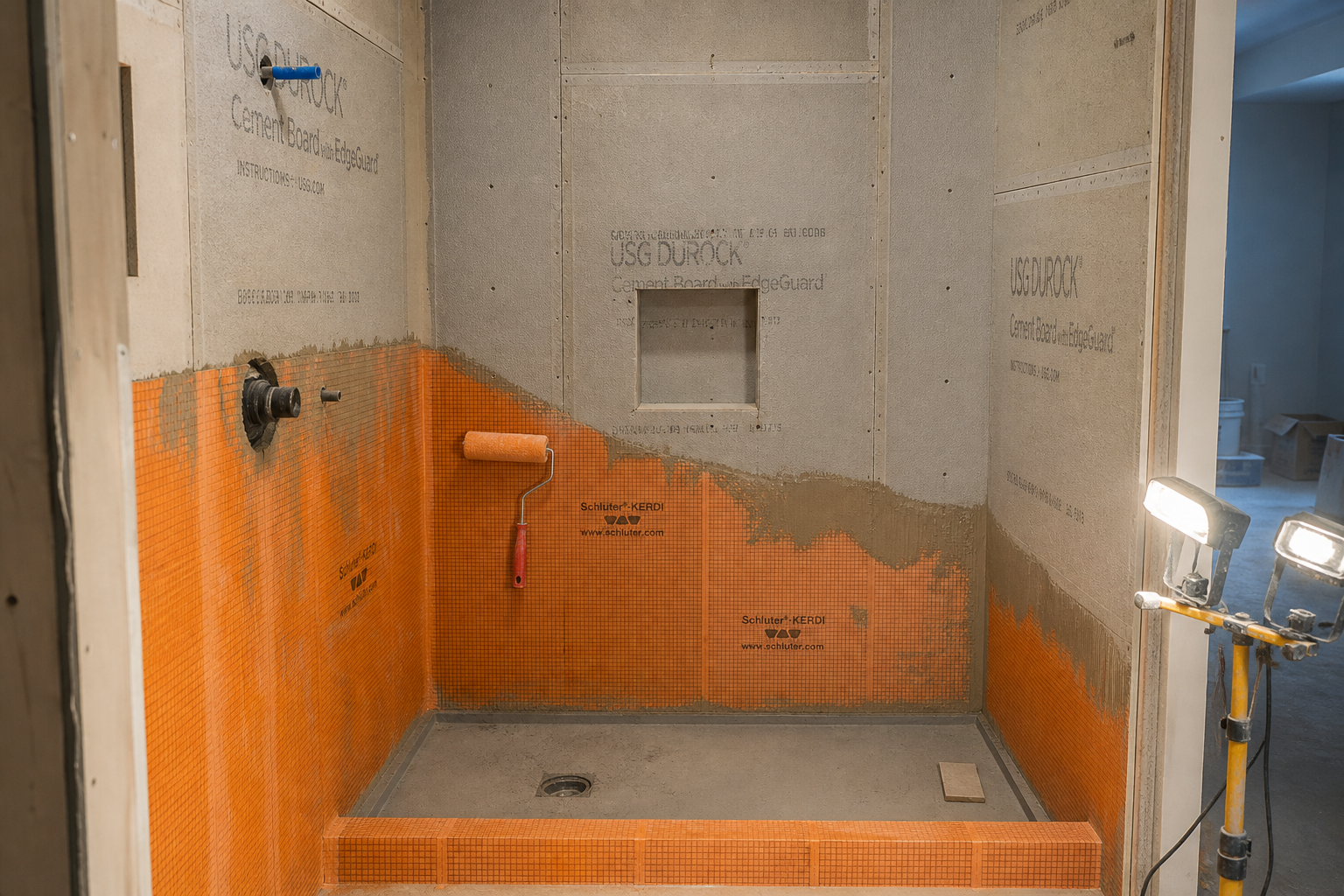
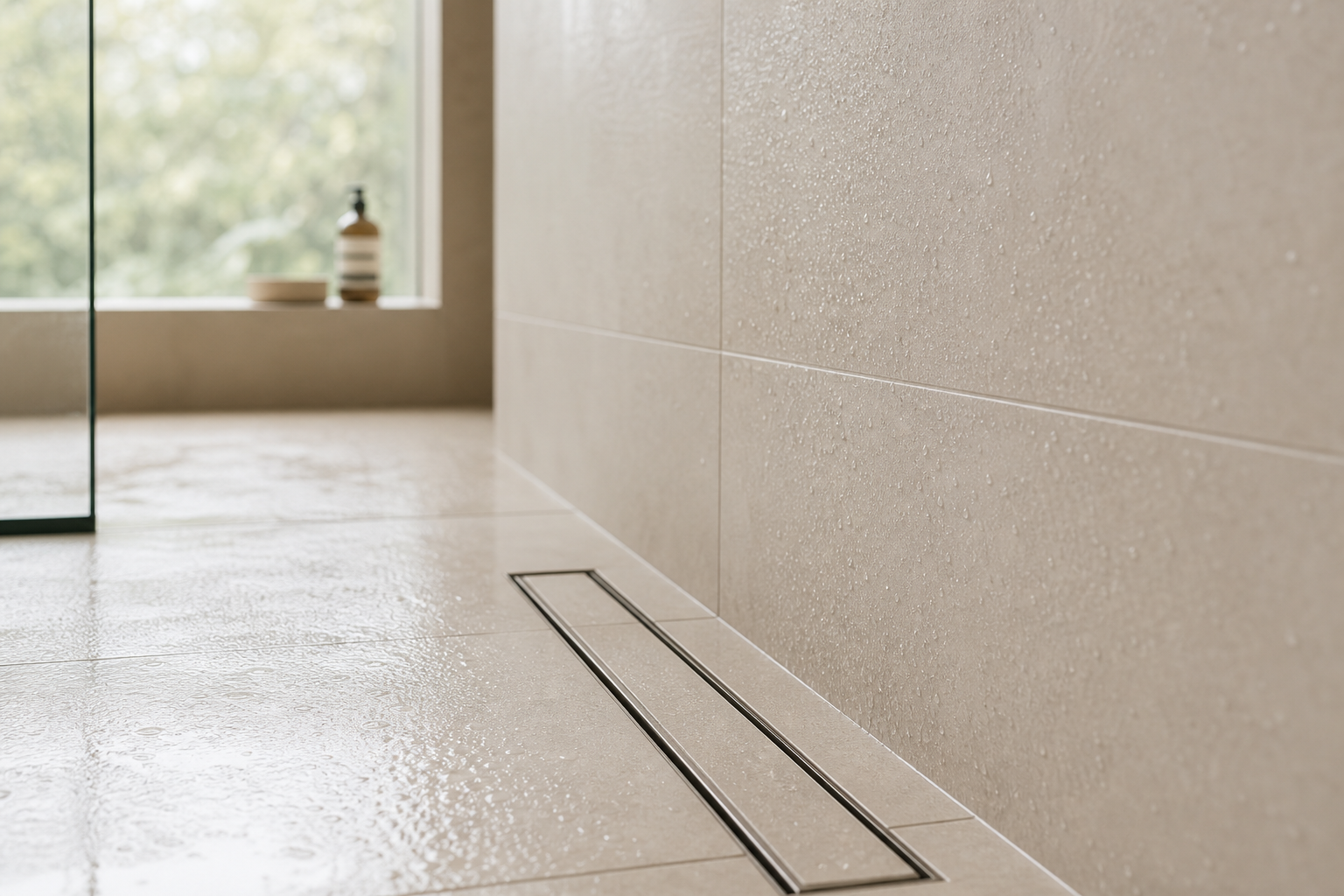
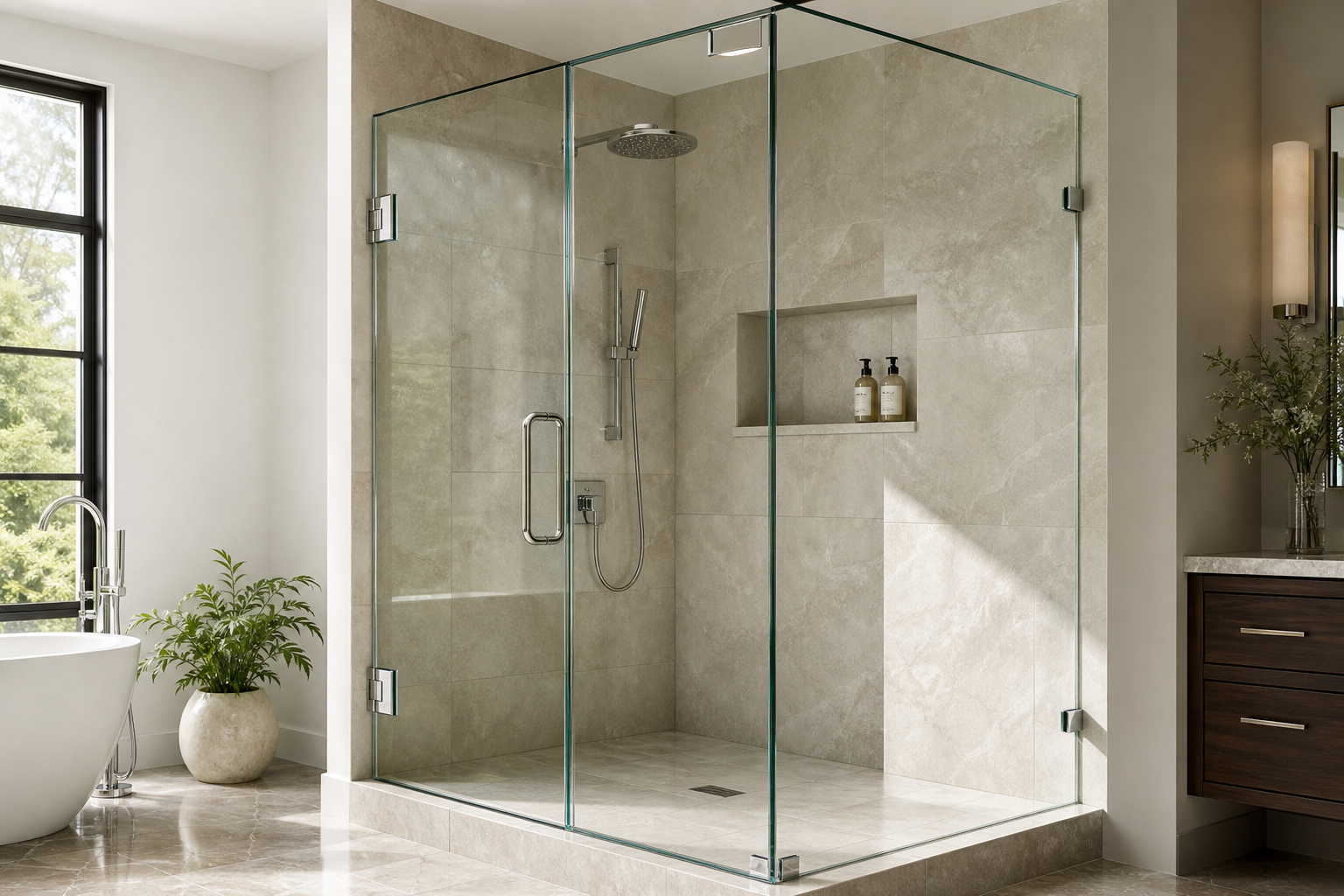
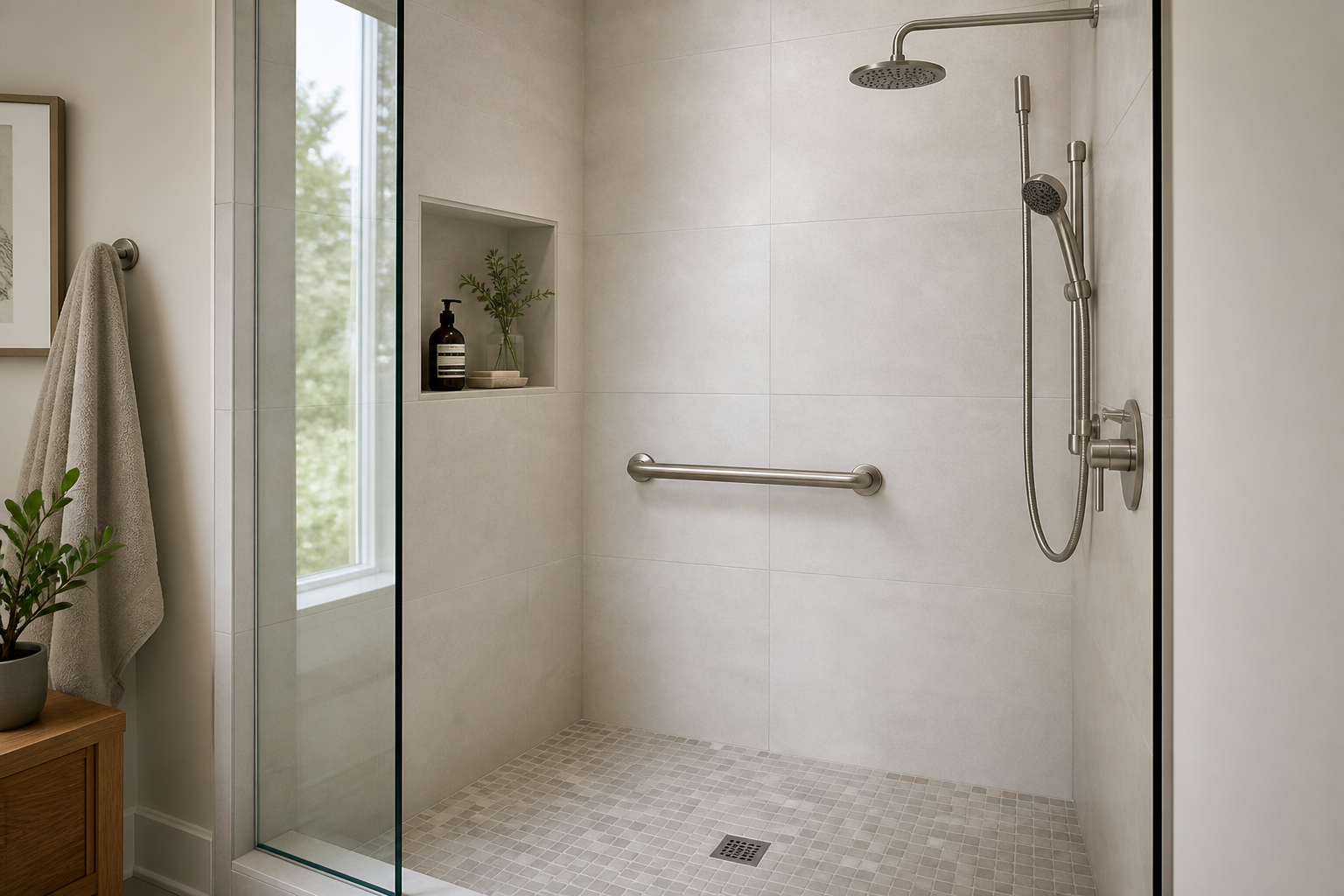
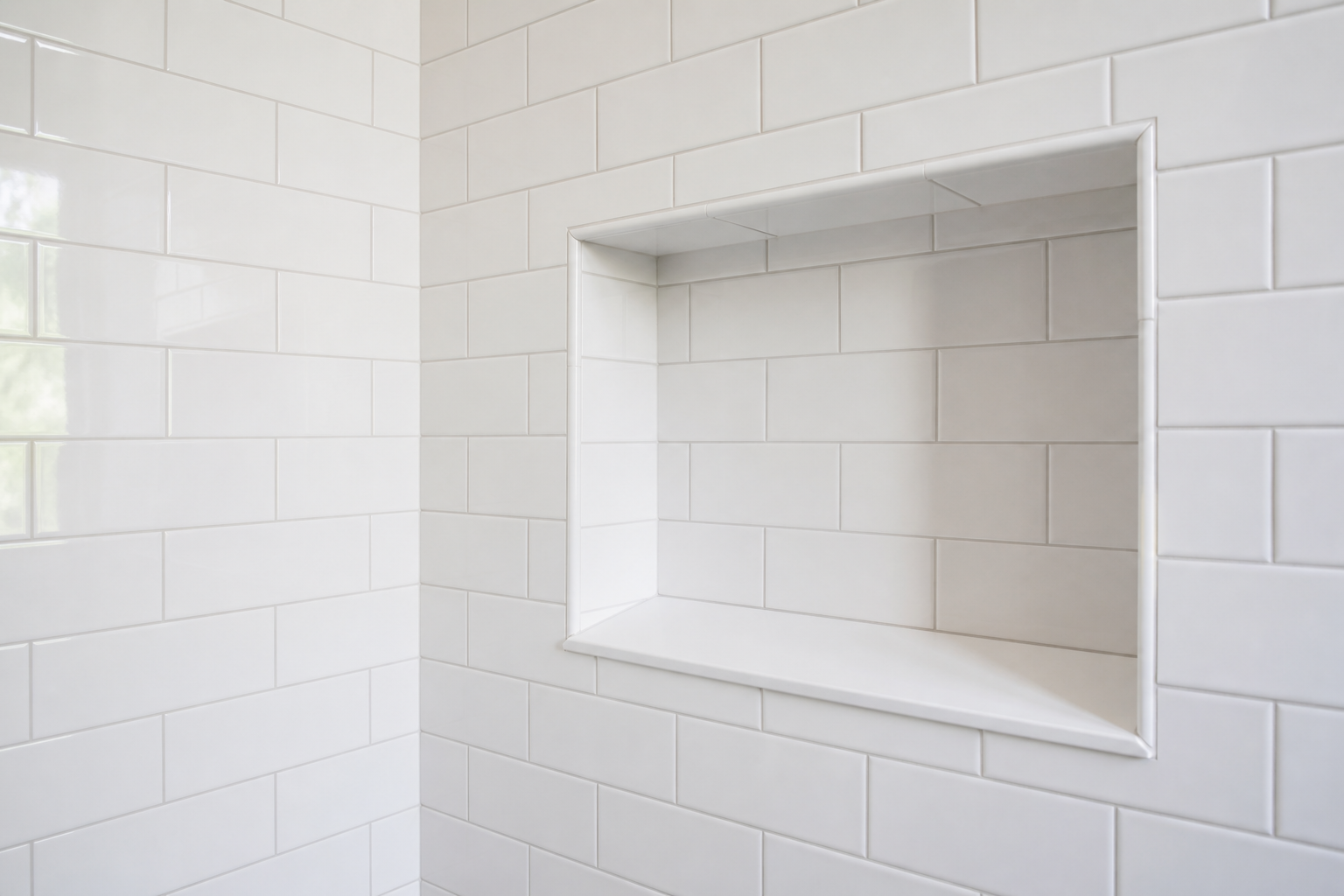
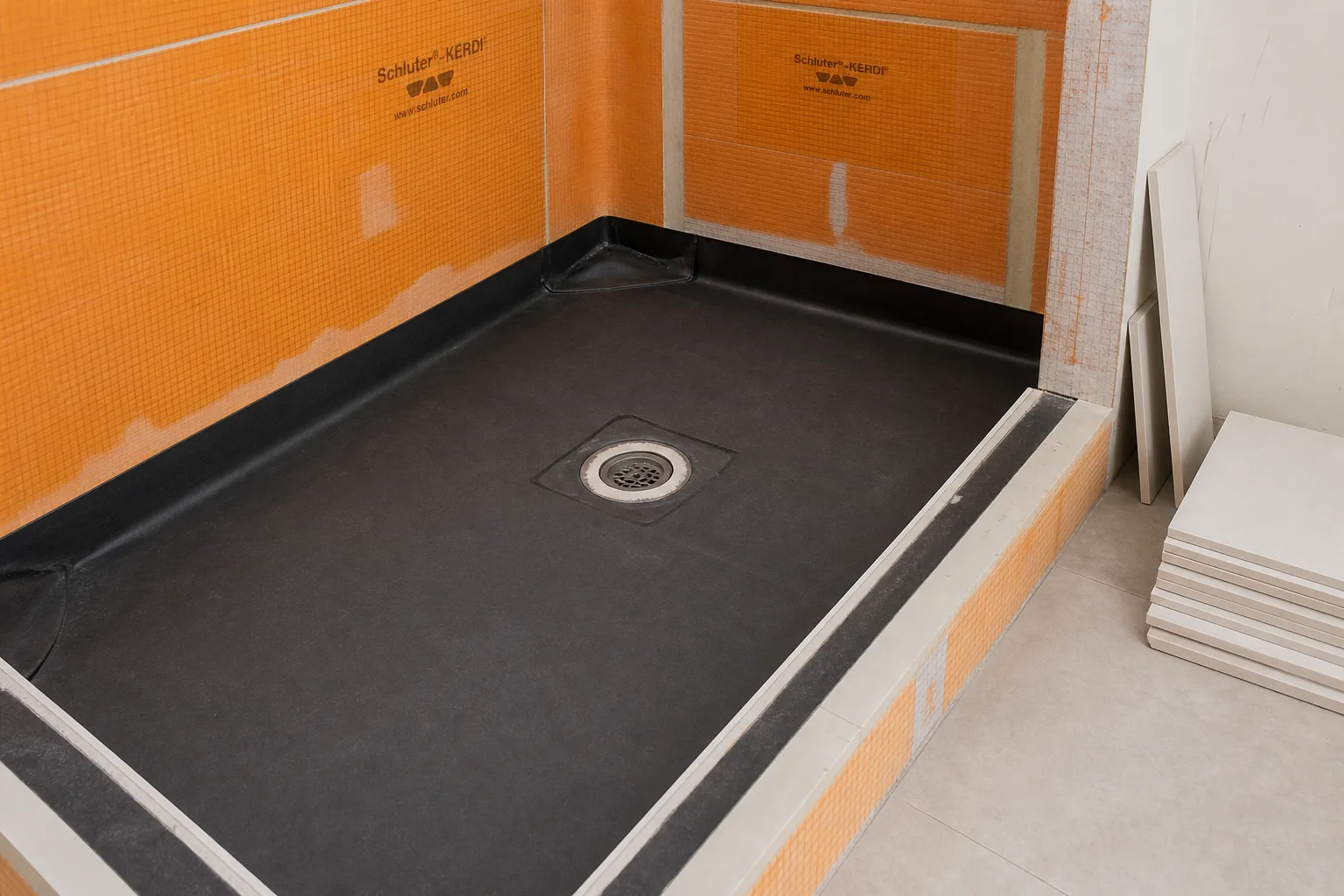
A competent answer names a specific system (bonded membrane, liquid-applied membrane, or equivalent), describes where the membrane sits in the assembly, explains how corners and drain connections are treated, and mentions a verification method before tile covers the work. A concerning answer references "waterproof board" or "we seal the grout" without describing a continuous waterproofing layer behind the tile.
This question works because it cannot be answered with marketing language. It requires the contractor to describe a sequence of physical steps. Contractors who have done this work dozens of times answer without hesitation. Contractors who subcontract shower work without understanding it stumble, defer to "our tile guy handles that," or describe steps that reveal a gap in the assembly.
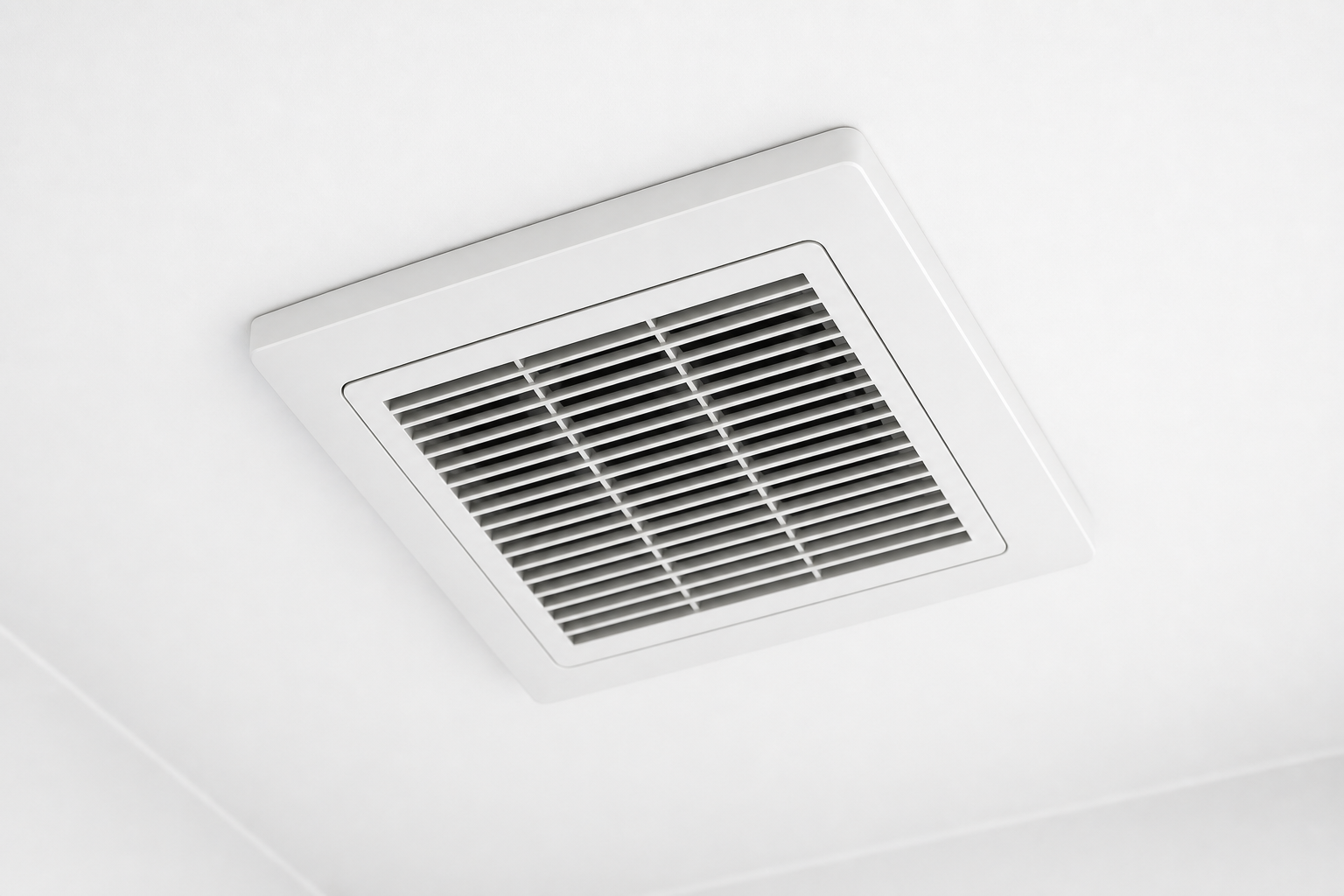
"Where does the exhaust fan duct terminate, and how do you verify it?"
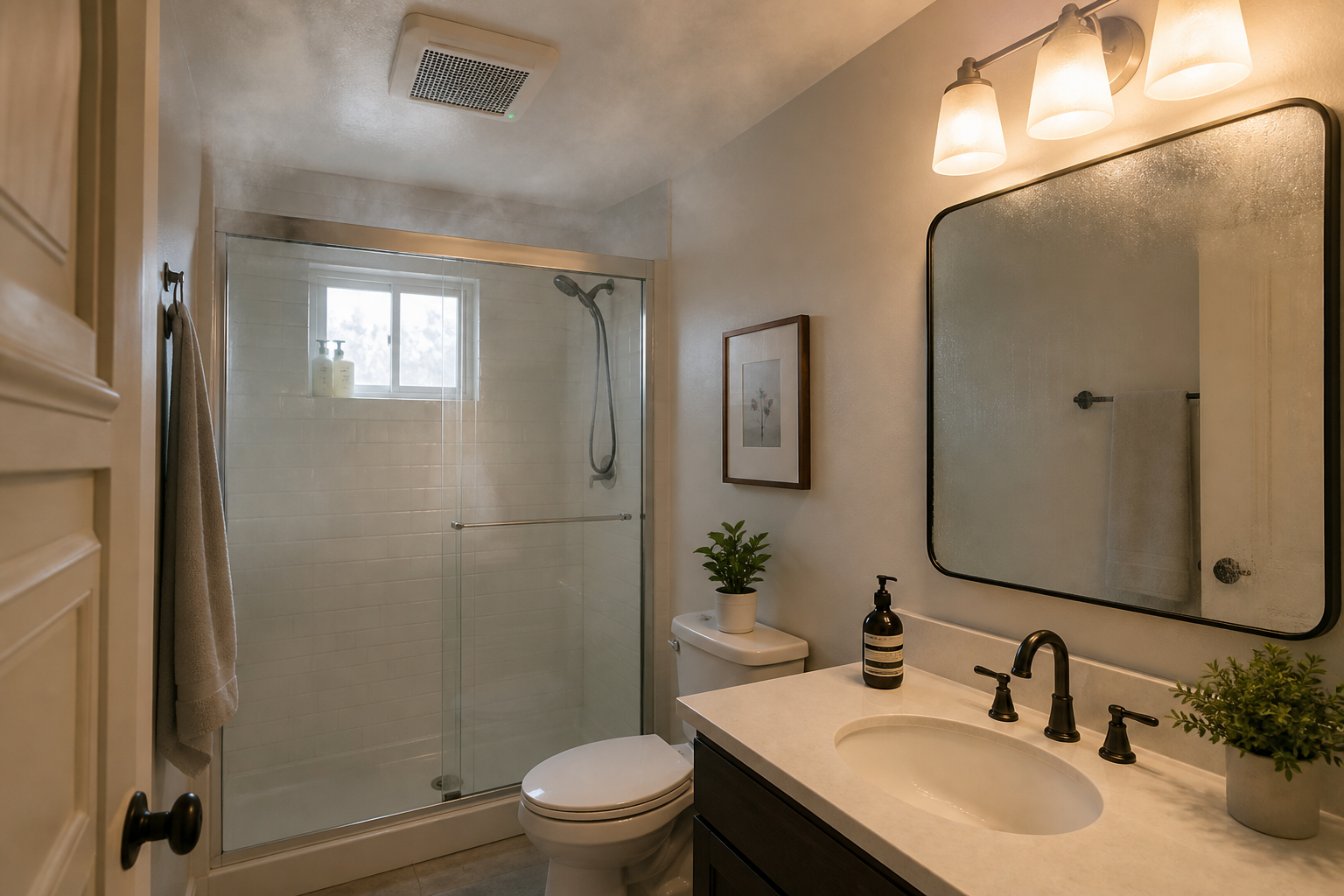
Most homeowners ask whether a new fan will be installed. Few ask where the air goes. A thoughtful contractor checks the existing duct path, confirms exterior termination, evaluates duct length and material, and sizes the fan to room volume. A contractor who plans to connect a new fan to an existing duct without verifying where that duct ends may be installing a fan that exhausts into an attic or soffit. The fan will sound like it works. The moisture will go somewhere it should not.
"What happens to movement at the shower curb, the tub-to-tile transition, and the floor-to-wall junction?"
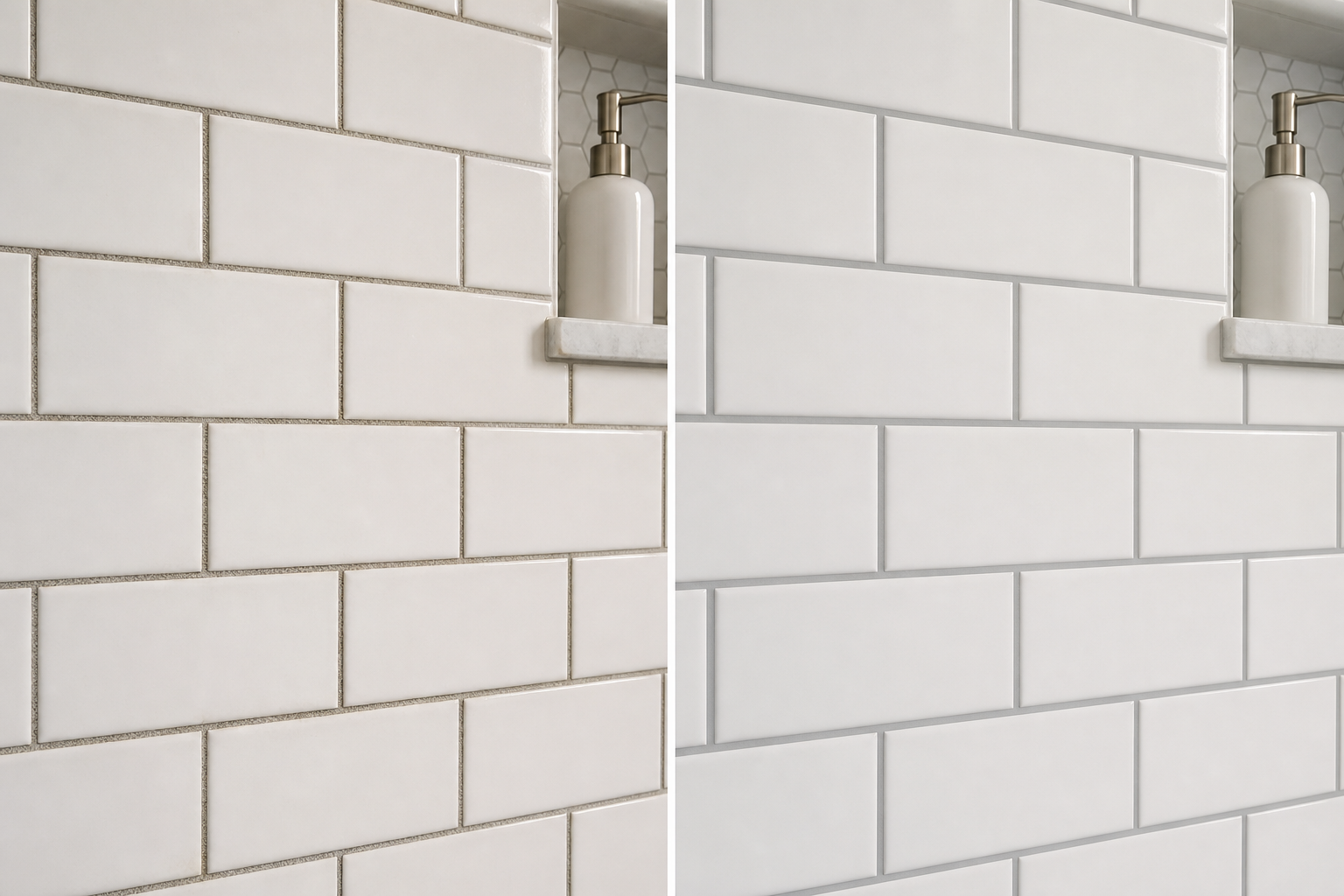
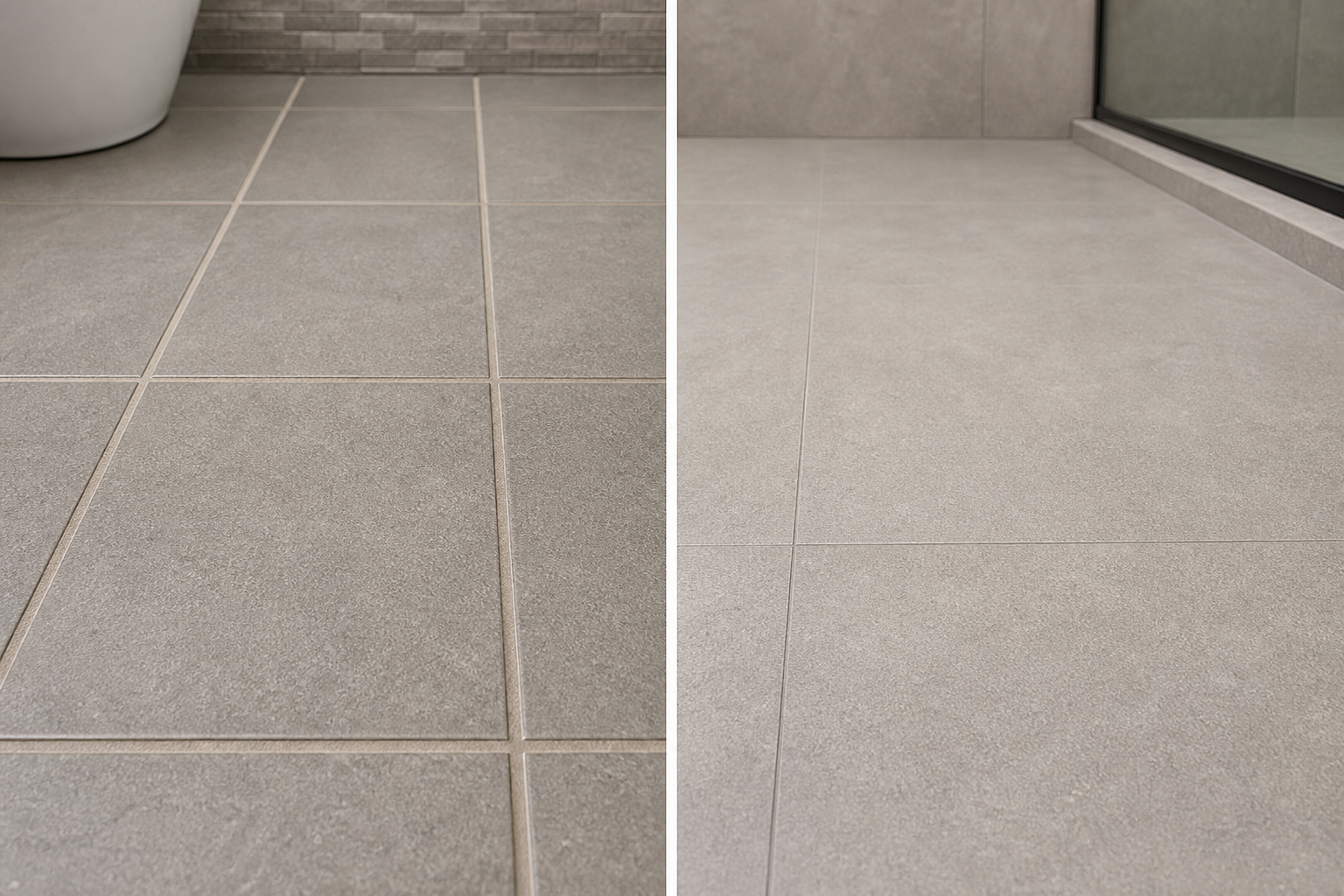
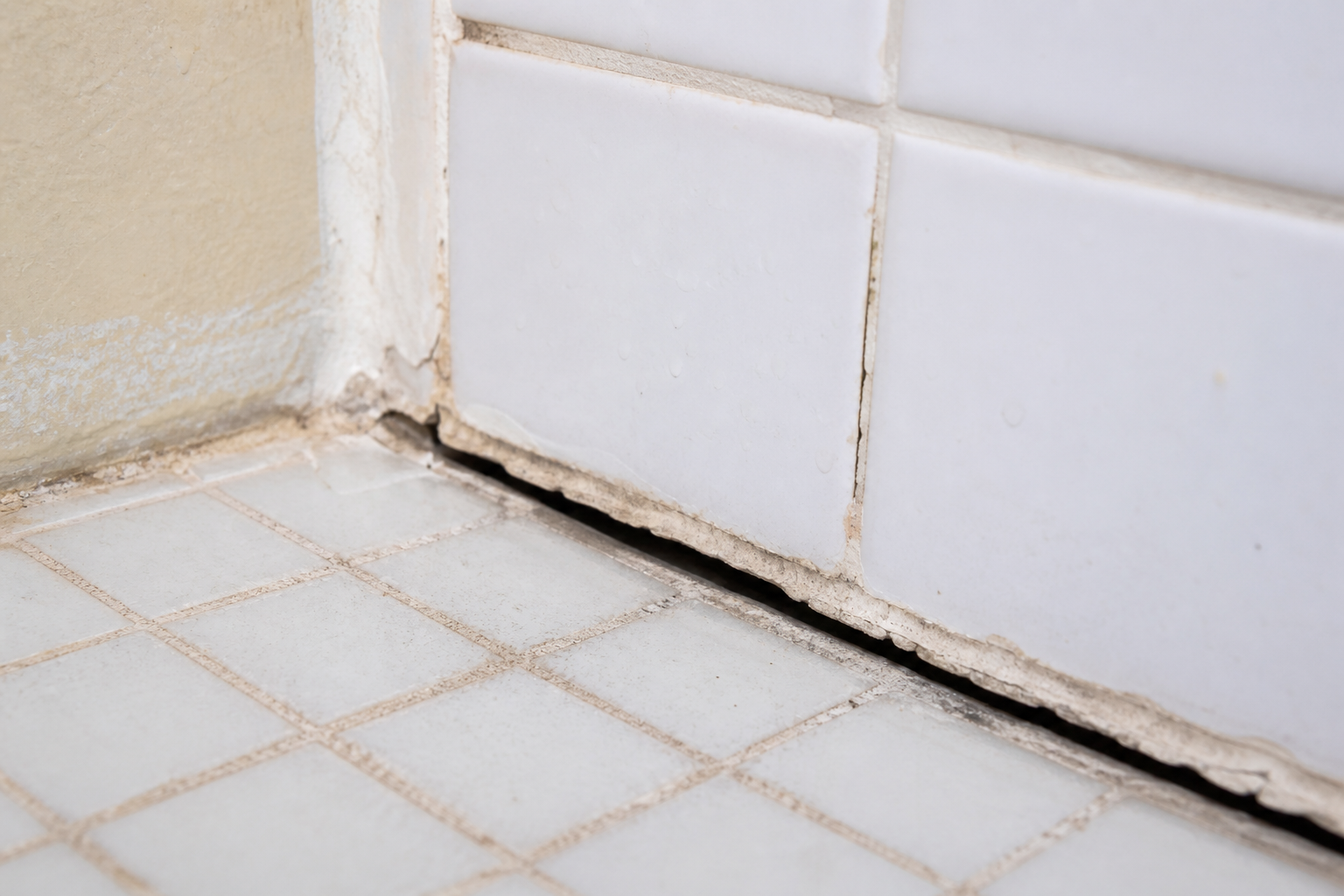
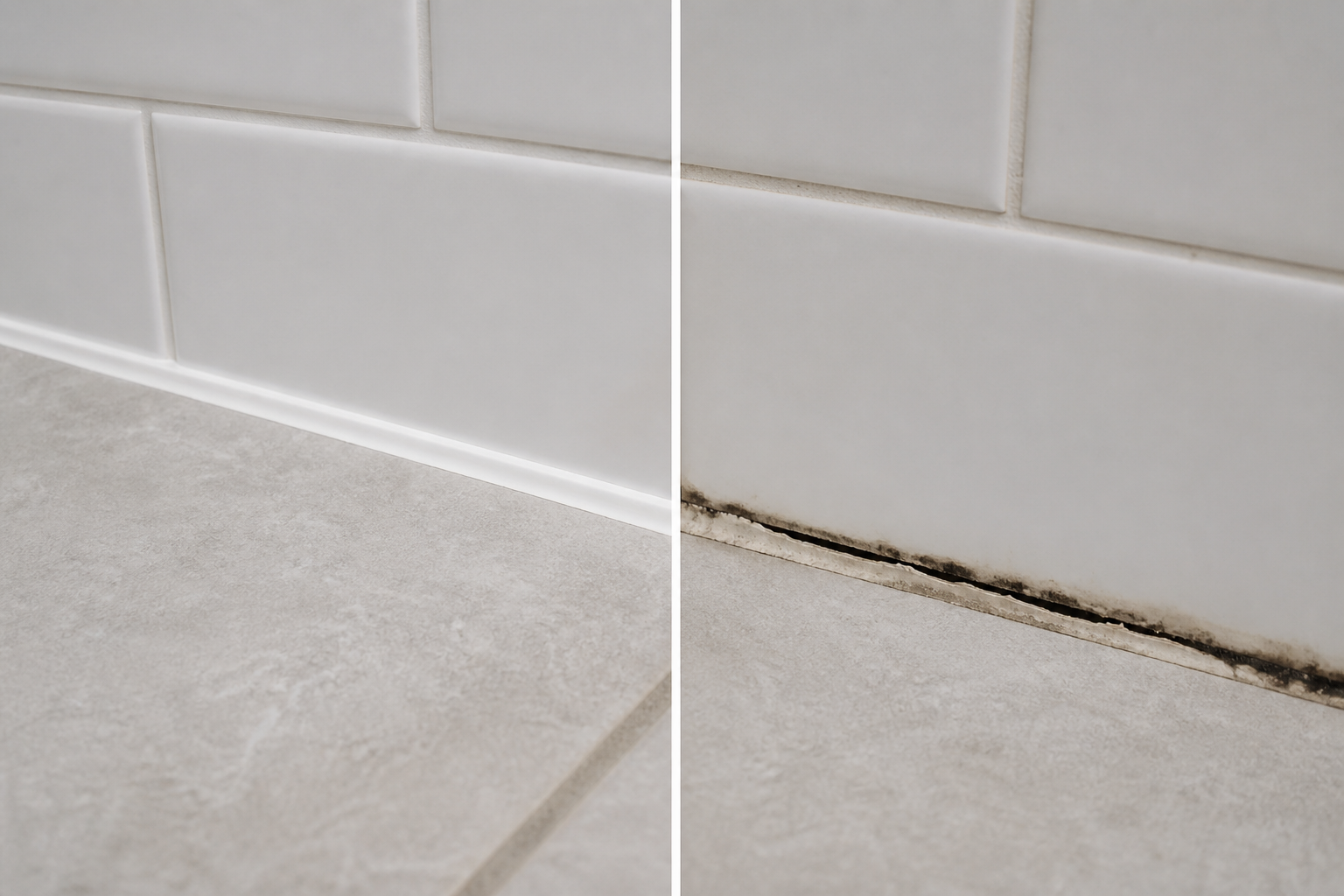
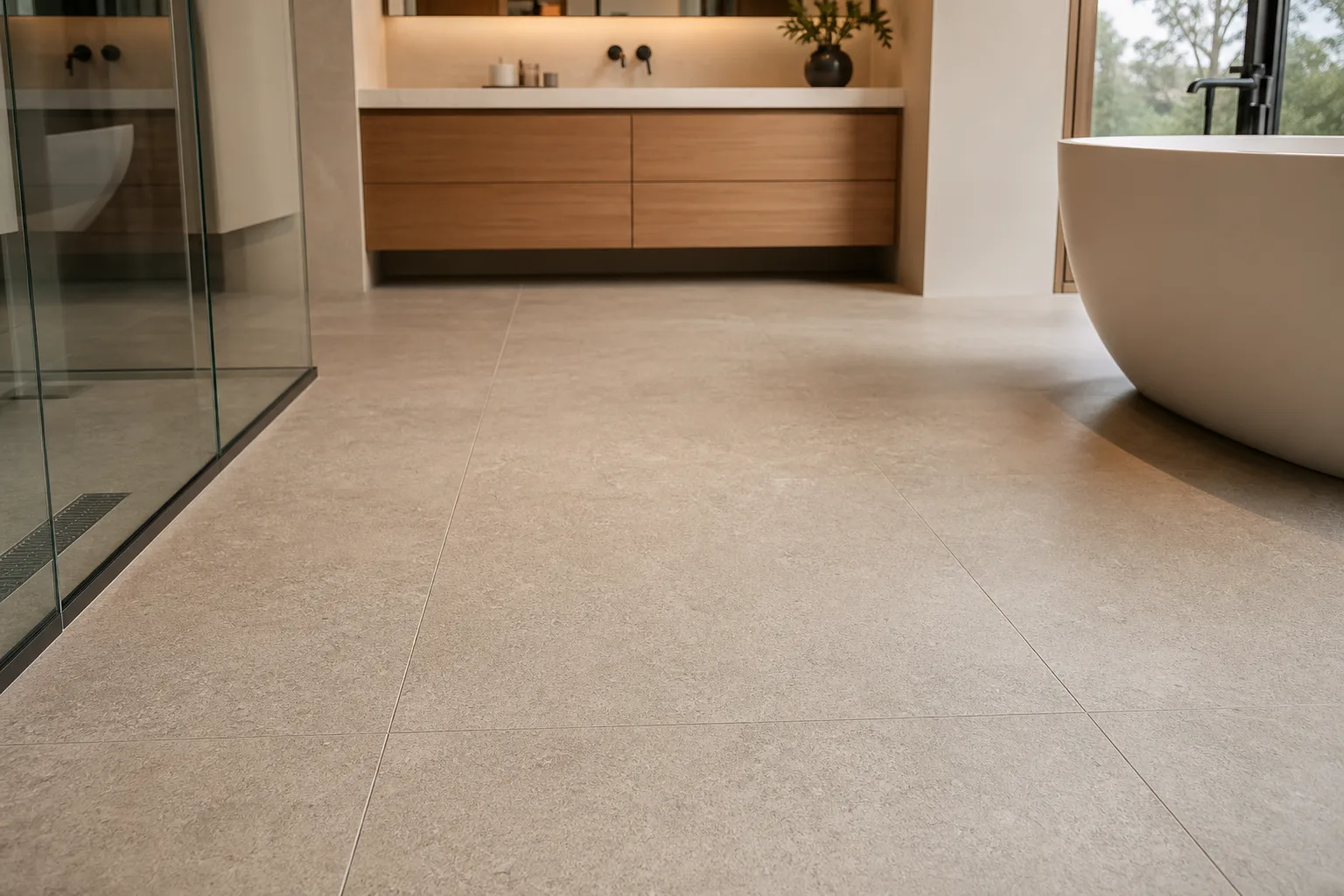
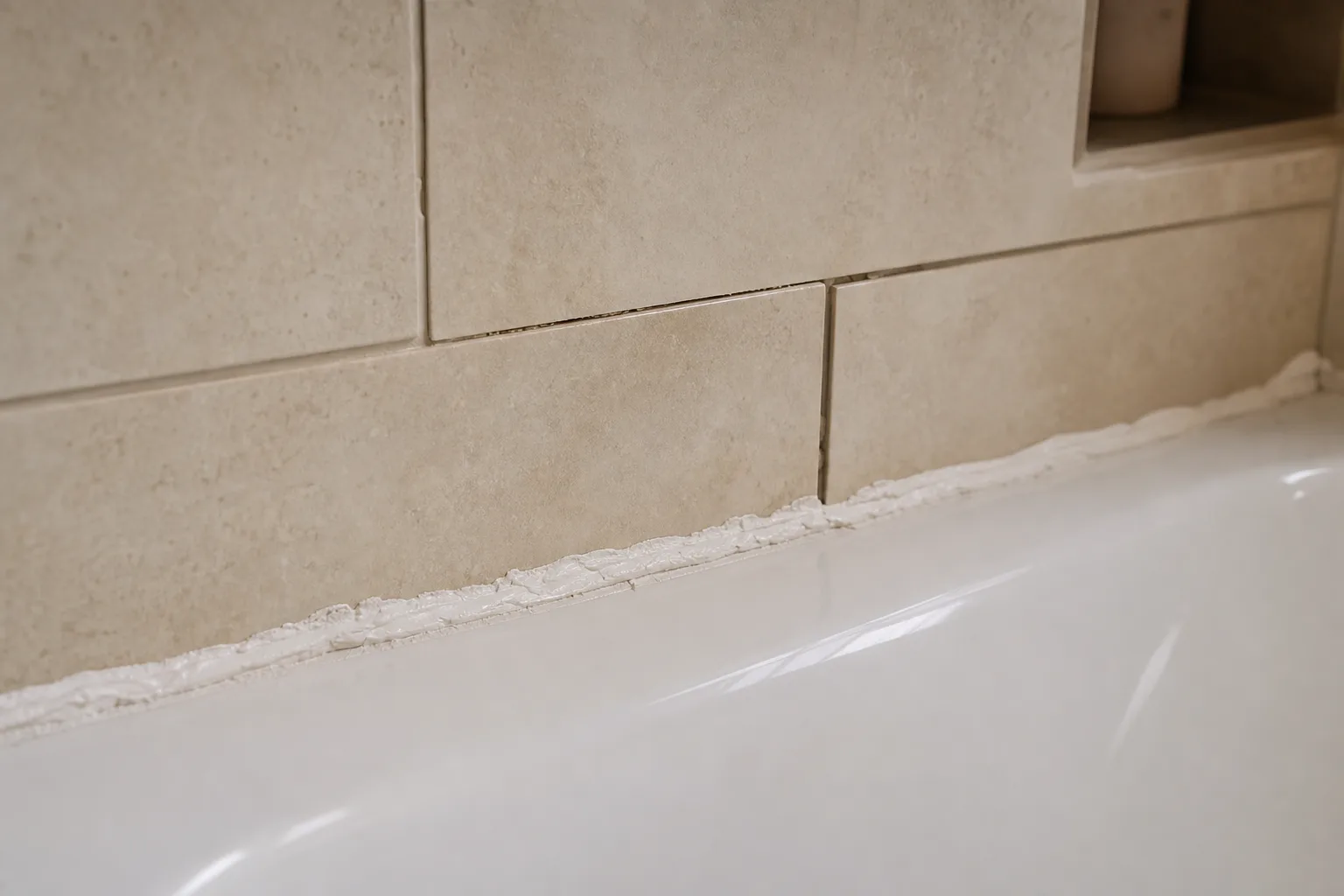
Tile is rigid. Buildings move. The interface between tile and other materials requires movement joints (often called expansion joints), not grout alone. A contractor who describes caulk at transitions without mentioning movement accommodation may be setting up grout crack lines within the first two years. This question separates contractors who understand tile as a system from contractors who understand tile as a surface finish.
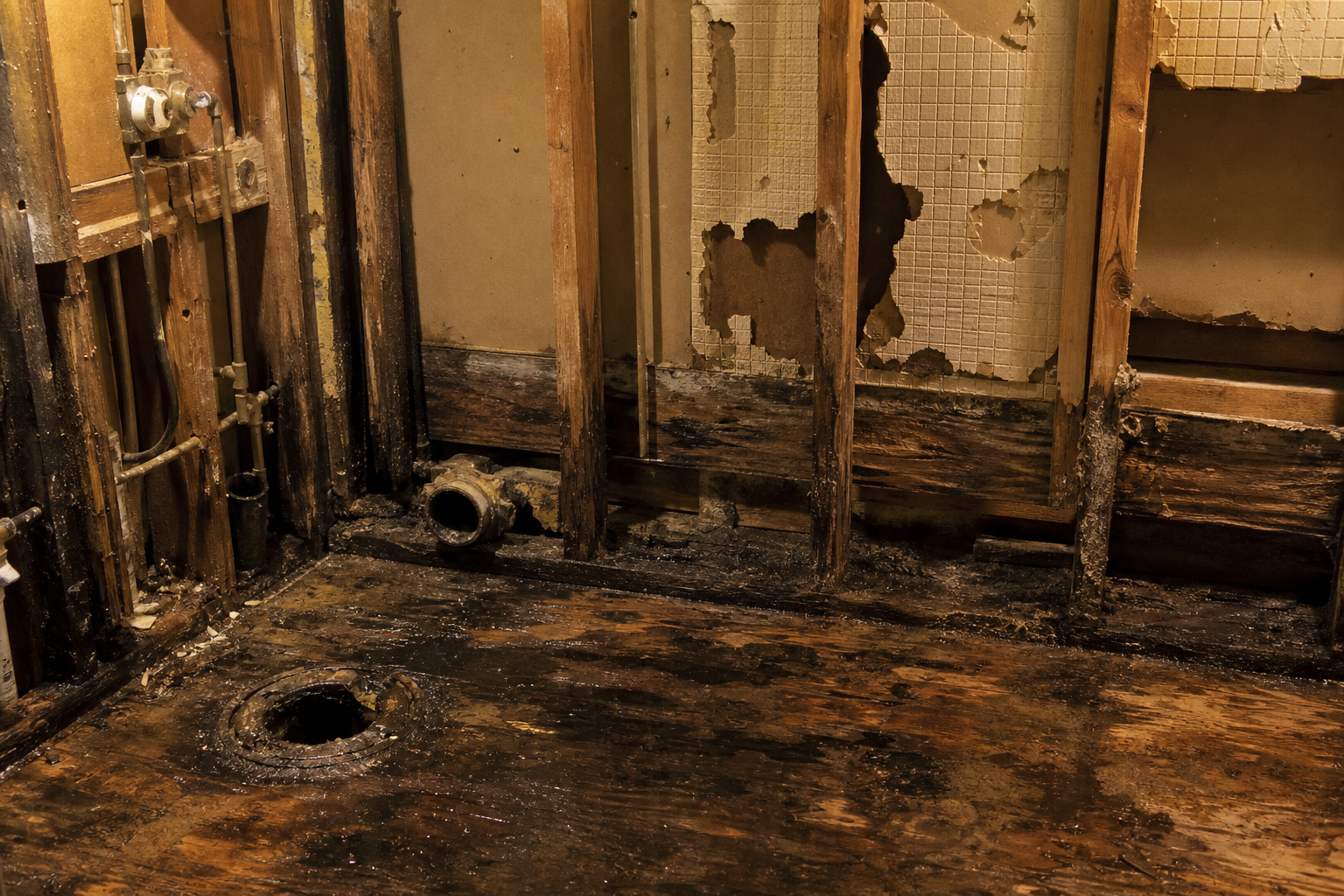
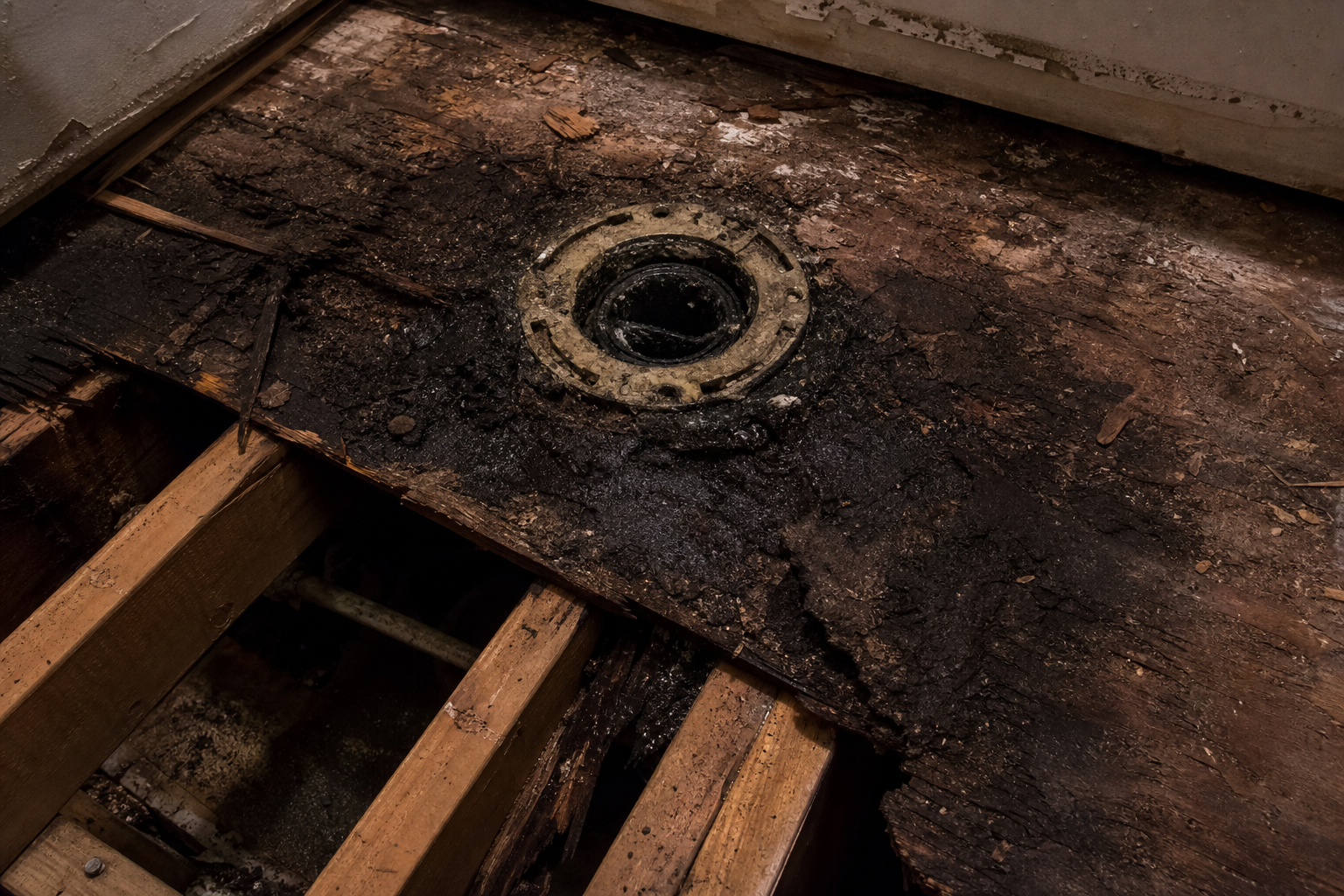
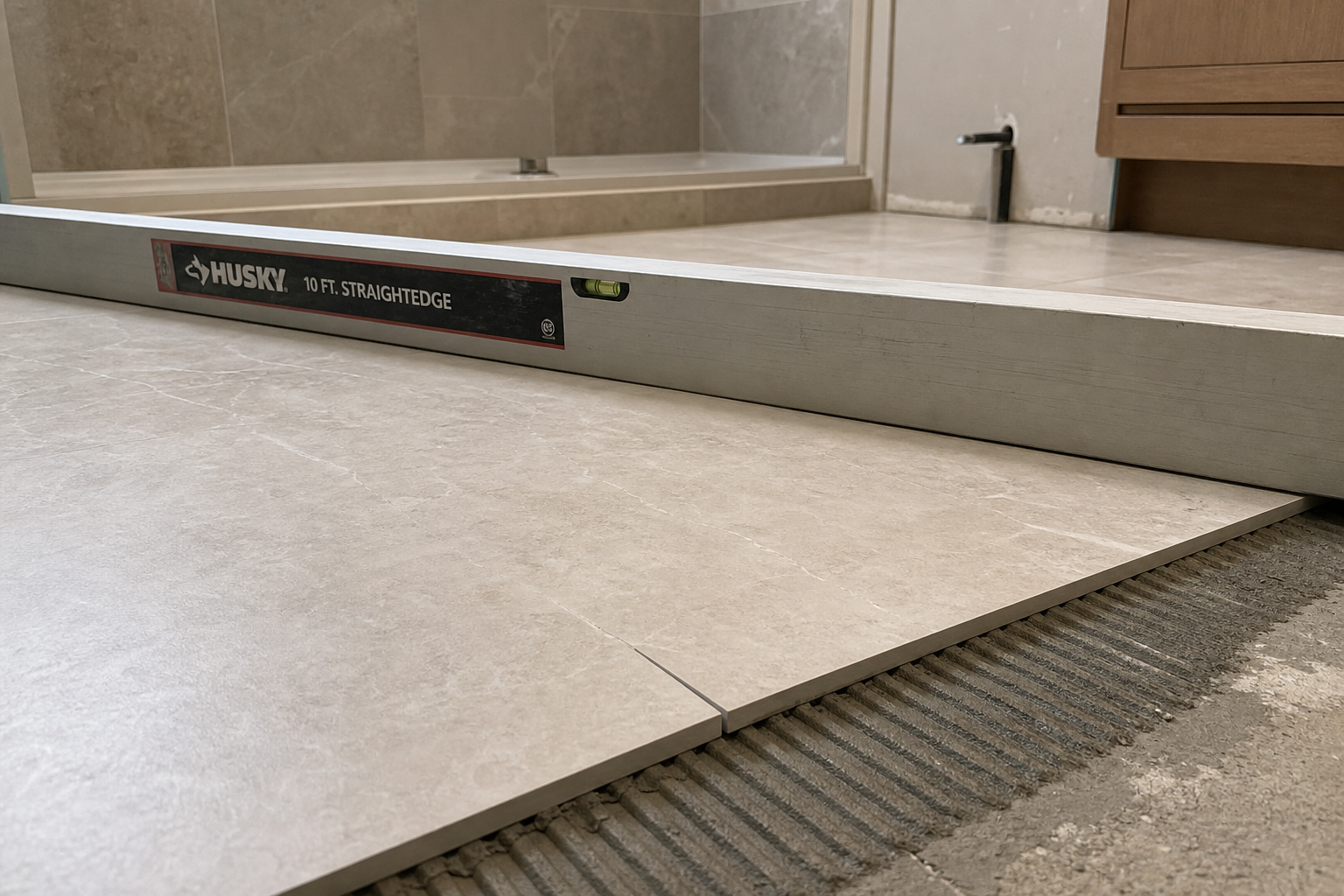
"How do you handle a subfloor that is out of plane or damaged after demo?"
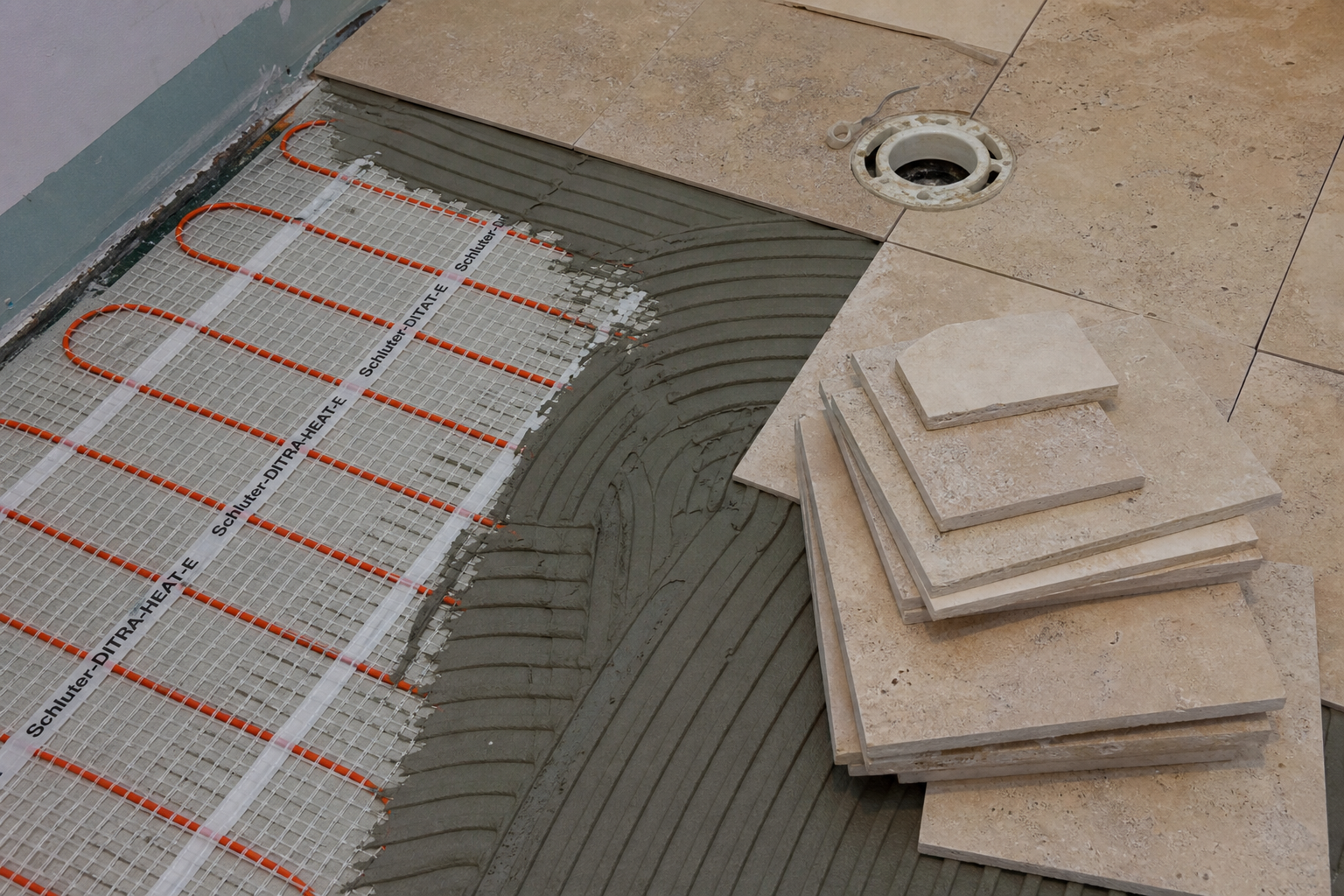
The correct answer includes inspection at demo, a threshold for self-leveling compound or structural repair, and a process for not proceeding with tile until the substrate meets flatness requirements for the specified tile format. Large-format tile in particular requires flatness tolerances that older subfloors often fail. A contractor who says "we will make it work" without describing how is planning to hide lippage or rush prep.
Questions About Sequence and Verification
Competence is not just knowing what to do. It is knowing when to do it and how to confirm it worked before the next step conceals it.
"At what point do you flood-test the shower, and what happens if it fails?"
Flood testing (filling the shower pan with water for 24 hours to verify no leakage through the waterproofing assembly) is standard practice for many membrane systems. Some bonded systems verify differently, but every competent contractor has a verification method and can describe it. The follow-up about failure is equally important. A contractor who says "that never happens" has not done enough showers. A contractor who describes the remediation process (identify the breach, repair, retest, document) has.
"Who is on site during waterproofing and tile, and who verifies the work before the next trade starts?"
In firms that subcontract tile, the general contractor's oversight role matters enormously. Errors at the waterproofing-to-tile handoff are a common failure point. A contractor who cannot name who inspects the shower before tile covers it is describing a process with a quality gap.
"What inspections are required for this scope, and who schedules them?"
Plumbing and electrical rough-in typically require inspection before walls close. A contractor who includes permit and inspection language in the estimate without describing the sequence may be planning to skip steps or leave scheduling to the homeowner. Ask specifically: "Will the shower be inspected before tile, or only the rough plumbing?" Jurisdictions vary, but the contractor should know what applies to your project.
"What decisions must be finalized before demo, and what happens if we change something mid-project?"
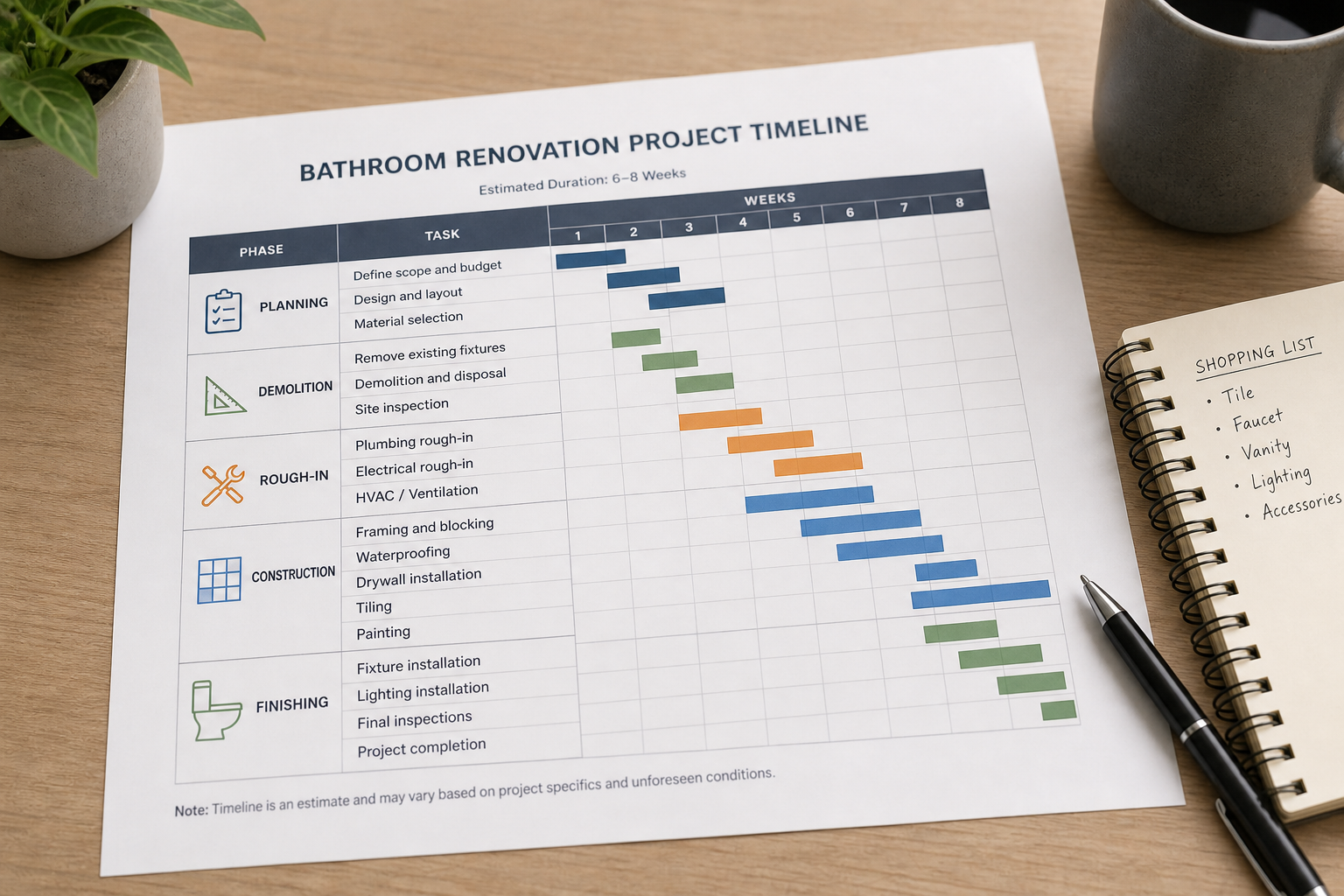
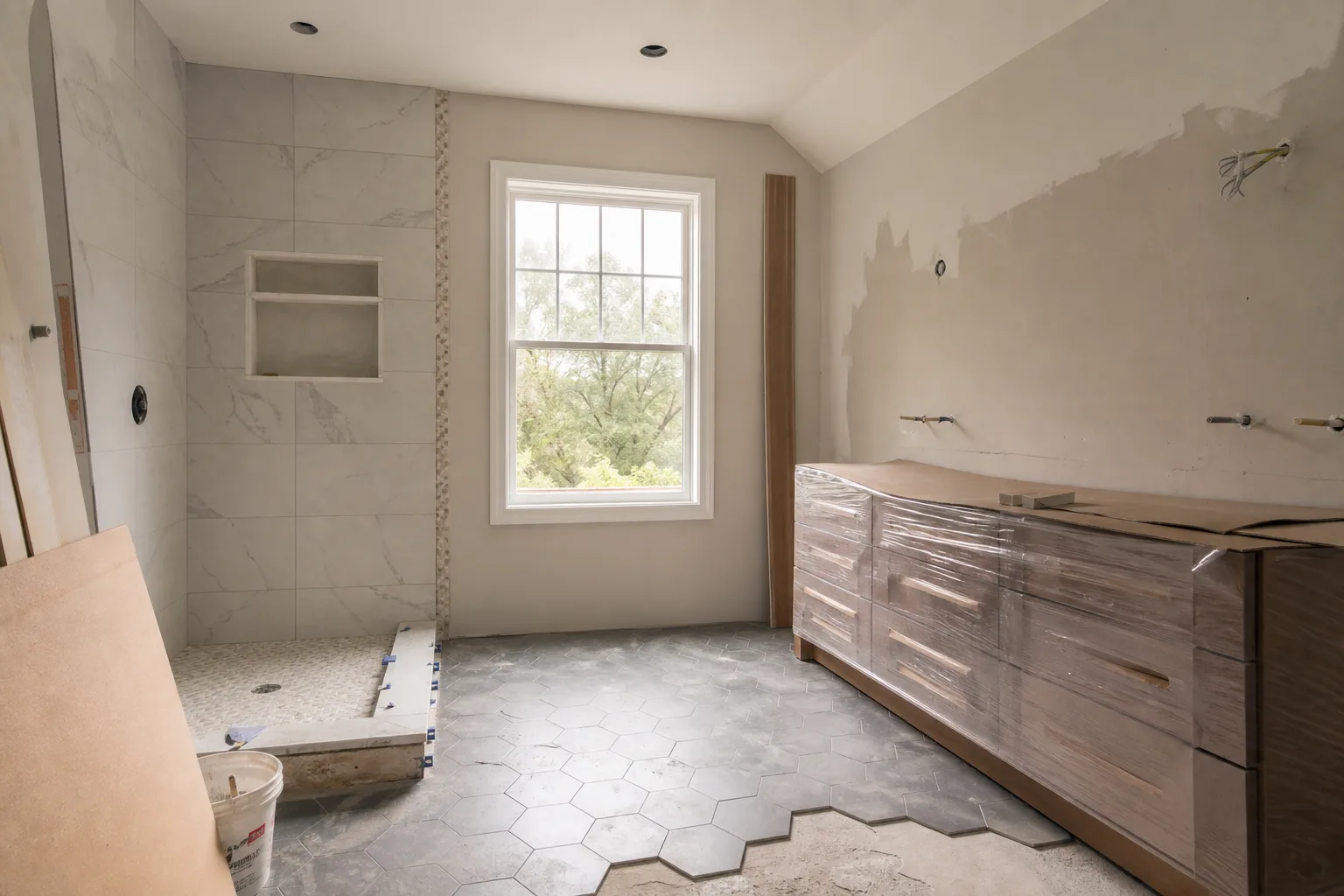
This question tests project management, not construction technique. A competent contractor lists material selections, layout confirmation, fixture locations, and glass configuration as pre-demo requirements. They describe a written change-order process with cost and timeline impact documented before work proceeds. A contractor who says "we can figure out the tile during construction" is describing a process that produces change orders, delays, and rooms that are close but not what you planned.
Questions About Failure Modes
The most revealing questions ask contractors to describe what goes wrong and how they prevent it.
"What are the three most common failure modes you see in bathrooms, and how does your process prevent them?"
Experienced bathroom contractors have seen grout failure, waterproofing breaches, vent termination problems, and subfloor rot. They should be able to name specific failures and map them to specific prevention steps in their process. A contractor who cannot name failure modes has not been paying attention on past projects, or has not been in business long enough to see consequences.
"Tell me about a project where something went wrong. What happened and how did you handle it?"
Every project encounters problems. Material arrives damaged. Subfloor is worse than expected. An inspection fails. A fixture is backordered. The measure of competence is not the absence of problems. It is the response: documented communication, written change orders, revised timeline with reasoning, and resolution without disappearing. Contractors who claim nothing ever goes wrong are either inexperienced or not being honest.
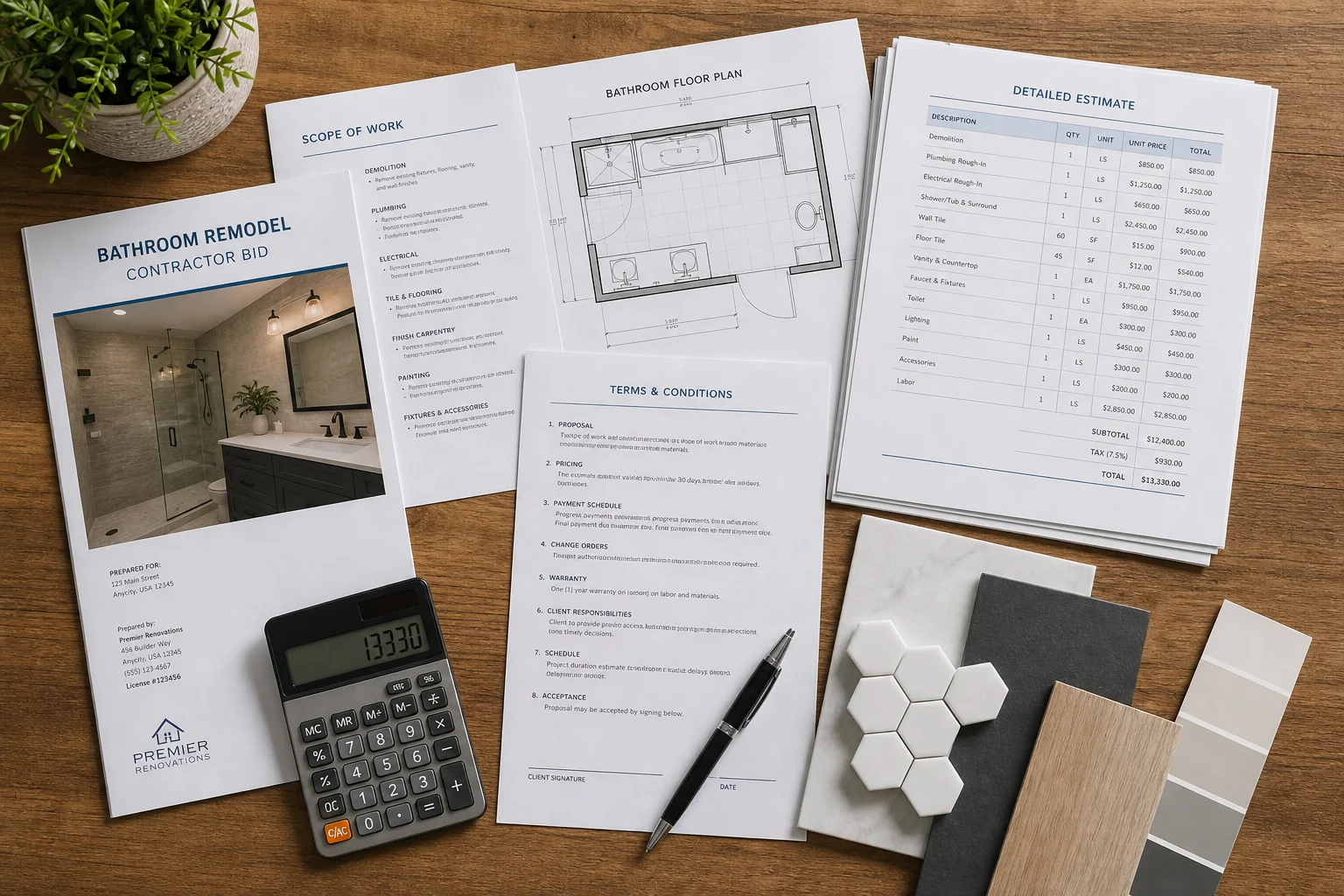
"What is excluded from this bid, and what would trigger additional cost?"
Exclusions reveal what the contractor is not planning to do. Common exclusions that should be explicit: asbestos or lead abatement, structural repair beyond a stated threshold, relocation of plumbing stacks, and finish work outside the bathroom. Allowances without product names ("$3,000 tile allowance") are exclusions disguised as inclusions. Ask what happens when the allowance is insufficient.
"If I call a reference from a project completed two years ago, what will they tell me about how the shower is performing?"
This reframes the reference question from satisfaction to durability. Recent references confirm the project went smoothly. Older references confirm the work lasted. Ask the contractor this question directly. Their reaction tells you whether they are confident in their shower assemblies or hoping you will not call anyone from 2022.
Questions About What They Cannot Control
Competence includes honesty about limits.
"What material lead times could delay this project, and when would those materials need to be ordered?"
A contractor who cannot discuss lead times for custom vanity, glass enclosure, or specialty tile has not planned the project timeline. Long-lead items should be ordered during design, not discovered at week three of construction.
"What existing conditions would you not know until demo, and how do you budget for them?"
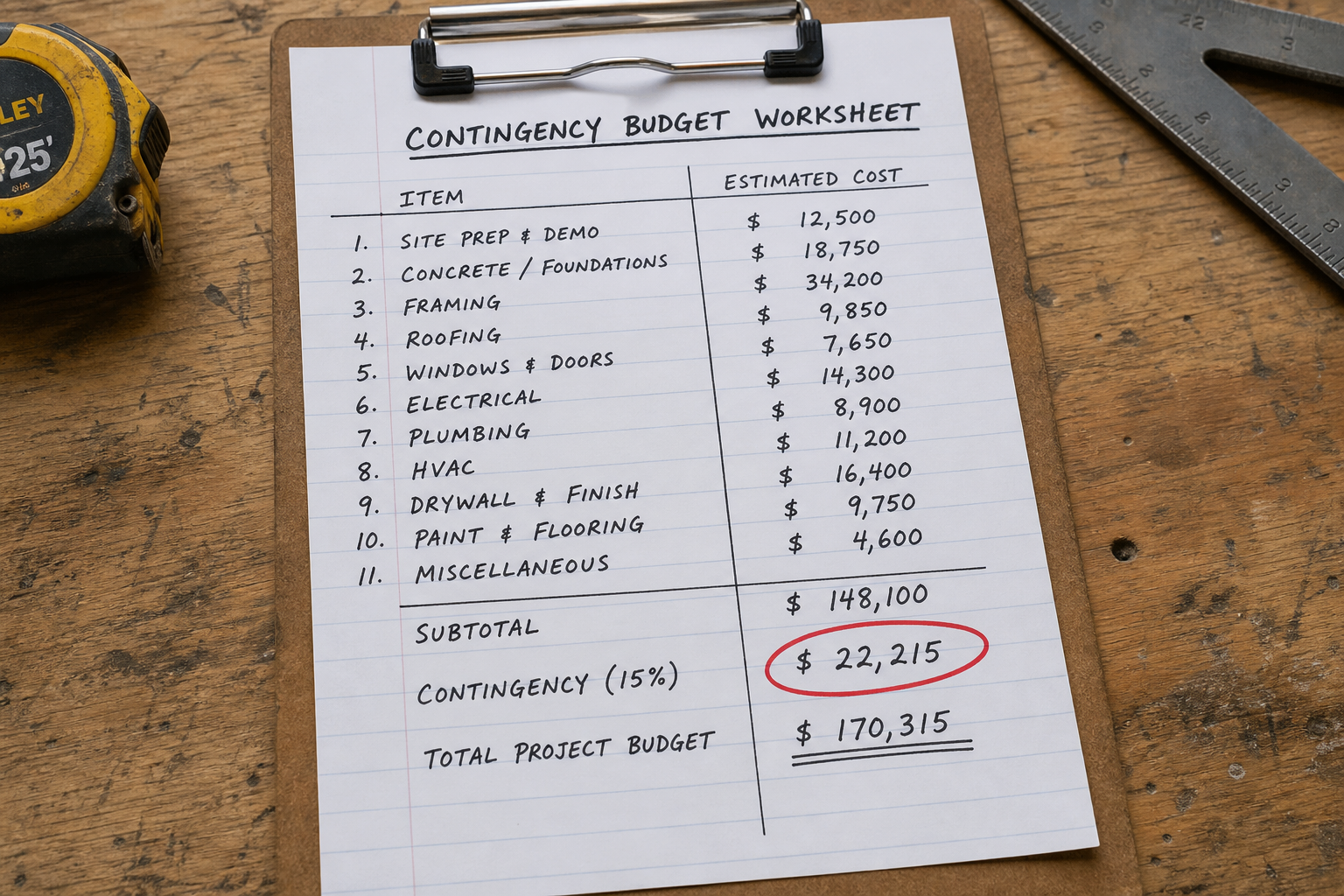
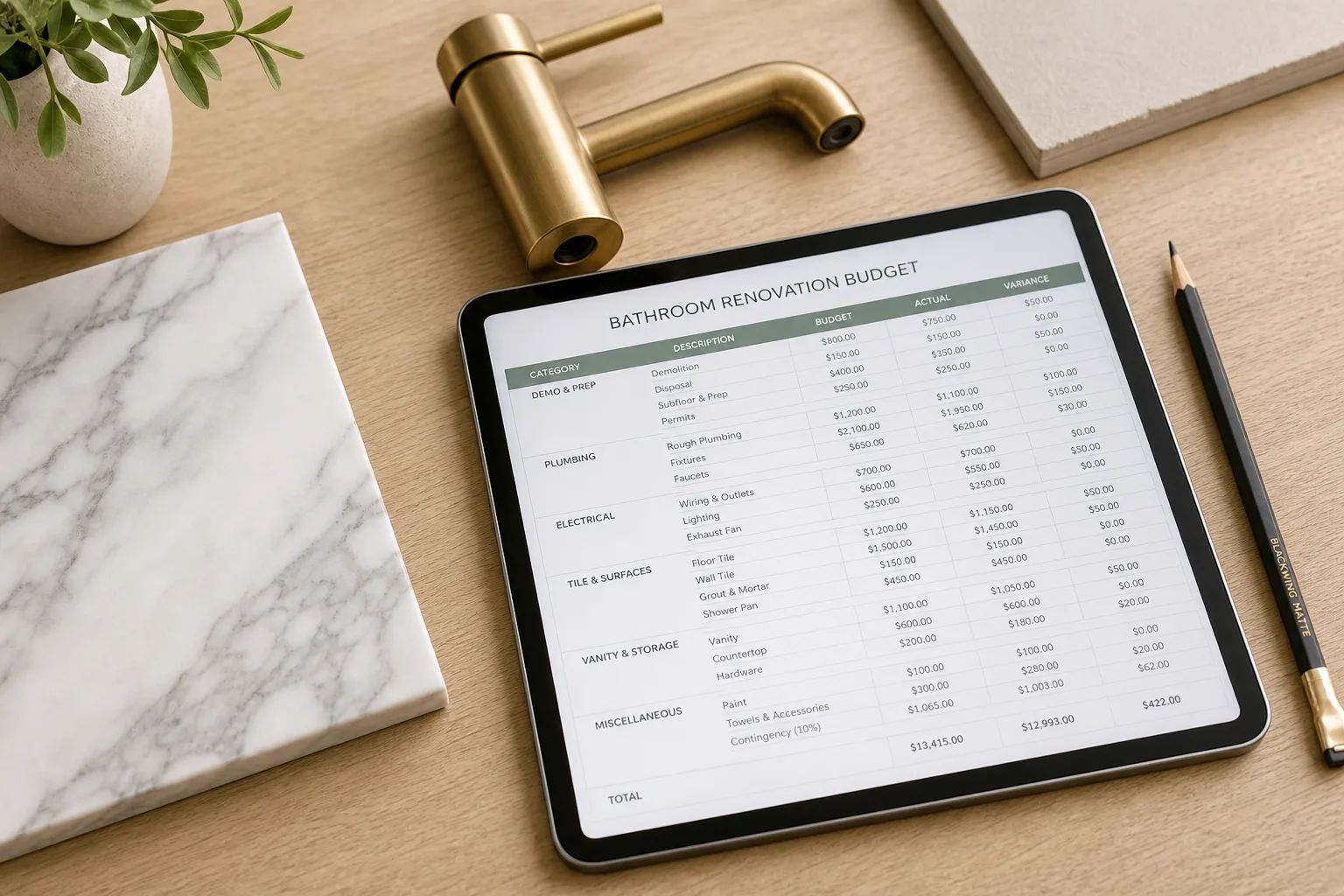
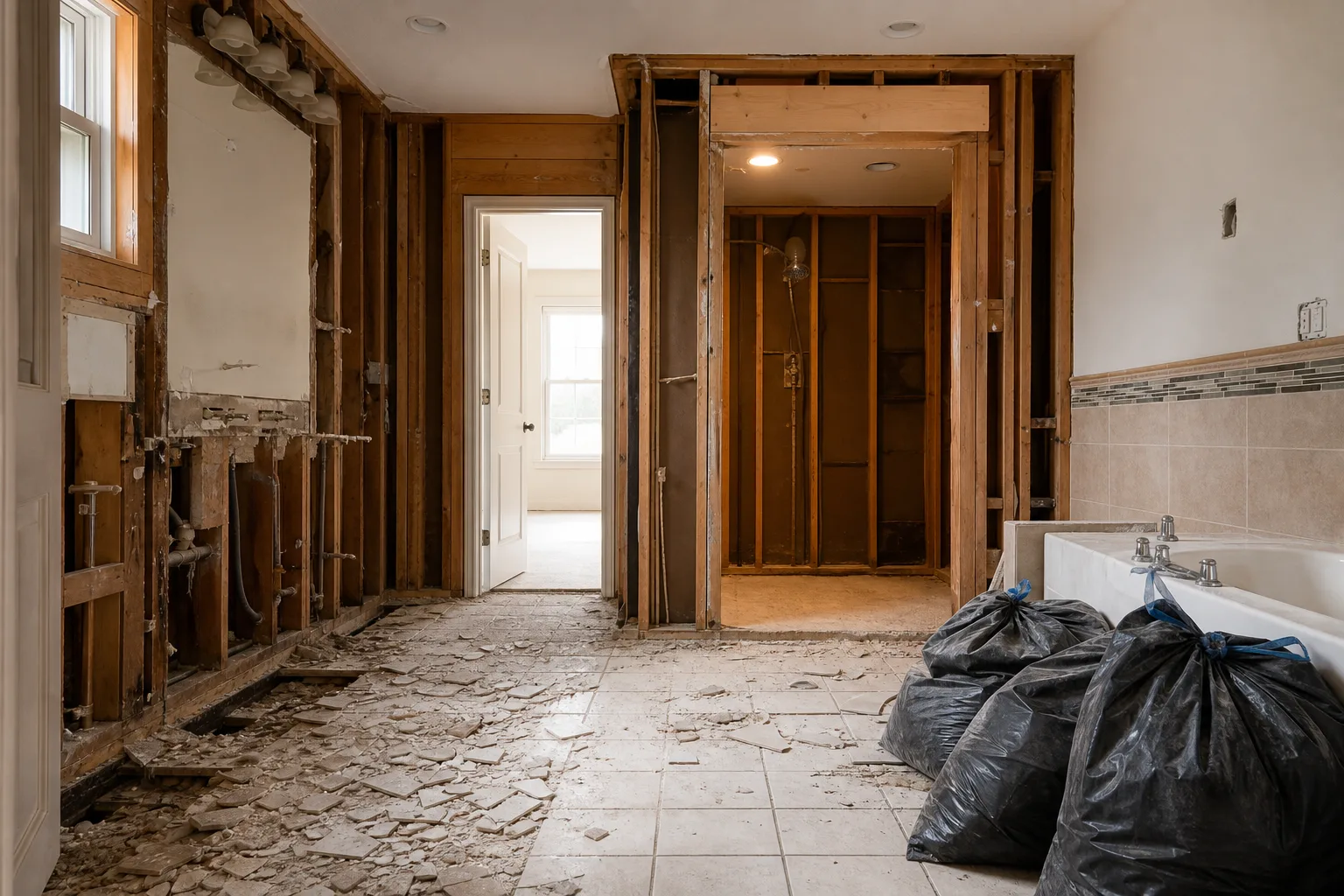
Rot, galvanized pipe, undersized venting, and out-of-level framing are common discoveries in older homes. A contractor who says "we will see when we get there" without a contingency line item or a stated process for handling discoveries is transferring risk to the homeowner.
"What would cause you to stop work and require a conversation before proceeding?"
This question tests whether the contractor has decision thresholds. Good contractors stop when they find conditions that change scope: structural damage, code violations in existing systems, or substrate conditions that make the specified tile impossible without additional prep. A contractor who never stops is a contractor who improvises and bills later.
How to Use These Questions
You do not need to ask all of them in one meeting. Select five or six based on what matters most for your project. If you are keeping existing plumbing locations, weight the waterproofing and tile questions. If you are moving fixtures, add plumbing sequence questions. If the home was built before 1970, weight the existing conditions questions.
Listen for specificity. Vague answers ("we use industry standard practices") are answers. Deferred answers ("our tile sub handles all of that") are answers. Confident answers that name products, describe sequences, and acknowledge failure modes are different answers.
Take notes. Compare answers across contractors. The contractor whose answers are most specific, most consistent with each other, and most willing to describe what goes wrong is usually the contractor whose work will still be performing when the others' shortcuts surface.
When clients share contractor conversations with us for a second opinion, we look at what the contractor volunteered without prompting. The ones who mention flood tests, movement joints, and exhaust duct routing before they are asked are the ones with real experience.