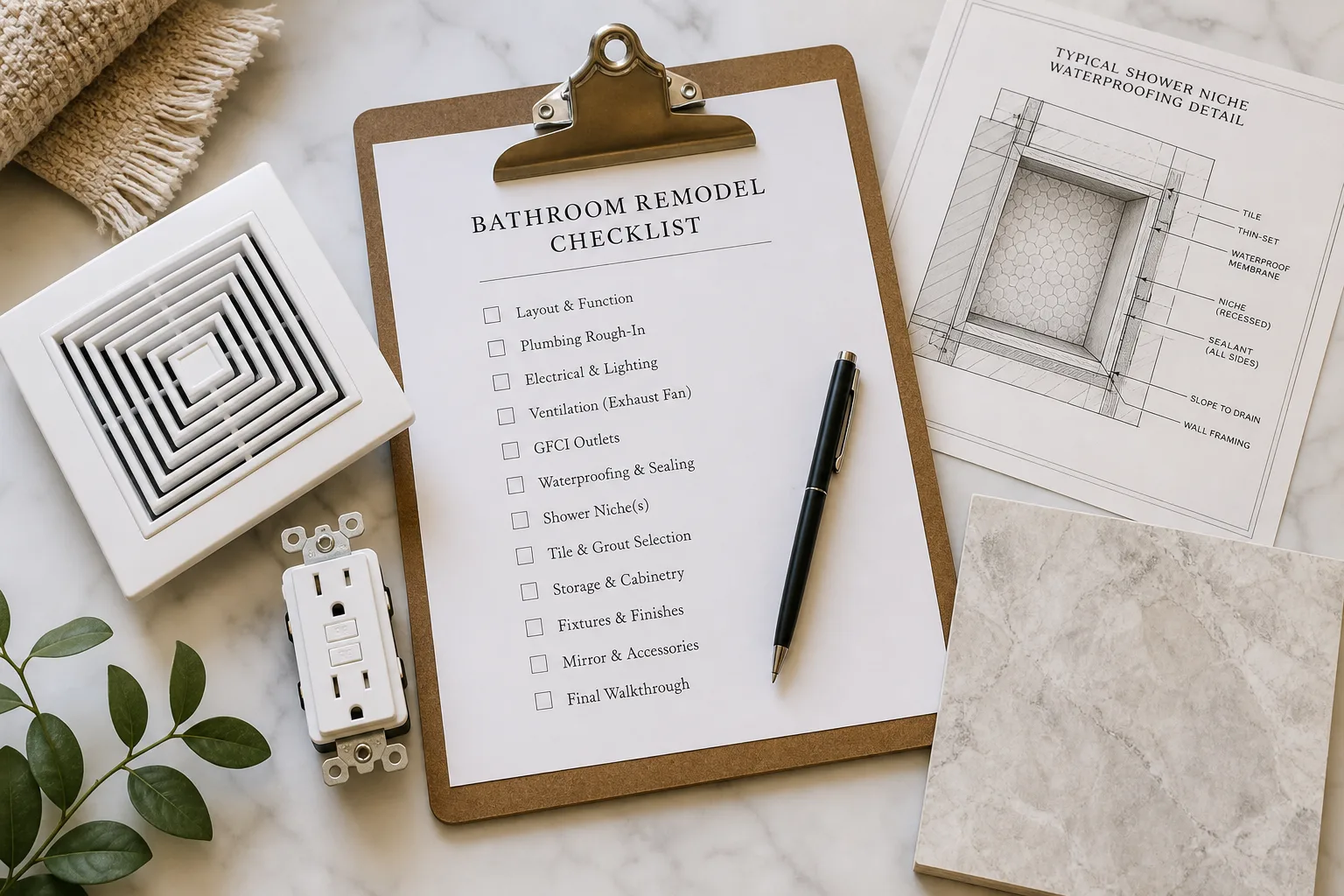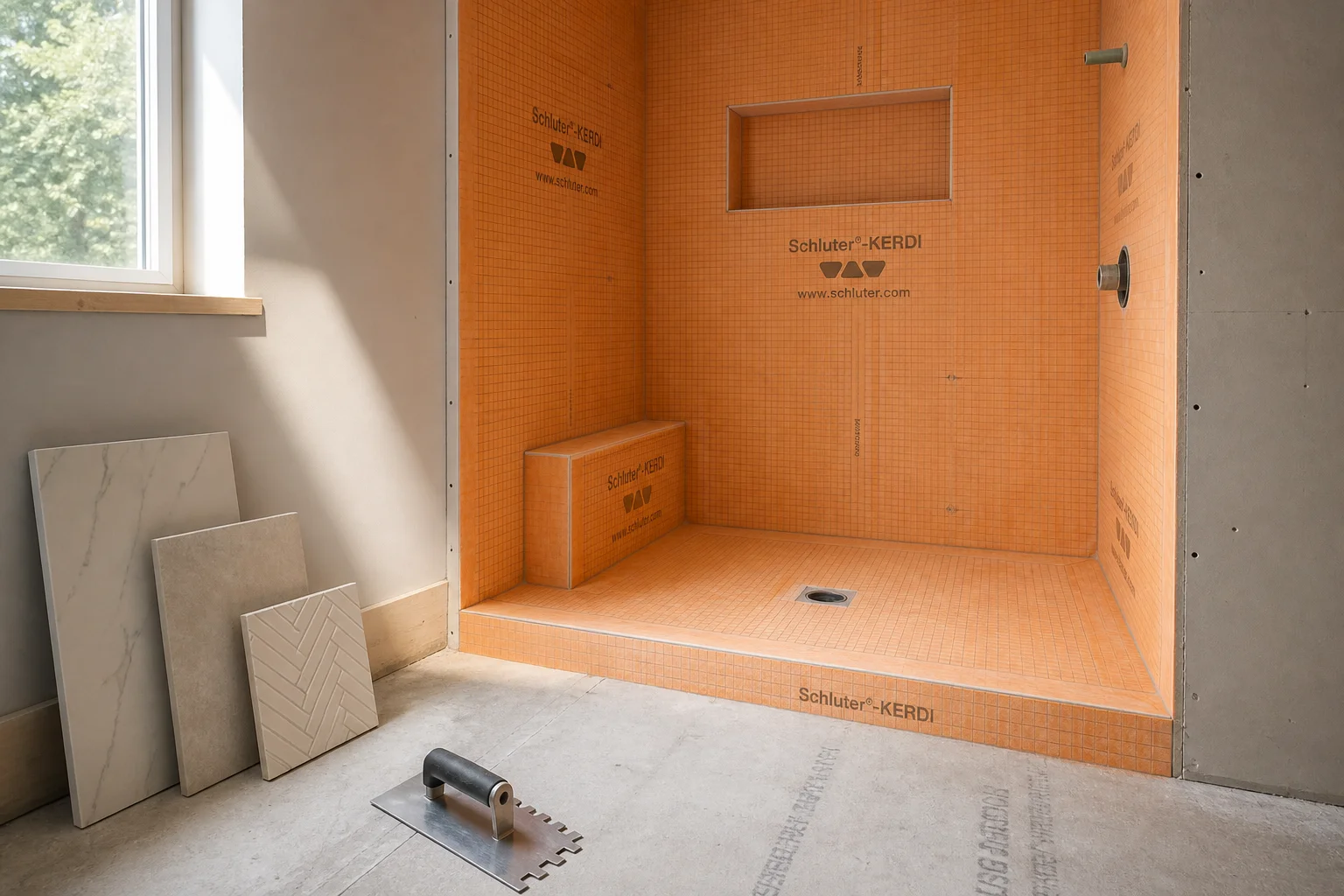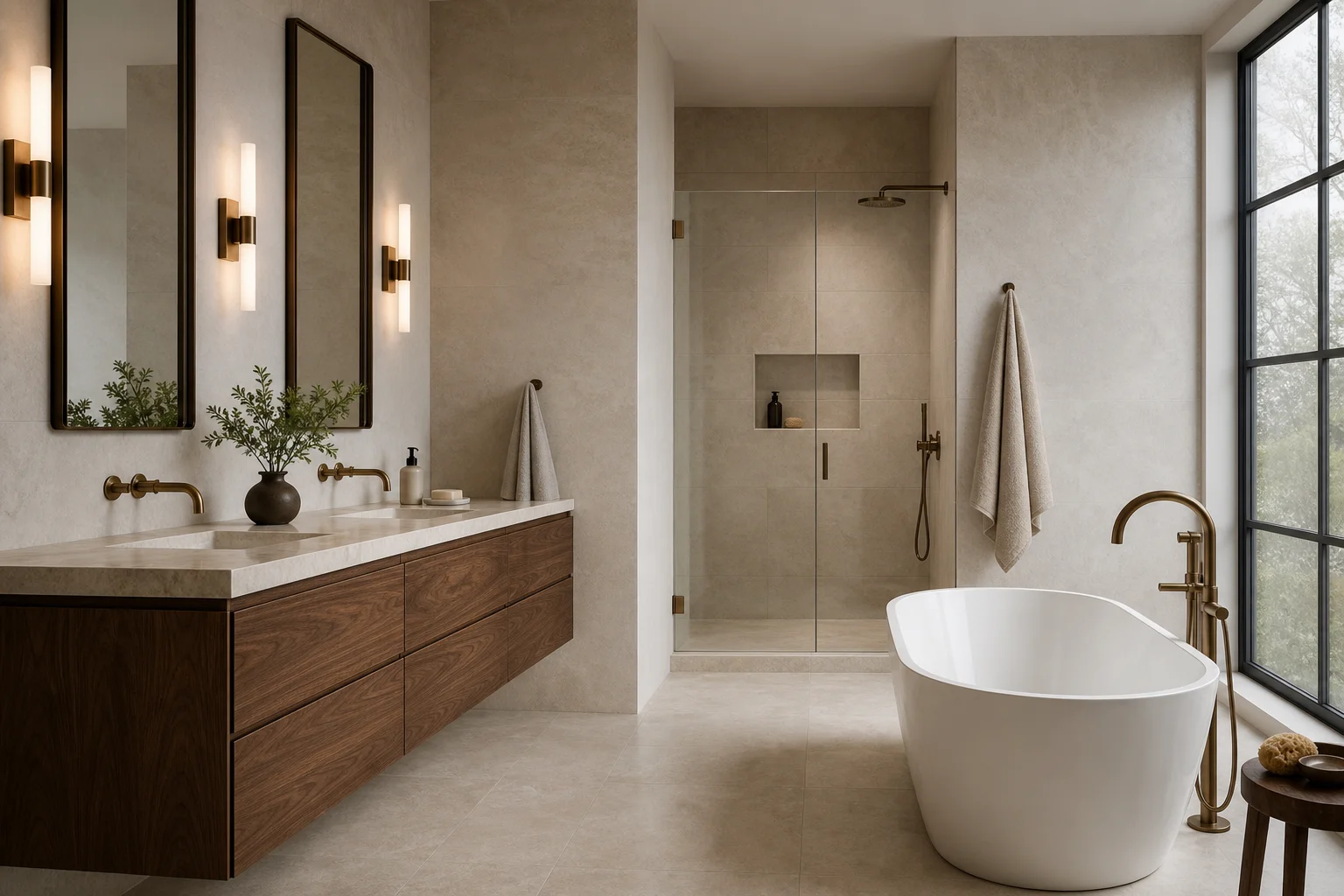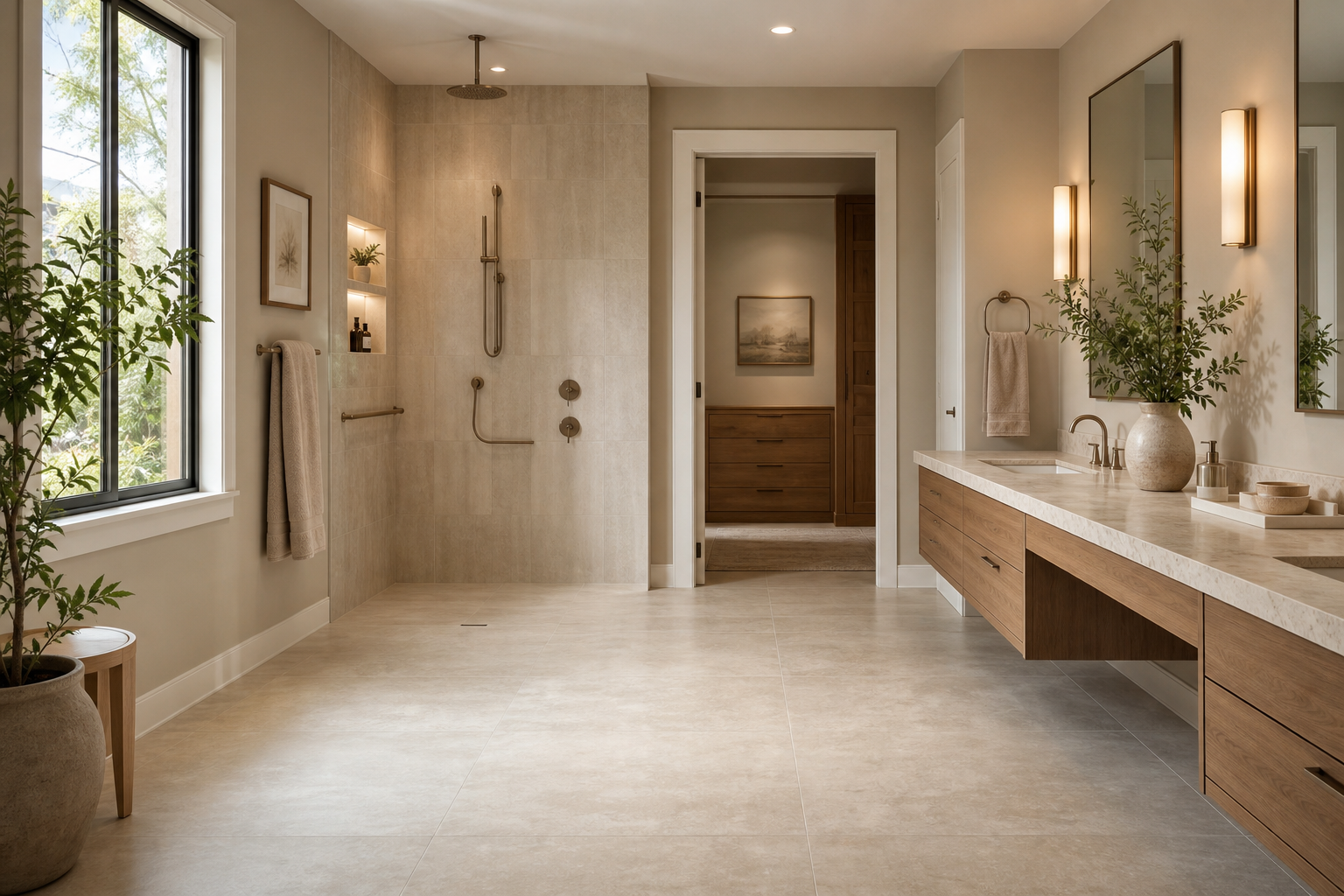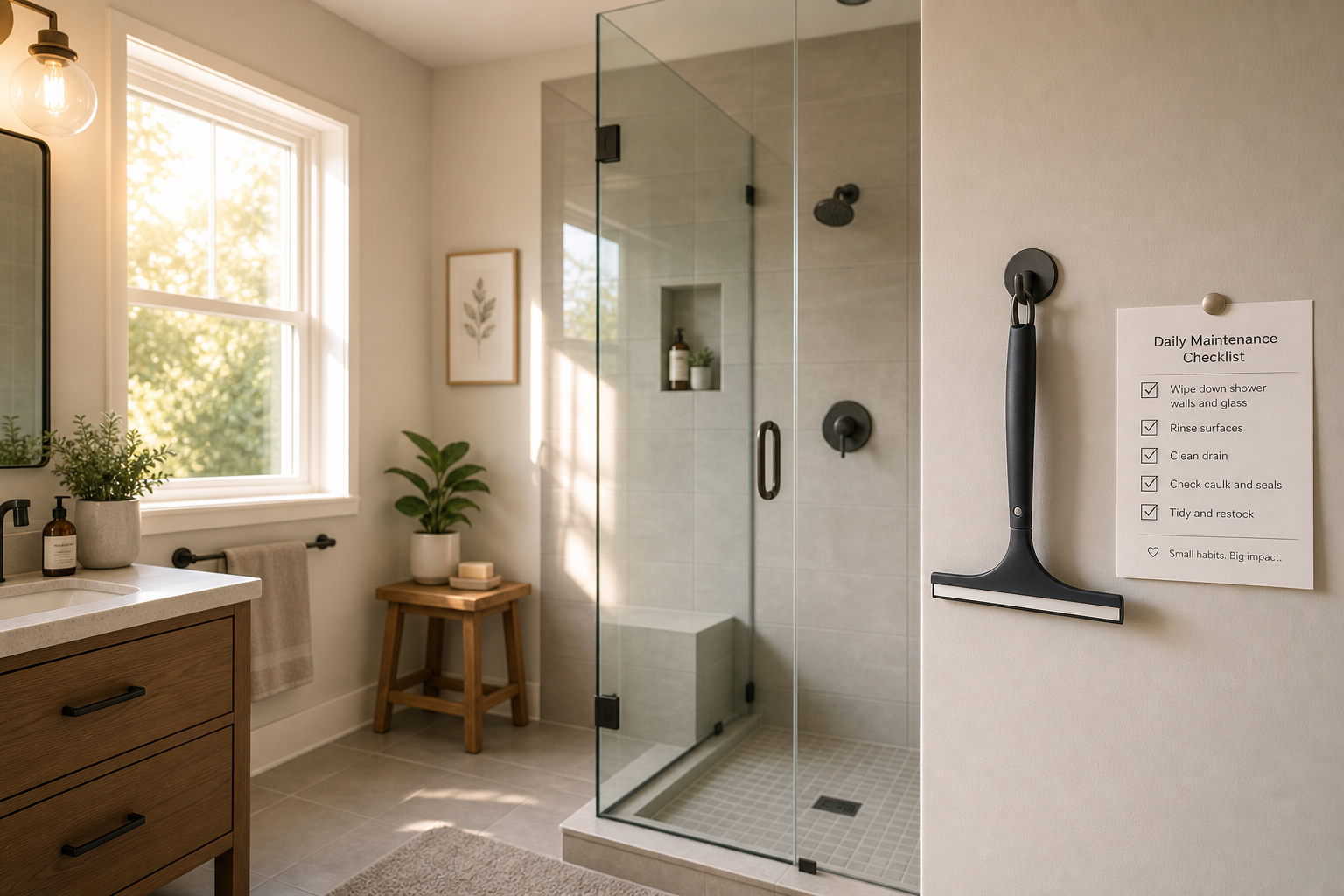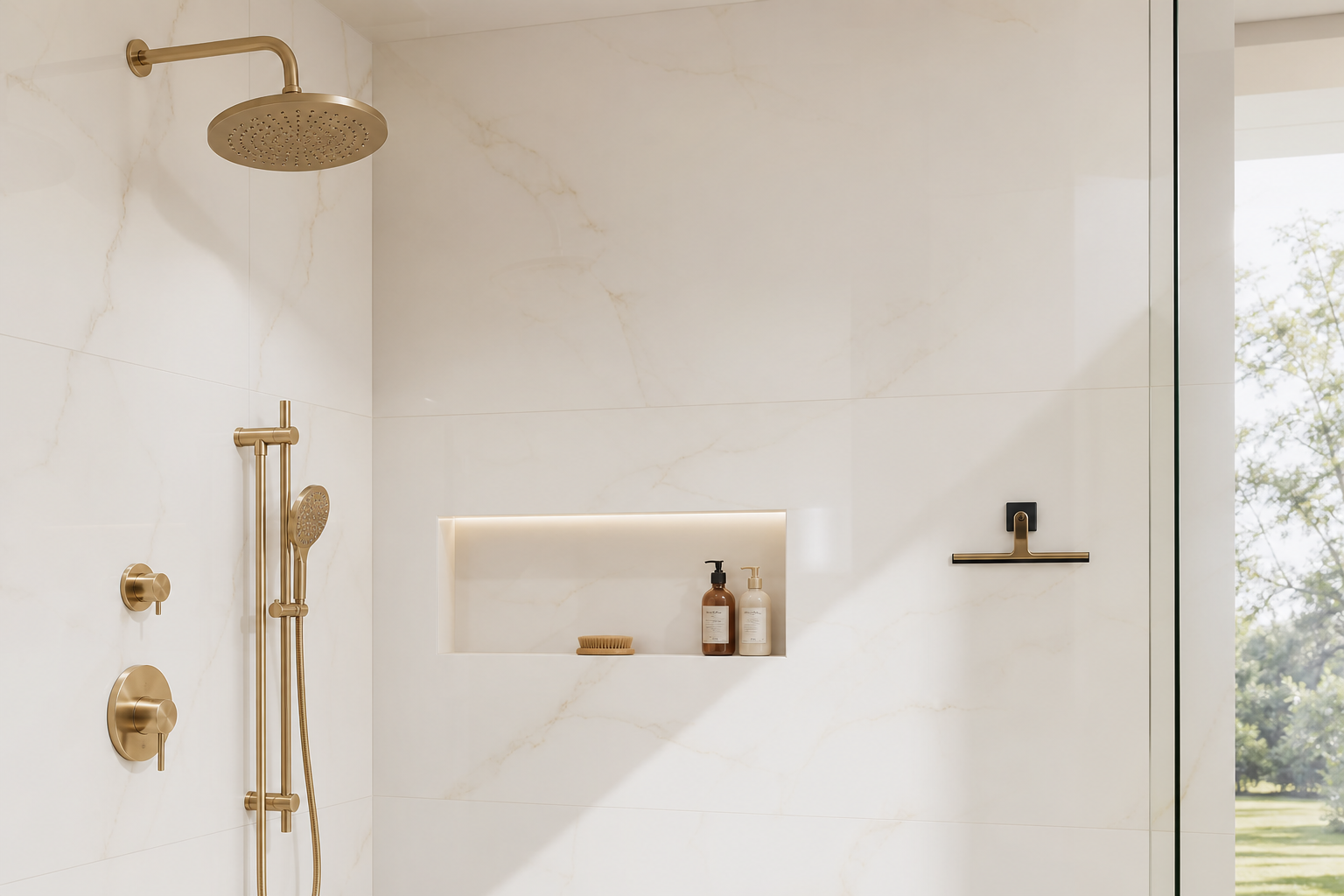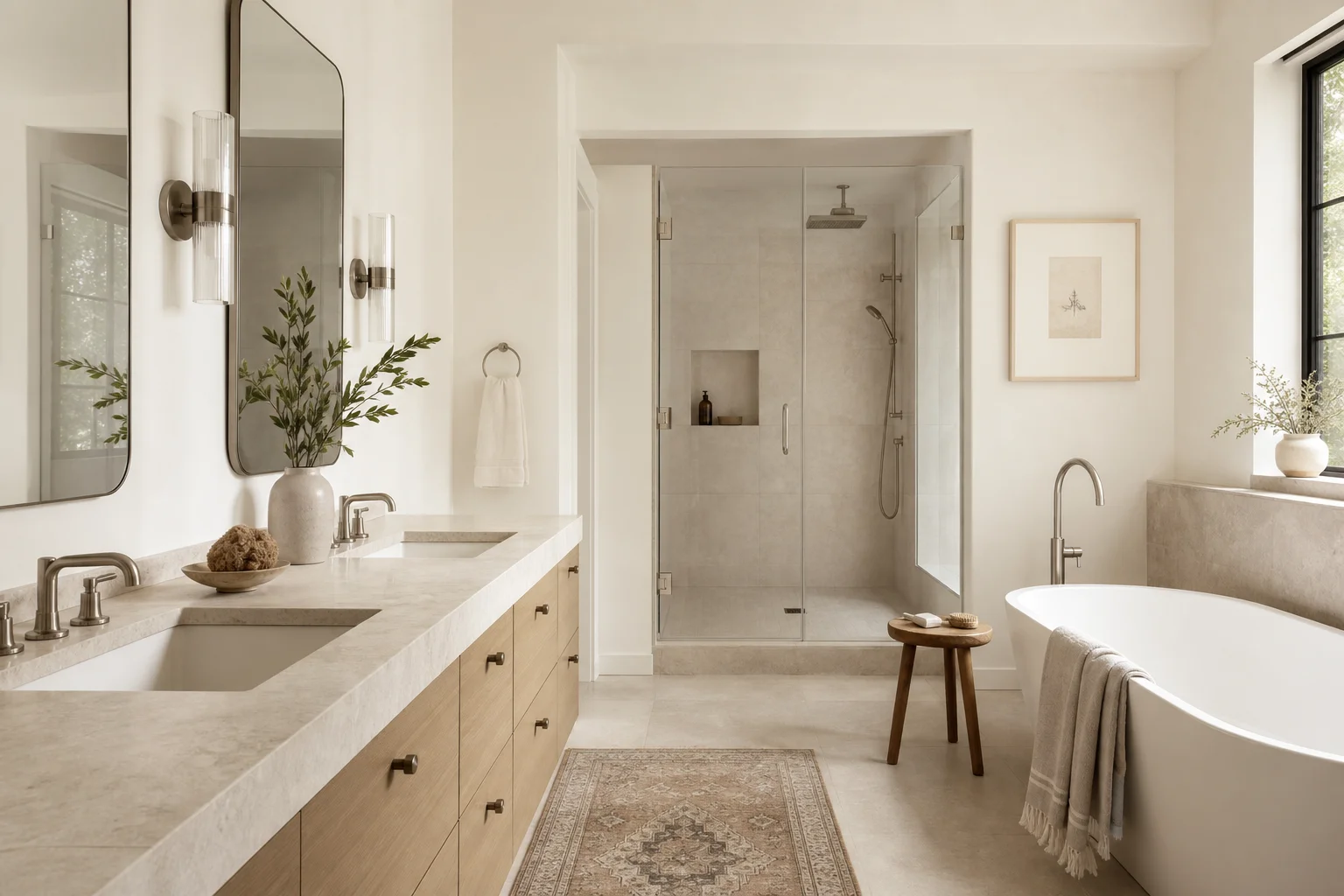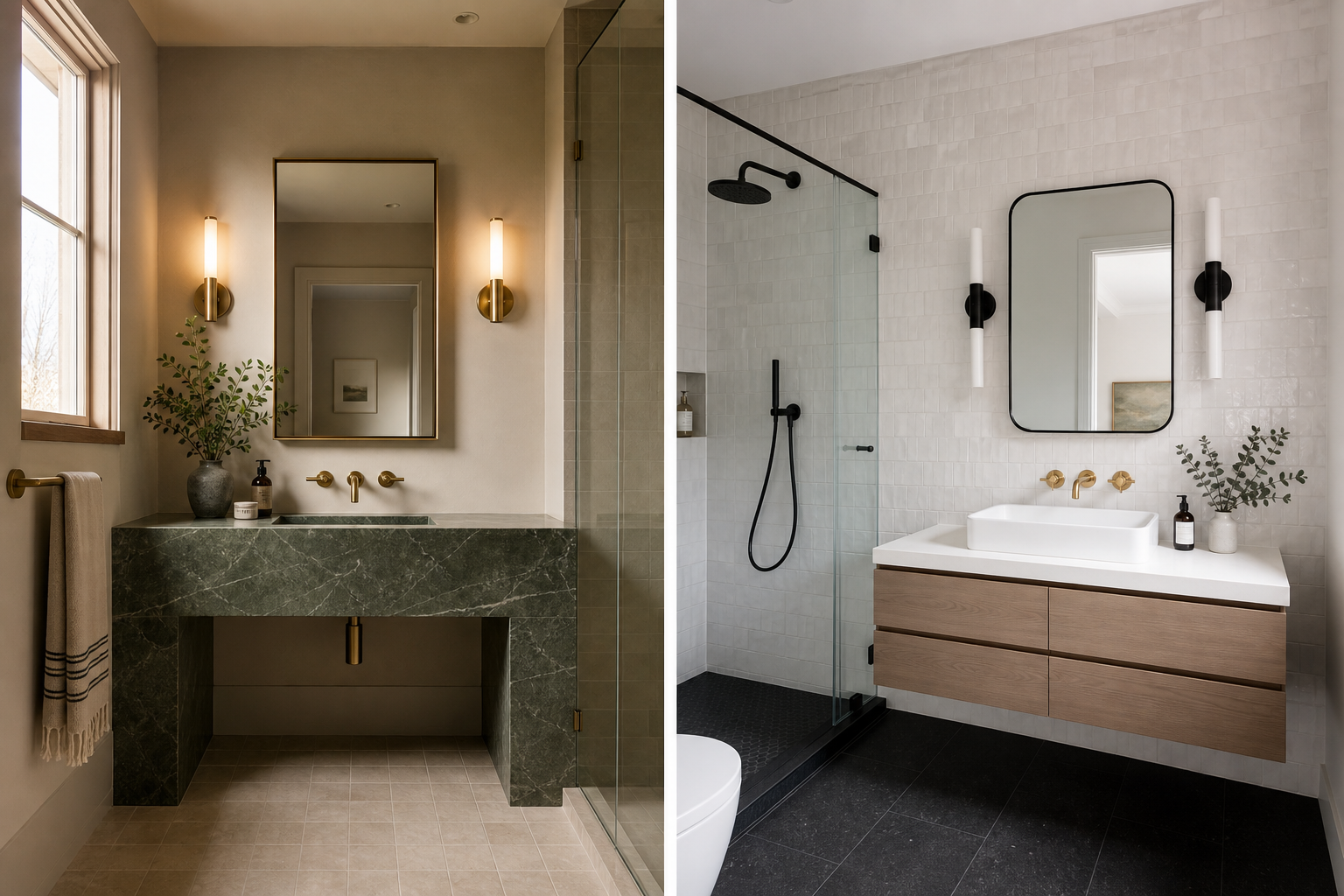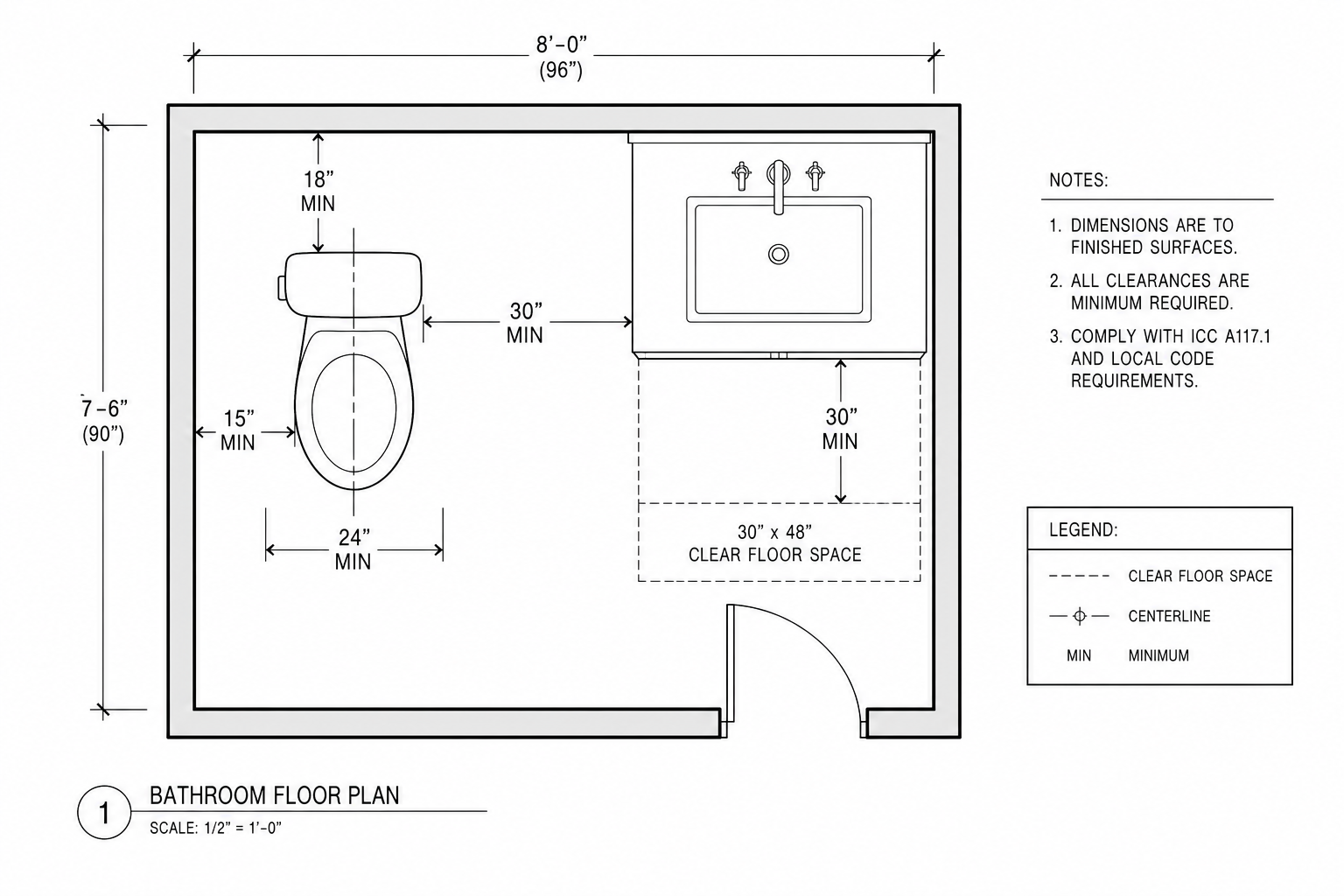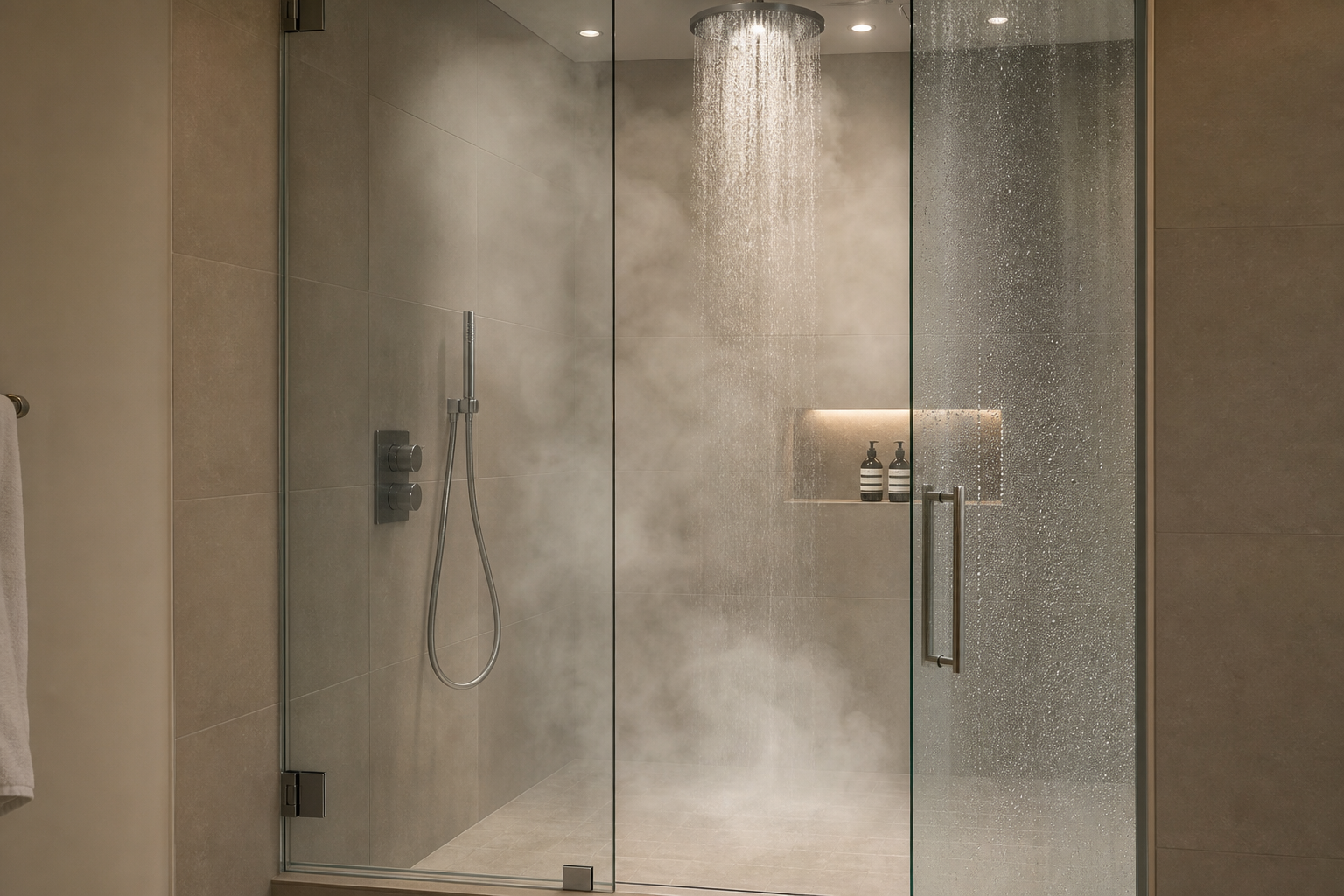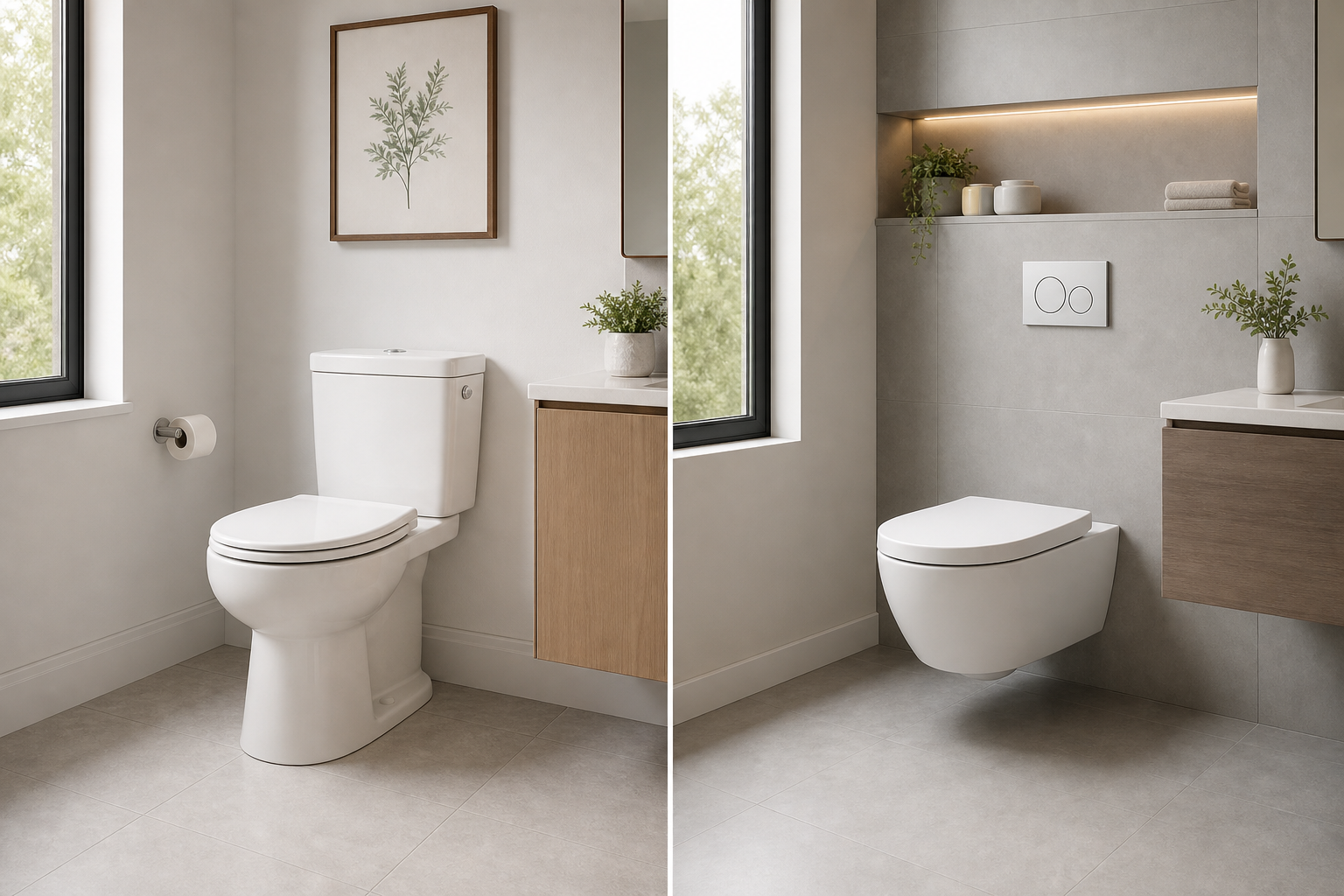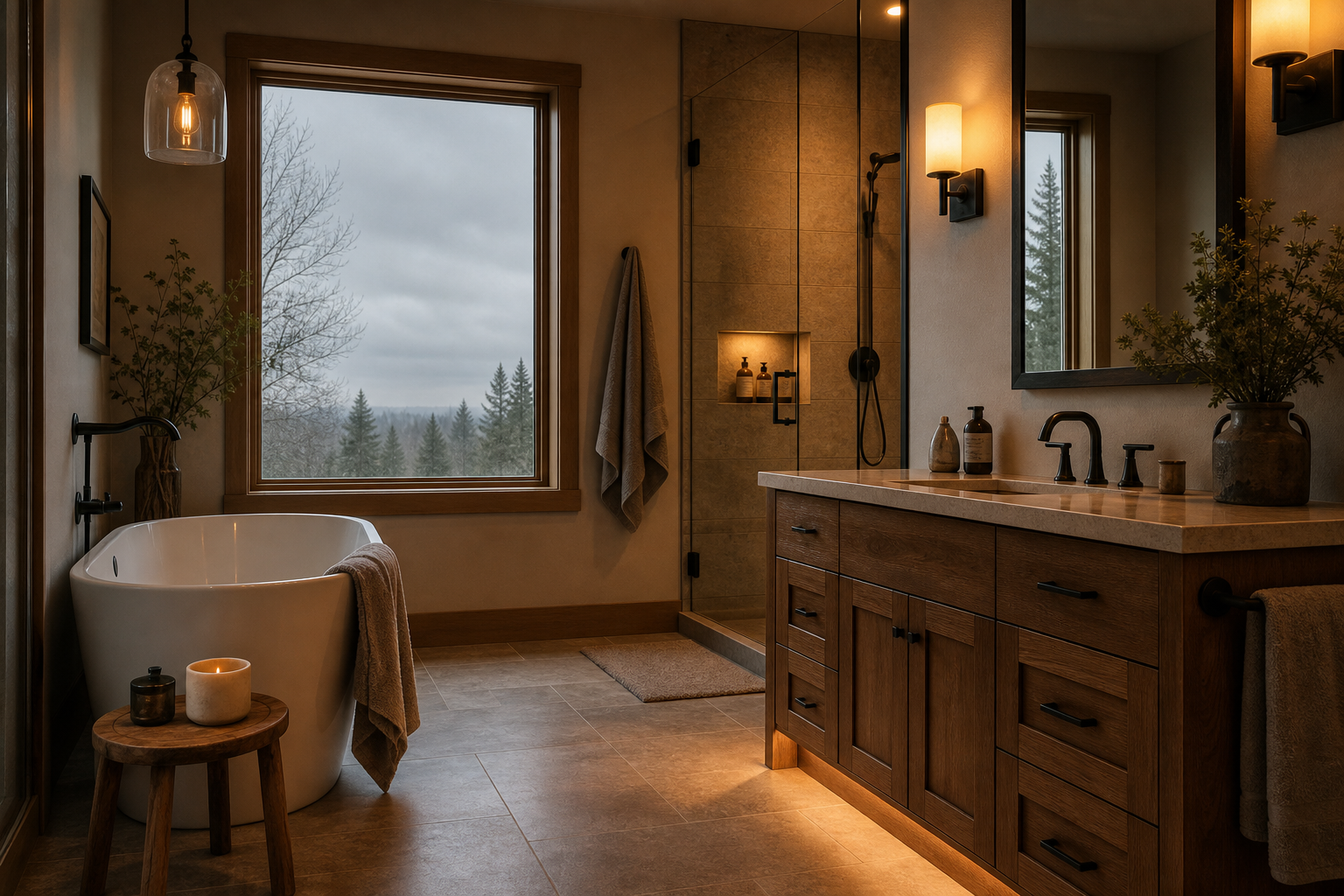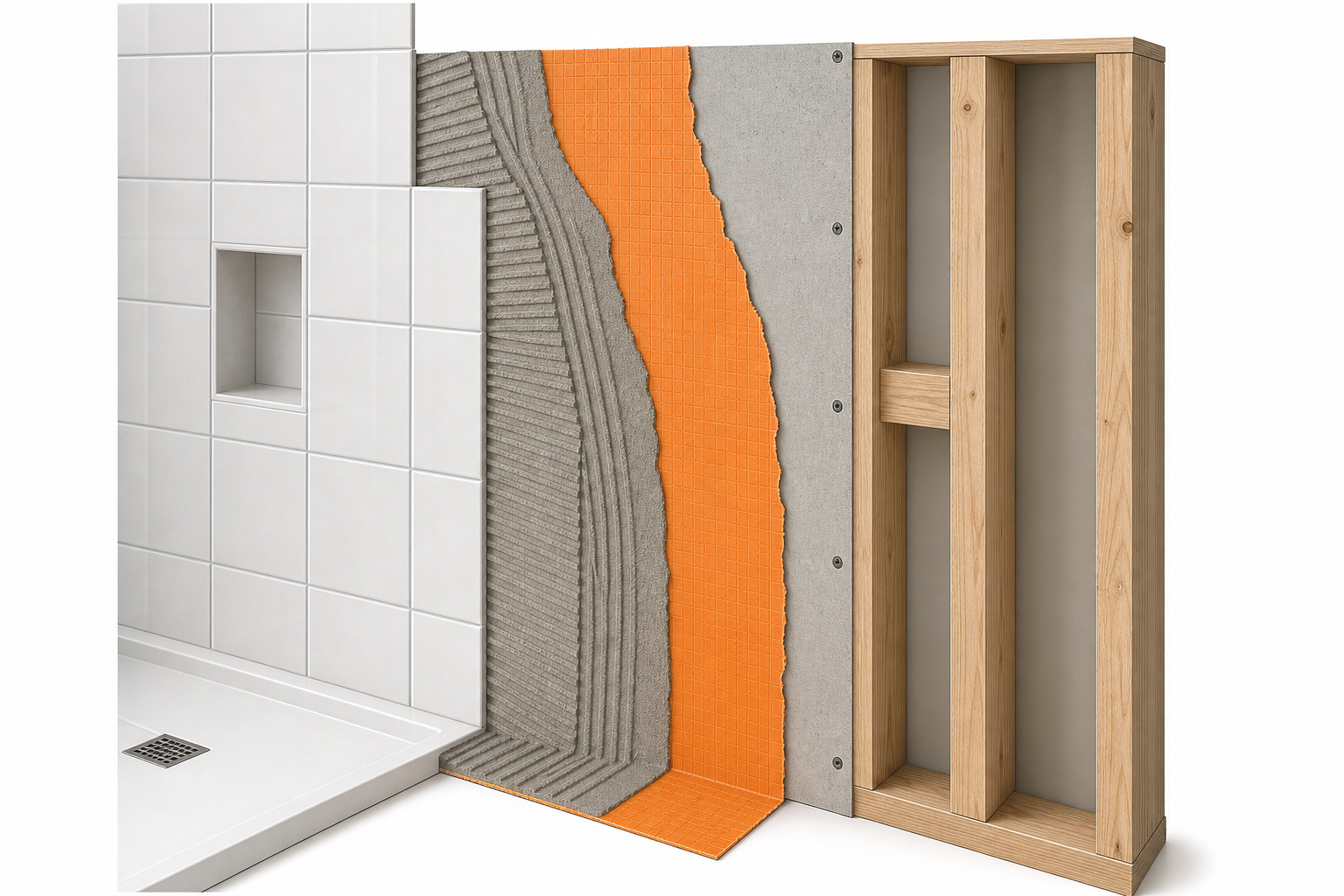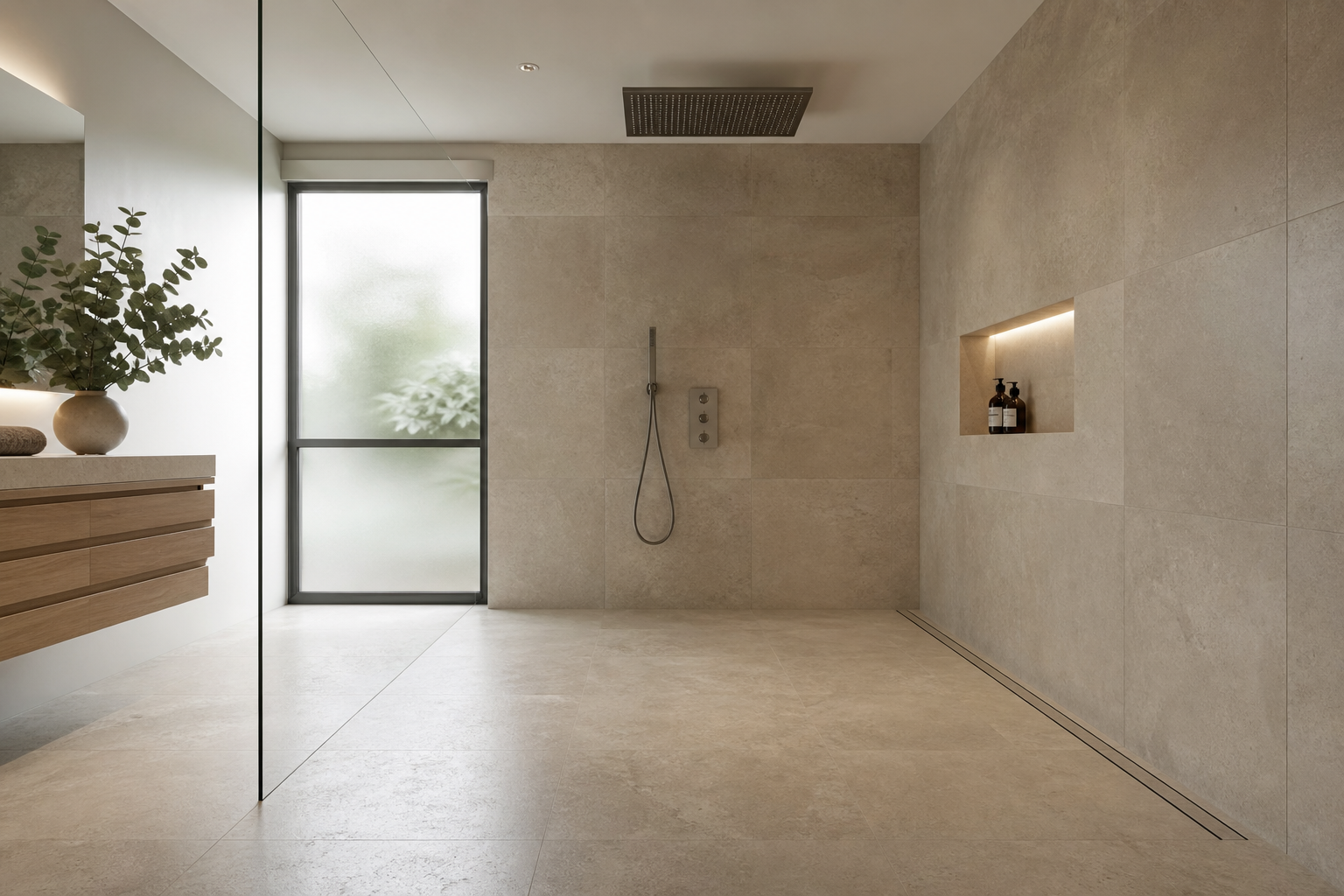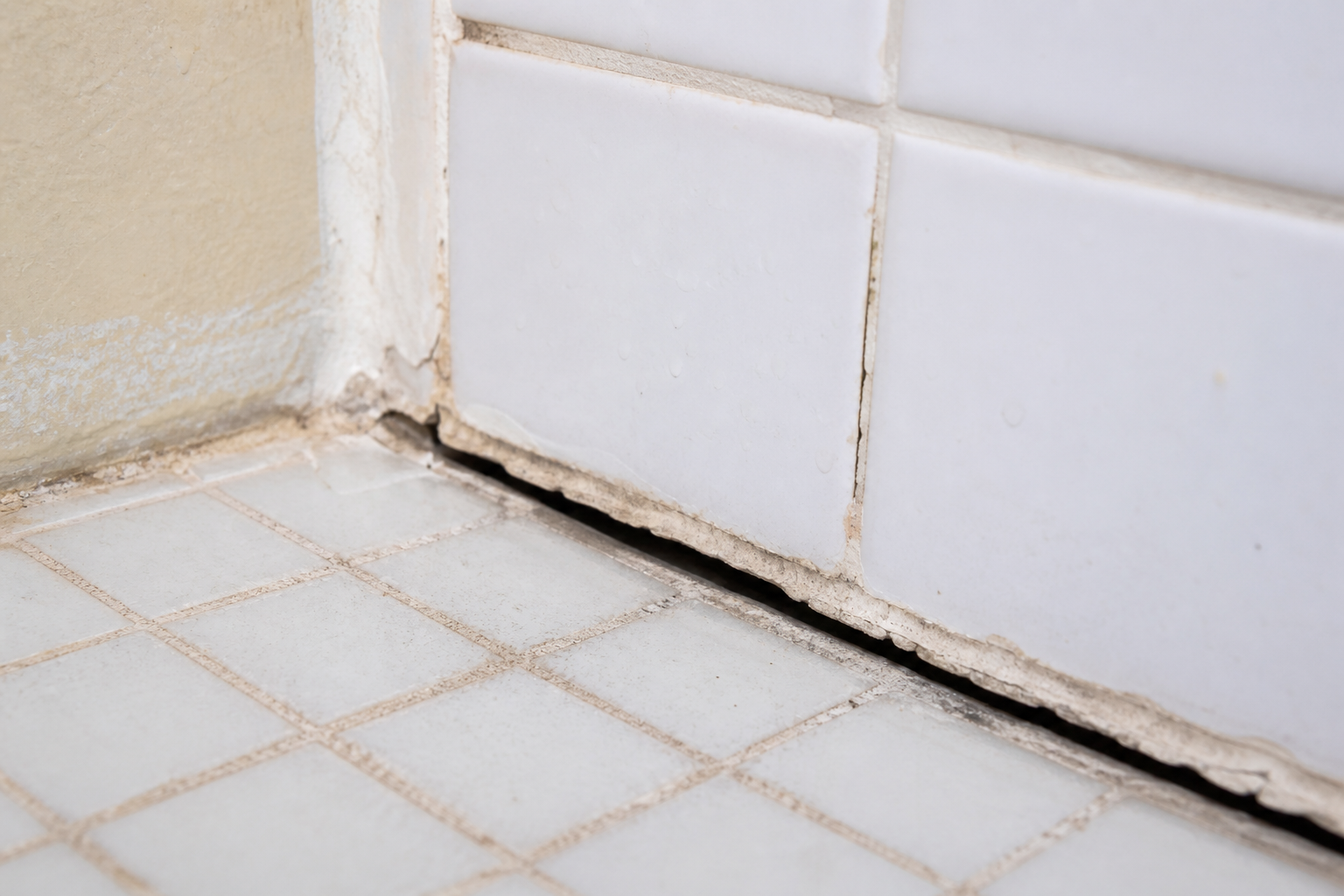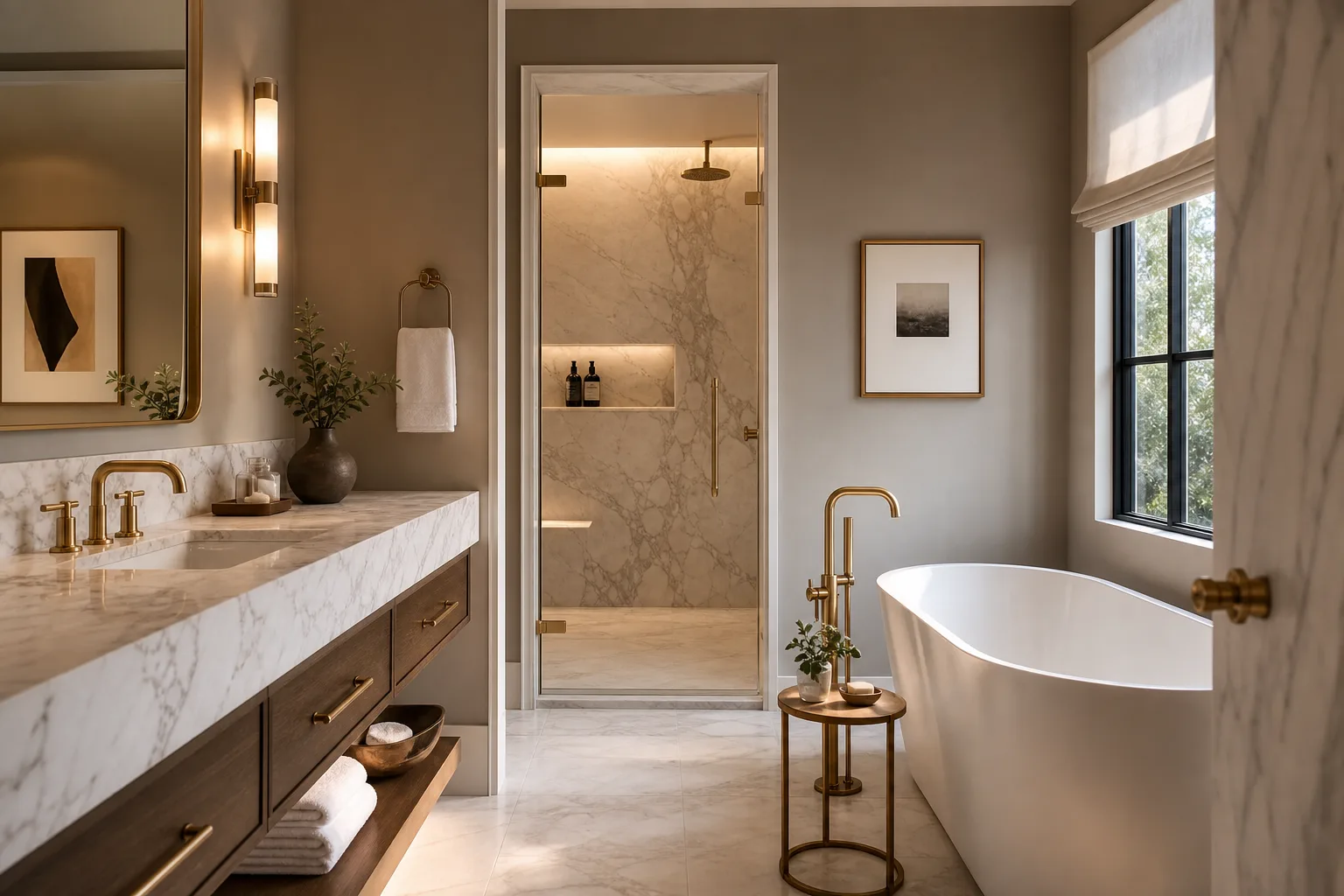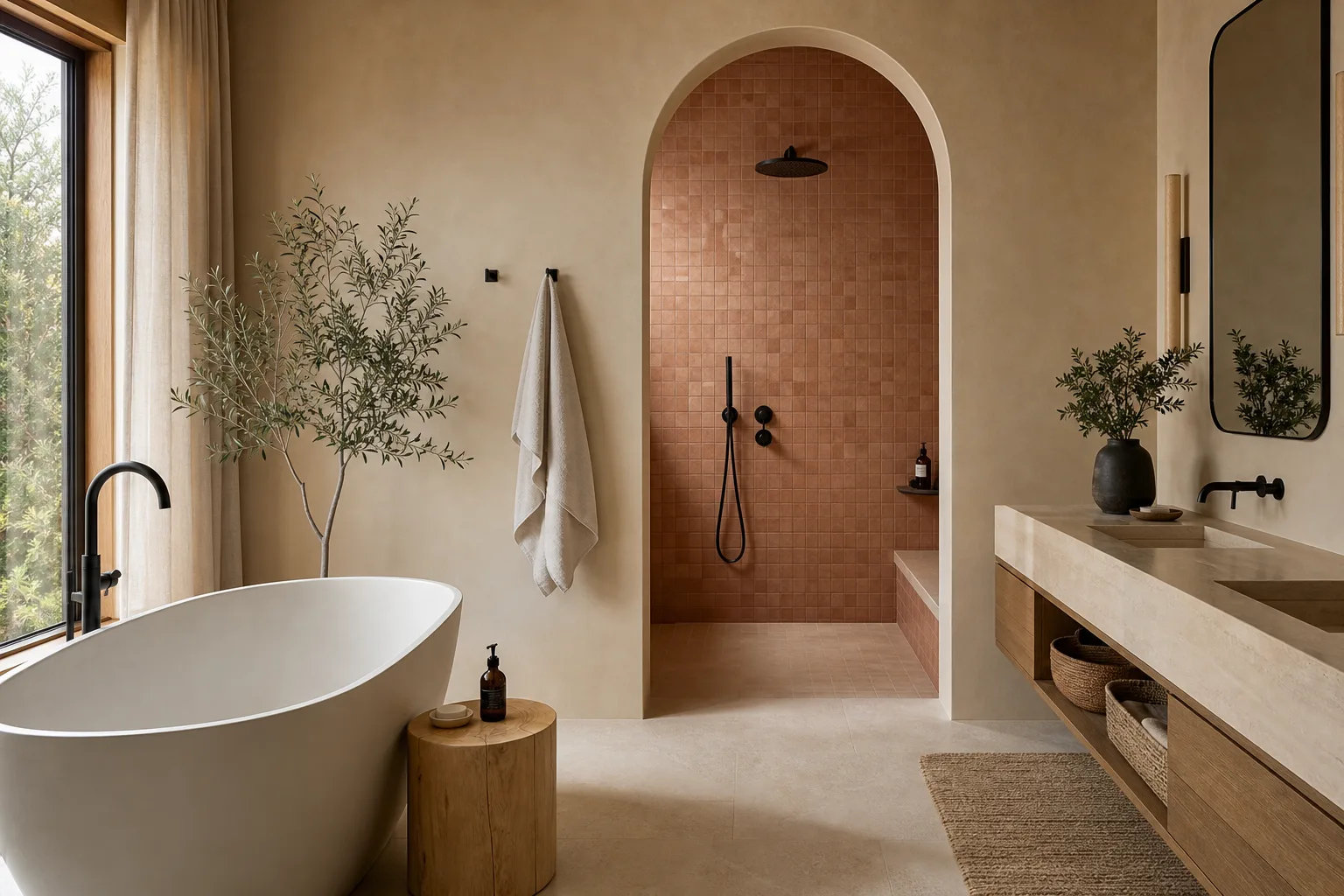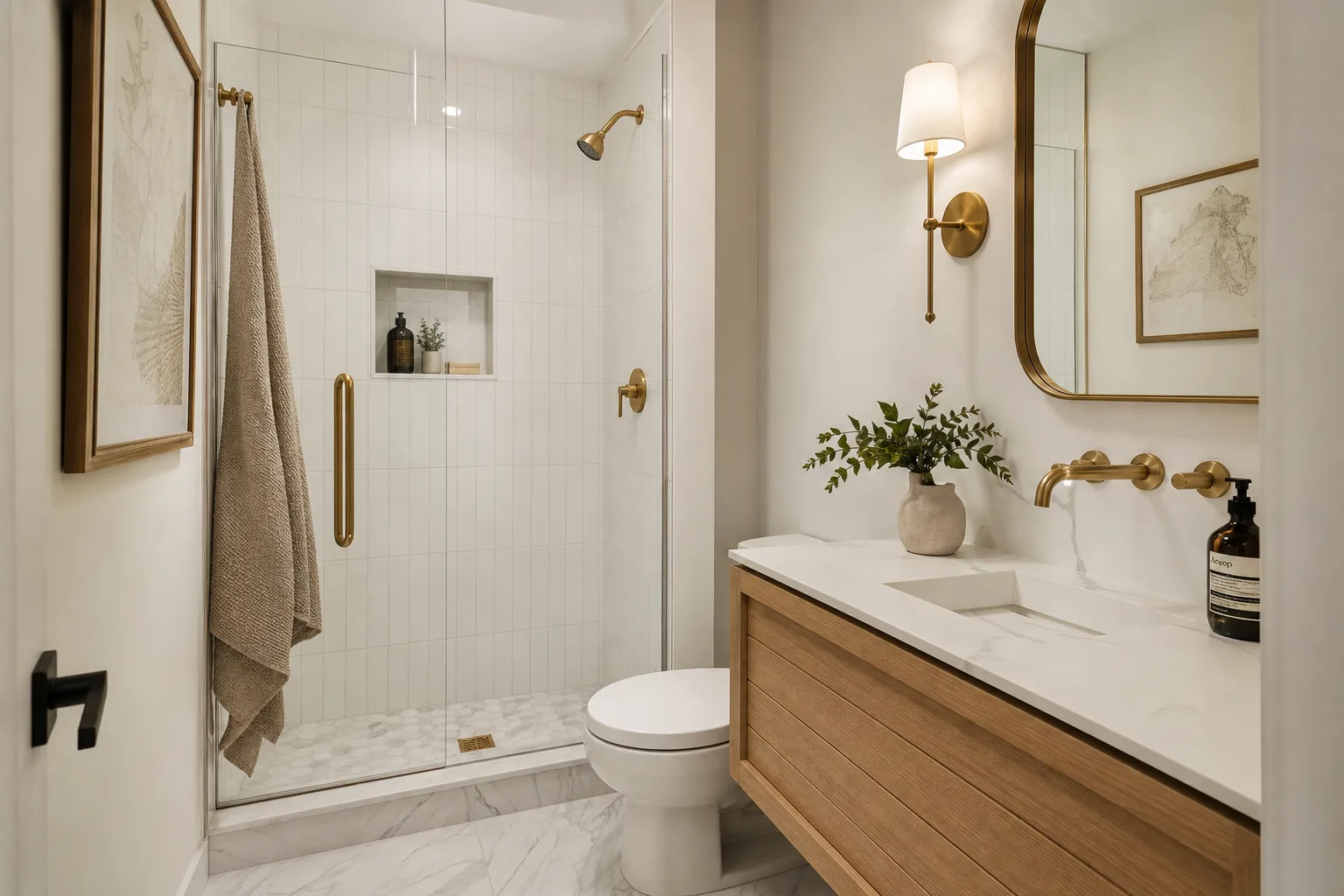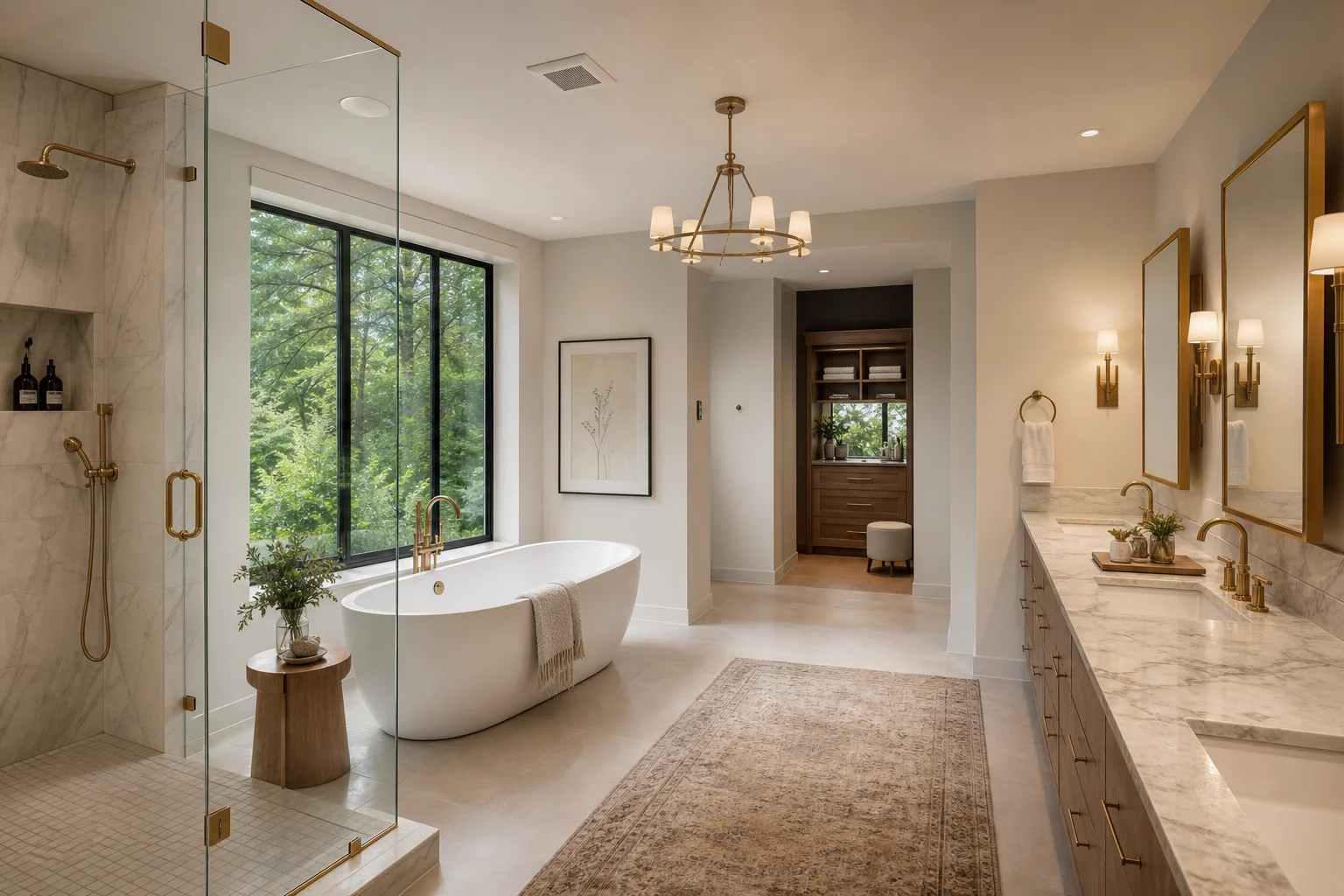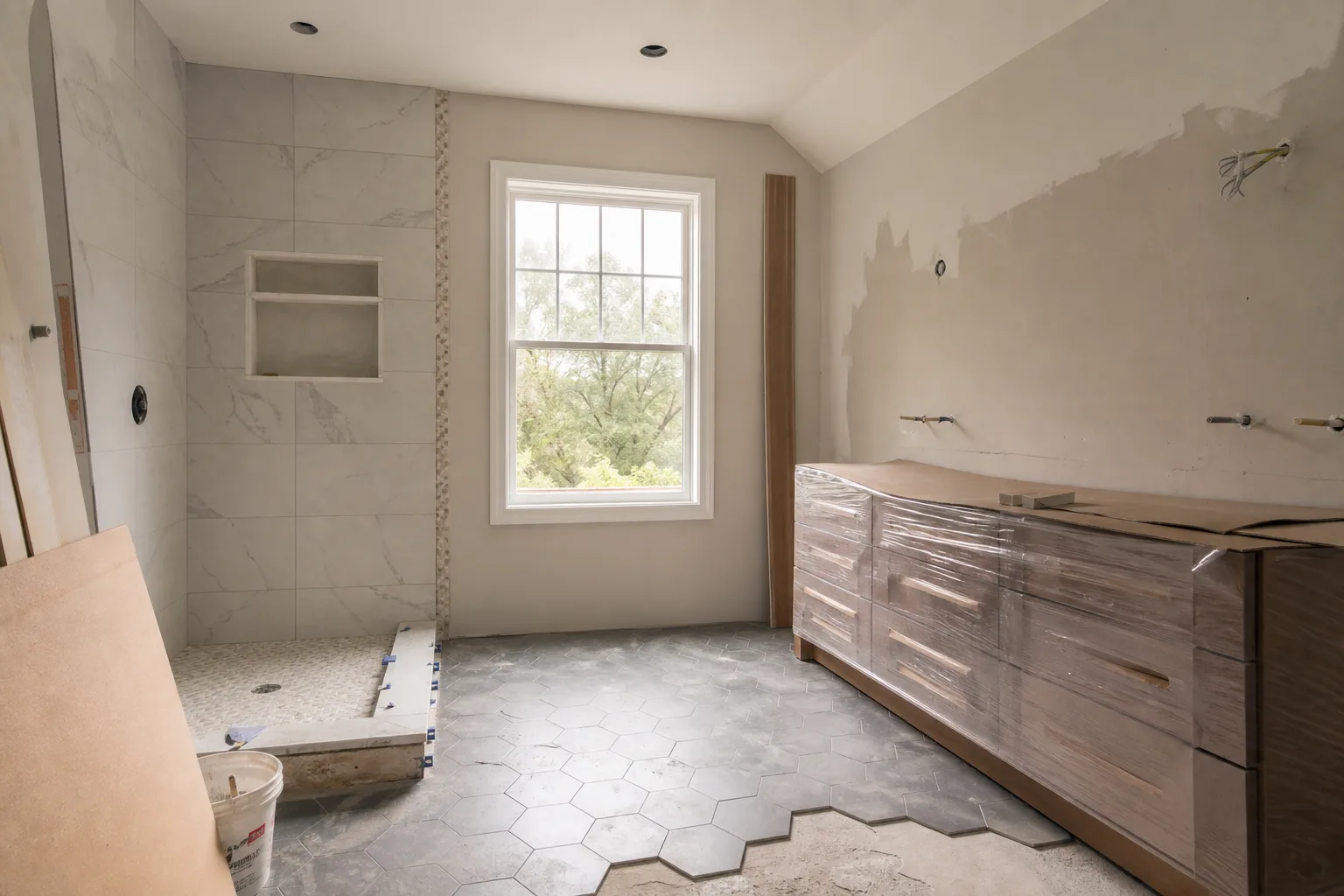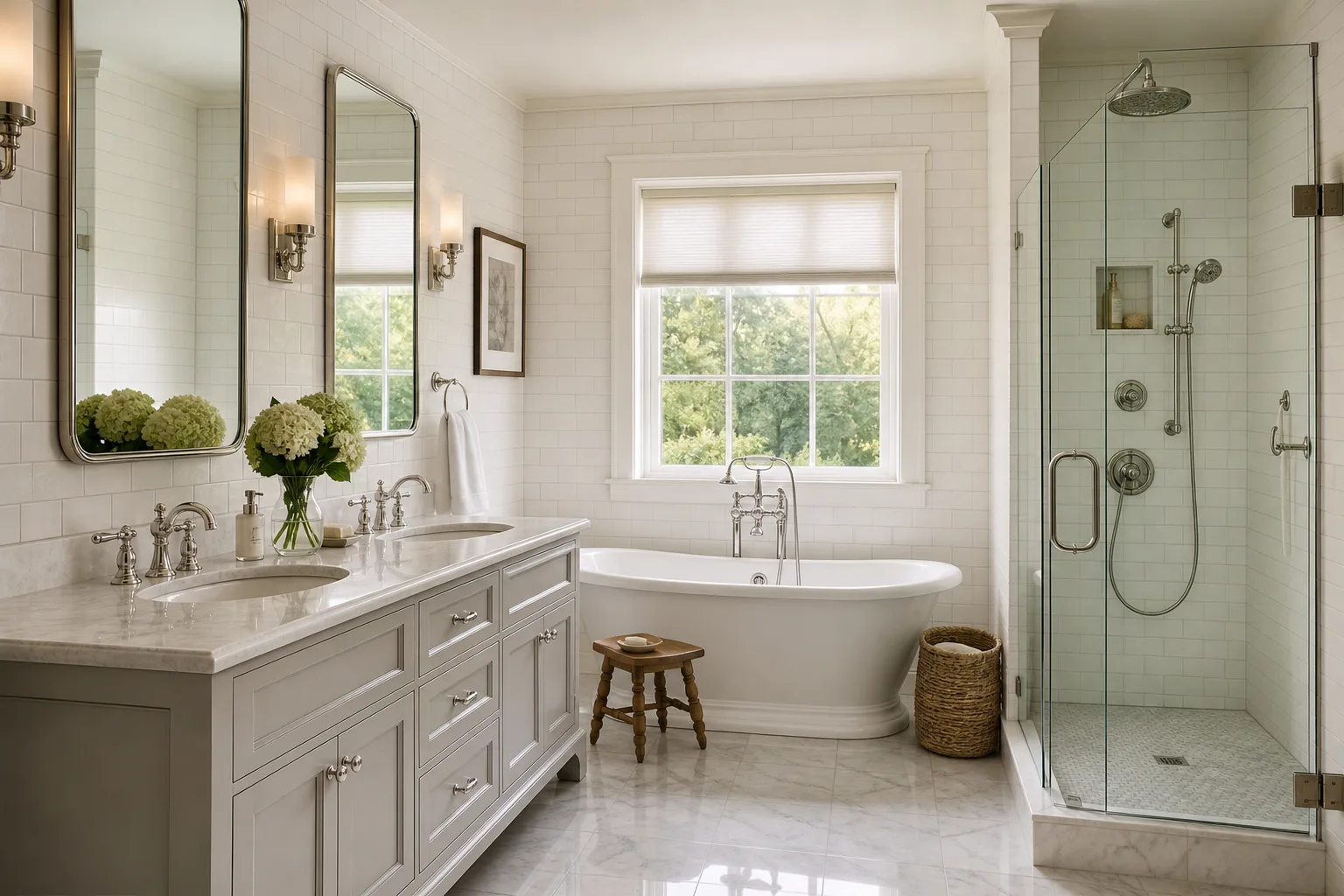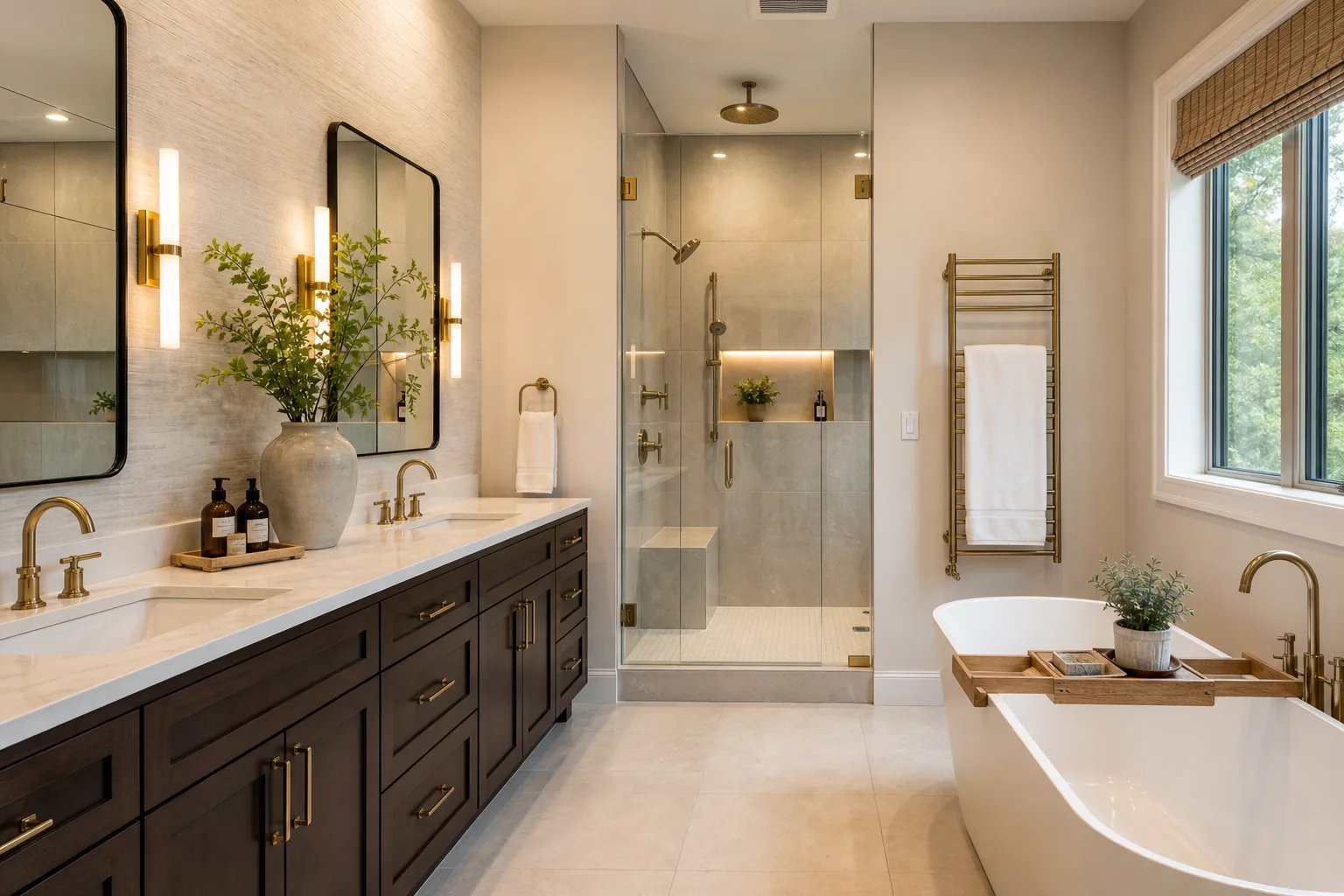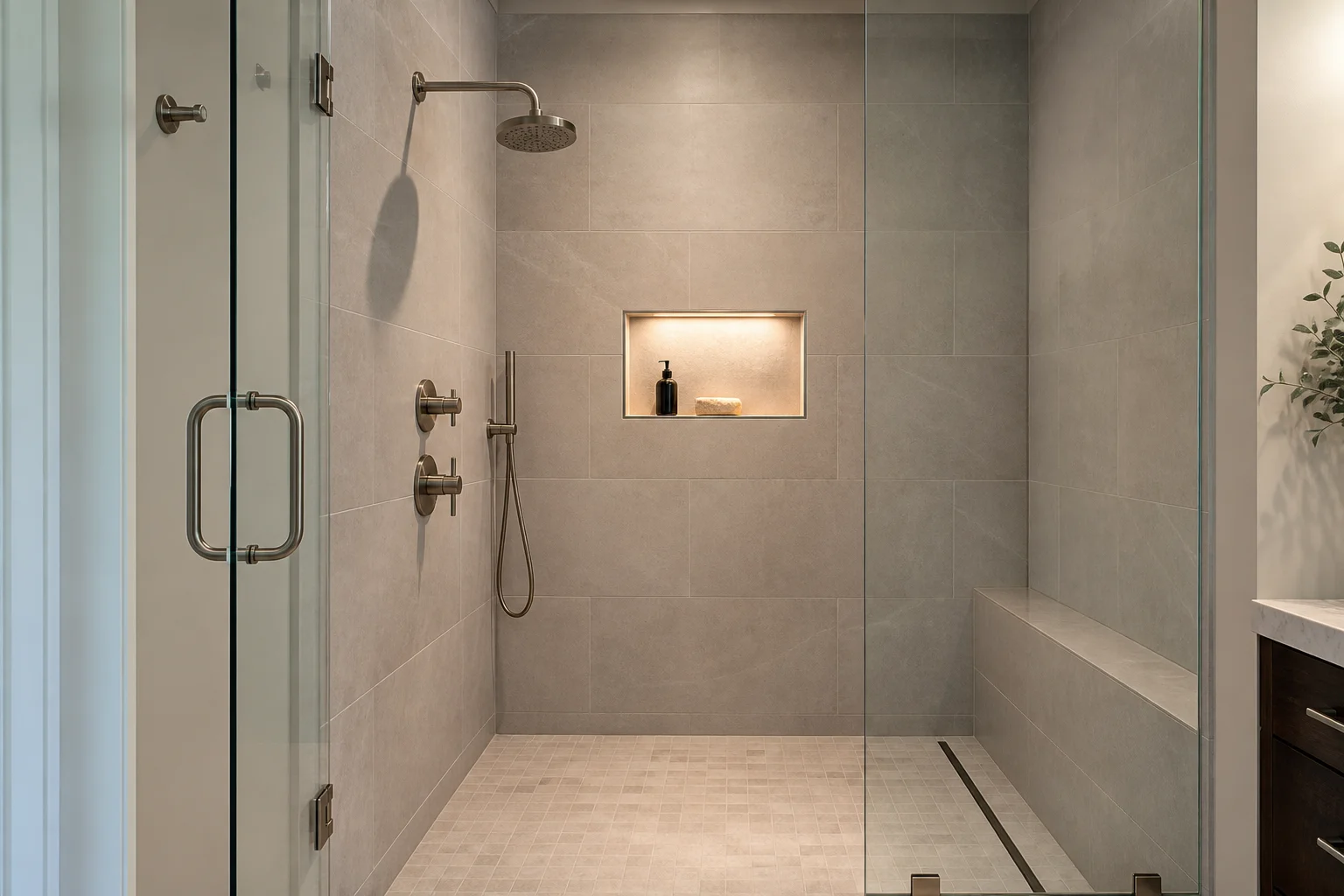
The first uncomfortable moment in many new showers happens before the shower even starts.
You open the glass, lean in, turn the handle, and take the first cold spray on your forearm, shoulder, or shirt sleeve. Then you stand outside the shower waiting for the water to warm, door open, bath mat damp, wondering why a room that cost so much still asks you to do something so awkward every morning.
This is not a fixture problem. It is a placement problem.
Shower controls are usually installed where they are easiest to plumb, easiest to center, or easiest to make symmetrical in a drawing. Those reasons are understandable. They are not always good enough. The person using the shower does not experience the valve as a plumbing diagram. They experience it as a reach, a sequence, a temperature adjustment, and a small daily ritual that either makes sense or does not.
In bathroom design, the smallest rough-in decisions often have the longest emotional life.
The Common Placement: Under The Showerhead
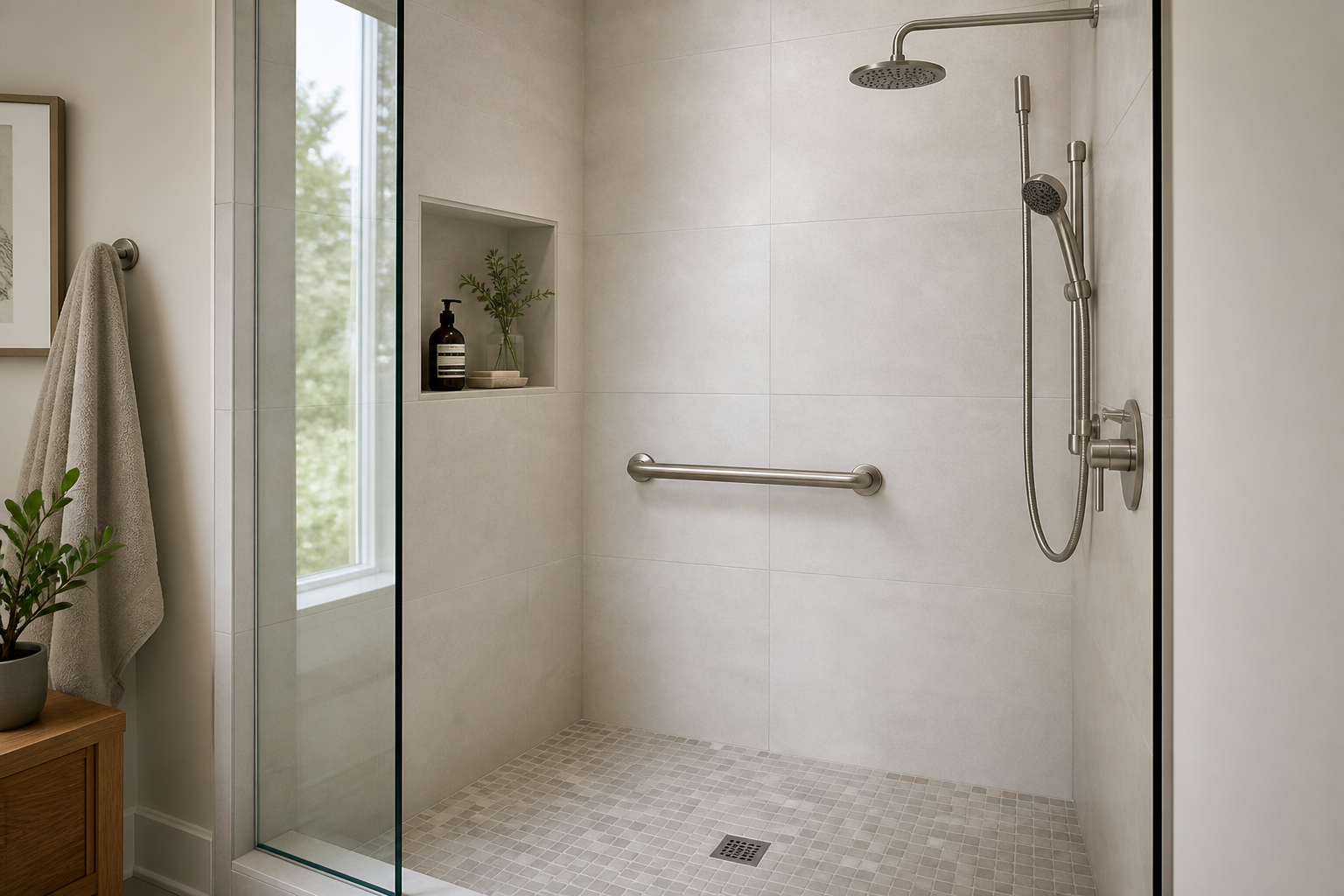
The default shower layout puts the control valve on the same wall as the showerhead, usually centered beneath it. In many simple tub-shower combinations, that arrangement is expected and often practical. The plumbing wall is already there. The valve and head stack neatly. The tile layout has an obvious centerline.
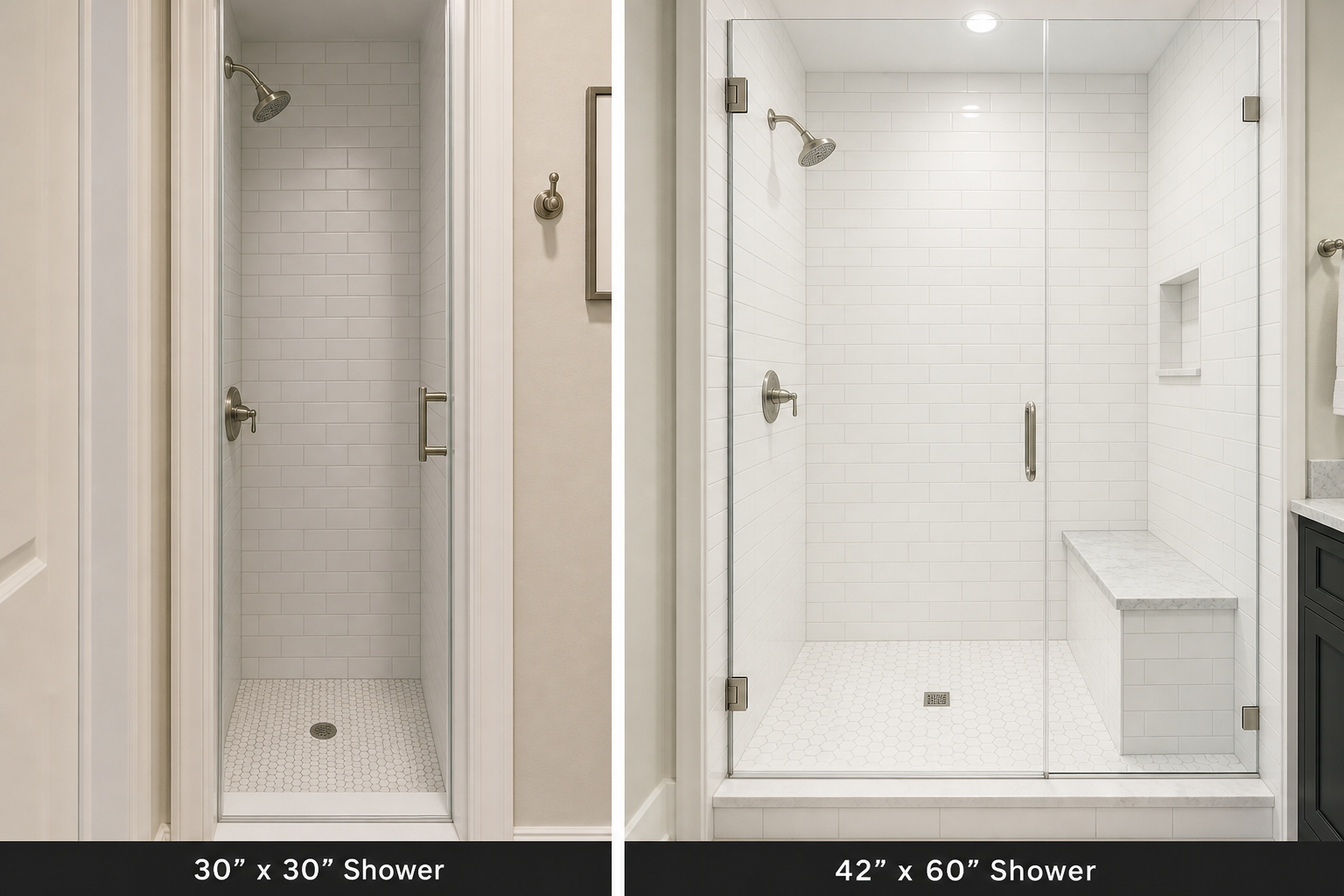
But in a custom shower, especially one with glass, a larger footprint, a bench, multiple heads, or a curbless entry, the default can become lazy.
The problem is not that a valve beneath the showerhead is always wrong. The problem is that it often forces the user to enter the spray zone before the water is comfortable. If the showerhead points toward the door, the person adjusting the valve may get wet before they intended to. If the valve is behind a fixed glass panel, it may require an awkward reach. If the valve is near a bench or niche, the layout may force competing uses into one crowded wall.
The first question should not be "where does the valve look centered?" It should be: where can a person turn on the shower comfortably before stepping under the water?
That question changes the room.
Think In Sequences, Not Objects
A shower is not a set of objects. It is a sequence:
1. Open the door or pass through the entry. 2. Reach the controls. 3. Turn on water. 4. Wait for temperature. 5. Step in without getting sprayed too early. 6. Adjust temperature while standing in the normal showering position. 7. Reach shampoo, soap, razor, towel, and hooks without choreography.
Good placement respects that sequence. Poor placement interrupts it.
When controls are located near the shower entry, the user can start the water without entering the wet zone. When the valve is placed on a side wall, the showerhead can be aimed away from the entry. When a thermostatic valve is paired with separate volume controls, a larger shower can serve multiple outlets without making the control wall confusing. When a handheld is included, its bracket and hose path need to be imagined at the same time as the main valve.
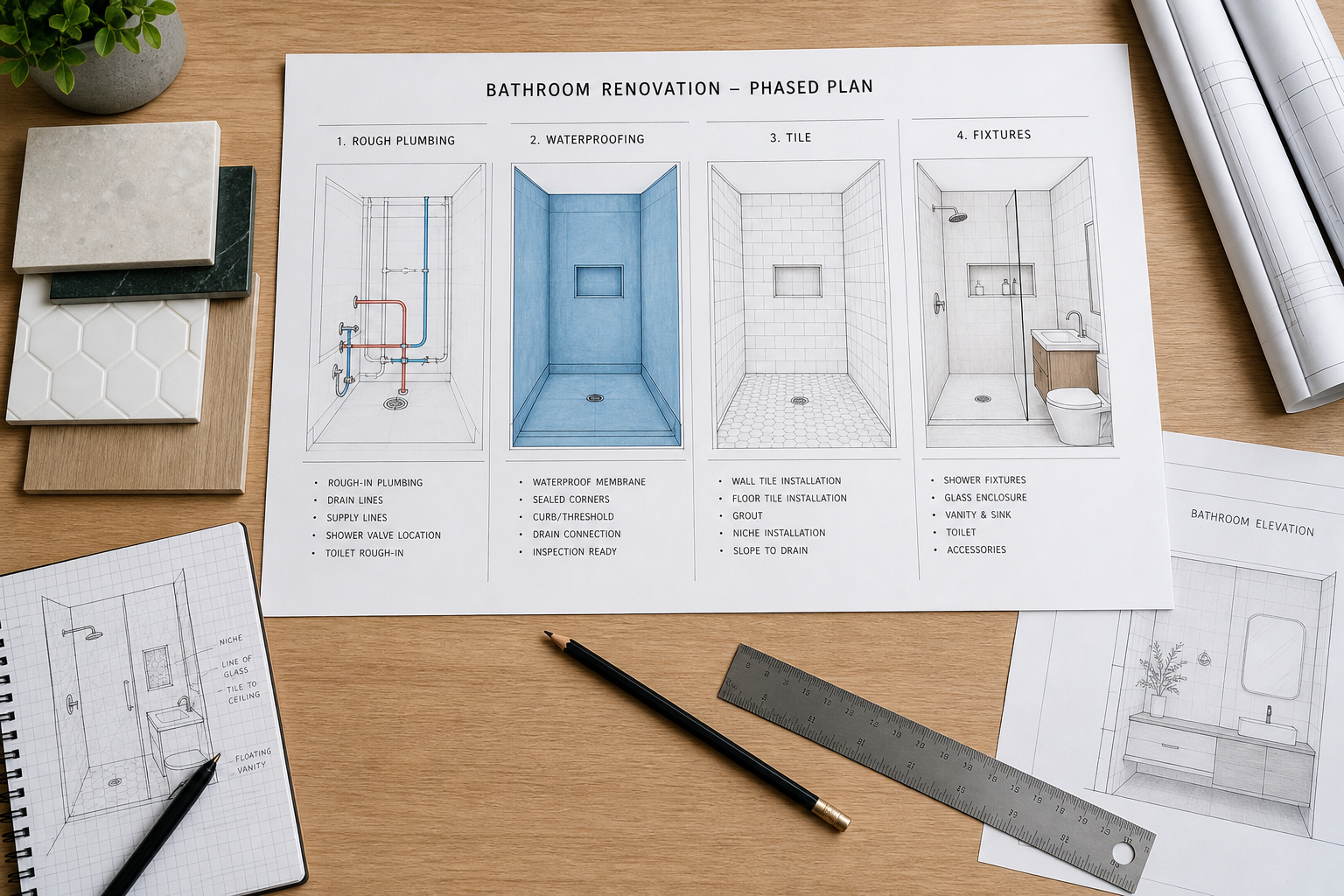
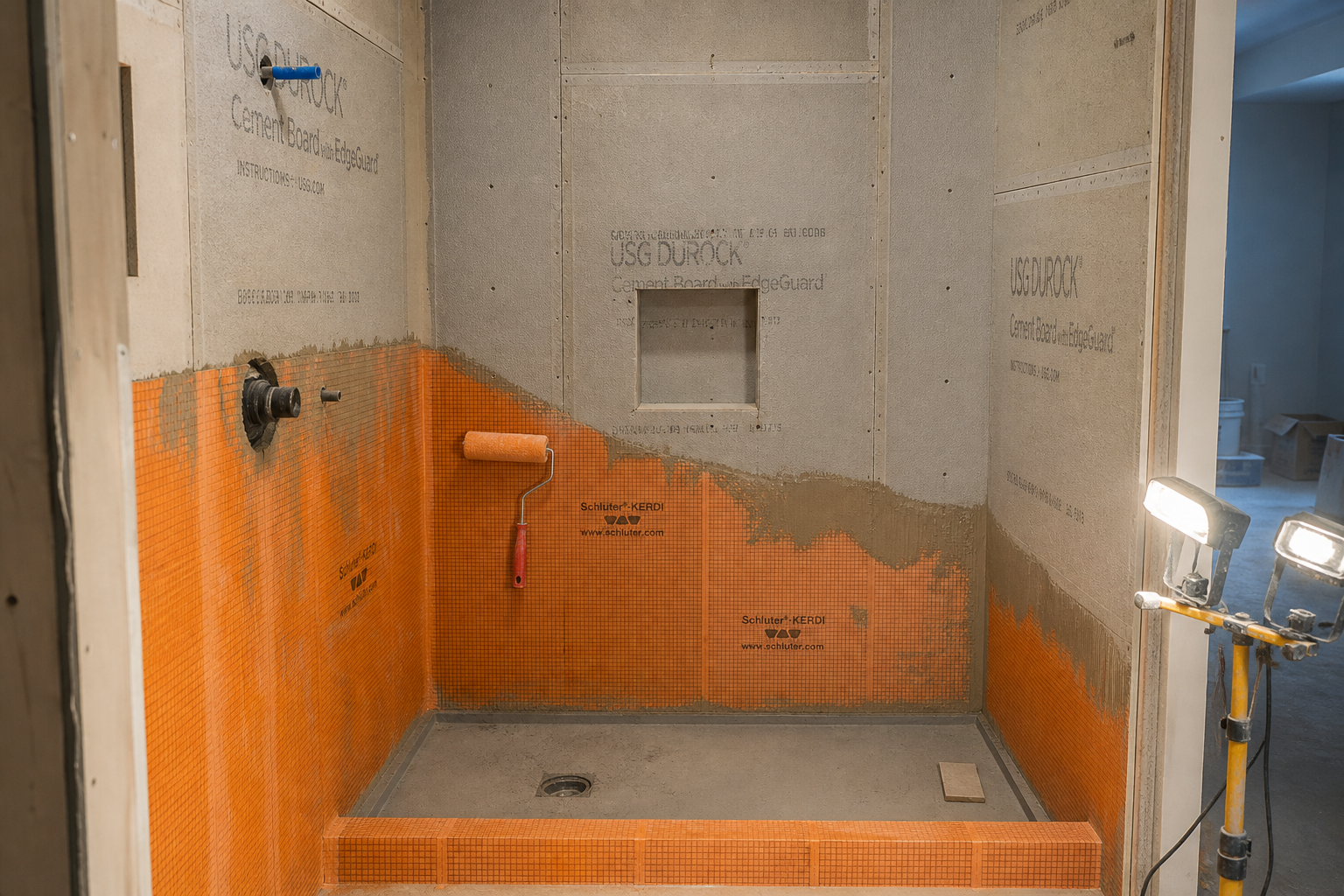
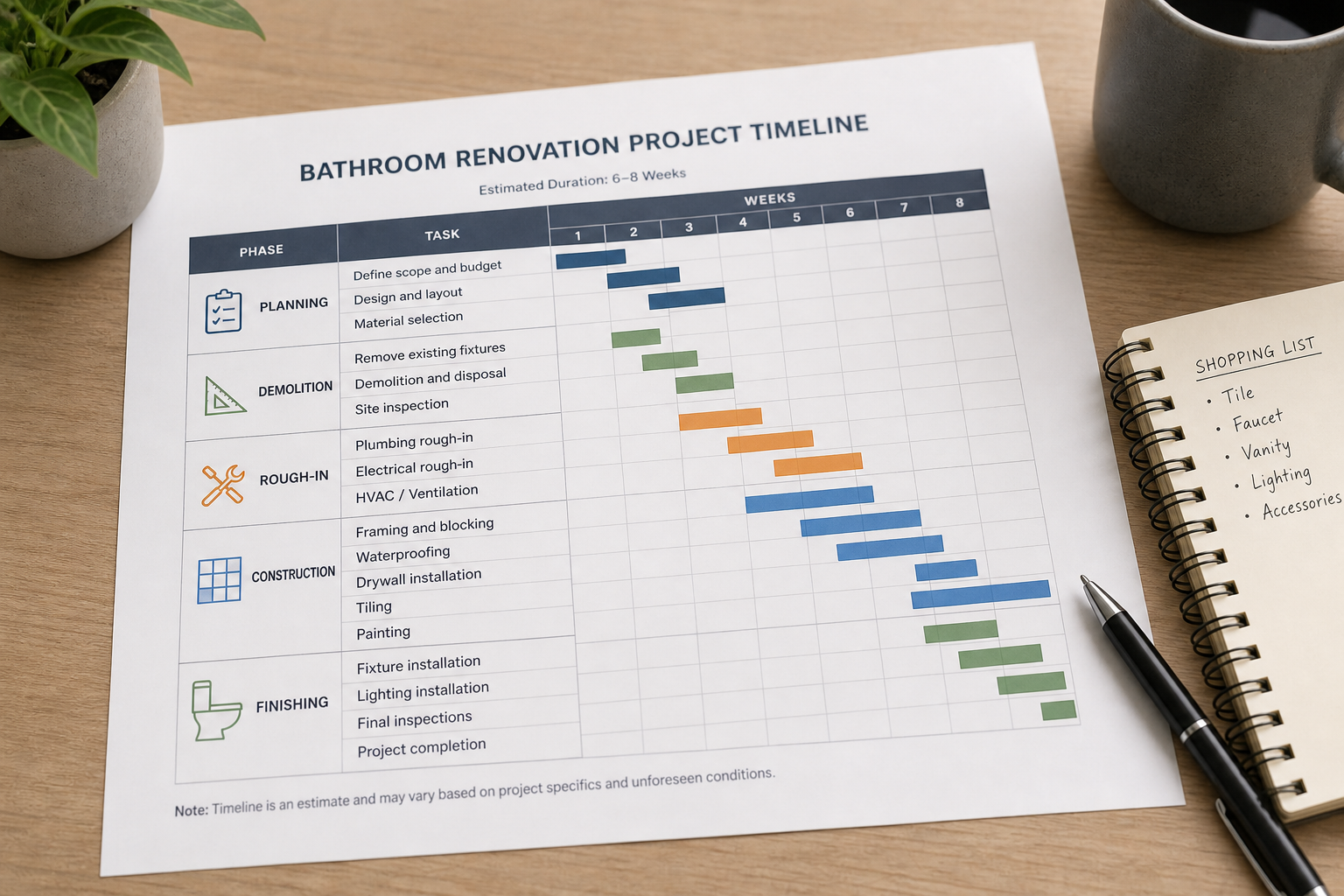
This is why valve placement should be decided before tile layout, niche placement, and glass design are finalized. If the controls move later, the whole wall may change.
The Difference Between Pressure-Balance And Thermostatic Controls
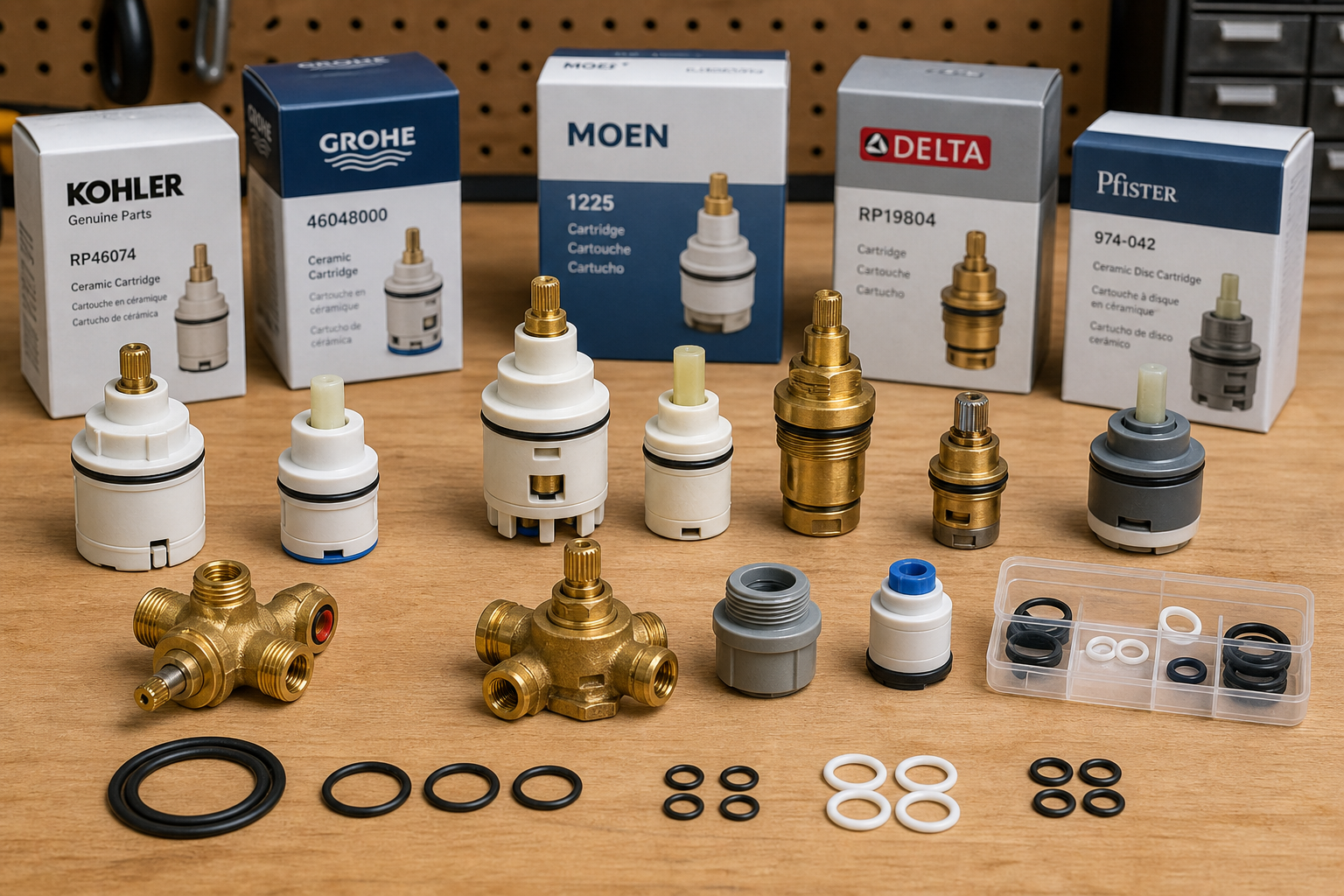
Homeowners often choose shower trim by finish and silhouette. The rough valve behind the wall matters more.
A pressure-balance valve helps maintain a safer temperature when pressure changes elsewhere in the plumbing system. If someone flushes a toilet or runs a sink, the valve helps reduce sudden temperature swings. These valves are common and practical for many showers.
A thermostatic valve controls temperature more precisely by mixing hot and cold water to a set temperature. In many higher-spec shower designs, a thermostatic setup can be paired with separate volume controls for different outlets: rain head, hand shower, body sprays, or tub filler. That can make the shower easier to use, but it also requires more planning, more wall space, and a clearer understanding of how the household will actually shower.
Neither choice is automatically better. The right choice depends on the shower complexity, budget, plumbing capacity, and the user's expectations. But the decision should be made intentionally because the rough valve is not a decorative accessory. It is a permanent piece of the room's nervous system.
If the valve is wrong, the trim finish cannot rescue the experience.
Height Is Not Just A Code Question
There are practical norms for shower valve height, and manufacturers provide instructions for their products. But the best height is also shaped by who uses the room.
A very tall user may find a low control awkward. A child may need a control within reach. A bench may require a handheld control that can be accessed while seated. An aging-in-place plan may place controls where someone can operate them without twisting, bending, or stepping into water before they are ready.
This is where a bathroom remodel should slow down. Stand in the framed shower before the wall closes, if possible. Imagine the door swing, glass panel, bench, niche, and showerhead. Reach for the control. Ask who in the household uses it first in the morning, who uses it at night, who shaves there, who bathes a child there, who might use it in ten years.
A control height that looks clean on a drawing may be wrong for the body using it.
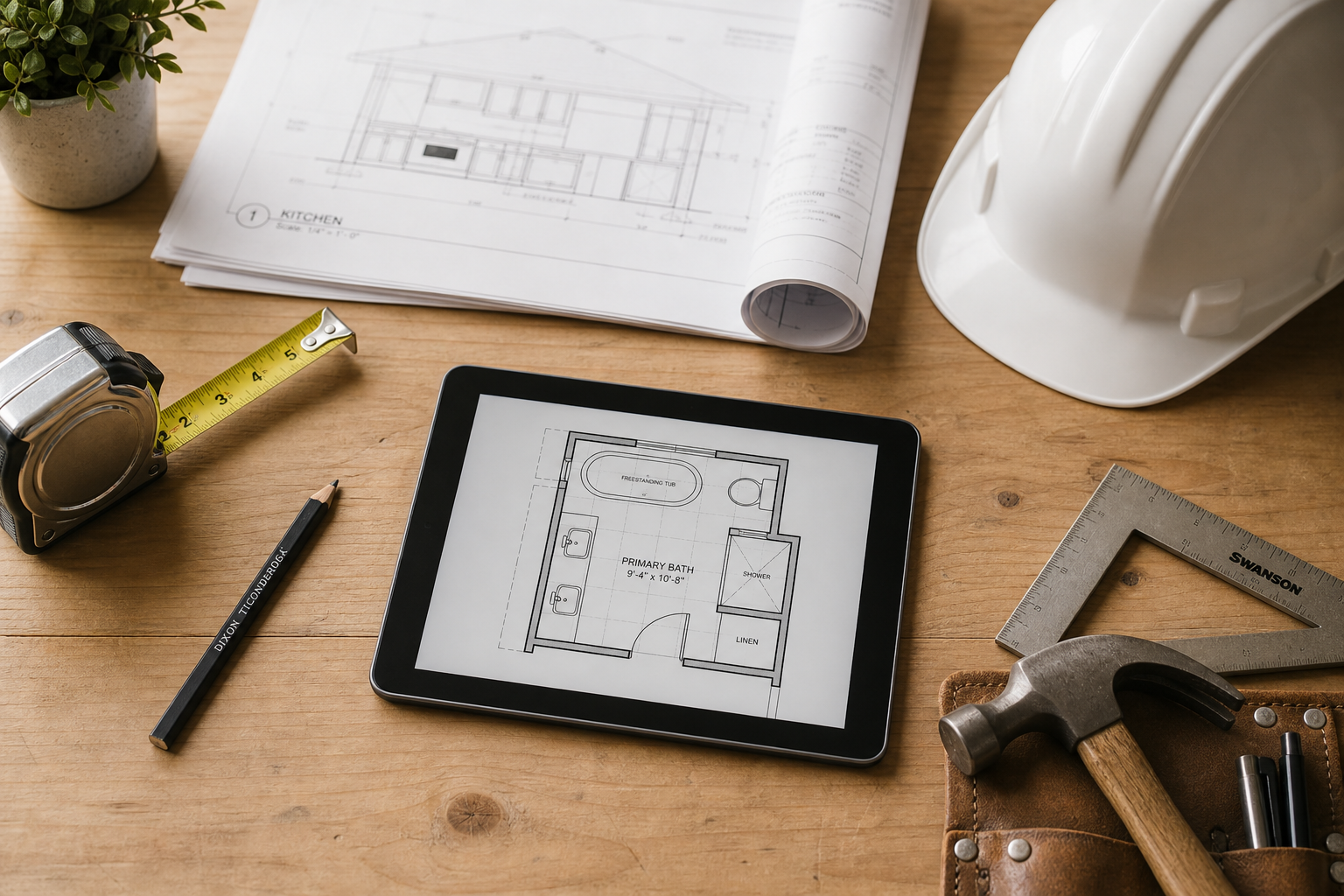
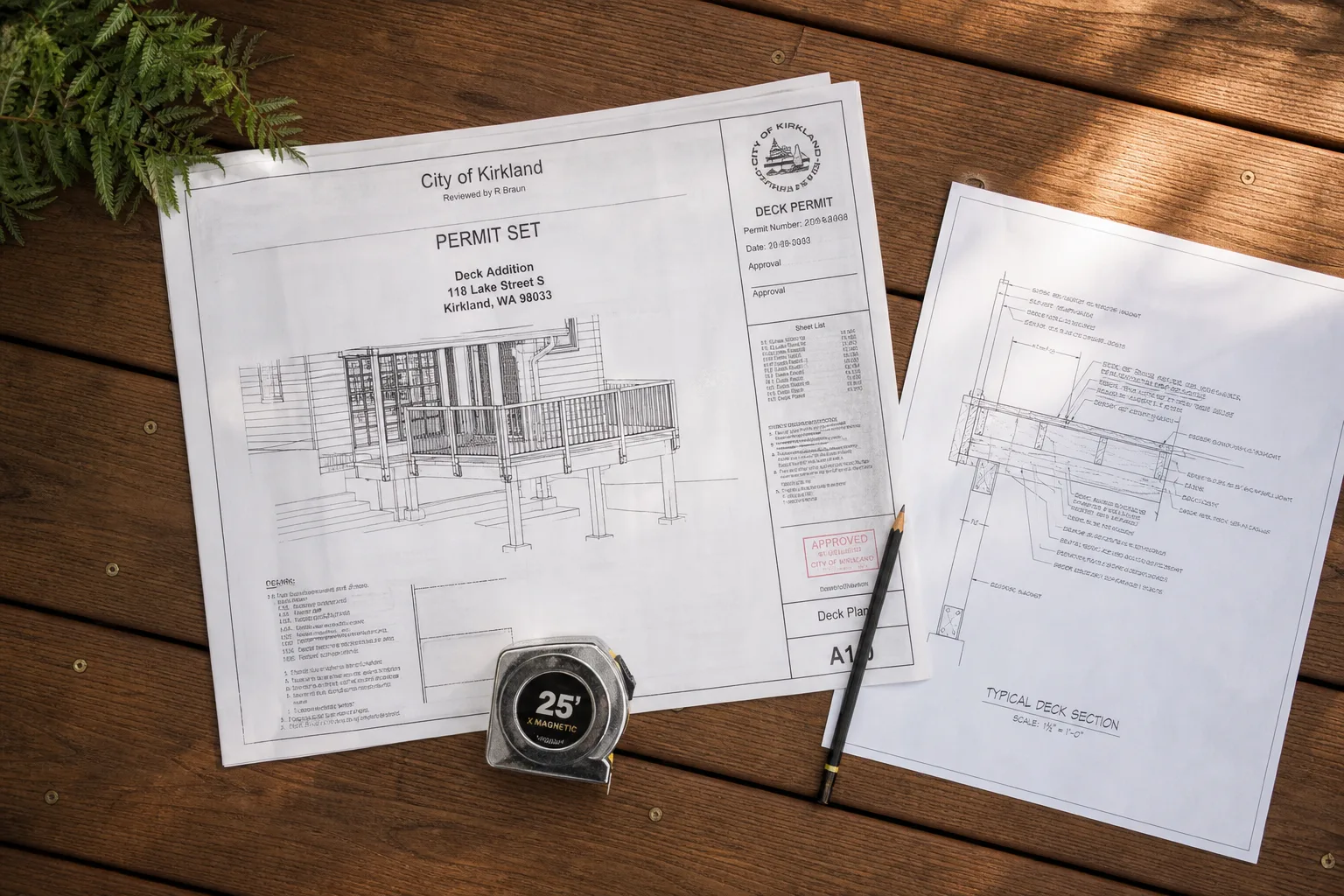
Control placement goes on the design drawing before rough plumbing is scheduled on any project we run. We mark entry side, showerhead position, valve height, and reach arc together so the plumber is installing to a spatial decision rather than improvising one in the framing. On showers with multiple fixtures, that drawing gets reviewed with the homeowner before demo so the positions are agreed and understood as fixed before the walls close.
The Glass Door Changes Everything
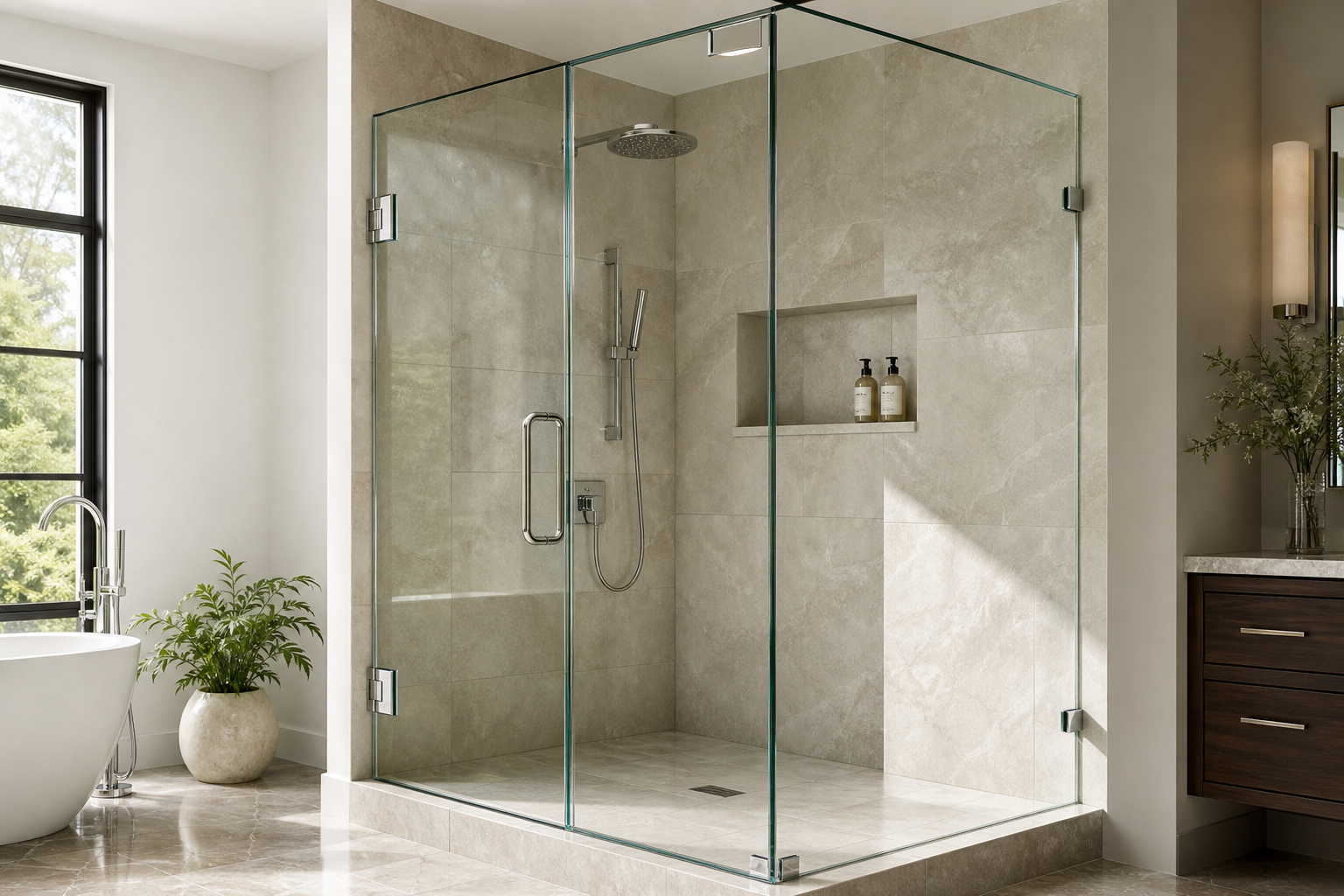
Glass is often templated late, but it should influence rough-in decisions early.
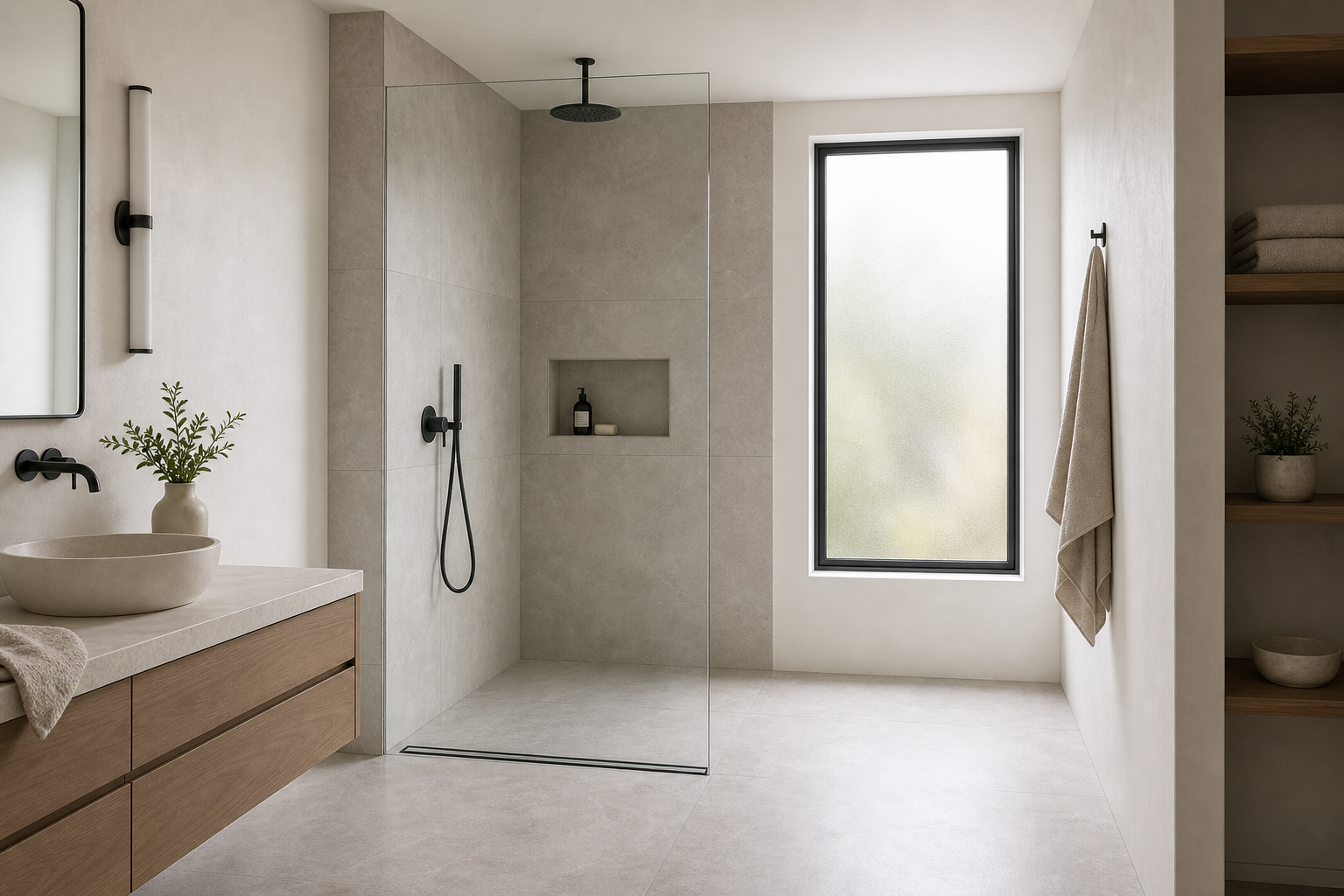
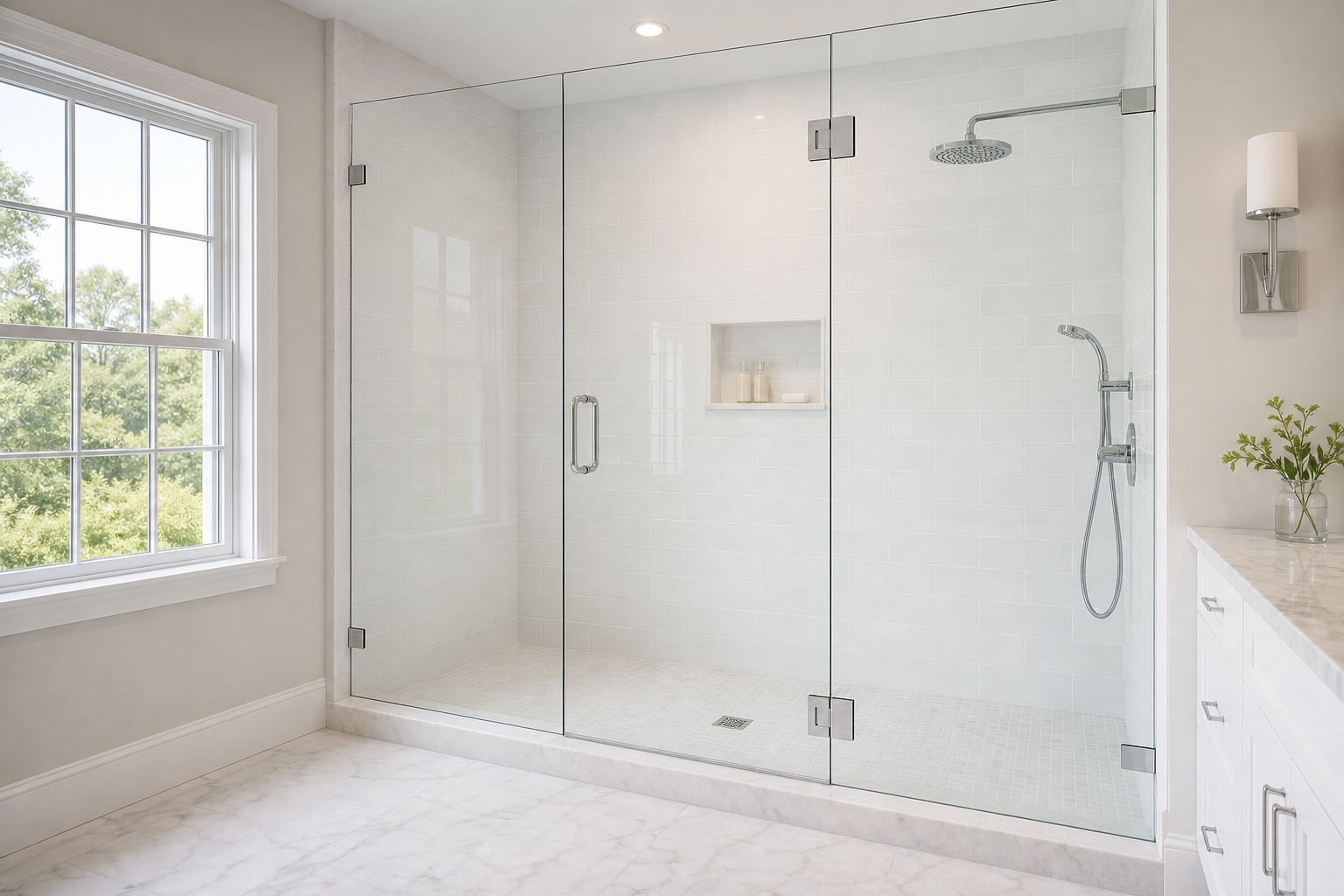
If the shower has a hinged door, the handle side and swing direction affect whether the control is easy to reach. If the shower has a fixed panel, the valve may need to move closer to the opening. If the entry is curbless and open, the showerhead direction and control access become part of splash management. If the bathroom is tight, the door swing may compete with the vanity, toilet, or towel placement.
This is why "centered under the showerhead" is not a design principle. It is a convenience that may or may not survive the glass plan.
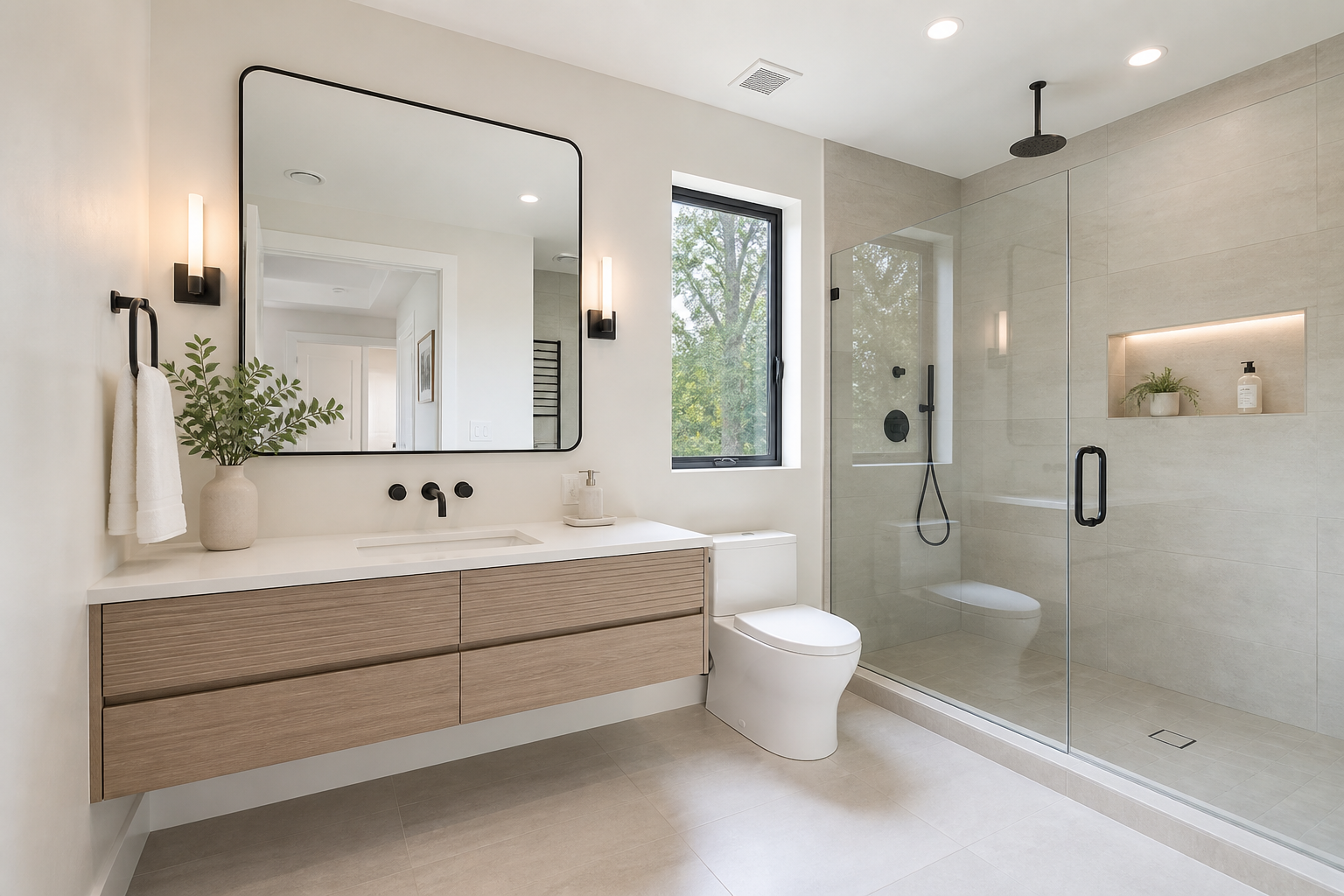
The more the shower relies on clean glass lines, the more carefully the controls need to be located. Otherwise the user ends up with a beautiful enclosure that makes daily use clumsy.
The Niche Problem
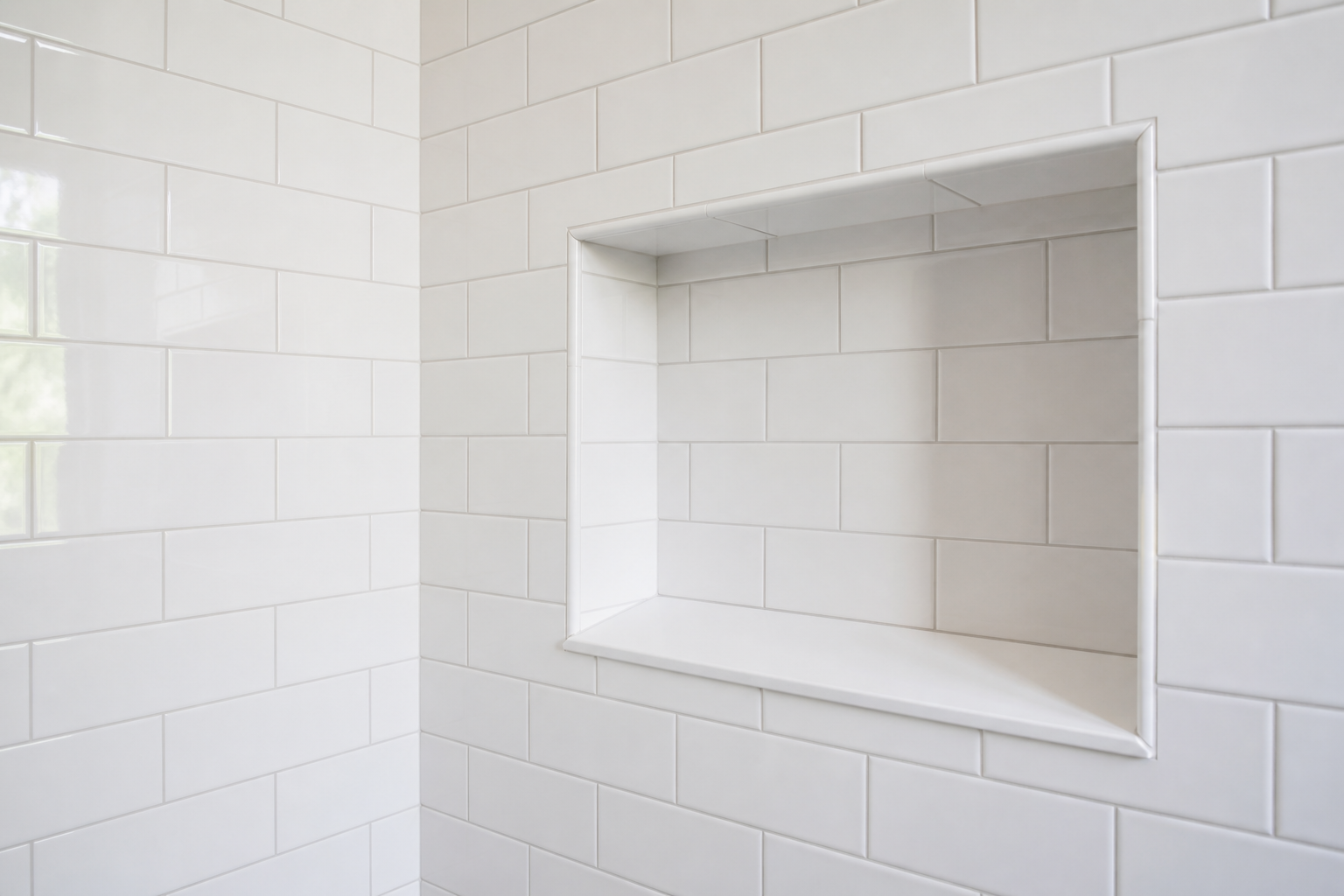
Shower niches are often placed where they look good in elevation drawings. Controls are often placed where plumbing is simple. The two can collide.
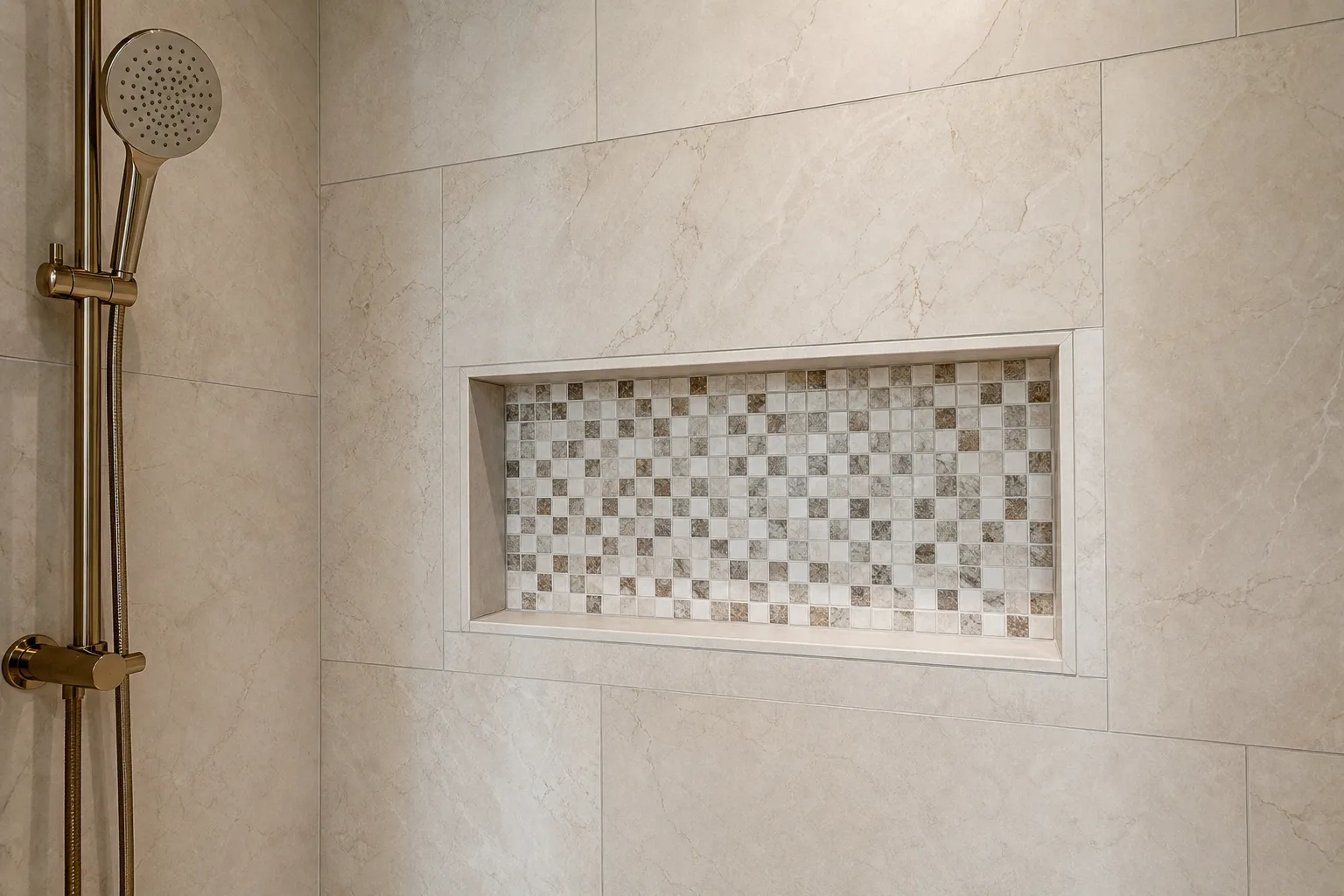
A niche above or near the valve may create waterproofing complications. A valve too close to a niche can crowd the wall. A niche on the same wall as the showerhead can make bottles more visible than intended. A niche on the wrong side of the shower can force the user to turn under running water just to reach soap.
The better approach is to plan the wet wall as a whole. Start with the body: where does the person stand, where does water land, where does the hand naturally reach? Then plan the valve, handheld, niche, bench, and glass in relation to that body.
Bathrooms fail when they are designed as photographs. They succeed when they are designed as movements.
What To Ask Before Rough Plumbing
Before the plumber opens the wall or sets the valve, ask:
- Can I turn on the shower without stepping into the spray?
- Can I adjust temperature from the normal showering position?
- Does the door or glass panel block my reach?
- Is the valve compatible with the trim and outlets we selected?
- Do we need pressure-balance, thermostatic, or separate volume controls?
- Where will the handheld hose hang when not in use?
- Does the niche placement fight the control placement?
- Will this still work for the household ten years from now?
These are not decorator questions. They are the questions that decide whether the room feels intelligent.
The Small Decision You Feel Every Day
Good bathroom design often disappears. You do not think about the control placement because it simply works. The water starts before you step in. The handle is where your hand expects it. The spray does not surprise you. The towel is nearby. The room gives you no little argument at the beginning of the day.
That absence of irritation is easy to undervalue during planning because it does not sparkle in a showroom. But after the room is built, it may matter more than the tile.
The shower control is a small decision. That is exactly why it deserves attention. Small decisions are the ones you live with most often.